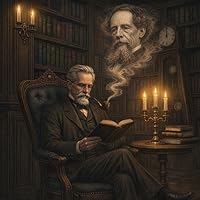
Philip Kindred Dick was a prolific American science fiction author whose work has had a lasting impact on literature, cinema, and popular culture. Known for his imaginative narratives and profound philosophical themes, Dick explored the nature of reality, the boundaries of human identity, and the impact of technology and authoritarianism on society. His stories often blurred the line between the real and the artificial, challenging readers to question their perceptions and beliefs.
Raised in California, Dick began writing professionally in the early 1950s, publishing short stories in various science fiction magazines. He quickly developed a distinctive voice within the genre, marked by a fusion of science fiction concepts with deep existential and psychological inquiry. Over his career, he authored 44 novels and more than 100 short stories, many of which have become classics in the field.
Recurring themes in Dick's work include alternate realities, simulations, corporate and government control, mental illness, and the nature of consciousness. His protagonists are frequently everyday individuals—often paranoid, uncertain, or troubled—caught in surreal and often dangerous circumstances that force them to question their environment and themselves. Works such as Ubik, The Three Stigmata of Palmer Eldritch, and A Scanner Darkly reflect his fascination with perception and altered states of consciousness, often drawing from his own experiences with mental health struggles and drug use.
One of Dick's most influential novels is Do Androids Dream of Electric Sheep?, which served as the basis for Ridley Scott's iconic film Blade Runner. The novel deals with the distinction between humans and artificial beings and asks profound questions about empathy, identity, and what it means to be alive. Other adaptations of his work include Total Recall, Minority Report, A Scanner Darkly, and The Man in the High Castle, each reflecting key elements of his storytelling—uncertain realities, oppressive systems, and the search for truth. These adaptations have introduced his complex ideas to audiences well beyond the traditional readership of science fiction.
In the 1970s, Dick underwent a series of visionary and mystical experiences that had a significant influence on his later writings. He described receiving profound knowledge from an external, possibly divine, source and documented these events extensively in what became known as The Exegesis, a massive and often fragmented journal. These experiences inspired his later novels, most notably the VALIS trilogy, which mixes autobiography, theology, and metaphysics in a narrative that defies conventional structure and genre boundaries.
Throughout his life, Dick faced financial instability, health issues, and periods of personal turmoil, yet he remained a dedicated and relentless writer. Despite limited commercial success during his lifetime, his reputation grew steadily, and he came to be regarded as one of the most original voices in speculative fiction. His work has been celebrated for its ability to fuse philosophical depth with gripping storytelling and has influenced not only science fiction writers but also philosophers, filmmakers, and futurists.
Dick's legacy continues to thrive in both literary and cinematic spheres. The themes he explored remain urgently relevant in the modern world, particularly as technology increasingly intersects with human identity and governance. The Philip K. Dick Award, named in his honor, is presented annually to distinguished works of science fiction published in paperback original form in the United States. His writings have also inspired television series, academic studies, and countless homages across media.
Through his vivid imagination and unflinching inquiry into the nature of existence, Philip K. Dick redefined what science fiction could achieve. His wor
Once again, it’s AUDIOBOOK Time! But first, a Synopsis:
“Que sera, sera - Whatever will be will be - The Future's not OURS to see: Que sera, sera!" Doris Day, May 1956.
What if you could change the Future? Philip K. Dick says our technology will soon be able to DO JUST THAT!
Well, Doris Day told me the future isn't ours to meddle with, when I was six years old in 1956 (with Doris crooning as America's Girl Next Door from my Mom's childhood radio, with its twin decorative black and white Scotty Dogs).
Whatever happens MUST happen.
And here Philip K. Dick agrees!
NEVER try and Fix the Future, he warns.
Perhaps Doris remembered this short story from two years earlier, in 1954, as the Cold War became glacial...
***
So maybe the details, echoing the hero's extreme reluctance to get into this Top Secret think tank's electronic Time Dipper, were familiar to many.
And maybe even Shakespeare, a half millennium earlier, warned us no to meddle with time, for:
As flies to wanton boys So we are to the gods - They kill us for their sport!
For old man Chronos is a jealous god: "I'm alright, Jack. (Just) keep your hands off my stash..."
Maybe Meddling is a capital offense - but we'll have to read to the end of this nail-biter to find that out: will the hero survive the harrowing Time Dip?
***
You know, during WWII, T.S. Eliot had written: If all time is eternally present All time is unredeemable.
Meaning, of course, a dystopian future for mankind may be unavoidable if we continue on our evil path.
(No Meddlers allowed!)
"Is my dystopian future INEVITABLE?" Ebenezer Scrooge once asked the Ghost of Christmas Future.
In this remarkable early story, first published in the October issue of Future Science Fiction (1954), Dick manages to convey, in a somewhat conventional time travel story, how deceptive and astonishing even the least detail of our universe might be.
This tale—featuring a host of beautiful and unconsciously malevolent butterflies—heralds the dark, mind-blowing philosophical menace that Philip K. Dick would soon become.
I can’t exactly remember which episode it was but when Lisa Simpson once asks her brother what he would like to be, he replies, a butterfly and then starts imagining how Principal Skinner is dragged away from the charred ruins of the school, by some policemen, yelling that it wasn’t him but the butterfly, only to evoke disbelief, while a little Bartesque butterfly is hovering nearby, holding the tools of arson in his tiny hands and enjoying a dirty laugh.
Well, Dick’s short story Meddler reminded me a little bit of this story and I had the feeling the scriptwriters of that episode must have known the story, because here, Dick envisions a future in which man has been eradicated from the face of the earth by intelligent butterflies. The story also plays with the paradoxes of time travelling in a rather grim and clever way, at the same time showing the author’s ability to sketch a complete vision of human society at a given point in time in the framework of quite a short story. Contrary to most other time travelling scenarios, in Meddlers, the danger does not arise from people travelling back and making minor changes in the past which prove to be disastrous for the present but they doom their own society in their effort to iron out blunders they somehow introduced into the future during one of their illicit forays there. The German language has the wonderful word verschlimmbessern for the process of making things worse with good intentions, maybe because we Germans direly need it.
Philip K. Dick’s Meddler is a tight, unsettling piece of time-travel fiction that reads like a warning shot fired straight at human hubris. What begins as a bureaucratic “expedition into the future” quickly reveals itself to be an ecological nightmare, as mutated butterflies, alien-like cocoons, and warped landscapes tell a story the officials refuse to hear: time is not a playground, and the future does not tolerate interference.
Dick’s strength here is his ability to pack dread into small details. The changes aren’t dramatic — they’re biological, creeping into the environment with a quiet inevitability. Each shift signals that the timeline has already begun to fracture, and that mankind’s attempt to control destiny has instead contaminated it.
The story’s tension doesn’t rely on action but on realization. As the investigation unfolds, it becomes clear that the meddler is less a character and more a symptom — the embodiment of a government that treats causality like bureaucracy instead of the living, interconnected system it is. Dick excels at portraying this institutional blindness, creating a scenario where the officials believe they’re solving the crisis long after the real damage is irreversible.
Meddler succeeds not because it dazzles with time-paradox tricks, but because it frames time travel as an ecological and moral disaster. Dick suggests that every intervention — technological, political, temporal — carries consequences that no committee can fully comprehend, and once you mutate the future, you never get the original version back.
Concise, eerie, and thematically sharp, Meddler stands as one of Dick’s early masterclasses in turning science fiction into a philosophical alarm bell. It lingers not as a tale of adventure, but as a reminder that some boundaries, once crossed, change everything.
So that's the butterfly effect eh? I can guess the ending quite right (I was imagining hidden butterflies fly out of the time car when Hasten get back to his time) but "cocoons"! And empty cocoons! That's horror. By the way Hasten doesn't seem to be the finest person for that job. If I were him I will not go back to my days. Yet, still I have no idea of how to prevent the apocalypse.
An entertaining short story about time travel and potential impact on humanity. Although the ending was somewhat easily able to guess early in the story, I still enjoyed it. Especially the descriptions of the planet and civilization during the course of the main character's time travel. Recommend as a short read to fill in between larger / more dense books.
Classic, science-fiction short story told by the master. A quick read. A solid lesson in not messing with the timeline. It pretty much spells out how “the butterfly effect” works. Highly enjoyable, will read again due to it being so short.