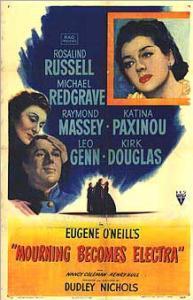
A three-part reworking of themes from Greek tragedy, the plays are set in New England in 1865, just after the Civil War. A returning victor, General Ezra Mannon (Agamemnon), is poisoned by his unfaithful wife Christine (Clytemnestra) and then avenged by his son Orin (Orestes) and daughter (Lavinia). With Orin's subsequent suicide, Lavinia (the Electra of the title) becomes a fatalistic recluse in the Mannon mansion.
American playwright Eugene Gladstone O'Neill authored Mourning Becomes Electra in 1931 among his works; he won the Nobel Prize of 1936 for literature, and people awarded him his fourth Pulitzer Prize for Long Day's Journey into Night, produced in 1956.
He won his Nobel Prize "for the power, honesty and deep-felt emotions of his dramatic works, which embody an original concept of tragedy." More than any other dramatist, O'Neill introduced the dramatic realism that Russian playwright Anton Chekhov, Norwegian playwright Henrik Ibsen, and Swedish playwright August Strindberg pioneered to Americans and first used true American vernacular in his speeches.
His plays involve characters, who, engaging in depraved behavior, inhabit the fringes of society, where they struggle to maintain their hopes and aspirations but ultimately slide into disillusionment and despair. O'Neill wrote Ah, Wilderness!, his only comedy: all his other plays involve some degree of tragedy and personal pessimism.
Inspirada em Oresteia, de Ésquilo, esta peça, que corresponde a cerca de oito horas de representação, divide-se em três partes (trilogia) que, segundo a minha interpretação, poderão denominar-se como o Crime, a Vingança e o Remorso. A acção decorre nos Estados Unidos, no período da Guerra da Secessão e conta a história da família Mannon, composta pelo casal e dois filhos. O tema central é o mesmo de Oresteia — a infidelidade e assassínio, a vingança dos filhos e o amor desmedido da filha pelo pai e o ódio pela mãe — no entanto, O'Neill foi menos corajoso do que Ésquilo pois, além de as mortes serem menos sangrentas, não ousou cometer matricídio e foi mais severo no castigo. Em relação a outras peças que já li esta tem uma particularidade que torna a sua leitura semelhante à de um romance: todos os movimentos e expressões fisionómicas das personagens são descritos por um narrador.
Esta preciosa primeira edição, que encontrei num dos meus momentos mágicos com os livros, foi traduzida pelo escritor Henrique Galvão e publicada em 1942, aquando da representação da peça no Teatro Nacional D. Maria II.
Da apresentação do tradutor, transcrevo duas frases — a primeira sobre o autor (na altura ainda vivo) e a segunda sobre o livro — que, apesar de terem sido escritas há 76 anos, não perderam actualidade. O ser humano não muda...
"Os homens julgaram sempre mal os seus contemporâneos, e ou os sopram desmedidamente com intuitos comerciais ou políticos, ou os desdenham severamente, através dos agentes da concorrência desleal que em todos os tempos se travou entre os que disputam a Glória com mais audácia do que valor e os que a esperam com mais valor do que audácia. Só o Tempo, eliminando as pessoas e a concorrência da mesma época, cumpre a tarefa de classificar rigidamente obras e autores e apresentar, enfim, os homens, conforme a sua estatura real e na verdadeira proporção em que cada um avultou perante os mais."
"Não será esta trilogia teatral o processo e o julgamento da própria Humanidade? Não será esta família Mannon, hermética, estranha, orgulhosa e miserável; seduzida pelo crime e pela glória; ansiosa por uma libertação; intuitiva acerca do valor da Paz e da pureza, mas incapaz de as alcançar; impelida por uma fatalidade mais forte do que os seus meios de compreensão e de defesa; justiceira e culpada ao mesmo tempo; arrastada para o suicídio pelos acontecimentos que ela própria desencadeia para se libertar — não será esta horrível família Mannon, o réu que responde por crimes, erros, pecados, vícios e inferioridades de uma humanidade inteira, no momento cruciante de uma Civilização em que o alcance e os resultados das suas criações espirituais parecem abrir falência?"
Eugéne O'Neill (1888-1953) nasceu num quarto de hotel em Nova Iorque e morreu num quarto de hotel em Boston. Filho de actores, a sua infância foi passada a acompanhar os pais pelos estados norte-americanos ou em internatos. Aos 23 anos passou meses num sanatório de tuberculosos (doença de que morreu anos mais tarde) e foi durante esse tempo que começou a escrever teatro. Venceu quatro vezes o Pulitzer (o último postumamente) e o Prémio Nobel da Literatura em 1936 "pela força, honestidade e emoções intensas de suas obras dramáticas, que incorporam um conceito original da tragédia."
While not necessary to read any of these pieces of literature that contribute to the understanding of the play, any of these pieces will deepen the understanding of this trilogy.
According to at least one other reviewer, an understanding of Freudian personality theory contributes to the understanding of the Mourning trilogy. Without a doubt. I was grasping to label types.
According to Illiterate, another reviewer on Goodreads, the understanding of this trilogy can be understood as another three components.
Some of us can reference other works and ideas but cannot well discuss it. Here are some more labels that come to mind: Powerful Horrific American
That many Americans talk about their dysfunctional families horrifies me just now.
This was my first O'Neill experience. Crazy. This cycle of plays reminds me of how interconnected (in sometimes freaky ways) are the ideas of life, death, love, hate, societal standards, and taboos. All of these concepts play a sort of round robin tournament as life combines with death, love, hate, standards, and morals everything connects with everything else. It's certainly not always a pleasant combination, but one worth contemplating. I would love to see this staged, especially to see the art direction's creation of a family whose faces are all life-like masks. Well, you probably just use masks. But still.
Mourning Becomes Electra de O’Neill este o reinterpretare amplă (copleșitor de amplă, 13 acte) a trilogiei Oresteia de Eschil. O tragedie modernă în trei părți: Homecoming, The Hunted și The Haunted. Puse cap la cap, pot dura până la cinci ore pe scenă. O’Neill scrie cu un simț aproape religios al detaliului. Totul e apăsat, meticulos, dens, cusut parcă pe destint, nu pe întâmplare.
Acțiunea este plasată în perioada de după Războiul Civil, într-un orășel din Noua Anglie, și urmărește destrămarea (demascarea???) familiei Mannon, unde blestemul, moștenirea și dorințele reprimate se împletesc tragic. Avem și echivalențele moderne ale personajelor antice: Ezra Mannon este Agamemnon (generalul întors acasă din război), soția sa, Christine, e Clytemnestra (geloasă, rece, mistuită de ură și pasiune), Adam Brant (amantul) e Aegisthus, Lavinia (fiica) este Electra (personajul central, obsedat de puritate, justiție și răzbunare), iar fratele ei, Orin este Orestes - întors de pe front și prins între iubirea bolnăvicioasă pentru mamă și loialitatea față de soră. Ceea ce a fost, la Eschil, o confruntare cu zei, destin și vină ereditară, devine la O’Neill o tragedie psihologică, aproape freudiană. Totul e tradus în termeni de traumă, complexul lui Oedip și dorințe reprimate.
Sincer, pe alocuri, am avut impresia că urmăresc un serial turcesc sau una dintre acele telenovele care rulau pe Acasă TV =))). E acea senzație de dramă intensă, repetitivă, în care personajele se urăsc, se iubesc, se trădează și, bineînțeles, se învinovățesc până la autodistrugere. Dar aici, nivelul este altul. O’Neill scrie impecabil. Frazele lui sunt construite cu greutate, cu intenție. Pe O’Neill nu l-am mai citit de anul trecut și aproape uitasem cât de bine scrie. Ce forță are! Ce suferință disciplinată!
Și în final, totul se transformă în vinovăție, izolare și autoînchisoare. Într-o astfel de lume, nici cei care au încercat să facă "ce trebuie" nu scapă. Lavinia o spune cel mai bine "Sper că există, pe undeva, un iad și pentru cei buni." Pentru că în lumea lui O’Neill, a fi "bun" înseamnă, de multe ori, a fi orb, violent și înrăit în numele unei moralități imposibile.
This play is the definition of a dysfunctional family drama.My God,how frusturated I have become near the end of it.Why is everyone jealous of someone else??!! Sharing is caring.I swear I was expecting a filial makeout session,but the worst happened:an incestuous marriage proposal took place. I really felt uncomfortable reading some passages because the vibes of incest were pounding my brains out.O'Neill sure went there in depicting the ugly dynamics of a dysfunctional family.
I read this one mostly out of historical interest. I'm reasonably fond of theatre and must admit to being puzzled by this play's reputation. To me it was extremely ham-handed. Anything that wasn't taken from the Oresteia was taken straight from Freud. I know Freudian theories of personality were more accepted when the play was written, but to me the relationships of the Mannon family were laughably two-dimensional.
من خیلی فرویدی نگاه نمیکنم به این سه گانه؛ یعنی میشه برداشت های فرویدی کرد، ولی خب به ناتورالیسم بیشتر نزدیکه، و به سرنوشت-گرایی از همون نوعی که در نمایشنامه های یونان باستان یافت میشد. یه کمی جنبۀ تراژیکش زیاد از حده، که یعنی اذیت کننده میتونه باشه گاهی، ولی خب قدرت دراماتیک بسیار بالایی داره، که یعنی میخکوب نگه میداره خواننده یا بیننده رو. زبان اثر جزو نقاط قوت کار به حساب میاد، پس اگه به ترجمه خونده بشه کمی از تأثیرش رو از دست میده. به طور کلی این نمایشنامۀ بلند یکی از ژانرهاییه که انگار یوجین اونیل در اون تبحر بیشتری داشت و مثلاً در «میان پردۀ عجیب» یا «آن سوی افق» هم تو فُرم بلند تئاترپردازی کرده. نمایشنامۀ بلند شاید مخصوصاً امروز که همه جور امکانات محدود شده، چندان تن به اجرا نده و اجراکننده مجبور باشه از سر و تهِش بزنه، ولی برای خواندن خیلی مناسبه. انگار که داری یه رمان ده هزار صفحه ای رو به صورت چکیده و مؤثر در دویست سیصد صفحه میخونی. کلاً یوجین اونیل جزو مورد علاقه های منه، و اون تلخی گاه تحمل ناپذیری که در آثارش و در نگاهش به جهان هست، کمی تا قسمتی از زندگی خودش نشأت میگیره.
"I love everything that grows simply — up toward the sun — everything that’s straight and strong! I hate what’s warped and twists and eats into itself and dies for a lifetime in shadow."
در خانهای قبر مانند ساخته شده بر نفرت و مرگ، داستان نسلها تکرار میشود. فرزندان محکومند که نقش والدین خود را تکرار کنند. و گناه از نسلی به نسل دیگر منتقل میشود. حتی وینی که خواست زندگی در او بیدار شده در زیر بار سنگین گناه له میشود. خانه ساکنان را مرده میخواهد.
این نمایشنامه در حال و هوای نمایشنامههای ایبسن است. چرا این نویسندگان زندگی و مرگ را در تضاد با هم میدانند؟ آنها از زندگی نمیگویند از رویای زندگی ایدهآلشان میگویند. زندگیای که باید جور خاصی باشد وگرنه به نظر آنها "زندگی" تلقی نمیشود. آفتابی همیشگی. اما سایه و آفتاب زندگیاند. اینجا دوگانه زندگی و مرگ مطرح نیست. دوگانهی این نویسندگان زندگی ارزشمند و بی ارزش از منظر خودشان است.
O'Neill delivers every time. A tragedy of a dysfunctional family with very complex characters. I liked that he made Lavinia (an equivalent to Electra) his protagonist, she's fascinating. He really understood his Aeschylus. The extensive stage directions make his plays read like a novel sometimes. Highly recommend!
so like why does this end like the onceler's part of the lorax is my question
okay. real review. "oresteia set in the american civil war" is a really cool concept, and "chorus made of random characters working at the mannons' house that represent the town's opinions" is a pretty creative way to transfer the chorus thing. but girl this was not it. this play takes those interesting concepts and sands them down into something deeply dull and clunky.
first major issue: the clytemnestra character's motivation is that she hates her husband and she hates the bad sex they have and she wants him dead so she can be with her lover instead. and you know what? this play is set in 1860, and so that makes sense! women don't have power! you can't get a divorce! you have no power in this marriage! but the original character of clytemnestra is motivated primarily by the fact that her husband sacrificed her daughter to the gods. taking out that rage to make this an Unfaithful Woman Thing feels lazy at best and--dare i say it--misogynist at worst. i didn't want to call o'neill a misogynist going in, because who am i to say that every man in the 30s is a misogynist, but then i got into the segments where she was clinging to her lover scared of everything and obsessing over being young and beautiful, and. ok. ok
second and perhaps MORE major issue: why the weird incest undertones. why did o'neill need to take this DIRECTLY out of the freudian idea of the "electra complex." why the electra character saying, verbatim, “you’re the only man i’ll ever love” to her father. why the orestes character saying, nearly verbatim, “i don’t want to get married; you’re my only girl” to his mother. why the incest undertones between the two siblings in the very last segment. it's not that i don't think anyone can write about incest in a nuanced and meaningful way; it's that i think this is potentially the least interesting oresteia take possible. yeah, yeah, o'neill borrowed from the oedipus cycle, but the oedipus cycle is ABOUT incest, among other things. the oresteia is about justice and vengeance and murder and matricide and ancestral curses and children being punished for their forefathers' crimes along with their own. and also cannibalism. and also murder murder violence killing. the oresteia has SO much going on and going "well what if electra and orestes really wanted to fuck each other" is . i mean, it's certainly a take! but it's a take i do not care about when there is so much more to explore!
also this was just far less fun to read than the original texts. and that's coming from me, a guy who does not find choral ode very fun to read. i liked the last segment most because i liked seeing orin psychologically disintegrate, but overall this bored and disappointed me--on a prose level, as well; the dialogue was stilted as FUCK. apparently o'neill rewrote this play three times and i'm just saying... maybe it should have been four.
This play, according to Google search results, was first produced in the early 1930’s, around this time Freud was making an impression on many writers and artists. I don’t know if Eugene O’Neill was an admirer but what he’s done with this retelling of a Greek Myth, where he broadly uses the plot of Aeschylus’s Oresteia, is to give us a family drama with Freudian laden relationships.
The action is set around the Mannon family, this is an old family going back generations with an unhappy episode that haunts them. When Christine Mannon, the mother, finds the love she has always wanted everything changes. For years, the family dynamics have been fragile; the disharmony between the parents have created an unhealthy alliance between father and daughter and son and mother. The children, Lavinia and Orin, now grown-up, are fiercely loyal to a parent where jealousies are easily triggered. This leads to a sequence of tragic events as nature and nurture seem to battle it out. The ending suggests a kind of bleak hope, as Lavinia wants to put things right knowing she can never change.
The backdrop of the American Civil War adds to the Claustrophobic mood of the play; here its Orin haunted by death and killings during this war. To me the sets and dialogue have a kind of a Southern feel; I imagined American Colonial architecture in an expansive landscape. It was a GR friend in a buddy read who pointed out that it was set in New England. Its dialogue, to a degree, felt dated and very much of its time. However, to see how a retelling is handled, and how the themes are conveyed through its story structure made this interesting for me. I also liked it on a cerebral level, there’s a lot going on, where the tension stays taut and the action sometimes speaks as loudly as the words, like Lavinia transforming into her mother.
Occasionally, a classic read is interpreted with current sensibilities, instead of the ones written in their own time. With recent events of Historical Cases, I did wonder if this may become one of them; where Eugene O’Neill’s dramatic critique of the subconscious will be eclipsed by its Freudian elements.
Description: A three-part reworking of themes from Greek tragedy, the plays are set in New England in 1865, just after the Civil War. A returning victor, General Ezra Mannon (Agamemnon), is poisoned by his unfaithful wife Christine (Clytemnestra) and then avenged by his son Orin (Orestes) and daughter (Lavinia). With Orin's subsequent suicide, Lavinia (the Electra of the title) becomes a fatalistic recluse in the Mannon mansion. The author was four times a Pulitzer Prize winner and was the first American dramatist to win the Nobel Prize for Literature in 1936
BBC R3 has been giving us the The Oresteian Trilogy on Sunday evenings and it has been fantastic listening. Of course, this is how I ended up with this O'Neill play.
I did enjoy this. Beatrix Lehmann played the role of Lavinia in the 1938 London production and it was considered one of her best roles. I really love Greek drama and this was a retelling which actually worked quite well. The setting just after the American civil was seemed to mirror that of the Greek quite well. The rich eccentric family and their "odd" ways could easily fit in. I'm not sure all the incest really worked as well in the 19th century setting though. Still despite that it was a very interesting trilogy. I know that it is was staged in London as all three plays with a running time of four and a half hours. For me I enjoyed the first play the best, it focused on the unhealthy relationship of the mother and daughter. I think O'Neill may have made the mother just a little too unsympathetic. It was easy to see why her daughter was so upset with her (or perhaps as I was imagining Beatrix in the role I was just unduly sympathetic to Lavinia). I thought the brother Ores was very weak but his speeches about the horror of war and the way it had effected them very powerful. In fact in many ways the play was at it's strongest when it diverged from the source of the myths. I'd love to see this on stage one day.
This is one of the classic plays that you hear about, but I hadn't read. We selected plays for our latest "Reading Around the Library" and I decided to read this one. This is a three part drama, essentially three plays that make up one larger work. My undergraduate class in Greek drama provided a good base for much of the meaning of the drama. One word kept popping into my head whenever I finished reading a section -- fraught. It was rife with tension, madness, incestuous leanings, adultery, death, destructive relationships, revenge, hate, chafing at social mores, skeletons in closets, and general family dysfunction. Love and hate tug the family members to several breaking points which tended to end scenes. The background is the close of the Civil War and the set surrounds the family mansion in a New England town. The stage directions provide interesting info and continuous themes such as the mask-like facial features of the members of the family and the slightly camouflaged ugly facade of their home. Overall an interesting, though hardly light-hearted read.
I gave this hauntingly morbid story five stars not because it has a good plotline and characters; but because how much it had an effect on me. So dark, so incestuous, so creepy, so gross; a complete package. Exactly how I like my stories.
Toxic family - check Twisted unlikable characters - check Powerful dialogues - check Suicides - check Murders - check Guilty conscience - check Strange symbolic mansions - check A mountain of bizarre - CHECK Sinister love interests - check check check *hint* A WHOLE LOT OF INCEST!
Here I go, this is what I want and this is exactly what this play provided.
I didn't feel sorry for anyone. Every single one of them was either a stupid fool or a complete asshole. So glad this diabolic play is part of my semester course and I got to read it.
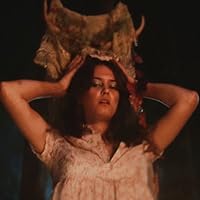
I've seen the 1947 film,based on this play.The title refers to the lead character going into mourning because of the disasters that befall her family.
It's not a cheerful film,and it performed poorly at the box office.I didn't like it much,either.There is a lot of heartbreak and tragedy alongwith the story of a dysfunctional family,its dark secrets and violence.
It's a tough one to sit through.Supposedly,an iconic work of drama,it didn't work for me.
Mit o Elektrze przewija się w literaturze, fascynuje, stanowi inspirację, sama wracałam do niego wiele razy, głównie przy okazji lektur i odkryć literackich. Amerykański noblista Eugene O'Neill przenosi mityczną konwencję w czasy końcówki wojny secesyjnej. Lavinia to dumna córka generała Ezry Mannona. Wraz z matką Christiną czekają na powrót ojca i brata z wojny. Lavinia z utęsknieniem, matka z odrazą. Między kobietami panuje atmosfera pełna napięcia. Lavinia nie czuła się nigdy kochana przez matkę, a teraz zarzuca jej zdradę ojca z kapitanem Adamem Brantem. Gdy Lavinia odkrywa, że Adam jest spokrewniony z rodziną, sytuacja się zaognia. Marynarz jest bowiem dzieckiem brata Ezry i pokojówki. Uderzające podobieństwo do Orina - brata Lavinii, ma z pewnością wpływ na uczucie Christiny, która od zawsze preferowała syna. Takie rodzinne zawirowania nie mogą skończyć się dobrze. Christina przyczynia się do śmierci męża, który umiera w pierwszą noc po powrocie z wojny. Teraz obie kobiety czekają niecierpliwie na Orina, każda gotowa przekonać go do swojej wersji wydarzeń. Christina zarzuca bowiem Lavinii zauroczenie kapitanem i uknucie intrygi. Sprawa nie jest jednak taka prosta - Orin został poważnie ranny na wojnie, wraca straumatyzowany i ma początkowo problemy z rozsądnym i spokojnym ocenieniem obu relacji. Lavinia jednak przekonuje brata o winie matki.
O'Neil has re-told the story from Greek myth 'curse on the house of Atreus', and modernized it according to our times , Lavinia is Electra, Orestes is Orin, Ezra Manon is Agamemnon , Christine is Clytemnestra. he has skipped the part dealing with Helen an Paris and has replaced it by creating another forbidden love of Abe Manon and the nurse who gave birth to Adam Brant and Adam Brant is Augustus from the old Oresteia by Aeschylus. in this play all the Mannons are caught in more or less the same trap. Each character has his flaw, his own personal failure; each one of them is a combination of the inner self, which is the life force, trying to deal with the circumstances of a world he did not make and could not control. The punishment they suffer in spite of all their efforts is out of all proportion to what they deserve. The appeal of the play lies not in "order re-established", but in the realization of man's powerlessness to deal with life in any way that would indicate a universal good. He stumbles in the fog, that in this play is the dominant atmosphere, seeking for a pathway that is not there. o' Neil is successful in keeping the rules of the traditional tragedy intact but also manages to break away as well .....