Jump to ratings and reviews
Rate this book

53 jours

Rate this book
53 jours est le roman auquel Georges Perec travaillait au moment de sa mort, survenue le 3 mars 1982. Le livre est publié ici intégralement, dans une édition établie par Harry Mathews et Jacques Roubaud. Il comprend, d'une part, ce que Georges Perec avait déjà rédigé et qui recouvre onze des vingt-huit chapitres prévus ; d'autre part, un abondant dossier de notes et de brouilIons laissés par l'auteur, permettant le déchiffrement du reste du livre. Il a par ailleurs été prélevé dans les notes concernant les dix-sept derniers chapitres, celles qui étaient susceptibles de permettre aux lecteurs passionnés par la narration de reconstituer sans difficulté l'ensemble de l'histoire.

336 pages, Paperback

First published January 1, 1989

49 people are currently reading
659 people want to read

About the author

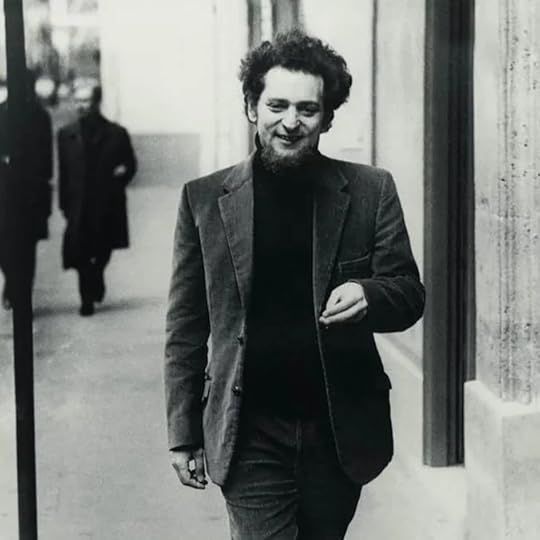
Georges Perec

132 books1,649 followers
Georges Perec was a highly-regarded French novelist, filmmaker, and essayist. He was a member of the Oulipo group. Many of his novels and essays abound with experimental wordplay, lists, and attempts at classification, and they are usually tinged with melancholy.

Born in a working-class district of Paris, Perec was the only son of Icek Judko and Cyrla (Schulewicz) Peretz, Polish Jews who had emigrated to France in the 1920s. He was a distant relative of the Yiddish writer Isaac Leib Peretz.

Perec's first novel, Les Choses (Things: A Story of the Sixties) was awarded the Prix Renaudot in 1965.

In 1978, Perec won the prix Médicis for Life: A User's Manual (French title, La Vie mode d'emploi), possibly his best-known work. The 99 chapters of this 600 page piece move like a knight's tour of a chessboard around the room plan of a Paris apartment building, describing the rooms and stairwell and telling the stories of the inhabitants.

Cantatrix Sopranica L. is a spoof scientific paper detailing experiments on the "yelling reaction" provoked in sopranos by pelting them with rotten tomatoes. All the references in the paper are multi-lingual puns and jokes, e.g. "(Karybb et Scyla, 1973)".

Perec is also noted for his constrained writing: his 300-page novel La disparition (1969) is a lipogram, written without ever using the letter "e". It has been translated into English by Gilbert Adair under the title A Void (1994). The silent disappearance of the letter might be considered a metaphor for the Jewish experience during the Second World War. Since the name 'Georges Perec' is full of 'e's, the disappearance of the letter also ensures the author's own 'disappearance'.

His novella Les revenentes (1972) is a complementary univocalic piece in which the letter "e" is the only vowel used. This constraint affects even the title, which would conventionally be spelt Revenantes. An English translation by Ian Monk was published in 1996 as The Exeter Text: Jewels, Secrets, Sex in the collection Three.

It has been remarked by Jacques Roubaud that these two novels draw words from two disjoint sets of the French language, and that a third novel would be possible, made from the words not used so far (those containing both "e" and a vowel other than "e").

W ou le souvenir d'enfance, (W, or, the Memory of Childhood, 1975) is a semi-autobiographical work which is hard to classify. Two alternating narratives make up the volume: one, a fictional outline of a totalitarian island country called "W", patterned partly on life in a concentration camp; and the second, descriptions of childhood. Both merge towards the end when the common theme of the Holocaust is explained.

Perec was a heavy smoker throughout his life, and was diagnosed with lung cancer in 1981. He died the following year in Ivry-sur-Seine at only forty-five-years old. His ashes are held at the columbarium of the Père Lachaise Cemetery.

David Bellos wrote an extensive biography of Perec: Georges Perec: A Life in Words, which won the Académie Goncourt's bourse for biography in 1994.

Ratings & Reviews

What do you think?
Rate this book

Friends & Following

Create a free account to discover what your friends think of this book!

Community Reviews

5 stars
31 (15%)
4 stars
73 (37%)
3 stars
68 (35%)
2 stars
17 (8%)
1 star
5 (2%)
Displaying 1 - 30 of 32 reviews
Profile Image for Paul.
Author 0 books106 followers
October 25, 2021
Do you know, I was sure I had reviewed this but it seems I hadn't. An unfinished review for an unfinished book, perhaps? Some of those reviewing the book claim to have been "unable" to finish reading it - now there's an irony, isn't it? Poor Perec had a more compelling reason for the incompletion of his task.

There's a double tragedy here, then. Firstly, that GP died far too young, at a mere 45 from lung cancer. Secondly, that his demise prevented his finishing "53 Days". How could any writer hope to follow a masterwork such as Life a User's Manual? GP wasn't just any writer, though, and there's compelling evidence here that his next book would have proven equally accomplished. In the vein of La Disparition, but to my mind much stronger, it's a cryptic detective story, filled with red herrings, digressions and puzzles. Once again, it involves the search for a missing person, set in a sinister unnamed country. Just as the plot starts to unfold in Chapter Eleven, the novel grinds to a halt.

The remaining seventeen chapters of the novel, such as it is, have been compiled from GP's notes. The unfinished nature of the work - and we're talking truly unfinished, not in the mode of a Kafka novel - clearly undermines the reading experience and prevents a full appreciation of what the novelist might have achieved. On the other hand, something that does enhance the experience is the sheer quality of the splendid Godine edition. And it does provide a fascinating insight into GP's compositional methods. To be honest, I'd still rather have this part-finished work by Perec than the vast majority of fully-realised novels by lesser writers. On the subject of which... 16 reviews on Goodreads? Sixteen reviews? Is the world finally brain dead?

Notes for the remainder of the review:

Was GP influenced by the Don Isidro Parodi stories?
What else might have GP written had he not died in his prime?
What is the point in reviews that ape the style/format of the book in question in an attempt to seem clever? None. I'll finish here, then.
Profile Image for Eddie Watkins.
Author 48 books5,558 followers
June 3, 2016
Perec died before finishing this book. What's here in its complete form is fantastic - full of Perec's charm and heady playfulness, and his uncanny ability to instill in the reader the sense that reading itself is enough to constitute a full life, while simultaneously inspiring him/her to engage more fully in the world around them - but as he didn't even finish half of it I at least was left unsatisfied, even with Roubaud's and Mathews' very careful editing of Perec's drafts and notes for the uncompleted chapters. I do admit to not applying myself fully to these notes, which with diligent application could possibly satisfy a very nerdy reader and allow him/her to sketchily complete the book in his/her head, and as the book is a (labyrinthine) murder mystery one could at least see how Perec intended to resolve it; but I simply didn't feel like doing this, figuring maybe I could do it when I have more spare time in my life - seaside retirement, slowly dying, etc.
Profile Image for Paul Dembina.
694 reviews163 followers
July 18, 2021
This is a hard one to rate seeing as it's an unfinished novel. Perec was working on it when he passed away so what we get here is the 1st 11 complete chapters plus the beginning of the 12th. That's about 90 pages. Then the following chapters (up to number 28) are presented in various degrees of completeness based on notes Perec left behind. The 3rd section is a series of transcriptions of notes found in various ring binders and sheets of paper.

It seems so appropriate that the novel is in this state since part of the premise is that the solution to a murder mystery is reliant on an incomplete novel
Profile Image for Laurent De Maertelaer.
804 reviews163 followers
November 28, 2023
De afwerkingsgraad is te laag om deze roman echt naar waarde te schatten. Perecs dood belette hem om '53 dagen' af te werken, twee Oulipo-vrienden (Roubaud en Mathews) reconstrueerden het einde op basis van nagelaten schriftjes en notities. Opzet: een roman schrijven in 53 dagen, de tijd die Stendhal erover deed om 'La chartreuse de Parme' te schrijven (min 1 dag, eigenlijk). '53 dagen' wemelt van de spiegel- en droste-effecten en is een lange hommage aan het thriller- en detectivegenre. Ook zitten er opnieuw veel verwijzingen naar Perecs jeugd, zijn verleden en het centrale oeuvrethema verlies. Het nawoord van Manet van Montfrans is zoals steeds helder en verhelderend. De vertaling van Borger lijkt mij okay.
Helaas staan er heel wat fouten in deze editie: het notenapparaat is een ramp (ik ontdekte zeker 3 gigantische kemels en dan heb ik het niet alleen over verkeerde nummering), er zijn heel wat typo's en bovendien is het boek gedrukt op papier van zeer lage kwaliteit. Als De Arbeiderspers de andere Perecs die er nog aankomen zo gaan uitgeven, zal ik toch twee keer nadenken alvorens aan te schaffen.
Profile Image for Jim Elkins.
361 reviews454 followers
Read
August 16, 2024
53 Days as a Way of Understanding Life A User's Manual

Perec's unfinished last book was an attempt to write the world's most complex detective fiction. (Would it have been? Anyone know any murder mysteries that have more complex language play, or more layers of self-reference?) My comments here have to do with echoes and contrasts with Life A User's Manual. If 53 Days had been finished, it might have changed the reception of Life A User's Manual.

Lack of Overall Constraints
The notes assembled by Harry Mathews and Jacques Roubaud show Perec was inventing many things as he went along, and that he had no clear idea how he'd finish the entire project. (See for example Peter Salmon's review in the Sydney Review of Books .) In one notebook that Mathews and Roubaud (the editors) myseriously call the "Rhodia Notepad," Perec writes:

"how did Servals' comrades
know that he betrayed them
what he had been turned around

How do they let Serval know that they know
(supposing that they do)" (p. 143)

There are many pages of notes like this. Perec's indecision regarding all sorts of basic plot points is the first thing that's illuminating about 53 Days, because the notes show show that many things were not planned in advance—entirely unlike Life A User's Manual. There are no constraints evident in the notes, except the many language games and the overall "constraint" of trying to write the world's most intricate detective story, and of using the mise-en-abyme of manuscripts to do so. It's possible that another late text, translated as A Gallery Portrait, was also written without constraints. Perec seems to have had a different attitude to prose than poetry in this regard. Warren Motte notes that only one published poem of Perec's was written without constraints. (Motte, The Poetics of Experiment, p. 24.)

Indecision about the Book's Meaning
Perec knew he wanted to outdo detective fictions, but he also wanted to undermine their usual clasifying, satisfying solutions. After Robbe-Grillet, it wouldn't have been interesting to let the narrative narrow to a verdict. What's interesting here is the notes suggest he was entertining all sorts of possibilities:

"The truth, barely touched upon, recedes into the distance." This would have been in accord with, say, Robbe-Grillet's Voyeur—but then the note continues: "It has to be sought far beyond any direct allusion," which would take it outside the range of Robbe-Grillet's narratives (p. 258).

But then he also questions the reason for departing from the detective fiction model: "Why not an explicit crime?" he asks himself. "What's the point of so much deceptiveness in the book if the purpose is for everything to be obvious once the body is discovered?" (p. 255). This is a strange thing to be asking so far into such a complex exercise in the usual dwetective fiction tropes (discoveries, enigmas, hazards, alibis, innuendos, etc.).

What kind of ending would work? I can't tell, from my reading of the translated notes. It would be interesting to try to discover a provisional answer.

What is "Meaning"?
Given that Life A User's Manual posits a zero-sum game, implying among many things that a good life is a meaningless one, it's interesting that in this project Perec wonders about what counts as "meaningful":

"What do you know when you've read the novel to the end? Nothing, except that for quite unknown reasons Serval has been given the manuscript of a detective story... You can see straight away that this... has a deeper meaning... But when you can see that, you see nothing," because the novel permits all sorts of conclusions to be drawn from the evidence (pp. 115-16).

"Meaning" here seems to denote lack of ambiguity, but Perec also appears to be questioning the significance of any conclusion in detective fiction. A Conan Doyle story might be conclusive, and the details Holmes reveals may be significant, but are they menaingful? If Bartlebooth had completed all the puzzles, would that have been meaningful, or would it mainly have had meaning as a demonstration of successfully completed meaninglessness?

Because of open questions like this, this may be one of the most frustrating incomplete novels ever written.

Appendix, for reference
Here's a list of the five books that comprise this project. I'm adding it because I notice some confusion in the reviews. This book is called 53 Days, but the table of contents lists two separately titled texts: "53 Days" and "Un R est un M qui se P le L de la R." The first is nearly complete in 13 chapters. The second is represented by Perec's notes.

("Un R est un M qui se P le L de la R" stands for "Un R[oman] est un M[iroir] qui se P[romène] le L[ong] de la R[oute]," "A Novel is a Mirror Walking Along a Road.")

Actually the project as a whole involves five novels:

(1) Crypt = Serval’s unfinished manuscript, about a detective named Serval.

(2) Magistrate = “The Judge is the Murderer,” a manuscript found behind a radiator by Serval, as described in the manuscript Crypt.

(3) The Koala Case Mystery, another source for the novel Crypt.

(4) 53 Days = manuscript of the first part of the book (as in the table of contents, a book of 13 chapters), which is discovered, in the second part of the book, "Un R est un M...," in a car owned by a man who has disappeared, another Robert Serval. The disappearance is investigated by a detective named Salini.

(5) “53 Days” = the name Perec gave to the entire unfinished project, now known as 53 jours.

Sources of confusion:

(a) Perec's notes (in the “Rhodia notepad,” p. 154) refer to 53 jours (without quotation marks), indicating the first part of the book under discussion, and then he refers to the entire book this way:

<<53 Jours>> (Un R est un M qui se P le L de la R)

which makes it seem as if the second part of the book, Un R est un M qui se P le L de la R, is equivalent to the entire book.

(b) The running headers in the first part of the English translation make this all worse: they read "53 DAYS" on left-facing pages, and 53 DAYS (without scare quotes) on the right.

(c) And of course the second source of confusion is that the entire book is called 53 Days, different from 53 Days and "53 Days"!
Profile Image for Andrew.
2,258 reviews931 followers
Read
February 19, 2024
Perec was a true original, one of the great unsung giants of 20th Century literature, and this is what he was working on his final days. You’ve got all the makings of a Perec masterpiece, with peculiar use of location, overlapping mysteries, and all the rest. Unfortunately, those three packs a day caught up with him, and this was left unfinished. What’s there is wonderful – feel free to ignore those notes and marginalia at the end unless you are in search of some Oulipian coded message – but it is, sadly, incomplete, and that is reflected in the reader’s experience.
Profile Image for Michael.
740 reviews17 followers
February 14, 2018
This would have been one trippy book if it was finished. That it isn't finished doesn't make it any less trippy, and indeed you find yourself thinking nonsense like "I wonder if Perec died and left it unfinished on purpose!" You almost wouldn't put it past him. That all being said, it isn't nearly as fun to dig around in the notes for the unfinished bits as I thought it would be.

I wonder if there's such a thing as an enthusiast for unfinished books. Maybe this one would pair well with The Mystery of Edwin Drood.
Profile Image for Guillaume Potel.
39 reviews1 follower
August 12, 2025
Un policier de haut niveau façon Perec, malheureusement mort avant de le finir.
Le dossier des notes sur la fin est hyper intéressant et permet de se plonger dans le génie de l’auteur.
Encore une fois un exercice d’équilibriste et de magie, parfaitement réalisé.
100 reviews
July 21, 2024
Chaotische vertelling van boek in boek, vol raadsels, verwijzingen, puzzels, woordspelletjes. Spiegel in spiegelpaleis, alleen met doel verwarring te zaaien zonder iets van schoonheid te kunnen oogsten. Jammer.
Niet mijn gevoel voor spanning en complexiteit.
Profile Image for Ronald Morton.
408 reviews207 followers
February 24, 2016
A fitting final work for one of my favorite writers of the last 50 years.

I'm going to discuss the structure of the novel for a moment mostly because it goes a long way to show just what makes this book so damn good, as well as why it fits so well into Perec's oeuvre. That said, part of the joy of reading Perec is discovering the structure of the text itself, as it is almost never how it is laid out. So, consider yourself warned.

The book starts in the first person narration. The narrator is given a manuscript by a famous mystery writer who has disappeared. So, we go one narrative layer down into the manuscript. The manuscript contains a mystery - about a disappearance - which is resolved by the discovery and exegesis of another book within the book. Well, maybe not resolved - resolved on one hand and further complicated on another. Back in the first layer (the first person narrative exploring the writer's disappearance) - the narrator is attempting to solve the disappearance by investigating the creation of the manuscript itself. He comes across another book that has been utilized in the creation of the manuscript - a full section has been appropriated with small textual changes (12 12 letter words - or word groups - are replaced with 12 other 12 letter word/groups). Other small changes are discovered until the narrator - utilizing the outside book skeleton key - is able to resolve what happened to the writer.

Confused?

Well, that's part one. Part two reveals that the first part is a manuscript found in a car of a man who has disappeared - of the same name as the man who disappeared in the manuscript you just read - and the investigator is attempting an exegesis on that found text to solve this next mystery. Which takes up the second part of the book.

Perec excelled at this type of narrative slight of hand, and he's in full force here.

But what really makes this book special - and, I will admit, frustrating - is that it was incomplete at the time of Perec's death, so the second half has been reconstructed from Perec's notes. The real gem of it all though is that the last 150 pages of the book are actual transcriptions of Perec's notes (and diagrams and drawings) for the entire text that show the way he thought through the creation of the book, and how he was aware of the layers going on at all times through the text. This sort of window into his process is utterly captivating.

All that said, I wouldn't start here with Perec - you'll be better served with W, or the Memory of Childhood, Life A User's Manual: Revised Edition, and A Void - but once you've read those and are looking for something else this is an absolutely amazing read.
Profile Image for Sini.
600 reviews162 followers
February 16, 2025
De Frans- Joodse schrijver Georges Perec (1936-1982), een van de meest inventieve en originele schrijvers ooit, werkte de laatste maanden van zijn leven aan ’53 dagen’. Dat moest een volkomen onorthodoxe detectiveroman worden, vol dubbele bodems en valse aanwijzingen, en met veel verborgen verwijzingen naar Stendhal. Door zijn ziekte en dood kon Perec deze roman helaas niet afmaken, maar zijn vrienden Harry Matthews en Jacques Roubaud hebben de onvoltooide versie aangevuld op basis van Perecs aantekeningen. De aangevulde versie (hoewel niet het complete dossier) is door Edu Borger nu in soepel Nederlands vertaald, en van behulpzame voetnoten voorzien. Bovendien zorgde Perec- kenner Manet van Montfrans voor een heel verhelderend nawoord.

Dit boekje is lang niet zo briljant als Perecs geniale meesterstukken "Het leven een gebruiksaanwijzing" en "W of de jeugdherinnering". En ’53 dagen’ zou vast nog mooier en completer zijn geweest als Perec het had kunnen afmaken. Maar het is voor Perec- junks zoals ik zonder meer een leesfeest. Ook liefhebbers van experimentele literatuur, of van originele literaire puzzels en van detective- verhalen, kunnen hun lol op. Bovendien is dit boekje, volgens De Arbeiderspers, nog maar het eerste van een nieuwe reeks van Perec- werken. Deze reeks omvat enkele nieuwe nog te verschijnen vertalingen, onder andere van "Récits de Ellis Island" en "Je me souviens", en daarnaast een aantal herziene uitgaven van al bestaande vertalingen, waaronder "Ruimten rondom" en "De dingen". Wat een vooruitzicht!

Perecs boeken zijn altijd anders dan al zijn andere, en dat geldt ook voor ’53 dagen’. Maar in veel van zijn boeken is Perec, als lid van de Oulipo- groep, aangestoken door het procedé van de ‘contrainte’: het zichzelf opleggen van soms heel bizarre, vaak moeilijk uitvoerbare, maar wel dwingende spelregels. In "La disparition" (’t Manco), een roman van 300 bladzijden, komt bijvoorbeeld geen enkele – e voor. In "Les revenentes" (De wedergekeerden) komen juist alleen maar - e's voor en geen andere klinkers. En in ’53 dagen’ had Perec zichzelf voor de uitdaging gesteld om strikt 28 hoofdstukken te schrijven, precies evenveel als "De Kartuize van Parma" van Stendhal, en om elk hoofdstuk te beginnen met een speelse variant van de openingszin uit het gelijkgenummerde hoofdstuk van Stendhal.

Andere schrijvers zouden zulke spelregels niet eens bedenken, maar Perec legde ze zelfs aan zichzelf op. Zo dwong hij zich om originele en creatieve oplossingen te vinden voor problemen die ‘normale’ schrijvers helemaal niet kennen. En zo wilde hij een nooit eerder aangeboorde creativiteit bij zichzelf aanboren, en los komen van de stereotypen in zijn eigen hoofd. Tegelijk gaat de ‘contrainte’ samen met het speelplezier dat ook puzzelaars en cryptogrammenmakers kenmerkt, of makers en oplossers van schaakproblemen. Perec, en Oulipo- genoten als Queneau of Calvino, behoren tot de meest speelse schrijvers die ik ken, en tot de meest creatieve. Al hun boeken staan stijf van inspirerend spelplezier en aanstekelijk puzzelvernuft. Die boeken lezen bovendien als een trein, ondanks de complexiteit van hun spelregels. En ze zijn heerlijk ongewoon.

Dat alles geldt ook voor ’53 dagen’. Op het eerste gezicht lijkt dat een gewone -zij het opvallend goed geschreven- detectiveroman, vol met intriges, raadselachtige verdwijningen, dubbele bodems, moeilijk oplosbare moorden, verborgen aanwijzingen en onnavolgbare plotwendingen. Maar in deze detective- roman ontbreekt de gebruikelijke oplossing die alle raadsels verklaart. Alle vraagtekens worden dus door nieuwe vraagtekens gevolgd. Elke zekerheid blijkt “onmiddellijk weer te vervagen, te vervliegen in wazigheid, vluchtigheid en onzekerheid”. Elk puzzelstukje is weer een nieuwe puzzel. Elk uitroepteken verandert in een vraagteken. De “onnaspeurbare en onwaarneembare realiteit die men uit alle macht probeert te reconstrueren” wordt steeds onnaspeurbaarder en onwaarneembaarder. Dat alles maakt ’53 dagen’ ook heel pregnant: volgens Perec is de realiteit een ondoorgrondelijke labyrint waarin we allemaal op de dool zijn, en dat wordt mooi belichaamd door een detectiveroman waarin vol vergeefse passie wordt gezocht naar de logische lijnen in dat labyrint.

In het eerste deel van ‘53 dagen’ krijgt de naamloze ik- figuur, een wiskundeleraar in het fictieve Noord- Afrikaanse stadje Grianta, het verzoek om te achterhalen wat er gebeurd is met de verdwenen detectiveschrijver Robert Serval (pseudoniem voor Stéphane Réal). Een deel van de oplossing zou verborgen kunnen zijn in een door Serval geschreven detectiveroman, "De crypte", waarin trouwens ene Robert Serval de hoofdrol speelt. Ook schijnt Serval (Réal) een schoolgenoot te zijn geweest van die ik- figuur. Al herinnert de ik- figuur zich dat in het geheel niet. Op basis hiervan reconstrueert de ik- figuur, op even adembenemende als minutieuze wijze, zijn jeugdherinneringen. Vele personages op klassenfoto’s worden opgesomd en kort gememoreerd, allerlei details van vroeger worden kort maar met veel levendigheid geschetst, en zelfs systeemkaarten van leraren worden op onnavolgbare wijze tot in detail beschreven. Zodat je als lezer vele fascinerende flarden krijgt voorgetoverd van een ongrijpbaar veelvormige wereld. Maar nergens in die flarden ziet de ik- figuur de gedaante van Robert Serval. Ook herinnert de ik- figuur zich vooral veel gezichten zonder naam, veel namen zonder gezicht, en veel “herinneringen aan plekken die een fantoomtopografie schetsen”. Zijn zo rijke herinneringen zijn dus doordrenkt van onvolledigheid.

Weinig schrijvers kunnen de veelvormigheid van onze ervaringen en herinneringen zo schitterend voelbaar maken als Georges Perec. Tegelijk kunnen ook maar weinig schrijvers zo pijnlijk voelbaar maken dat onze ervaringen en herinneringen altijd vol zijn van lacunes, open plekken en schrijnende vraagtekens. En dat maakt dat we gebiologeerd volgen hoe de ik- figuur zijn rijkgeschakeerde herinneringen reconstrueert, maar zonder daarin de oplossingen te vinden die hij zoekt. Zodat we helemaal ondergedompeld worden in de vergeefsheid en intensiteit van die zoektocht.

Zelfs nog grotere hoogten bereikt Perec in de passages waarin de ik- figuur Servals detectiveroman "De crypte" bestudeert, zoekend naar verborgen aanwijzingen. Die fictieve roman wordt enorm smakelijk samengevat, zo smakelijk dat je hem graag zou willen lezen. Bovendien is de ik- figuur werkelijk ongehoord vernuftig in het speuren naar en decoderen van mogelijke aanwijzingen. Zelfs mogelijke letterraadsels, cijferraadsels of anagrammen weet hij heel inventief te duiden. Als lezer applaudisseerde ik vaak verbaasd en opgetogen. Alleen, elke hypothese doet de voorafgaande hypotheses weer teniet. Elke mogelijke oplossingsrichting of verborgen aanwijzing wordt door andere aanwijzingen weer helemaal omgekeerd of ontkracht. Elke plotlijn verandert door diverse verrassende plotwendingen in zijn totale tegendeel. Bovendien bestaat "De crypte" uit meerdere elkaar soms tegensprekende versies. Voorts verwijst dat boek naar meerdere cryptische intertekstuele bronnen, die zichzelf en elkaar ook weer tegenspreken.

Zelfs de titel van '53 jaren' is raadselachtiger dan hij lijkt. Bijvoorbeeld door de aanhalingstekens die er in die titel staan, zodat de titel gepositioneerd wordt als een citaat. Wat ons eraan herinnert dat ook Servals roman "De crypte" vol verborgen citaten lijkt te staan, die het raadsel alleen maar vergroten. Bovendien is de titel een verwijzing naar Stendhal. Die namelijk schreef "De Kartuize van Parma" in 52 dagen, en Perec wilde over zijn roman één dag langer doen.

Zo zijn er meer toespelingen op Stendhals roman. Ik noemde al de 28 hoofdstukken (evenveel als in Stendhals roman) en de variaties op Stendhals beginzinnen. Ook komt er een professor Shetland voor, wat een anagram is van Stendhal. Het eerste deel van ’53 dagen’ speelt in Grianta: dat is ook de naam van het ouderlijk huis van Fabrice del Dongo, hoofdpersoon van Stendhals roman. Er is sprake van het (fictieve) Marhenbey-schandaal, waarvan de naam is samengesteld uit de letters MAR(ie) HEN(ri) BEY(le), Stendhals burgerlijke naam. Het paspoort van één van de personages heeft nummer 233184259, wat een combinatie is van 23-3-1842 (Stendhals geboortedatum) en 59 (de leeftijd waarop hij stierf). Duizelingwekkend. Immers, de ik- figuur van ’53 dagen’ raakt helemaal in de war van alle verborgen aanwijzingen in De crypte, maar de lezer van ’53 dagen’ wacht hetzelfde. Temeer omdat nergens onthuld wordt wat die aanwijzingen precies betekenen. En zelfs niet altijd óf ze wel iets betekenen. Ze lijken ook niks bij te dragen aan de oplossingen waarnaar in ’53 dagen’ zo gretig wordt gezocht. Al is het voor de lezer wel plezierig om met die aanwijzingen te puzzelen.

Nog duizelingwekkender is echter dat de ‘53’ in de romantitel niet alleen een verwijzing is naar Stendhal. Want Manet van Montfrans wijst op het legernummer van Perecs in de oorlog vermoorde vader. Dat was 3716. En 37 + 16 = 53……. Perec verwijst ook in andere boeken op cryptische wijze naar zijn door WO II en de holocaust weggewiste ouders, via letterraadsels, cijferraadsels en andere verborgen aanwijzingen. Juist dat cryptische benadrukt hoe onbevattelijk het is dat ze zijn weggerukt uit de wereld. In" La disparition" (’t Manco) ontbreekt de letter – e: dat verwijst eveneens in stilte naar de “disparition” van Perecs ouders, en naar de onbevattelijkheid van hun leven en lot.

Ook in ’53 dagen’ gedenkt Perec dus zijn ouders in stilte en cryptisch. Dit boek maakt, door al zijn dubbele bodems en dubbelzinnigheden, mooi invoelbaar hoe de “onnaspeurbare en onwaarneembare realiteit die men uit alle macht probeert te reconstrueren” steeds onnaspeurbaarder en onwaarneembaarder wordt. Dat krijgt scherpe randen omdat het in ’53 dagen’ gaat om onoplosbare misdaad en onoplosbare verdwijningen. En de stille verwijzing naar Perecs beide verdwenen ouders geeft daaraan nog veel extra diepte en lading. Want hun verdwijning was een “onnaspeurbare realiteit” voor Perec, waar hij tot zijn dood mee bleef worstelen.

De conclusie is kortom dat er geen conclusie is. Want: “De ‘werkelijkheid’ is dus het tegendeel van wat je eerst dacht; […] het is heel goed mogelijk dat Serval niet dood is; het is heel goed mogelijk dat hij dood is, maar dat de moordenaar niet X is, zoals men ons wil laten geloven, maar Y; het is heel goed mogelijk dat Serval zelfmoord heeft gepleegd en dat X of Y de schuld van zijn dood in de schoenen geschoven wordt…”. Precies die niet- conclusie dringt zich in ’53 dagen’ sterk op. Vooral als we zien hoe vergeefs de ik- figuur ‘de werkelijkheid’ tracht te reconstrueren in zijn herinneringen en door close reading van Servals "De crypte". En ook door de verrassende plotwending halverwege de roman, waardoor inderdaad de hele onbegrijpelijke werkelijkheid in zijn al even onbegrijpelijke tegendeel verandert. Maar het is zonde om de details te verklappen van deze zo vernuftige plotwending.

In zijn laatste, postume boek was Perec dus weer goed in vorm. Het is vol van het vertelplezier dat je ook in ‘gewone’ detectiveromans tegenkomt. Tegelijk roept het werelden vol van pijnlijke vraagtekens op die je in maar weinig boeken ziet. Ik ben dus blij met deze nieuwe vertaling. En ik verheug mij als een kleuter op de nieuwe en vernieuwde Perec- vertalingen die nog gaan komen.
Profile Image for Javier Avilés.
Author 9 books142 followers
February 28, 2017
Qué novela más prometedora se ocultan tras estos pocos capítulos.
30 reviews2 followers
October 30, 2018
I didn't peruse this because I always find plots wherein the victim is just as sinister as the suspect/culprit a waste of time. Why bother so much finding out how the detective/narrator solves the crime for the mere sake of a worthless person--a scum of society, I could hardly even call him a victim (ok, yeah yeah "Justice". But it's not real life! My reading is more important, y'know! Nah, just a petty issue of mine.) Wait, the narrator didn't even do it for justice! More like due to business and out of curiosity. See?
The narrator being a cliche type also added to the drabness, he's a bookworm, typical from a literary/experimental author writing a detective story (ala Auster, Bolano, Murakami et al.) Well, Perec was ahead of them at the time though. Maybe his influence were Borges and Nabokov rather, since he was putting some meta stuff in, and he called the book "a mirror", and of course the wordplays and codes, Oulipian trad perhaps.

This novel is not even halfway complete, maybe just 1/3? Thus the mystery it tried to build up was still ineffectual, so it's actually difficult to come up with a fair assessment overall. Nonetheless, the conceit that Perec wanted to execute could have been clever and entertaining, based on how I seem to have grasped his raw notes correctly.
Profile Image for Miguel Soto.
521 reviews57 followers
September 3, 2017
Así como hay cuadros dentro del cuadro dentro del cuadro dentro del cuadro..., también puede haber una novela dentro de la novela, dentro de la novela, dentro de la novela... ese es el caso de 53 días, donde un protagonista, que no sabemos si es el narrador del propio libro o de otro llamado "53 días", se encuentra con un manuscrito, que revela la clave para entender una desaparición, manuscrito con pistas encriptadas que remiten a otras novelas... una mezcla entre policiaca, absurda, surrealista... pero con una cuestión de gravedad: Perec no terminó la novela, por lo que solamente la primera mitad está completamente estructurada, y la segunda está incompleta, a lo que los editores respondieron publicando las notas originales del autor organizadas según sus fuentes: libretas, archivadores, notas sueltas... para que, como cada lector pueda, organice -o complete- la lectura de 53 días...

Yo por mi parte no lo logré del todo, pero me quedé fascinado con las posibilidades que las anotaciones iban revelando y ofreciendo, me decepcionó un poco el hecho de que el autor lo haya dejado a medias porque me habría encantado terminar de saber cuál fue la resolución de este enredo.

La estructura me pareció muy original, una especie de novela policiaca con referencias literarias internas y externas, un gran rompecabezas. Al menos me dieron más ganas de leer otras cosas de Georges Perec.
Profile Image for Rodrigo.
11 reviews17 followers
January 3, 2022
A Perec lo sorprendió la muerte cuando trabajaba en otro de sus proyectos aparentemente imposibles, la novela 53 días, novela policial, homenaje a Stendhal (el título alude al tiempo que le tomó a este último escribir La cartuja de Parma, libro extraordinario, probablemente el mejor que escribió el autor) y juego y parodia del arte de narrar articulado en torno a una frase del mismo Stendhal, «una novela es un espejo que se pasea a lo largo de un camino», que quedó lamentablemente inacabada. La edición de Harry Mathews y Jacques Roubaud, publicada en en 1989 y en español, por Mondadori, al año siguiente, recoge una primera parte más o menos terminada –un enigma policial-, de alrededor 100 páginas y 11 capítulos; el esquema de los capítulos restantes; y otras 150 páginas con apuntes, carpetas, esbozos y apuntes que al menos formulan un argumento imposible de endemoniada estructura, el juego de espejos que tanto le gustaba a Perec. Pero entiendo que no haya tenido reediciones. Es un artefacto imposible que puede gustar(nos) mucho a los admiradores de Perec, pero que es muy difícil de apreciar simplemente porque no está completo; y si lo que hay ya era un puzzle difícil de seguir, el resto es un material atractivo, sí, pero tan disperso que es imposible de ensamblar.
Profile Image for Darren Cormier.
Author 1 book15 followers
December 30, 2021
It's difficult to know how to rate this book. Perec died while he was midway through writing it, having completed almost 12 of a planned 28 chapters, and leaving behind copious notes and drafts for the rest of it. The first 11 chapters are as fun, playful, and intellectually engrossing as anything Perec had written: you know in any of his books you are reading something by an author who has read more than you ever could, understood more of the books he wrote, but instead of writing long, tendentious treatises on the state of man, used this literary, historical, and problem-solving skills to entertain, like a magician-acrobat writing crossword puzzles.
The rest of the book is an interesting research project, a making-of documentary for a book. Recommended for those who like mystery novels and French literary references.
Profile Image for Bjorn.
73 reviews
December 27, 2024
structurally very complicated, but fascinating precisely because of its complexity — it’s extremely amusing, but also slightly frustrating, how Perec doesn’t shy away from introducing many, many foreign names in the midst of all intrigue, right there where a straight-forward explanation without digressions or intricate adverbial constructions would have been perfectly helpful.

the afterword by Manet van Montfrans is very valuable in placing this unfinished work within the context of Perec’s oeuvre and really quite saddening familial history.
25 reviews
February 7, 2024
Genius! I blame reading rut but finally finished and glad that I did! I feel like I gained something from this book besides being entertained by a lil mystery of the best kind! Also guys this isn’t even a book! It’s the drafted first part and the unfinished second part with a ton of notes and outlines and scribbles because the writer died before he could finish it’s so awesome concept and translated from French okay guys!?! Good talk bye.
497 reviews2 followers
September 1, 2018
Seemingly interminable (despite being only 80 pages long) police/spy story that did nothing to persuade me of Perec's dazzling quality of writing. I do not intend to read another of his books and the 170 pages of notes did nothing to suggest I should read anything by his disciples either. I did not finish it.
This entire review has been hidden because of spoilers.
Profile Image for Brandon Istenes.
44 reviews8 followers
September 6, 2025
Part 1, the finished part, is a very fun read, much more so than Life: A User’s Manual.

Shame that it is unfinished but you get the feeling he used his own dying partway through writing it as a literary device. Which is an absolutely incredible move.

Skimming the latter parts, it was very enjoyable to catch glimpses into Perec’s mind and writing process. Very inspiring.
Profile Image for Danny.
244 reviews3 followers
May 25, 2018
53 jours: pour les lecteurs passionnes de Georges ....
Profile Image for Javier Robles.
13 reviews1 follower
July 7, 2019
Libro con narrativa de "puesta en abismo" lastimosamente es un libro incompleto en el que Perec estaba trabajando al momento de su muerte
Profile Image for Jake.
9 reviews1 follower
November 13, 2019
Great first half of a book, but I question the motivation to publish. The notes aren’t enough to carry the narrative through to the end. It’s sad Perec passed away before finishing it. (2.5)
Profile Image for Peter.
19 reviews5 followers
June 26, 2016
Ever since I encountered Perec's brilliant novel, Life A User's Manual , I have been consistently impressed by his amazing mastery of form and his ability to write fascinating prose. A practitioner of Oulipo, Perec carefully constructs elaborate literary systems; the present work features nested "mystery-novels-within-mystery-novels" and even . Reading one of Perec's stories is like spending an evening engaged in stimulating conversation, and the reader inevitably walks away with a new understanding of history, archaeology, mathematics, literature, etc.

The reader should note that the author died before completing "53 Days" [sic]. Eleven of the planned 28 chapters are finished, (pgs. 1-92 in my edition). However, Perec's copious notes (94-258) are provided to end the mystery and provide a fascinating look into the mind of an artist at work.
Profile Image for Lily.
1,160 reviews44 followers
April 16, 2014
53 Days is a mystery about mysteries. Fictional novels are referenced and play a central role in solving the multifaceted crime. The author himself died in the midst of writing this novel, which is mysterious in and of itself. The plot of the novel is actually about a mystery novelist who disappears amid conspiracy and the crime is passed along to a former schoolmate to solve, who then passes the mystery on to a police detective when he disappears. The format is experimental and the mystery of the plot is dense with code and conspiracy. All of the mystery of the plot carries over to the novel itself: was this what Perec intended? It is a little ironic and strange that this was his final work...

Review published on the Denver Library website.
Displaying 1 - 30 of 32 reviews

Can't find what you're looking for?

Get help and learn more about the design.