

What do you think?

Batman: From the 30's to the 70's
The anthology collects (mostly in black and white) stories originally published in DETECTIVE COMICS #27, 29, 38, 40, 140, 168, 205, 233, 359, 395, 402; BATMAN #1, 16, 67, 68, 77, 81, 86, 92, 105, 131, 139, 144, 153, 217, 277; WORLD'S FINEST #88, 113.
388 pages, Hardcover
First published October 1, 1971
About the author
E. Nelson Bridwell
286 books8 followersEdward Nelson Bridwell was a writer for Mad magazine (writing the now-famous catchphrase, "What you mean...we?" in a 1958 parody of The Lone Ranger in Mad) and various comic books published by DC Comics. One of the writers for the Batman comic strip and Super Friends, he also wrote The Inferior Five, among other comics. He has been called "DC's self-appointed continuity cop."
Ratings & Reviews
Friends & Following
Create a free account to discover what your friends think of this book!
Community Reviews
Displaying 1 - 19 of 19 reviews

May 23, 2019
Did I really read this in 1980? Maybe; maybe not. But it was around that time.
I don't know where or how I acquired this volume and its Superman companion (Superman: From the Thirties to the Seventies) but these were my introduction to DC's iconic (male) superheroes.
The editor compiles a representative sample of comics from each decade.
I don't know where or how I acquired this volume and its Superman companion (Superman: From the Thirties to the Seventies) but these were my introduction to DC's iconic (male) superheroes.
The editor compiles a representative sample of comics from each decade.

October 15, 2014
An uncle gifted me this collection when I was very young, and I read it cover to cover over and over again. Seeing the vast range of art and storytelling styles, and the medium evolved, was an eye opening experience. Together with a coffee table edition of The Hobbit and my original battered paperback of John Irving's The World According to Garp, I consider it one of the three most influential books of my childhood/teen years.

October 5, 2014
I have had this book almost all my life, but hadn't read it for decades. It is a terrific compilation of stories from Batman's first 30-35 years. A longer review can be found here: http://eyesandearsblog.blogspot.com/2...

September 15, 2022
Exactly what's advertised, very good if you want a collection of old Batman stories from the 30s-70s. I'm not a big fan of these older stories, which is the only reason for my three stars, but it's sometimes really cool to see where newer Batman media got it's inspiration from.
April 26, 2025
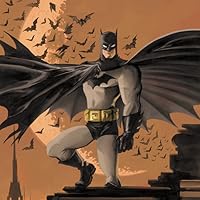
Batman: From the 30s to the 70s is a hardcover anthology published by Crown Publishers that collects stories spanning Batman’s earliest appearances through the early 1970s. This is the oldest Batman book I own. It’s even older than I am.
Most of the pages are in black and white, which I didn’t realize when I first bought it. However, I actually like it that way because it brings out the details of the art more clearly. For those who prefer color, there are a few stories that feature color pages, but strangely, some of them are not fully colored from start to finish. I understand keeping most of the book in black and white to save on printing costs, but the inconsistent coloring in some stories feels oddly incomplete.
The book opens with an introduction by E. Nelson Bridwell, who also wrote the Batman comic strips. It’s a really good read. He explains how Batman changed over the years, not just within the comic stories, but also behind the scenes and in other media. The collection is divided by decade, with curated stories from each era that trace Batman’s transformation throughout the years. For each decade, the book showcases the covers of iconic issues, giving readers a glimpse of the visual style and standout issues of the time.
The book also serves as a great introduction to the Bat-Family, featuring characters like Robin, Batwoman, Bat-girl, Batgirl, Alfred, Ace the Bat-Hound, and even Bat-Mite. It also features some of Batman’s most iconic villains, including the Joker, Two-Face, the Riddler, Clayface, and Doctor Death.
One of the book’s biggest strengths is that it collects the first appearances of many key characters in the Batman mythos — not just Batman himself, but also Commissioner Gordon, the Joker, Robin, Alfred Beagle, and early villains like Doctor Death and Basil Karlo’s Clayface. It also features the debuts of fan-favorite supporting characters such as Batwoman, Bat-Girl, Barbara Gordon’s Batgirl, Ace the Bat-Hound, and even Francine Langstrom. To be honest, this is the kind of material I expected from the Batman in the Forties, Fifties, and Sixties collections.
I discovered this book by chance while looking for a collected edition that included 'The Million Dollar Debut of Batgirl' from Detective Comics 359 — and I’m glad I did. It’s a great starter textbook for anyone who wants to understand how Batman and the mythos surrounding him evolved over the decades.
My Batman Collected Editions Instagram page
Most of the pages are in black and white, which I didn’t realize when I first bought it. However, I actually like it that way because it brings out the details of the art more clearly. For those who prefer color, there are a few stories that feature color pages, but strangely, some of them are not fully colored from start to finish. I understand keeping most of the book in black and white to save on printing costs, but the inconsistent coloring in some stories feels oddly incomplete.
The book opens with an introduction by E. Nelson Bridwell, who also wrote the Batman comic strips. It’s a really good read. He explains how Batman changed over the years, not just within the comic stories, but also behind the scenes and in other media. The collection is divided by decade, with curated stories from each era that trace Batman’s transformation throughout the years. For each decade, the book showcases the covers of iconic issues, giving readers a glimpse of the visual style and standout issues of the time.
The book also serves as a great introduction to the Bat-Family, featuring characters like Robin, Batwoman, Bat-girl, Batgirl, Alfred, Ace the Bat-Hound, and even Bat-Mite. It also features some of Batman’s most iconic villains, including the Joker, Two-Face, the Riddler, Clayface, and Doctor Death.
One of the book’s biggest strengths is that it collects the first appearances of many key characters in the Batman mythos — not just Batman himself, but also Commissioner Gordon, the Joker, Robin, Alfred Beagle, and early villains like Doctor Death and Basil Karlo’s Clayface. It also features the debuts of fan-favorite supporting characters such as Batwoman, Bat-Girl, Barbara Gordon’s Batgirl, Ace the Bat-Hound, and even Francine Langstrom. To be honest, this is the kind of material I expected from the Batman in the Forties, Fifties, and Sixties collections.
I discovered this book by chance while looking for a collected edition that included 'The Million Dollar Debut of Batgirl' from Detective Comics 359 — and I’m glad I did. It’s a great starter textbook for anyone who wants to understand how Batman and the mythos surrounding him evolved over the decades.
My Batman Collected Editions Instagram page

August 9, 2026
Batman as a character needs no introduction at this point. However, this was not always the case. At one point, Batman was a brand-new character from Detective Comics. The book is a hardcover anthology of Batman's most famous and influential stories. The book covers the period from the 1930s to the 1970s.
As time goes on, the lore only deepens. Nowadays, Batman uses Bruce Wayne as his disguise. He's been in movies, television shows, video games, cartoons, and countless merchandise. The book covers Batman's inception as a comic book character. It shows his first adventure, the origins of Batman, the development of Robin the Boy Wonder, and their love interests. The editor, E. Nelson Bridwell, was a writer for MAD magazine and wrote some stories for the newspaper serial.
I am not a comic book fan. I would be, but the sheer size of a library that stretches for decades gives me pause. Superman, Batman, and The Flash are famous DC Comics characters. I never read their adventures because of the lore. I saw the older movies, and I know a little bit about their powers and abilities. I saw Tim Burton's Batman movies, Batman Forever, and the Mr. Freeze one. I loved the 1990s cartoon series with Mark Hamill as the Joker.
I enjoyed the book. Thanks for reading my review, and see you next time.
As time goes on, the lore only deepens. Nowadays, Batman uses Bruce Wayne as his disguise. He's been in movies, television shows, video games, cartoons, and countless merchandise. The book covers Batman's inception as a comic book character. It shows his first adventure, the origins of Batman, the development of Robin the Boy Wonder, and their love interests. The editor, E. Nelson Bridwell, was a writer for MAD magazine and wrote some stories for the newspaper serial.
I am not a comic book fan. I would be, but the sheer size of a library that stretches for decades gives me pause. Superman, Batman, and The Flash are famous DC Comics characters. I never read their adventures because of the lore. I saw the older movies, and I know a little bit about their powers and abilities. I saw Tim Burton's Batman movies, Batman Forever, and the Mr. Freeze one. I loved the 1990s cartoon series with Mark Hamill as the Joker.
I enjoyed the book. Thanks for reading my review, and see you next time.

November 27, 2020
Most of the stories in black and white.

November 30, 2025
Batman both solo and with the bird - Quite a run through the years

March 25, 2013
Three and a half to four stars. Really, it's as ridiculous (and occasionally painful) as you would imagine a Batman collection covering the thirties through the seventies would be. But I kind of loved it. I particularly enjoyed seeing the introductions of characters like Two-Face, the Red Hood, the Joker, and Barbara Gordon's Batgirl.
If you're married to the grittier Batman tales of later years, this is not the collection for you. But if you're willing to squint a little, you can see the more serious elements of the Batman mythos under all the silliness.
If you're married to the grittier Batman tales of later years, this is not the collection for you. But if you're willing to squint a little, you can see the more serious elements of the Batman mythos under all the silliness.

October 26, 2014
A fun, nostalgic collection for the early 1970s running from Batman's origin through the debut of Robin and then the Joker and onward into the early seventies, which shook up what had been the status quo for years (Dick goes off to college, Bruce and Alfred move into Gotham and operate out of a penthouse rather than Wayne Manor). Surprisingly, there's almost nothing from the "New Look" period of the 1960s (which was a big deal at the time) other than Barbara Gordon's debut as Batgirl. Fun, subject to your taste in Batman eras

April 24, 2016
I was gifted this as a youngster in the early 70s and reread it over and over again. My first introduction to Batman's world, along with reruns of the 60s Adam West TV series.
A great compilation that gives a good account of the transitions of the character (and comic books in general) over that time period.
Highly recommended for Batman fans and kids of all ages.
March 5, 2011
A collection of the Batman comic books from the 30's through the 70's, highlighting important events in the career of the Dark Knight and the Boy Wonder! Very exciting, and much easier than tracking down a bunch of comic books!

July 20, 2008
Very interesting to see the way Batman have developed over the decades.

August 7, 2010
An excellent book. Some of the best Batman stories, and a history of change from Dark Knight to Responsible Parent to Dark Knight.

May 21, 2012
Black and white interior? Booooo.
March 20, 2014
6 stars
my favorite batman anthology.
my favorite batman anthology.
July 23, 2016
This was a companion volume to the Superman collection edited by Bridwell . From Batman first appearance in Detectives comics up till the seventies including Batgirl first appearance.

May 14, 2009
I literally grew up with this book. The lessons I learned are too numerous for this format.
Displaying 1 - 19 of 19 reviews