

What do you think?
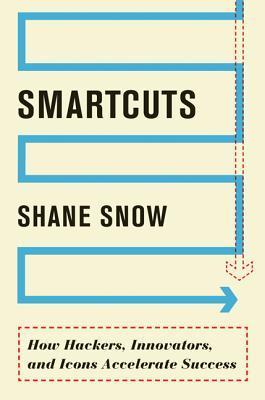
Smartcuts: How Hackers, Innovators, and Icons Accelerate Success
Entrepreneur and journalist Shane Snow (Wired, Fast Company, The New Yorker, and cofounder of Contently) analyzes the lives of people and companies that do incredible things in implausibly short time.
How do some startups go from zero to billions in mere months? How did Alexander the Great, YouTube tycoon Michelle Phan, and Tonight Show host Jimmy Fallon climb to the top in less time than it takes most of us to get a promotion? What do high-growth businesses, world-class heart surgeons, and underdog marketers do in common to beat the norm?
One way or another, they do it like computer hackers. They employ what psychologists call "lateral thinking" to rethink convention and break "rules" that aren't rules.
In Smartcuts, Snow shatters common wisdom about success, revealing how conventions like "paying dues" prevent progress, why kids shouldn't learn times tables, and how, paradoxically, it's easier to build a huge business than a small one.
From SpaceX to The Cuban Revolution, from Ferrari to Skrillex, Smartcuts is a narrative adventure that busts old myths about success and shows how innovators and icons do the incredible by working smarter--and how perhaps the rest of us can, too.
How do some startups go from zero to billions in mere months? How did Alexander the Great, YouTube tycoon Michelle Phan, and Tonight Show host Jimmy Fallon climb to the top in less time than it takes most of us to get a promotion? What do high-growth businesses, world-class heart surgeons, and underdog marketers do in common to beat the norm?
One way or another, they do it like computer hackers. They employ what psychologists call "lateral thinking" to rethink convention and break "rules" that aren't rules.
In Smartcuts, Snow shatters common wisdom about success, revealing how conventions like "paying dues" prevent progress, why kids shouldn't learn times tables, and how, paradoxically, it's easier to build a huge business than a small one.
From SpaceX to The Cuban Revolution, from Ferrari to Skrillex, Smartcuts is a narrative adventure that busts old myths about success and shows how innovators and icons do the incredible by working smarter--and how perhaps the rest of us can, too.
272 pages, Hardcover
First published September 1, 2014
Ratings & Reviews
Friends & Following
Create a free account to discover what your friends think of this book!
Community Reviews
Displaying 1 - 30 of 449 reviews

February 1, 2017
I really need to stop reading these self help/productivity books because 90% of the time their ideas can be cut down to fit on an index card. The book was simple and easy to read and so if you need something that you can read without much effort and time commitment this is okay. I just am bored of hearing anecdotes and the same advice again and again. Get a mentor? Wow never been told that one before.

February 19, 2015
This is an easy book. It's easy to read and it was likely easy to write. There's nothing challenging about it, and while it would be difficult to fundamentally disagree with anything it it (beyond some questionable metaphors and the constant use of the omg-drastic-subject-change-cliffhanger-before-I-answer-the-question-I-just-asked writing tactic), there were only a small handful of half-thoughts in the entire book that actually made me think about something new, or think about something old in a new way.
It's a book that kinda-sorta makes you feel like you're learning and developing yourself, but it's really just the same as cooking shows -- it activates mirror neurons that make you feel good, while really just filling time and falsely inflating one's sense of accomplishment.
On a personal note, I'm tiring of this sub-genre of productivity/self-help/current-culture books written by non-experts that all seem to re-package the same insight. "Get a mentor." "Get active, robust feedback." "Simplify." "Be nice to people." These aren't Smartcuts, they're pillars of the extremely common and accepted current school of thought about how to succeed. They aren't books that have been painstakingly researched or draw from a wealth of experience (of which there are plenty! See: "The Innovator's Dilemma." "Thinking, Fast and Slow." "The Lean Startup." "The Shallows."). They're books by people who've learned how to extrapolate whatever they want from whatever subject matter is at hand without breaking a sweat (think: the college essays you wrote the night before they were due), and can write in a snappy style that's easy to keep reading. They're book-long Fast Company or Buzzfeed articles. Worthwhile nuggets here and there, but overall fluff.
Speaking a little more generously, I actually do think Snow could be a decent writer, and that had he had the benefit of a really good book editor who challenged him to make more complex arguments, the book might have actually been worth the time, and not nearly so annoying.
It's a book that kinda-sorta makes you feel like you're learning and developing yourself, but it's really just the same as cooking shows -- it activates mirror neurons that make you feel good, while really just filling time and falsely inflating one's sense of accomplishment.
On a personal note, I'm tiring of this sub-genre of productivity/self-help/current-culture books written by non-experts that all seem to re-package the same insight. "Get a mentor." "Get active, robust feedback." "Simplify." "Be nice to people." These aren't Smartcuts, they're pillars of the extremely common and accepted current school of thought about how to succeed. They aren't books that have been painstakingly researched or draw from a wealth of experience (of which there are plenty! See: "The Innovator's Dilemma." "Thinking, Fast and Slow." "The Lean Startup." "The Shallows."). They're books by people who've learned how to extrapolate whatever they want from whatever subject matter is at hand without breaking a sweat (think: the college essays you wrote the night before they were due), and can write in a snappy style that's easy to keep reading. They're book-long Fast Company or Buzzfeed articles. Worthwhile nuggets here and there, but overall fluff.
Speaking a little more generously, I actually do think Snow could be a decent writer, and that had he had the benefit of a really good book editor who challenged him to make more complex arguments, the book might have actually been worth the time, and not nearly so annoying.

October 12, 2014
This is a meticulously researched book that flows with beautiful storytelling. Snow develops nine principles of working smarter, and illustrates each one with a chapter that weaves together several mini-histories and mini-biographies, which seem to always dovetail perfectly by the end.
Smartcuts brings together a lot of the ideas I've been reading about in other books, plus some I haven't, and it builds a strong framework that I am excited to explicitly follow.
What fascinated Snow was how certain people and companies have been able to achieve amazing things in hardly any time -- he became obsessed with finding the uniting principles behind their success. He calls them Smartcuts.
The Nine Smartcuts
Snow shows how the most well-regarded presidents Hacked the Ladder by moving laterally into the White House from top positions in other fields, instead of paying their dues in lower elected offices. Indeed, lateral thinking is the thread that ties all the smartcuts together: this is the ability to question the basic assumptions of a problem and approach it sideways, and in an unconventional way.
Training with Masters is an essential method for learning a skill rapidly. The cases of Jimmy Fallon and a team of heart surgeons show that the best mentors are in it for the long haul, and are personally invested in your success. But you can also have mentors that you never meet. Jimmy Fallon studied his favorite comics for years. And anyone can watch videos online, read books, and imitate the masters.
Another way to make progress that sticks is to employ Rapid Feedback. This technique is all the rage in tech startups who are "running lean" (see Eric Ries' Build-Measure-Learn loop in The Lean Startup: How Today's Entrepreneurs Use Continuous Innovation to Create Radically Successful Businesses), and Snow also shows how The Second City uses it to pump out brilliant young comedians. The best feedback is depersonalized, so you see your efforts as experiments instead of referendums on your ability. Experiments can fail, but you can't.
Leverage is power, and Platforms are one of its most powerful forms. The Ruby on Rails web framework has enabled newbie coders to develop their apps at blistering speeds, and the result is an explosion in useful software. Just like cars use the platform of a road (which is made of dirt, gravel, tar and asphalt) for smooth rides, you don't need to reinvent the wheel in your work; use all the existing infrastructure you can to save effort and focus on innovation and creativity.
How are pro surfers like the electronic artist Skrillex? They're both brilliant at catching waves. Surfers study the ocean for hours before a competition, so they can understand how the waves are breaking and catch the right ones. Skrillex did the same with EDM and the disruption of the recording industry. Research shows that you can learn to spot waves in markets, too, and you can prepare yourself to jump on them fast by always keep a toe in the water -- in other words, experimenting with lots of ideas, like Google does with its well-known "20% time."
Superconnectors are another way to gain leverage -- these are people (influencers) and platforms (social media) that allow you to spread messages to millions of people in no time. Snow uses the clever example of Radio Rebelde, which enabled the Cuban revolutionaries Castro and Guevara to galvanize the country against a dictator despite being terribly outnumbered and outgunned. Superconnectors provide amplification, and if your message is authentic and enticing, it will resonate (see All Marketers Are Liars: The Underground Classic that Explains How Marketing Really Works - and Why Authenticity is the Best Marketing of All).
In order to make enormous gains, you need to achieve and maintain Momentum -- after all, "an object in motion tends to stay in motion." This means never resting on your laurels when you do hit it big, and not doing the same thing over and over (like a band that has a hit and then re-writes it again and again).
Simplicity is the ultimate sophistication. A lot of the greatest innovations come from re-envisioning existing models by taking a step back to first principles (lateral thinking at its finest). Take Embrace, a famous solution to the high death rates of premature babies in developing countries. Instead of trying to make cheaper incubators like a NICU has, some smart entrepreneurs realized that babies just need to be kept warm. So they created a "sleeping bag for babies" that costs thousands of times less than a fancy incubator.
The final Smartcut is 10x thinking, which is one of the central ideas in another recent book, Zero to One: Notes on Startups, or How to Build the Future. This principle says that it's actually easier to create a ten-times improvement in something than to make it only 10% better. Because such problems are so hard, there's little competition, and it's easier to keep going toward a solution. And if you can get others on board with your ambitious vision (like some superconnectors), you can create massive leverage -- people are much more likely to support an audacious plan with strong ideals than a run-of-the-mill incremental improvement. Elon Musk and Space X provide the canonical example of this.
Smartcuts is the kind of book that will give you ideas for your own work on every other page, and you'll leave the book feeling smarter indeed.
Smartcuts brings together a lot of the ideas I've been reading about in other books, plus some I haven't, and it builds a strong framework that I am excited to explicitly follow.
What fascinated Snow was how certain people and companies have been able to achieve amazing things in hardly any time -- he became obsessed with finding the uniting principles behind their success. He calls them Smartcuts.
The Nine Smartcuts
Snow shows how the most well-regarded presidents Hacked the Ladder by moving laterally into the White House from top positions in other fields, instead of paying their dues in lower elected offices. Indeed, lateral thinking is the thread that ties all the smartcuts together: this is the ability to question the basic assumptions of a problem and approach it sideways, and in an unconventional way.
Training with Masters is an essential method for learning a skill rapidly. The cases of Jimmy Fallon and a team of heart surgeons show that the best mentors are in it for the long haul, and are personally invested in your success. But you can also have mentors that you never meet. Jimmy Fallon studied his favorite comics for years. And anyone can watch videos online, read books, and imitate the masters.
Another way to make progress that sticks is to employ Rapid Feedback. This technique is all the rage in tech startups who are "running lean" (see Eric Ries' Build-Measure-Learn loop in The Lean Startup: How Today's Entrepreneurs Use Continuous Innovation to Create Radically Successful Businesses), and Snow also shows how The Second City uses it to pump out brilliant young comedians. The best feedback is depersonalized, so you see your efforts as experiments instead of referendums on your ability. Experiments can fail, but you can't.
Leverage is power, and Platforms are one of its most powerful forms. The Ruby on Rails web framework has enabled newbie coders to develop their apps at blistering speeds, and the result is an explosion in useful software. Just like cars use the platform of a road (which is made of dirt, gravel, tar and asphalt) for smooth rides, you don't need to reinvent the wheel in your work; use all the existing infrastructure you can to save effort and focus on innovation and creativity.
How are pro surfers like the electronic artist Skrillex? They're both brilliant at catching waves. Surfers study the ocean for hours before a competition, so they can understand how the waves are breaking and catch the right ones. Skrillex did the same with EDM and the disruption of the recording industry. Research shows that you can learn to spot waves in markets, too, and you can prepare yourself to jump on them fast by always keep a toe in the water -- in other words, experimenting with lots of ideas, like Google does with its well-known "20% time."
Superconnectors are another way to gain leverage -- these are people (influencers) and platforms (social media) that allow you to spread messages to millions of people in no time. Snow uses the clever example of Radio Rebelde, which enabled the Cuban revolutionaries Castro and Guevara to galvanize the country against a dictator despite being terribly outnumbered and outgunned. Superconnectors provide amplification, and if your message is authentic and enticing, it will resonate (see All Marketers Are Liars: The Underground Classic that Explains How Marketing Really Works - and Why Authenticity is the Best Marketing of All).
In order to make enormous gains, you need to achieve and maintain Momentum -- after all, "an object in motion tends to stay in motion." This means never resting on your laurels when you do hit it big, and not doing the same thing over and over (like a band that has a hit and then re-writes it again and again).
Simplicity is the ultimate sophistication. A lot of the greatest innovations come from re-envisioning existing models by taking a step back to first principles (lateral thinking at its finest). Take Embrace, a famous solution to the high death rates of premature babies in developing countries. Instead of trying to make cheaper incubators like a NICU has, some smart entrepreneurs realized that babies just need to be kept warm. So they created a "sleeping bag for babies" that costs thousands of times less than a fancy incubator.
The final Smartcut is 10x thinking, which is one of the central ideas in another recent book, Zero to One: Notes on Startups, or How to Build the Future. This principle says that it's actually easier to create a ten-times improvement in something than to make it only 10% better. Because such problems are so hard, there's little competition, and it's easier to keep going toward a solution. And if you can get others on board with your ambitious vision (like some superconnectors), you can create massive leverage -- people are much more likely to support an audacious plan with strong ideals than a run-of-the-mill incremental improvement. Elon Musk and Space X provide the canonical example of this.
Smartcuts is the kind of book that will give you ideas for your own work on every other page, and you'll leave the book feeling smarter indeed.

September 4, 2014
Failure and how it's OK to fail repeatedly as long as you learn from it is a mantra these days. Graduation speeches are full of "Fail fast and fail often!" exhortations. While the encouragement to experiment and push yourself beyond what's safe and known still holds true, one of the things I learned from Smartcuts is not all failure is equal. By using the rather scary research study about doctors learning a new way to do coronary artery bypass grafting (result of failure = death for patient), Shane Snow shares the "paradox of failure." Doctors who failed at the surgery got worse, whereas doctors who observed the surgeons who failed learned from their mistakes and got better. Using this and other examples, Snow goes on to show how to set things up so if you fail, you still learn and grow from this. (I'm being cagey but I think it's worth reading it for yourself.)
Failure is just the topic of one chapter. There's a whole lot more in the book. Some of the examples were familiar. Most of the information was new. What Smartcuts does is bring it all together in a framework of different principles that can contribute to success. One thing to note is that this book is not called "Shortcuts" as Short notes that "the one irreplaceable ingredient I've found, however, is work."
Smartcuts scored on three of my "this is a good book" criteria:
- I found myself sharing information from the book with others as I was reading it
- It was memorable, to the point that I ended up spotting principles from the book in the Discovery TV show "Gold Rush"(what can I say, I live in a house surrounded by testosterone!)
- It was an engrossing read. I read in an interview of Shane Snow where he quoted one of his favorite editors, Paula Span, saying, “Great writing speeds you along.” Snow believes that the best writers in the world are those who can whisk you through 1,000 words in what feels like 10 seconds, or 100,000 words in 30 seconds. He certainly accomplishes it with this book.
Failure is just the topic of one chapter. There's a whole lot more in the book. Some of the examples were familiar. Most of the information was new. What Smartcuts does is bring it all together in a framework of different principles that can contribute to success. One thing to note is that this book is not called "Shortcuts" as Short notes that "the one irreplaceable ingredient I've found, however, is work."
Smartcuts scored on three of my "this is a good book" criteria:
- I found myself sharing information from the book with others as I was reading it
- It was memorable, to the point that I ended up spotting principles from the book in the Discovery TV show "Gold Rush"(what can I say, I live in a house surrounded by testosterone!)
- It was an engrossing read. I read in an interview of Shane Snow where he quoted one of his favorite editors, Paula Span, saying, “Great writing speeds you along.” Snow believes that the best writers in the world are those who can whisk you through 1,000 words in what feels like 10 seconds, or 100,000 words in 30 seconds. He certainly accomplishes it with this book.

January 19, 2015
I’ve been somewhat remiss on writing a review on this book, but it hasn’t been far from my mind since I finished it a week or so ago.
First, let me start with how great this book was. It was clever and concise without the endless drivel that these books can sometimes produce. Actually, a lot of books about this sort of lateral thinking come off sounding more like a blog/podcast session that has been stretchhhhhhed to fill the pages. (See Think Like a Freak and after you read it, tell me this wasn’t a podcast they stretched into a book). This book gave excellent and interesting examples of what ‘smartcuts’ were and how they came into being – and ultimately, how to create the atmosphere and circumstances to create them yourself.
It has a great quick list at the end that summarizes the whole premise of what a smartcut is and how it happens. It’s really up to you but it will be the actions that you take as to the when occurs. It’s not a book about shortcuts to the top, it’s a book about how to get to the top using your smarts.
Great book.
First, let me start with how great this book was. It was clever and concise without the endless drivel that these books can sometimes produce. Actually, a lot of books about this sort of lateral thinking come off sounding more like a blog/podcast session that has been stretchhhhhhed to fill the pages. (See Think Like a Freak and after you read it, tell me this wasn’t a podcast they stretched into a book). This book gave excellent and interesting examples of what ‘smartcuts’ were and how they came into being – and ultimately, how to create the atmosphere and circumstances to create them yourself.
It has a great quick list at the end that summarizes the whole premise of what a smartcut is and how it happens. It’s really up to you but it will be the actions that you take as to the when occurs. It’s not a book about shortcuts to the top, it’s a book about how to get to the top using your smarts.
Great book.

June 8, 2015
This was an easy to read book with a number of very interesting stories. The principles and applications espoused were hard to find anything to disagree with - certainly nothing revolutionary here. This would likely be a 4-star book, but it read very much like a series of clickbait articles, all making use of the Gladwellesque "This is the reason why we think fascinating account X happened, BUT actually it's not that at all..." that grew old pretty fast. Still, despite these minor quibbles, this is a fun book chock full of interesting stories, though somewhat iffy applications, and solid principles for those interested in business, entrepreneurship, and career advancement strategies.

January 19, 2016
This is a fun book. Easy read. You can tell the writer is a tech journalist, since the writing has the tone of an extended Wired article. But since it is like a Wired article, it's a little short on substance. An uplifting beach read that will make you smile and feel inspired.

February 9, 2017
(2.5) pure anecdote and oversimplification, with some injection-of-self into the narratives.
Didn't much care for it.
Didn't much care for it.

December 16, 2017
The stories were nice, but I couldn't get anything actionable or new insights out of them.

November 21, 2015
You can make incremental progress by playing by the rules. To create breakthrough change, you have to break the rules.
Let’s break some big ones together.
"بإمكانك التقدم ببطء إن لعبت وفقا للقوانين. أما إن أردت أن تحدث تقدما مذهلا، فعليك أن تكسر تلك القوانين
لنكسر بعض القوانين سويا"
--------
بهذه الأسطر، أنتهى أحد أروع الكتب التي قرأتها في هذه السنة. كتاب مليء بالحماس والإثارة
يتحدث الكتاب عن ٩ أدوات يستخدمها الناجحون تمكنهم من الوصول للنجاح بسرعة وتساعدهم في اختصار الوقت وحرق المراحل.
من الأدوات مثلا: أن تجد مشرفا عليك، يعطيك أسرار المهارة التي تتعلمها ويخبرك عن الأشياء الضرورية فيها، ويساعدك في الوصول للكبار
كتاب رائع ومحفز بكل ماتعنيه الكلمة، ويروي هذه الأدوات من خلال القصص الكثيرة التي اعتمدها عليها في تجميع هذه القوانين.
في كل قانون تقرأه، تتحرك خلايا مخك لتبحث عن طريقة لتستخدم تلك الأداة بنفسك، لتتمكن من حرق المراحل بنفسك لتصل للنجاح.
الكتاب لا يتحدث عن "كيف تنجح"، وإنما يتحدث عن
"لو كنت ناجحا، كيف تسرع نجاحك"
Let’s break some big ones together.
"بإمكانك التقدم ببطء إن لعبت وفقا للقوانين. أما إن أردت أن تحدث تقدما مذهلا، فعليك أن تكسر تلك القوانين
لنكسر بعض القوانين سويا"
--------
بهذه الأسطر، أنتهى أحد أروع الكتب التي قرأتها في هذه السنة. كتاب مليء بالحماس والإثارة
يتحدث الكتاب عن ٩ أدوات يستخدمها الناجحون تمكنهم من الوصول للنجاح بسرعة وتساعدهم في اختصار الوقت وحرق المراحل.
من الأدوات مثلا: أن تجد مشرفا عليك، يعطيك أسرار المهارة التي تتعلمها ويخبرك عن الأشياء الضرورية فيها، ويساعدك في الوصول للكبار
كتاب رائع ومحفز بكل ماتعنيه الكلمة، ويروي هذه الأدوات من خلال القصص الكثيرة التي اعتمدها عليها في تجميع هذه القوانين.
في كل قانون تقرأه، تتحرك خلايا مخك لتبحث عن طريقة لتستخدم تلك الأداة بنفسك، لتتمكن من حرق المراحل بنفسك لتصل للنجاح.
الكتاب لا يتحدث عن "كيف تنجح"، وإنما يتحدث عن
"لو كنت ناجحا، كيف تسرع نجاحك"

July 1, 2021
Not very good
There isn’t much depth to the ideas or any sort of actionable advice beyond the usual generic nonsense. Put yourself at the intersection of things that are going to be big. Thanks. Guess I’ll transfer out of the hand spinning wool industry and move away from my monastery in the Himalayas. I mean seriously is anybody impacted by the advice to “get a mentor (but not like a bad mentor, a good mentor)?” This book, like some sort of Malcolm Gladwell copycat, is a regurgitated series of mediocre and questionable studies and anecdotes heavily impacted by survivorship bias.
There isn’t much depth to the ideas or any sort of actionable advice beyond the usual generic nonsense. Put yourself at the intersection of things that are going to be big. Thanks. Guess I’ll transfer out of the hand spinning wool industry and move away from my monastery in the Himalayas. I mean seriously is anybody impacted by the advice to “get a mentor (but not like a bad mentor, a good mentor)?” This book, like some sort of Malcolm Gladwell copycat, is a regurgitated series of mediocre and questionable studies and anecdotes heavily impacted by survivorship bias.

October 11, 2018
This book managed the amazing feed of being a business book that's as practical to apply as it is enjoyable to read. It also managed to give several key thoughts, not one idea rehashed the whole book.

October 12, 2014
The pace of life is accelerating. Everything happens quicker these days. It took Rockefeller forty-six years to become a billionaire. Andrew Mason did it in two. Clearly you can't do that by traditional means — you have to find some shortcuts along the way. But the amorality of a shortcut troubles Snow, so he has coined[1] a "smartcut" instead, for “shortcuts with integrity.” Think Benjamin Franklin, not Frank Abagnale. (Or indeed Andrew Mason.)
What can you learn from people like Jimmy Fallon, David Heinemeier Hansson, Sonny Moore, Eli Pariser, Jane Chan, or Elon Musk? Or the surgeons at Great Ormond Street Hospital? And what did they learn from the Ferrari Formula One pit-crew?
One suggestion is to find a mentor. Not necessarily in the traditional sense of someone who will actually even know you exist, of course. It's easier than ever these days to learn everything you possibly can about someone you'd like to emulate, and dissect everything they do, looking for patterns that they might not even be so aware of themselves. My suspicion is that Snow did this with Malcolm Gladwell. Just as Jimmy Fallon got his Saturday Night Live break through his ability to do uncannily perfect renditions of his own comedy heroes, Snow is able to channel Gladwell's writing style much better than any of the (many) other imitators I've seen. But impersonation isn't just about the voice. It's about the material too, and here Snow falls a little flatter. He can't quite weave his disparate anecdotes into quite so compelling a narrative. He has too many lessons he needs to shoehorn in for that. A lot of them are interesting points for the 10x, life-hacking set, and he does a good job of connecting up a lot of dots, but it's all a little too Tim Ferriss at times for me.
If a cross between Gladwell and Ferriss sounds wonderful to you, you'll probably love this. If the very thought of it makes you cringe in horror, then run away now.
---
[1] Or, at least, liberated from the hands of hairdressers everywhere.
What can you learn from people like Jimmy Fallon, David Heinemeier Hansson, Sonny Moore, Eli Pariser, Jane Chan, or Elon Musk? Or the surgeons at Great Ormond Street Hospital? And what did they learn from the Ferrari Formula One pit-crew?
One suggestion is to find a mentor. Not necessarily in the traditional sense of someone who will actually even know you exist, of course. It's easier than ever these days to learn everything you possibly can about someone you'd like to emulate, and dissect everything they do, looking for patterns that they might not even be so aware of themselves. My suspicion is that Snow did this with Malcolm Gladwell. Just as Jimmy Fallon got his Saturday Night Live break through his ability to do uncannily perfect renditions of his own comedy heroes, Snow is able to channel Gladwell's writing style much better than any of the (many) other imitators I've seen. But impersonation isn't just about the voice. It's about the material too, and here Snow falls a little flatter. He can't quite weave his disparate anecdotes into quite so compelling a narrative. He has too many lessons he needs to shoehorn in for that. A lot of them are interesting points for the 10x, life-hacking set, and he does a good job of connecting up a lot of dots, but it's all a little too Tim Ferriss at times for me.
If a cross between Gladwell and Ferriss sounds wonderful to you, you'll probably love this. If the very thought of it makes you cringe in horror, then run away now.
---
[1] Or, at least, liberated from the hands of hairdressers everywhere.

March 27, 2016
The book has some good ideas but the writing style and content are lacking. The chapter starts with an anecdote and stops abruptly with a teaser. There is a slow build-up to the actionable advice but not actually revealing it. Then the author returns to the anecdote that was at the beginning of the chapter. At this point, you've forgotten what was the anecdote about. While some of the advice seems to make sense and the author provided examples to support it (like if your career ladder is blocked, switch to another one or make lateral moves to climb faster -- case in point, some ambitious U.S. presidents has fewer years in politics than U.S. senators). Then there is the advice to find a mentor who can guide you specifically on your career and give frequent feedback. The author gives the example of Jimmy Fallon, who had a laser beam focus on joining Saturday Night Live. The first time he auditioned, he wasn't selected. He kept at it and honed his skills (from the audience feedback) until he got another chance to audition for SNL. Wait a second... what about the advice of switching to another career? What about the examples of young presidents on the fast track who didn't put in their time through each rung of the political career ladder? When are you supposed to know when you're not good enough versus when you're in a dead-end career??
The other noteworthy advice is to hunt for patterns. Experienced people recognize patterns, like what makes a good song. Successful people hunt for patterns, like what is the next music genre that will hit it big.
The other noteworthy advice is to hunt for patterns. Experienced people recognize patterns, like what makes a good song. Successful people hunt for patterns, like what is the next music genre that will hit it big.

March 27, 2016
Smartcuts adalah sebuah hasil observasi yang dilakukan oleh Shane Snow, seorang jurnalis yang telah menulis di Wired dan Fast Company, tentang bagaimana orang-orang sukses meraih kesuksesannya dengan cepat.
Dalam buku ini, Snow menjelaskan kalau kita akan menghabiskan waktu bila hanya bekerja keras seperti banyak orang lain, dan menunggu keberuntungan datang pada kita. Harus ada hal yang berbeda dari apa yang kita lakukan, agar bisa meraih kesuksesan dengan cepat.
Snow menceritakan beberapa kisah menarik, mulai dari perjalanan Elon Musk membangun SpaceX, bagaimana pendidikan di Finlandia menjadi yang terbaik di dunia, bagaimana cara paling efektif menjadi presiden Amerika, hingga bagaimana Skrillex bisa meraih puncak kesuksesan di bisnis musik elektronik.
Menurut Snow, ada 9 kunci kesuksesan mereka:
1. Hacking the Ladder, coba cari cara yang berbeda dengan kebiasaan untuk meraih kesuksesan.
2. Training with Masters, cari guru yang bisa membantu mempercepat proses belajar.
3. Rapid Feedback, dapatkan masukan yang banyak dan jujur dari orang lain.
4. Platforms, buat sebuah sistem untuk mempercepat kamu melakukan sesuatu.
5. Waves, pelajari waktu yang paling tepat untuk melakukan sesuatu.
6. Superconnectors, bantulah orang lain niscaya mereka akan membantu kamu.
7. Momentum, jangan sekali-kali berhenti berinovasi.
8. Simplicity, fokus pada hal-hal yang penting saja.
9. 10x Thinking, ubah paradigma agar biaa mencapai prestasi yang sangat besar.
Dalam buku ini, Snow menjelaskan kalau kita akan menghabiskan waktu bila hanya bekerja keras seperti banyak orang lain, dan menunggu keberuntungan datang pada kita. Harus ada hal yang berbeda dari apa yang kita lakukan, agar bisa meraih kesuksesan dengan cepat.
Snow menceritakan beberapa kisah menarik, mulai dari perjalanan Elon Musk membangun SpaceX, bagaimana pendidikan di Finlandia menjadi yang terbaik di dunia, bagaimana cara paling efektif menjadi presiden Amerika, hingga bagaimana Skrillex bisa meraih puncak kesuksesan di bisnis musik elektronik.
Menurut Snow, ada 9 kunci kesuksesan mereka:
1. Hacking the Ladder, coba cari cara yang berbeda dengan kebiasaan untuk meraih kesuksesan.
2. Training with Masters, cari guru yang bisa membantu mempercepat proses belajar.
3. Rapid Feedback, dapatkan masukan yang banyak dan jujur dari orang lain.
4. Platforms, buat sebuah sistem untuk mempercepat kamu melakukan sesuatu.
5. Waves, pelajari waktu yang paling tepat untuk melakukan sesuatu.
6. Superconnectors, bantulah orang lain niscaya mereka akan membantu kamu.
7. Momentum, jangan sekali-kali berhenti berinovasi.
8. Simplicity, fokus pada hal-hal yang penting saja.
9. 10x Thinking, ubah paradigma agar biaa mencapai prestasi yang sangat besar.

December 1, 2016
Smartcuts are really a categorization of some of the ways to “move ahead”, be that in project or career or life. The categories that the author comes up with, for example simplification, building a platform, and using a different ladder to climb, were pretty much the same kinds of suggestions you get in other books on getting ahead. However, in this volume, many of the examples were fresh and new. I appreciated the concept breakdown – this is the kind of book that begs for a little index card to refer to once in a while to get off a plateau in progress. (And there are some other reviews on Goodreads that have an excellent summary, so you can get the ideas without investing the hours reading the book!)

September 13, 2014
Interesting stories about ladder hacking and people who don't just pay their dues, work hard and expect to get to the top quickly.

November 10, 2019
Good read.

September 9, 2023
If I was younger I would've loved this book, but now that I'm in my 30s I know this book is just full of spin. There are no gold nuggets here.
There is little practical strategies to take away. Most of what is written is anecdotal and frilled up with stories with creative connections.
What we really need to improve is data of people who actual put these strategies to the test and reveal what happened, what went wrong and what they could do in the future.
In the end I understand that you just need to go out and try things out yourself. There is no smart cuts like people think. Every situation and time is different. You just need to test things out and modify it after your own reflections.
"Ride the wave at the right time" is way too vague to be of any personal or practical use.
All my reviews can be found at: https://www.flyintobooks.com
There is little practical strategies to take away. Most of what is written is anecdotal and frilled up with stories with creative connections.
What we really need to improve is data of people who actual put these strategies to the test and reveal what happened, what went wrong and what they could do in the future.
In the end I understand that you just need to go out and try things out yourself. There is no smart cuts like people think. Every situation and time is different. You just need to test things out and modify it after your own reflections.
"Ride the wave at the right time" is way too vague to be of any personal or practical use.
All my reviews can be found at: https://www.flyintobooks.com

July 18, 2017
Bardzo fajna książka:) Historie sukcesów gwiazd muzyki, wynalazców i innych ludzi, którzy odnieśli wielki sukces. Historie bardzo inspirujące i napędzające do wzięcia spraw w swoje ręce by również spełniać swoje marzenia. Każda historia jest ilustracją jakiejś myśli/sposobu/skrótu na to by osiągnąć to do czego dążymy.

January 7, 2020
Shane Snow presents a framework on lateral thinking for breaking convention in our complex lives. Smartcuts is defined by nine principles such as Hacking the Ladder to Rapid Feedback to Momentum to Simplicty to 10x Thinking in order to achieve work, and progress faster.
I enjoyed Shane’s thoughts, and in conclusion his challenge to the reader to impact the world, help others along, and make a change.
I enjoyed Shane’s thoughts, and in conclusion his challenge to the reader to impact the world, help others along, and make a change.

November 11, 2017
It is an easy and nice book to read. There are many interesting stories of innovators inside. I enjoy all those famous people journeys. So it is not difficult to understand all the theory he wrote.

March 17, 2017
A particular review said that if you like both Tim Ferriss and Malcolm Gladwell, you'd appreciate this. And I do. So I did. Despite some negative reviews, I really enjoyed this and found it to be a valuable read.
Some notes I made:
-Informal mentorships are hugely effective while formal ones are not.
-the new cycle to embrace: small fail, small win, big win, repeat.
-the question then becomes: How do you prepare for a big win? What (very) small failures and small win can you pursue to prep for a big win?
Ex. With cold emails, a job interview, and THEN?
***Momentum is KEY. But in the absence of that, the PERCEPTION of momentum is as important or more important than momentum itself.***
Some notes I made:
-Informal mentorships are hugely effective while formal ones are not.
-the new cycle to embrace: small fail, small win, big win, repeat.
-the question then becomes: How do you prepare for a big win? What (very) small failures and small win can you pursue to prep for a big win?
Ex. With cold emails, a job interview, and THEN?
***Momentum is KEY. But in the absence of that, the PERCEPTION of momentum is as important or more important than momentum itself.***

September 24, 2014
Fantastic debut book by Shane Snow in the vein of Malcolm Gladwell, studying various "success stories" and the strategies that allowed people of diverse backgrounds to attain that success. The conversational style in which Snow writes also keeps this book grounded and informative; you'll constantly find yourself impressed with each example he provides, too.
Snow breaks down a variety of principles, that, on their own, don't seem like much more than jargon (lateral thinking, failure, rapid feedback, etc.), but tied into the success stories of figures such as Skrillex, Alexander The Great, Elon Musk, J.J. Abrams, and so many others, you see just how these people started at the ground floor and what they did to ascend to their highest level of success. Their successes are impressive, but the way in which Snow conveys the information about their trials and tribulations will impress you even more.
Not all of the examples in this book are about well-known people, nor are the principles all common knowledge (though, many probably use them regularly and don't even realize it). For example, Michelle Phan is a Youtube success story that started out without any credibility or reputation as a make-up artist; essentially, the Sinatra principle allowed her to grow her brand based on the type of work she was doing and who it was being noticed by, whereas fellow Youtuber Paul "Double Rainbows" Vasquez never really attained the popularity in other videos that his most famous one did.
It's important to note, as with that previous example, that failure is an integral step in any success, and it is gratifying to find many stories of failure in this book as well. Failure is actually one of the principles Snow writes bout, for that very reason. Failure is a corrective process and even the most successful people will demonstrate just how they overcame their failures to finally figure out what worked for them. J.J. Abrams, for example, was an unsuccessful screenwriter for a long time, before he adopted the idea of co-writing and was embraced by those who had found success. He has since gone on to stratospheric accomplishments in film and TV, but has continued to give opportunity to those who find themselves unsuccessful, just as he once did.
This is not a very long book, but it's certainly rife with information, and, as you can see, examples and even more principles than the ones I've mentioned. It almost seems a given that there will be a follow-up book, or, at least, I hope so. Definitely a book I won't hesitate to recommend to others.
Snow breaks down a variety of principles, that, on their own, don't seem like much more than jargon (lateral thinking, failure, rapid feedback, etc.), but tied into the success stories of figures such as Skrillex, Alexander The Great, Elon Musk, J.J. Abrams, and so many others, you see just how these people started at the ground floor and what they did to ascend to their highest level of success. Their successes are impressive, but the way in which Snow conveys the information about their trials and tribulations will impress you even more.
Not all of the examples in this book are about well-known people, nor are the principles all common knowledge (though, many probably use them regularly and don't even realize it). For example, Michelle Phan is a Youtube success story that started out without any credibility or reputation as a make-up artist; essentially, the Sinatra principle allowed her to grow her brand based on the type of work she was doing and who it was being noticed by, whereas fellow Youtuber Paul "Double Rainbows" Vasquez never really attained the popularity in other videos that his most famous one did.
It's important to note, as with that previous example, that failure is an integral step in any success, and it is gratifying to find many stories of failure in this book as well. Failure is actually one of the principles Snow writes bout, for that very reason. Failure is a corrective process and even the most successful people will demonstrate just how they overcame their failures to finally figure out what worked for them. J.J. Abrams, for example, was an unsuccessful screenwriter for a long time, before he adopted the idea of co-writing and was embraced by those who had found success. He has since gone on to stratospheric accomplishments in film and TV, but has continued to give opportunity to those who find themselves unsuccessful, just as he once did.
This is not a very long book, but it's certainly rife with information, and, as you can see, examples and even more principles than the ones I've mentioned. It almost seems a given that there will be a follow-up book, or, at least, I hope so. Definitely a book I won't hesitate to recommend to others.
February 8, 2015
concrete advice wrapped in interesting stories
Unlike many books about accelerating success, this book gives very concrete and actionable advice. For example, the book recommends making side-way career moves instead of gradually climbing; it recommends seeking role-models and mentors, etc. What's more important, the book explains the subtleties (depth of mentor-mentor relationship, being prepared for "big breakthrough") as being crucial to success.
This book is very well written and is easy read. The author supports a lot of the advice with references to research studies, and wraps everything with inspiring and easy to remember stories. The author also switches back and forth between captivating stories and research findings thus making the book feel like a cliffhanger ( what happened during the third SpaceX launch? What happened after? )
This a book worth reading, however, much like many of the books of this kind it suffers from a survivorship bias. The book describes the commonalities between what successful people do and is very inspirational. Unfortunately, I suspect that there are many people who tried to make side-ways career moves and/or had great mentors, but never truly succeeded, so these people are not described in this book. The author does address a portion of this bias with a convincing anecdote in the chapter on Momentum. However, other parts of the book are somewhat one-sided. Keep this in mind. Regardless, this book is likely to inspire you to try thinking and acting in a new way.
Unlike many books about accelerating success, this book gives very concrete and actionable advice. For example, the book recommends making side-way career moves instead of gradually climbing; it recommends seeking role-models and mentors, etc. What's more important, the book explains the subtleties (depth of mentor-mentor relationship, being prepared for "big breakthrough") as being crucial to success.
This book is very well written and is easy read. The author supports a lot of the advice with references to research studies, and wraps everything with inspiring and easy to remember stories. The author also switches back and forth between captivating stories and research findings thus making the book feel like a cliffhanger ( what happened during the third SpaceX launch? What happened after? )
This a book worth reading, however, much like many of the books of this kind it suffers from a survivorship bias. The book describes the commonalities between what successful people do and is very inspirational. Unfortunately, I suspect that there are many people who tried to make side-ways career moves and/or had great mentors, but never truly succeeded, so these people are not described in this book. The author does address a portion of this bias with a convincing anecdote in the chapter on Momentum. However, other parts of the book are somewhat one-sided. Keep this in mind. Regardless, this book is likely to inspire you to try thinking and acting in a new way.
August 9, 2014
This is a really important book!
If you've ever wanted to get from point A to point B quickly, but worried that doing so would mean giving up your integrity--or not having the requisite skills you'll need at your end point--then this book is for you.
Shane Snow's colorful narrative and compelling analysis demonstrates, point by point, how to bypass unnecessary steps in getting to your goals, and even how pattern recognition can sometimes eliminate years of paying your dues. His wide-ranging examples from classic literature/mythology, popular culture, art, comedy, science, business, medicine, technology, politics, education, and even activities such as surfing and car racing help drive the main idea home--that there are ways to bypass busywork, as long as you are smart about it.
What I like most about Smartcuts is that it isn't gimicky. Time and time again, Snow regularly highlights the differences between when smartcuts worked and when they didn't. True to character, he addresses ways to stay in balance and act with integrity while also working smarter. And the end goal isn't just about saving time or getting rich and famous--the stories told often include world-changing elements.
Overall, the book was brilliantly written and very well-researched, and gave me a lot of great food for thought.
If you've ever wanted to get from point A to point B quickly, but worried that doing so would mean giving up your integrity--or not having the requisite skills you'll need at your end point--then this book is for you.
Shane Snow's colorful narrative and compelling analysis demonstrates, point by point, how to bypass unnecessary steps in getting to your goals, and even how pattern recognition can sometimes eliminate years of paying your dues. His wide-ranging examples from classic literature/mythology, popular culture, art, comedy, science, business, medicine, technology, politics, education, and even activities such as surfing and car racing help drive the main idea home--that there are ways to bypass busywork, as long as you are smart about it.
What I like most about Smartcuts is that it isn't gimicky. Time and time again, Snow regularly highlights the differences between when smartcuts worked and when they didn't. True to character, he addresses ways to stay in balance and act with integrity while also working smarter. And the end goal isn't just about saving time or getting rich and famous--the stories told often include world-changing elements.
Overall, the book was brilliantly written and very well-researched, and gave me a lot of great food for thought.

July 1, 2015
I picked up this book for my husband. I took a peek into it, and then read the whole book. To be honest, I am not interested in business books. It was the anecdotes that hooked me, and drew me in to finish the book. I love a good story, and there were many to keep me entertained despite the business aspect of the book. Also, I felt a small connection to the author since we both happened to be in Rexburg, ID in the same year. I know, because he mentioned being there when the world record for the Mario Bro's Nintendo game was beat, and I remember being there and wondering how much time must have been wasted to get to that level of gaming expertise. It felt very current, reading about Jimmy Falon, Michelle Phan (self made, popular makeup artist, by use of YouTube tutorials), and the Yosemite Bear (double rainbow enthusiast). Yet it was grounded with fascinating tales from history. If I liked business books more I would have rated it higher. The book is based on "lateral thinking", the new term for "thinking outside the box", and the following points build on that principle. Well writ. Snow is obviously well read. A book interesting even for those of us uninterested in business principles.

March 18, 2016
An easy read that helps entrepreneurs to advance their career via lateral thinking. From innovators to politicians, artists and all the way to the Finish educational system, the book is full of concrete examples of how to utilise the so-called smartcuts i.e. lateral thinking.
Perhaps the biggest wake up call for me was that hard work is irrelevant if you do not learn how to apply smartcuts. I used to be a strong supporter of "hard work pays off", the book changed my mind on the topic. Having said that, hard work will be always important no matter what, but applied through the lens of lateral thinking.
Other key learnings were, to what extent and under what circumstances mentors help, spotting and making use of "momentum" as well as the importance of aiming high.
I definitely recommend Smartcuts to all early-stage entrepreneurs.
Perhaps the biggest wake up call for me was that hard work is irrelevant if you do not learn how to apply smartcuts. I used to be a strong supporter of "hard work pays off", the book changed my mind on the topic. Having said that, hard work will be always important no matter what, but applied through the lens of lateral thinking.
Other key learnings were, to what extent and under what circumstances mentors help, spotting and making use of "momentum" as well as the importance of aiming high.
I definitely recommend Smartcuts to all early-stage entrepreneurs.
August 14, 2014
(I read an advance e-copy)
Very enjoyable and digestible anecdotes that tie into a strong overall thesis. The lateral thinking he touts is clear in every example, and not only is each story educational but also inspirational in its own right.
In particular as someone who grew up in the 80s and follows the tech industry, this book gripped my attention from start to finish. I gained further insight into stories I already knew (Elon Musk and SpaceX, Brian Lam, etc.), and then there were others who I'd heard of but knew little about, such as David Hansson, whose story is incredible.
Highly recommended for anyone interested in business, disruption and technology, but I also think anyone who likes good stories would enjoy this book.
Very enjoyable and digestible anecdotes that tie into a strong overall thesis. The lateral thinking he touts is clear in every example, and not only is each story educational but also inspirational in its own right.
In particular as someone who grew up in the 80s and follows the tech industry, this book gripped my attention from start to finish. I gained further insight into stories I already knew (Elon Musk and SpaceX, Brian Lam, etc.), and then there were others who I'd heard of but knew little about, such as David Hansson, whose story is incredible.
Highly recommended for anyone interested in business, disruption and technology, but I also think anyone who likes good stories would enjoy this book.
February 3, 2015
I started reading it and then ended up just skimming parts of it. It just didn't hook me in and I didn't feel it was worth my time reading. There were way too many examples and not enough meat on the subject in my opinion. I absolutely disagree with his idea that children just need a calculator to solve math problems. If they don't know the basics and are not taught them they will not be able to reasonably solve the given math problem. Not everyone who takes the "smartcuts" is actually qualified for their job. There are many people who are on a fast track to be promoted and will do anything to get there in the shortest amount of time but unfortunately are not qualified for the job/position since they do not have the background experience and knowledge.
Displaying 1 - 30 of 449 reviews