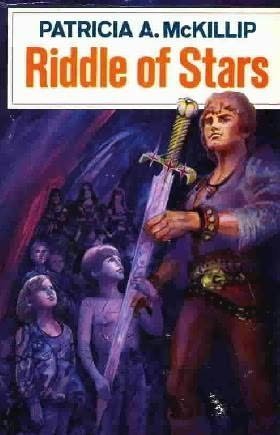
(Mild Spoilers) I read this series as a child, and I recall loving it, though I remembered very little details other than how it made me feel. There is a saying among DJ’s that the crowd may not remember the songs you played, but they’ll remember how you made them feel. Well, once I started rereading this series after 3 or so decades, the author started playing me that same song, and it made me feel that way all over again.
This series is tragically underrated, and should be considered one of the Classics of the genre.
THE GOOD
A Pro of Prose: The authors prose is lovely while still being utilitarian, much like Ursula K Le Guin’s, though I never hear the same praises heaped upon this author. Other authors like Guy Gavrial Kay can tend towards “purple prose”, but this author captures the same lyrical sense of language while never becoming self indulgent.
Soft Magic At It's Best: I don't know what it is exactly, but I absolutely love the way magic is used in this series. The actual abilities as well as how the author describes them. Somehow these books make the idea of being able to turn into a tree sound really cool. When it all comes together in the third book. there are some seriously badass moments where the author uses the magic in very epic and interesting ways.
An Ode to Understanding: One of the things I love the most about this series is that it venerates learning and knowledge. The "Riddle-Master" term from which the series draws it's name is actually the answering of questions. Riddles aren't riddles in the sense that they are a poem with an obscure answer, but rather they are questions that need answering. Riddle-Masters are scholars and scientists seeking the answers to questions, and hold knowledge above all else.
I wish this was a virtue that our own world revered as highly.
Music is Noteworthy: I like how music plays a subtle role in everything throughout the series. It is both a power unto itself - magically speaking - and is also used effectively to add an air of mystery and poetry to the world. If there is a character that plays an instrument, you can be sure they will be important.
THE NOT SO GOOD
Empire Strikes Back Syndrome: Unfortunately there is a bit of a figurative donut hole in the middle of this series, and that is the second book, Heir of Sea and Fire. The middle volume of the trilogy does something rather unexpected: follows entirely new point-of-view characters, all women, and leaves you wondering what exactly happened to Morgon, the main character. This is a pretty unusual tactic, and it is effective at broadening the charm of the supporting characters as well as building the mystery of the story. However, it was a literary gamble that had its good points and it’s not-so-good points.
The second volume does give us strong female characters at a time when there were very few to be found in the Fantasy genre, which is great, but ultimately the book is a bit of a snooze fest. With the main character gone, we mostly follow a group of women who are just wandering around trying to find Morgon. I love that they are constantly being "mansplained" to and being told what to do by patronizing men, and they literally do not care at all. They just ignore what they are told and do what they want. You go girls!
The down side being that there simply isn't anything exciting that happens in the second book - like, at all! It is a big ask for the audience to put aside our desire to read about Morgon and instead become invested in a rather placid road trip story with new characters. Speaking of those characters...
Where's the Women?? I presumed that with the second book introducing several women as major characters, we would then follow them as point-of-view characters in the third book, right? Nope. The final volume is completely from the perspective of Morgon. We do continue seeing the women's character growth throughout the book, but the lack of POV chapters felt weird to me, especially since it is made clear that they grow a lot and have their own adventures - but they are completely "off screen".
I am guessing the author chose not to spoon feed us the women's stories, and chose the "show versus tell" option, but it felt odd to disconnect from them to such a degree after following them closely for an entire book.
THE BAD
If you don't want us to figure out that a seemingly minor character is going to be important later on, don't name them
Deth.
Seriously, as soon as his name came up I knew he was going to be super important. *rolls eyes*
THE VERDICT
Despite some quibbles - mostly about the second book - I think this is a largely undiscovered gem that more Fantasy fans should make time to read. Maybe you won't vibe with it as well as I did, but I think this series deserves a lot more attention.
4.5 of 5
Highly Recommend!