

What do you think?
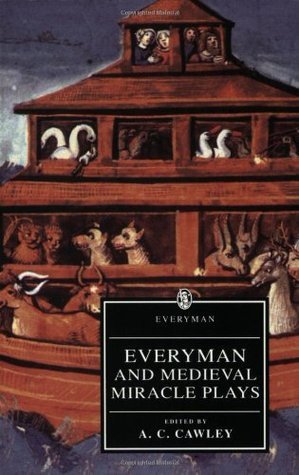
Everyman and Medieval Miracle Plays
Miracle plays were a popular form of entertainment throughout the Middle Ages, and part of the poetic and dramatic tradition on which Shakespeare drew. Everyman discovers what you can't take with you when you go. He beseeches in turn friends, family (one pleads 'cramp in my toe'), possessions ('I follow no man in such voyages'), and finally falls back on moral and religious values.
288 pages, Paperback
First published January 1, 1956
Ratings & Reviews
Friends & Following
Create a free account to discover what your friends think of this book!
Community Reviews
Displaying 1 - 30 of 40 reviews

December 5, 2017
I read this at 2am because I drank too much coffee, its v christmassy, there's lots of sheep

January 25, 2024
Folk humor enlivens familiar Christian stories. I would like to see a pageant cycle performed outside in a market square.

September 5, 2018
كل إنسان هي مسرحية أخلاقية، كُتِبت في العصور الوسطى ونُشِرت دون اسم مؤلف. تتناول المسرحية رحلة الإنسان لملاقاة الرب، حيث يتخلى عنه الكثير من الشخصيات، كالرفقة وابن العم و الأنسباء والمال والقوة والتعقل والجمال، ويدعون الإنسان وحيداً إلا أن هذا الإنسان عندما يتوب، تنهض أعماله الصالحة لترافقه إلى القبر.
من أبرز الاقتباسات التي أثارت اهتمامي:
"الرفقة: ليس جديراً بالصحبة الطيبة من يقول ولا يفعل، لذلك حدثني عن آلامك كما تتحدّث إلى صديق حميم."
"الإنسان: يعدني الناس وعوداً معسولة، ولكن عندما أكون بأمسّ الحاجة، يتخلّون عني. لقد خُدِعت وهذا ما يجعلني حزيناً."
"الإنسان: يُقال بين الناسأن المال يُبدل الحطأ صواباً."
"المال: إن من طبيعتي أن أقتل روح الإنسان."
"الإنسان: أخبرني المال بكل جرأة أنّه سلّم الكثير من الناس إلى جهنّم."
من أبرز الاقتباسات التي أثارت اهتمامي:
"الرفقة: ليس جديراً بالصحبة الطيبة من يقول ولا يفعل، لذلك حدثني عن آلامك كما تتحدّث إلى صديق حميم."
"الإنسان: يعدني الناس وعوداً معسولة، ولكن عندما أكون بأمسّ الحاجة، يتخلّون عني. لقد خُدِعت وهذا ما يجعلني حزيناً."
"الإنسان: يُقال بين الناسأن المال يُبدل الحطأ صواباً."
"المال: إن من طبيعتي أن أقتل روح الإنسان."
"الإنسان: أخبرني المال بكل جرأة أنّه سلّم الكثير من الناس إلى جهنّم."

February 8, 2020
In brief: A collection of medieval English dramatizations of Biblical stories and folklore, alongside the best-known medieval morality play.
Thoughts: This was a good collection! Admittedly, I don’t know what a bad collection of medieval plays would look like, or the quality of the plays that aren’t included, but I still found this to be a pretty comprehensive selection, especially as an introduction to the genre. Which this wasn’t for me, because I am a nerd and read at least a couple of this in university for fun, but whatever. I have had a medieval Thing for a long time.
Anyhow, there are a range of plays from a range of cycles in this book, each taking on a Christian story in rhyming verse with a small number of actors. There’s a little bit of historical context, and some glossing for the more difficult medieval and/or Northern English words, but beyond that, all you really get is the plays themselves. The verse styles they’re written in are pretty varied, which each playwright clearly having his own voice. The guy whose meter and rhyme were all over the place so that the play basically read as free verse was my favourite, I think.
And the playwrights could tell a good story. A lot of the speeches read as kind of didactic and heavy-handed today (‘twas the genre and the era, after all) but they’re still pretty engaging and I can easily picture amateur over-actors speaking the lines. It suits that style very well. And, because this is the Middle Ages, there’s also a fair bit of broad humour and slices of medieval life thrown in, like the shepherd who steals a sheep and hides it in a crib, then gets thrashed by his colleagues when discovered. It definitely makes the stories a bit different and more amusing, and being able to read the plays today provides a nice window into medieval worldviews and tastes.
The only thing I really wish had been better was some of the commentary. I’d have liked a bit more annotation beyond the glosses and more information on each play and its players than the few paragraphs we get. (Mostly I think this is an artifact of reading an older version of this collection; we’ve learned a lot in the last 70 years and I think a newer edition would have different info.)
Really, that’s about all I can say. I enjoyed the read and, as I’ve said, found it pretty interesting from a socio-historical perspective. If you’re interested in the topic, I’d certainly recommend!
8/10
Contains: A lot of Christian content, and an equally large amount of Middle English. If you don’t like your Bible stories mixed with broad comedy, this may not be for you. The rhythms of the poetry might get stuck in your head.
Thoughts: This was a good collection! Admittedly, I don’t know what a bad collection of medieval plays would look like, or the quality of the plays that aren’t included, but I still found this to be a pretty comprehensive selection, especially as an introduction to the genre. Which this wasn’t for me, because I am a nerd and read at least a couple of this in university for fun, but whatever. I have had a medieval Thing for a long time.
Anyhow, there are a range of plays from a range of cycles in this book, each taking on a Christian story in rhyming verse with a small number of actors. There’s a little bit of historical context, and some glossing for the more difficult medieval and/or Northern English words, but beyond that, all you really get is the plays themselves. The verse styles they’re written in are pretty varied, which each playwright clearly having his own voice. The guy whose meter and rhyme were all over the place so that the play basically read as free verse was my favourite, I think.
And the playwrights could tell a good story. A lot of the speeches read as kind of didactic and heavy-handed today (‘twas the genre and the era, after all) but they’re still pretty engaging and I can easily picture amateur over-actors speaking the lines. It suits that style very well. And, because this is the Middle Ages, there’s also a fair bit of broad humour and slices of medieval life thrown in, like the shepherd who steals a sheep and hides it in a crib, then gets thrashed by his colleagues when discovered. It definitely makes the stories a bit different and more amusing, and being able to read the plays today provides a nice window into medieval worldviews and tastes.
The only thing I really wish had been better was some of the commentary. I’d have liked a bit more annotation beyond the glosses and more information on each play and its players than the few paragraphs we get. (Mostly I think this is an artifact of reading an older version of this collection; we’ve learned a lot in the last 70 years and I think a newer edition would have different info.)
Really, that’s about all I can say. I enjoyed the read and, as I’ve said, found it pretty interesting from a socio-historical perspective. If you’re interested in the topic, I’d certainly recommend!
8/10
Contains: A lot of Christian content, and an equally large amount of Middle English. If you don’t like your Bible stories mixed with broad comedy, this may not be for you. The rhythms of the poetry might get stuck in your head.

August 30, 2015
Once you get accustomed to the language it's an entertaining but thought provoking read about the inevitability of death for ...every man/woman/child. Death is depicted as a journey that one embarks on suddenly and will never return from - that much we all know. The play also makes an effort to describe what happens after we die, and that is we give an account to God of all the things we did with the life He lent us.
In the same vein the play emphasizes that not only is our very life lent to us from God, but all our possessions, knowledge, wits and senses are also gifts to us from God. Therefore when we die they are returned to the true owner. The only thing that really belongs to us while we are alive are our actions and the charity/good deeds we do for others. It illustrates that the true "self/identity" of 'Everyman' is the relationship that he/she has with all others. Possession is a false notion because the things that we claim ownership of usually end up possessing and controlling us and/or defining us in some artificial way. Pride of life does not lie in what we own, or gather around ourselves - to paraphrase the play, rather this is what robs us of life. Ultimately, pride of life lies in what we give away to others.
In the same vein the play emphasizes that not only is our very life lent to us from God, but all our possessions, knowledge, wits and senses are also gifts to us from God. Therefore when we die they are returned to the true owner. The only thing that really belongs to us while we are alive are our actions and the charity/good deeds we do for others. It illustrates that the true "self/identity" of 'Everyman' is the relationship that he/she has with all others. Possession is a false notion because the things that we claim ownership of usually end up possessing and controlling us and/or defining us in some artificial way. Pride of life does not lie in what we own, or gather around ourselves - to paraphrase the play, rather this is what robs us of life. Ultimately, pride of life lies in what we give away to others.

October 6, 2021
AmblesideOnline year 8. We just read Everyman, not all the other plays. I will continue to have my kids read it because I think it’s important to get a sense of what the Medieval plays were like but man…it is VERY much a morality play. Everyman finds out he’s going to die and he realizes his “good deeds” are so weak and feeble that he’ll never get into heaven…but not to worry, he begins to work harder and they grow stronger. 🙄
October 25, 2018
We read two of the plays for our Middle Ages class - The Second Shepherd's Pageant (certainly not the typical view of the shepherds during the birth of Christ) and Everyman. The second one is a morality play telling how our deeds are tallied during life and when we face death we will be alone and face what we have done in life.

January 29, 2019
Read for my drama class. This play was just about how to be a good person and get into heaven. Held my attention a bit more than the 2nd Shepherd's Play did but it is very much a 'renounce material objects and other physical possessions and just be a good person or else' kind of message. Quick read and fairly well written, just preachy. But I guess that is expected for the time frame.

February 24, 2021
This collection of Medieval Miracle plays gives a great chance to take a peek into how the time period understood Christianity. It is only a limited collection but that stops the reader from getting bogged down in repeated stories from different angles.
A good read and very informative. Though it does help if you know the biblical accounts they are based on.
A good read and very informative. Though it does help if you know the biblical accounts they are based on.

October 18, 2025
I had never heard of these 14th century morality plays. I find it fascinating to picture local guilds putting on these plays in the middle ages. Really interesting to read and learn about yet another portion of church and cultural history.

January 23, 2018
The Second Shepard's Play, Herod the Great and Everyman.
Everyman being the simplest of the three and also my favourite. A very unique concept.
Everyman being the simplest of the three and also my favourite. A very unique concept.

October 30, 2018
Gives an idea of what life was like during the Middle Ages through miracle plays which were very popular at the time.

April 3, 2020
This play is hard to follow because of the language. I even watched a production online and had to follow along with the text as I watched and I still barely was able to follow.

April 15, 2020
Interesting historically, but not super riveting.

January 12, 2021
Only read the Second Shepherd’s Play. 2.5.

September 13, 2022
I only read Everyman from this book
September 13, 2022
Only read Everyman, not the whole book.

June 13, 2024
so shakespeare was just like that, huh?

December 22, 2024
read the second wakefield’s pagent for uni - at least it’s short and i half understood what was going on!

Read
May 31, 2026Read Everyman with book club. I plan to go back and read some of the other plays later because I am fascinated by the medieval mind.

Read
September 3, 2026doesn't feel necessary to rate it because this was kind of like reading a text book. i wasn't entertained by the stories, I was merely reading them as informative about the time period, iykwim.

August 24, 2024
I would not advise anyone to get their theology (or even basic grasp of biblical narratives) from the plays in this book. However, I found it to be an interesting look into popular level Roman Catholicism of the Middle Ages and early stages of English poetry/drama.
The editor has collected a sampling of the kinds of biblical narrative plays that were performed at Corpus Christi celebrations in Medieval England as well as a morality play, which appears to be a sort of Roman Catholic predecessor to John Bunyan’s Pilgrim’s Progress. Rather than present an entire pageant (cycle of short plays), the editor grabs a few plays here and a few there to give a broad feel for the wide variety of meter, rhyme, and/or alliteration that exists in the tradition.
Much like modern Hollywood treatments of biblical narratives, biblical fidelity generally takes a backseat to dramatic and/or comedic effect (or to sheer ignorance of what the Bible actually says) in these plays. There are also plenty of anachronisms (e.g. King Herod appears to be a Muslim…550+ years before Mohammed). For me, it was alternately cringey and entertaining, and I always enjoy finding a new source of old alliterative narrative poetry.
The editor has collected a sampling of the kinds of biblical narrative plays that were performed at Corpus Christi celebrations in Medieval England as well as a morality play, which appears to be a sort of Roman Catholic predecessor to John Bunyan’s Pilgrim’s Progress. Rather than present an entire pageant (cycle of short plays), the editor grabs a few plays here and a few there to give a broad feel for the wide variety of meter, rhyme, and/or alliteration that exists in the tradition.
Much like modern Hollywood treatments of biblical narratives, biblical fidelity generally takes a backseat to dramatic and/or comedic effect (or to sheer ignorance of what the Bible actually says) in these plays. There are also plenty of anachronisms (e.g. King Herod appears to be a Muslim…550+ years before Mohammed). For me, it was alternately cringey and entertaining, and I always enjoy finding a new source of old alliterative narrative poetry.

April 1, 2026
The Creation, and the fall of lucifer 2.5/5
The Creation of Adam and Eve 3/5
The Fall of Man 3.5/5
Cain and Abel 3/5
Noah's Flood 2.5/5
Abraham and Isaac 3/5
The Annunciation 3.5/5
The Second Shepards Pageant 1.5/5
Herod the Great 2/5
The Woman Taken in Adultery 3.5/5
The Crucifixion 2.5/5
The Harrowing of Hell 3.5/5
The Resurrection 1.5/5
Everyman 3/5
The Death of Pilate 4/5
The Creation of Adam and Eve 3/5
The Fall of Man 3.5/5
Cain and Abel 3/5
Noah's Flood 2.5/5
Abraham and Isaac 3/5
The Annunciation 3.5/5
The Second Shepards Pageant 1.5/5
Herod the Great 2/5
The Woman Taken in Adultery 3.5/5
The Crucifixion 2.5/5
The Harrowing of Hell 3.5/5
The Resurrection 1.5/5
Everyman 3/5
The Death of Pilate 4/5

May 3, 2010
I love this play! I love the symbolism, the word usage fascinated me when I first read it for a literature class. My favorite part from it is when God speaks concerning materialism: 'How that all creatures be to me unkind, living without dread in worldly prosperity...In worldly riches is all their mind, they fear not my righteousness the sharp rod.' It is very poignant for this time in our world. How materialistic we have come. It fascinates me that this play was written many many hundreds of years ago, and yet it still rings true. You know when something is greatly written, when it is still applicable years and years and centuries later. People and their habits don't change.

September 7, 2016
I don't normally read anything from this time period which may be why I didn't really enjoy this play

October 29, 2013
Charming and delightful required reading (I love it when that happens). This edition focuses on miracle plays as they were written for performance from the English cycle( from about early 14th to late 16th century). Miracle plays were not only used for entertainment but also as a form of Christian education for laity before literacy, printing and/or state law contributed to decreasing performance although Everyman was still being performed by the end of Elizabeth I reign. This edition is highly readable with catchy rhythm. It is also rather useful as a daily devotional!
Read
February 14, 2014backdrop to the backdrop: i am going to salzburg in a few months, so i've been learning about it, so I watched a video about the Salzburg music festival, and saw footage of modern-day performances of the the German version of this medieval play "everyman"--Jedermann. It fascinated me, so i've read the English version of the play, as well as the other mystery plays in the book.
It comes as a shock to remember that one of the values of christianity USED to be that a good Christian was supposed to not be money-grubbing. My, my. What a commentary on modern life.
It comes as a shock to remember that one of the values of christianity USED to be that a good Christian was supposed to not be money-grubbing. My, my. What a commentary on modern life.
March 11, 2017
Not that good. I only read a couple of the plays, and they were not enjoyable. They are plays about different bible stories, like Noah’s flood and the crucifixion. The play Everyman was decent. It’s about Everyman trying to take his strength, goods, beauty, etc. with him at death, but all that he could take was his good deeds. Overall two stars.

March 20, 2012
I didn't read all of the plays in this, but I very much liked the Biblical narratives. They were funny and to the point. Everyman was also very enjoyable and had a very universal message. The personification of ideas were applicable to every man. :)

May 1, 2013
This review is only about the Everyman play. I would prefer to see it than read it. It's a good universal message about how short life is and you can't take anything with you. Our lives should be led in a way that serves others (good deeds)and not self.
Displaying 1 - 30 of 40 reviews