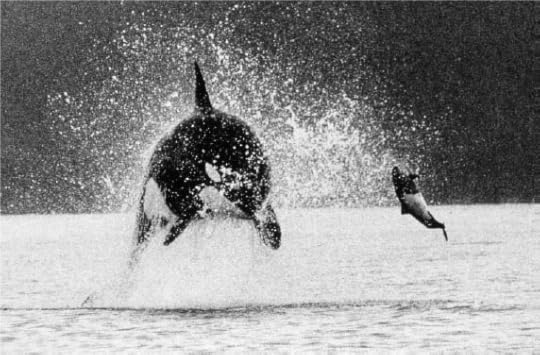
This book is memoirs of Saulitis's early years studying a family of orca whales in Prince William Sound. There is science about orcas here, and there is also the poetry of place, and ruminations on the fruited blank spaces (of species and individuals) across which science cannot reach.
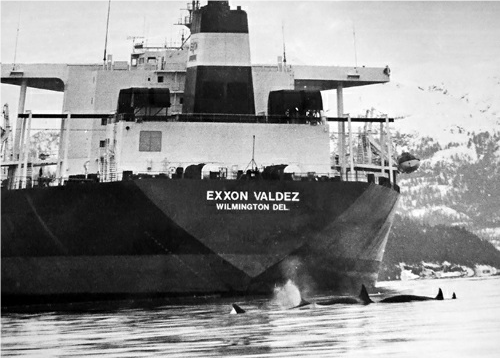
Eye to eye with an imprisoned orca, Saulitis writes: "Watching him, I felt the way I had the previous summer, seeing orcas swim through crude oil sheens--culpable, part of the mechanized world, reducible to the sum of my destructive, human parts." Which is how I feel so often in the company of non-human animals: This mourning about the choices humans have made, this irascible complicity, this keen wish to be something other than human. Reading about oil spill and imprisonment, thinking about the ways the human world intrudes on the profoundly complex orca world, made these feelings very present for me.
And eye to eye with a free orca, she writes: "I could count on one hand the number of times a wild orca had looked me in the eye. What does it see? What does it think and feel? I know what I feel. I feel my heart pinned in its gaze. I feel seen and known in ways I could never see and know myself--the iceberg of my own being. I can't see my reflection in a wild orca's eye, and I can't ask for an interpretation. But there's no question who's in control, who's choosing to see and be seen. I'm never more alive than in that moment, exposed, a part of my soul stolen and given back, reshaped."