How can an angel decay? An "angel" in this context is not the haloed, winged messenger of the Christian deity. In Buddhist cosmology, angels are "celestial beings" who live in the sixth realm of rebirth. Those with good karma can be reborn there, and the pleasure and comfort it offers far exceed that of the human world. However, this is not the unqualified paradise it may sound like. No matter how many eons and kalpas may pass, beings cannot stay in the sixth realm. Like the other realms, good and bad, it is part of samsara--the endless cycle of death and rebirth. A perfect being must eventually fall from perfection. Nothing in the world of samsara is permanent, all is subject to change.
Honda, now an old man on the verge of death, is undergoing change. His wife has died. Wealthy, he no longer needs to work. He looks in the mirror and sees the physical signs of decay advancing daily. The one constant in his life is seeking out the reincarnations of Kiyoaki, all of whom have died by the age of twenty. This time around it appears to be in the form of Toru Yasunaga, a sixteen-year old boy working a menial job far below his abilities.
As the story progresses two themes emerge. Decay is one of course, but also uncertainty. Unlike with the past reincarnations, we are not sure by the end of the novel that Toru is really authentic. Honda himself comes to believe he probably isn't, especially since he does not die at twenty. Decay is evident in Honda and the depiction of human aging, but also in the land itself. Honda visits the famous pine tree of Miho, supposedly the place where a divine being once danced, only to find it full of pollution and tourists. Elsewhere he notes the increasing clutter and debris of modernity, in a passage emblematic of Mishima's disdain for Western innovation:
"The Daigo district was a clutter of all the dreary details of new construction, to be seen throughout Japan: raw building materials and blue-tiled roofs, television towers and power lines, Coca-Cola advertisements and drive-in snack bars. Among heaps of rubble below cliffs where wild daisies stabbed at the sky were automobile dumps, blue and yellow and black, piled precariously one on the other, the gaudy colors molten in the sun."
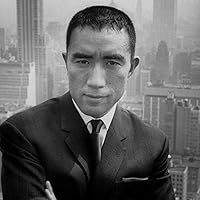
This was Mishima's last work before his suicide, and this story takes on greater significance once you know more about what he was thinking, or rather obsessing over during this point in his life. Mishima was a man who desperately wanted to exist, and exist authentically. Writing was one way of doing this, but paradoxically, so was dying. It is fitting that his final book was about death and dying, and the illusion of life.
As the story draws to a close the narrative takes on almost dream-like qualities. Honda returns to Gesshuji to see Satoko, and tries to relive Kiyoaki's last moments there. He becomes both Honda and Kiyoaki, imagining that his friend is waiting for him at the inn, even has Honda himself makes the excruciating climb toward the temple. Arriving at the gate, he thinks to himself "only an instant had passed." I don't believe Mishima intended this to be poetical. Only a moment really has passed. Time is yet another illusion, a figment we insist upon.
Once admitted inside, he (and we) finally see Satoko again, one of the few characters who is not reintroduced in the earlier books. Although older, she is not decayed. Her presence in the first and last books is like bookends, meant to tell us something important. She tells a baffled Honda that she never knew a Kiyoaki, leading him to doubt that anything in the previous books happened, and that "perhaps then there has been no I."
While this may sound like an existential crisis, ending with what seems like a "it was all a dream" trope conclusion, it becomes more than that when you consider Mishima's intense focus on Buddhist doctrines throughout the Sea of Fertility. Honda's existential doubt is essentially the teaching of "anatman"--the belief that because the "self" cannot be located or identified as anywhere or as anything, it does not really exist. One is simply a collection of "skhandas" or phenomena (flesh, blood, bone, etc.) that comes together for a time, and later, disintegrates. These phenomena are "reborn" again and again, but what is reborn is "not you and not another." Realizing this truth is a step on the path to Enlightenment, because it frees you from attachment. Satoko, having attained this wisdom, is not the wizened, disappointed creature Honda is in his old age. He chased phantoms all his life in a quest for some kind of permanence, only to realize at the end that nothing is permanent.
As the reader, we observed Honda much as Honda observed others, and like him we are shocked by revelation. Was any of this real? Why did we believe it was? Honda was convinced that the reincarnations happened mostly because of factors that appeared airtight as evidence, but on second thought may only have been a coincidence. What, in the end, was his proof? Three moles on the left side of a body? Along for the ride, we accepted this reasoning by the final book only to have our confidence dashed. What does it mean to be reborn? What, for that matter, does it mean to live?