"Smart and defiant. Rich with characters and anecdote and heart. A great success." --Anthony Swofford, New York Times Book Review Has the futureever more people with their houses, stores, roads, and sprawlbeen wrecking your past? Melissa Holbrook Pierson, with unalloyed insight, elucidates how it feels to lose that landscape of home. In the past twenty years, like countless towns it resembles, Akron, Ohio, has lost its singularity, and much of what native-daughter Pierson loves about it. She then moves to Hoboken, New Jersey, a forgotten appendage of New Yorkuntil stockbrokers discover it. Finally, she speaks of rural areas, telling of the thousands of upstate New Yorkers displaced by city reservoirs.
A unique book uniquely of our moment: This is what it feels like to lose the place you love.
Melissa Holbrook Pierson is the author of the acclaimed Dark Horses and Black Beauties, The Perfect Vehicle, The Place You Love Is Gone, and her newest book, The Man Who Would Stop At Nothing was published in the fall of 2011.
This book was too warm and fuzzy for me. I could not hook up with the overly friendly colloquial tone that suggests reader and writer are buddy-buddy.
*“Skyscrapers – why Akron has ‘em!” *“Impending loss. Knowing for sure that loss is coming and prophylactically mourning it. (A poetry that was lost; ‘beloved voices now silent.’) Man, I was anticipating it from way before I knew what it meant.” *“Nothing can approach them; they are just like life! They define life!” *“I can’t help it if I want to live in the past! It’s my past, the time forty years ago when there was still some wide open space into which to insert some dreaming…”
Have I mentioned that I dislike the exclamation mark? I do!!!!!!!
Further, if there’s anything that irritates me it’s writers referring to themselves in the third person (unless they're insane). I like to believe it’s not happening. But it is.
*“Thirty-five years ago a certain demented daughter…” *“One of these forlorn figures wore an oversized black herringbone man’s coat with the cuffs turned back…”
What is it about personal third-person references that irk me so much? I wish I knew; it must have to do with the presumption I’m ready to swallow someone’s own version of themselves, or a sense that the speaker has done way too much navel-gazing… I’ll have to research this…
Some verbs, when mixed with colloquial diction, come off like fussy dress-up verbs, eg bewail, opine and bemoan. (Lament would have been a welcome respite.) We’ve got this going on, too.
For me the author went too heavy on referencing (poetry, essays, etc). When the lyrics of Chrissie Hynde’s “Ohio” showed up in full, it was almost too much for me. No, not almost. It was too much. Not that I don’t like the song. It just seemed, what, gratuitous? Or like nailing a point home that already had an icepick in it.
Bristled, I couldn’t keep from nit-picking. For example – “Akron preferred its food with a white accent or, if colored, primary, like Lucky Charms.” Listen folks, Lucky Charms are not primary colors. If you remember the ad, they’re “pink hearts, yellow moons, orange stars, green clovers.” And besides that, those marshmallow charms are pastel, which cannot be primary. Sorry, I’m growing very small, I know. I would like to be more big-hearted.
You can see it tortured me to continue. I put the book aside. I found it repetitive and gushy. After the first segment on Akron, which through no fault of its own I now officially hate, I was still waiting for the book to start. Where’s the sad? I want the melancholy. The grave. The haunted. The serious. Not just shiny nostalgia.
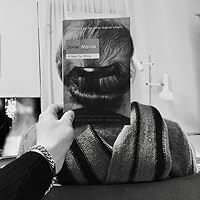
But hey, great cover. And if you cut the book down to a four-page essay, extricating the crap and exclamation marks, or turned it into a lyrical poem, probably I’d like it.
This book is absolutely beautiful. It is extraordinarily well-written and captures the essence of finding that a place of importance to you has been done away with in the name of progress. I literally wept while reading this book.
Holbrook utilizes quotes as epitaphs and weaves them throughout her narrative. Though she is writing about places that hold importance to her, one needn't have lived in Akron, OH or Hoboken, NJ to understand her grief at losing pieces of her past. I highly recommend reading this if you are at all interested in or concerned with the loss of earth's spaces.
This is a beautiful and haunting book. It was recommended to me as a book about nostalgia, which it is. It’s also a book about the places we love and what it’s like to lose them. I had to read this slowly, sometimes so that I could savor the ideas and other times so that I could process the memories that the book brought up. This book is as sublime as a perfect sunset: a rare and special thing that is gone too soon.
This book is so profound and well-written that I actually took notes while reading it. I read paragraphs twice and thought about the essence of each statement. I could see this used as a text in sociology and especially urban anthropology. An entire class could revolve around onerous nomenclature.
You do not have to be a past resident of Akron or New Jersey to appreciate the meaning of this book although I had so many "yes! I love that place" moments when reading about my hometown. I came to realize just how important those places of my youth are to me, those vestiges of my former self. Are they there to this day, or are they a WalMart? It's always a Walmart.
I especially like this part "imagine you wedding at the end of the birch allee." This is where I always dreamed of getting married as a child. This is where I came back to to get married.
The infamous Bulwer-Lytton Award was a contest that rewarded the absolute worst (fake) opening line to a novel. One memorable entry was this: "I was a very, very, very, very sensitive child."
This could very well be that book. It's a bleedingly idiosyncratic POV about what home means to the author, and - I guess - how nobody and nothing should ever try to change it. (ps: Sorry, Native Americans.) It's impenetrable. I kept skipping ahead 3 pages, 8 pages, 20 pages - looking for an entry point. Like reading the unedited journal of a 14 year-old. From Akron.
I don’t know what I expected, but this wasn’t it. I almost gave up and put it on my just-couldn’t-finish-it list, but I persevered, hoping it would get better. In the end, it was the longest 200 pages I’ve read in quite some time.
As someone who is constantly feeling nostalgic, this book was relatable even if it was nostalgia for things I haven’t experienced. We’re always so eager to move forward that we often forget about who and what got us to the present.
I enjoyed this much more once I realized it was really a personal memoir rather than a factual historical account of a place (or rather, 3 different places). I originally picked the book up because the author, like me, grew up in Northeastern Ohio and then moved to New York City in her early 20s. The Ohio section baffled me because she experienced her 1960s-1970s childhood years there as completely idyllic, with a total sense of belonging, and seemingly without economic struggle, emotional alienation, or, really any kind of sadness at all. Kind of the exact opposite of my experience and of many of my Ohio expatiate friends. Suddenly, this happy and secure child grows up to be a disaffected bordering on depressed 20-something living just outside of NYC in Hoboken, NJ, working in publishing and hanging out a punk clubs in the early 1980s. There are lots of unexpected diversions and musings throughout the book. The last section on the Catskills region of New York contains the most objective historical information, while simultaneously exploring the author's ideas about sustainability and environmentalism. It sounds like a bunch of very separate threads, but the personal observations manage to tie it all together.
2007 wrote: A good follow-up to the previous book read, Saving America's Treasures. Subtitled "Progress Hits Home", this book tracks various ways progress has erased our cultural identity. The subject has intrigued me since I saw a graveyard standing in the middle of a mini-mall parking lot down in Maryland about 5 years back. It wasn't the only example I was to see in life. This book spotlights how people's hometowns are whipped clean by progress, be it by commercialism or by flooding towns to create reservoirs. This book hits home as one of the chapters describes the flooding of towns in the Catskills that I have often heard my grandfather and parents talk of playing and adventuring in. I have often been pointed to the middle of a lake to descrinbe my family's past. And this the reason so many people can't come to terms with their own past or their ancestors. The writing is amazing, fiery and fierce and angry but somehow loving and sweet. Courageous. Honest.
This book is really three separate stories about the meaning and the importance of home and the impact of change and "progress." Part one is about the author's youth in Akron, but also speaks poetically and nostalgically about the meaning of home and the pain of seeing places you love disappear and change. Part two is a more straightforward story about the author's time in Hoboken as a young adult, which she manages to be nostalgic for despite how difficult and dreary that "home" was. (Great references to Maxwells) The final part mostly gives an historical account of all the cities upstate from NYC that were flooded for the creation of the city's reservoirs. Imagine your entire town being wiped out and replaced by a lake.
Though I found the nostalgic, heart-string pulling a bit over the top in part one, I really loved this book and the way it made me yearn for all the homes and places I've known and loved.
Overall, a beautiful and dense look at place, how we are defined by it, and the soul-ache caused by the intrusion of modern life into nature and the landscapes of our childhood. Strongly environmentalist, which is a genre which has my sympathies, but in which I do not read widely.
I very much liked her reflections on the perfection of the untrammeled spaces in her suburban childhood, but I started to lose sympathy with her in the drowned towns section (although I loved all the concrete factual evidence here), as Pierson is clearly a transplant and moderately wealthy interloper in this community, but she refuses to acknowledge her own gentrifying presence in the landscape.
The main character is Melissa Holbrook Pierson and she love to explore. She needs to find her sister and figure out what happened to their house. She needs to look around the house to find evidences of what happened to her sister. She has to go throw her over grown house and find hided rooms to try to find her sister. She needs to get clues to find good souls to replace the bad souls in her life. She has to get out of the house before she is trap forever. If you want to know more then read the book.
This is on my top 5 favorite books of all time. It says everything my soul wants to say about attachment to places, why I hate so-called progress, and the need to curb consumerism (of land, of place, etc.). Absolute therapy for me when another developer wins against history and/or the environment. Written by a sociologist not a preservationist, so there is more analysis of reasonings and emotions. Excellent. She's perhaps a little cheesy in parts, but I over look that...
Having reached an age where I mourn lost places of my own childhood, I appreciated this book (even though Pierson goes a little beyond the pale...) She is most eloquent when writing (romantically!) about Akron, Ohio -- where she grew up. She shortchanges the state of New Jersey by using her narrow experience (Hoboken in the early 80s, pre-gentfrication, during her depressed post-college years) as indicative of an entire state.
I bought this book four years ago in a student bookshop in kutztown before leaving pa. The title seemed relevant to where I was and so I opened it with the intention of reading a paragraph but couldn't stop until a friend dragged me off. I love her writing and have languished in this book and still have not got to the end of it. I like a book that doesn't make me want to get it over with. I've even given the book away and re bought it for myself I like it so much.