"If the doors of perception were cleansed everything would appear to man as it is, Infinite. For man has closed himself up, till he sees all things thro' narrow chinks of his cavern.” - William Blake
Aldous Huxley, a renowned writer, mainly famous for his great dystopian work, Brave New World (1931), blasts to the world his transcendental essay: The Doors of Perception, published in 1954.
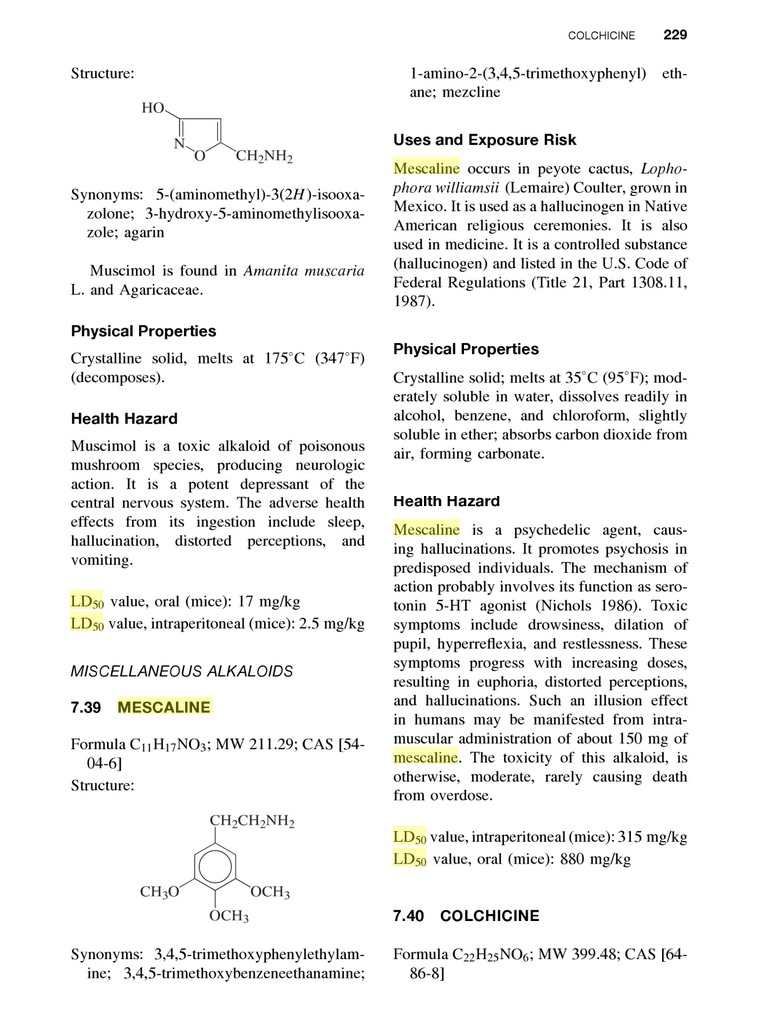
In this philosophical essay, Huxley describes his spiritual experience with mescaline, taken one day in May 1953. The author makes a detailed description of his experience with 4/10 of a gram of this psychedelic plant. The essay elucidates his visual and spiritual awareness in spatial/time analysis, Art, Nature, Music, Religion, Sociology, Education, Philosophy and Psychology.
Huxley got acquainted about the use of peyote after coming to the United States in 1937. He first became conscious about the cactuses' use after reading an essay written by Humphry Osmond.
After having read Osmond's essay, he got curious about this psychedelic substance and decided to make his experiment with mescaline. Osmond arrives at Huxley's house to accompany him during his spiritual experience. After that, the author's experience was so intense that he decided to tell the tale:
Spatial/time analysis: "Place and distance cease to be of much interest. The mind does its perceiving in terms of intensity of existence, the profundity of significance, relationships within a pattern. I saw the books but was not at all concerned with their positions in space. What I noticed, what impressed itself upon my mind was the fact that all of them glowed with living light and that in some the glory was more manifest than in others. In this context position and the three dimensions were beside the point. Not, of course, that the category of space had been abolished."
Initially, Huxley was expecting to picture brightly colours, but as he stated, he was a "bad visualiser", however, he experiences a more detailed perception of the outer world. The "being" is not separated from "becoming" and the living moment becomes timeless like a neverending present. Colours from the outer world become more vivid and therefore visual impressions are intensified.
"I was looking at my furniture, not as the utilitarian who has to sit on chairs, to write at desks and tables, and not as the cameraman or scientific recorder, but as the pure aesthete whose concern is only with forms and their relationships within the field of vision or the picture space. But as I looked, this purely aesthetic, Cubist's-eye view gave place to what I can only describe as the sacramental vision of reality." The symbolism of the chair is destroyed, and it's perceived beyond a simple object.
Philosophy: "We live together, we act on, and react to, one another; but always and in all circumstances, we are by ourselves. The martyrs go hand in hand into the arena; they are crucified alone. Embraced, the lovers desperately try to fuse their insulated ecstasies into a single self-transcendence; in vain. By its very nature, every embodied spirit is doomed to suffer and enjoy in solitude. Sensations, feelings, insights, fancies—all these are private and, except through symbols and at second hand, incommunicable. We can pool information about experiences, but never the experiences themselves. From family to nation, every human group is a society of island universes."
During Huxley's experience, the ego disappears (egolessness), thus the perception about others begins to be more lucid. Every pattern becomes one and therefore the words and symbols are removed:
"...there is an 'obscure knowledge' that All is in all—that All is each. This is as near, I take it, as a finite mind can ever come to 'perceiving everything that is happening everywhere in the universe. "
The author quotes the eminent Cambridge philosopher, Dr C. D. Broad by saying: "to enable us to live, the brain and nervous system eliminate unessential information from the totality of the 'Mind at Large". This idea explores that the human mind filters reality, and as a result of that, psychedelic drugs are an important element to remove this filter.
"We walked out into the street. A large pale blue automobile was standing at the curb. At the sight of it, I was suddenly overcome by enormous merriment. What complacency, what an absurd self-satisfaction beamed from those bulging surfaces of glossiest enamel! Men had created the thing in his own image - or rather in the image of his favourite character in fiction. I laughed till the tears ran down my cheeks."
Art: Huxley reflected the following statement about the Milkmaid by Johannes Vermeer: "That mysterious artist was truly gifted with the vision that perceives the Dharma-Body as the hedge at the bottom of the garden". He states that Vermeer's paintings are magnificent examples of life within. In another hand, Cézanne's Self-portrait with a straw hat seems incredibly pretentious. These experiences prove that even by being a bad visualiser, Huxley managed to feel vivid emotions from those paintings.
Music: "Instrumental music, oddly enough, left me rather cold. Mozart's C-Minor Piano Concerto was interrupted after the first movement, and a recording of some madrigals by Gesualdo took its place...But, as it turned out, I was wrong. Actually, the music sounded rather funny"
Once again, Huxley's auditory perception is changed, becoming more vivid and thus his initial perception about those music works has changed.
Psychology: "The schizophrenic is a soul not merely unregenerate, but desperately sick into the bargain. His sickness consists in the inability to take refuge from inner and outer reality (as the sane person habitually does) in the homemade universe of common sense - the strictly human world of useful notions shared symbols and socially acceptable conventions."
The author elucidates that Schizophrenia can be heaven and hell because those who suffer this pathology doesn't distinguish the inner world from the outer world. It's also stated that those who suffer from anxiety and periodical depression might have different experiences under the influence of mescaline.
"Most takers of mescalin experience only the heavenly part of schizophrenia."
Nature: "We drove on, and so long as we remained in the hills, with view succeeding distant view, significance was at its everyday level, well below transfiguration point."
The view from the hills became abruptly lucid, just like the perspective described from those landscape painters.
Sociology: "Equally unsurprising is the current attitude towards drink and smoke. In spite of the growing army of hopeless alcoholics, in spite of the hundreds of thousands of persons annually maimed or killed by drunken drivers, popular comedians still crack jokes about alcohol and its addicts... The only reasonable policy is to open other, better doors in the hope of inducing men and women to exchange their old bad habits for new and less harmful ones."
Religion : "Christianity and mescalin seem to be much more compatible. This has been demonstrated by many tribes of Indians, from Texas to as far north as Wisconsin. Among these tribes are to be found groups affiliated with the Native American Church, a sect whose principal rite is a kind of Early Christian agape, or love feast, where slices of peyote take the place of the sacramental bread and wine."
Self-transcendence can be found in religion and therefore, Christianity and mescaline are well-suited for each other, however, it is unlikely to happen as Huxley stated in his essay.
"All I am suggesting is that the mescalin experience is what Catholic theologians call "a gratuitous grace," not necessary to salvation but potentially helpful and to be accepted thankfully, if made available...a human being obsessed with words and notions, but as they are apprehended, directly and unconditionally."
Education: "In a world where education is predominantly verbal, highly educated people find it all but impossible to pay serious attention to anything but words and notions. The non-verbal humanities, the arts of being directly aware of the given facts of our existence, are almost completely ignored."
Aldous Huxley managed to describe his experience in an enlightened way. He elucidated his experience in such an illuminating way that it was impossible not to quote his standpoints. The author's universalism is highly depicted in his philosophical and religious points of view. It's asserted in the essay that spiritual experiences will transform anyone for the better, and I couldn't agree more! I just personally don't agree that psychedelic drugs are well-suited for Christianity or to any religion whatsoever. Words, prayers, slogans are notions and symbols intrinsically correlated to Religion in general. Psychedelic drugs are still seen with disregard and therefore it will not be intrinsically connected to Religion. I personally believe that spirituality can be separated from Religion, but that would be a more detailed topic to discuss...
I do practice meditation, and I was tremendously curious to read this book. I found very elucidative, mind-blowing and inspiring how the details were depicted throughout the text. When I was younger, I was very sceptic about these spiritual experiences, but when I became older, I realized that these transcendental experiences are quite relevant for self-fulfilment (either with psychedelic drugs or through meditation). I recommend anyone to read this book (even to sceptics). It's undoubtedly, a mind-bending book that questions our reality and gives new paths to our general perception of the world.
No wonder Jim Morrison baptised his band's name "The Doors"...
Rating: 4.5/5 Stars