
What do you think?
Rate this book

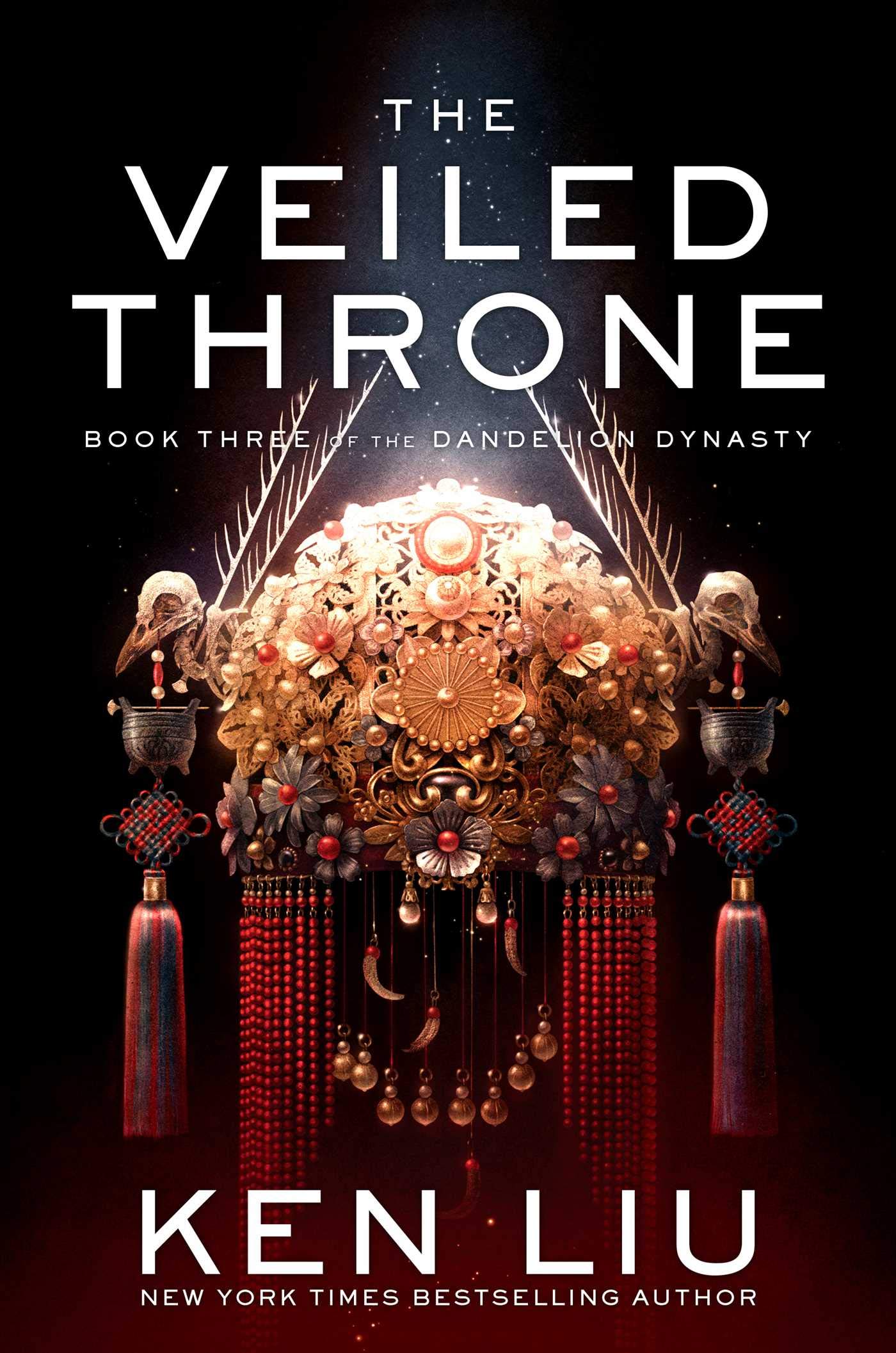
982 pages, Hardcover
First published December 7, 2021


“Though each individual mortal experiences life for but a score of years, they can draw upon a store of stories left by all their forbearers. The race of humankind grows toward infinity, even as the nature of each individual is limited. Nature may describe tendencies and circumscribe potentialities, but it is within the power of each soul to nurture itself for another life, to imagine a course not taken, to strive for a different view. Through that yearning by the finite for the infinite, the portraits painted by all the mortal eyes may yet piece together a grander truth than our divine understanding.”
“Everyone is a storyteller… That’s how we make sense of this life we live. Misfortune and affliction test us with one blow after another, most of which we don’t deserve. We have to tell ourselves a story about why to make all the random manipulations of fate and fortune bearable.”
“In Dara there is a sacred bond between a teacher and a student. Though I am your slave, I am also your teacher. It’s my duty to protect you from the consequences of bad choices, and that duty is not dissolved just because you didn’t like my lessons.”
“As the Ano sages would say… ‘Sometimes a paving stone is essential on the path to mine pure jade.’ Even an impractical idea may spark a better plan down the road.”
“The emperor’s school affiliation or academic accomplishments are not the point. The point is, as a child, the emperor was once inspired by the words of Kon Fiji to defend his friend Rin Coda from arrows raining out of the sky, an incident well-known by every teahouse storyteller. From this, we can infer that scholarship is directly correlated with courage. The more books read, the greater the warrior.”
“Adherence to the teachings of the sages or the gods both require faith. But in every age and among all peoples, the ones who live by faith alone and the ones who reject faith completely are few, while those who stand on the border between belief and disbelief, leaning toward what is convenient at the moment, make up the majority.”
“In our histories, we call those who kill thousands, hundreds of thousands, even millions, great, but they are often little more than hollow shells, walking corpses into which we project our fantasies of what heroism and nobility look like. I know what an obsession with vengeance and heroism did to my nephew; I do not believe that is what your mother would want for you.”
“The best scholars spend so much time studying the Classics that they forget to eat not because they wish to exercise power as high officials, but because they love the smell of writing knife carving into hot wax and the mind-pleasure of debating the wisdom of the sages with a friend. The tinkerers and wanderers who invent and create do so not to pursue profit, but because they love the freedom they experience when they make a thing: something imperfect, silly, perhaps even useless, but theirs and wholly new.”
“She had lived so long as a reader that she had forgotten that a culture could not be reduced to writing, that wisdom could not be imprisoned in books, that to live was to breathe, to dance, to hunt, to forget.”
“It was a painting richer in color than the work of jaded portraitists in money-blinded Dimushi, a symphony more pleasing than the vulgar din generated by the orchestras of traveling folk opera troupes, a tapestry of sensations and textures against the tongue more varied than the smooth silks and rough hempen clothes and nubbly woolen yarns found in Boama, a potpourri of aromas more intoxicating than the famed medicine shops of Çaruza, and a parade of tastes each more astounding than the last, a feast for the senses fit for the gods.”
“Remember that cooking and eating are about more than sustenance. Food is a language of its own. Chewing up tough meat and vegetables to feed us one mouthful at a time was how parents spoke to us before we had grown teeth or learned our first words; making their favorite dishes and leaving them on the ancestral altar is how we tell our parents that we love them when they can no longer hear us. We honor our past and hope for the future when we cook and eat.”
“Mind-pleasure comes from love, Kinri, love of sister, parent, friend, country, literature, beauty itself. A great lady I met at Lake Tututika on that outing taught me that. Love allows us to taste the fish, not just to weigh it. “And so, the best way to evoke mind-pleasure is to tell a story about love. That’s what all great art, fine cooking included, is about.”
“Weighing the fish requires only a fair scale, but there is no fairness when it comes to taste. The senses are governed by mind-pleasure. If you love a man, you think him handsome; if you hear a song from your childhood, you think it pleasant; if a smell or taste reminds you of home, then you feel its tickling caress in your heart.”
“Some of the most important decisions we make in life are not derived from reason, from weighing the fish, from an evaluation of the pros and cons—but from a simple leap of faith, of love that needs no evidence, apology, or argument.”


