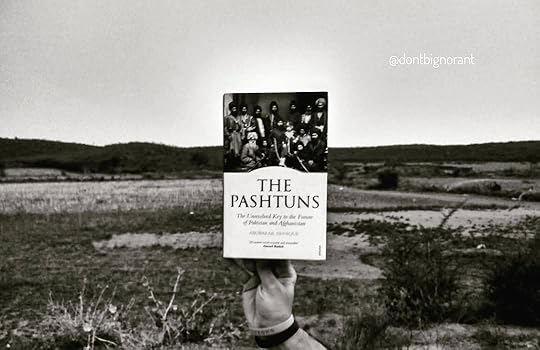
Most contemporary journalistic and scholarly accounts of the instability gripping Afghanistan and Pakistan have argued that violent Islamic extremism, including support for the Taliban and related groups, is either rooted in Pashtun history and culture, or finds willing hosts among their communities on both sides of the Afghanistan-Pakistan border.
Abubakar Siddique sets out to demonstrate that the failure, or even unwillingness, of both Afghanistan and Pakistan to absorb the Pashtuns into their state structures and to incorporate them into the economic and political fabric is central to these dynamics, and a critical failure of nation- and state-building in both states.
In his book he argues that religious extremism is the product of these critical failures and that responsibility for the situation lies to some degree with the elites of both countries. Partly an eye-witness account and partly meticulously researched scholarship, The Pashtun Question describes a people whose destiny will shape the future of Pakistan and Afghanistan.
Formerly called Pathans, and now indigenized to Pashtuns, the sturdy people of Pakistan's north west and Afghanistan's south east provinces make a unique amalgam of tribes seen anywhere else in the world. Fanciful tales have often been told about them, of honour killings, blood feuds between families and tribes and a propensity for keeping vendetta alive for a long time until retribution for an actual or perceived slight is extracted from the other party. These belligerent people have traditionally been ruled by chieftains according to tribal mores and customs. Outsiders found it expedient not to stir up a hornet's nest by unnecessarily provoking confrontation with them. The British fought some disastrously expensive battles with them in the 19th century and were only too happy to demarcate a border and safely withdraw behind it. But the region's history transformed in a unique way by the Soviet occupation of Afghanistan in 1979. The country became a battleground for Islamist fighters coming from all Muslim nations of the world, taking it out with the infidels. When the Soviets were routed and driven out, the mujahedeen fought amongst themselves, eventually making Taliban gravitate to the top spot. Then the flirtation with global terrorism ensured their downfall. But during all these episodes of modern history enacting violently, the Pashtuns were forced to toe the Islamic line at the expense of tribal affinity. We see a tribal society gradually absorbed into the pan-Islamic current and conforming to the hard rules of it. The loss of a tribe causes no concern for the broad world, but the present context is further vitiated by Islamic terrorism exported by secret sponsors in the oil rich states. However, the author presents a picture which is not altogether hopeless. He believes that the Pashtuns are desperately in need of peace now and this idea is dawning on them after nearly four decades of hard fought battles in which the death toll was very painful for the society. Icons like Malala Yousufzai reflect the beginning of the slow transition to peace. The book is a must read for those who take an active interest in the region's present and future. Being in an effortlessly readable format and decor, the book is extremely relevant in today's South Asian scenario. Abubakar Siddique is a senior correspondent for Radio Free Europe/Radio Liberty (RFE/RL). Based in Prague, he covers the Middle East, South Asia, and Central Asia, with particular focus on Afghanistan and Pakistan. Siddique has spent the past decade and a half researching and writing about terrorism, security, political and humanitarian issues in Pakistan, Afghanistan, and the Pashtun heartland, the border region where he was born. His background and professional experience have given him a specialized knowledge of the politics, social life and security situation in this strategic and volatile region.
The Pashtuns occupy a prominent position in Indian history as the founders of the Lodi dynasty, the last among Delhi’s sultanates when Babar snuffed out Afghan ascendancy in the Battle of Panipat in 1526, by establishing the Mughal dynasty, which was Turkish in origin. Though the Pashtuns were able to defeat the second Mughal, Humayun, for a short period, their star had set for the final time in the sub-continent. Ahmed Shah Abdali, who later renamed his tribe to Durrani made a trailblazing drive to power in Afghanistan. It were people affiliated to this family and tribe who ruled the country till monarchy itself was abrogated by communists in the 1970s. Then came the invasion of the Soviets that would change Pashtun social life forever. The Pashtuns were tribal people imbued with a strong group ethos and consisting of allegiance to nang (honour), melmastya (hospitality) and badal (reciprocity, often revenge). Outsiders attacked them, like the British did, in a vain bid to annex the country. But the people maintained their tribal outlook and continued their simple, but chivalrous pursuit of the three goals. The Soviet occupation changed all that. Islamic fighters congregated in Afghanistan in drones. Attracted by a call to Jihad against Russian infidels, the fighters included fanatics from all over the Muslim world which had no affinity to the Pashtuns’ tribal mores, but to the Sharia alone. This corrupted the Pashtuns’ outlook, who eagerly embraced the culture of weapons and Jihad. Siddique skillfully presents the picture of a once simple tribal society trying to find its roots in the changed social milieu of pan- Islamic terrorist ideology.
An illuminating assessment of the socio-political climate of Pakistan and Afghanistan follows. Right from its inception, Pak military wanted to have an elbow room in its western neighbor in the scenario of an all out war against its eastern enemy – India. But they were reluctant to extend wholehearted support to Pashtuns who formed sizeable communities in Pakistan’s Khyber Pakhtunkhwa and FATA provinces. A consolidation of Pashtun nationalism was certain to ignore the sanctity of the Durand Line that demarcated the two countries de jure. Calls for a Pashtunistan were being heard aloud. But the act of imposing such a frontier was a clever move on the part of the colonial British in effort to remind them never to cross it to avoid disastrous consequences. But the tribal affinities transcend national boundaries and Pakistan was paranoid more than ever, after the secession of Bangladesh that the Pashtuns across the border may team up with their brothers in Pak border districts. So, when an opportunity presented itself for uniting Islamic forces to oppose Soviet occupation, it sensed its chance and intensely pushed for a pan-Islamic coalition in whose melting pot tribal affiliations would fuse together under the blinding radiation of Sharia philosophy in the garb of the Arabic language. Mercenary Jihadists from West and central Asia and also from the other Islamic nations fought together under the green banner of Islam and won the war. The soviets were thrown out and the Mujahideen assumed power. Internecine warfare among the former fighters helped Taliban win the race to absolute power. The author identifies the present position as a unique one in which the Taliban is forced to make their tribal identity play second fiddle to Islamic compulsions. At the same time, he makes some unusual maneuvers to claim that the Taliban, which was ousted from power after the post-9/11 blitz in Afghanistan have now recouped and are ready to assume power again, as part of an international agreement on power sharing after the western powers evacuate their troops from the territory. This time, he concludes, the Taliban is doing its homework to govern better by reconciling with the other tribal factions in the country and not to repeat the earlier mistake of playing into the hands of terrorist organizations like the al Qaeda. The book thus offers a peek into the mind of the Taliban, which is quietly licking its wounds in Afghanistan’s tribal heart lands.
The book presents a balanced view of the socio-political situation in the two countries. He proposes a road map for future progress which is a snapshot of a whole slew of measures rational and practicable. Any attempt at long term stability in the region involves close cooperation between Afghanistan and Pakistan.
Even though Siddique shies away from using the terms ‘terrorist’ to denote organizations like the Taliban or Lashkar e-Jhangvi, no sympathizing with the terrorists is visible in the text. It is curious to note the synonyms the author utilizes, like ‘extremists’, ‘Jihadists’, ‘militant’ , but not ‘terrorist’.! Siddique recognizes the Taliban as an organization that can and should rule over future Afghanistan. He cites examples where Taliban is at the receiving end, like the mass grave of about 2000 Taliban fighters found near Mazar-e Sharif who were killed by Hazaras in encounters. He also takes pains to clarify that the Taliban militia, with the exception of the Haqqani network, don’t indulge in terrorism elsewhere.
Came for cultural and historical insight into Pashtun society, instead got somewhat frenzied rundown of AfPak militancy through the decades. I guess it isn't Siddique's fault that he didn't write the book I was looking for, but THE PASHTUN QUESTION still ends up stuck in no man's land, with not enough context for readers with no background in the region, and without enough to offer those who've read the many books covering this stuff in greater detail. The three chapters on Afghanistan, zeroing in on the details of militancy in specific provinces, are the best.
Another excellent book to read about contemporary Pashtun history. And gives a concise, yet comprehensive background to the current geopolitical situation of Pashtun lands. #Pashtun #History #Politics #Afghanistan #pakistan
My review for The Business Standard (July 19, 2014)
The Pashtun people are at the crossroads, once again. On one hand, the Pakistan army's ongoing Operation Zarb-e-Azb in the country's Pashtun regions will have far-reaching consequences. On the other hand, as Afghanistan seeks to transfer power democratically for the first time in its history, there is a likelihood of renewed clashes between the Pashtun and Tajik ethnic groups. Given that these two events will have a tremendous ripple effect on the future of South Asia, understanding this region and its people is imperative for foreign policy watchers across the world. This scholarly work by journalist Abubaker Siddique, a trained anthropologist, provides an insider's perspective to a body of literature otherwise dominated by a handful of British colonial accounts.
The author, himself a Pashtun from the South Waziristan Agency in Pakistan, argues that violent Islamist extremism amongst Pashtuns is a result of the failure of Afghanistan and Pakistan in making Pashtuns a part of their state structures and national identities. Being an indigenous account, the reader should be aware of cognitive biases that can make such insider writings ignore internal issues and resort to external causes for all problems. Siddique, however, largely avoids such biases and gives an honest assessment of problems in Pashtun society.
The book follows a non-linear narrative and is divided into three parts. Part One is an ethnographic account in which the writer explores the umbrella term 'Pashtuns' - also identified as Afghans, Pathans or Pakhtuns. This group, the world's largest tribally organised society, is divided into four tribal groupings and several clans like the Afridis, Wazirs and Durranis. Tracing a thousand-year history, Siddique describes how a vast majority of Pashtuns became mere adjuncts to a contest between the two supranational concepts of communism and pan-Islamism. The author goes on to lament that the archetypical Pashtun nation has never been integrated into a single empire, state or political system.
The second part deals with the Pashtuns of Pakistan who constitute the country's largest minority, making up 15 to 20 per cent of the population. All chapters in this part will be of special interest to Indian readers in understanding Pakistan's historical doctrine of 'strategic depth' to counter India. The Pashtun Question describes how the Pakistani state made the Pashtun regions a tinderbox of pan-Islamism that simultaneously counters the forces of Communism in Afghanistan and Pashtun nationalism in its western half. The remnants of the dangerous game that Pakistan started are visible even today. The Federally Administered Tribal Areas (FATA) continue to be centrally mis-administered under an oppressive set of laws called Frontier Crimes Regulations adopted by the British during the Great Game. These areas never saw any semblance of the rule of law and the 'political agents' who represented the central governments remained marginal players. Such was the lawlessness in the region that the Taliban and Al-Qaeda legitimised their presence as doing a favour to the local population by briefly ending rampant thievery, murder and the drug trade in the name of jihad. This section also discusses the origins of the Tehreek-e Taliban Pakistan (TTP) after the Nato crackdown in Afghanistan. What Pakistan ignored then, and has probably realised now, is that with each inch of Pakistan's strategic depth in Afghanistan, the TTP in turn gained strategic depth in Pakistan itself.
The chapter on Balochistan is interesting. While the region below Quetta is simmering with currents of Baloch secession, northern Balochistan remains the seat of the Afghan Taliban.
The third part deals with Afghanistan's Pashtuns who constitute over 60 per cent of the country's population, concentrated in the southern and south-eastern parts adjoining Pakistan. This section traces the alliance of the Taliban with Al-Qaeda as a bittersweet marriage of convenience arranged to overthrow communist rule. The section describes how, as a result, there was a decline in the authority of the clan leader or Khan and the rise of the cleric or Maulawi in Pashtun society. Imported Arab terrorism was completely against the notion of Afghaniyat, favouring a radical Salafi Islamiyat instead. A complex power struggle ensued between the foreign Mujahideen and the largely Pashtun Taliban after the collapse of the communist government. The author traces all the political events, including the Mujahideen and Taliban rule up to the current state of affairs in the country. The inter-group dynamics between the various warring factions are complex and inconsistent as a result of which the reader may feel lost in this section.
The book also seeks to project the Afghan Taliban as having a Pashtun nationalist core, differentiating it from the Al-Qaeda and TTP which, like the The Islamic State of Iraq and the Levant or ISIS, disregard diversity in ethnicity, language and culture. In reality, despite its religious fanaticism, the Afghan Taliban's popular image as a non-corrupt, simple and easily accessible organisation makes it a viable alternative for Pashtuns troubled by decades of lawlessness and neglect.
The fourth part of the book tries to propose a way forward for peace and reconciliation in the troubled region. Siddique expresses fear that the state of Afghanistan will find it difficult to assert its monopoly over the legitimate use of physical force in the days to come. The country faces the dual challenge of reconstructing an inclusive national identity along with a powerful, protective state. On the Pakistani side, the book calls for structural changes in Washington's approach to push Pakistan to permanently end the use of Pashtun borderlands as terrorist havens. There is a glimmer of hope in the Pakistan military's changing outlook towards the selective application of Islamic radicalism. The author urges Afghanistan to accept the Durand Line as the international border while advocating open access for people to regions on both sides.
This last part of the book could have been bolder in presenting concrete proposals for a political resolution. As is apparent, the situation looks grim with no immediate solution on the horizon. The Pashtun Question, however, serves the purpose of informing readers of the complex political landscape of the Pashtun regions and explores the various hues of political players in an objective and insightful manner. This perhaps is the book's greatest contribution.
This book is written for those who wants to know about Afghanistan and Pashtuns' Belt by an afghan researcher........ Based on facts........ Hats off to the author who made a great effort to provide some knowledge about Pashtun Belt on both sides of the Durand line
Pashtuns are the ethnic group residing mostly in Afghanistan and Pakistan. History comes to know them as the people who never allowed themselves to be ruled by any great power until the last quarter of the 20th century after which they came at the receiving end of the ravages of the Cold war which devoured Afghanistan completely once the Soviets invaded it in 1979. The USA and the Arabs donors flushed Pakistan with the funds to train the Mujahideen, mostly Pashtuns, in Pakistani madrasas and wage Jihad in Afghanistan in order to oust the Soviet Union from the ‘Graveyard of Empires’. Not only the funds but the Arab fighters, too, started pouring in in the border areas in order to support this Jihad and be a part of it. After ten years of struggles, the Jihad led to the retreat of Soviets from Afghanistan but the damage had been done and if that was not the worst, after Soviet’s withdrawal the country was devoured in the civil war where different warlords fought each other for the control of the provinces. Crimes like murder, robbery, rape etc. became ubiquitous during the Civil War which ultimately led to the creation of Taliban, a Pashtun group led by Mullah Omar, which took control of the nation in 1996 bringing the chaos to an end in the territories it held. Taliban imposed such measures and rules on the Afghans which led to the worldwide condemnation because of their being too harsh, repressive and monolithic in nature. It provided sanctuaries to the Arabs who had come to help Afghans in waging the war against USSR calling them their fellow Muslim brothers and one of them was Bin Laden who was already getting on the nerves of the USA and the Taliban had repeatedly denied handing him over to anyone. The 9/11 incident precipitated another invasion of Afghanistan and this time it was by the USA and hence the Taliban was defeated in a very short period and the USA established a transitional government in Kabul led by yet another Pashtun leader Hamid Karzai.
All these events since the Soviet invasion led to the displacement of Pashtuns from their territories many of who found refuge in Pakistan and the shared borderland territories like Khyber Pakhtunwala, FATA, and Balochistan. This massive exodus led to the decline of Pashtun culture which was further exacerbated by the presence of Arabs in the region who contaminated the Pashtun’s ideology of ethnonationalism with that of pan-Islamism. The code of Pashtunwali was somewhat replaced by the strict interpretation of Sharia, the role of elders in solving the disputes was replaced by the clerics and mullahs dictating the punishment and the blended ideology of Salafism and Deobandism was imposed on the mass by groups like AlQaida and even Taliban. All these changes paved the way for the decline of Pashtun’s legacy of centuries and reduced them to an ethnic group browbeaten by the rivalry of two ideologies and devastated by their exploitation at the hands of Pakistan which vied for establishing a subjugated and conforming government in Kabul. The lion share of Pashtun’s decline is attributed to Pakistan which firstly trained mujahideens on its land, provided sanctuaries to the Pashtun warlords and Arabs and then supported Taliban in Afghanistan as the group was mainly under its control. This all became possible because of the massive funds and arms which flushed the Pakistani army from the USA, the Arab states, and the private donors in order to defeat the Soviet in Afghanistan but the Pakistani Army continued its hegemonic policy on the perpetual basis. Pakistan’s safe haven to the Afghan Taliban has worsened the scenario and hence the plight of Pashtuns continues on both the sides of the border.
The author, Abubakar Siddique, has divided the book into four parts. The first part deals with the history of Pashtuns since the first Anglo-Afghan war till the date. The second part describes the role of Pakistan in bringing the devastation to the Pashtuns on both sides of the border and how since the Soviet invasion it has established hegemony over the politics of Afghanistan. Part three discusses the Taliban’s impact and hold on the three greater regions i.e. Loy Kandahar, Loy Paktia, Loy Nangrahar. Finally, part four concludes all the events since the Soviet invasion and hints at the changes to be brought to the land in order to revive Afghanistan as it was before the invasion. Overall, the book is highly informative but the title of the book ‘The Pashtuns’ is not apt as the author has mainly discussed the role of Pakistan and the warlords in bringing devastation to the Pashtun society on both side of the border. Although the author has elaborated the Pashtun society and their scenarios in the regions like Balochistan, FATA and of course Afghanistan, he has ventured over more important issues like political maneuvers by Pakistan, the importation of radical ideologies by the Arabs etc. too. So it is not all about the Pashtuns but exposes you to the wider picture of the regions in Afghanistan and Pakistan which has a massive Pashtun population.
In the heart of university road Peshawar there is a bookstore named “Kitab Kor”, I came to know about its opening during my first days at Islamia College, due to our mutual friends & political background I soon became friends with the owner & the bookstore became my routine go-to spot for hang out, to read & at times to escape Peshawar’s scorching summer heat. It was that bookstore which further nurtured my bibliophilism, I got bunch of English books on Pashtuns, Afghanistan & Pashtun nationalism, one of which was “The Pashtun Question: The Unresolved Key to the Future of Pakistan and Afghanistan” by Abubakar Siddique. The book rested on my shelf unread for quiet some time before it got my attention after some recent political developments in the region but once I started reading it, I couldn’t take my eyes of it & wanted to consume it all in one go, thou it wasn’t possible. I was stunned by how thoroughly researched & well-articulated it was, along with the straightforward & understandable language which makes it easy for nearly anyone to read it. The author Abubakar Siddique, who himself comes from the war-torn Waziristan which became affected with the worst kind of post 9/11 terrorism & works with Radio Free Europe (locally known as Mashal Radio) has tried his best to give an impartial insider’s view of what actually happened on the land of Gandahara civilization which turned a vast number of its inhabitants into warmongers & the rest begging for peace on their land.
In the introduction of the book, author Abubakar Siddique provides a first hand information from his memories that how the relatively peaceful tribal belt of Pakhtunkhwa (then FATA) alongside the Durand line was made open drug & gun market to facilitate the non-local Mujahideen of Afghan market. The influx of large amounts of black money to wage the Soviet-Afghan war effected the dynamics and norms of Pashtun society in the worst possible way, leading to many internal conflicts to which the elders seemed concerned.
Divided into 4 parts & 11 Chapters, the book provides enough knowledge about Pashtuns, their historic homeland, how the peaceful open borders changed into routes of Extremist mobilization, different factions of the society and their reaction to a new waged war. The Taliban seizing power in 1996, claiming the throne of Kabul, terrorizing of Waziristan after the fall of Taliban government in 2001, start of terrorism on the Eastern side of Durand line, its effect on the tribal structure, spreading of terror to the settled districts of Khyber Pakhtunkhwa in a mutated and more dangerous shape. How Balochistan was being used as a safe heaven for Afghan Taliban, predominantly the Quetta shurah. In Chapter 4 a very decisive and impressive conclusion is drawn providing an outlook for how a peaceful Pashtun future can be crafted through promoting democratic values on both sides of the Durand line & by working for eliminating violent factors ensuring long lasting or in authors words permanent peace.
My favorite chapter from the book, which attracted my attention the most is “From Peaceful Borderlands to Incubator of Extremism” in which the author has shed light on the historic Roshanite movement, its chief opposer, Akhund Darweza, a cleric. Discussed the pioneer of Afghan Nationalism, Khushal Khan Khattak, referring to him as the “warrior poet”, The historic Afghan Empire whose stone was laid by Ahmad Shah Abdali in 1747, The holy wars fought at the frontiers against Punjabi Sikhs when the Afghan empire fell weak & termed then as “Jihad”. The “Great Game of 19th Century”, the coming forth of Nationalist generations in 20th century, the globalization of word Jihad in the modern world, the start of Cold War, the Pashtunistan movement at its peak, the Soviet Afghan War, the Arab Jihadists and their negative role also comes under thorough discussion in this chapter.
For those who want to understand the Afghan conflict spanning over 5 decades, it’s a must-read book. The language is simple, the literature is understandable with almost no use of tough to understand English phrases. In my opinion what makes this book more worth reading than all the others available on the issue in the market is that it is written by a journalist who himself comes from the war effected area, having grown up in the situation & he has done thorough research trying to present the first hand information available to the readers.
The title gives a notion that the book might primarily discuss the pashtun history and nationalism broadly, but it monotonously end-up discussing the cliched war on terror alongwith tapping on the issue of the Taliban slightly. Generally, it is a very ordinary book. Had I known the quality of the content, I wouldn't have bought it in the first place. However, surprisingly, there are some good recommendations towards the end of the book regarding how to amend the Pak-Afghan relations in the context of the pashtun tribal demography. In short, I won't recommend it unless a person has no knowledge of the Taliban and is really interested in getting to know about War on terror and the pashtun Taliban issue.
A must-read for anyone working in the AfPak region. Mr. Siddique's research is laid out well and he possesses a clear writing style that makes the book easy to read. He shares his expert knowledge on Pashtuns extremely well. I learned quite a bit about several different groups, areas, and factions with Pashtun areas. I also appreciated his conclusion, where he recommended several great options and ideas for a path to peace in Afghanistan and Pakistan.
Mr. Siddique also runs Radio Free Europe/Radio Liberty's Gandhara AfPak news page (a great site!). He is also very approachable on Twitter as I was able to pick his brain on points while I read the book.
This is a book that must be read by all policy makers as it offers a lot of insights into some very relevant and critical issues. These issues need to be resolved promptly as it will benefit everyone and contribute to lasting peace and stability in this region...
Excellent book. Very detailed insight into the intricacies of such a complex society. Contains a lot of lessons for present-day political solutions applied to Af-Pak society. Understanding this will help take a step towards defeating rising fundamentalist forces.
An imposed war in my Homeland kills me over and over, strangers reap its benefits, imposed by outsiders, its kills me over and over.
My attire torn, my being shattered, I am being killed again and again, What a deadly skill, kills me with my own, I am being massacred over and over.
Whether Peshawari or Kabuli, the Pashtun is a single spirit, One is my sweetheart, the other my beloved, I am being assassinated over and over.
Our streets are coloured by my beloved blood, every day I watch them burn, The war is alien, the guns are foreign, I am being Killed over and over.
Oh, peace loving people of the world, stop these warmongers, This is my doomsday, end of my world, I am being killed over and over.
- Rehmat Shah Sayel
The Pashtuns, the unresolved key to the future of Pakistan and Afganistan, is meticulously researched and a well written literature on the Af-Pak region. And in this book the author talks about the Pashtuns and the rise and fall of the Afghan Taliban.
And before we discuss about Afghanistan and the Pashtuns, I wanna tell you one thing for sure, that this book is only for those readers who are genuinely interested in reading about the Af-Pak ( Afganistan-Pakistan) region.
So, here the question arises that who are the Pashtuns? And how the afghan taliban captured the Power in Afghanistan?
Pashtuns are the largest ethnic majority in Afghanistan and also the largest ethnic minority in Pakistan. The majority of the Pashtuns are sunni muslims of the Hanafi school. And the mother tongue of most Pashtuns is 'Pashto', an Indo-European language.
And for finding the answer of the second question we have to travel back to the 1980s when the Soviets invaded Afghanistan to support the communist there.
When the Red army invaded Afghanistan, they never had imagined that it will be a death trap for them and their soliders.
And it was during the era of the cold war when the Soviets entered Afganistan, and the United States with the help of Pakistan and its notorious intelligence agency, the ISI, hatched a very dangerous plan to trap and defeat the Soviets in Afghanistan, which they eventually did by training and funding the Afghan mujahedeens. And with the help of the mujahedeens they defeated the mighty Soviet Union.
Although, Uncle Sam defeated the Soviets in Afghanistan, but the methods which were used by them in the Afghan-Jihad (1979-89) is still haunting Afghanistan and its inhabitants, especially the Pashtuns.
In fact those mujahedeens who defeated the soviets, became the monsters for the ordinary people of Afghanistan, and from 1989 to 1996, they created the havoc throughout Afghanistan.
And one of the many reasons for the creation of the Taliban was the chaos created by these mujahedeens.
Around 1994 some talibs (Religious students) gathered under the leadership of mullah Mohammad Umar to tech these mujahedeens a good lesson.
And in the starting the people of Afghanistan, especially the people of southern Afghanistan, welcomed the movement of taliban. But once the taliban captured the Power in Afghanistan in 1996, they showed their true intentions when they introduced the strict interpretation of the Sharia law throughout Afghanistan. And from 1996 to 2001 the Taliban ruled Afghanistan.
And because of the blessings of Pakistan and its all powerful army, the Taliban was able to survive in Afghanistan. In fact when the United States launched the 'Global War On Terror' (GWOT) in 2001 by invading Afghanistan, the leadership of taliban created their base in Quetta with the help of the Pakistani army. And because of these safe heavens created by the Pakistan for these terrorists organizations, the situation in Afghanistan is deteriorating day by day.
Although, the double-dealing of Pakistan exposed on 2 May 2011 when the US Navy Seals killed the Al-Qaeda chief, Osama bin laden in the garrison town of Abbottabad, Pakistan.
It's ironic that the United States of America providing billions of billions of dollars to a country which is not only exporting terrorism worldwide but also at the same time hosting the Afghan Taliban.
And as long as Pakistan supports the Afghan taliban, the situation in Afghanistan is not going to improve. The world needs to impose strict sanctions on Pakistan and as well as those countries who supports terrorism.
I will end with these lines :-
'The disunity amongst the Afghans is the real cause of all the problems in Afghanistan.'
My Ratings : ⭐⭐⭐⭐ (4/5)
I hope you like this, thanks for reading, Jai Hind.