Jump to ratings and reviews
Rate this book

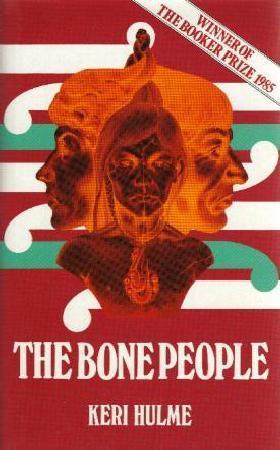
The Bone People

Rate this book
Integrating both Maori myth and New Zealand reality, The Bone People became the most successful novel in New Zealand publishing history when it appeared in 1984. Set on the South Island beaches of New Zealand, a harsh environment, the novel chronicles the complicated relationships between three emotional outcasts of mixed European and Maori heritage. Kerewin Holmes is a painter and a loner, convinced that "to care for anything is to invite disaster." Her isolation is disrupted one day when a six-year-old mute boy, Simon, breaks into her house. The sole survivor of a mysterious shipwreck, Simon has been adopted by a widower Maori factory worker, Joe Gillayley, who is both tender and horribly brutal toward the boy. Through shifting points of view, the novel reveals each character's thoughts and feelings as they struggle with the desire to connect and the fear of attachment.

450 pages, Hardcover

First published January 1, 1984

744 people are currently reading
46491 people want to read

About the author

Keri Hulme

17 books305 followers
Hulme, Keri (1947–2021), novelist, short story writer and poet, gained international recognition with her award-winning The Bone People. Within New Zealand she has held writing fellowships at several universities, served on the Literary Fund Advisory Committee (1985–89) and the Indecent Publications Tribunal (1985–90), and in 1986–88 was appointed ‘cultural ambassador’ while travelling in connection with The Bone People.

Born and raised in Otautahi, Christchurch, Hulme is the eldest of six children. Her father, a carpenter and first-generation New Zealander whose parents came from Lancashire, died when Hulme was 11. Her mother came from Oamaru, of Orkney Scots and Maori descent (Käi Tahu, Käti Mämoe). Hulme was schooled at North New Brighton Primary School and Aranui HS (Christchurch). Her holidays were spent with her mother’s extended family at Moeraki, on the Otago East Coast, a landscape filled with the residue of its Maori past, which remains important for linking Hulme with her Maori ancestors: ‘I love it better than any place on Earth. It is my turangawaewae-ngakau, the standing-place of my heart.’

The Bone People (Spiral Collective, 1984) won the 1984 New Zealand Book Award for Fiction, and the prestigious international Booker Prize in 1985. 'Set on the harsh South Island beaches of New Zealand, bound in Maori myth and entwined with Christian symbols, Miss Hulme's provocative novel summons power with words, as a conjuror's spell. She casts her magic on three fiercely unique characters, but reminds us that we, like them, are 'nothing more than people', and that, in a sense, we are all cannibals, compelled to consume the gift of love with demands for perfection' (New York Times Book Review).

Source: Read NZ https://www.read-nz.org/writer/hulme-....

Ratings & Reviews

What do you think?
Rate this book

Friends & Following

Create a free account to discover what your friends think of this book!

Community Reviews

5 stars
9,769 (40%)
4 stars
7,955 (33%)
3 stars
4,147 (17%)
2 stars
1,417 (5%)
1 star
645 (2%)
Displaying 1 - 30 of 2,387 reviews
Profile Image for Adina.
1,287 reviews5,496 followers
May 16, 2025
3.5*

Booker prize winner 1985

I am going to be short because it's been two months since I finished this omne. The Bone People is one of those novels which divide readers. Some love it and some hate it.

First of all, the writing style is extremely peculiar, a part poetry in prose, a part 3rd person narration and a part 1st person POV of different characters. The POV and writing style can change from one sentence to the next which gives the novel an air of surreality but it can also become frustrating, not always figuring out what is going on.

Another reason it might not be a book for many is that it deals with child abuse. There are three main characters in the novel: one peculiar lady modelled after the author, a widower who finds and adopts a young mute boy and, finally, the child. It becomes clear quite early that the child suffered abuse even before it was found with no memory on a beach after his boat capsized. However, he is also abused by his adoptive father and an important part of the novel deals with guilt vs impulse for violence of the father, the trauma of the child and the woman's debate over the acceptability of this behaviour.

Although the novel was hard to stomach, I appreciated its literary value and I do not regret reading it.
12 reviews21 followers
September 6, 2007
I have read this book 11 times. It's not because of my faulty memory (although I do have one), it is because this is my favorite fiction book of all time. The shape is unusual for a novel - it is not told in one voice or from one point of view. At times there is an omniscient narrator and at others it is told in the first person. It is the story of the journeys of three people back to the landscape of family. Sometimes free verse, sometimes standard prose, always poetic. Keri Hulme plays with the shape and feel of words themselves, giving the book a sensory quality not usually found just by reading. I do not want to give too much away because I feel that discovering this book is sort of like going on an amazing drive through beautiful country - just around the next bend there will be something wonderful, but each person will be struck by different things. For those who don't speak Maori ( myself included), she keeps a handy glossary at the end of the book for the phrases that are thrown in occasionally.
Profile Image for Hugh.
1,293 reviews49 followers
April 12, 2017
An original, personal and visceral novel, which for me is the kind of book that justifies the existence of the Booker Prize. The surface story is about the interactions between three difficult and damaged people, but there is a lot more to it than that - plenty of Maori culture, mythology and language (fortunately most of the latter is translated in the glossary) and a mixture of first and third person narrative voices including quite a lot of poetry. That may sound difficult, but the core story is quite gripping , though I must admit that I didn't try to follow everything. Hulme's introduction says that it started as a short story, but the finished novel is much more than that.

At the centre of the story is Kerewin Holmes, whose character must be at least slightly autobiographical. She is an artist of mixed European and Maori heritage, estranged from her family, who leads a self-sufficient and independent life in a tower she has built for herself on the New Zealand coast. Her life is disturbed when she finds a mute boy with an injured foot in her tower. The boy is Simon (or Haimona), who turns out to be a survivor of a shipwreck in which his parents are believed to have died. The third character is Joe, who found Simon and adopted him with his now dead wife. Both Joe and Kerewin are heavy drinkers. The story concerns their interactions, conflicts and culture clashes.

The story touches on some difficult themes, particularly Joe's relationship with Simon, which mixes extreme physical violence with a love that Simon needs more than anything else. Kerewin is asexual and dislikes physical contact, she is also fiercely independent. Part of the story involves the mystery of Simon's background - for example it is known that he already bore the scars of physical abuse before his adoption. I won't say too much more about the plot - I'm not sure I entirely believed the happy ending but it occupies such a small part of the book that it almost feels like an afterthought.

So a very interesting book, a little flawed but probably very memorable. I don't know why it took me so long to get round to reading it, but I would certainly recommend it.
Profile Image for Jennifer nyc.
353 reviews425 followers
August 23, 2025
One of the most beautiful books I’ve read. The lonely shores of New Zealand are rich with atmosphere like Eowyn Ivey's The Snow Child, and echo the lives of the three main characters who find each other and create an imperfect family. With some magical realism that comes from Māori culture, that’s where the comparison ends, since this feels tangible and hard sometimes, with lots of humor to bite. Really, it is about love—our need for it despite its imperfections, what it really means to provide it and want to, and how much we really want to be seen. It is about starting new again and again, each time making more conscious choices about what from our past to keep and what to throw away. From that core, it asks about community and what that means to individual relationships.

At first, I thought this might be a kind of epic poem the way the beginning was written. It took many tries before I felt immersed, but the world took hold and the prose became easy to follow, not just because I got used to it, but because the poetry and the use of Māori language is intermittent enough to immerse with flavor rather than push away.

The story is mainly told through the eyes of a part-Māori woman who lives alone in a tower, estranged from her family, and one day finds a six-yr-old boy inside her top window. But the third-person narrative weaves into the boy at times, and into his father, too, who joins the story when he picks up the boy from the tower. The boy is a bit of a mystery, the father his unofficial caretaker, and the reveals of the novel are all personal.

The end, like the beginning, is poetic and hazy and difficult to penetrate. But after being seeped in this world it worked its magic on me subconsciously, lifting and honoring sorrow with the value of living.
Profile Image for Whitaker.
299 reviews578 followers
May 28, 2014
This novel is a shining jewel, one with a huge flaw in its centre.

diamond with a flaw

It is still, however, an impressive and beautiful work, and a hugely ambitious one: an attempt to create a story that marries the disparate identities—Maori and European—that make up present day New Zealand. There is a realism-based story of friendship, self-destruction, and child abuse, and there is a symbolism-filled story of healing, catharsis, and the necessary fusing of Maori and European civilisations. Each is well-told but they don’t fit together. This is a problem because they are the same story. Hulme’s writing sparkles and plays fantastic tricks of light and manages to—mostly—obscure that flaw, but can’t make it go away.

The three main characters are Joe, Kerewin, and Simon/Haimona. They are respectively Maori, Maori-European, and European. All are estranged from their families and cultures, and deeply damaged. In each other, they find comfort and solace, but also hurt and pain. As I noted, a key story element in the novel is child abuse. It’s horrific and at the same time is a necessary trigger for the eventual catharsis that occurs.

When asked whether Simon/Haimona is a Christ figure, Keri Hulme, in an interview, replied that she doesn’t like categorising him like that because it might cast an approbatory light on the child abuse that occurs. She went on to say that she wanted to write about child abuse because it is a problem in New Zealand that is not acknowledged.

I can understand this desire. We can’t, however, get away from the symbolic, religious elements of the story because they seem just too carefully thought out and constructed. We have a trinity; we have a child that is “sacrificed” to a greater end; we have a father figure called Joseph; we have a mother figure who is a virgin; we even have a powerful image of the three in one: It is impossible to not see religious symbolism in this. To cap it all, the strength of the narrative derives its power from that symbolism.

These elements are not forced. They carry weight in terms of who the characters are and in terms of their narrative arc. But the story of these individuals has a powerful current that runs counter to the symbolism of the narrative arc. It is difficult on the one hand to decry the abuse and at the same time to approve the catharsis that follows, but this is what the work demands.

That Hulme even manages to fuse this contradiction into a whole is testimony to the strength of her writing. But it is not enough. The tension is just too great, and so, we see in it a crack, a cleavage that is not healed. Was this intentional: a symbol on a meta-fictional level of the cleavage between Maori and European civilisation in New Zealand? If so, that would be too clever by half. I would prefer actually that Hulme wanted to tell this story, and tried and failed to resolve its inherent contradictory forces. Somehow the passion behind that creative impulse moves me more than the idea of a cold crafting of a deliberately flawed work.

[An interesting discussion the book may be read at The Guardian Books Blog]
Profile Image for Paul.
1,471 reviews2,167 followers
May 22, 2019
4.5 stars
This was twelve years in the writing and was rejected by many publishers. It defies easy description and is very much set in the interface between Maori and western culture. There is complexity in the structure and a dose of magic realism at the end. The character of Kerewin Holmes is a remarkable creation who jumps out of the page.
The novel revolves around three characters. Kerewin Holmes is a solitary woman living in a tower, a painter who does not paint and who is estranged from her family. Joe is the adoptive father of Simon, a boy washed up on the beach, who isn’t able to speak and who has considerable behavioural problems and no sense of personal property. Joe has relatively recently lost his wife and child and he is now bringing up Simon alone. In this he is struggling and he is physically abusive and violent towards Simon.
Hulme is a great storyteller and her descriptions are vivid;
''watching the blood sky swell and grow, dyeing the rainclouds ominously, making the far edge of the sea blistered and scarlet''
There is a musicality and rhythm to it all; Hulme switches perspectives between her characters and mixes poetry with prose, also mixing English with indigenous Maori language.
There are lots of themes. All of the main characters are isolated. A sense of home and family life is often seen as something to be strived for as Simon thinks;
“He had endured it all. Whatever they did to him, and however long it was going to take, he could endure it. Provided that at the end he could go home. ……if he can’t go home, he might as well not be. They might as well not be, because they only make sense together. We have to be together. If we are not, we are nothing. We are broken.”
Hulme has said that interwoven threads is one of her favourite images in the novel. Hulme has taken two elements of postcolonial literature, language and magic realism and uses them to good effect.
One issue that cannot be avoided is the violence by Joe towards Simon. When Hulme writes the violence she strips back the language and makes it very stark. Hulme herself is very clear about why she did this; to address an issue in New Zealand. Hulme has stated that violence towards children was a “pervasive social problem in New Zealand, among Maoris and Pakeha . . . and she had written the bone people in part to draw attention to it”
Hulme gives the reader nowhere to go with this; Joe by being violent loses his Maori language and sides with the Pakeha, the western colonizers. His attempt to destroy Simon seems linked to the destruction of Maori culture. His redemption is linked to his rediscovery of his roots and culture. I only found this partially convincing; male violence is male violence, wherever it is found.
I must admit that I did struggle with some aspects of the ending, but the writing and language is captivating.
Profile Image for Trudie.
650 reviews753 followers
December 15, 2018
* 1.5 *
( Warning : spoilers, trigger warnings and unpopular opinion time )

C.K Stead is a fairly divisive figure in NZ literature and has been roundly rebuffed for his criticisms of both The Bone People and The Luminaries
After reading The Bone People for myself I went searching for his much maligned letter to the London Review of Books (1985) entitled "Maoriness" which can be found here
https://www.lrb.co.uk/v07/n21/letters

In amongst some perhaps unfortunately worded statements, I finally found a set of arguments about Hulme's novel that happen to dovetail almost exactly with my own reading of it. The letter is in no way entirely disparaging of the book and neither am I but this final paragraph stood out :-

I’m glad The Bone People has been written and published. But when I stand back from it and reflect there is, in addition to the sense of its power, a bitter aftertaste, something black and negative deeply ingrained in its imaginative fabric, which no amount of revision or editing could have eliminated. I suspect it has its location in the central subject-matter, and that this is something it shares with Benjamin Britten’s opera Peter Grimes, a work which also presents extreme violence against a child, yet demands sympathy and understanding for the man who commits it. In principle, such charity is admirable. In fact, the line between charity and imaginative complicity is very fine indeed.

A bitter after taste is precisely what I am left with here despite the books obvious power and lingering hold over me. Some of this writing is the best I have encountered in NZ literature, the sense of place, particularly for the South Island is unparalleled and Hulme takes a delight in word-play and poetry that initially made me think this was going to be a 5-star read. Also as Stead states :-

Simon is a major fictional character, the most complete, convincing and fascinating of the three, and all the more remarkable in that his personality has to be conveyed to us without spoken language

I would go further and say that Kerewin is just as fascinating. A singular personality the more so because she is so obviously a fantastical version of Keri Hulme herself. This makes things all the more problematic for me because despite the love she demonstrated for this Goblin, sun child as she calls Simon/Himi she fails him over and over again.

Lets take a look at how dated and tone deaf some of the this central subject matter is. I will let Joe and Kerewin do the talking here :

( The rating given reflects my distaste for the handling of the subject matter not as a reflection for the quality of the writing which is mostly exceptional and of course this is all a personal opinion and I do not hold any grudge towards readers who found this an entirely different and more worthy experience )
Profile Image for Adam.
27 reviews2 followers
February 5, 2013
The Bone People had been on my to-read shelf for almost a year, so I decided that it was a good first read of 2013. I wanted to like it; indeed, for the first hundred pages or so, I did. The language is unconventional but richly textured and evocative (and exotic to this American boy). This was enough that I didn't notice some major flaws until I was too far in to quit reading. Once I noticed them, however, they were impossible to un-notice.

My first problem with the book is that one slowly realizes that Kerewin is a bothersome character. Since she is arguably the most important character, this is an issue. If you've familiar with the mysterious, sometimes scary realm of fan fiction, you'll know the term Mary Sue. Kerewin has got the Mary Sues something bad. The similarity of her name to the author's is only the first clue. She's also fabulously wealthy, talented in art, music, and language, a survivalist, and oh--she can kill a man with her bare hands. In conversation and in monologue, she sounds exactly like someone with all of these traits would sound: that is, she sounds ridiculous. About three quarters of the way though the book, I was wincing every time she opened her mouth.


I'm not exactly sorry that I read The Bone People, but I don't think I recommend it.
Profile Image for Hanneke.
394 reviews486 followers
December 27, 2017
So, okay, Ms. Hulme, I already felt rather suffocated by your novel throughout the book, but you really tried to strangle me with your final chapters. I was going to rate the novel 3 stars. However, after those last chapters, I will now grant it a mere one star plus another one for the rather picturesque writing throughout the book.

Let me explain. I rather liked the sing-song quality of the narrative and in particular the inserted little snippets of poetry, contemplations and lamentations. What I truly hated were the two main characters who are just utterly unsympathetic. Hulme’s apparent alter ego, Kerewin, has serious character flaws and feels so elevated from mere humans that she does not want to commit herself in any way, even if a six year old boy, whom she claims to love, is ferociously beaten on several occasions, the last abuse so severe that the boy is within inches of death. She is convinced that the father, her new friend Joe, cares about his adopted son and that should be a sufficient reason to excuse his behaviour and for herself no reason to act in a decisive way. Subsequently, at the end of the book, Hulme seems to insist that her readers accept her idea of the redemption and forgiveness of Joe. It feels to me that she forgets that her readers might feel pretty disgusted by both Kerewin’s and Joe’s earlier pathological behaviour and are not in the mood to forget what transpired before. To help her doubting readers, she introduces sudden magical occurences which result in the elevation of Joe to a moral, even saintly, human being. Sorry, what drivel! Needless to say, I was relieved to finish the book.
Profile Image for Luke.
1,626 reviews1,192 followers
December 17, 2015
4.5/5

A rare mix of characters and languages and emotions indeed. Gripping. Kerewin is one of my all-time favorite characters; she's everything I am and so much more. The talent and the energy and the drive. Simply beautiful. I can't forgive Joe though. I can't. Moving on though. The story builds and builds and then the ending. Hardly satisfying. The flow of words was nice, I have to admit. The Maori language has a certain running quality that makes the sprinkling through tolerable, almost pleasant, despite the lack of understanding. So, higher than a four, but not a five. I don't agree with all of it. But I can't deny its unique beauty.
Profile Image for Warwick.
Author 1 book15.4k followers
April 25, 2025
It took me some time to adjust to the rhythms of this one, but when I did I found it a strange and powerful experience. We are on the South Island of Aotearoa New Zealand, in a world of sparse community, spiritual undertones, and a Maori-inflected natural world: manuka, weka, pakihi, kumara, huhu, katipo. The main characters have the stark outlines of tarot cards or symbolic figures (a boy with no voice; a woman who lives alone in a ruined tower), yet they are made deeply and feelingly human.

There's a lot of pain in here, and the characters often behave badly – in one particular case, unforgivably badly, I think. But the author does not ask for forgiveness. It's a wonderfully unjudgemental narrative: she shows people who are broken, and who are destructive, and she shows that this does not preclude healing, or community, or love. There's something very unusual and beautiful in that, even if you can't accept it (and I think there are serious concerns to be had about how much we should accept it).

The central protagonist, ‘Kerewin Holmes’, I assume to be a fictionalised version of Keri Hulme, the author. She's a very distinctive character, completely unlike the ‘heroine’ of any comparable novel. A pipe-smoking, whisky-drinking aikido master, she is utterly self-reliant – strong, capable, polysyllabic, artistically prolific, ‘Hard and taut, someone of the past or future, an androgyne’. Sexuality not only plays no part in her motivations, it is completely removed from her character: indeed I would say this is the most complex and thoughtful portrayal of asexuality I know in literature.

“I spent a considerable amount of time when I was, o, adolescent, wondering why I was different, whether there were other people like me. Why, when everyone else was fascinated by their developing sexual nature, I couldn't give a damn. I've never been attracted to men. Or women. Or anything else. It's difficult to explain, and nobody has ever believed it when I have tried to explain, but while I have an apparently normal female body, I don't have any sexual urge or appetite. I think I am a neuter.”


It's fascinating to see Hulme carving out the language to describe this in 1983; she even posits a ‘neuter personal pronoun’, ‘ve/ver/vis’. And it means that any ‘happy ending’ cannot simply be a lazy lovers' reunion, but instead must be a much more complicated and interesting kind of ‘commensality’ (as Kerewin calls it in the book), where people come together in bonds of family and friendship.

Hulme's prose is dense, and at times allusive; she slips in and out of internal monologue, hops between tenses for stylistic effect, and frequently breaks out into Maori. (Hulme had only one Maori great-grandparent, but considered herself Maori.) It's a curious and worthwhile novel – the only one Hulme finished, it was published by a New Zealand feminist collective and promptly won the Booker Prize in 1985, the first Kiwi novel to do so. I'm happy I finally read it, not least because I'm pretty sure they can revoke my New Zealand passport if I haven't.
Profile Image for Sara.
Author 1 book934 followers
March 13, 2022
Art and family by blood; home and family by love…regaining any one was worth this fiery journey to the heart of the sun.


Keri Hulme’s The Bone People is a complex story of love, isolation, and a search for identity, set in her native New Zealand. Much of the complexity of this novel rises from its treatment of opposites and how they interact and weave together in a life. How, for example, do love and cruelty exist within the same person and toward the same object? How does a person sort the good and bad and decide whether the one can ever offset the other? How does an individual balance his need for solitude with his need for companionship and understanding?

The three main characters are a half-Maori woman, Kerewin Holmes, who becomes involved in the lives of Joe, a Maori man, and his foster son, Simon, a white child. Kerewin is separated from her family and living an isolated life by choice, but in despair for the family she has lost.

A family can be the bane of one's existence. A family can also be most of the meaning of one's existence. I don't know whether my family is bane or meaning, but they have surely gone away and left a large hole in my heart.

Joe is grieving the loss of his wife and natural child to flu, and he is struggling with the difficulties that come with being a single parent to his foster son, who has disabilities and sometimes unbridled rage. Simon is unable to speak, an affliction that stems from his own loss of parents, and which is apparently psychosomatic rather than physical, but he has an intelligence that is sharp and so he rebels against not being understood or sometimes even acknowledged. Unlikely as it seems, the three form a bond that stems from some ability they have to understand one another, an ability that no doubt stems from their lonely, unfathomable similarities.

There is, at the heart of this novel, a dichotomy that I had difficulty dealing with, and that is the idea that a person could love deeply someone and yet hurt them repeatedly and severely. In order for the book to work, I believe this is a contradiction that you must accept. And, you must accept this as a path to self-discovery and self-recognition that can bring redemption. While I doubt I could ever believe this in the real world I live in, somehow I came to within the confines of this story.

Another aspect of the book that is very important, and which I admit to understanding only on a level that feels wholly inadequate, is the Maori culture and the search for identity within the peoples of New Zealand. Both Joe and Kerewin are a part of the Maori culture, and both are trying to live within the Pakeha (European) culture that has displaced it. The strength for each of them comes from the connection to their Maori roots and a large part of their hope for salvation lies in being able to reconnect to that lost part of themselves. I believe it is no accident that the pure Maori, the mixed Maori/Pakeha, and the pure Pakeha are represented in the three main characters, and that part of the struggle for them is to learn how to live together in harmony.

This is not an easy book. It is well-written, but written in an unusual style that incorporates various voices and the use of both prose, poetry and a vague stream of consciousness. It suffers a few times from being bogged down and repetitive, and would have benefited from being cut down in length by a good editor. However, it is a prodigious enterprise that leaves a stunning impression on the reader. Hats off to Keri Hulme. Definitely worth the reading!
Profile Image for Britta Böhler.
Author 8 books2,026 followers
November 6, 2022
I am a not overly enthusiastic about this book. Although some parts were beautifully written and engaging, in the end it failed to convince me.
The book deals with difficult issues, i,e. inter-familial violence, child abuse and alcoholism. Hulme paints a vivid, realistic picture and the characters (even the abusive stepfather) are not 'black and white'. But the 'hollywood-ending', where all is hopeful and the abusive father is reformed, didn't ring true to me.

Still, for readers interested in Maori culture the book might be worthwile.
This entire review has been hidden because of spoilers.
Profile Image for Lee.
1,263 reviews20 followers
July 21, 2022
When I recommended this book to my book club several years ago, the only other woman who had read it glared at me and said "if we pick this book, I am going to be REALLY mad at you" and so I withdrew the suggestion. This winner of the Man Booker prize is painful to read. It forces the reader to consider the complexity of human nature and behavior -- how thin the line can be between love and abuse. It is set in New Zealand and is about three wounded and likeable characters - a man, a woman, and a child.
Profile Image for Isis.
831 reviews50 followers
March 3, 2009
I out myself as a philistine, I guess, with my dislike of this painfully literary book, which I read only because I was in New Zealand and thought I ought to read a famous NZ author. Once I got past the aggressively defensive introduction (Idiosyncratic Author is idiosyncratic! I can dizzily swap first-person POV and use my own grammar and make up my own words because I am Artistic!) and the Mary-Sueish tinge of the central character being named after the author (*headdesk*), I found this book...confusing. Parts of it were interesting, parts dull, and hey, surprise woo-woo at the end (which I kind of wish had been introduced sooner, because it was cool, and actually, you know, went some where). I didn't particularly like any of the characters, but I suppose that was part of the point.
Profile Image for Albert.
524 reviews62 followers
March 13, 2022
The novel revolves around three characters and their relationships with one another; each of the three feels separated from their community for different reasons. Kerewin Holmes is a painter and a loner who values her solitude. She comes from a wealthy family from whom she is estranged, but she lacks for nothing material that she wants. She lives in a tower, alone, she does not seek out interaction with others, she does not like to be touched and like the author, considers herself asexual.

Joe Gillaylay, is a factory worker. He and his wife had adopted Simon, the lone survivor of a shipwreck. Joe then lost his wife and baby son to illness, and he was left alone to raise Simon. Simon is mute but has developed a short-hand method of speaking with his hands; he can also write very well at a young age. Simon is unable or unwilling to share anything he knows about his life prior to the shipwreck.

In each other, Kerewin, Joe and Simon find something they need, something they are missing, a blend of love, friendship and understanding. There is an intense love between Joe and Simon. Beware, though, at the core of the story there is extremely violent child abuse.

I know some readers will not want to read a story that deals so explicitly with child abuse. I think the author attempts to address the issue honestly. I have found novels that deal with ugly, distressing behavior to ultimately be some of my favorites (Lolita, The Collector). In addition to the subject matter, this novel was challenging to read. It incorporates a lot of indigenous, Maori, language but there is a translation reference at the back of the book to help you. More challenging is a mixture of 1st and 3rd person narratives, with the 1st person moving between the three main characters. There is also quite a bit of poetry interspersed throughout the story. For me it was helpful to not expect myself to understand everything, but instead to focus on enjoying the story, the characters and the setting. I did not feel the ending fit the story very well.

For anyone willing to take on the described challenges, I highly recommend The Bone People. The Bone People won The Booker Award in 1985; Keri Hulme was the first New Zealander to win this award. The Bone People is the only novel that Hulme has completed to date.
Profile Image for Meredith.
26 reviews7 followers
August 20, 2007
I cannot put my finger on why I love this book. I didn't really think it all that special when I read it, but it has stayed in my mind so vividly when many a lesser book has dissipated from my memory. I think the authors descriptions are understated while being vivid. I read the book years ago and I can still remember clearly descriptions of meals cooked, of the matter-of-fact efficiency the main character displayed in her solitude. All of the characters are overtly flawed, and the author doesn't just skip over that to tell a "happily ever after" story about friendship. Maybe I loved this book because it is not a fairytale. The characters you grow to love and empathize with are also the ones that drink to much and beat their children, or the ones who steal from you after you've generously given them money. These are not the heroes we put next to flags or on films, but they still come across the page as lovable. A very provacative novel.
Profile Image for George Ilsley.
Author 12 books314 followers
May 26, 2023
Have read this New Zealand novel a few times, and it never fails to grab onto my guts and wrench me into feeling so bad, and so good, all at the same times. I recommend it to friends just to make them cry. It brings me joy whenever a reader has to cry.

2022 update: Just learned that Keri Hulme passed away in late December 2021. I may read this again, and shed a few tears in her memory.
Profile Image for Vonia.
613 reviews102 followers
January 6, 2021
The Bone People (1983)
Author: Keri Hulme
Read: 12/4/20
Rating: 3.5/5 stars

The Good:
Taking place on the South Island in New Zealand, scattered through the text is an abundance of information for readers on the Maori culture and lifestyle, as well as life in a fishing village.

Highly descriptive narrative invites readers on a dark but evocative adventure to Oceania. Hulme's writing is raw and deeply sensual, often with a visceral quality.

Frequent use of the Maori language (although not too much that it inhibits understanding) further adds to the immersive, transporting power of the novel, making readers feel like they are witnessing authentic interactions.

Psychologically complex in its themes and ideas; astute examination of such "phenomena" as violence as a form of love, the nuanced repercussions of trauma, psychological struggles pertaining to belonging, identity, and loneliness.

Controversial topics are opened for much thought long after three last pages, particularly on morality. How much is too much when it comes to discipline. Questions of culpability- say, as occurred in this (thankfully) fictional story, you were consulted beforehand and "let" a father abuse a child? Does whatever happened thereafter fall under your responsibility? Are words only words?

One of the few books- particularly fiction books- that
Has a touch of magical realism (for fans of the genre) as well as references to spirituality and the occult, such as medicinal potions and tarot reading.

The Bad:
Experimental techniques, as noted below, can be discombobulating and make the story difficult to fully understand.

A good portion of the poetry is beautifully written. However, there is also much that may have been intended as "art", but honestly reads as incomprehensible, pretentious gibberish.

Religious connection here comes off as forced and intrusive; doesn't even make it's argument clear. Father (figure) named Joseph, Trinity of three main characters, sacrifices, renewal, religious awakenings, virgin mother- a mother figure who is a virgin. The entire final section which mentions Christianity frequently, yet still makes little to no sense except broad allusions to ancestors, Maori culture, various religions.

There is undoubtedly much lost in translation, but too much seems deliberately alienating- not only drenched in Maori vernacular, but also occult and even witchcraft, venturing into such beliefs as cannibalism. While this may be fascinating, more fascinating would be fascinating material conveyed in a comprehendible manner.

An uncomfortable read for most, with graphic scenes, violence, and some darker forays into the human psyche.

Takes a questionable moral stance on a few issues, primarily alcoholism (in general and by a young boy), smoking (mostly cigars, also by a kid), and child abuse. At best it condones, at worst it endorses. Here is the worst of it: "... it all shows you cared deeply. In a negative way, so does the fact that you beat him. At least, you worried enough about what you considered was his wrongdoing to try and correct it." (page 235) So causing near lethal pain and suffering is true love?

The "Experimental":
The text has a disconnected quality, namely due to the intermittent Maori phrases. Although most can be guessed at through the context, it can feel jarring. Hulme includes a glossary at the back of the book, selecting some words and phrases either at random or those she deemed most important and listed by page number. But this resulted in more intrusion than aid. Some suggestions that would have been far more effective: 1) have a general glossary in alphabetical order, 2) to have actually defined every word written in Maori rather than selectively 3) used reference symbols like in footnotes to prevent unproductive flipping to the back. As it is written, readers will unfortunately likely find themselves flipping to the back frequently, only to be frustrated most times upon discovery that Hulme did not deem a word or phrase worthy of the glossary. It seems like she may have purposely been selective with her glossary entries, in order to alienate the reader a little bit not not too much.

The novel is told from three character perspectives. Frequently, Hulme will segue into internal monologue, clearly marked by an indented paragraph. What is not so clear is exactly whose thoughts they are and when she deems it necessary to indent, as other internal thoughts are written with regular formatting. With characters also referring to themselves in third person, it is often difficult to discern whose point of view is indeed being taken.

Dreams play a significant part, sometimes interspersed between narrative of what is taking place in reality. Can be confusing to tell which is which.
Several instances where Hulme writes poetry or something that certainly wouldn't quite be considered prose. Fragmentary, vague words and passages.

Mysticism, folklore, myths and legends plays as a backdrop throughout the narrative, and takes center stage in the third and final part of the novel- in which a spiritual trek and awakening takes place involving Maori ancestors and gods. By far the most gibberish- sounding portion of the book.

#TheGoodTheBadThe_Review #adoption #alcoholism #artistlife #asexuality #barasmainsetting #BookerPrize #bothoneandfivestars #beach #bloodyviolent #cannibalism #castle #childabuse #childPOV #Christianity #crime #deathofspouse #dreams #dubiousparentage #fatherson #folklore #fuckedupchildhood #ghost #island #kleptomania #loneliness #magicalrealism #multiplepointsofview #musicperformance #mute #mystery #nature #NewZealand #occult #onaboat #orphan #parenting #PegasusPrize #poetry #religion #streamofconsciousness #storywithinastory #suicide #uniquechaptertitles #weather
This entire review has been hidden because of spoilers.
Profile Image for Christmas Carol ꧁꧂ .
963 reviews834 followers
December 31, 2015
I read this book not long after it's release. I remembered it having a slow start and then building up to a shattering climax.

The scenes that had an impact for me still do. This book does a wonderful job of exploring a complex relationship that was both loving & violent. Some of the prose was quite beautiful & I didn't mind the liberties Hulme took with descriptive words.

There are also a few flaws.

Kerewin is at least partially autobiographical (the similar names are a little clue!) and I could just feel Hulme's smug approval of Kerewin's actions. Personally I found her insufferable at the start, although she did improve in the middle of the book & I liked the character's honesty about her part in the outcome for Simon.

I had forgotten the ending. Was a bit Mills & Boon for me. Thought Hulme wimped out a bit there.

Not a masterpiece (Mistresspiece?) but a very fine book & an important part of New Zealand's literary landscape.

Profile Image for David.
744 reviews170 followers
December 23, 2018
What a mess of a novel. The initial promise of a 4-star experience was systematically dismantled by the author herself. Interesting setting and carefully crafted imagery are ultimately all for naught. Hulme launches her literary clay pigeons and then recklessly shoots each one out of the sky until all that's left are shards nobody cares about.

What follows is a rant so feel free to stop reading here if that kind of review upsets you.

Broken, wounded people can, and do, perpetrate terrible harm upon themselves and others. It is mighty unpleasant to read about such things but I do so (now and then) to expand my sensibilites; I won't walk away from a book just because it's emotionally challenging. But we all have our limits and this one tested mine repeatedly. Take such a story, stretch it out for 550 pages, romanticize the suffering, and consistently make excuses for the hideous abuse on display, and you have definitely lost me. Add to all this the many uneducated, simple characters using words like "exemplar" and "fanatacism" - and Dr. Sinclair Fayden, World's Least Convincing Pediatrician, who smokes cigars with his seven-year-old patients and colludes with victims of Child Abuse in order to "sneak" them back into the care of their abusers - and it's easy to understand why Hulme "had been rejected by some of the country's major publishers".

There are aspects of "The Bone People" that made it interesting and not a complete waste of time. This is a rare international award-winning novel from New Zealand, and that stunning landscape and environment are strongly represented. Maori language and culture permeate throughout. The celebration of coastal living really appealed to me, having been raised by a rugged shore myself. It is always compelling to have outsiders as protagonists and everyone here is beyond mainstream society. And there is a strong presence of ancient spritual voices. So much potential!

In terms of characterization, I was most fascinated by Kerewin. There is a lot going on there. Her abundant flaws - including some very unattractive traits - are believable and well-delineated. Given that she's clearly autobiographical might explain her particular strength. In any event, she's well done. Simon followed next as often interesting but he is also a bit of an avatar and not fully developed. Joe, however, was quite poor in many respects and the least persuasive protagonist. In fact almost every minor character (many of whom appear indirectly and for only a few pages) seemed more credible.

Hulme's attempts at giving Joe depth did not work for me. The information she provides the reader - by way of explaining the motivations behind his erratic, destructive behaviors - is weak and unconvincing. We are asked to believe that he is intelligent, perceptive, charming, and willing to do just about anything in order to bring love back into his life. Why, then, the Jekyll and Hyde transformations which are brought on by the smallest of insults? Why the careful depictions of shame and remorse followed by his casual returns to obscene violence against a vulnerable child? Why his inability to understand Simon when their behaviors are so similar? When Joe takes center stage after page 400, it became much harder to stay interested in the proceedings. I was ultimately undone by this supposed epiphany following his release from prison:

"I know I exacerbated his reckless wounding of himself, but now I am not allowed to give him even shelter..."

This is the extent of his understanding following a criminal conviction for extreme, chronic child abuse? Aue. He aha tou mate? E whakama ana au ki a koe! I realize that we all have contradictory natures, but this is the very antithesis of intelligent, perceptive, and charming. It was all a bridge too far and a road too long.

"The Bone People" is obviously not New Zealand's best effort in fiction and I look forward to better experiences ahead.

1.5 stars rounded up
This entire review has been hidden because of spoilers.
Profile Image for Wyndy.
241 reviews106 followers
August 6, 2018
One of the most original, difficult, and compelling books I’ve read in a long, long time. I don’t really know how to explain this novel or the spell it cast on me, so I’ll throw out some random tidbits: An artist and loner named Kerewin Holmes, estranged from her family and resistant to human touch, lives alone in a remote tower near the Tasman sea. A mute young boy washes up on a New Zealand beach, barely alive after surviving a boat wreck that assumedly kills his parents, with no clues to his identity. Joe Gillayley, a local factory worker and happily married man, finds the child, names him Simon, and provides him a home with himself and his wife. These three individual characters - Kerewin, Simon and Joe - become inextricably bound, and this novel is their complex story. There’s mystery and tension, brutality and gentleness, Maori magic and spirits, despair and hope.

This was a stunning, though often uncomfortable, read for me, and it’s certainly not for everyone (as you can see from the varying GR reviews). If you decide to read this 1985 Booker and Pegasus Prize winner, my advice is don’t try to make sense of every word - just let some of the unusual free verse and random, alternating narrative wash over you. This one is going on my keepers shelf (at least for now) to join some other favorites I plan to reread.
Profile Image for Vivian.
2,919 reviews483 followers
October 19, 2017
The ocean was the only song in the book that I enjoyed.

That said, it was a fascinating insight, but, like a door you never wished you opened. Hulme is a gifted wordsmith, rich, evocative language that paints a harsh and salt-stained landscape, which really gives a sense of New Zealand's vast wild spaces, also the staggering alcoholism, racial tensions and blithe brutality. . From a strictly objective point of view the story is stunning. Truly. Unfortunately, it is drawn out.

Reading about people getting blinding drunk, being stupid, belligerent and abusive-- and then sick, nine of out ten days is not riveting.

Reading about a kid being brutally beaten regularly, not a couple slaps or strops of a belt, but broken bones and scars that will never go away physically or emotionally, is depressing.

Reading about other people thinking something should be done, and doing nothing, well... that's F#@king infuriating.

I have to give some leeway for the fact that this was published in the eighties. While corporal punishment used to be commonplace, thrashing your kids was not. It was never acceptable.

There is a mysticism and magical realism employed within the story that blend well with the native Maori beliefs. There is an intense amount of Maori language used, so the index in the back is not a perhaps I'll use it supplemental because unless you understand basic phrases, titles, and terms of endearment then you'll miss significant context. I read this in paperback form so I can not speak to whether or not ebooks have clickable references, but it would be invaluable.

Finally, my knowledge of NZ politics and racial issues is nil or near as nil as to be completely useless. Nonetheless, it is obvious within the story how characters are judged on how "Maori" they are from physical looks, to language skills, and beliefs. This is interesting, but it also makes the brutality of Simon, an extraordinarily "white" character disturbing. I haven't read any critiques about this, but it would be interesting to discuss with someone who had greater understanding of the issues.

So, the theme really didn't appeal to me. The storytelling itself is beautifully worded if repetitive and drawn-out. The ending, well here's where it fell apart. Unrealistic and vague, as if more palatable closure was needed then either was laid out throughout the story or frankly, deserved by the characters.

As much as I love the ocean, I don't want to visit here, again.

Betelgeuse, Achenar. Orion. Aquila. Centre the Cross and you have a steady compass.
But there's no compass for my disoriented soul, only ever-beckoning ghostlights.
In the one sure direction, to the one sure end.
Profile Image for Jenny (Reading Envy).
3,876 reviews3,709 followers
November 28, 2015
I read this as part of my self-declared New Zealand November in 2015. It checks of a few boxes for me - Oceania 2015, a Man Booker Prize winner (I'd like to read them all eventually) from 1985, female author, etc. Keri Hulme is also part Maori, which made this a deeper cultural read about the country.

From the publisher's description, I was expecting a pretty straight-forward novel:
"In a tower on the New Zealand sea lives Kerewin Homes, part Maori, part European, an artist estranged from her art, woman in exile from her family. One night her solitude is disrupted by a visitor – a speechless, mercurial boy named Simon, who tries to steal from her and then repays her with his most precious possession. As Kerewin succumbs to Simon’s feral charms, she also falls under the spell of his Maori foster father Joe, who rescued the boy from a shipwreck and now treats him with an unsettling mixture of tenderness and brutality."
Instead I discovered a book mixing poetry inside of prose, stream of consciousness inside of third-person narrative, rotating points of view inside three unusual minds, and a setting with fantastical elements, sometimes from Maori mythology, sometimes Keriwen's or Simon's own ideas. It was simultaneously easy and complex to read and is unlike anything else I can think of that I've read.

It's funny because the only books I can think of that are similar are recent New Zealand reads. I don't think it is a unique experience to New Zealanders where the outsides don't match the insides, but so far that has been a far more prominent theme in New Zealand literature than in any other place of origin. The insides that are unexpected range from artistry to mental illness, abuse to psychopathy. The world is seen both as it is and in an elevated sense, through the lens of myth or a different mind. Why in New Zealand, I wonder? Is the mystical connection to the land just that more recent here of all places?

Don't listen to the people who poo-poo this book. It doesn't feel like an Oxford or MFA educated writer musing about their contemporary experience because that isn't who the author is.
Profile Image for Bbrown.
909 reviews116 followers
March 20, 2014
You know those books that you finish thinking that it was alright, but as time goes on and your mind mulls it over you begin to like it more and more? The Bone People is the opposite kind of book, to the extent that coming back to write this review I was surprised to find I had given it two stars instead of one.

Where to begin with this terrible attempt at a novel? Well, the opening of poems and snippets of disjointed text without context served as a confusing start to the book, and even once you return to it after finishing the book and knowing what is going on it's needlessly opaque. In general the structure of the book is a mess, with the first two-thirds of the book being an almost completely realistic depiction of life before switching over in the final third to a story replete with the supernatural. Jarring, to say the least. Additionally, this book is far longer than it needed to be, and a properly aggressive editor would likely have shaved off at least a hundred pages.

Beyond the structure the content is also painfully bad. The main character, Holmes, is a bizarre insert of the author that is a rich, brilliant artist who is also a martial arts master. Sure she laments at times about her lack of connection to other people, but the book paints this as Holmes being too cool for everyone else more than an actual inability to be social with other people. She feels like a edgier attempt at a Mary-Sue, and at times I cringed while reading the parts of the book focusing on her.

She's not the main problem, however, as the character of Joe and the book's attitude toward his actions fills that role. It is revealed somewhere at around the halfway mark that Joe is being abusive toward his adopted son Simon, the third main character. We're talking beatings that put Simon's life in danger. The book still treats Joe as a sympathetic character despite this, even when Joe's beatings put Simon in the hospital and bring him within a hair's breadth of death.

Hulme is on record as saying she wanted to write about the issue of child abuse when she wrote The Bone People. Someone needs to tell her that writing about an issue is more than just including an instance of that issue happening in your book, you also have to explore the effect of that message or take a stand on that issue. I'm assuming she didn't intend to do either, because the end of the novel appears to preach that child abuse isn't that bad and that being around an abusive adult is a good option so long as he claims to care. At the end of the story Simon is desperate to return to Joe, his abuser, and in general the novel takes the approach that by removing the child from his care the government was making a mistake, as they just "didn't understand the relationship the two had."

Such a message is disgusting. I'm going to give Hulme the benefit of the doubt and assume she's merely an incompetent writer, instead of evil.
Profile Image for Semjon.
763 reviews497 followers
September 23, 2021
Dieses mit dem Booker Prize prämierte Werk aus dem Jahr 1985 ist wahrlich schwere Kost. Wer dezidierte Schilderungen von Gewalt gegen Kinder nicht lesen kann, dem sei davon abgeraten. Ich denke, dass ich hart im Nehmen bin, aber zumindest verstört und mitgenommen war ich durch die Schilderung des Dreiecksverhältnisses Junge-Adoptivvater-Nachbarin auf jeden Fall. Keri Hulme nimmt sich sehr viel Zeit, ihre handelnden Person durch Selbstreflexionen, Gedankenströme, Schilderung von Handlung und Dialogen plastisch werden zu lassen. Ihr Schreibstil ist dabei sehr eigenwillig und komplex, da die vier genannten Erzählformen und erzählende Person teilweise von Satz zu Satz wechseln können. Dies erfordert vom Leser Phantasie und vor allem komplexes Denken und viel Aufmerksamkeit beim Lesen. Ich habe schon lange nicht mehr so viel Lesezeit für ein 650 Seiten Buch gebraucht. Das liest man nicht mal so nebenher.

Simon, der Siebenjährige, ist Überlebender eines Schiffsunglück in Neuseeland. Seine Herkunft ist nicht bekannt. Er wird nach dem Unglück von Joe, einem Maori, groß gezogen. Simon spricht nicht, ist rebellisch und in seinem Zorn kaum zu beendigen. Joe bestraft ihn mit Schlägen, die aber keine Wirkung auf das Verhalten des Kleinen haben. Eines Tages taucht der Junge bei Kerewen auf, eine Achtel Maori, die eigentlich keinen Wert auf den Kontakt legt, doch sie kommt von Joe und Simon nicht los. Alle drei Figuren sind gefangen in ihren Problemen und Unzulänglichkeiten. Doch so gebrochen brauchen sie auch Halt und diesen finden sie dann doch immer wieder in dem toxischen Dreieck.

Ich fand dies sehr beeindruckend geschrieben, auch wenn vor allem am Ende die maorische Mystik über meine Vorstellungskraft ging, was zum Sternabzug führt. Über weite Strecken ist dies ein 5-Sterne-Psychogramm von Menschen, die sich auf der Suche nach sich selbst und die Liebe Anderer verloren haben. Traurig, aber sehr lesenswert.
Profile Image for Tania.
123 reviews9 followers
August 20, 2011
The Bone People is, quite simply, the most powerful, moving, stunning book I have ever read. The characters are well drawn. I wanted to hate Joe, but he was in so much pain that I couldn't, really. I never excused what he did - and Hulme did not ask the reader to do that. She challenges the reader to look at our society as a whole; to see what we do to people and how we as communities play a role in creating some of the violent, terrible situations that result in children being abused.

I know that some people found that the mysticism in the latter section of the novel took away from the book. I disagree. I found that it fit in well with the story and helped flesh out some of the messages the author was trying to get across. Some of the imagery in this novel is absolutely breathtaking. I have never been so utterly moved and transfixed by a novel as I have by this one. It challenged my perceptions and it made me a different person when I was finished it.

The book is quite long, and it can be slow in a few spots. I found that I had to read it twice. I admit I did hate Joe the first time I read the novel; I really only began to understand him the second time I read the book. This is a complex, multi-layered work that speaks to a wide range of issues: child abuse, spirituality, community, and culture.

I highly recommend this novel to everyone. You may not like it or agree with it, but you will be impacted by it. It still haunts me today.

Profile Image for John.
1,680 reviews131 followers
November 29, 2023
I thought I had read this novel when it was first published but now I am unsure. Memory or false memory is a strange feeling. Being a New Zealander I can understand the context of punishment on children. When I was growing up their was still corporal punishment at school. Parents did not spare the rod or in my mums case the rarely used wooden spoon while my father his hands. Now I think New Zealand has changed although their is still child abuse it is not on the scale it was historically.

Simon, Joe and Kerewin all have their demons. The adults fueled by alcohol and lack if control. Simon, mute and traumatized by a ship wreck and a past of fear and abuse. The story is a fable. The stereotype of Maori being mystical and spiritual is for the majority a fantasy. Although there are some and it’s growing where their history and heritage is part of their identity.

Kerrwin is too good to be true. Artist, philosopher, martial arts expert and of course estranged from her family without any explanation of why. Joe a laborer in a factory given custody of Simon after his wife died. Unlikely, he struggles to understand Simons violence, destructive behavior and the only discipline he has is his fists.

Towards the end of the book they all undertake a metamorphosis. Joe is healed mentally and spiritually after getting out of jail by meeting an old Maori who is the guardian of a relic and been waiting for him. Joe becomes the new guardian. Simon recovers in hospital and becomes more stable but still independent. Kerewin goes to the brink of death and is in a way reborn a better person. She forgives and becomes more giving, accepting and tolerant.

A strange book and by its very strangeness a worthy winner of the Booker Prize. Yes, it is a visceral story with child abuse and the language is repetitive at times. I would still recommend it. During my reading of the book the author Keri Hulme died. She never wrote another novel but this one is a fine tribute.
This entire review has been hidden because of spoilers.
191 reviews11 followers
December 31, 2015
I really enjoyed this to start. Well written, the blending of first and third person was really interesting, and I liked Kerewin a lot. I thought the presentation of broken, flawed people was well done also.

On the other hand, the latter half of the novel is overlong and deviates from the flow of the first half in its attempt to bring each of the main characters to a spiritual, then physical resolution.

Finally, Simon. Joe is the worst parent, and Kere is a terrible babysitter. Both alcoholic, both totally cool with Simon doing whatevs including drinking and smoking &c. And ultimately, I just can't get past the constant and absurdly vicious child abuse. I don't mind unpleasant topics in books, but this was resolved so unsatisfactorily that I kind of hate the whole book now.
Profile Image for Amanda.
1,199 reviews275 followers
March 10, 2016
3.5 rounded up. I first read this book in the early 90's and I didn't remember that much of the story but I remember living it. This time it was on track to be a 5 star read until I got to the last part and then it just went off the rails for me. Sometimes I really enjoy rereads and sometimes I think they are a terrible idea.
Displaying 1 - 30 of 2,387 reviews

Can't find what you're looking for?

Get help and learn more about the design.