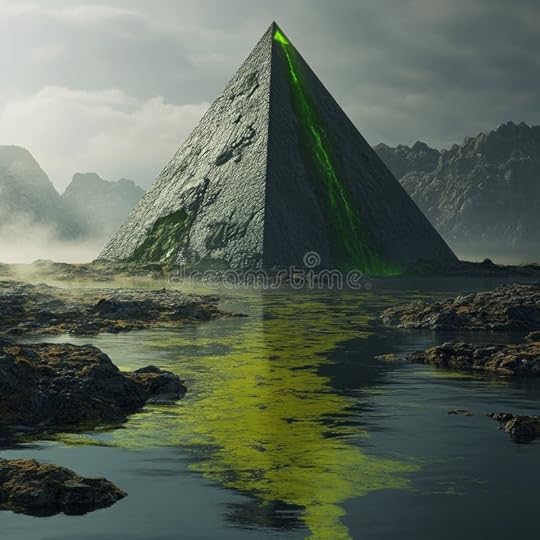
For thousands of years the Grigori have lain hidden, dreaming of the day when they will emerge from the darkness. Now that day draws close.
Norma, Trixie and Ella fight doggedly to frustrate these plans, but they need help. Percy Shelley must lead Norma to the Portal in NoirVille so she can return to the Real World. Trixie's father must convince her that, if she is to destroy the Great Pyramid standing in Terror Incognita, she must be prepared to die. And Vanka Maykov - though not the man she knew and loved - must guide Ella to the secret enclave of the Grigori, where she will face the most chilling of enemies.
In this explosive finale to the Demi-Monde series, our heroes will come to understand that resisting evil will require courage, resolve... and sacrifice.
Краят на четирилогията е зашеметяващ и почти напълно компенсира тегавите втора и трета част. Рийс дава не просто свобода на въображението си, а го подплатява с интелигентен анализ на човешката природа и технологичните и политически капани на днешния ден.
Тук в картинката най-сетне се появява и американската армия, ползваща Деми-монд като тренировъчен симулатор. Генерал Салах-уд-дин (Саладин) се изправя срещу антисемита и апологет на самодържавието Константин Победоносцев. Загадките на Терор Инкогнита с нейната пирамида от мантит най-сетне са разкрити, а АББА рязко се намесва в играта.
Двата свята - Деми-монд и “реалният” - окончателно влизат в синхрон, а бъдещето и миналото се заплитат в кълбо.
Прелест! Книжен сериал в чудесен формат.
4,5⭐️
🪬”Всяка религия [...] - или който и да е друг -изъм - е доктрина на победата, чиито поддръжници са доволни само тогава, когато противниците им са покръстени, подчинени или унищожени."
Триадата от силни женски образи води читателите към неподозирани нови хоризонти, а историята е всичко друго, само не и праволинейна. Ако Рийс шофира по същия начин, по който пише, значи едва ли зачита знаците, забраняващи обратните завои. Изобщо, завои да искаш в „Деми-монд: Есен”. Ако първата книга ви е зарибила, но някъде из втората и третата сте започнали да изпитвате съмнения дали точно на тези 2000+ страници да посветите времето си за четене, при наличието на толкова други примамливи благинки по книжарниците... то „Деми-монд: Есен” ще разсея съмненията ви, а краят на това пътуване ще ви остави удовлетворени и благодарни, че сте били на борда. Прочетете ревюто на "Книжни Криле": https://knijnikrile.wordpress.com/202...
Excellente série donc, qui trouve sa conclusion dans un quatrième tome à la hauteur de ses prédécesseurs.
Comme je le soupçonnais déjà à la lecture du tome 3, le récit se déroule cette fois largement (mais évidemment pas uniquement) dans le monde réel, où doivent se décider l'avenir et de l'Humanité, et du Demi-Monde.
Les différences entre le monde réel du roman et le nôtre, qui étaient apparues de manière discrète au fil des tomes précédents se révèlent être finalement très importantes, avec une Terre dominée par un Empire britannique sorti grand vainqueur de la seconde guerre mondiale et des USA et un URSS très en retard sur leur rival.
Le cycle du Demi-Monde s'avère donc être in fine une uchronie fort habilement dissimulée.
Ce dernier tome conclut brillamment, quoique de manière un brin gentillette, cette série, qui restera pour moi un très bon souvenir de lecture.
Amazing conclusion to an incredible ride through history and fiction! WOW!
I have to admit I wasn't entirely sure about books two and three in this series, they felt like they got off track from the wonderful first book's vision. I was very much mistaken, you just need to get through all four books and then it all becomes so clear, and so incredible!
The first book was something of a revelation for me, it taught me various things about some history and historical figures that I was unaware of, and made me more interested in learning about these things. After that, the middle two books were slightly disappointing because they appeared to have deviated from the path set-out by the first, however all this was revealed to be a misinterpretation of things.
For a final book in a series, I'd have to say this one outdid any other final books I've so-far read in any series. Oftentimes the final book proves to be a disappointment, lets face it, they usually just don't live up to whatever hype the previous book(s) generated for the series. This one was a shocker for me, I thought I had the whole series figured out after the third book, and boy was I wrong! Twists, twists, more twists, I had no idea the rollercoaster had only started giving me a ride in the first three books.
I really don't want to get too specific, because I really don't wish to ruin it for anyone, but seriously, just go read this series, if you start to have doubts in books two or three, don't fret, it all makes sense in the end!
One could not wish for a better wrap-up to any book series, Rod Rees did an incredible job with this one! I enjoyed it all thoroughly! I really hope Mr Rees will write lots more in the future, I dig his style.
Mein Fazit ist, in aller Kürze: Die Reihe ist nicht gut gealtert. Ich habe neulich ein ganz wunderbares Zitat gelesen, das sinngemäß besagt, dass eine Buchrezension nicht das Buch an sich bewertet, sondern meine Erfahrungen und Gefühle beim Lesen des Buches in Worte fasst. Und aus dieser Position heraus spielt es keine Rolle, dass das Buch 2014 veröffentlicht wurde, wenn ich es 2024 gelesen habe und schimpfen möchte. Denn ich möchte viel schimpfen.
Fairerweise: Teilweise bin ich selber schuld. Nachdem Band drei mit einem wirklich gemeinen Cliffhanger aufgehört hat, war ich ungeduldig und habe die Leseprobe von Band 4 gelesen. Und die war wirklich, wirklich langatmig. Ich bin mir sicher, es gäbe spannendere Wege, diesen Teil der Lore, des Weltenbaus und der Figurencharakterisierung unterzubringen. Und da ich dann ein paar Wochen später das Buch bekam, las ich es eben noch einmal ... und war noch mal angeödet wie sonstwas. Teilweise ... ich weiß schon, warum mir der Tipp "Show don't tell" auf den Keks geht. Statt also in einem knackigen Infodump (der aufgrund der Collage-Struktur der Kapitelanfänge auch wunderbar z.B. als Schulbucheintrag, Lexikonartikel etc. funktioniert hätte) präsentiert das Buch die Dinge immer wieder in einer Ausführlichkeit, die teilweise antiklimatisch wirkt. Mich jedenfalls hat es unglaublich frustriert, dass ca. 50% des Buches damit verbracht wird, Nebenschauplätzen hinterherzujagen, um Dinge zu zeigen. Die Episoden waren als solche zwar teilweise sehr unterhaltsam (wie der Auftritt einer jungen Auralistin, die eine große Rolle spielen darf), aber teilweise auch mühsam, weil sie so sehr zeigten, wo das Buch schlecht gealtert ist - beispielsweise, als ein Typ namens Judas sich in eine Terrorzelle einschleusen soll, deren Inkompetenz eine schlechte Kopie von "das Leben des Brian" darstellte. (Und dass ich die latenten Untertöne des internalisierten Antisemitismus von Rod Rees extrem unangenehm fand, schrieb ich schon in meiner Rezension zu Band drei.) Was ich außerdem anfangs noch halbwegs wegignoriert bekam, war mir hier auch zu viel: Male Gaze. Allzu oft besteht die Beschreibung weiblicher Figuren aus zwei Eigenschaften - Haarfarbe und Brüste. Und da irgendwie der Großteil des in Band vier noch lebenden Casts weiblich war, gab es ständig Erwähnungen davon, wie Brüste aussahen. Oder wie sie durch Kleidung/Bewegungen hochgehoben wurden. Oder wie sie in Szene gesetzt werden.
(Mit anderen Worten: Elemente, die in vorigen Bänden noch ignorierbar verteilt waren, treten im letzten Band geballt auf.)
Letzten Endes habe ich sehr lange darüber nachgedacht, was mich am Twist und am Ende stört. Und es sind mehrere Aspekte:
- Das Buch verrennt sich komplett in seinen eigenen Verwicklungen. Es gibt den Startkonflikt ("Ella reist in die Demi-Monde, um Norma zu retten und gerät dabei in eine Intrige, die Jahrzehnte umspannt. Die ganze Welt steht auf dem Spiel!"), der sich in drölfzigtausend Nebenschauplätze aufsplittet. Teilweise ist das sinnvoll im Kontext des Plots, weil gut 80% dieser Nebenkonflikte gezielt und absichtlich in die Welt gesetzt wurden, um davon abzulenken, was wirklich gespielt wird. Es ist in diesem Kontext auch absolut logisch, dass diese Nebenkonflikte ständig dem Plot nervig ins Gehege kommen - hier war nur für mich manches Mal das Maß überschritten. Statt erhöhter Spannung gab es ein genervt geseufztes "Boah, die auch noch. DIE haben jetzt gerade noch im Plot gefehlt". Aber am Ende muss der Grundkonflikt irgendwie gelöst sein. Das passiert hier zwar, aber auf eine Art, bei der ich mich veralbert fühlte, weil ganz am Ende Erkenntnisse präsentiert werden, die dem Inhalt der bisherigen Bände widersprechen. (Wenn Person A und Person B angeblich die gleiche Person sind, wie erklärt sich dann die Begegnung in Band drei, bei der Erkenntnisse passieren?) Dadurch, dass die Auflösung so als "Gotcha" präsentiert wird, hatte ich außerdem das Gefühl, ums Mitraten gebracht zu werden. - Ich fühlte mich am Ende betrogen. Das Buch endet auf eine Weise, die mir das Gefühl gibt, dass ich mir das Mitfühlen, das Sorgen darüber wer überlebt und das Mitfiebern mit all den Figuren eigentlich auch hätte sparen können. Und das, nachdem es durchaus sehr viele Seiten investiert hat, um mich emotional sogar an die dranzutackern, die ich anfangs nicht so gemocht habe oder die mir egal waren. (Vielleicht war dieses Gefühl ja sogar die Absicht dieses Endes. Aber ich rezensiere meine Erfahrung mit dem Buch und die war "Ich mag das nicht"). - das Ende hatte auf mich nicht den gewünschten Impact (oder nur einen Teil davon) weil der Übergang dazu für mich nicht glaubwürdig war. (Möglichst spoilerfrei: Eine Person bekommt eine Lösung präsentiert, von der sie anfangs absolut nicht überzeugt ist. Sie hält das Ganze für eine absolut unsinnige Idee, aber ... weil Baum? ist sie auf einmal doch total überzeugt davon und vertritt es sogar vor einer großen Menschenmenge unter Gefahr für Leib und Leben.) Mir fehlt die Begründung dafür, woher der Sinneswandel kommt - als wäre nach 200 Seiten Exposition auf einmal nicht mehr genug Platz gewesen, um glaubhaft herüberzubringen, wie eine Person von "Ich lehne das ab, das ist Humbug" zu "Diese Idee wird die Menschheit vor dem Untergang retten" gelangt. Hier hätte es auch Potential gegeben, um die Probleme, die ich mit den Punkten davor hatte, aus der Welt zu schaffen. Einfach indem der Plottwist weniger wie "ich komme aus dem Nichts" eingetreten wäre. - Ich bin mir immer noch nicht sicher, ob es an mir liegt und ich nur unaufmerksam war oder ob ich tatsächlich verpasst habe, woher im Non-Virtualitäten-Plotstrang Dong E das plotentscheidende Ding hatte, das am Ende ... den Plot entscheidet. (Falls es das tatsächlich tut, siehe Punkt 1 dieser Liste.)
Ich glaube im Endeffekt: Diese Reihe wollte extrem viel und hat ein paar extrem gute Ideen, viele tolle Wortspiele, aber ist in Hinblick auf Diversität, Figurenbeschreibungen und Handwerk einfach nicht gut gealtert. Dazu kommen Sachen, die auch 2014 schon schlimm istisch waren, mir aber 2024 extrem negativ auffielen. Bei einem Buch, auf das ich nicht fast zehn Jahre gewartet hätte, um es zu lesen, hätte ich die Geduld nicht aufgebracht und es eigentlich schon irgendwo in Band 3 in die Ecke gepfeffert. Betrachte ich es als verlorene Lebenszeit, es gelesen zu haben? Das nun nicht. Ich habe erfahren, wie es ausgeht und was dahintersteckt, auch wenn ich zwischendurch sehr verwirrt war. Und ich habe durch den langen Abstand zwischen der ersten und zweiten Reihenhälfte und durch den Sprachenwechsel einiges gelernt. Das war wertvoll. Und nun ist das aus dem System und ich kann hoffentlich jetzt was anderes lesen.
Fall is a good conclusion to the series. I'll admit that during the start of this book, I was sort of feeling finished with this world. However, the plot was interesting, with the return of some characters who's missing (or change) I found negatively impacted the story. Fall explored the JAD and Noirville, two areas of the demi-monde previously overlooked. It also explores the real-world in more depth, showing how it differs from the world in which I write this review. The world building was very interesting and detailed. About 2/3rds through the book, there is a significant section full of exposition. I wasnt a fan of this. About 2000 pages into the series, there should not be enough missing information to require so much exposition. On the bright side, I really loved the ending. The "we've sorted everything out... but oh no..." ending is my favourite trope, so I was very glad to see that it waznt all roses.
It's been a bit of a slog to get to the final page of the Demi Monde saga. Book #4 Fall doesn't quite reach the epic heights I was expecting. There's a lot of exposition as we switch points of view into the Real World and the hard SF elements of the storyline are rolled out to cover the more fantastical parts that stay within the virtual reality Demi Monde (that is apart from the vampiric Grigorii)
What we're left with is an alternate history / steampunk fantasy / temporal adjustment / adventure novel and all of this hurts the characters. Not just in the sense that they are going to have to make sacrifices if the war to stop the Forth Right in the Demi Monde or the fight to stop ParaDigm in the Real World will see some of them getting killed off. No, this is more on the sense that what were three-dimensional characters in earlier books are now just cut-outs being pushed around the stage of the novel by the author.
Rees has done a fantastic job in creating the world within the Demi Monde, it's the crossover to the Real World and the revelations that come in this book that take away much of that success
So... book four and the last in the series, and what a Tome it is! All the threads of the previous books are brought satisfyingly together (though the final explanation of what's been going on is delivered via quite an info dump towards the end) while also, via the second of the 'epilogues', slightly bizarrely leaving things open for a sequel somewhere down the line. I don't want to give away any spoilers, but for me, this was the only slight disappointment of the novel, as it all just felt a little too neat. The other 'epilogue' is a deeply philosophical piece, seemingly tacked on for those who want to get their heads round the intricacies of the author's thought processes in more detail. I for one am always a sucker for the philosophy underpinning a novel, so rather liked this parting gesture... a bit of a reward for having stuck with it through the four seasons of the Demi-Monde. In short, I feel this is a satisfying ending to what has been quite a journey, and undoubtedly a creative tour de force, but if you are coming new to the series, I cannot stress enough how important it is to read these books in order! It all begins with Winter, people!
The final book in the series... It was a bit of a struggle to be honest. I love the series, the story and the characters, the word plays... But this last book was maybe a book too many. I was excited to see how things will end and it was different to what i expected, interesting. What threw me was the good 100 pages before the ending where it got really "wordy" and i ended up skimming for the important parts. I never skim... But the explanations became unnecessarily detailed with a constant flow of complicated words (I promise you I'm intelligent enough to deal with big words, but it made the book feel like a dry textbook from an old library. For a good 100 pages... I choked on it.) It took away some enjoyment from the ending, but I'm glad i got through and i still hold a lot of love for the world and the characters.
I dove into the last book in the series almost immediately after completing book three. Unfortunately, it did not have the same impact as the first three books. I found much of the final book lacking the same intensity and the same focus on good plotting. It felt a chore to read much of this, and I finished the series a little disappointed.
I honestly don't know yet what to think about the conclusion. Something about it just didn't work for me - I can't quite put my finger on it. I like the concept of artificial consciousness, and how that became a core factor in the series. I'm just not sure if the ending really felt justified.
In any case, over all this was a good series. One that I'll be happy to hand all four books onto somebody else to enjoy.
Много силен завършек на четирилогията. Изпълнена с много обрати и увлекателна до самият финал. Затваряйки книгата наистина изпитах задоволство за времето, което отделих на поредицата. Род Рийс има неподражаем стил и огромно въображение. Прочетох "Есен" може би година след третата част -"Лято", защото си мислех, че няма накъде повече да се доразвие историята, а то какво се оказа. Леле,леле, остави ме без думи краят. Новаторска, различна, поразява със стила и замисъла си. Не мисля, че ще допадне на всеки, но лично за мен си струва всичките близо 2000 страници.
I have mixed feelings about this series. It's long, it's a little inconsistent. I loved some of it, and then other sections left me disappointed. I finished it because I really had to see how it would all work out. There were many surprises, and there were times I could not put the books down. Other times, I wondered if I would make it to the next chapter.
I put off reading this final book in the Demi-Monde series for months; I just didn’t want it to be over. A great ending to a unique and hugely imaginative series.
The first book was great - a uniqure environment in which to set a wild story. Most (all?) characters were established and the stage was set. Books two & three were good, but sometims confusing. By the time I made it to the finale, I had no idea what to expect. All I can say is *wow*. It tooks turns that were completely unexpected, and brought new ideas into this crazy story. I have no idea how the author developed such an insane imagination, but I appreciate it! It was great, and I am glad I read it!
One would think if I rated the first three books in the series at 4-stars, then the author would come through with something similar, but not so. This was very unique and creative like the others, but the telling of the story never grabbed me. I never really cared. By the end I just wanted to hurry and get it over with.
The last book in this series is even crazier than the rest, but I still loved it, even the discussions I would usually not find interesting. Great world building, interesting characters and one wacky plot.