

What do you think?

The Wind City
Wellington. The wind city. New Zealand’s home of art and culture, but darker forces, forgotten forces, are starting to reappear. Aotearoa’s displaced iwi atua – the patupaiarehe, taniwha, and ponaturi of legend – have decided to make Wellington their home, and while some have come looking for love, others have arrived in search of blood.
A war is coming, and few can stand in their way. Saint (lovably fearless, temporarily destitute, currently unable to find a shirt) may be our only hope. Tony, suddenly unemployed and potentially a taniwha herself, has little choice but to accept the role her bloodline dictates. And Hinewai, who fell with the rain? If she can’t find her one true love, there’s a good chance that none will live to see the morning.
Wellington will never be the same again.
A war is coming, and few can stand in their way. Saint (lovably fearless, temporarily destitute, currently unable to find a shirt) may be our only hope. Tony, suddenly unemployed and potentially a taniwha herself, has little choice but to accept the role her bloodline dictates. And Hinewai, who fell with the rain? If she can’t find her one true love, there’s a good chance that none will live to see the morning.
Wellington will never be the same again.
328 pages, Paperback
First published November 13, 2013
About the author
Rem Wigmore
14 books17 followersRem Wigmore is a speculative fiction writer from Aotearoa New Zealand, author of the solarpunk Vengeful Wild duology (Foxhunt and Wolfpack). Their other works include Riverwitch and The Wind City, both shortlisted for Sir Julius Vogel Awards. Rem’s short fiction appears in several places including Baffling Magazine, Capricious Magazine and two of the Year’s Best Aotearoa New Zealand Science Fiction & Fantasy anthologies. Rem’s probably a changeling, but you’re stuck with them now. The coffee here is just too good.
Ratings & Reviews
Friends & Following
Create a free account to discover what your friends think of this book!
Community Reviews
Displaying 1 - 30 of 38 reviews
February 28, 2014
It’s raining in Wellington, sometime soon or not so long ago. Saint has been feeling miserable, maybe due to an odd encounter he had on a bus the other day but he can’t quite remember, only knows it has something to do with a girl and a twisting of sorts, somewhere in his mind. Honestly, discovering his flatmate is a bloodthirsty maero – one of the iwi atua roaming Aoteroa since time began – hasn’t really helped his mood. Lucky for Saint he’s made a new friend then, and so what if Noah isn’t technically alive?
Boutique sci-fi publisher Steam Press is dedicated to presenting speculative Kiwi fiction in the form of “gorgeous paperbacks”, and this care and attention to detail is obvious here: the book is a delight, from the cover design and font, to the sketches of Wellington that begin each chapter.
Full review here
Recieved from Steam Press through NZ Booklovers.
Boutique sci-fi publisher Steam Press is dedicated to presenting speculative Kiwi fiction in the form of “gorgeous paperbacks”, and this care and attention to detail is obvious here: the book is a delight, from the cover design and font, to the sketches of Wellington that begin each chapter.
Full review here
Recieved from Steam Press through NZ Booklovers.

Read
October 19, 2015Imagine a quirkier Rivers of London. Or a darker Gods Behaving Badly. Or a more complex and queerer Neverwhere. Or a more earth-bound (well, earth-set) Perdido Street Station. Now take that, put it in a Wellington, New Zealand, populated with Māori atua. Have you done that? Okay, then you have just a hint of the awesome weirdness that is Summer Wigmore’s The Wind City. The book is urban fantasy of the highest order—fun, smart, surprising, textured, morally ambiguous—and definitely worth a read. — Derek Attig
from The Best Books We Read In August: http://bookriot.com/2015/08/31/riot-r...
from The Best Books We Read In August: http://bookriot.com/2015/08/31/riot-r...

June 28, 2018
So basically if ca. 2004-era Joss Whedon, Sarah Rees Brennan and Peter Jackson got really drunk (and possibly otherwise intoxicated) together and decided to collaborate on a book where Sarah did plot (whimsical teenagers! doing whimsical yet dramatic plot things! and magic! and bonding! and done now! shhh, don't ask if it all made sense!), Joss did dialogue/characters (but was SO off his head he couldn't come up with any new ones so just badly pastiched some of his old ones) and Peter did setting and mythology (something something Maori have gods and spirits and fairies and shit, right?), you might end up with The Wind City as a final product.
I didn't remotely hate this. For the first 100 pages or so I genuinely enjoyed it - yes, so everyone and everything was basically a remix of all Joss Whedon things and Doctor Who things and Neverwhere, and all the characters were more than just vaguely familiar and all the dialogue consisted of Buffy-esque snark and/or Firefly slang liberally sprinkled with every pop culture reference ever from presumably every pop culture thing the author has ever enjoyed, with trademark lines directly lifted from said things. But! For a while that was fun. I like most things Joss Whedon and Doctor Who etc. It was all extremely ridiculously over the top but it was enjoyable in a silly but lovable way.
But then I got tired of the dialogue being nothing BUT snark and the characters being nothing BUT thinly disguised rip-offs and the motivations and plot making no goddamn sense. I got especially tired of one of the main characters (and unfortunately the one who gets the most attention), who is meant to be a flawed but relatable rule-breaking charmer and is actually a borderline psychopathic genuine fucking asshole. As the story passed the halfway point and there was still no particular reason why this idiot needed to be quite so stupid or quite such a dick to absolutely everyone or needed to be redeemed instead of just bloody killed for all the horrible things he's done, I got really really cranky about this douchenozzle. It didn't help that he's written as a deliberate Spike wannabe, because that just made his doucheyness more obvious - yeah, Spike snarks a lot, but he's not JUST snark and he has motivations and a history that make sense and his snark wasn't just empty one-liners, he told people true things whether they wanted to hear them or not. This guy was nothing BUT empty one-liners. I never got a sense of why I should sympathise with him (the book is very thin on his background) or why he is so casually mean to his friends and utterly unquestioning about murdering sentient beings. I had zero fucks to give about this arse, honestly.
Despite this, there were things I loved about this book. It's not often you get decent urban fantasy set in Wellington and I enjoyed the sense of the city as a character and the obvious love the author has for it. I enjoyed wandering through the streets and passing the landmarks along with the characters. There were some lovely lyrical sections about the city that were absolutely beautiful and I wish there'd been more of that. I really liked the use of Maori mythology, although I do wish there hadn't been quite so much repackaging of it for a Western audience with terms like goblins and fairies and nymphs and such (she did use their actual names and stories for the most part but every once in a while there'd be a sudden reference to "fae" or something that was weird in this context). I liked most of the characters and mostly just wish someone else had been given a major part (like, why was Steffan not the MC? He was so much more interesting than Saint!). One of the other main characters is Maori and there was a nice helping of queer rep (bonus points for pan).
So yeah. For about half the book I had fun. For about half of it I was irritated. And I have never ever wanted anything or anyone to shut up talking about my favourite TV shows before I read this book, so I guess that's an experience? :p I don't know. This could have been thoroughly lovely if the aggressively whimsical pop culture reference snarkfest of "hey look we can all quote Buffy and Pirates and Princess Bride, let's see who can come up with the craziest metaphor bonus points if you make all the words all wonky wheeeeeeee" idiocy had been toned down a whole lot and if the primary MC was not a genuine scrotal wart that we were somehow expected to root for.
2.5 stars rounded (barely) up, because of the Cuba Street spirit.
I didn't remotely hate this. For the first 100 pages or so I genuinely enjoyed it - yes, so everyone and everything was basically a remix of all Joss Whedon things and Doctor Who things and Neverwhere, and all the characters were more than just vaguely familiar and all the dialogue consisted of Buffy-esque snark and/or Firefly slang liberally sprinkled with every pop culture reference ever from presumably every pop culture thing the author has ever enjoyed, with trademark lines directly lifted from said things. But! For a while that was fun. I like most things Joss Whedon and Doctor Who etc. It was all extremely ridiculously over the top but it was enjoyable in a silly but lovable way.
But then I got tired of the dialogue being nothing BUT snark and the characters being nothing BUT thinly disguised rip-offs and the motivations and plot making no goddamn sense. I got especially tired of one of the main characters (and unfortunately the one who gets the most attention), who is meant to be a flawed but relatable rule-breaking charmer and is actually a borderline psychopathic genuine fucking asshole. As the story passed the halfway point and there was still no particular reason why this idiot needed to be quite so stupid or quite such a dick to absolutely everyone or needed to be redeemed instead of just bloody killed for all the horrible things he's done, I got really really cranky about this douchenozzle. It didn't help that he's written as a deliberate Spike wannabe, because that just made his doucheyness more obvious - yeah, Spike snarks a lot, but he's not JUST snark and he has motivations and a history that make sense and his snark wasn't just empty one-liners, he told people true things whether they wanted to hear them or not. This guy was nothing BUT empty one-liners. I never got a sense of why I should sympathise with him (the book is very thin on his background) or why he is so casually mean to his friends and utterly unquestioning about murdering sentient beings. I had zero fucks to give about this arse, honestly.
Despite this, there were things I loved about this book. It's not often you get decent urban fantasy set in Wellington and I enjoyed the sense of the city as a character and the obvious love the author has for it. I enjoyed wandering through the streets and passing the landmarks along with the characters. There were some lovely lyrical sections about the city that were absolutely beautiful and I wish there'd been more of that. I really liked the use of Maori mythology, although I do wish there hadn't been quite so much repackaging of it for a Western audience with terms like goblins and fairies and nymphs and such (she did use their actual names and stories for the most part but every once in a while there'd be a sudden reference to "fae" or something that was weird in this context). I liked most of the characters and mostly just wish someone else had been given a major part (like, why was Steffan not the MC? He was so much more interesting than Saint!). One of the other main characters is Maori and there was a nice helping of queer rep (bonus points for pan).
So yeah. For about half the book I had fun. For about half of it I was irritated. And I have never ever wanted anything or anyone to shut up talking about my favourite TV shows before I read this book, so I guess that's an experience? :p I don't know. This could have been thoroughly lovely if the aggressively whimsical pop culture reference snarkfest of "hey look we can all quote Buffy and Pirates and Princess Bride, let's see who can come up with the craziest metaphor bonus points if you make all the words all wonky wheeeeeeee" idiocy had been toned down a whole lot and if the primary MC was not a genuine scrotal wart that we were somehow expected to root for.
2.5 stars rounded (barely) up, because of the Cuba Street spirit.

January 9, 2020
I first came across this book when I was in my publishing class and an editor came in to talk about his publishing house (Steam Press). He handed over this book and the first thing I felt was an affinity to its presence. Then I read the first page and I knew I had to buy it. Three years later, I found it in a bookstore in the middle of nowhere NZ and bought it. And it was a great purchase.
Summer Wigmore delivered her first novel with brilliant wit, a delicate interweaving of myth and fiction, and remarkable dialogue. And yeah, it also helped that she wrote about the city that I currently live in.
I cannot comment enough on the mastery of Wigmore's use of humour among her characters. Honestly, it's enough to make the writers of Doctor Who take notice. Thoroughly enjoyable.
Summer Wigmore delivered her first novel with brilliant wit, a delicate interweaving of myth and fiction, and remarkable dialogue. And yeah, it also helped that she wrote about the city that I currently live in.
I cannot comment enough on the mastery of Wigmore's use of humour among her characters. Honestly, it's enough to make the writers of Doctor Who take notice. Thoroughly enjoyable.

October 8, 2017
A charming novel that brings modern characters and ancient mythology together in a Wellington love letter.
For those familiar with Māori mythology and/or New Zealand's capital city, this book certainly captures the imagination. It was these elements that first drew me to the book. Various cameos and in-jokes create a sense of familiarity for those in the know. For those unfamiliar with these elements of the story, the light-hearted tone and witty, colourful cast of characters are enough to draw you in and appreciate the energy and charisma of the author, Summer Wigmore.
The reason I have only reviewed two stars is because I felt that despite its charm, The Wind City just missed the mark. The writing style and character development was original and refreshing, but too often clumsy. The dialogue felt a tad over-stylised, which was at times as distracting as it was endearing.
But for me, what stood out most was that Wigmore hadn't quite mastered who the ideal reader of the novel was. A Wellingtonian? A New Zealander who may never have visited Wellington but is familiar with NZ culture and Māori myths? Or a complete stranger to Wellington and New Zealand altogether?
Places in Wellington were described in minute detail and focused on minor points and technicalities (the description of the Public Library, for example). As a Welllingtonian myself, the descriptions were of course unnecessary for me to picture the scene, yet I felt they were almost too detailed to fully make sense to someone less well acquainted with the city. I was already in love with Wellington when I picked the book up... but it wasn't me that Wigmore should have been trying to convince.
Overall, though it was not particularly well written, I would still recommend this book to those interested in New Zealand fiction.
Here’s why: As an urban fantasy novel, it champions the city as a setting and this is something seldom seen in mainstream NZ fiction. It's refreshing to see a city celebrated as a home of stories and hub of culture, particularly as New Zealand novels often favour wild or rural settings, or use cities to tell stories of tension and violence. The Wind City goes a step further as a fantasy novel, drawing parallels between the ancient and modern and suggesting that cities are recesses of energy comparable to nature.
For those familiar with Māori mythology and/or New Zealand's capital city, this book certainly captures the imagination. It was these elements that first drew me to the book. Various cameos and in-jokes create a sense of familiarity for those in the know. For those unfamiliar with these elements of the story, the light-hearted tone and witty, colourful cast of characters are enough to draw you in and appreciate the energy and charisma of the author, Summer Wigmore.
The reason I have only reviewed two stars is because I felt that despite its charm, The Wind City just missed the mark. The writing style and character development was original and refreshing, but too often clumsy. The dialogue felt a tad over-stylised, which was at times as distracting as it was endearing.
But for me, what stood out most was that Wigmore hadn't quite mastered who the ideal reader of the novel was. A Wellingtonian? A New Zealander who may never have visited Wellington but is familiar with NZ culture and Māori myths? Or a complete stranger to Wellington and New Zealand altogether?
Places in Wellington were described in minute detail and focused on minor points and technicalities (the description of the Public Library, for example). As a Welllingtonian myself, the descriptions were of course unnecessary for me to picture the scene, yet I felt they were almost too detailed to fully make sense to someone less well acquainted with the city. I was already in love with Wellington when I picked the book up... but it wasn't me that Wigmore should have been trying to convince.
Overall, though it was not particularly well written, I would still recommend this book to those interested in New Zealand fiction.
Here’s why: As an urban fantasy novel, it champions the city as a setting and this is something seldom seen in mainstream NZ fiction. It's refreshing to see a city celebrated as a home of stories and hub of culture, particularly as New Zealand novels often favour wild or rural settings, or use cities to tell stories of tension and violence. The Wind City goes a step further as a fantasy novel, drawing parallels between the ancient and modern and suggesting that cities are recesses of energy comparable to nature.

August 30, 2017
I found this book via a tumblr post, and I can see how it ended up there.
The informal prose, and the goofy vocabulary of our two POV characters, were a bit much at times. I found myself skimming over large patches of text when it got too wordy.
Still,
Overall, I enjoyed this book for the breath of fresh air that it was (haha get it? oh geez someone's probably already made that joke before)
The informal prose, and the goofy vocabulary of our two POV characters, were a bit much at times. I found myself skimming over large patches of text when it got too wordy.
Still,
Overall, I enjoyed this book for the breath of fresh air that it was (haha get it? oh geez someone's probably already made that joke before)

October 12, 2013
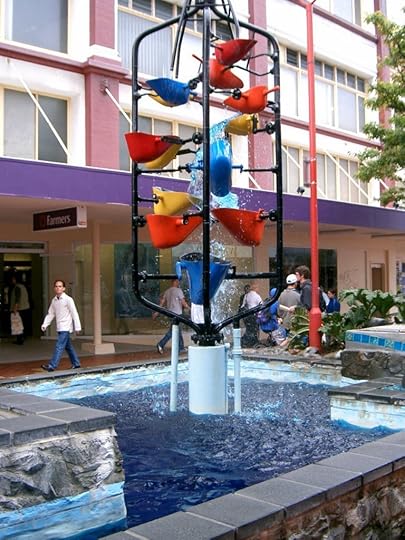
Someone finally read my memos and wrote the book I've been wanting to read since I first discovered the urban fantasy genre. Urban fantasy in Wellington with the paranormal elements taken from Māori mythology. And there is a spirit of the Bucket Fountain. My life is now complete.

December 10, 2013
The Wind City is set in Wellington, New Zealand. I grew up here and have very intimate knowledge of the the landmarks and the setting of the plot. After reading Wigmore's book, I felt like I had another whole layer added to my city, that, while written as fiction and fantasy, might just possibly be there. I now look sideways at a the central Library and the famed Bucket Fountain (not just because of Elijah Wood).
This book made me laugh and also cry. A couple of the characters have stayed with me and I enjoyed getting to know them. I also enjoyed the use of New Zealand myths and legends incorporating Maori and historic references. Although you wouldn't have to have foreknowledge of either. It isn't overblown, nor tokenistic, and it doesn't follow the frantic paranormal trend, nor does it buck it.
It stands on its own. It makes good use of pop references. Read it, you'll most likely like it.
This book made me laugh and also cry. A couple of the characters have stayed with me and I enjoyed getting to know them. I also enjoyed the use of New Zealand myths and legends incorporating Maori and historic references. Although you wouldn't have to have foreknowledge of either. It isn't overblown, nor tokenistic, and it doesn't follow the frantic paranormal trend, nor does it buck it.
It stands on its own. It makes good use of pop references. Read it, you'll most likely like it.

November 16, 2016
This book has so much going for it but is seriously marred by the ridiculous writing throughout most of it. It reads like a rejected write-in script for a Buffy novel. Occasionally the author slips into more descriptive writing, and that is really good, so it's a shame she didn't scale back the banter and rambling internal monologues throughout. Also, the (joint?) main character's motivations are completely incomprehensible, in a way that can't simply but put down to his being written as a cross between Spike and Jack Sparrow.
Still, there was enough promise to keep me reading to the end: the setting, the concepts, most of the other characters and the plot, which rattles along. I'll look out for more from Wigmore in future.
Still, there was enough promise to keep me reading to the end: the setting, the concepts, most of the other characters and the plot, which rattles along. I'll look out for more from Wigmore in future.

September 13, 2019
anyone who liked this is lying to themselves and that’s all i have to say on the matter

December 13, 2013
The Wellington City Library is a fine building, sweeping around the western edge of Civic Square creating a horseshoe with the Town Hall on the south and the City Art Gallery (the old library) on the north of the square. It is a fabulous library, and (not something we hear that often) a fine piece of 1980s design – light, open, spacious and with an excellent collection, and fine coffee bar on the mezzanine. What most of us haven’t spotted is that on Victoria Street, just north of the main doors, there is a second coffee bar, less obvious through a portal between two columns – but you have to know it is there to see the door. Here, in the coffee bar known as Hikurangi, there are never many people, but there is always a good number of iwi atua – fae and spirits, maybe a patupaiarehe or two, occasionally a ponaturi and if you’re really lucky a taniwha.
At least that’s the way it is Summer Wigmore’s delicious story of Aotearoa’s displaced iwi atua, who’ve decided that settling in Te Whanganui a Tara is the thing to do – but the problem is that many iwi atua, such as the maero who’ve come across from Te Wai Ponamu and many of the patupaiarehe aren’t that good with humans, tend to hold them in contempt and in some cases not averse to a bit of homicide (the maero, well they hunt, fatten up and dine on humans – but they’re not the kind of iwi atua you’d necessarily want to have round for dinner, or even drinks).
Enter Saint, and his wairua guide Noah. Noah has a mission to save humans but as a spirit being (wairua) he’s unable to physically engage, so he conscripts Saint, chic, hip, stylish Saint with his awesome coat, Saint, unsuspecting flatmate to a maero and with the ability, it seems, to make and throw fire. Saint becomes Noah’s weapon, his way to stop the iwi atua. Enter Tony, small businesswoman running dolphin spotting tours on the harbour, who suddenly finds herself unemployed, boatless and it seems a taniwha – so not just the daughter of a Central Otago orchardist. Enter Hinewai, Tony’s neighbour, tall, angular, supermodel beautiful, haughty and contemptuous – a patupaiarehe looking for her one true love. Finally, enter Steff, quantum physicist turned anthropologist of the iwi atua and Saint’s old school friend. Here, in the principal dramatis personae we have the basis of Wigmore’s alt-world struggle for the soul of humanity, and parable of the colonisation of Aotearoa’s spirit world and its old ways.
It turns out this spirit world is wracked with the problems, envies, rivalries and fractiousness of the human world, struggling with the effects of domination and the politics and rights of presence and guardianship, of local stories and meanings and of entitlements to be of any particular place. Wigmore has conjured up a sense of place and presence that makes sense of the soul of the city – a place of politics and commerce, of art and culture and of a now deep-seated coffee culture – and the struggles of mutual adaptation of the old and new ways to the shape and form of the ever changing new place.
I’m trying to resist reading it as a post-colonial metaphor (even though it is), because it is also a crackingly good yarn, twisting and turning with moral ambiguity and misinterpretation and just a little deception and duplicity, and offerings of fish. This is an inventive, engaging, entertaining novel packed with great characters (among the minor characters I have to confess to a soft spot for the sprite of the bucket fountain, with her rainbow hair, and the cool barista Rongo), tragedy and redemption (of several kinds) with a lightness of tone and deftness that belies its author’s teenage and its first novel status.
File under fantasy, alt-world, speculative fiction and thoroughly enjoyable.
At least that’s the way it is Summer Wigmore’s delicious story of Aotearoa’s displaced iwi atua, who’ve decided that settling in Te Whanganui a Tara is the thing to do – but the problem is that many iwi atua, such as the maero who’ve come across from Te Wai Ponamu and many of the patupaiarehe aren’t that good with humans, tend to hold them in contempt and in some cases not averse to a bit of homicide (the maero, well they hunt, fatten up and dine on humans – but they’re not the kind of iwi atua you’d necessarily want to have round for dinner, or even drinks).
Enter Saint, and his wairua guide Noah. Noah has a mission to save humans but as a spirit being (wairua) he’s unable to physically engage, so he conscripts Saint, chic, hip, stylish Saint with his awesome coat, Saint, unsuspecting flatmate to a maero and with the ability, it seems, to make and throw fire. Saint becomes Noah’s weapon, his way to stop the iwi atua. Enter Tony, small businesswoman running dolphin spotting tours on the harbour, who suddenly finds herself unemployed, boatless and it seems a taniwha – so not just the daughter of a Central Otago orchardist. Enter Hinewai, Tony’s neighbour, tall, angular, supermodel beautiful, haughty and contemptuous – a patupaiarehe looking for her one true love. Finally, enter Steff, quantum physicist turned anthropologist of the iwi atua and Saint’s old school friend. Here, in the principal dramatis personae we have the basis of Wigmore’s alt-world struggle for the soul of humanity, and parable of the colonisation of Aotearoa’s spirit world and its old ways.
It turns out this spirit world is wracked with the problems, envies, rivalries and fractiousness of the human world, struggling with the effects of domination and the politics and rights of presence and guardianship, of local stories and meanings and of entitlements to be of any particular place. Wigmore has conjured up a sense of place and presence that makes sense of the soul of the city – a place of politics and commerce, of art and culture and of a now deep-seated coffee culture – and the struggles of mutual adaptation of the old and new ways to the shape and form of the ever changing new place.
I’m trying to resist reading it as a post-colonial metaphor (even though it is), because it is also a crackingly good yarn, twisting and turning with moral ambiguity and misinterpretation and just a little deception and duplicity, and offerings of fish. This is an inventive, engaging, entertaining novel packed with great characters (among the minor characters I have to confess to a soft spot for the sprite of the bucket fountain, with her rainbow hair, and the cool barista Rongo), tragedy and redemption (of several kinds) with a lightness of tone and deftness that belies its author’s teenage and its first novel status.
File under fantasy, alt-world, speculative fiction and thoroughly enjoyable.

November 1, 2018
66 points/100 (3 ½ stars/5)
The Wind City had an amazing start. I was captured immediately. I kept wanting to quote parts of it at people, and did probably annoy quite a few people about it when I started. I was so amused and excited about it in the beginning. I mean, we have a...who knows what at that point create a human body and go "You must be my true love.". Brilliant! I love it already.
I loved how this was urban fantasy that didn't have any vampires or werewolves or witches. It was all Maori. It was people and things and beliefs I had no idea of before I read this. I had no idea it could create such a rich world. At some point, I'm going to have to look up just how much of The Wind City was based in true myths and how much was made up. There was just so much! What little of the book that was dedicated to Maori myths was really fun and enlightening.
There are three main leads in the series, and pretty much all of them are unreliable narrators by virtue of none of them having a clue about the atua before the start of the book. Every single one of them is learning, and they're learning from different people who are all telling their side of things. The truth, of course, is somewhere in the middle. I actually like all the leads. They each have their own thing, their own purpose. I just wish they did more.
It was the vast middle of the book that I found boring, and it is where this book lost most of its points. I.just.didn't.care! I just wanted something to happen. Everything that was happening seemed to happen off screen! We just ended up hearing about it later on as if they didn't matter. Then we went right back to just..talking and going place and doing nothing in particular.
See, this book is pretty much exactly the Maori version of American Gods by Neil Gaiman. The Wind City is about a bunch of kind of fae, kind of god like people or creatures who are trying to learn how to live in a modern world with humans. They're cold and cruel and they do not have the same morals or emotions as us. And they manage to convince a few humans that they should work with them, to different goals. And the middle is just so dull. There are just so many parallels.
Yes, the ending was actually almost worth it. It was over really quickly, and I'm not quite satisfied with parts of it. Yet, it fit. I went from crushing boredom to interested again within a few paragraphs. It made that change quickly, and I really enjoyed the direction it took. I just feel like this book could have easily been half the length.
The Wind City had an amazing start. I was captured immediately. I kept wanting to quote parts of it at people, and did probably annoy quite a few people about it when I started. I was so amused and excited about it in the beginning. I mean, we have a...who knows what at that point create a human body and go "You must be my true love.". Brilliant! I love it already.
I loved how this was urban fantasy that didn't have any vampires or werewolves or witches. It was all Maori. It was people and things and beliefs I had no idea of before I read this. I had no idea it could create such a rich world. At some point, I'm going to have to look up just how much of The Wind City was based in true myths and how much was made up. There was just so much! What little of the book that was dedicated to Maori myths was really fun and enlightening.
There are three main leads in the series, and pretty much all of them are unreliable narrators by virtue of none of them having a clue about the atua before the start of the book. Every single one of them is learning, and they're learning from different people who are all telling their side of things. The truth, of course, is somewhere in the middle. I actually like all the leads. They each have their own thing, their own purpose. I just wish they did more.
It was the vast middle of the book that I found boring, and it is where this book lost most of its points. I.just.didn't.care! I just wanted something to happen. Everything that was happening seemed to happen off screen! We just ended up hearing about it later on as if they didn't matter. Then we went right back to just..talking and going place and doing nothing in particular.
See, this book is pretty much exactly the Maori version of American Gods by Neil Gaiman. The Wind City is about a bunch of kind of fae, kind of god like people or creatures who are trying to learn how to live in a modern world with humans. They're cold and cruel and they do not have the same morals or emotions as us. And they manage to convince a few humans that they should work with them, to different goals. And the middle is just so dull. There are just so many parallels.
Yes, the ending was actually almost worth it. It was over really quickly, and I'm not quite satisfied with parts of it. Yet, it fit. I went from crushing boredom to interested again within a few paragraphs. It made that change quickly, and I really enjoyed the direction it took. I just feel like this book could have easily been half the length.

November 4, 2015
I reviewed this book professionally here a year or two ago, and I stand by most of what I said then.
The Wind City is a fast-paced, energetic book, an Antipodean Neverwhere. It's one of a handful of fantasy novels set in New Zealand's capital, Wellington, and the author's obvious love for that city is inspiring. This version of Wellington is a tad idealised, with no mention of the lines of beggars on Lambton Quay or the long, horrible winters, but Wellingtonians will love the teapot-headed spirit of Cuba Street, the tipua hanging out in the bucket fountain. There is a surprising absence of weather spirits, though, given the title.
The Wind City is, however, marred by several flaws, listed in order of significance:
1) The dialogue is very stylised and sounds more like certain popular American TV shows than the speech of ordinary New Zealanders.
2) The novel draws extensively on Maori mythology. The author is a New Zealander of European ancestry, and all the Maori myth seems very... Europeanized. A tipua is called a nymph. The only difference between European "fairies" and Maori "Patupaiarehe", according to the author, is the name. Yes, there are a lot of similarities between the two mythological entities, but Wigmore makes it sound like Patupaiarehe are simply Fae who emigrated.
Honestly, the best parts of the book are the parts in which the author ditches appropriated myth and invents original entities (see also: the Cuba Street Spirit).
3) Thirdly and most significantly, the main character is a colossal tool.
In fact, the reason I'm re-reviewing this is because the protagonist's behaviour continues to trouble me, long after finishing the book.
There are several major characters in The Wind City: Tony, the down-to-earth female sailor who finds out that she isn't really human; Hinewai, the ageless goddess with the personality of an angry 12-year-old; Steffan, the only important 'muggle' character, who should have been the main character instead of Saint, seriously; Noa, a ghost; and the one with the most page time, the creator's pet, the odious Santiago "Saint" Fletcher.
Saint is one of those characters whose chief motivation can be summed up in the sentence "I want to be special." At the outset of the novel he's unemployed, poor, has about two real friends and wants to do something meaningful with his life. Not so much out of any desire to make the world a better place, just to be someone important. Naturally, when a ghost offers him special powers and the chance to become a supernatural vigilante, Saint leaps at the opportunity to leave his miserable life.
The ghost calls himself 'Noa' and clearly isn't remotely trustworthy. Noa wants Saint's help in cleansing Wellington of the iwi atua, the spirits and deities of the Maori. He wants Saint to burn them all alive. Saint agrees.
Saint doesn't seem to spend a lot of time questioning whether Noa is real or whether he should he should consider getting professional help. He certainly doesn't question whether the atua really deserve genocide. Saint's plot essentially boils down to an Ender's Game deal where the protagonist believes himself to be on the side of the angels when he's actually doing terrible, unforgivable things, only to find out the truth right at the end.
However in this book case, it doesn't work. It's not really a spoiler that the atua aren't that bad. Several of the major characters are atua themselves, and the reader knows long before Saint that his mission is uh, 'misguided'. And really, calling him misguided is charitable.
Yes, the first Atua Saint meets is homicidal, but as he keeps killing it becomes increasingly obvious that the Atua have at least human intelligence, that they're capable of altruism, that they have communities and families... and Saint keeps. On. Slaughtering. Them. Is he really that impossibly gullible? Or does he just enjoy having an excuse to kill?
He makes a joke about jaffas before murder. I refuse to believe that anyone who makes 'banterous' comments about chocolate before killing someone isn't a psychopath.
Interestingly, Saint is the only major white/ pakeha character in The Wind City. He kills a lot of POC characters. Because he thinks they're not human in the same way he is. I don't think the author thought through the implications of that at all.
Anyway, at the climax of the novel
I don't want to bash The Wind City as a book though, seriously. It's a beautifully made tome, and more importantly, a well-written story, especially considering the author was 19. The story is vibrant, the characters (with one exception) endearingly flawed, the prose fluid and jeweled with some really beautiful passages.
The tipua in the Bucket Fountain brooded, chin on her hands and rainbows in her hair. The buckets, blue and yellow and red, slowly tipped, pouring water into each other, some of it spilling onto the street. "What do radios have to do with anything," she said, too quiet to hear, and then louder, much louder, she called her friends to arms.
The Wind City would have probably been a better book had it been written by someone Maori, but the author couldn't help that. It would definitely have been a better book had the character of Saint been excised entirely. And replaced as the protagonist by Steffan. But there you go.
The Wind City is a fast-paced, energetic book, an Antipodean Neverwhere. It's one of a handful of fantasy novels set in New Zealand's capital, Wellington, and the author's obvious love for that city is inspiring. This version of Wellington is a tad idealised, with no mention of the lines of beggars on Lambton Quay or the long, horrible winters, but Wellingtonians will love the teapot-headed spirit of Cuba Street, the tipua hanging out in the bucket fountain. There is a surprising absence of weather spirits, though, given the title.
The Wind City is, however, marred by several flaws, listed in order of significance:
1) The dialogue is very stylised and sounds more like certain popular American TV shows than the speech of ordinary New Zealanders.
2) The novel draws extensively on Maori mythology. The author is a New Zealander of European ancestry, and all the Maori myth seems very... Europeanized. A tipua is called a nymph. The only difference between European "fairies" and Maori "Patupaiarehe", according to the author, is the name. Yes, there are a lot of similarities between the two mythological entities, but Wigmore makes it sound like Patupaiarehe are simply Fae who emigrated.
Honestly, the best parts of the book are the parts in which the author ditches appropriated myth and invents original entities (see also: the Cuba Street Spirit).
3) Thirdly and most significantly, the main character is a colossal tool.
In fact, the reason I'm re-reviewing this is because the protagonist's behaviour continues to trouble me, long after finishing the book.
There are several major characters in The Wind City: Tony, the down-to-earth female sailor who finds out that she isn't really human; Hinewai, the ageless goddess with the personality of an angry 12-year-old; Steffan, the only important 'muggle' character, who should have been the main character instead of Saint, seriously; Noa, a ghost; and the one with the most page time, the creator's pet, the odious Santiago "Saint" Fletcher.
Saint is one of those characters whose chief motivation can be summed up in the sentence "I want to be special." At the outset of the novel he's unemployed, poor, has about two real friends and wants to do something meaningful with his life. Not so much out of any desire to make the world a better place, just to be someone important. Naturally, when a ghost offers him special powers and the chance to become a supernatural vigilante, Saint leaps at the opportunity to leave his miserable life.
The ghost calls himself 'Noa' and clearly isn't remotely trustworthy. Noa wants Saint's help in cleansing Wellington of the iwi atua, the spirits and deities of the Maori. He wants Saint to burn them all alive. Saint agrees.
Saint doesn't seem to spend a lot of time questioning whether Noa is real or whether he should he should consider getting professional help. He certainly doesn't question whether the atua really deserve genocide. Saint's plot essentially boils down to an Ender's Game deal where the protagonist believes himself to be on the side of the angels when he's actually doing terrible, unforgivable things, only to find out the truth right at the end.
However in this book case, it doesn't work. It's not really a spoiler that the atua aren't that bad. Several of the major characters are atua themselves, and the reader knows long before Saint that his mission is uh, 'misguided'. And really, calling him misguided is charitable.
Yes, the first Atua Saint meets is homicidal, but as he keeps killing it becomes increasingly obvious that the Atua have at least human intelligence, that they're capable of altruism, that they have communities and families... and Saint keeps. On. Slaughtering. Them. Is he really that impossibly gullible? Or does he just enjoy having an excuse to kill?
He makes a joke about jaffas before murder. I refuse to believe that anyone who makes 'banterous' comments about chocolate before killing someone isn't a psychopath.
Interestingly, Saint is the only major white/ pakeha character in The Wind City. He kills a lot of POC characters. Because he thinks they're not human in the same way he is. I don't think the author thought through the implications of that at all.
Anyway, at the climax of the novel
I don't want to bash The Wind City as a book though, seriously. It's a beautifully made tome, and more importantly, a well-written story, especially considering the author was 19. The story is vibrant, the characters (with one exception) endearingly flawed, the prose fluid and jeweled with some really beautiful passages.
The tipua in the Bucket Fountain brooded, chin on her hands and rainbows in her hair. The buckets, blue and yellow and red, slowly tipped, pouring water into each other, some of it spilling onto the street. "What do radios have to do with anything," she said, too quiet to hear, and then louder, much louder, she called her friends to arms.
The Wind City would have probably been a better book had it been written by someone Maori, but the author couldn't help that. It would definitely have been a better book had the character of Saint been excised entirely. And replaced as the protagonist by Steffan. But there you go.

August 10, 2017
My exact rating for this book would be a 3.5. It left me feeling conflicted, and not in a good way. The story itself was fantastic. It revolves around New Zealand mythology, something I don't know anything about. I love mythology, so getting to learn about new legends was great.
The characters were all interesting and engaging as well. I connected with all of them and I especially enjoyed the more morally ambiguous ones. The relationships between them were phenomenally well written.
My main problem with this book was the writing style. There were sections that were written beautifully, and others that were just too casual. Parts of it read less like a novel and more like a conversation. I do like conversational tones, but I feel that it can be easily overdone. The Wind City is a perfect example of that. My frustration came from the fact that not all of the novel was overly casual. As I've said, there were sections that were gorgeous to read. Poetic. I just wish the rest of the book was like that. The exposition read almost like dialogue and the dialogue itself could be awkward to read at times.
I would recommend reading this book for its story and not its writing. The cast is diverse and fun to read about, and if you enjoy a more casual tone then you shouldn't have much of a problem with it.
The characters were all interesting and engaging as well. I connected with all of them and I especially enjoyed the more morally ambiguous ones. The relationships between them were phenomenally well written.
My main problem with this book was the writing style. There were sections that were written beautifully, and others that were just too casual. Parts of it read less like a novel and more like a conversation. I do like conversational tones, but I feel that it can be easily overdone. The Wind City is a perfect example of that. My frustration came from the fact that not all of the novel was overly casual. As I've said, there were sections that were gorgeous to read. Poetic. I just wish the rest of the book was like that. The exposition read almost like dialogue and the dialogue itself could be awkward to read at times.
I would recommend reading this book for its story and not its writing. The cast is diverse and fun to read about, and if you enjoy a more casual tone then you shouldn't have much of a problem with it.
October 23, 2018
A fun, multiple-character intertwining arc that is completely ruined by the dialogue and the characters.
There's some good things here, the multiple arcs that collide, some of the relationships work. But there are a lot of bad things.
The dialogue for one. Every main character freaking quips. When they aren't quipping they are doing their best to be an expy of Doctor Who or Buffy, and if you are going to do that please don't outright mention the shows in your book.
So the characters are lacking, so are their motivations. Saint just wants to be special, to have his life mean something. And Hawiani also wants to be special, to have their own story. And... Tony finds out she is special and her life means something. Bleh, motivations are pretty weak, and the characters act as the plot demands.
The ending is not earned. The book really pulls its punches on the ending so that we can have this weird, no main-character dies ending. It is really odd considering what happens in the book.
I can't really recommend this book, if you like Buffy or Doctor Who there are better works out there. If you want Y.A Urban Fantasy that's set in New Zealand? Then yeah this could work out.
There's some good things here, the multiple arcs that collide, some of the relationships work. But there are a lot of bad things.
The dialogue for one. Every main character freaking quips. When they aren't quipping they are doing their best to be an expy of Doctor Who or Buffy, and if you are going to do that please don't outright mention the shows in your book.
So the characters are lacking, so are their motivations. Saint just wants to be special, to have his life mean something. And Hawiani also wants to be special, to have their own story. And... Tony finds out she is special and her life means something. Bleh, motivations are pretty weak, and the characters act as the plot demands.
The ending is not earned. The book really pulls its punches on the ending so that we can have this weird, no main-character dies ending. It is really odd considering what happens in the book.
I can't really recommend this book, if you like Buffy or Doctor Who there are better works out there. If you want Y.A Urban Fantasy that's set in New Zealand? Then yeah this could work out.

March 6, 2018
As I kept reading through this book, I by turns wanted to love it and hate it, and I managed neither. The world building and the writing style are brilliant, a wonderfully breathing, fresh, and natural text that weaves a creative and immersive urban fantasy of Maori mythology. Also, pretty much every single character is some kind of queer (with one character word for word indentifying as pan, which is so important!). However, the plot is thin, important scenes are resolved far too quickly, pretty much any character's motivations are flimsy and unbelievable, most of all the main character's. That guy ... Saint. He's a desperate, broken, shimmering, whimsical figure, and so much could have been made of him, but we never even quite learn why he's doing all that he's doing, why he's so desperate and broken. I considered putting the book down for good time and again, actually half-way through the first chapter already, and then it would somehow swerve around again and make it all worth it again. In the end, it left me with very mixed feelings. And killed off my favourite character about half-way in, so hmph.

March 9, 2020
Full review here: https://wp.me/p21txV-Hj
"However, while [there] are good reasons to pick up this book, there are other reasons that a reader might not want to. Chief of those is the plot, which isn’t as cohesive as I think it should be. To be sure, it starts out all right, and there’s something to be said for the breadth and varying viewpoints that following three different characters can achieve, but by around the midway point it becomes utterly chaotic. It’s like the reader’s equivalent of being in the back of a cart with the reins on the horses cut loose: uncontrollable and inescapable.
"Because of this, everything else that’s good about this novel suffers..."

December 22, 2021
After reading the authors more recent works I can definitely see great improvement, but I’m a sucker for seeing my ethnicity/heritage/culture in books especially when it’s in genres I enjoy.
This book was featured in my 2021 Advent Calendar for my business Oasis Scents which makes things even better.
4/5
This book was featured in my 2021 Advent Calendar for my business Oasis Scents which makes things even better.
4/5

March 23, 2017
goodreads ate my review uggghhhh
real rating: 3.5
for something i got off a wlw rec post it does not have a lot of wlw but it works out
I love love the world, life needs more urban fantasy thats actually fantastical, not just vampires and werewolves are fae living in their own world. Also, new mythologies! A good read already just off of that
im just disappointed that while the characters and premise are solid, they still lack enough depth to really draw me in? It's still rather unrefined and there are a lot of things which just don't develop enough.
real rating: 3.5
for something i got off a wlw rec post it does not have a lot of wlw but it works out
I love love the world, life needs more urban fantasy thats actually fantastical, not just vampires and werewolves are fae living in their own world. Also, new mythologies! A good read already just off of that
im just disappointed that while the characters and premise are solid, they still lack enough depth to really draw me in? It's still rather unrefined and there are a lot of things which just don't develop enough.
March 16, 2019
Really enjoyed this. Set in modern day Wellington with Maori myths and legends walking around.

July 4, 2019
Whimsical Kiwi urban fantasy explores diversity of relationships.

April 27, 2025
I just didn’t like this book. The characters were annoying in the way in which they spoke, and they were just altogether annoying. The fantasy genre is not for me.
April 18, 2019
This is a quirky little urban fantasy, with Maori supernatural beings as characters. I enjoyed it.

November 21, 2013
Reposted from http://booksellersnz.wordpress.com/
Falling in love with Wellington is an occupational hazard of living here – or even sometimes of just visiting, as novelist Summer Wigmore can attest.
The latest title from New Zealand speculative fiction publisher Steam Press is The Wind City, an urban fantasy (and arguably paranormal romance) debut novel that isn’t just set in Wellington, it seems to be built of Wellington, full of absolutely positively words. The action all takes place in the central city, a lot of it around Civic Square and the City to Sea bridge where, appropriately, you can find the sculpture of these words from Lauris Edmond:
It’s true you can’t live here by chance,
you have to do and be, not simply watch
or even describe. This is the city of action,
the world headquarters of the verb –
And, now, the world headquarters of the iwi atua, the gods and monsters of Maori mythology. In The Wind City, Wigmore imagines a Wellington filled with taniwha and patupaiarehe, spirits of land and sea and air – and of the bucket fountain on Cuba Mall: “colourful and clashy and loud, like you’d expect, with rainbow-painted nails and hair in bright streaks of red and blue and yellow. She looked almost human otherwise…” Just out of sight of humans, the spirits of the city have evolved as society has changed. It’s an engaging and very fruitful central idea.
What makes the Wellington-ness of The Wind City even more extraordinary is the fact that Wigmore wrote it never having lived in the capital. She says the idea for the book came to her when she was on a Wellington bus during a visit: “I wanted to explore the cracks and crevices of the city.” But it wasn’t until the establishment of Steam Press by Stephen Minchin in 2011 that she felt there might be a market for the book, and set about seriously writing. At the launch, Minchin recounted how he received the (unsolicited) manuscript one Friday, read it over the weekend, and agreed to publish it on the Monday – possibly one of the fastest slush pile acceptances on record.
Steam Press has done another excellent job on the production of this title. The cover art by Alice Brash is bang on, and the drawings throughout the book are evocative (and will be useful for those unfamiliar with the capital). The plot of The Wind City is centred around Tony (she might be a taniwha), who you love, and Saint (constantly describing himself as “lovably fearless”), who you want to slap. The whip-fast, hyper-aware banter of the dialogue will be familiar to fans of Joss Whedon, and there’s a hat tip to Buffy the Vampire Slayer in that Saint models himself on the character of Spike. But, although her influences are clear, Wigmore’s voice and style are both assured and very much of New Zealand.
While she obviously revels in writing the fun stuff – and parts of the book are what’s-making-you-laugh-like-that? funny – her plotting is deft and her handling of the characters’ emotional development is sensitive and believable. And her prose really shines, especially when she steps away from her protagonists’ voices. I loved the opening sentences: “Hinewai fell with the rain. The patterns of drips and drops falling formed the outline of a girl, sketched her skin in silver; she had long, long hair, down past her waist, white as mist. She was a smudge, then she was a shadow, and then she gathered her raindrop-self together and formed her old body again.”
I highly recommend The Wind City as a great summer read for older kids and young-to-young-ish adults alike. The prose sparkles and the plot bounces along like an umbrella stolen by the wind. And all that love just draws you in: love for the city, and love for what might be hidden in its nooks and crannies, its mists and rainbows. This is a confident, vivacious first novel. Wigmore is one to watch.
Falling in love with Wellington is an occupational hazard of living here – or even sometimes of just visiting, as novelist Summer Wigmore can attest.
The latest title from New Zealand speculative fiction publisher Steam Press is The Wind City, an urban fantasy (and arguably paranormal romance) debut novel that isn’t just set in Wellington, it seems to be built of Wellington, full of absolutely positively words. The action all takes place in the central city, a lot of it around Civic Square and the City to Sea bridge where, appropriately, you can find the sculpture of these words from Lauris Edmond:
It’s true you can’t live here by chance,
you have to do and be, not simply watch
or even describe. This is the city of action,
the world headquarters of the verb –
And, now, the world headquarters of the iwi atua, the gods and monsters of Maori mythology. In The Wind City, Wigmore imagines a Wellington filled with taniwha and patupaiarehe, spirits of land and sea and air – and of the bucket fountain on Cuba Mall: “colourful and clashy and loud, like you’d expect, with rainbow-painted nails and hair in bright streaks of red and blue and yellow. She looked almost human otherwise…” Just out of sight of humans, the spirits of the city have evolved as society has changed. It’s an engaging and very fruitful central idea.
What makes the Wellington-ness of The Wind City even more extraordinary is the fact that Wigmore wrote it never having lived in the capital. She says the idea for the book came to her when she was on a Wellington bus during a visit: “I wanted to explore the cracks and crevices of the city.” But it wasn’t until the establishment of Steam Press by Stephen Minchin in 2011 that she felt there might be a market for the book, and set about seriously writing. At the launch, Minchin recounted how he received the (unsolicited) manuscript one Friday, read it over the weekend, and agreed to publish it on the Monday – possibly one of the fastest slush pile acceptances on record.
Steam Press has done another excellent job on the production of this title. The cover art by Alice Brash is bang on, and the drawings throughout the book are evocative (and will be useful for those unfamiliar with the capital). The plot of The Wind City is centred around Tony (she might be a taniwha), who you love, and Saint (constantly describing himself as “lovably fearless”), who you want to slap. The whip-fast, hyper-aware banter of the dialogue will be familiar to fans of Joss Whedon, and there’s a hat tip to Buffy the Vampire Slayer in that Saint models himself on the character of Spike. But, although her influences are clear, Wigmore’s voice and style are both assured and very much of New Zealand.
While she obviously revels in writing the fun stuff – and parts of the book are what’s-making-you-laugh-like-that? funny – her plotting is deft and her handling of the characters’ emotional development is sensitive and believable. And her prose really shines, especially when she steps away from her protagonists’ voices. I loved the opening sentences: “Hinewai fell with the rain. The patterns of drips and drops falling formed the outline of a girl, sketched her skin in silver; she had long, long hair, down past her waist, white as mist. She was a smudge, then she was a shadow, and then she gathered her raindrop-self together and formed her old body again.”
I highly recommend The Wind City as a great summer read for older kids and young-to-young-ish adults alike. The prose sparkles and the plot bounces along like an umbrella stolen by the wind. And all that love just draws you in: love for the city, and love for what might be hidden in its nooks and crannies, its mists and rainbows. This is a confident, vivacious first novel. Wigmore is one to watch.

August 10, 2013
Cross-posted from wellingtonista.com.
In her début novel, nineteen-year old Summer Wigmore presents us with a wonderful urban fantasy, set quite concretely in the very real environs of modern-day Wellington, but populated throughout with mythical characters and creatures from Maori folklore (collectively known as iwi atua).
Our two main protagonists are Saint and Tony, the former an out-of-work young-man-about-town ("loveably fearless" as he regularly reminds himself), and Tony, a dolphin tour operator whose business is literally scuppered when she has a run-in with one of the pontaturi (sea spirits). Both Saint and Tony have the ability to see the various non-human creatures (for reasons that become apparent as the story progresses), and thus become central to the plot when two new atua - Noah and Hinewai - arrive in Wellington and enlist the locals in their respective quests.
At times it's reminiscent of some of Tom Holt's novels -- taking modern, unassuming characters (in this case Tony, Saint being anything but unassuming), and throwing them head-first into odd and inexplicable situations populated with otherwordly creatures, for both dramatic and comedic effect. There's certainly plenty of humour to be had. Saint is a walking quip machine, joking his way through scenes even while facing impending death at the hands of various monstrous creatures, and the interaction between the good-natured Tony and the impossibly beautiful, but socially inept Hinewai is hilarious. At one point, in the Hikurangi (the atua's secret cafe, of course), Tony leads the assembled atua in a sing-along of the Flight of the Conchords song Robots, good fun in its own right, and better when, having just been informed of some of the rather anti-human behaviour of certain factions within the atua, the punchline comes: "once again without emotion, the humans are dead".
The mixture of mythic characters with the modern setting also leads to some wonderful moments of bathos. In another scene, Whai and Ariki -- rival spirits -- are having a spat; insults have been traded, Whai having just criticised Ariki's hair. Ariki's having none of it...
It's that sort of book. The pacing is excellent, jumping between the various characters and plot-lines with ease and fluidly, and the twists and turns are like nuggets of literary hokey-pokey, adding extra flavour to an already delicious dish. The only thing that occasionally jarred was the liberal use of adverbs. Dialogue is not just said; it is said loftily, or confidently, or stiffly, or urgently, or lazily, or absentmindedly. This habit may have more attention drawn to it by a recent reading of Elmore Leonard's "ten rules" of writing (which bans any modification of the verb 'said'), and it nearly seems as if Wigmore has taken that particular rule, and decide to turn it on its head. No matter, Wigmore's imaginative prose and fantastic story-telling more than make up for any minor stylistic quirks.
The Wind City is a startling debut novel for a nineteen year-old writer. More to the point, this is a startling novel for a writer of any age, at any stage of their career: first book or tenth.
In her début novel, nineteen-year old Summer Wigmore presents us with a wonderful urban fantasy, set quite concretely in the very real environs of modern-day Wellington, but populated throughout with mythical characters and creatures from Maori folklore (collectively known as iwi atua).
Our two main protagonists are Saint and Tony, the former an out-of-work young-man-about-town ("loveably fearless" as he regularly reminds himself), and Tony, a dolphin tour operator whose business is literally scuppered when she has a run-in with one of the pontaturi (sea spirits). Both Saint and Tony have the ability to see the various non-human creatures (for reasons that become apparent as the story progresses), and thus become central to the plot when two new atua - Noah and Hinewai - arrive in Wellington and enlist the locals in their respective quests.
At times it's reminiscent of some of Tom Holt's novels -- taking modern, unassuming characters (in this case Tony, Saint being anything but unassuming), and throwing them head-first into odd and inexplicable situations populated with otherwordly creatures, for both dramatic and comedic effect. There's certainly plenty of humour to be had. Saint is a walking quip machine, joking his way through scenes even while facing impending death at the hands of various monstrous creatures, and the interaction between the good-natured Tony and the impossibly beautiful, but socially inept Hinewai is hilarious. At one point, in the Hikurangi (the atua's secret cafe, of course), Tony leads the assembled atua in a sing-along of the Flight of the Conchords song Robots, good fun in its own right, and better when, having just been informed of some of the rather anti-human behaviour of certain factions within the atua, the punchline comes: "once again without emotion, the humans are dead".
The mixture of mythic characters with the modern setting also leads to some wonderful moments of bathos. In another scene, Whai and Ariki -- rival spirits -- are having a spat; insults have been traded, Whai having just criticised Ariki's hair. Ariki's having none of it...
"Well your hair looks like shark oil! Like red ochre, like all that's contemptible in the world."
"You stink of uncleanliness. You're a dog, you are! My fern-root's the bones of your ancestor!"
"You're bored enough to play at war, but you know nothing of death or the hunt. Play with your nets as much as you like, fisher-rat. They will be the things that hold you still when I drown you, when I burn you, when I stab you deep."
"You're a dick."
It's that sort of book. The pacing is excellent, jumping between the various characters and plot-lines with ease and fluidly, and the twists and turns are like nuggets of literary hokey-pokey, adding extra flavour to an already delicious dish. The only thing that occasionally jarred was the liberal use of adverbs. Dialogue is not just said; it is said loftily, or confidently, or stiffly, or urgently, or lazily, or absentmindedly. This habit may have more attention drawn to it by a recent reading of Elmore Leonard's "ten rules" of writing (which bans any modification of the verb 'said'), and it nearly seems as if Wigmore has taken that particular rule, and decide to turn it on its head. No matter, Wigmore's imaginative prose and fantastic story-telling more than make up for any minor stylistic quirks.
The Wind City is a startling debut novel for a nineteen year-old writer. More to the point, this is a startling novel for a writer of any age, at any stage of their career: first book or tenth.
May 18, 2014
Set in present-day Wellington, New Zealand, this book is about two people who learn that the world is not what they think it is.
Saint is a destitute, loser type. On the bus, one day, he sees a very strange woman with straight white hair named Hinewai. Saint is the only one who can see her. She tells him that beings from Maori legend, that go under the general name of iwi atua, are coming to Wellington, some with violent intentions toward humans. Saint can't help but think that he is losing his mind, until his roommate (who he calls The Flatmate) turns into a large, hairy, carnivorous creature who almost makes Saint his next meal. Saint meets an ethereal being named Noah, who convinces him that the rest of the iwi atua are just mindless creatures who don't deserve to live.
Tony is a female boat owner who runs one of those see-the-dolphins tourist boats. One day, her boat is deliberately sunk by Hinewai, who tells Tony that she is actually a type of iwi atua, called a taniwha (a type of large lizard that can swim underwater). Tony is surprised when she actually transforms into a taniwha. Hinewai is upset because, in Maori folklore, she has only a minor role in someone else's tale, but she doesn't have her own tale. Tony figures that the first step in getting Hinewai her own tale is to take her to some of the bars and restaurants in Wellington, where she might meet her True Love. They run into Saint, who learns, to his shock, that those iwi atua that he has been killing, by the hundreds, really are intelligent beings. Many of the surviving iwi atua would like to make Saint pay for what he has done, slowly and painfully. Can Tony keep Saint alive, and prevent a war between humans and the iwi atua?
This is a gem of a story. Considering that it is the author's debut novel (she was only nineteen years old when it was published) brings it to the level of Wow. It is well-written from start to finish, and it is highly recommended.
Saint is a destitute, loser type. On the bus, one day, he sees a very strange woman with straight white hair named Hinewai. Saint is the only one who can see her. She tells him that beings from Maori legend, that go under the general name of iwi atua, are coming to Wellington, some with violent intentions toward humans. Saint can't help but think that he is losing his mind, until his roommate (who he calls The Flatmate) turns into a large, hairy, carnivorous creature who almost makes Saint his next meal. Saint meets an ethereal being named Noah, who convinces him that the rest of the iwi atua are just mindless creatures who don't deserve to live.
Tony is a female boat owner who runs one of those see-the-dolphins tourist boats. One day, her boat is deliberately sunk by Hinewai, who tells Tony that she is actually a type of iwi atua, called a taniwha (a type of large lizard that can swim underwater). Tony is surprised when she actually transforms into a taniwha. Hinewai is upset because, in Maori folklore, she has only a minor role in someone else's tale, but she doesn't have her own tale. Tony figures that the first step in getting Hinewai her own tale is to take her to some of the bars and restaurants in Wellington, where she might meet her True Love. They run into Saint, who learns, to his shock, that those iwi atua that he has been killing, by the hundreds, really are intelligent beings. Many of the surviving iwi atua would like to make Saint pay for what he has done, slowly and painfully. Can Tony keep Saint alive, and prevent a war between humans and the iwi atua?
This is a gem of a story. Considering that it is the author's debut novel (she was only nineteen years old when it was published) brings it to the level of Wow. It is well-written from start to finish, and it is highly recommended.
January 28, 2014
Reading The Wind City by Summer Wigmore is like the best sort of birthday, where you get everything you asked for and, best of all, things you never even thought to hope for.
I knew I wanted a fun, joyful fantasy story that made me laugh out loud. I knew I wanted a diverse cast of characters. I did not know, before reading this book, how much I needed to see myself and my friends in a story.
In The Wind City, characters slide Princess Bride quotes into appropriate situations, and characters think things like, “Hey! I’m being a dashing hero!” And it’s not just for laughs or for comedic effect, it’s because that’s what real people do, that’s the language of tropes and references that so many people of my generation speak.
Characters who find out that they’re walking among legends have a variety of reactions, and one is “I will befriend all these mythical beings!” and one is “I will research them!”—a beautiful breath of fresh air after years of watching characters in other fiction have identical textbook responses to discovering magic.
In The Wind City, you will fall in love with Tony, and Saint, and Steffan, and Hinewai, and everyone… and there will come a moment, about halfway through this novel overflowing with wit and wonder, when you realize that any one of them could die.
If there are any flaws in this book, I was having far too much fun to notice. I have read this book twice now and know I'll keep rereading it for a smile for years.
I knew I wanted a fun, joyful fantasy story that made me laugh out loud. I knew I wanted a diverse cast of characters. I did not know, before reading this book, how much I needed to see myself and my friends in a story.
In The Wind City, characters slide Princess Bride quotes into appropriate situations, and characters think things like, “Hey! I’m being a dashing hero!” And it’s not just for laughs or for comedic effect, it’s because that’s what real people do, that’s the language of tropes and references that so many people of my generation speak.
Characters who find out that they’re walking among legends have a variety of reactions, and one is “I will befriend all these mythical beings!” and one is “I will research them!”—a beautiful breath of fresh air after years of watching characters in other fiction have identical textbook responses to discovering magic.
In The Wind City, you will fall in love with Tony, and Saint, and Steffan, and Hinewai, and everyone… and there will come a moment, about halfway through this novel overflowing with wit and wonder, when you realize that any one of them could die.
If there are any flaws in this book, I was having far too much fun to notice. I have read this book twice now and know I'll keep rereading it for a smile for years.

April 24, 2014
The Wind City is an enjoyable read in the vein of Divine Misfortune or Monster (both by A Lee Martinez). An urban fantasy full of characters that have depth and motivation. The prose is clearly born of the internet generation, from the youth that has grown up being allowed to revel in being geeks and making geek humor and finding support for being who you are. And in many ways, this book makes those very points.
I read the Kindle version, and there may be some issues in the copy, given that there were places where the prose seemed to lack proper punctuation or polish. But what was initially jarring added to the charm of the book by the end. That lack of polish and shine, while charming, does detract from the book slightly, though. It just feels like it could've used one or two more edits on that front. And that is my only complaint and reason I deduct half a star from the rating.
It is a quick read, I read it over about two days while traveling and plenty of breaks. But it is a fun read. If you enjoy urban fantasy books, if you enjoy American Gods and fun adventurous reads by the likes of A Lee Martinez, if you enjoy books about a mythology base that is unseen in typical western culture, you will love this book.
And as a bonus, if the notion of quadrants, moirails, kismessitudes, and so forth mean anything to you, you will especially enjoy this book.
I read the Kindle version, and there may be some issues in the copy, given that there were places where the prose seemed to lack proper punctuation or polish. But what was initially jarring added to the charm of the book by the end. That lack of polish and shine, while charming, does detract from the book slightly, though. It just feels like it could've used one or two more edits on that front. And that is my only complaint and reason I deduct half a star from the rating.
It is a quick read, I read it over about two days while traveling and plenty of breaks. But it is a fun read. If you enjoy urban fantasy books, if you enjoy American Gods and fun adventurous reads by the likes of A Lee Martinez, if you enjoy books about a mythology base that is unseen in typical western culture, you will love this book.
And as a bonus, if the notion of quadrants, moirails, kismessitudes, and so forth mean anything to you, you will especially enjoy this book.

July 4, 2016
When Saint befriends the spirit of a Maori demigod and is gifted with the ability to manipulate fire, he is tasked with ridding the city of the spirits and entities that dwell there. Little does he know, however, that the evil spirits he is destroying are in fact conscious beings with their own lives; friends, homes and families.
Typical of much Urban Fantasy, there is a hidden world that only some characters are a part of – one of magic and magical creatures. But, despite being hugely imaginative, the story itself was disappointing with the lack of depth given to these characters or creatures. When Saint first learns his flatmate is a monster, what could have been a well developed plot point becomes a brief action sequence before moving on. The same can be said of many elements which had huge potential but were glossed over which diminished their potential importance. The irony here is that the invented fictional spirits of the urban setting were actually really fun, interesting characters and they made a lot of sense. As far as Urban Fantasy goes, these elements were exactly spot-on and I would have loved to have seen more of this in the book.
To read the rest of this review, or more reviews of science fiction or fantasy books, visit my blog on wordpress http://tinyurl.com/hrsbuu4 and follow us on twitter for news and updates https://twitter.com/Nebula_Books.
Typical of much Urban Fantasy, there is a hidden world that only some characters are a part of – one of magic and magical creatures. But, despite being hugely imaginative, the story itself was disappointing with the lack of depth given to these characters or creatures. When Saint first learns his flatmate is a monster, what could have been a well developed plot point becomes a brief action sequence before moving on. The same can be said of many elements which had huge potential but were glossed over which diminished their potential importance. The irony here is that the invented fictional spirits of the urban setting were actually really fun, interesting characters and they made a lot of sense. As far as Urban Fantasy goes, these elements were exactly spot-on and I would have loved to have seen more of this in the book.
To read the rest of this review, or more reviews of science fiction or fantasy books, visit my blog on wordpress http://tinyurl.com/hrsbuu4 and follow us on twitter for news and updates https://twitter.com/Nebula_Books.

September 17, 2015
THIS BOOK. Man. I need to shove this book into everyone's hands RIGHT NOW. This is such a wonderful story, entrancing from start to finish, and I love everyone in it. I just want to hug every single character and hang out with them and just -- *breathes*
I'm very glad I somehow stumbled upon this book. As a canadian, urban fantasy with Maori myths was super refreshing and mysterious, and I kept getting more and more excited about the diverse cast, and the complexity of characters, and how smoothly the story flowed, slowly building into a disaster, leaving you with a solid case of book hangover.
10/10, would get my feelings destroyed again, thank you.
I'm very glad I somehow stumbled upon this book. As a canadian, urban fantasy with Maori myths was super refreshing and mysterious, and I kept getting more and more excited about the diverse cast, and the complexity of characters, and how smoothly the story flowed, slowly building into a disaster, leaving you with a solid case of book hangover.
10/10, would get my feelings destroyed again, thank you.
Displaying 1 - 30 of 38 reviews