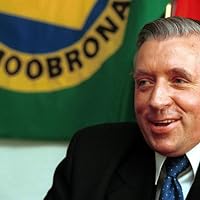
Jacek Jan Kuroń (Polish pronunciation: [ˈjatsɛk ˈjan ˈkurɔɲ] was one of the democratic leaders of opposition in the People's Republic of Poland. Kuroń was a prominent Polish social and political figure; educator and historian; an activist of the Polish Scouting Association; co-founder of the Workers' Defence Committee; twice a Minister of Labour and Social Policy. Privately, Kuroń was the father of chef Maciej Kuroń.
Szalenie bogata autobiografia jednego z ważniejszych działaczy antykomunistycznej opozycji ostatnich trzech dekad PRL-u. Ujmuje szczerością sądów, refleksji, wspomnień. W barwny sposób opisuje środowiska wczesnych działaczy ZMP-owskich i ZMS-owskich, walterowskiego harcerstwa, KOR-u, grupy "komandosów". Malując ich wielowymiarowy portret autor nie tylko uwzględnia ich pozytywne dokonania ale także nie szczędzi słów krytyki. Jest to wreszcie portret ewolucji poglądów samego autora i świadectwo formowania się jego własnej teorii społecznej, którą stara się wyłożyć na końcowych stronach książki.
Oczywiście autobiografia jest ściśle spleciona z wydarzeniami historycznymi, takimi jak "odwilż", wydarzenia poznańskie 1956 roku, polski październik 1956, "mała stabilizacja" lat 60., haniebne wydarzenia marcowe 1968, czy początek rządów Gierka i opisuje towarzyszący im nastrój społeczny. Kuroń szczegółowo relacjonuje swoje pobyty w więzieniu, które z czasem stają się swoistą obserwacją uczestniczącą dostarczającą materiałów do jego własnej teorii zachowań społecznych.
Bogactwo opisów, ilość faktów, nazwisk mogą wydawać się przytłaczające. Sam czytałem tę książkę z przerwami. Ale z drugiej strony właśnie dzięki nim można tę autobiografię potraktować jako doskonałe kompendium wiedzy na temat zarówno części aparatu komunistycznego jak i zróżnicowanego środowiska opozycji czasów środkowego PRL-u. Polecam każdemu, kto lubi konfrontować wiedzę wyniesioną ze szkoły lub z mediów z relacjami naocznych świadków lub/i aktorów wydarzeń!
[Kuroń was one of the important figures in the opposition against the communist regime in Poland.]
It's more of a personal memoire than anything else (sometimes he jumps back and forth in time), one showing history of seeing, and acting with, the system from the first person perspective. And with a lot of sharp observations of how people act in society. (He had a great sense of psychology and sociology.)
Kuroń was born into a leftist family in Lwów, now Ukraine, by then - Poland. As a young kid he experienced the WW2. While he was relatively safe, he couldn't not think about the suffering of others - especially Jewish children in the ghetto. And even at this age he was not only very empathic of strangers, but also - people that hurt him (excusing them for being poor, being loved by no-one, etc).
When the war ended, it looked like a socialist's dream - building paradise: a new, better society, without capitalism, even if from the ashes. He was active in communist scout movement. As he didn't like military-style hierarchy - he tried to put as flat structure as possible, with a lot of democracy, raising awareness of being responsible for others (especially weaker ones) etc. (Quite ironically, he raised a whole group of the new opposition.)
And here got typical experiences: - when you except children to be responsible, more than often - they are - even in systems lead by democratically-acclaimed talented leaders there are problems - no-one cares for minority votes/opinions, and people how know that they have little influence (e.g. as they are shy or not as socially talented) feel excluded from the decision system
(He considered that he was too non-critical of the socialism, as every time he read nationalistic books, he was repelled by them (not surprisingly). But he missed shades of grey, he missed that some right-wing people were actually right on the socialist regime, he didn't oppose when some old scout organizations were disbanded because of not being subordinate enough to the regime, etc.)
It was a success to a large degree and someone decided (from the party, not - from the scout movement) that all over the Poland, every school should have a scout unit. But, not unexpectedly, it was not a good idea. (Typical schematic: good bottom-up thing enforced top-down with the emphasis on some superficial features.) Only best students were allowed to join (instead of ones that _wanted_), teachers didn't have time or interest in leading them, and they were doing the most boring things (like marches for some socialist festivals).
When it comes to advancing in socialist's ranks he was quickly disillusioned - the idealist stayed at the bottom, while one's not caring about the idea, but caring a lot about the career, were keeping getting promoted.
(And in general, no matter if there are socialists, scout captains, teachers or military officers, he saw that in every place: - there are a few outstanding ones, - there are a few horrible ones, - most of people either want to do as little as possible to keep their post and salary OR want to do a lot, but for their promotion; in both cases the initial idea is basically not important. )
He started working in the opposition, de facto among group of their friends. Initially, and for a long time, it was trying to make socialism better, or - the regime following socialist ideals. It took long time to realize that well, it's not possible. That declared socialist values have little in common with the reality. (E.g. it's all about play of personal interests, rather than national ones; companies are not owned by capitalists but it does not mean that they are owned by people - they are owned by state/party with their interests, etc.)
The opposition was interesting, because it was much of a psychological game - with others, with the regime. Almost never it was sure what would be acceptable, for what he will go to prison. As I said, he worked within a group of friends (later, some criticized them for being to hermetic - it was hard to join without knowing in-jokes or personal gossips, etc). But what was proven to be important - in case of repressions, years spent in prison, etc - it is crucial to know that there are people waiting for you.
When there were country-wide protests, some people thought it's party's agents who have stirred it. (Because protests only in Warsaw would not make them that easy to justify repressions.) But, as he said, only people who have never organized any movement can say that - even with a lot of work and community-building it is hard to make people acting - just calling for action by an unknown person won't work.
While spending his time in prison, he met various kinds of people (well, from political prisoners and people who were there basically for being capitalists to real thugs). For some time he even introduced himself as Jewish (to see if antisemitism was strong, or - if it was mostly party's propaganda tool to mask Soviet influence) - but most of the time he saw no difference how people interacted with him.
But, at least, the most grotesque meeting was with one Nazi war criminal (Jacek had his own speculation why they hadn't executed him). Even after more than two decades after the war, he was still a firm believer in the 3rd Reich mission - to make new Roman Empire, prosperous and living in peace. And, for him, it was his "paradise", one worth exceptional means (for him killing innocent was a grave atrocity - but justifiable given the end goal).
While he [Jacek] still claims that the dream of building a better place is an important thing, one of the most important hopes, especially in case of lack of eternal life, he saw (perhaps the clearest possible) example that sacrificing others for the sake of making this dream come true is unacceptable (no matter how much _we_ want to sacrifice ourselves).
He was in ave of Christianity. While raised as an atheist himself, and initially treating religion as 'the opium for masses', his own concept of altruism, care for the weak & oppressed, and forgiveness resonated with Christian one. (He called socialists 'Christians without a God'; and also somehow related dreams of creating a paradise; in socialist case - on Earth.) But even when his beloved wife died, he didn't convert to it. He knew that deep faith requires forgetting about one's doubts - and that can also lead people do doing bad things in the good (nomen omen) faith. He remembered too well his former blind belief in socialism...
Świetny audiobook. W wielu miejscach relacje Kuronia są rewelacyjne. Poruszające opowiadania wojenne ze Lwowa; początek znajomości z Gają. Historie więzienne, o subkulturze łaknącej miłości, ale potrafiącej okazywać ją tylko przemocą; opowieść zastępcy gestapo z Alei Szucha, z którym Kuroń siedział trochę w celi. Ciekawie i ze znajomością rzeczy opowiada o Październiku 56 i Marcu 68; pasjonujące są jego wywody o miłości i twórczości jako podstawach życia, także społecznego.
Ciekawe miał rozmowy z Wyszyńskim, Wojtyłą. Co za grąg ludzi, wśród których się obracał: J.J.Lipski, Michnik, Modzelewski, Olszewski, Słonimski, Kołakowski... Dość nudne, bo szczegółowe, mające raczej wartość czysto historyczną, są relacje na temat przekształceń harcerstwa: zebrania, stanowiska, podziały, walki o wpływy w latacj 50.: ciężko to ogarnąć.
Po wysłuchaniu całości myślę sobie, że jednak ten polski komunizm był w wersji ulgowej, w stosunku do sowieckiego. W Sowietach Kuronia albo by zesłali skutecznie do łagru na Kołymę, albo rozstrzelali. Kto by tam się bawił w zamykanie na dwa-trzy lata do więzień. Jednak w Polsce sowieckiego człowieka było o wiele mniej, "moralność" komunistyczna nie weszła w lud, nawet w elitach jej nie bardzo widać, najbardziej oczywiście w okresie do śmierci Stalina, ale ludzi "wierzących" w zasadę cel uświęca środki całym sobą, fanatyków komunizmu...? Nawet Gomułka, i to też świetnie Kuroń pokazuje, był swojski, nie sowiecki. Komunizm nas tu osmalił, i myślę że Stasiuk ma nosa jeżdżąc w głębokie postsowiety, by coś z komunizmu zrozumieć, bo doświadczenia Polski są jednak takie około-komunistyczne. Tu raczej, zdaje się, masowo zatriumfował niedomyślany konformizm: coś tam z grubsza się wiedziało, czym ten komunizm jest, jak trzeba gadać, co chwalić, co krytykować z patetycznym zadęciem, ale w gruncie rzeczy tylko po to, by mieć posady i przywileje.
Jacek Kuroń to legenda opozycji i postać dzisiaj w znaczniej mierze zapomniana, a szkoda. "Wiara i wina" to bardzo ciekawe świadectwo życia w PRL i starań wpływania na tamtejszą rzeczywistość społeczną. Od początków w harcerstwie, działań partyjnych aż do przejścia na stronę opozycji. Nie wszystkie fragmenty są równie ciekawe, ale pełno tu bardzo ciekawych spostrzeżeń. Są tu przejmujące opisy dzieciństwa w okupowanym Lwowie i wiele interesujących spostrzeżeń dotyczących życia w więzieniu. Książka jest zarówno autobiografią jak i manifestem ideowym. Warto przeczytać, żeby zrozumieć postać Kuronia.