Architecture According to Pigeons is a fun, lively introduction for children to world's most beautiful buildings. In this delightful book, Speck Lee Tailfeather reveals that he and his fellow pigeons are in fact great aficionados of architecture. Speck delivers his account of a journey around the globe, offering a "bird's eye view" of the Colosseum, the Taj Mahal, Golden Gate Bridge, the Sydney Opera House, the Eiffel Tower, Frank Lloyd Wright's Fallingwater, and dozens of other buildings to delight children and parents alike.
I was disappointed at first, expecting (more) fun imaginings of pigeon's feelings on architecture as opposed to being entirely educational. However I quickly got into the right mind-set and had a blast learning!
Highly recommended educational material for younglings!
This nonfiction picture book is written by "Speck Lee Tailfeather" (the pen name of Stella Gurney) and illustrated by Natsko Seki (2013). The narrator is a British pigeon who's been tasked with introducing you, the human reader, to some of the great architecture of the world. ("We [pigeons] love your beautiful buildings! Why else do you think we flock about them in such great numbers, risking your violence toward us?")
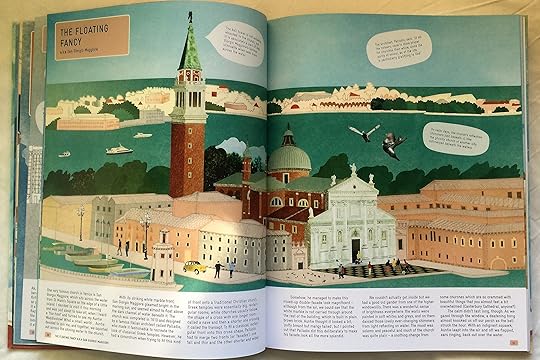
Each two-page spread has: (1) an artist's rendition of an interesting building, accompanied by people and pigeons (and you can search for the narrator); (2) several paragraphs of fine print with important info; and (3) a few factoids in word balloons pointing to specific parts of the architecture. Each building is given a pigeon name as well as a human name, such as The Great Worm (aka Great Wall of China) and The Silver Squiggle (aka Walt Disney Concert Hall). There is a spread devoted to great bridges, and one devoted to the tallest towers. I was unfamiliar with some of the buildings (e.g., San Giorgio Maggiore in Venice and Church of the Light in Ibaraki), so I learned a lot.
The light tone helps make this book a fun introduction to some great buildings.
Absolutely loved this book! It definitely wasn't what I was expecting when I ordered it online, but I ended up adoring it. The illustrations/collage/multimedia art style were executed beautifully and perfectly complemented the information about each landmark. As a teacher, I will definitely be planning many teaching activities based on this book. Reading, writing, geography, science, art... a teacher's dream! I've already recommended this book to one teacher friend who went out and bought it straight away, and I'll definitely be recommending it to many more.
کتابهایی که مستقیماً سراغ دادن اطلاعات خام علمی نمیروند و یک بازیگوشی دارند را دوست دارم. کتاب دربارۀ ساختمانهای مشهور سرتاسر دنیا از دید یک پرنده به اسم اسپک است. اسپک سرتاسر دنیا پرواز میکند و از ساختمانها میگوید. شاید اولین شوخی و بانمکی همین باشد که انگار داریم ساختمانها را از چشم یک پرنده و طبیعتاً از نگاه بالا میبینیم و راحتتر کلیت یک ساختمان را میفهمیم. هر چند دو صفحه به یک ساختمان اختصاص دارد و از زبان اسپک حالوهوا و اطلاعاتی از آن ساختمان پیدا میکنیم و حتی نظرات شخصی اسپک را هم میشنویم که همیشه هم همسو با نظر معمار نبوده. صفحاتی هم محض تنوع خیلی مختصر به پلها و برجها اختصاص پیدا کرده. تصویرسازی کتاب چیزی شبیه ترکیب کلاژ و نقاشی است که محبوب من نیست اما خیلی کارآمد و زیبا است و حسوحالی خودمانی و واقعی، و در عین حال شیرین و فانتزی میدهد. انگار هم داری خود فضا را میبینی و هم تلاش شده حسوحال فضا هم در آن تصویرسازی بیاید. کتاب شبیه ویکیپدیا نیست و برای همین دوست داری بروی صفحۀ بعدی و ببینی این بار با چه ساختمانی روبرو خواهی بود. یک جور جرقه و وولولکی را در تو بیدار میکند که حالا که در عصر تکنولوژی هستیم برویم و عکسها و ویدیوهایشان را در اینترنت پیدا کنیم و مهمتر از همه بهمان یادآوری میکند که معماری (به عنوان چیزی که همیشه جلوی چشممان هست) چقدر دقیق و روی حسابوکتاب است و در عین حال میتواند زیبا باشد. کتاب با اینکه پیچیدگی خاصی ندارد در نسخۀ فارسی هم خیلی خوب تبدیل شده و ورق زدنش حسوحال باحالی دارد. ترجمه هم تلاش کرده خودمانی باشد و نهایتاً یک تجربۀ باحال و بانمک از بال زدن حوالی ساختمانها است.
I took this book in small doses, purely because the information and images were quite brilliant and I wanted to make it last. It is an excellent book. The illustrations of famous places are basic but not too basic, engaging and give a nice overview of what you would see there. Quirky names, and pages of information put across with humour made it enjoyable to read. Children can (and did) learn a lot about the world through this book. Most people will never visit half of the places shown, but it is sure to spark their interest and perhaps encourage them to experience new cultures. My personal favourite page to visit was Venice.
Good for adult read, a bit tight and "full" of information for kids. Great sketches for all. I saw the preview video of this while teaching about buildings, and could never find the book in the libraries. So I found a used one at a thrift online store. Love it. I'm now collecting used books for use at school in the art room.
This is a fantastic book for both kids and adults. The book highlights 39 amazing architectural accomplishments. The book covers all the basic information and features about each building and the architect. The guide is Speck Lee Tailfeather, a pigeon who provides all this perspective... while wearing an acorn cap. I think everyone will enjoy this wonderful book.
My 9 year old son and I, really enjoyed this one. It has a lot of words on each page but is very interesting. We were fascinated all the way through. Very educational and great upclose look at famous buildings and architecture.
An interesting concept and the book did feature some interesting buildings. But the tone of the pigeon’s voice - a bit of a smartass - didn’t help me like pigeons any better and was a little grating to read
I was just looking for an entertaining, aesthetically pleasing picture book at my local library when I stumbled upon the full-blown pigeonesque narrative voice of Speck Lee Tailfeather, this unique architecture connoisseur.
I wanted to love this one because the idea was fun ... a pigeon's eye view of some of the most interesting buildings in the world. I've been to a couple of the buildings and bridges. Not as many as I'd like yet but hey, there's still time.
But ... I don't see many kids picking this one up. It's way too detailed. The older kiddos that COULD read it would be put off by the "picture book" styling (or well-intentioned teachers that still drive me crazy in our school library because they say "YOU CAN"T GET THAT GO GET A CHAPTER BOOK". I understand the intention but don't like the execution of the intention at all. But I digress).
And the younger kids that might like the picture book styling? No way would they sit down for something this long. Or be able to read much of it.
I would have preferred real photographs to the art. Or at least in addition to the art.
There are not many books around about architecture for children. I have a few that were printed pre-1960, but they tend to be a little dry. When I saw this publication come up in my searches I quickly bookmarked it, and I’m glad I did!
‘Architecture According to Pigeons’, is an excellent book for children interested in engineering, buildings or construction. It is also an outstanding introduction to the great buildings around the world. It starts with a pigeon called Peck who introduces himself before he takes the reader on a worldwide tour to see some of the greatest architectural sites. No book could cover every well-designed building in the world, but this one incorporates a wide selection from ancient ruins to ultra-modern skyscrapers.
There are one or two pages dedicated to each building. Peck gives the reader a running narration of what the building is used for, who designed it, why it was built, some of its history, and a description. It is written in fun, inspiring prose without all the dry facts dominating the page in cute boxes and bullet points. I think back to my ancient art history lectures with a shudder – if only they were as inspiring as this book! Peck brings the information alive with his funny flight landings, and opinions about architecture- all from the pigeon’s perspective.
The book covers the following buildings: Canterbury Cathedral, Eiffel Tower, Georges Pompidou Centre, Notre-Dame de Ronchamp, Basilica de la Sagrada Familia, Venice and San Giorgio Maggiore, The Colosseum, different types of bridges, Great Pyramid of Giza, Taj Mahal, Great Wall of China, Church of the Light, Sydney Opera House, Brasilia in Brazil, Fallingwater, Chrysler Building, and Walt Disney Concert Hall. The last couple of pages has further information about each building.
My favourite pages were for the Church of Light in Japan. I have never heard of this building, but because of this book, I want to go there and see it for myself. It sounds breathtaking.
The book is designed by Julia Hasting and Sandra Zellmer. The illustrations are by Natsko Seki. The pictures dominate most of the page, while the text sits at the bottom. There are non-interfering speech bubbles on the pictures highlighting information. Natsko has created a realistic portrayal of the architectural sites using, pencil, ink, water colour and collage. Her style helps feed to the readers the most important aspects of the buildings.
I recommend this book for all ages, but middle school and higher would get the most out of it. It is hardcover, 64 pages, and large.