One man. Two worlds. The chains of command only stretch so far.
He’s a conduit to alien invasion. A security threat. To the same country he swore to defend from its enemies. Enemies both foreign and domestic. Hard to tell the difference once his growing powers unleash the ancient truth. Time to go rogue.
Niall Kearey is US Air Force. Special Forces. His job to save lives. On Earth. Not on Astereal, a world across the universe. He’s not insane. Except the hazy threads of a childhood dream keep intruding on his life. Creating havoc. The reason he’s alive beyond all reasonable expectations. And now these aliens won’t be denied. To the humanoid telepaths of Astereal, Niall’Kearey is legend, a military leader in a war dating back to ancient times. Now dark stars are tearing Astereal apart and prophecy says he can save them. From an apocalypse.
On Earth, Niall’s growing psychic abilities have attracted unwanted attention, exposing his family to danger. A rescue attempt results in catastrophe. His secret is out and his life shattered. Then, with alien invasion a real threat, the US government designates him a security risk as a secret political conspiracy seeks to control both him and this first contact with extra-terrestrials.
Niall is torn between protecting his loved ones, saving an alien race, and his duty to Earth, but when history opens his eyes to the full potential of his latent powers, he finally confronts the disturbing scale of his dilemma.
It’s time to go rogue. The mission? Human survival.
Science fiction Author of the War of Ages series, previously published as Shimmer in the Dark.
I love writing science fiction / fantasy. I've been involved in a couple of writing projects over the last couple of years and have learned a lot from editing for other authors. Back on Earth, life is more normal. I'm married, mother of two girls, and a piano tutor when I'm not writing.
Visit my Facebook Author Page: https://www.facebook.com/Ceri.London.... and my blog. I am developing a page devoted to the scientific inspiration for some of the fantastical ideas in my work.
"Rogue Genesis" by Ceri London is a complex, highly intelligent and competently written Science Fiction / fantasy thriller. I don't often read Science Fiction and only let my curiosity get the better of me because several of my friends raved about this book. They were right to do so.
The story is based on a excellent idea: A man from Earth who kind of lives in two worlds at the same time. The other world, Astereal, is in danger because the fragile balance of black holes holding it in place is coming loose. The concept of time folds, time warps, astral travel or whatever phrase you would like to use for this double excistence is highly original, fascinating and certainly unique. It made the story stand out from others in the genre just for that. With this creative set up, the subplots and the competent military/ technological writing it is impossible to find fault with this book.
Our protagonist, US Air Force Major Niall Kearey, is a splendid character with his own family life, deep thought and with - literally - A LOT on his overloaded mind. The way the author blends the telepathic fantasy side with more technological science fiction and fantasy is brilliant and made me think that maybe I should read scifi books more often. This is a far cry from repetitive and formulaic writing; this novel is innovative and therefore hugely rewarding. It is also a gripping thriller, a family story and simply a must read.
PHENOMENAL!! I love this book, and I am so glad it is only the first of a series. I really took my time reading this. There was so much thought and intent put into each detail, that I wanted to make sure I took it all in. First, I love military-covert ops, strictly classified, GI-Joe, dirty politicians, shoot-em up stories - love em! I also happen to live for fantasy and science fiction especially... so the two married and had this beautiful child of a book. No review I give is going to do this story justice, but please take my advice and read this book!
Major Niall Kearey is a real life hero, he loves his country and serves it proudly, he loves his wife and family, and he is a stand up honest man... except he has been keeping a secret his whole life. The way the author weaves this world with one across the galaxy, is a beautiful thing. Human attributes make the natives of Astreal relate-able, and the way everything comes together is pure genius. I wish every ending was a satisfying as this one was. This military thriller turn paranormal/science fiction adventure will leave you wanting more from Ms. London. An absolutely amazing story! I was provided an ARC of this book in exchange for my honest review.
If only this book had been published a few months earlier, it would have completely taken the wind out of the sails of Messrs. Resnick and Malzberg and they could have continued mumbling into their beards unheard and ignored.
This SF story is the debut novel of a young English woman who has managed to get absolutely everything right. She has plenty of hard science, carefully researched, her hero is a well-drawn US Air Force Major who specializes in hazardous casualty evacuations from war zones and she has all that properly researched too. Major Niall Kearey is a family man in love with his beautiful wife, so there are no sexual shenanigans to upset the old fogeys.
The plotting is seamless, the story very exciting, the writing superb and you won’t be able to resist falling in love with the characters. This is the best SF story I have read in thirty years and it’s the first of a series.
Niall has learned to hide his psychic ability since childhood when first the whispering, strange dreams and shadowy monsters woke him screaming. His mother moved them to a new house away from the ‘evil spirits’, his father took to drink. To prevent causing them further distress Niall buried his secret so deep in his subconscious even he believed that the strange world he visited, with its advanced telepathic people living in floating cities was an imagined dream. He rationalized his fleeing there when in extreme stress or danger as just his mind evading the looming crisis.
Major Kearey has had too many life-saving precognitive visions to dismiss them. His wife Tami has her own psychic ability, and now his 6-y-o daughter Lizzie also wakes screaming from the night terrors.
After one too many impossible escapes from certain death, the Air Force also notices and he is ordered into a new classified project where his talents can be investigated surreptitiously.
Then comes the day when he is pulled to Astereal while still awake and conscious on earth and finally has to admit that Astereal is a real place not just an exciting dream he has imagined, and this world will soon be torn asunder by the forces of the unbalanced black holes around it.
Niall struggles to master the knowledge and abilities required to help the Astereans while hiding his powers from those seeking to investigate them and shield his beloved family from the secret power brokers who hope to tear them from him for their own purposes. To get help for his family Niall is forced to come clean.
The Earth powers are all hungry for the new technology of Astereal but Niall is handicapped by their distrust, suspicion and efforts to try to control him. Everybody seems to want a piece of him, but they all want him to do only what they allow and attempt to keep the star-traveler on a short leash. The alignment of Astereal and Earth is looming closer and closer, and still Niall isn’t ready. Before his preparations are complete, he is incarcerated and illegally tortured by his own countrymen.
He manages to escape and flees, struggling to complete his work with the entire worlds’ resources mobilized to find and recapture him. Despite his many setbacks and fears for his family, the drama eventually concludes in an entirely satisfying though surprising manner.
With the knowledge Niall has gained of the true workings of government, the Air Force and politics, it will be interesting to see what role he will play in the follow-up and third books in this trilogy.
I received a free advance copy for an honest review as part of a Read 4 Review offer.
How about epic, universal, telepathic, psychokinetic, electromagnetic, space-time warping, worm-holing scifi?
Yeah…I thought so.
This novel is all that and so much more.
Rogue Genesis presents us a seemingly simple military man, Niall, who has a little something special, an uncanny intuition, and the ability to astral project out across the reaches of space. Niall soon learns he will be held responsible to save all 100 million inhabitants of an alien planet on the far side of the universe. This planet he visits regularly in his subconscious dreams, Astereal, happens to be parked curbside to the apocalypse. Not one, not two, not even three, but SEVEN black holes encircle this poor solar system. And one of them has become dominant, throwing the whole deal off balance.
But the US govt., and age-old corrupt secret societies are not having it. Not unless they are in control of Niall and his abilities.
Niall finds his whole world turned inside out, friends become enemies, everything he holds dear is threatened, and yet the responsibility to save these alien people resides solely in his hands.
Astereal is running out of time, and Niall is running out of options on Earth. As this epic paranormal scifi thriller drags you to the clinch point, we realize the future of mankind and the Astereans depend on the choices Niall makes.
As it says so eloquently in the description, “The fate of two worlds rests on his shoulders.”
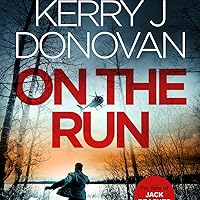
They say you can’t judge a book by its cover, but this one you can. The book is even more awesome than the pop-bang-wow head-turning cover art.
If you call yourself a fan of scifi, you need to read Rogue Genesis.
From the very first page, Ceri London had me hooked! I liked the combination of action, drama and suspense as we take a rollercoaster of a ride throughout the novel. The character and story development were very thorough. I really liked the characters of Niall Kearey, his wife, Tami, Dr. Jacqueline Bison, and Uathach. The novel had very likeable, interesting characters, to say the least. London paints a portrait of each of her characters with such lurid words. From the humans on Earth to the beings of Astereal, the characters are fleshed out and are made real for the reader. The imagination, time, and effort that London put into the novel shines over all. I found myself completely enthralled with the beautiful, mystical landscapes that she creates, along with the realistic feel she gives everything in the novel. I very much enjoyed the scientific aspect of the novel, as well. As someone who is not into science fiction, per say, I thought this novel was spectacular! I am very anxious to read more.
I tend to separate my science fiction into two categories. In some SFF, the science part is a story element used as a setting or a device to keep the plot moving forward. Then there are the tales where the science is integral to the story, almost like another main character.
Rogue Genesis is the latter, the kind of science fiction where I found myself googling terms like “geo-magnetic flux” and “ley lines” in my spare time.
But lest you be frightened away by the science, fear not, good reader! The story of Major Niall Kearey, USAF, is a great read with lots of well-developed characters and military-political intrigue. Kearey has had greatness thrust upon him, the fate of a world rests on his abilities to navigate space-time.
As a small child, Niall found his mind could slip away to what he thought was a dream world. Over time he came to realize the dream world was an actual planet on the opposite side of the universe called Astereal. Kearey travels there in the blink of an eye and is able to interact with the Astereans by taking a host body, which the Astereans gladly offer. Earth and Astereal exist in different timeflows, meaning that a very short period of time is much longer on Astereal and Niall’s visits span many generations of Asterean history.
As we enter the story, Astereal is slowly being torn apart by “dark stars” or black holes. The upside to the dark star problem is that it is also slowing Asterean time down to match Earth’s timeflow, a point called Alignment. As Alignment approaches, Niall’s powers grow beyond mind travel such that he is able to open portals in space-time and move actual things, like people. A lot of people.
Earth (understandably) is worried about the potential for a rogue super-psycho-kinetic mind traveler to transport millions of aliens to our planet. Enter the bad guys: a shadowy organization reaching the highest levels of world power who are very interested in Asterean technology. Through a series of carrot-and-stick maneuvers, they compel Kearey to cooperate.
The stakes mount for Kearey. His wife, his children, and the Asterean race all become pawns in an inter-galactic game of chicken. Major Niall Kearey, USAF, needs to come up with a new plan.
Geo-magnetics, flux engines, secret societies, portals, space-time slipping, aliens, mental shields, and dark stars, Rogue Genesis literally has them all, but somehow Ms. London makes it all work in this self-described “science fiction/fantasy techno-thriller.”
First in “Shimmer in the Dark” series, I will definitely be coming back for more.
Rogue Genesis, the first novel in Ceri London's Shimmer in the Dark series, is an intricate and visionary science fiction novel that resembles a mash-up of notables like David Weber's Honor Harrington series and Peter Hamilton's The Dreaming Void. With a grand scope and intimate storytelling style, Rogue follows one man, a highly decorated and successful US special forces soldier, as he tries to save not only his family from a malevolent secret society of psychics, but also an entire alien civilization from the devastating cosmic forces that are set to destroy their home world.
Weaving political intrigue, scientific exploration, and elements of fantasy into a suspenseful narrative, London's story is highly ambitious in its vision, and she pulls it off with the kind of necessary plausibility that will appeal to many hard SF fans along with a look inside the intimacies of human nature and relationships that will appeal to those who prefer more character-driven novels.
Though the novel's initial pace is leisurely, London enhances long moments of slow narrative with superbly executed and exciting action that will definitely get your heart racing and your fingers turning the page. Rogue is a novel that is best consumed in large chunks, as its meandering and subtle reveals require a high level of concentration to fully grasp. It is the perfect novel for a weekend spent relaxing beachside or for filling time during a long overseas flight.
I was given this book for an honest review by the author, Ceri London. First I just need to mention to all of my Christian friends that, though I am a creationist Christian, I read this book, as it was intended as a work of FICTION. So if it bothers you to even hear the word evolution, don’t bother, having said that, I just loved this book. It is a long read, but worth every minute. This is not a book you can 'skim' through; every word is part of the story. I loved the characters, especially the Hero, military guy with a heart. There are more twists and turns in this book than a mountain logging road. This book can be read as a 'stand alone' story; I appreciate that, but will be continued. I for one will be sticking with this author and this storyline. I recommend this for teens and up (there is very little swearing and no sexual content). I give this book 5+ stars.
Can I get a whoop whoop! Loved this book. I'm not normally real big on the time travel sci fi thing, but indie author Ceri London definitely caught my attention with her writing style and a compelling story. It was a little hard to follow sometimes but I think that was more due to me than the book. Bravo to Ms London for creating a fantastic story.
Ceri London has written, in Shimmer In The Dark: Rogue Genesis one of the most powerful science fiction/fantasy novels I have read since Dune. Well, actually, it is better than Dune. More creative, with a wider range and depth of reality, that is approachable to all readers. This is, without doubt, a science fiction novel, but it also has strong ties to military-political intrigue in the present day which grounds the novel in a level of believability even when the “fiction” portion of the science asks you to stretch your mind into new levels of belief.
Some, I suppose, would lean more towards calling it ‘fantasy’ as there are no space ships and Earth colonies on other planets. If you are one of the ‘hard sci-fi geeks’ that some of my friends are, you might be disappointed by no space rockets blasting around, I suppose, but that should in no way deter you from reading this jewel of a book.
Unlike many, I have no problem stretching credulity to new levels. I don’t expect a science fiction or fantasy book to stay within the realm of ‘probability’. I expect to be taken to a new place, a new level of existence, while I expect that existence to still feel believable. I expect to be charmed into a new sense of reality for a short while. Something that Ms. London has done brilliantly in this, the first of a four-part series.
Niall Kearey is a very special person, with a very special family. As has been described by the blurb on the book, he can, with is mind, reach out across galaxies to what he thinks is a ‘dream world’ – a world “racing towards annihilation” – a world soon to pass into alignment with Earth, with unknown outcome. Here on Earth, there are power brokers, secret societies, power-hungry and amoral politicians, and a corrupt U.S. Military. A military and power structure that will do anything, including the destruction of Niall’s beloved family, to bring him under their control and use him for world domination. Of this, and possibly other worlds . . .
London, in my estimation, did a beautiful job of making me feel her characters. I actually understood, and admired, Niall. My admiration was not only for his special abilities, but also for his love of and deep commitment to his family. In the face of horrific circumstances, he stands by his family and continues to fight for them, when everyone around him is betraying his faith, his honour and his commitment to country. The very thing that Niall has fought for, and watched his friends die for, is pulled into the light, and that light shines upon a dark and venomous snarl of greed and xenophobia that would happily watch whole civilizations die, accepting only the technology and power that those cultures might provide. In all, humanity at it’s slimiest, humanity who would sentence millions to death, while gobbling up their scientists to live as virtual prisoners, slaves to the military-industrial complex. Yep. Humans all right. Humans who would imprison a decorated military man under “correct supervision”, using him as a lab rat to assure his “asset to this nation” status.
Yes, a lot of the book made me sick. I want to howl in despair at the horror of the reality of what humans truly are, what they are truly capable of. Of human avarice, hatred, brutality and vicious self-aggrandizement, the truly black and horrific souls within. Sick, in that everything that London writes is so very gut-wrenchingly believable in so many ways. So real within the fictitious world that she creates. Amidst the black holes, space-time jumps, dark matter universes and other fascinating and well-researched portions of the book, London delves into the human psyche, and lays bare its soul. And proves, beyond a doubt, the very reasons that, even if there are other civilizations out there, my view of how they would view Earth is “That poor, beautiful orb, filled with the trailer trash of the universe, vicious, dangerous creatures to be avoided at any cost.” I can see the signs hanging in space now:
Overall, if you are a lover of science fiction style fantasy, I cannot recommend this book highly enough. It was on my back burner for a while, a lot longer than I had wished for it to be, but I am so very glad that I finally sat down and read it. It was well worth the time. More than worth it. This book needs a lot more attention than it is getting right now. Go out and buy it. I can guarantee you that you will be recommending it to your friends. It’s very creativity of concept makes it a standout in the field. That should draw you in. What will keep you there is the writing, the characterizations, and her deep understanding of the human psyche will keep you reading, and watching for the next in the series.
Rogue Genesis I was continually awed and amazed by the plot twists and connections woven throughout this fast-paced story. The protagonist, Niall, is a kickass, Special Forces type who has an uncanny knack of smelling trouble and escaping just in the nick of time. This does not escape notice by his superiors who decide to find out exactly what his psychic abilities comprise. As it turns out, even Niall doesn’t understand their extent until he realizes the excursions he’s enjoyed since childhood to the distant planet, Astereal, were real, leaders on that planet now looking to him to save them as it’s in the process of being destroyed by the gravity of its neighboring dark stars, a.k.a. blackholes.
As the U.S. military fully recognizes his talents he of course becomes a threat and the intrigue begins. Earth’s magnetic grid plays an important role as do various locations where significant anomalies are known to exist and how they affect his abilities. The story cleverly weaves within its scientific premise such things as psi phenomena, astral projection, and teleportation along with a touch of conspiracy theory and the origin of ancient civilizations who possessed technologies we cannot duplicate today.
Anyone fascinated by quantum and string theory, psi phenomena, civilizations on other planets, or just any other unsolved mystery you can name or imagine up to and including “ancient aliens” will really enjoy this book and how it’s all tied together in such a credible way. My only criticism is that at times the story moved faster than I would have preferred, not allowing me to ponder and visualize the various locations and characters as much as I’d like but that will undoubtedly be rectified easily enough when I read it again, which I surely will.
Major Niall Kearey is an all action hero with an edge, he can sense danger before it happens. By allowing his subconscious to escape into an imaginary world he's known since he was a child, Kearey is able to identify a way out of danger and then act. But then he discovers a shocking truth. The world he's known for so long isn't imaginary but real, and they need his help to save their population before the planet's consumed by a black hole.
If you like your science fiction big, full of action and ideas, then this is the book for you. In Rogue Genesis, Ceri London successfully combines the raw excitement of a military conspiracy thriller with the ideas and scope of a space opera, taking the two separate storylines, one on earth, the other on Astereal, and intelligently drawing them together to a satisfying conclusion.
The two worlds, the dystopian conspiracy on Earth and the collapsing civilisation on Asetreal are very well put together. You cannot help but be pulled along by Kearey as he tries to do what's best for his family, his country, and his friends on another planet. The action scenes are tough and visceral, and there are enough twists and turns to keep
This is a big book and it's unsurprising there are the occasional missteps. At points the action slows as each of the elements are brought into alignment. Sometimes there is too much reliance on the science behind what's happening, making the story more, rather than less confusing. There is also an issue that Major Kearey reaches the peaks of desperation quite early in the story, meaning emotionally he has nowhere else to go, which can be a little draining. However, for the quality of the writing, the scale and ambition of the story, and the sheer breadth of ideas make this a book worth reading. I can't wait to read the next. Recommended.
Rogue Genesis by Ceri London is an awesome EPIC scifi thriller. First the cover - WOW this cover is so gorgeous it sends out mind waves - READ ME! Second the story - INCREDIBLE beyond mere words to describe. But I'll give it my best shot. Major Niall Kearey has a strange ability. He can sense danger of any kind which comes in handy for his military ops. But this gets him noticed by the wrong people - covert government types. Niall also slips out of his body when in dangerous situations and travels 1000s of light years across the universe to Astereal, a planet in flux due to seven black holes pulling it apart. When on Astereal he inhabits an alien body to interact and slowly learns this planet is not a dream world. The descriptions of this planet are stunningly breath taking and made this reader sigh. The author skilfully weaves a complex tale of mind warping, sinister organizations and a man who can exist in two worlds at the same time, two worlds inextricably connected, two worlds he must save along with his family. This reader loved every moment of every page so beautifully written. But Niall is just a man, not ordinary - but can this terrible burden be resolved or will two planets be destroyed. Read and find out as Niall sorts out what can only be described Dune-like problems on a mega scale. A FIVE STAR EPIC SCIFI THRILLER and a must read. Highly recommended.
Another great book found in the amazon free books. I was expecting something completely different ( from some misterious reason the combination of author name and cover made me expect some cheesy sci-fi/romance) but was really really happy to be wrong.
I purchased this book because the cover was very intriguing. I love science fiction and I was sure that this book was for me, and I was right. Only a third into the novel I found myself pulled into the plot like a magnet. “Rogue Genesis” by Ceri London is an amazing novel very well written and filled with a mixture of emotions, fantasy, thrill, suspense, drama and mystery. A very complex novel that kept me glued to the pages cover to cover.
The story is about a man from earth Niall Kearey, his wife Tami, Dr. Jacqueline Bison, and Uathach. Niall found from a very young age that he had an amazing ability to travel in a blink of an eye from earth to another world at the opposite side of the universe called Astereal. At first he thought it was simply a dream but soon he realized that it was really happening. He lived in two different worlds at the same time, which I found captivating and enthralling.
Astereal is a fantasy world brilliantly created by the author and it is in grave danger. It reminded me a little about superman and his planet Krypton before it was destroyed. The characters are very likable and very believable. London paints a picture of her characters cleverly and the reader can’t help but fall in love with them. Niall’s love and deep pledge to his family is remarkable.
The author did a fantastic job with this book. Niall’s life is very complicated and wonderfully presented by the author. On earth he is working trying to find a connection between supernatural and what is happening around him while keeping his family safe. In Astereal, he is a field general who is trying to transport many aliens to earth before their planet is destroyed.
I am so glad that I decided to buy the book, because I loved getting lost into this astounding plot. I don’t think I have ever read a science fiction book that I enjoyed more than this one, in a very long time. I would recommend this to anyone who in interested in science fiction and would like to read an absolutely fascinating book.
Rogue Genesis is another gem that was found thru Goodreads.com, but it is a interstellar romp that will leave you breathless from the action and jumping between worlds.
You see, the hero in this book is a very different man because he has the ability to jump between Earth and a distant world named Astreal. While he is here on earth, he is working for a private organization trying to find a link between psychic ability and what is going on with the world around us. While he is on Astreal, he is a field general in the race to rid the planet of one species before the death of Astreal occurs, all the while trying to get the rest of the planet to earth.
The way that the book jumps back and forth from Earth to Astreal at first does seem a little jarring, but after you get into the book it is almost always preceded with the announcement that it is going to happen. You are thrown around a little in the early chapters, but Ms. London seems to realize this error and rights the ship quickly.
Let me just say that when I started this book, I was a little skeptical. I have been reading sci-fi since I was a teenager, so it takes a lot to impress me. I have to say, Ms. London has impressed me. The pacing of the book was good. There was never a lot of filler just in the book to make the chapter longer: every detail seemed to be in the book for a reason.
Since this is the first book in a series, I look forward to what Ms. London has to offer in the future and fully expect to be a reader of hers for years to come.
As a sci-fi writer and reader I thoroughly enjoyed this book. Often times I find myself being overly critical of other sci-fi writers especially when they add in a military aspect.
But Ceri London got the military part of this book spot on. I'm not sure if she was a soldier in a past life or if she had someone helping her, but from page 1 the lingo, description and dialogue reflected a writer with a good grasp of the inner workings of the military. Major Kearey was not only realistic he was someone I could relate to as a reader.
The science side of things seemed to make sense too. I always say the hardest part of writing sci-fi is, well, the science. It's fiction, but if you make the science side of the plot to difficult to believe readers will call your bluff.
Ceri, didn't. At least not for me. And trust me, I didn't do well in high school or college chemistry. So I'm not expert.
Overall this is a really solid debut novel. Lots of good stuff for sci-fi fans.
The characters could have used a bit more development in some places but this didn't effect my enjoyment of the story.
The single star I left off will, without a doubt, be earned in her next novel, which I anxiously await.
I received a copy of this book from the author for an honest review. Truly an interesting story about the hero's ability to travel other dimensions. It wasn't until I was 30% into the book that everything started to click.
The military portion was a little heavy for me, necessary to build the character of the hero. The story peaked my interest such a different concept of meeting and interaction with other alien races.
Our hero is a happily married man with children. I really enjoy that aspect. His children inherited his ability. Strange that he didn't seem to notice this. But man....don't also notice what is going on in their family.
I would like to read more about the alien race that has become citizens of Earth. Will I purchase the next one, yes I will.
This is a book that held my interest and I stayed up late at night because I couldn't wait to see what was to happen next.
I was given this book by the author in exchange for an honest review (Which I totally forgot to do because I got side tracked with life eep! Better late than never).
Rogue Genesis is the story of Major Niall Kearey who has the mysterious ability to project himself to the Astereal. A planet in danger, which only he has the ability to save by building a bridge between Astereal and Earth in order to save the people.
Where the military part of the novel was harder for me to read then the rest (primarily because I don't know all the jargon), it in no way detracted from the novel in any way.
London's story telling was excellent in following Kearey and is struggle to develop his abilities but at the same time keep them hidden from the people who would look to use him.
I am very much looking forward to reading the next book in the series.
I've just finished this challenging novel with tears in my eyes—to my mind one of the greatest accolades I can give: emotional involvement. Just how powerful can one man's mind be? The book isn't an easy read. It requires thought. However, a weighty subject gives the best reward. The plot contains technical information, soldiering, politics, betrayal by friends, tender moments, anger and love. The author's presentation of a version of the origin of our species crept up slowly and hit me with a flash of understanding. Brilliant in concept and written so well that a non-boffin like me can comprehend, this novel makes me want to read the follow-up.
As with any review I refuse to give spoilers. This book is a science fiction thriller. The descriptions and imagery were intense. This book makes you feel completely involved in the action and there is plenty of action right from the beginning. I imagine that if it was shown as a 3D movie the movie goers would required seat belts to stay put during the more intense moments! Well Done!
I highly recommend this book for those that enjoy science fiction. This story is well put together, has some great tension, and a well planned ending. Congrats to the author for a great story. Looking forward to reading the next one.
This book is fantastic! The exploits of Niall are amazing, and I was unsure what I was reading at the beginning. When the first show dropped, I was pleasantly surprised. I would recommend this to any scifi lover!
This book has great pace, fantastic character development and expertly weaves lots of events together to a very satisfying conclusion. You'll be left very glad this is a series.
-- Great cover: Very eye-catching and intriguing, makes you what to know more, and she allowed the GR community to participate by having a poll. Polls are a great way to get public feedback and gauge public responses. While one doesn't have to accept the public's vote, it is an excellent tool to use. So if you're in doubt about how something will be received by your readers, have a poll. Ms. London is very savvy in regards to gaining public participation while not expressly using the public's opinion. After all, everyone has an opinion and everyone wants to express it. A wise author learns how to use that to their advantage. :o)
Well played, madam. Well played indeed.
--Grammar/formatting: Overall very strong grammar and formatting. I found very few typos (her previous betas and she had done an excellent job, but the few I found I pointed out for her benefit prior to final publishing--We all hate the annoying buggers and the more eyes on a manuscript the better.)
Her Ebook formatting and overall fiction formatting was excellent. Again, I found only a few errors, which were of the typo kind rather than lack of knowledge. Typos versus lack of knowledge are very different types of errors. We all make typos of one sort or another. A well-educated beta or reader can quickly spot the difference because a lack of knowledge creates an egregious amount of errors, usually the same type while typos are few, far between and of a sporadic nature.
--Story: Well plotted out, lots of research obviously went into this first book of a four book series. Overall I'd say the science was solid up until the point where it becomes speculative science. But then that's the point of most science fiction. Speculative science is about taking what we currently know and can prove with evidence through the scientific method and 'speculating' with fiction and well thought out plots. Hell, TV Star Trek talks about tachyons all the time in ways that have little to do with what we currently know about tachyons. Yes, they're real. Do we have a tachyon drive? Or tachyon field detector? Um, no. No one freaks out about that.
Given my medical, science and military background, I felt most of the science and military was accurately portrayed within reason. A certain amount of suspension of belief was required, but not so much that it was painful. Another reviewer mentioned how the numerous black holes were basically overkill, and while I would agree with this since one black hole would be more than enough to kill a solar system, it really didn't detract from my enjoyment of the story. We'll call it dramatic license. Maybe they were really small singularities. Individually, small ones would have less gravitational pull, but together their power would magnify. My only complaint about this is that Ms. London never goes into detail about the size of the black holes, their actual distances from Astereal and their positions to each other, only that their competing gravitational forces are distorting the space/time fabric and destroying Astereal. Which would both happen easily. Too much gravity is a bitch!
As for the time dilation of the wormholes and general relativity ... well ... yeah. That's where some of the story gets a bit shaky and actually difficult to understand, especially during the first half of the story.
Ms. London deliberately kept time differences between Astereal and Earth somewhat vague in order to allow for literary freedom. However, general relativity basically states that every time Niall travels to Astereal more time should pass on Earth rather than on Astereal, therefore by the time he returns to Earth, potentially decades or centuries will have passed instead of seconds or minutes. Only Ms. London wrote it the opposite way. Hmm... More time passes on Astereal rather than on Earth while he's away.
So here's the rub and the gray area of Ms. London's concept as I understand it. Correct me if I'm wrong, Ceri! Throughout the majority of the story, Niall only travels to Astereal through his mind by astral projection not by wormhole. If astral projection can exist, would the consciousness be limited-or not limited-by space/time? Could he conceivably travel to another galaxy within seconds/minutes by astral projection without using a wormhole? If so, then this may eliminate the question of general relativity since his body remains on Earth and therefore ruled by Earth's space/time while his consciousness travels the cosmos. And since consciousness doesn't age physically, so I will assume since consciousness is non-corporeal, then any problems of aging is a non-issue at this point.
An interesting concept. My only real complaint was that it wasn't clearly explained or described for the first half of the story.
There were a couple of twists/mystery reveals to the story. The mystery to the plot I'd actually guessed early on given the title of the story. I like that sort of thing and I do the same thing in my work. There was another twist that was nice, which I'd also guessed but not because of the reveals given. In fact, IMO, I think the reveals should've been given sooner in some instances to create more suspense for the overall plot, but that's just me. We all have our preferences.
--Characters: Ms. London has a very good ability to create original, interesting characters with real life problems, concerns, weaknesses and strengths. I fully believed in the characters, specifically Niall since he was the main character and the main POV. The progression, growth and arcs of the characters were also believable given their respective circumstances. Even Niall's best friend's gradual transition was delightfully gray and his denial was just plausible enough. Though it did begin to push the boundaries. I mean, really? He doesn't see his own culpability? But many people live their entire lives in deep denial, so it works for the story.
The downside of Ms. London's characterization was though I fully believed in them, I never fully connected to any of them. Even Niall, who narrates a good 80% or more of the story. And it's not because Niall is military and stoic. I'm former military. As a medic, I'm stoic. Believe me, external stoicism nearly always has deep emotions brewing beneath. As they say, "Still waters run deep." No... it was something else. I found myself having very little to no emotional responses during the most emotional scenes. The very scenes in which I'm suppose to be anxious or upset or happy or relieved and I'm feeling sort of... meh.
So why? For me at least, I'd say:
This is purely a plot-driven story. This is not a bad thing, but it is difficult (though not impossible) to write plot-driven stories that have emotionally strong characterization. To do so you have to get really deep into a character's psyche. You have to not just tell what they're doing, not just show what they're doing, but you have to use their actions and reactions to the plot to illustrate--at a very deep emotional level--who they are, why they do the things they do. And then every action and reaction has to ring true for that character. Their physical actions have to mirror their internal narration like when metaphors are used.
For example: There's a scene when Niall learns a deep truth about himself from his family, who is estranged. Here is a man who values family deeply, yet we've only been told about his estrangement from his parents before now. We've not seen any interaction through story narration or flashbacks. There's no emotional connection to Niall's pain. We just know that he has pain.
Then the reveal, he's rightfully angry, but within a short span of time, he not only forgives but reconnects with his family. It felt... fake. Forced. He yells and stomps then dissipates his anger. Just like that. Really? After years of grudge-holding and estrangement, he doesn't go outside and scream or kick the dog or show any other real physical frustration? A military man, trained to kill. Really?
And for that matter, why bother with the estrangement in the first place? If we're not going to see it or feel any attachment to it, then why bother? The potential for a raging sense of double betrayal falls flat. It goes no where. He forgives as if he still had a solid, loving relationship with his family. But that's not what we're told he has.
So the story narration doesn't reflect character past/personality that we're given. So who is Niall? Is he estranged or isn't he? If he forgives so easily now, then why all the grudge-holding before?
And much of this scene was unnecessary other than character backstory and I suspect a thread for future books. But given how it muddles Niall's character, thereby making it difficult for the reader to really connect and attach to Niall, this scene and others like it could've been streamlined and written with a clearer vision of who Niall is and how the plot is wanting to mold him.
Like I said, plot-driven stories can be difficult to add strong characterization, but it can be done. One just has to understand that while the plot runs the show, it must also serve to strengthen the characters, their motivations and emotions AT ALL TIMES because they are responding to it. The plot is there not just to tell a story but to reveal who these people are, what makes them tick and why they're changing. There should be no wasted scenes, no added fluff. If it's not necessary to the plot or characterization, don't write it. There were many scenes which could've been streamlined and strengthened with the goal of characterization while staying true to the plot.
Pacing: Generally, this story has solid pacing. Starts off with a strong scene/hook, sucks you in and keeps you interested even through the slower sections. There's a lot going on. Characters at odds with one another, questionable motives, visiting the alien world, so curiosity alone will keep most people reading. This is a very good thing!!! Ms. London has the ability to tell a good story.
Of course, some of her scenes suffered from a lack of clear description and abrupt transitions. Oh, it's always good to avoid too many adjectives and over writing, but when one has to reread too often throughout a book because one isn't sure how a character got from A to Z or which character Niall is speaking to or just what the heck is going on because we're doing what now? That's when you need a bit more Niall did this then did that... sort of thing. Or more physical descriptions of a scene, just enough to set a tone or a visual. Don't spoon feed us, but when I have no idea when Niall got from knocking out one character to suddenly hijacking the helicopter from its two pilots... wait when did he get to the helicopter?
SOOOO...!
I can't say it blew my mind, but I really enjoyed it. There were no major plot holes, the writing is solid, the story is fun and interesting and I think most people will really like Major Niall, whether or not they closely connect with him or the other characters. He is a genuinely likable character and straight-forward (almost too much). I would think a combat-decorated major in the Air Force would be a bit more cynical and hard-edged. In my experience, field officers at his level would expect to be betrayed by those outside his very small inner circle. But again, I'm seeing this from my personal experience of the military and field EMS. Cynicism and distrust is an everyday thing when dealing with strangers and any potential threat.
Would I recommend it? Yes, and have already done so to a few friends that I know like sci-fi.
Will I read the sequels? I am curious to see where else this plot goes. Ms. London has started an interesting world and has an easy reading style.
I was given a free (digital) copy of this book in exchange for a review.
Niall Kearey is a Major in the US Air Force; he's also a psychic with the ability to mentally travel to a planet called Astereal. Astereal is a doomed planet - being surrounded by seven black holes isn't exactly a healthy environment for a civilisation. Astereal is also simultaneously a peaceful, but belligerent planet - on the one hand, crime is low, but there is an ongoing war between two species. The story is set both on Earth and Astereal, guiding us through Kearey's journey to becoming a powerful psychic and saviour of the Astereans.
This book reads like a Dan Brown novel. Unfortunately I really dislike Dan Brown novels…
My initial thoughts on the writing was actually quite positive - the prose is continuous and not at all jarring as it can be with debut authors. I was thrown by the amount of military jargon flung about in the first few chapters of the book though. Despite the positive start, my thoughts on the book steadily declined.
The writing did nothing to stir feelings for the characters and the Astereans. The characters go through some pretty emotional stuff in this book, but I felt completely disconnected and more like an observer rather than someone drawn into the book. This was mainly due to the author's focus on the pace of the story rather than the world she'd created.
I realised very early on in the book that the descriptions of the Astereal and its people were very vague. In general the world building is very poor - I know very little of Asterean culture, architecture, history, their planet etc. This extends to parts of the story on Earth too - very little description is given to the surroundings and the characters.
In all honesty though the writing wasn't too big of a problem for me to deal with. The science, however, is something else entirely. Kearey is a psychic so most of the science was what one would call "pseudoscience", but with some Physics and Geology thrown into the mix too. I found the "science" confusing and quite difficult to understand. I'm not a Geology graduate, so I could make neither head nor tails of the Geology terminology - to be frank, I'm not even sure how many of the terms were actually real. I am, however, a Theoretical Physics graduate, so a review of the Physics is something hard to resist.
First, how far are the black holes from Astereal? Being close to just one black hole would make any sort of intelligent life impossible, let alone seven! Astereal's sun has also managed to retain its planet - with seven black holes it's quite an exceptional feat to hold on to a stable, predictable orbit. Time also runs at a different pace on Astereal, which is, in fact, a legitimate piece of Physics. However, I'm not sure if this pacing was due to time dilation or some other pseudoscientific reason. If it is from time dilation, then the author has massively abused the theory of General Relativity.
There are some good ideas contained within this novel (e.g. the anthropology experiment), but this isn't enough for me to pick up the next book. At one point I just wanted to give up reading the book and it was only obligation that got me to complete it. My advice is that if you like your science fiction hard and want meticulously detailed worlds then avoid this book.
This epic tale spans two worlds, one in serious trouble. Major Kearey has the unique ability to travel between worlds. Yet, he doesn't realize that the world in his "imagination" does in fact exist until he is an adult. That world is on a collision course for destruction and saving the population becomes critical.
London's Major Kearey is an engaging hero. He's fully drawn full of numerous shades and levels. At the mercy of a controlling government intent on discovering his secrets, he walks the line between being an obedient soldier and protecting himself and his family. London deftly creates the tension between the opposing forces tearing at him. He's strong, yet troubled; a daredevil soldier and loving husband and father.
London's other characters are just as believable as her main characters; each with a unique voice and layers.
The story itself is sweeping and is a fascinating look at alien worlds and cultures doomed to extinction and the race to save them. It has a satisfying arc that moves at a swift pace.
London's writing is crisp, and reads quickly with an easy flow.
I was given a free (digital) copy of this book in exchange for a review.
Another genre I dont read much. But it was interesting. Mind travel a different spin can take it or leave it. This comes from one who reads paranormal.Tami and Niell were likable characters. Maybe the story line was too envolved. Not sure what it didnt do for me. Do you know how the world began? Poor darwin(smiles). Sci Fi is just that a world that can be broad and varied. A planet in trouble, of course planatry war. Im not a science major that part of it was a tad boring to me. But for the ones that love Sci Fi this will be a good read for them.