

What do you think?

Age of Ultron (Collected Editions)
Age of Ultron: The Complete Event
For years, the Marvel Universe has lived in fear that the artificial intelligence known as Ultron would one day evolve to fulfill its greatest desire: to wipe out all organic life and take over the Earth. That day has arrived! The impossible has happened and Ultron rules the planet! And as the few super hero survivors that remain try desperately to stay alive, Luke Cage learns the staggering secret of Ultron's victory. As a near-broken Captain America leads a ragtag counterattack, Wolverine makes a controversial and desperate decision - that creates an all-new Marvel Universe! But can even this rash act defeat Ultron? The event of the year has arrived! COLLECTING: Age of Ultron 1-10, 10AI, Avengers Assemble 14AU -15AU , Fantastic Four 5AU , Fearless Defenders 4AU, Superior Spider -Man 6AU , Ultron 1AU , Uncanny Avenger s 8AU , Wolverine & the X-Men 27AU
456 pages, Hardcover
First published June 1, 2013
About the author
Brian Michael Bendis
4,420 books2,627 followersA comic book writer and erstwhile artist. He has won critical acclaim (including five Eisner Awards) and is one of the most successful writers working in mainstream comics. For over eight years Bendis’s books have consistently sat in the top five best sellers on the nationwide comic and graphic novel sales charts.
Though he started as a writer and artist of independent noir fiction series, he shot to stardom as a writer of Marvel Comics' superhero books, particularly Ultimate Spider-Man.
Bendis first entered the comic world with the "Jinx" line of crime comics in 1995. This line has spawned the graphic novels Goldfish, Fire, Jinx, Torso (with Marc Andreyko), and Total Sell Out. Bendis is writing the film version of Jinx for Universal Pictures with Oscar-winner Charlize Theron attached to star and produce.
Bendis’s other projects include the Harvey, Eisner, and Eagle Award-nominated Powers (with Michael Avon Oeming) originally from Image Comics, now published by Marvel's new creator-owned imprint Icon Comics, and the Hollywood tell-all Fortune and Glory from Oni Press, both of which received an "A" from Entertainment Weekly.
Bendis is one of the premiere architects of Marvel's "Ultimate" line: comics specifically created for the new generation of comic readers. He has written every issue of Ultimate Spider-Man since its best-selling launch, and has also written for Ultimate Fantastic Four and Ultimate X-Men, as well as every issue of Ultimate Marvel Team-Up, Ultimate Origin and Ultimate Six.
Brian is currently helming a renaissance for Marvel’s AVENGERS franchise by writing both New Avengers and Mighty Avengers along with the successful ‘event’ projects House Of M, Secret War, and this summer’s Secret Invasion.
He has also previously done work on Daredevil, Alias, and The Pulse.
Though he started as a writer and artist of independent noir fiction series, he shot to stardom as a writer of Marvel Comics' superhero books, particularly Ultimate Spider-Man.
Bendis first entered the comic world with the "Jinx" line of crime comics in 1995. This line has spawned the graphic novels Goldfish, Fire, Jinx, Torso (with Marc Andreyko), and Total Sell Out. Bendis is writing the film version of Jinx for Universal Pictures with Oscar-winner Charlize Theron attached to star and produce.
Bendis’s other projects include the Harvey, Eisner, and Eagle Award-nominated Powers (with Michael Avon Oeming) originally from Image Comics, now published by Marvel's new creator-owned imprint Icon Comics, and the Hollywood tell-all Fortune and Glory from Oni Press, both of which received an "A" from Entertainment Weekly.
Bendis is one of the premiere architects of Marvel's "Ultimate" line: comics specifically created for the new generation of comic readers. He has written every issue of Ultimate Spider-Man since its best-selling launch, and has also written for Ultimate Fantastic Four and Ultimate X-Men, as well as every issue of Ultimate Marvel Team-Up, Ultimate Origin and Ultimate Six.
Brian is currently helming a renaissance for Marvel’s AVENGERS franchise by writing both New Avengers and Mighty Avengers along with the successful ‘event’ projects House Of M, Secret War, and this summer’s Secret Invasion.
He has also previously done work on Daredevil, Alias, and The Pulse.
Ratings & Reviews
Friends & Following
Create a free account to discover what your friends think of this book!
Community Reviews
Displaying 1 - 30 of 375 reviews

October 15, 2014
How many Wolverines does it take to screw in a light bulb?
*Snikt!* Bub, ask that question one more time and I’m going to gut you.
Ultron, that super-duper-indestructible-human hatin’ robot is back from being banished into outer space (They all come back from being banished into outer space. Every last one of them.), so it’s time to continue his war on humanity.
This is a fairly grim dystopic look at what would happen if Ultron is allowed to follow through on his plans to eradicate mankind. In the not-to-distant future, most super heroes are either dead or on the run. Ultron and his robot army are slowly taking over the Earth, starting with the big cities and working down to the towns.
But there’s a plan to fight back and it involves old man Nick Fury, time travel (GAH!!) and multiple Wolverines.
I don’t know how much of this is going to play out in this summer’s Avenger’s movie (I’m guessing not a lot), but it’s penned by Bendis, so it does have a lot to recommend anyway.
Still.
Time travel...with Wolverine.
You’ve been warned.
*Snikt!* Bub, ask that question one more time and I’m going to gut you.
Ultron, that super-duper-indestructible-human hatin’ robot is back from being banished into outer space (They all come back from being banished into outer space. Every last one of them.), so it’s time to continue his war on humanity.
This is a fairly grim dystopic look at what would happen if Ultron is allowed to follow through on his plans to eradicate mankind. In the not-to-distant future, most super heroes are either dead or on the run. Ultron and his robot army are slowly taking over the Earth, starting with the big cities and working down to the towns.
But there’s a plan to fight back and it involves old man Nick Fury, time travel (GAH!!) and multiple Wolverines.
I don’t know how much of this is going to play out in this summer’s Avenger’s movie (I’m guessing not a lot), but it’s penned by Bendis, so it does have a lot to recommend anyway.
Still.
Time travel...with Wolverine.
You’ve been warned.

June 1, 2015
This has nothing to do with the recent movie other than the fact that it involves the Avengers and their long-time nemesis Ultron. With their film business booming, a cynical person might think that Marvel tried to sucker some people into buying the comics by using the same title for both and releasing this first. Since I am a cynical person, that’s the theory that I’ll buy into.
However, as far as these big tie-in event comics go, it’s not the worst one I’ve read. There’s some interesting stuff with the idea that Ultron kicked the collective ass of the superheroes and drove the ones he didn’t manage to kill underground. Now he rules the world as the few left lick their wounds and try to come up with a plan. Which in this case involves a lot of time travel, and Wolverine deciding that he can do a little creative clawing to fix the whole mess.
It was a new angle to see the superheroes so utterly defeated. Even Captain America has essentially given up and is curled up in a corner sucking his thumb. That kind of desperation gives the story a little extra pop. Even some of the tie-in stories were pretty good with stand outs being one in which Black Widow is facing a no-win situation as she futilely tries to save a handful of people from an army of evil robots, and another comic in which an Avenger pulls off a blaze-of-glory exit is equally impressive.
Like most of these crossovers though, things get get wildly scattered and unfocused while storylines sprawl to multiple books, and some of the drama is undercut by the fact that anyone who has been reading comics for more than ten minutes knows that everything will be returned to the usual baseline, more or less. It’s also more than a little weird that for a series featuring Ultron as the Big Bad, that he actually hardly appears in it.
However, as far as these big tie-in event comics go, it’s not the worst one I’ve read. There’s some interesting stuff with the idea that Ultron kicked the collective ass of the superheroes and drove the ones he didn’t manage to kill underground. Now he rules the world as the few left lick their wounds and try to come up with a plan. Which in this case involves a lot of time travel, and Wolverine deciding that he can do a little creative clawing to fix the whole mess.
It was a new angle to see the superheroes so utterly defeated. Even Captain America has essentially given up and is curled up in a corner sucking his thumb. That kind of desperation gives the story a little extra pop. Even some of the tie-in stories were pretty good with stand outs being one in which Black Widow is facing a no-win situation as she futilely tries to save a handful of people from an army of evil robots, and another comic in which an Avenger pulls off a blaze-of-glory exit is equally impressive.
Like most of these crossovers though, things get get wildly scattered and unfocused while storylines sprawl to multiple books, and some of the drama is undercut by the fact that anyone who has been reading comics for more than ten minutes knows that everything will be returned to the usual baseline, more or less. It’s also more than a little weird that for a series featuring Ultron as the Big Bad, that he actually hardly appears in it.

June 8, 2020
What could turn out to be Brian Michael Bendis' last big Avengers event (he went on to write the X-men and The Defenders' books) starts with a bang and ends with a whimper, and yet another new Avengers book Avengers A.I. Volume 1: Human After All. 5 out of 12.

May 3, 2018
What a stinking pile of absolute crap. Worst Ultron story I’ve ever read. Brian Bendis turning in the most boring and tedious tale of his long and ever less lustrous career. Hitch’s art is dull and depressing as hell. The heroes didn’t act like heroes at all but like total losers. There was hardly any real Ultron. And the crossover issues were pointless filler. This huge event yet another suckfest from Marvel. Glad I didn’t waste my money on this piece of garbage. And, yeah, I did just tell you exactly what I really think of this collection.

April 28, 2015
I'm still perplexed by what the hell this was (and I say that as someone who is generally a big Bendis fan).

June 21, 2013
While the series started off promisingly, it quickly turned into schlocky nonsense once time travel became the motivating factor in the story. Some great art from Bryan Hitch and Carlos Pacheco can't improve the convoluted, confusing, and downright pointless experience of this entire Event. I wrote a lengthy article about the problems this mini-series has had, which you can read here. It is a detailed article though so expect nothing but spoilers throughout.

December 3, 2013
Is it just me or is the depressing nature of the story's beginning a little much? There's no wonder or awe (like in Blade Runner), no heroism of the few remaining rebels (like in Terminator). Maybe it's the art - Hitch usually inspires awe in me (Ultimates), but here it's just yawn-worthy close-ups (damn does Hitch over-rely on that scene layout crutch) and "heart-heavy" scenes of the usual destruction of sacred tourist-worthy scenery. The whole opening chapters lack some sort of excitement - perhaps because they're all screwed by the time we see them, and there's no progression or tension (just utter defeat)?
Maybe it's all the talking. I am normally an unrepentant disciple of Bendis' propensity for long and winding dialogue, because it's usually so very entertaining, honest and sometimes even insightful. However it creates a certain pace in the stories that isn't usually coincident with tension and big, big action. Comic relief during a big flight scene I have no problem with, but long stretches of thinking out loud and debating...make for a deflationary momentum, even when the pacing says the audience needs a break. There's a difference between giving us a breather and going off on a random tangent that may contribute to the overall story but arrests any momentum you may have built. It's not entirely do bad as this, but the poor effect is still noticeable.
The pacing *does* pick up in places - especially where Bendis jumps us from left-hanging moments to a surprising re-entry of a plot thread. And I appreciate the plotting effort that he put in to give us some nice surprises. Once things get in gear and we start messing with time, I actually enjoyed myself - and wished there was more of this, and less of the excess exposition to get us there.
The climax - the "resolution" if you can call it that - was at least logical, if a bit contorted and (yes I've seen the reviews) under-satisfying. The good side of it is the moments of epilogue that give us something new to look forward to.
Wow, and then there's the obligatory one-off crossover/tie-in comics. Brutal, for the most part. Angsty or pedantic or completely missable, except for Remender' Uncanny Avengers (thoughtful), Bunn's Fearless Defenders (confusing but curious) and Waid's epilogue for Hank Pym. Waid especially writes *such* a great story that I for the first time since I was a kid actually care whether Pym lives or dies - I really care how he feels. That is a major accomplishment for a character who's been a has-been, bitter, ineffectual leader for ages. I totally wish Waid would have followed that up with taking on the actual Avengers A.I. series, but Sam Humphries will prolly squander this bow-wrapped gift.
Some wicked plot threads at the end:
Maybe it's all the talking. I am normally an unrepentant disciple of Bendis' propensity for long and winding dialogue, because it's usually so very entertaining, honest and sometimes even insightful. However it creates a certain pace in the stories that isn't usually coincident with tension and big, big action. Comic relief during a big flight scene I have no problem with, but long stretches of thinking out loud and debating...make for a deflationary momentum, even when the pacing says the audience needs a break. There's a difference between giving us a breather and going off on a random tangent that may contribute to the overall story but arrests any momentum you may have built. It's not entirely do bad as this, but the poor effect is still noticeable.
The pacing *does* pick up in places - especially where Bendis jumps us from left-hanging moments to a surprising re-entry of a plot thread. And I appreciate the plotting effort that he put in to give us some nice surprises. Once things get in gear and we start messing with time, I actually enjoyed myself - and wished there was more of this, and less of the excess exposition to get us there.
The climax - the "resolution" if you can call it that - was at least logical, if a bit contorted and (yes I've seen the reviews) under-satisfying. The good side of it is the moments of epilogue that give us something new to look forward to.
Wow, and then there's the obligatory one-off crossover/tie-in comics. Brutal, for the most part. Angsty or pedantic or completely missable, except for Remender' Uncanny Avengers (thoughtful), Bunn's Fearless Defenders (confusing but curious) and Waid's epilogue for Hank Pym. Waid especially writes *such* a great story that I for the first time since I was a kid actually care whether Pym lives or dies - I really care how he feels. That is a major accomplishment for a character who's been a has-been, bitter, ineffectual leader for ages. I totally wish Waid would have followed that up with taking on the actual Avengers A.I. series, but Sam Humphries will prolly squander this bow-wrapped gift.
Some wicked plot threads at the end:

March 6, 2022
Maybe it was because I already heard this story was awful, and on top of that I got the hardcover for super cheap, but I honestly didn’t hate this at all. I mean the main event story isn’t great by any stretch, but knowing time travel hijinks were involved definitely helped temper my expectations out. It was also way better than the movie of a similar name. Here we actually see an Age of Ultron that’s more than a day, and not just located to one country. Ultron also doesn’t have a stupid ass plan involving dropping a rock this time around, as this time he dips to safety in the future and just sends his adamantium laced drones around the present to just murder everyone. Pretty solid ass plan if I’m being honest.
The hardcover I read also had a fuckload of tie-ins, most of which were actually pretty enjoyable and way better than the main story. I mainly read this for the Superior Spider-Man tie-in, since I’m reading through that series now, but the other ones were quite good as well. I especially liked the Fantastic Four, Black Widow, and Ant-Man ones. The Ant-Man one actually surprised me because it was a heart tugging issue that really did explain perfectly why someone like Hank Pym does what he does.
This was better than I was expecting, as it was super cheap, didn’t take that long to read, and included 4 one-shots that mostly knocked my socks off, hence why this is rated so high. It was perfectly fine and I like how simple Ultron’s plan was: Send robots to shoot lasers from sky. Granted, the plan the heroes had to kill him was unbelievably stupid & complicated, but I figured it would be, and HIS plan was still funny as fuck. I originally gave this 2 stars but bumped it to 3 after thinking about how much fun I genuinely had while reading it. It really wasn’t that bad. Onto Infinity!
The hardcover I read also had a fuckload of tie-ins, most of which were actually pretty enjoyable and way better than the main story. I mainly read this for the Superior Spider-Man tie-in, since I’m reading through that series now, but the other ones were quite good as well. I especially liked the Fantastic Four, Black Widow, and Ant-Man ones. The Ant-Man one actually surprised me because it was a heart tugging issue that really did explain perfectly why someone like Hank Pym does what he does.
This was better than I was expecting, as it was super cheap, didn’t take that long to read, and included 4 one-shots that mostly knocked my socks off, hence why this is rated so high. It was perfectly fine and I like how simple Ultron’s plan was: Send robots to shoot lasers from sky. Granted, the plan the heroes had to kill him was unbelievably stupid & complicated, but I figured it would be, and HIS plan was still funny as fuck. I originally gave this 2 stars but bumped it to 3 after thinking about how much fun I genuinely had while reading it. It really wasn’t that bad. Onto Infinity!

December 4, 2013
I want to give this about 3.5....it's better than the companion (2nd half of this book) which I gave 3 stars.
As discussed with others on here, I didn't care for the fact that there's no lead in, we just wake up in the aftermath...I would have loved to see some of the big guns go down in a blaze of glory a la Butch & Sundance, but no such luck. I would have been more emotionally invested, and that's important for my enjoyment and ranking of a book.
Ultron gets unleashed by some baddies, accidentally, and The Avengers show up just in time, Thor is able to knock Ultron back to somewhere else with Mjolnir, but the robot swears to return, which he does.
We open with Hawkeyes on a rescue mission, saving Spidey from Owlman and Hammerhead, who survive by selling Avengers to Ultron. This makes me love Clint Barton even more, as he gives a speech about how if the World is over, and everyone is doomed, he ain't going out like a sucker. He won't let Ultron change who he is and ruin his remaining humanity. I like it.
There's a ragtag band still left of Avengers, and 2 of the strongest go on a mission to learn what they can, and it ends up being a suicide mission. We also see a character who's been missing for a while...and learn that this will also be a time travel book...ugh.
Move from NYC to Chicago and see a few others still alive, and one hero die in a very plain manner, which would make sense about how senseless death is, but we never saw the big epic deaths...so it's kinda silly here.
We relocate to the Savage Land, and one stumble onto one of Nick Fury's bases...and a surprise and welcome ally or five.
There's a plan, but Logan doesn't have faith, and suggests a different course of action, there's a debate, and in the end, the regular plan goes forward, but Logan goes on his own mission...and the book follows his story here. I think this was a better choice than following the other group...and in fact that storyline becomes moot due to wibbly wobbly timey wimey stuff...
I enjoyed the alternate reality that springs up when things get altered, and love to see what happens when one person is removed from Marvel history...it's major. This would have been a great story to follow and a book I'd have read for sure.
Of course, Logan realizes his action didn't work exactly, and alternate Tony Stark gives him some good advice, which he takes back in time again, almost creating a paradox when he runs into himself from the past, the one who he was who just went back the first time before he changed things...
The solution makes sense, and I see why some might call it weak, but it also allows Ultron's creator Hank Pym to redeem himself...and set up a new series, Avengers AI....which I plan on checking out next. There's also finally consequences to Logan's actions in time travel, in that he breaks the space time continuum...leaving cracks which will lead to the events of New Avengers and multiverse collisions and more end of days...
The art is great in some places, but too dark and grey in others...it does the job, but when you draw Clint Barton, Marc Spector, and Peter Parker in the same panel and they all look the same? No.
Worth a read? Just maybe, but not essential as an event book. It's no Civil War or Secret Invasion...not even a Dark Reign...it's more of a mini series with after effects.
As discussed with others on here, I didn't care for the fact that there's no lead in, we just wake up in the aftermath...I would have loved to see some of the big guns go down in a blaze of glory a la Butch & Sundance, but no such luck. I would have been more emotionally invested, and that's important for my enjoyment and ranking of a book.
Ultron gets unleashed by some baddies, accidentally, and The Avengers show up just in time, Thor is able to knock Ultron back to somewhere else with Mjolnir, but the robot swears to return, which he does.
We open with Hawkeyes on a rescue mission, saving Spidey from Owlman and Hammerhead, who survive by selling Avengers to Ultron. This makes me love Clint Barton even more, as he gives a speech about how if the World is over, and everyone is doomed, he ain't going out like a sucker. He won't let Ultron change who he is and ruin his remaining humanity. I like it.
There's a ragtag band still left of Avengers, and 2 of the strongest go on a mission to learn what they can, and it ends up being a suicide mission. We also see a character who's been missing for a while...and learn that this will also be a time travel book...ugh.
Move from NYC to Chicago and see a few others still alive, and one hero die in a very plain manner, which would make sense about how senseless death is, but we never saw the big epic deaths...so it's kinda silly here.
We relocate to the Savage Land, and one stumble onto one of Nick Fury's bases...and a surprise and welcome ally or five.
There's a plan, but Logan doesn't have faith, and suggests a different course of action, there's a debate, and in the end, the regular plan goes forward, but Logan goes on his own mission...and the book follows his story here. I think this was a better choice than following the other group...and in fact that storyline becomes moot due to wibbly wobbly timey wimey stuff...
I enjoyed the alternate reality that springs up when things get altered, and love to see what happens when one person is removed from Marvel history...it's major. This would have been a great story to follow and a book I'd have read for sure.
Of course, Logan realizes his action didn't work exactly, and alternate Tony Stark gives him some good advice, which he takes back in time again, almost creating a paradox when he runs into himself from the past, the one who he was who just went back the first time before he changed things...
The solution makes sense, and I see why some might call it weak, but it also allows Ultron's creator Hank Pym to redeem himself...and set up a new series, Avengers AI....which I plan on checking out next. There's also finally consequences to Logan's actions in time travel, in that he breaks the space time continuum...leaving cracks which will lead to the events of New Avengers and multiverse collisions and more end of days...
The art is great in some places, but too dark and grey in others...it does the job, but when you draw Clint Barton, Marc Spector, and Peter Parker in the same panel and they all look the same? No.
Worth a read? Just maybe, but not essential as an event book. It's no Civil War or Secret Invasion...not even a Dark Reign...it's more of a mini series with after effects.
This entire review has been hidden because of spoilers.

November 16, 2020
This is another instance of me not remembering that I’ve read a particular book before. I found the hardcover for an attractive price, so I picked it up. I didn't even realize that I’d read it before until I set the status to “Currently Reading” on Goodreads.
But what I read previously was the paperback. The hardcover is sufficiently different in content that I question whether they should be considered different editions of the same book. Don't get me wrong: everything that was in the paperback is in here.
And.
The book is almost twice as long as the paperback because, in addition to the Age of Ultron series, it also contains all of the various Age of Ultron one-shots. Since the main story involves alternate timelines in addition to the end of the world, the AU one-shots focus on side stories, often set within those alternate timelines. These tales aren't essential, but they enhance the main storyline.
If you have a choice, I recommend the hardcover over the paperback, but both are recommended!
But what I read previously was the paperback. The hardcover is sufficiently different in content that I question whether they should be considered different editions of the same book. Don't get me wrong: everything that was in the paperback is in here.
And.
The book is almost twice as long as the paperback because, in addition to the Age of Ultron series, it also contains all of the various Age of Ultron one-shots. Since the main story involves alternate timelines in addition to the end of the world, the AU one-shots focus on side stories, often set within those alternate timelines. These tales aren't essential, but they enhance the main storyline.
If you have a choice, I recommend the hardcover over the paperback, but both are recommended!
January 25, 2015
In anticipation of the upcoming Avengers sequel, I decided to delve a bit into the comic book history of Ultron and his battles with the Avengers.
So when I saw my local library had a collected edition called "The Age of Ultron" I figured it might be a good starting point to get ready for the upcoming film.
Four-hundred or so pages and more issues than I can count later, I can only hope that Joss Whedon isn't using this as inspiration from the upcoming film.*
*Based on the trailers I don't think this is an issue, but you never know.
Comprising a ten issue mini-series and various one-offs featuring various parties battling against an army of Ultrons, this convoluted story drops readers in once the destruction has happened and the Earth is in the hands of our robotic Ultron overlords. As a last ditch solution, the team sends Wolverine and Sue Storm back in time to take out Hank Pym and prevent him from invented Ultron in the first place.
But, of course, tampering with time doesn't always go well or exactly as expected as our heroes find out. It gets so convoluted in the middle third that I kept hoping Doc Brown would show up with his chalkboard and try to explain to some of these characters (and us) just what the alterations to the time lines had done. It sets up a LOT of multi-verses and one huge deux ex machine ending that, quite frankly, was better done in other science-fiction stories like War of the Worlds or even Independence Day.
And yet I kept on reading, somehow hoping this would all get better. It never really does.
Reflecting on it, I'm not certain which would have been more frustrating -- reading this as it came out, month by month or reading it all in one large chunk like I did here.
Frustrating and overly long, this collection isn't a good example of the kind of interesting storytelling that comics can and should do. It feels like a crossover without any weight and meant only to sell more issues to collectors and completists.
So when I saw my local library had a collected edition called "The Age of Ultron" I figured it might be a good starting point to get ready for the upcoming film.
Four-hundred or so pages and more issues than I can count later, I can only hope that Joss Whedon isn't using this as inspiration from the upcoming film.*
*Based on the trailers I don't think this is an issue, but you never know.
Comprising a ten issue mini-series and various one-offs featuring various parties battling against an army of Ultrons, this convoluted story drops readers in once the destruction has happened and the Earth is in the hands of our robotic Ultron overlords. As a last ditch solution, the team sends Wolverine and Sue Storm back in time to take out Hank Pym and prevent him from invented Ultron in the first place.
But, of course, tampering with time doesn't always go well or exactly as expected as our heroes find out. It gets so convoluted in the middle third that I kept hoping Doc Brown would show up with his chalkboard and try to explain to some of these characters (and us) just what the alterations to the time lines had done. It sets up a LOT of multi-verses and one huge deux ex machine ending that, quite frankly, was better done in other science-fiction stories like War of the Worlds or even Independence Day.
And yet I kept on reading, somehow hoping this would all get better. It never really does.
Reflecting on it, I'm not certain which would have been more frustrating -- reading this as it came out, month by month or reading it all in one large chunk like I did here.
Frustrating and overly long, this collection isn't a good example of the kind of interesting storytelling that comics can and should do. It feels like a crossover without any weight and meant only to sell more issues to collectors and completists.

September 15, 2014
Ultron returns in a story that echoes Days of Future Past and Age of Apocalypse, and even manages to improve on those former stories. Ultron attacks from the future, gaining a foothold and taking over the world. The heroes left standing mess with time travel to try to stop Ultron from ever being created. Things do not go as planned.
The low average rating for this one kind of stumps me. On one hand, it's a story that seems incredibly familiar by showing alternate realities and the deaths of alternate versions of characters, but then it throws in some new and interesting classic time travel conundrums. I'm sure it bothered some people because "it never really happened", but no comic book story ever "really happens". Another major complaint seems to be that the end fizzles out, which I suppose is true, but I enjoyed the true climax quite a bit . My usual issue with these kinds of stories is that the logic of time travel is often ignored for a good story, and that's true here, but I barely gave it a thought. A good sign, I think. The art is good and the glimpses of alternate worlds were a burst of creativity and interesting. I will say that ten parts is definitely too many for this story, and the side issues were almost entirely inconsequential. If this is what the next Avengers movie is based on, even loosely, I'm looking forward to it.
The low average rating for this one kind of stumps me. On one hand, it's a story that seems incredibly familiar by showing alternate realities and the deaths of alternate versions of characters, but then it throws in some new and interesting classic time travel conundrums. I'm sure it bothered some people because "it never really happened", but no comic book story ever "really happens". Another major complaint seems to be that the end fizzles out, which I suppose is true, but I enjoyed the true climax quite a bit . My usual issue with these kinds of stories is that the logic of time travel is often ignored for a good story, and that's true here, but I barely gave it a thought. A good sign, I think. The art is good and the glimpses of alternate worlds were a burst of creativity and interesting. I will say that ten parts is definitely too many for this story, and the side issues were almost entirely inconsequential. If this is what the next Avengers movie is based on, even loosely, I'm looking forward to it.

September 24, 2021
wtf i really enjoyed this event ... sure the storyline was like terminator: superhero edition then some endgame back to the future shii , yet it was really profound from start to 99% finish
the ending was funny , this guy makes an AI that destroyed and nearly destroyed the world {depending on what timeline you standing on} and then decides to turn into Dr Doom .i get the frustration ,but it just what authors do keep the ball rolling .
it was heading towards a 5 star till the epilogue showed. i like how resourceful nick fury is,he just lacks in the strategic department . Even wolverine knew going to the future to fight ultron in his priime was a stupid idea BESIDES THAT it was epic.
the ending was funny , this guy makes an AI that destroyed and nearly destroyed the world {depending on what timeline you standing on} and then decides to turn into Dr Doom .i get the frustration ,but it just what authors do keep the ball rolling .
it was heading towards a 5 star till the epilogue showed. i like how resourceful nick fury is,he just lacks in the strategic department . Even wolverine knew going to the future to fight ultron in his priime was a stupid idea BESIDES THAT it was epic.

January 11, 2016
I’m not sure what happy juice I was drinking the first time I read this, but I sure wish I’d had some of it today.
This was painfully okay.
It’s hard to explain. A lot of comics fall into 2 camps for me:
1) great plot, meh characterization/no character moments
2) great/okay plot and amazingly well done characterization and character moments.
I much prefer door #2. I can put up with a bland or okay plot if there’s a lot of character moments to latch onto. Unfortunately, this book really didn’t have any. There’s a lot of loss here: Luke Cage lost his wife and daughter, Sue Storm lost her entire family, it’s implied that all of the heroes not in the bunker have perished and there’s countless (nameless and barely mentioned) civilians that died. However.. I didn’t quite feel as though the characters’ grief was felt or shown all that well.
The art shows the desolation well, the heroes look upset in a few panels, that’s about it. Aside from Luke yelling his rage before attacking Ultrons and Sue simply saying her family was lost, it just isn’t shown. I felt like the most emotional moment was when they show Cap seemingly having given up. And I’ll get to my issues with his role in this book.
This is timely wimey wibbly wobbly plot story. Time travel to fix the world after it goes full on YA dystopian novel. To its credit, if you came into it knowing nothing about the story (which any films only fan wouldn’t have because Age of Ultron looks nothing like this book) you wouldn’t predict time travel (unless you know how often marvel events ultimately change nothing). There’s time travel and saving the world ends up in the hands of Sue Storm and Wolverine - an unlikely duo. Once they go back, I stopped caring, not gonna lie.
Perhaps the reason I just didn’t find this to be spectacular was because I just wanted more of the heroes. Especially Cap - I thought they’d show him coming around to lead and they kind of didn’t. He’s on the cover of this trade for no reason, it seemed. It cuts down to the 2 hero’s and I wondered if we could have a split with the team going back in time and the team in the timeline that still sucked? I wanted more of the heroes on the ground. What excites me about dystopian stories is how they deal with their new circumstances and this book really gives you five seconds of it before skipping straight to time travel. It’s partially why it feels like the heroes didn’t seem to care about the civilians lost?
Anyway, it’s better than the Age of Ultron film but that movie was a dumpster fire and that’s not a huge compliment.
This was painfully okay.
It’s hard to explain. A lot of comics fall into 2 camps for me:
1) great plot, meh characterization/no character moments
2) great/okay plot and amazingly well done characterization and character moments.
I much prefer door #2. I can put up with a bland or okay plot if there’s a lot of character moments to latch onto. Unfortunately, this book really didn’t have any. There’s a lot of loss here: Luke Cage lost his wife and daughter, Sue Storm lost her entire family, it’s implied that all of the heroes not in the bunker have perished and there’s countless (nameless and barely mentioned) civilians that died. However.. I didn’t quite feel as though the characters’ grief was felt or shown all that well.
The art shows the desolation well, the heroes look upset in a few panels, that’s about it. Aside from Luke yelling his rage before attacking Ultrons and Sue simply saying her family was lost, it just isn’t shown. I felt like the most emotional moment was when they show Cap seemingly having given up. And I’ll get to my issues with his role in this book.
This is timely wimey wibbly wobbly plot story. Time travel to fix the world after it goes full on YA dystopian novel. To its credit, if you came into it knowing nothing about the story (which any films only fan wouldn’t have because Age of Ultron looks nothing like this book) you wouldn’t predict time travel (unless you know how often marvel events ultimately change nothing). There’s time travel and saving the world ends up in the hands of Sue Storm and Wolverine - an unlikely duo. Once they go back, I stopped caring, not gonna lie.
Perhaps the reason I just didn’t find this to be spectacular was because I just wanted more of the heroes. Especially Cap - I thought they’d show him coming around to lead and they kind of didn’t. He’s on the cover of this trade for no reason, it seemed. It cuts down to the 2 hero’s and I wondered if we could have a split with the team going back in time and the team in the timeline that still sucked? I wanted more of the heroes on the ground. What excites me about dystopian stories is how they deal with their new circumstances and this book really gives you five seconds of it before skipping straight to time travel. It’s partially why it feels like the heroes didn’t seem to care about the civilians lost?
Anyway, it’s better than the Age of Ultron film but that movie was a dumpster fire and that’s not a huge compliment.
This entire review has been hidden because of spoilers.

September 13, 2014
Dear Brian Michael Bendis: I give up on you. This book had poor ratings, but I gave it a chance anyway. This was awful. The concept...might have been worth a chance, but it was executed so poorly that it was hardly bearable. The pages were near incomprehensible for much of the book. Somehow the panels didn't flow together. It was either that the jumps from one panel to the next were too big or too small. It never seemed clear how the story was progressing.
The writing didn't help. There were pages upon pages that had no dialogue or text of any sort. When there was dialogue, it was awkward and tense and unrealistic. It feels like the entire Avengers team either actively dislikes one another or, at best, tolerates one another. Yet then, when one of them is in danger, they band together and use it as an excuse for their horrible decision making.
And that's really the main focus of this book. People forego discussion, ignore other opinions, jump to conclusions, and generally just make bad decisions. It's also pretty frustrating how old the story really is. It goes back to an issue from Free Comic Book Day a couple of years ago and then jumps into the future, but doesn't actually fit anywhere into current continuity. Oh, and speaking of continuity, they don't even pay attention to what's established within this book. The first issue SHOWS the Thing on panel, but then they talk about how tragically he died. Was it because of something that happened in a spin off? Or did they just forget? Or maybe Bendis didn't tell the artists.
Speaking of whom, good lord, who hired these people?! Bryan Hitch's pencils are awkward and weirdly...rubbery looking. He's also responsible for the horrendous layouts in many of the issues that gave no sense of flow. But that could be at least partially the fault of the abysmal script. Brandon Peterson is similarly uninspired. His seems even worse as it is paired with Carlos Pacheco for alternating sequences. Pacheco is one of the bright points in the book as his art is clear, clean, and a breath of fresh air. There are also a few pages by Alex Maleev, who is also a welcome change.
There really is nothing redeeming about this book. Anyone who is trying to get you to read it is not your friend. What's more is that, despite Marvel's best efforts, it doesn't impact the rest of the Marvel universe in any noticeable way. Totally forgettable and worthy of skipping.
The writing didn't help. There were pages upon pages that had no dialogue or text of any sort. When there was dialogue, it was awkward and tense and unrealistic. It feels like the entire Avengers team either actively dislikes one another or, at best, tolerates one another. Yet then, when one of them is in danger, they band together and use it as an excuse for their horrible decision making.
And that's really the main focus of this book. People forego discussion, ignore other opinions, jump to conclusions, and generally just make bad decisions. It's also pretty frustrating how old the story really is. It goes back to an issue from Free Comic Book Day a couple of years ago and then jumps into the future, but doesn't actually fit anywhere into current continuity. Oh, and speaking of continuity, they don't even pay attention to what's established within this book. The first issue SHOWS the Thing on panel, but then they talk about how tragically he died. Was it because of something that happened in a spin off? Or did they just forget? Or maybe Bendis didn't tell the artists.
Speaking of whom, good lord, who hired these people?! Bryan Hitch's pencils are awkward and weirdly...rubbery looking. He's also responsible for the horrendous layouts in many of the issues that gave no sense of flow. But that could be at least partially the fault of the abysmal script. Brandon Peterson is similarly uninspired. His seems even worse as it is paired with Carlos Pacheco for alternating sequences. Pacheco is one of the bright points in the book as his art is clear, clean, and a breath of fresh air. There are also a few pages by Alex Maleev, who is also a welcome change.
There really is nothing redeeming about this book. Anyone who is trying to get you to read it is not your friend. What's more is that, despite Marvel's best efforts, it doesn't impact the rest of the Marvel universe in any noticeable way. Totally forgettable and worthy of skipping.

January 4, 2018
Surprisingly better than the film of the same name, which bears little to no resemblance apart from the titular villain.
I see a lot of really negative reviews here on GR, seems a lot of them were written during the crazed build up to the release of the second Avengers film. Perhaps folks were worried the movie would take its plot-points from the book? If so, these fears went unrealized and the book mostly feels closer to an ultra-gritty version of "Earths Mightiest Heroes".

How does that Dr. Who quote go? Timey-Wimey something? Anyhow, I always thought broken timestreams and their consequences are more of a DC-thing, but I guess Marvel has it's own track record with them (Kang the Conqueror, Days of Future Past, etc.) so fair enough. And, hey, if you're going to make Wolverine an integral part of an Avengers story, why not find a way to shoe-horn in two other time-displaced Wolverines? Nothing like some sweet Wolvie-on-Wolvie action. Clearly Fox studios were paying attention!
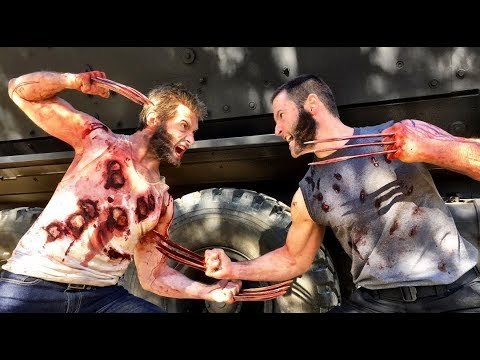
All in all, I'm glad I read this series, it gave some memorable images (such as the one below) and some unlikely team-ups (Logan and Sue Storm being my favourite) and alternative versions of some old favourites (Colonel America!).

I see a lot of really negative reviews here on GR, seems a lot of them were written during the crazed build up to the release of the second Avengers film. Perhaps folks were worried the movie would take its plot-points from the book? If so, these fears went unrealized and the book mostly feels closer to an ultra-gritty version of "Earths Mightiest Heroes".
How does that Dr. Who quote go? Timey-Wimey something? Anyhow, I always thought broken timestreams and their consequences are more of a DC-thing, but I guess Marvel has it's own track record with them (Kang the Conqueror, Days of Future Past, etc.) so fair enough. And, hey, if you're going to make Wolverine an integral part of an Avengers story, why not find a way to shoe-horn in two other time-displaced Wolverines? Nothing like some sweet Wolvie-on-Wolvie action. Clearly Fox studios were paying attention!
All in all, I'm glad I read this series, it gave some memorable images (such as the one below) and some unlikely team-ups (Logan and Sue Storm being my favourite) and alternative versions of some old favourites (Colonel America!).

May 1, 2015
Age of Ultron is a bleak look at what the Marvel Universe could end up like if technology goes too far. I picked it up on a whim since the movie was about to come out (and is now). I read it in one sitting and I have to tell you that it was long and I wanted to give up many times.
It’s just more bleak than I’m used to with Marvel. Granted I’m a Marvel noob but usually I don’t feel this much despair for the world gone wrong when I’m reading. Captain America has given up, Black Widow is scarred, and the world is dying. It was just a lot to handle. It was an epic even in the Marvel Universe and I just wasn’t ready for it.
Back to being a noob; this is not noob friendly. There are characters I didn’t know that were important players in this like Vision and Pym. And there was a lot of switching back and forth in time. It was hard to get a handle on at times.
The art was great. It was also bleak but that fit the story. I have no complaints about that.
As far as the movie goes, it’s probably just loosely based this book. I know that Tony Stark is the one who creates Ultron because of the trailers. (Which does relate to something that happened in this book.) I’ll be watching the movie and comparing a little but as of right now I’m just going to count it as something totally different.
It’s getting two stars from me. Don’t be mad.
It’s just more bleak than I’m used to with Marvel. Granted I’m a Marvel noob but usually I don’t feel this much despair for the world gone wrong when I’m reading. Captain America has given up, Black Widow is scarred, and the world is dying. It was just a lot to handle. It was an epic even in the Marvel Universe and I just wasn’t ready for it.
Back to being a noob; this is not noob friendly. There are characters I didn’t know that were important players in this like Vision and Pym. And there was a lot of switching back and forth in time. It was hard to get a handle on at times.
The art was great. It was also bleak but that fit the story. I have no complaints about that.
As far as the movie goes, it’s probably just loosely based this book. I know that Tony Stark is the one who creates Ultron because of the trailers. (Which does relate to something that happened in this book.) I’ll be watching the movie and comparing a little but as of right now I’m just going to count it as something totally different.
It’s getting two stars from me. Don’t be mad.

December 29, 2016
Well, that was dreadful.
When a highly intelligent evolved version of Ultron annihilate billions of humans, our last line of defense befalls on surviving superheroes (obviously).
The story was going strong in the initial pages. The characterization was good, the stakes were high and the enemy meant business... and at that point they decide to add all the time traveling crap to the story. Then all at once, Ultron became a footnote to the story and the writers start building their next marvel event. Come on!
At least now I can say Age of Ultron movie is better than its namesake, which isn't saying much.
When a highly intelligent evolved version of Ultron annihilate billions of humans, our last line of defense befalls on surviving superheroes (obviously).
The story was going strong in the initial pages. The characterization was good, the stakes were high and the enemy meant business... and at that point they decide to add all the time traveling crap to the story. Then all at once, Ultron became a footnote to the story and the writers start building their next marvel event. Come on!
At least now I can say Age of Ultron movie is better than its namesake, which isn't saying much.

December 5, 2013
Age of Ultron is the worst comics collected edition I have ever read (The second worst by the way is DC's Superman Vol. 1, New 52). With all the hype and anticipation, AoU fails in so many ways - the story, dialogue, disappointing end. Avengers 2 should not in any way based on this crappy comic book.

May 14, 2014
Boring. Surprisingly.

July 5, 2015
This started off interesting enough for me, but somehow with the time traveling scenarios it started getting lackluster.

December 11, 2013
For as much hate as this is getting, I found myself enjoying it much more than I probably should have. Considering the last few big Marvel crossover events I found rather... awful (especially Avengers vs. X-Men), by comparison I suppose that since this simply wasn't horrendous I gave it a little more credit.
It's pretty apparent from the get-go that the story will HAVE to resolve itself in a way that will slightly undo what unfolds in the first few chapters. So I'm a bit unsure why everyone has such an issue with how things eventually do get resolved. Yes, there is a lot of focus on Wolverine, but he's not as annoying as he could be. Yes, there are some richer topics/themes that could have been explored. Yes, the art (for a tent pole event) is a bit of a letdown. But even barring those criticisms, I found myself actively turning each page instead of begrudgingly turning each one. That, in my mind, for something like this, is what counts.
This is a very polarizing storyline, and I can understand the hate (and some of the curveballs thrown (like including Angela)), but through it all, I finally had a Marvel even that felt like it was a little more than just staged fights between various characters.
It's pretty apparent from the get-go that the story will HAVE to resolve itself in a way that will slightly undo what unfolds in the first few chapters. So I'm a bit unsure why everyone has such an issue with how things eventually do get resolved. Yes, there is a lot of focus on Wolverine, but he's not as annoying as he could be. Yes, there are some richer topics/themes that could have been explored. Yes, the art (for a tent pole event) is a bit of a letdown. But even barring those criticisms, I found myself actively turning each page instead of begrudgingly turning each one. That, in my mind, for something like this, is what counts.
This is a very polarizing storyline, and I can understand the hate (and some of the curveballs thrown (like including Angela)), but through it all, I finally had a Marvel even that felt like it was a little more than just staged fights between various characters.
September 20, 2013
It's hard to grade a book like this because it's not just one thing. There's the main series, which I liked a lot. Then there's the tie-in issues, which I didn't like as much. Although the one written by Mark Waid was very good and the 2 written by Al Ewing were pretty good.
I also need to consider other factors in this type of comic book reprint collection. This book is very comprehensive, it collects everything that related to this story. However, the stories aren't arranged in chronological order. The main story is first and the tie-in's are second. Many of the tie-ins take place during the main story so I would have preferred that they were placed in their proper spot.
I also need to consider other factors in this type of comic book reprint collection. This book is very comprehensive, it collects everything that related to this story. However, the stories aren't arranged in chronological order. The main story is first and the tie-in's are second. Many of the tie-ins take place during the main story so I would have preferred that they were placed in their proper spot.

July 20, 2022
The start is pretty interesting but after a while everything is trapped in this timeline breakdown, really boring. At the end I was not really caring for the plot. Only enjoying the art and period.
Inconsistent comi book made only for profit and without meaning
Inconsistent comi book made only for profit and without meaning
May 20, 2015
Neler oldu neler bitti belli değil. Aksiyon hat safhada. Bir LYS öğrencisine böyle anlar yaşatılmamalı...

November 15, 2015
Tüyap tan eve dönerken uçakta bitirdim. Ve şu ana kadar okuduğum en iyi çizgi roman soo far

February 1, 2016
Hawkeye shoots a dude in the ass in the beginning, that's all you need to know
December 11, 2018
Ever since the success of Marvel's first Secret Wars, comic book companies have had plenty of cross-over extended tales, where different titles will connect to a larger story arc, often, as in this case, a mini-series. I guess this device is supposed to sell more comics, but like so many trends, it has been ridden into the ground. The central story here, essentially apocalypse-by-robot. is Brian Bendis and Hitch at their strongest. Bendis's expressed main goal is to create great, exciting comics, and he does that here, the Doomsday plot resulting in mangled groups of Marvel's heroes struggling out of the ruins. The crossovers do the same, but as is often the case with crossovers, they do not have the verve of the main creator, Bendis', drive. The better writers do a better job. The byzantine mythology of the Marvel universe does offer more interesting hero-in-the-Apocalypse scenarios then say, the icon-heavy DC universe would offer. Just the same, I read the original AU mini-series in comic book format, ignoring the cross-overs, and I did not miss all that much. One final note about the plot is that its solution is dependent on time travel, so if you don't like time travel stories, this is probably not for you. I enjoy the paradoxes and had no problem with time travel.
June 14, 2019
Honestly, in my opinion, there's a lot to like about this book. The premise is excellent, I liked the character interactions, and the ending was the direct catalyst for one of my favorite comic events: Secret Wars 2015 (the multiversal ripple at the end lead to several incursions, which we see take place in Infinity and Secret Wars 2015). However... Ultron is barely in this book, just his drones, and the end of the time travel plot is one of the stupidest excuses for a resolution ever. Wolverine kills Wolverine... but how? You can't just stab him through the heart! Wolverine has regenerated from a DROP. OF. BLOOD. When Marvel wanted to canonically kill off Wolverine, they needed a whole miniseries to do it! This is a huge lack of thought on Bendis' part, and it makes me really disappointed, since Bendis has had a pretty great history with comics in the past.

June 23, 2013
I'm still trying to figure out exactly what to say and how I feel...First, I'm bummed that I just spent 40 bucks in a night binge reading this--it wasn't worth it, and that is certainly coloring my review. If this were a series I read for 10 or 20 bucks, I'd probably be more positive.
I wasn't originally planning on reading this until much, much later. But then I felt pressured to, as Marvel and even Bendis were saying 'it's main continuity,' and 'it will have giant consequences that ripple throughout the rest of the Marvel U.' Believing the hype here, I will admit, was my fault. I should've known.
It doesn't read or feel like a book that sits in the main continuity. It reads like an Elseworlds or What If... book, and if that were truly the case, if that were truly the type of book it was, it wouldn't be that bad. But it's not.
(okay, here is where I'll say there may be SPOILERS)
The time travel stuff that culminates in a universe-breaking reveal is a real let down. The main story essentially becomes a What If story set in the future, or I suppose, in a tangential reality to the main universe (cause of wibbly wobbly timey wimey) that, by the last five pages or so of issue 10, affect ALL of the Marvel Universes, Marvel 616, Ultimates, and whatever universe from the 90s Angela was part of. So, basically, Bendis and Marvel didn't lie. This book will affect the main continuity, but it seems like it will do so in a more reductive way, rather than an additive way. The plot reads like a gimmick to provide some clean slates for messy characters and plot lines--much like DC's flashpoint from a few years ago that kicked off the New 52. And, I can't help but compare this book to Flashpoint, which I enjoyed infinitely more. For one, Flashpoint was a shorter book, so, for me, there was less at stake; also, it seemed more up front about the way it would relate to the main continuity--I didn't once feel tricked. We knew Flash would be the constant (main continuity) character, set in an Elseworld, and it would be his attempt to get back to his world that would set the New 52 into motion. With AU, I didn't feel like I knew any of that going in--I never once felt oriented, even at the end. I didn't really understand when in time the events were taking place, and despite it feeling like an Elseworld, I didn't believe it was, cause Bendis and Marvel said it wasn't. That, still, is what really gets me. I feel tricked. I know it's unfair to review one book by comparing it to another (Flashpoint)--I should judge it on its own merits--but I think that's exactly the problem. I'm still struggling to grasp at what exactly its merits are, still trying to understand what the point of the book was, other than a gimmick and a money-grab, and the only real way I'm able to make sense of what the point of the whole book was, was to compare it to Flashpoint.
I realize now that I'm ranting, much more so than I intended--I stayed up til 4:30 in the morning reading these 10 issues, and I'm not exactly thinking straight.
Here's me reviewing the merits, in a less ranty way:
Writing: The writing seemed inconsistent at a lot of parts, almost like it wasn't Bendis writing everything. I know it could be difficult to handle the voices of all the characters at once, and that could account for a lot of what felt inconsistent, but since nearly all the story is told through dialogue (it's a comic book, I know, but still), the inconsistencies in the voices from character to character can really do a lot to impede any enjoyment in reading the story. I will say, this problem seemed to vanish as I read more issues. It could be cause I got used to Bendis' style, but it could also be because the cast of characters is sufficiently reduced at most times, about half way through, which I do think adds more focus to the storytelling.
Story (which I'm acknowledging as separate from the writing): The quality of the story seemed to work exactly opposite of the writing. It started out, with the big ideas it presented, fairly interesting and rather good/enjoyable. Over time, though, things got murky with the time-travel bit, and it got less interesting. I only kept reading because I was curious to finally discover how all of this was going to tie into main continuity. It all just seemed really dragged out. 10 issues for a single arc (I guess you might be able to argue it's 2) just seems like a lot, and they were weekly issues too, at 4 bucks a pop. It's still hard for me to not look at that like a money-grab. But I digress.
Art: The art varies a bit, but it's intentional. Different artists are used for different parts of the story (different timelines, characters, etc.) to convey different aesthetics. Overall, I think that was a neat concept, though I know it's not the first time it's been done (The Sandman series, for example, pretty much thrived one this concept, but executed it much, much more effectively). I only knew about this intentionality though because I saw Bendis say so on tumblr. If he hadn't mentioned it, I'm not sure I would have clued into it. But still, most of the art was very, very good. I especially liked the artist who drew all of the Wolverine/Sue Storm moments--too lazy to look up who that was at the moment.
Final verdict: If you really, really need to know what happened in this book, and how it's going to affect the Main Marvel 616 (or even Ultimates), I would suggest you wiki it all. If you have a friend who already owns all the books, I don't think it would hurt to read them. I just really wouldn't advise spending any money on them.
I wasn't originally planning on reading this until much, much later. But then I felt pressured to, as Marvel and even Bendis were saying 'it's main continuity,' and 'it will have giant consequences that ripple throughout the rest of the Marvel U.' Believing the hype here, I will admit, was my fault. I should've known.
It doesn't read or feel like a book that sits in the main continuity. It reads like an Elseworlds or What If... book, and if that were truly the case, if that were truly the type of book it was, it wouldn't be that bad. But it's not.
(okay, here is where I'll say there may be SPOILERS)
The time travel stuff that culminates in a universe-breaking reveal is a real let down. The main story essentially becomes a What If story set in the future, or I suppose, in a tangential reality to the main universe (cause of wibbly wobbly timey wimey) that, by the last five pages or so of issue 10, affect ALL of the Marvel Universes, Marvel 616, Ultimates, and whatever universe from the 90s Angela was part of. So, basically, Bendis and Marvel didn't lie. This book will affect the main continuity, but it seems like it will do so in a more reductive way, rather than an additive way. The plot reads like a gimmick to provide some clean slates for messy characters and plot lines--much like DC's flashpoint from a few years ago that kicked off the New 52. And, I can't help but compare this book to Flashpoint, which I enjoyed infinitely more. For one, Flashpoint was a shorter book, so, for me, there was less at stake; also, it seemed more up front about the way it would relate to the main continuity--I didn't once feel tricked. We knew Flash would be the constant (main continuity) character, set in an Elseworld, and it would be his attempt to get back to his world that would set the New 52 into motion. With AU, I didn't feel like I knew any of that going in--I never once felt oriented, even at the end. I didn't really understand when in time the events were taking place, and despite it feeling like an Elseworld, I didn't believe it was, cause Bendis and Marvel said it wasn't. That, still, is what really gets me. I feel tricked. I know it's unfair to review one book by comparing it to another (Flashpoint)--I should judge it on its own merits--but I think that's exactly the problem. I'm still struggling to grasp at what exactly its merits are, still trying to understand what the point of the book was, other than a gimmick and a money-grab, and the only real way I'm able to make sense of what the point of the whole book was, was to compare it to Flashpoint.
I realize now that I'm ranting, much more so than I intended--I stayed up til 4:30 in the morning reading these 10 issues, and I'm not exactly thinking straight.
Here's me reviewing the merits, in a less ranty way:
Writing: The writing seemed inconsistent at a lot of parts, almost like it wasn't Bendis writing everything. I know it could be difficult to handle the voices of all the characters at once, and that could account for a lot of what felt inconsistent, but since nearly all the story is told through dialogue (it's a comic book, I know, but still), the inconsistencies in the voices from character to character can really do a lot to impede any enjoyment in reading the story. I will say, this problem seemed to vanish as I read more issues. It could be cause I got used to Bendis' style, but it could also be because the cast of characters is sufficiently reduced at most times, about half way through, which I do think adds more focus to the storytelling.
Story (which I'm acknowledging as separate from the writing): The quality of the story seemed to work exactly opposite of the writing. It started out, with the big ideas it presented, fairly interesting and rather good/enjoyable. Over time, though, things got murky with the time-travel bit, and it got less interesting. I only kept reading because I was curious to finally discover how all of this was going to tie into main continuity. It all just seemed really dragged out. 10 issues for a single arc (I guess you might be able to argue it's 2) just seems like a lot, and they were weekly issues too, at 4 bucks a pop. It's still hard for me to not look at that like a money-grab. But I digress.
Art: The art varies a bit, but it's intentional. Different artists are used for different parts of the story (different timelines, characters, etc.) to convey different aesthetics. Overall, I think that was a neat concept, though I know it's not the first time it's been done (The Sandman series, for example, pretty much thrived one this concept, but executed it much, much more effectively). I only knew about this intentionality though because I saw Bendis say so on tumblr. If he hadn't mentioned it, I'm not sure I would have clued into it. But still, most of the art was very, very good. I especially liked the artist who drew all of the Wolverine/Sue Storm moments--too lazy to look up who that was at the moment.
Final verdict: If you really, really need to know what happened in this book, and how it's going to affect the Main Marvel 616 (or even Ultimates), I would suggest you wiki it all. If you have a friend who already owns all the books, I don't think it would hurt to read them. I just really wouldn't advise spending any money on them.
Displaying 1 - 30 of 375 reviews