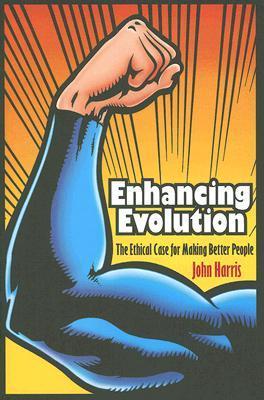
I had to read this book for a course on transhumanism. While I do not oppose transhumanism in itself and the book was fairly well written, and accessible to all (doing away with a lot of the more complicated philosophical language usually associated with this topic), I just couldn't help but cringe many times.
The author will often play man instead of playing ball and sometimes gives refutations for arguments which to me simply aren't, or are too weak to frankly discredit the arguments of his opponents. When your response is "this is humty-dumpty!" and you feel obliged to post something from Alice in Wonderland to make your point, for me, you still haven't clearly made out why exactly, in your opinion, something is "humpty dumpty".
Secondly, the author tiptoes around bigger questions, one being that of WHY parents would choose one genetical trait over the other. Sure, being a man or a woman or being black or white does not give the resulting person a different moral status (he often insists on those choices being morally neutral). Still, moral neutrality (having the same worth as a human being) does not mean it is totally neutral. There is SO MUCH behind the choice to have a boy rather than a girl or black rather than white skin that simply doing away with that reality by saying it's "morally neutral" just doesn't cover it for me.
The same "blindness" to actual societal problems comes up when discussing immortality. Saying that it won't drain the resources of the earth because at first only a small group of people would be immortal is a bit easy. In a discussion that's almost entirely hypothetical, "locking up" and argument with such a decisive claim seems phoney to me. And he misses a really huge point for me in the discussion: if one knew that there were people on the planet that achieved immortality, when faced with the certainty of one's own death, people would do anything to obtain or gain access to the technology in question, and not simply go down quietly because they can't afford it.
Lastly, something that I usually find lacking in any book about transhumanism of enhancement is: define that "better" that you're aiming for, and define exactly what is enhancement. Saying "the word doesn't need explanation and people understand it naturally" is an easy cop-out. Defining a term is the first step to understanding exactly what you mean and what are the values you thus uphold, what you hope to see happen in society. Also, "better" in the sense of a what? A higher degree of complexity, higher degree of achievements? Or are we instead truly talking about any kind of technological "add-on" to a human being, meant to make him more (or less) of something he wants (or doesn't) for himself? Then what's the difference with someone with BDD who wants his leg removed? What's "better". No answer, and the question isn't even asked.