At the time George W. Bush ordered American forces to invade Iraq, 70 percent of Americans believed Saddam Hussein was linked to 9/11. Voters in Ohio, when asked by pollsters to list what stuck in their minds about the 2004 presidential campaign, most frequently named two Bush television ads that played to fears of terrorism. We live in an age when the 30-second television spot is the most powerful force shaping the electorate's thinking, and America is in the hands of an administration less interested than any previous administration in sharing the truth with the citizenry. Of even greater concern is this administration's disinterest in the process by which the truth is ascertained, the tenets of fact-based reasoning-first among them an embrace of open inquiry, in which unexpected and even inconvenient facts can lead to unexpected conclusions. How did we get here? Al Gore's goal is to explain how the public sphere itself has evolved into a place hospitable to reason's enemies; to make us more aware of the forces at work on our own minds; and to lead us to an understanding of what we can do, individually and collectively, to restore the rule of reason and safeguard our future. Drawing on a life's work in politics as well as on the work of experts across a broad range of disciplines, Al Gore gives us a farsighted and powerful manifesto for clear thinking.
Albert Gore, Junior, known as Al, served earlier as a United States senator from Tennessee from 1985 to 1993 and as vice president of the United States from 1993 to 2001 under William Jefferson Clinton and shared the Nobel Prize of 2007 for peace for his efforts to raise awareness about global warming.
This forty-fifth vice president also served in the House of Representatives of the United States from 1977 to 1985. Gore, the Democratic nominee for president in the election of 2000, ultimately lost to the Republican candidate George Walker Bush in spite of winning the popular vote. The Supreme Court eventually settled a legal controversy over the election recount of Florida in favor of Bush.
People awarded this prominent environmental activist together with the Intergovernmental Panel on Climate Change for the "efforts to build up and disseminate greater knowledge about man-made climate change, and to lay the foundations for the measures that are needed to counteract such change."
He also starred in the Academy Award–winning documentary, An Inconvenient Truth, on the topic of global warming. Gore helped to organize the Live Earth benefit concert for global warming on 7 July 2007.
Gore is currently chairman of the Emmy Award–winning American television channel Current TV, chairman of Generation Investment Management, a director on the board of Apple Inc., an unofficial advisor to Google's senior management, chairman of the Alliance for Climate Protection, and a partner in the venture capital firm, Kleiner Perkins Caufield & Byers, heading that firm's climate change solutions group.
Al Gore Tells You What's Wrong With The US, And How To Fix It
Most Americans agree that their country's on the wrong track, but what exactly is the problem? It's easy to blame it all on Dubya - no one except a few true believers would say he's blameless. But surely there's more to it than that? Al Gore has thought deeply about the issues, and his analysis makes sense. The real strength of the US is in its system of government, but a democracy is only as strong as its citizens. If they aren't passionately involved in the democratic process and they don't understand or care about the Constitution, then everything will gradually fall apart.
And, unfortunately, that's what seems to be happening now. Gore argues that the US depends strongly on respect for reasoned debate, carried out through the written word. That's how it all got started. But since TV became the dominant medium, most people have stopped reading. They just absorb whatever comes out of the boob tube, and, as a result, they've become entirely too easy to manipulate. Politics isn't about reason any more. It's about buying 30 second TV spots, since they're what get you re-elected. So politicians become more and more dependent on vested interests who can pay for those TV spots.
Bush and Cheney were very bad, but they were more a symptom than a cause. They systematically trampled over the Constitution, but most people didn't even notice. According to polls Gore quotes, half of all Americans believe that the President can ignore anything Congress or the Supreme Court tell him to do - so when Bush said he was planning to work that way, most of the country didn't react.
But Gore says at the end that he sees signs of change. The Internet is starting to take over from TV, and it's quite a different type of medium. It's print-based and interactive. And, indeed, Obama won in 2008 largely due to a grass-roots web-based initiative. The fight is, unfortunately, far from over, but Gore's intelligent and perceptive book may help you understand what's going on.
Counterpoint
Loser! Loser! Loser!
If you want to know why Gore got rolled over in 2000, read The Assault on Reason. He's pompous, he quotes people you've never heard of to show you how goddamn smart he is, he whines. And he repeats himself, not once, but two or three or four times. Yes Al, we know you think Iraq was a mistake. You don't need to tell us again. And yes, we know you're worried about climate change. But maybe you noticed we had a really cold winter last year? How exactly does that fit into your fancy theories?
So what if Dubya's take on the Constitution was a bit different from yours? Alexander Hamilton thought the country needed a strong executive. Maybe he knew more about it than you do. When there's a war on, do you want to debate every little thing or do you want a decisive leader who can get things done?
Yeah - Al Gore's a sore loser. That's the take-home from this sorry mess of a book.
Really, I probably would give this book a 3.75 stars, but this system only allows whole digits in its ratings.
This book is great and terrible at the same time. The start and end of this book hit it right on the mark - there is a crisis in how information about our Democracy is being shared. It is clearly being manipulated by corporations and government entities. I whole-heartedly give two-thirds of this book a might big thumbs up.
But there are flaws. A minor one is Gore's understanding of communications theory. He keeps repeating as fact the idea that television is a one-way communications channel. While I understand his point since, if you scream at your television, the commercial still will keep playing. The fact is it is a two -way medium. It might be the weakest of two ways, but there are ways to communicate dissatisfaction with television. You can change the channel or simply turn it off. In fact, for the past two years, that's exactly what has been happening. It's true that FOX news is the most popular news channel and that it is making us all mindless drones. Gore's book correctly points out that most news has leaned to the right on most issues, but what he fails to add are two interesting nuggets about Fox's viewer ship - while it is the highest of all the networks, its audience is much smaller than even the third-place network 10 years ago. In fact, television viewer ship is at an all time low when compared to the past 25 years. That's a clear message from the people to TV saying "We hate what you are doing." Ergo, it is a two-way communications model.
However, that's a minor complaint. My biggest complaint about this book is the middle of it. Gore repeatedly complains about the Bush administration and how it has manipulated the media. I dislike the Bush administration and do believe they are all treasonous hacks who should be imprisoned for life, but by harping on it constantly through a great portion of the book, Gore almost makes it seem like the Bush administration is solely responsible for all that is wrong with Democracy in America today. His book would have been better served if he also had used equal examples of how Democrats as well as the two houses of Congress and the Supreme Court as well as local governments have really manipulated the system or just dropped the ball. Gore does not do this. He makes it sound like Bush's cronies have warped the entire system and that before Bush's appointment by the Supreme Court in 2000, everything worked perfectly fine. Nothing could be further from the truth, in my humble opinion. The system of communications in Democracy was far out of whack before Bush even decided to run for president and I think I could argue that Bush has gotten away with a lot of crap over the years because the system was broken before he broke it even further.
While I respect Gore's opinions in this book and believe that his complaints have merit, he would have really put himself in a better light and made this a much better book if he had expressed some of that neutrality that he complains is missing from modern communications today.
مؤلف الكتاب هو آل جور السياسي الأمريكي ونائب الرئيس الأمريكي بيل كلينتون في فترتيه الرئاسيتين وهو ناشط معروف في مجال الحفاظ على البيئة والطاقة وقد قدّم فيلما وثائقيا عن هذا الموضوع وحاز على الأوسكار عام ٢٠٠٧ ، وحاز آل جور على جائزة نوبل للسلام لنشاطه في مجال التغيير المناخي. هذه المقدمة عن المؤلف ضرورية لفهم هذا الكتاب الذي شن فيه هجوما على الرئيس جورج بوش الابن وإدارته وسياسته في إدارة الحرب وهجومه على العقل في تسعة فصول هي: سياسات الخوف - تضليل المؤمنين - سياسات الثروة - أكاذيب محبوكة - هجوم على الفرد - انعدام الأمن القومي -أزمة الكربون - الديموقراطية في خطر - جماعة مواطنين وثيقة الصلة. في مقدمة الكتاب يتساءل المؤلف عن سبب اعتقاد أكثر من نصف الأمريكيين أن لنظام صدام علاقة بتفجيرات ١١-٩ بعد أكثر من مرور خمس سنوات على غزو العراق وبعد أن تم إثبات أن نظام صدام لا علاقة له بالقاعدة ولا نية للعراق في التسلح النووي، من الذي خدع الشعب الأمريكي؟ ومن الذي حاول السيطرة على عقله؟ هذا ما يحاول الإجابة عنه في فصول الكتاب. في الفصل الأول سياسات الخوف يبدأ بالعبارات التالية: "الخوف أقوى أعداء العقل، والخوف والعقل جوهريان لحياة الإنسان، لكن العلاقة بينهما غير متوازنة فقد يبدد العقل الخوف أحيانا لكن الخوف يغلق العقل دوما. يبين كيف استطاع نظام بوش الحصول على تأييد للحرب على العراق باستغلال الخوف وإحساس الشعب أنه مهدد وفي خطر مما يجعله يؤيد من يريد أمنه ولو كان مقابله تقييد الحريات أو السلوكيات غير الأخلاقية مثل فضيحة تعذيب السجناء في أبو غريب التي لم يستنكرها كثير من الشعب لإحساسه بالخطر من هؤلاء الذين اتضح أنه ٩٩٪ منهم أبرياء، وكيف تم استغلال وسائل الإعلام وبالأخص التلفاز للتأثير على الرأي العام في هجوم سافر على عقول الناس، ويقتبس المؤلف لاستاذ علم الإجتماع في جامعة كالفورنيا باري جلاسنر قوله: هناك ثلاث أساليب تكوّن معا "المتاجرة بالخوف" وهي : التكرار، وجعل غير المألوف مألوفا، والتضليل، وباستخدام هذه الأدوات القصصية يمكن لأي شخص لديه منبر مسموع أن يزيد قلق الناس ومخاوفهم وذلك عن طريق تشويه الخطاب والعقل العام. وفي كل الفصول التالية يتكلم عن أخطاء إدارة بوش وفضائحها وكيف حصلت على هذه الامتيازات عن طريق هجومها على عقول الناس باستخدام الدعاية المضللة والسيطرة على وسائل الإعلام والتخويف والبروباغاندا واستخدام الثروة لشراء الأصوات مما يقوّض اسس الديموقراطية التي قامت عليها أمريكا وتشويه صورتها في العالم. الكتاب لا يعتبر فضائحيا بقدر ما يتكلم عن أخطاء وسبب سكوت الناس عنها وكيف سيؤدي هذا السكوت لأخطاء أخرى تضر بالمستقبل الأمريكي الذي حافظ على ديموقراطيته خلال ٢٠٠ سنة كانت نموذجا للجمهورية التي يحكمها القانون وليس الرجال، وهو يوجه كلامه للشعب الأمريكي ويحذره من هذا التخدير الذي تمارسه إدارة بوش. الكتاب جيد والمؤلف واعٍ بما يكتبه ويقدمه في ظل خبرته سواء كنائب للرئيس أو كناشط في مجال البيئة والذي طالته أيدي بوش بالتدمير أيضا
As the technologies of war give shifting advantage to the means of offense or defense, so the means of public debate have shifted to favor certain interests over others. Gore surveys the changing health of public discourse through the recent ages of print, radio, television and the internet. He gives eyewitness accounts of how these shifts have affected US government operations. As this book was written during Geoge Bush's Iraq war, Gore saw us just starting to emerge from an age of one-way communication via television, controlled by those able to afford huge broadcasting expenses, in which vested interests found an expanding capacity to control the flow of information. He sees hope in a rise of two-way communication, and does not yet see the peril from a new blizzard of one-way propagandization through the Internet.
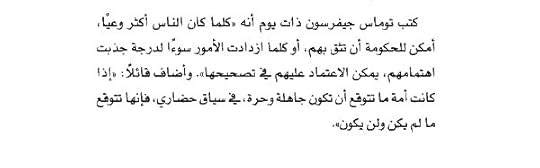
Gore does not simplify his message or dumb-down his wording for some hypothetical "reader of average intelligence". He expects that his readers are smart, educated, and quite justified in feeling cut out of the political game as we've seen it. Sometimes he seems to wish for the moral thunder of America's founders: "How long would it take James Madison to dispose of our current president's claim, in Department of Justice legal opinions, that he is largely above the rule of law so long as he is acting in his role as commander-in-chief?" And sometimes Gore plays the card of religion as he understands it:
"Dominance is as dominance does. Dominance is not really a strategic policy or a political philosophy at all. Rather, it is a seductive illusion that tempts the powerful to satiate their hunger for still more power by striking a bargain with their consciences. And as always happens sooner or later to those who shake hands with the devil, they find out too late that what they have given up in the bargain is their own soul."
Okay, so he could use some more humor. But through it all Gore stays optimistic that the tide is turning in favor of interactive media and renewed popular debate. He sees it in the multiplication on web-based movements, the power of blogging, or experiments with two-way television systems: "We can see it happening before our eyes: As a society, we are getting smarter. Networked democracy is taking hold. You can feel it." Maybe in the long-run he is right, as we learn the arts of smart, self-critical online communication.
هجوم على العقل أو الإعتداء على المنطق ان صح التعبير والترجمة.. يبين فيه الكاتب كيفية قيام الرئيس بوش الأبن وإدارته في الهجوم على المنطق خلال فترة رئاسته وتقنين صلاحيات سلطة العقل التي هي السلطة الطبيعية للشعب الحر..
تحدث الكاتب آل جور والذي نافس الرئيس بوش في انتخابات الرئاسة عام 2000 رغم فوزه بأصوات الناخبين، تحدث كثيراً عن حرب العراق وكيف تم تجييش الاعلام والصحافة والقضاء لمصلحة قضيته.. وترهيب البيت الأبيض لمن يدلي بمعلومات مخالفة لتوجهاتهم (كعلاقة صدام باليورانيوم أو القاعدة) وترهيب النواب والجنرالات ومحللي القنوات الاخبارية.. واتهم الكاتب بوش بالكذب والتظليل في اكثر من موقف مبيناً الدليل على ذلك..
كما بين قوة جهاز التلفاز الموجه الأقوى بالاتجاه الواحد.. وتأثير اعلانات الثلاثين ثانية التي تستغل الوقت الحر المتبقي للشخص الأمريكي في عقليته وتوجيه رأيه.. وكيفية استغلال هذا الجهاز الذي يعتبر الإعلان عن المنتجات هو العمل الأساسي له..
حيث اعتمد لدراسات أشارت بأن ثلاثة أرباع الشعب الأمريكي كانوا يعتقدون ان صدام حسين هو المسؤل عن هجمات 11 سبتمبر.. ولا أظن النسبة منطقية.. أو على اقل تقدير مبالغ فيها..
يدعو الكاتب لاحترام العقل وهو ما لم يفعله بوش.. وقوة السلطات وتمسكها ورقابتها على بعضها.. كما في نظام المساءلة والمحاسبة المقر في عام 1787م. واصفاً القضاء الحالي بالسلطة الرخوة..
اعترف آل جور بتخليهم عن افغانستان بعد دعمهم للقوات ضد الروس ما اتاح المجال لطالبان للحكم..
الكاتب فذ وعبقري وتبين ذلك في طرحه لأفكار مثل ” التألم بالنيابة “ وهي ظاهرة تألمنا لمرور شخص قريب بخبرة مؤلمة.. وتغذينا على الذكريات للمآسي القديمة والعيش فيها.. وكذلك وصفه للعلاقة بين الايمان/ العقل/ الخوف بلعبة: حجر/ ورق/ مقص.. حيث يلغي الخوف العقل.. ويتحدى العقل الايمان.. ويغلب الايمان الخوف..
شبه الكاتب الجمهوريين بالبرابرة وحكام العالم الثالث.. وأكد بأن الاساءة في معاملة السجناء بالعراق لم تكن موجهة لأجسادهم فحسب وإنما إلى معتقداتهم الدينية.. كما أكد بأن بوش كان يدعي بأن الحرب هي خياره الأخير لكنها كانت دوماً خياره الأول..
الاسلوب كان صعب وغير سلس ويكثر فيه التكرار والشرح الزائد وأظنه من الترجمة كون عدد صفحاتها أقل في النسخة الانكليزية بكثير..
يعيب الكتاب انه موجه من متنافس خاسر ضد خصم فائز..
اغلب احداث الكتاب تدور بالشأن السياسي المحلي وان كانت اسقاطاته ممكن تحميلها على العموم.. ولكنه يفضح لك نظام الحكم اللاديمقراطي في السياسة الامريكية وحجم سذاجة الشعب الامريكي..
This book was a very easy read, and as a pretty liberal individual, my views are very well in line with Al Gore's. I know there must be hundreds of anti-Bush books published by now, but if you just read this one, you should get a pretty good sense for the numerous abuses of this current administration. Gore cites many good examples ranging from Katrina to the War on Terror to Global Warming. The entire middle of the book is dedicated to this and eventually, I just wanted to browse through it since there were so many egregarious abuses of executive power. Reading about this pattern of abuses just got old. I was pretty well-informed on most of the evidence he cites, but his examples really drive the point home. There is a relieving sentiment that I got because no matter who the next president is, he/she cannot possibly be this manipulative and abusive with his/her power (knocking on wood).
One of Gore's main point is that America no longer has a well-informed electorate. Since television is a "one-way communication", there is no forum for discussion. And since propagandists have figured out that the electorate is very responsive to 30 sec commercials on television, politicians spend a exhorbitant portion of their time fundraising to buy 30 second programming, instead of having lengthy, thorough debates. Gore, of course, offers hope that the internet will offer the two-way communication that will restore the public forum for debate. And with my excessive postings on facebook, blogging on the NYT, and this goodreads page, I think Gore is right.
I only gave three stars because I did not receive too many new insights or paradigms of thinking from reading this book.
Two new insights I did get were: 1. Bush is perceived to be a dimwit by most citizens of the United States. But, Gore points out that he is really a smart, calculating individual who successfully misled the majority of Americans into believing that Saddam Hussein was somehow responsible for September 11. He has also successfully hijacked religious doctrine to develop an international policy that suits the special interests that he and Cheney represent. 2. A few months ago, I was surprised to hear that Bush has only vetoed 3 bills in his 7 years in office (#1 was federal funding for addition embryonic stem cell lines, #2 and #3 were expansions of SCHIP - the program providing healthcare to children). How does any President get through office with so few vetoes (not even one per year)? He apparently does it through "signing statements". Signing statements "are written pronouncements that the president issues upon signing a bill into law." Gore writes, " For example, after American soldiers dishonored and embarassed the country by torturing large numbers of helpless prisoners [Abu Gharaib:], an overwhelming bipartisan majority passed legislation sponsored by three Republican senators -- John McCain, John Warner, and Lindsey Graham -- outlawing torture. Bush could have vetoed the law, but COngress almost certainly would have overriden his veto. Instead, he signed the law but announced that he did not, and would not, have to abide by it. This helps to explain why Bush has vetoed only one bill [circa 2006:] during his entire term in office. Why bother, if he can simply decide on his own whim which provisions of a law apply to him and which ones he will simply ignore."
This didn't turn out to be the book I was expecting, but I'm quite glad I read it.
I think the biggest moment of insight for me came when I read these lines (and of course all the context around them): "Respect for our president is important. But even more important is respect for our Constitution." Indeed! Many Republicans have denounced Bush-opposers as unpatriotic. Well now, folks, I agree it's important to respect our leaders, but NOT when they blatantly disrespect our Constitution the way the Bush administration does. Our leader is not what makes us America and ties us together--that would make us a monarchy. What makes America unique is our respect for the rule of law and our Constitution. Thus, failing to hold our leaders to the same law as everyone else is profoundly unpatriotic.
Sadly, Gore cites a survey which "found that more than a third of respondents believed the executive branch has the final say on all issues and can overrule the legislative and judicial branches. Barely half—-53 percent-—believed that the president was required to follow a Supreme Court decision with which he disagreed." No wonder that a huge number of Americans aren't shocked that Bush is acting like an emperor, totally ignoring any laws he doesn't like and avoiding all accountability for his mistakes. They think that's what the president is supposed to do. Checks and balances, people! If Congress passes a law outlawing torture, and the president disagrees with it (which is in itself inexplicable) but he knows Congress will overpower his veto, he needs either to build a compromise with Congress or just suck it up and stop torturing people. That's how democracies operate. He shouldn't just sign it and then continue doing his own thing anyway!
One day we'll look back on this administration as eight years of foreign rule. Bush et al are not Americans--they don't share our values or abide by our laws. Hopefully in 2008 we'll get a proper American president again who respectfully takes their place as one member of one branch of the government instead of pretending to be the entire government.
So anyhow, this book turned out to be much more of a "here's the case against Bush" sort of deal than I expected, but Gore really does an excellent job of showing the havoc Bush is wreaking across the board.
However! I expected the book to focus on the question of why reason is so undervalued in politics lately. This is explored in more simplistic terms than I was hoping. Basically, Gore says that TV has become the major means of mass communication, but it's so expensive to own and operate a TV station that only rich conglomerates end up being able to transmit information outwards... so that pretty much all the content we see in the media is stuff that's designed to help out rich conglomerates. It's very very hard to get equal time for dissenting viewpoints on TV, and therefore very hard for dissenting viewpoints to be heard widely in general. This is probably fairly true, and it's probably true too that the Internet will eventually help balance things out. I just wish this discussion had been meatier. The book could have used more background about how things got this way, and a more detailed proposal for how to fix the problem.
It's a shame that the people who should read this book never will. Al Gore's critique of the current state of media, politics and democracy in America is thoughtful and thought provoking. His writing is methodical and intelligent, if slightly repetetive and not always clearly structured. The book points out Gore's perspective that our country has fallen into a slump of disinterested, uninformed decision-making. He says one of the major factors contributing to this state is the ubiquitous nature of television, with Americans spending almost 3/4 of their "discretionary" time in front of the tube. He makes a compelling argument that even made me (a self-proclaimed tv addict) stop to think about the choices I make with my free time.
Most of the book is an attack on the Bush administration - though I would not characterize it as partisan in the slightest. Gore blames the Bush administration for its failings, not the Republican party. In fact, I don't think he ever attacks the Republican party - but he does place a good deal of blame at the feet of the newsmedia, which spends hours and hours reporting on Anna Nicole Smith and Michael Jackson, rather than substantive issues that deserve national attention.
Gore's book is well written, though a bit academic, and I was hoping for more evidence of his characteristic sense of humor. All told, it is a damning analysis of the Bush administration's six years in office and a call to all Americans to raise their level of involvement and responsibility in our country. There is hard work ahead, but Gore has faith we can accomplish it together.
Gore begins by lamenting the nature of politics in the post-modern United States:
..."Why do reason, logic and truth seem to play a sharply diminished role in the way America now makes important decisions?"
American democracy is now in danger—not from any one set of ideas, but from unprecedented changes in the environment within which ideas either live and spread, or wither and die. I do not mean the physical environment; I mean what is called the public sphere, or the marketplace of ideas....
Gore comes perilously close to writing the book I've been writing for the last several years, and I am glad that he affirms some of my own ideas. His book will certainly get a far wider reading than anything I might ever write could, and his message (and mine) is too important to be left IN THE DARK.
The Founders took great care to protect the openness of the marketplace of ideas so that knowledge could flow freely. Thus...they made a special point—in the First Amendment—of protecting the freedom of the printing press. And yet today...The Republic of Letters has been invaded and occupied by the empire of television....
Gore is not only familiar with the works of Neil Postman, founder of the NYU's Media Ecology program, but he is also familiar with the principles regarding the operation of media and their consequences for the user:
In the world of television, the massive flows of information are largely in only one direction, which makes it virtually impossible for individuals to take part in what passes for a national conversation... The "well-informed citizenry" is in danger of becoming the "well-amused audience." ...As a result, our democracy is in danger of being hollowed out...
Gore then invokes the name of one of the founding fathers of the entire field of media studies:
... McLuhan was almost alone in recognizing that the passivity associated with watching television is at the expense of activity in parts of the brain associated with abstract thought, logic, and the reasoning process. Any new dominant communications medium leads to a new information ecology in society that inevitably changes the way ideas, feelings, wealth, power and influence are distributed and the way collective decisions are made....
Or, as McLuhan put it, "the medium is the message." And the consequences (the "message") of the social change brought about by television on a democratic polity have been dire:
Many young Americans now seem to feel that the jury is out on whether American democracy actually works or not. We have created a wealthy society with tens of millions of talented, resourceful individuals who play virtually no role whatsoever as citizens.
I would go a step further here and suggest that one of the consequences of the commoditization of information and the increasing commercialization of what is actually and ought to be seen as the uniquely human activity -- communication -- is that we have ceased to even see ourselves as citizens. We are now nothing more than consumers -- consumers not in a marketplace of ideas, but of impressions.
The democratization of knowledge by the print medium brought the Enlightenment. Now, broadband interconnection is supporting decentralized processes that reinvigorate democracy. We can see it happening before our eyes: As a society, we are getting smarter.
Why isn't this man President?
The next time you hear someone taking a shot at Gore because he is "wooden," or "stiff," or "boring," the next time you hear them parroting claims that are just not true, but have been repeated so many times -- on television -- that lazy-minded people believe them, rest assured in the knowledge that you are dealing with one of those very same lazy-minded people -- TV people. And then learn about your world, and vote for candidates that will make it better.
Democracy pointless? Only if you believe it to be.
Al makes some very good, precise points in this work. Yet, I found it less than satisfying overall. I felt that his points were good, but that he often veered away from his central premise. For example, he includes a section on how Bush has bullied the legislative branch into a passive compliance. I see this as evil, just as Gore does, but it is not based on the absence of reason. It is based on the unimpeded exercise of political power.
Al makes his core points in the Introduction;
That democracy rests on a well-informed citizenry
That in order to ensure the free flow of information freedom of assembly was assured, as was freedom of the printing press
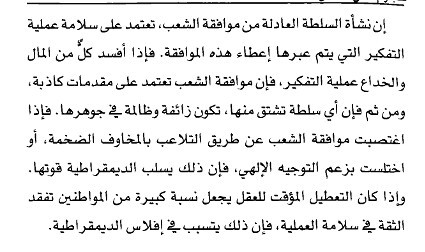
That the public discourse on which information exchange is based has shifted from the printed word to electronic media, particularly television, which is a one-way medium requiring vast wealth to access, wealth that is unavailable to the many
That reason is seriously hampered by fear, and that constant fear has become a feature of contemporary life
That this unreasoning fear might be resolved in a public forum open to all for the free exchange of ideas, but that this forum is no longer open to all, or to many, as it once was.
New science has given us insight into how fear works in the human brain and it shows that emotion affects reason much more than reason affects emotion
That television, by using a non-language moderated input, skips past input that is language moderated, penetrating to core emotion
He notes an “orienting response” that fixes our attention on the screen, notes how fearmongering is done, and shows how the Bushies did just that to justify the war on Iraq and their anti-freedom program at home
That faith plays a role in society as well as reason, citing the greater impulse for anti-slavery movement in religion, while the supposedly Reason-based, like Jefferson, lagged.
Overall, I felt that it was a good read with a bunch of interesting points. I appreciated the many quotes from Founders and others, but felt that he needed to stitch his material closer to the seam of his theory. Read this for its content.
Actually, Al Gore's book gets 5 stars for its overall content, the timeliness and appropriateness of the subject matter, and for more than occasionally delivering masterful, eloquent, and persuasive arguments to support its thesis. But unfortunately, at the same time, it was impossible to overlook the flaw that other reviewers have also noted: the organization of the material is somewhat disjointed and unnecessarily repetitive.
Imperfections aside, this is a book that is well worth reading. Over the past several years, our nation has become seriously and dangerously divided. To a large degree ideology, propaganda, fear-mongering, and demagoguery have replaced reasoned discussion, education, and debate. The devastating results of this downward spiral are evident everywhere, yet the spin-meisters continue to persuade their loyal followers to simply blame all their problems on those who disagree with their ideology. Leaders, Al Gore explains, inspire us to manage through our fears; demagogues, on the other hand, exploit our fears for political gain as they continually promise security in return for the surrender of freedom.
Al Gore's plea for America to embrace reason is extremely persuasive and well-researched. I fear, however, that a scarce trifle of the people who really should read this book actually will -- the term "preaching to the choir" comes to mind. The sad fact is (as this book clearly documents) that most of America will be too set in their ideologies or too involved with the latest reality TV shows, celebrity gossip, or other mindless entertainment and propaganda to ever decide to read such a book as this.
Throughout the book the author manages to project a sense of optimism that a substantial return to reasoned dialogue and debate can be achieved. To a small degree, reading this book increased my hope that this is possible.
Gore confronts the Bush administration on issues of policy, ideology, and ethics in a rational manner, and lays out his argument that television and a lack of transparency in the government is causing the trend of an apathetic, cynical public. At first I was skeptical of his argument railing against TV, because it seems like such an easy thing to attack. But it is hard to deny the way television, as the primary source of most American's news and information, has contributed to a lack of civic discourse. Gore doesn't stop at the attack, though. He provides a vision for innovation in television and internet media that can revitalize the public debate and restore a reasoned citizenry. I am simplifying the scope of the work, of course, because media is only one of the contributing factors to the "assault on reason."
You can feel the depth of sincerity in Gore's politics and in his conviction for the protection of the country, democracy, and our Constitution. Informative and challenging, The Assault on Reason is a must-read for anyone who is ready for a change in American politics.
The idea that TV is rotting our brains is nothing new, but the idea that TV and the modern American system of politics by television has completely ruined our democracy is a bit more novel, and that is the main point of this book. Several other things struck me as I was reading this, however: 1. This book, which very bluntly calls out myriad ways in which the current Bush administration has disregarded, denied and dismantled our constitution and historical tradition, could never have been written by anyone who is actually running for president. And, 2., this is exactly the person I wish were running for president. No one else in the campaign has said half of these things, half as strongly...and they need to be said. Also, it becomes very clear very quickly that Gore does indeed know his American and constitutional history (and has great respect for them and for our core American ideals), which is a lot more than I'd say about most of the people who have been in charge here recently. Definitely a must read for this campaign season...but it will probably leave you wishing you could vote for the author. Alas...
الكتاب رائع جدا ومبسط والكلام مرتب ومفهوم. انا شايفة ان مهم جدا انه يتقرأ ، هو بيتكلم في عنوان الكتاب بس بشكل سياسي ، ومن غير الشكل ده ، مكنش هيبقى سياسي .. ان حد يخوفك ويعملك ارهاب ويعطل مناطق التفكير ف عقلك ، دي مش مجرد سياسة ، ده في أي نقاش ممكن ده يحصل ، ف اصغر مجتمع حواليك لأكبره ، اقتناعك بفكرة لمجرد ان عرضها حلو ، تأييدك لشخص عشان دايما بيظهرلك ف كل حتة _الاعلانات_ ، بتصدق أي شخص بيتكلم بالدين لانك ساذج ... حاجات كتير بتأثر سلبيا على عقلك وميخليش رأيك منطقي ، غير حتى عناوين الموضوعات ف الكتاب .
حاجة مفهمتهاش من الكتاب : جور لما اقترح اقتراحات لحل المشاكل دي ، قال انه حاول انه يعملها ف وقته لما كان نائب كلينتون ، والجدير بالذكر انه معظم امثلته كان عن فترة بوش وتفجير برج التجارة وغزو العراق ، يعني المشكلة اصبحت اسوأ حتى ف عصر الانترنت والسوشيال ميديا ومقترحات جور.
I read this book to see if he was going to stand for President. It looks like he is not.
America fascinates me - the more power it has in the world the less interest it seems to pay to the consequences of that power. Democracy sounds like such a good idea, but can we honestly say the US is a democracy when - in 1998, for example - only 36.4% of adults able to vote did so? When the only merit that matters in being elected President is being a multi-millionaire? And does the people only getting to have a say once every four years really qualify a country as a democracy?
Gore even declares himself a man of faith - I guess one would have to in the US. His doing this left me feeling a little sad that this could be considered in the least bit relevant.
All the same, this book does seem to support people participating in society and that is a novel idea - I'm sure the powers that be will ever allow it to happen, but it is nice to pretend it is possible.
After reading this book my sentiment is that Al Gore could be a modern day Abraham Lincoln. His work demonstrates his knowledge of the human condition both through science and scholarship. His book looks at decline reason in Society. Gore quotes many frightening prophecies from men like Thomas Jefferson to show us that the alarm bells have been ringing only we're too ignorant to know what to listen for because we (me included) have never read Jefferson or Thomas Payne. I didn't quite know of his devotion to JC, and though the book does not trumpet this fact, it is yet very clear where his strength comes from. I include that last sentence only because I suspect others, like myself, might not have known it. He is a voice that cries out for justice.
Gore presents his disagreements with his opponents as evidence of their mental inferiority. Even though his critiques of their policies are reasonable, by framing them as a question of smart (him) and dumb (them), he alienates anyone whom he might want to convince of his position. And massively annoys those who are already on his side.
can you imagine a world in which a man was president who knew to translate philosophers of the public sphere into readable prose--in addition to winning the Nobel??? it's enough to make my cry.
THIS BOOK SHOULD BE REQUIRED READING FOR EVERY AMERICAN! This book lays out what exactly our government is doing, and how we are letting them systematically destroy "our democracy" and turn it into a Theocracy. It lays out flat how every single report the admin. has gone on to justify our wars has been a lie, often ignoring true reports from independent sources and going with biased reports from interest groups. How they are deleting, re-classifying, and covering up documents on the war, the environment, health care, foreign policy, energy policies, and the governmental workings themselves. This book is the first step to learning what is really going on in this country.
Al Gore has written a well-reasoned critique of the Administration's leadership (or lack of same). He draws on Chomsky and other progressive critics. This book is surprisingly direct for a practicing politician. Of course, the environmental parts are the hardest-hitting. If the conservative coup in 2000 had been prevented, this country, under Gore, would have had liberty and justice for all, not just the superrich.
Over the top! Outstanding! The best read regarding my life as a U.S. citizen I've had since reading Thomas Friedman's The World is Flat. For more from me bout this book, I refer you to "Body Electric" where I've written extensively.
Would Al Gore be Al Gore now if he had been sworn in as the President he was elected to be? I don't know, but I really like the current Gore, and I can see why many want him back in pubic office.
The book focuses mostly on the idea that reason is no longer employed to make educated and responsible decisions in life, particularly in regards to our political discourse and policy. Gore spends the first part of the book talking about technology and how we get our information. He talks about radio and television and how their one way nature in communicating information affected us not only from a psychological standpoint but from a neuroscience standpoint as well(how information from these sources is processed in the brain), and what this has done to political discourse both as a side effect of the technology, as well as knowingly by those with the means and opportunity to take advantage of it. He also talks a bit about fear, what it is, what causes it, and the underlying physiological things going on in the fear response and relates this to political dialogue as well.
He continues from there with what is mostly a scathing indictment of the Bush administration. Not as much specific policies as the manner in which the administration went about making policy decisions and enacting them. Though he does put blame on all politicians and society at large for not doing more about this, while also explaining somewhat WHY we let this happen.
He ends by talking about the internet and its prospect for opening up true open and honest dialog. He sees it in a sense as something that can save democracy given the ease with which it allows people to communicate as well a means for those without money or power to share their ideas and have their voices heard.
It was a really fascinating book. Maybe it was just the liberal elite intellectual in me, but I can't express how gratifying and heart warming it was to hear a politician quoting scientists, philosophers, historians, and world leaders(both past and present) throughout what was a reasoned well thought out analysis of our current situation and how we got here. It expressed all these disparate thoughts I've had over the last few years, as well as some new ideas I hadn't ever put together, and wrapped them in a tight package.
As a polemic against the worst failures, mistakes, and wrong-headed policies of the Bush administration, it's okay. As anything more than that, The Assault on Reason fails. The book can't even deliver on its basic premise -- that the politics of fear, deception, secrecy, etc. have damaged our country's ability to function as a democracy -- primarily because Gore never gets around to defining what he means by "reason." And that's really too bad, since Gore raises a number of very interesting issues and makes some insightful connections. For example, the first chapter focuses on fear, and uses research from cognitive science and psychology to show how fear can disrupt our brain's thinking patterns -- and therefore our public discourse and our collective decision-making. This would be a fascinating avenue of exploration, but it never really goes anywhere. The scientist Charles Taber is quoted as saying, "The Enlightenment model of dispassionate reason as the duty of citizenship is empirically bankrupt," but Gore seems to not even notice that this statement may undermine the entire premise of his book.
There are a few other parts of the book where Gore pulls together insights from interesting places to illuminate the current political exile of expertise and evidence. Unfortunately, those passages are surrounded by rehashing common criticisms of Bush policies, banal observations about media and technology, and strings of familiar quotes from Founding Fathers.
Al Gore heavily criticises the George W. Bush administration for attacking Iraq based on a false premise, and trying to cover up this false premise by a systematic attack on the role of reasoned debate in policy and public life.
In this book (written in 2007) he argues that there is a trend in US policy that assault reason by ignoring facts and analysis when making police decisions. He argues that the only way on restoring this is in creating a “marketplace of ideas”, where in the public realm itself opinions can be shared and are accessible for everybody.
In Gore’s eyes, the internet is perhaps the greatest source of hope for reestablishing a healthy functioning self government. He places high hopes in this medium, where everybody can share his or hers reasonable ideas to the public.
Alas, we all can see that the opposite happened. In today’s world, fake news is indistinguishable from real news and you have to check every fact for yourself. Instead of creating a “marketplace of ideas”, the internet has destroyed it instead.
Can we blame him for not seeing this? Perhaps not, as this book was written in 2007. It probably just shows how desperate Al Gore is today, with Trump as president and possibly a talk show host as president in 2020.
This book has a somewhat meandering style – in no way is it as powerful as his documentary film (An Inconvenient Truth) on climate change.
Gore is evocative when focusing on the gross ineptitudes of the Bush administration. He is less forceful when discussing the effects of television and the possible future effects of the internet. I also found his constant juggling of historical anecdotes of the past – whether it be the George Washington era or Greek philosophers to be irritating.
Nevertheless his critique of Bush-Cheney is to the point with strong suggestions that they are circumventing democratic processes from the war in Iraq to the torturing of prisoners in Afghanistan, Iraq, and Guantanamo. He also blasts the Bush administration for their avoidance of climate change. It is heartening to see a former presidential candidate take Exxon-Mobile to task for their negligence of the environment, but masquerading as environmental protectors.
If I had read before the holiday this year my whole Republican family would have gotten a copy for Christmas. It´s a book you have to love and hate. Gore is the man, and we will lament his loss and praise his sense, but we are made to feel a little stupid for these last 8 years.
Just picturing Bush sending back the CIA report telling them to make a connection to Iraq after they already said there was no connection never will quite match his innocent/child-like expressions and poor locution. Perhaps the man IS smart. He duped a nation, made the Presidency more powerful, ignored Congress, The People, and worked unconstitutionally without ever being held accountable. He even dodged the damn shoe pretty impressively. Now he can retire to his mansion in Texas.
Good riddance. Let´s see if Obama can restore reason back into the Beltway and throughout the land.
This book is like a single man crying in the wilderness. Al Gore does an excellent job of explaining the concept of manufacturing consent, fear politics and group thing intellectual ignorance. This book should be a classic. It explains major concepts like; the democratic process, the decline of reason and rationalization based on a shift in media from text to TV and the impact of global environmental change. My only negative point is the fact that if spends way to much time explaining Bush’s war on Iraq rather then continuing to keep the philosophical argument going. It is hard to enjoy a book that transitions from conceptual social-political problems to current affairs. Mr. Gore does a good job of taking a large grab bag and providing a very constructive argument in his conclusion. This is a book for the shelves of every critical thinking voter.