Jump to ratings and reviews
Rate this book

Letters to a Young Scientist

Rate this book
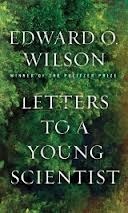
Inspired by Rainer Maria Rilke's Letters to a Young Poet, Edward O. Wilson has distilled sixty years of teaching into a book for students, young and old. Reflecting on his coming-of-age in the South as a Boy Scout and a lover of ants and butterflies, Wilson threads these twenty-one letters, each richly illustrated, with autobiographical anecdotes that illuminate his career--both his successes and his failures--and his motivations for becoming a biologist. At a time in human history when our survival is more than ever linked to our understanding of science, Wilson insists that success in the sciences does not depend on mathematical skill, but rather a passion for finding a problem and solving it. From the collapse of stars to the exploration of rain forests and the oceans' depths, Wilson instills a love of the innate creativity of science and a respect for the human being's modest place in the planet's ecosystem in his readers.

256 pages, Hardcover

First published January 1, 2013

458 people are currently reading
7514 people want to read

About the author

Edward O. Wilson

201 books2,494 followers
Edward Osborne Wilson, sometimes credited as E.O. Wilson, was an American biologist, researcher, theorist, and author. His biological specialty is myrmecology, a branch of entomology. A two-time winner of the Pulitzer Prize for General Non-Fiction, Wilson is known for his career as a scientist, his advocacy for environmentalism, and his secular-humanist ideas pertaining to religious and ethical matters. He was the Pellegrino University Research Professor in Entomology for the Department of Organismic and Evolutionary Biology at Harvard University and a Fellow of the Committee for Skeptical Inquiry. He is a Humanist Laureate of the International Academy of Humanism.

Ratings & Reviews

What do you think?
Rate this book

Friends & Following

Create a free account to discover what your friends think of this book!

Community Reviews

5 stars
1,466 (31%)
4 stars
1,686 (36%)
3 stars
1,157 (24%)
2 stars
312 (6%)
1 star
45 (<1%)
Displaying 1 - 30 of 541 reviews
Profile Image for Chrissy.
446 reviews92 followers
January 17, 2014
This books should more accurately be titled "Letters to a very young field biologist," or "Anecdotes from an entomologist that may only be of minimal interest if you have no interest in bugs."

Thankfully, it was a quick read.

E. O. Wilson is clearly a successful and prolific scientist, but success in biology does not good-general-science-advice make. It's always interesting, to me, to hear about how researchers started their careers. Oftentimes it's encouraging to learn that some favourite minds fell into their fields by sheer chance, by randomly uncovered passion or talents, or by circuitous routes through esoteric areas of knowledge or counterculture. Wilson, on the other hand, wanted to be exactly what he become since childhood and followed a very standard route to get there: beginning as a boy scout and camp counsellor and ending up at Harvard. This is as straightforward an origin story as a scientist gets, and, while admirable, the story of a very precocious passion and intelligence followed linearly through to PhD has little to offer any student who didn't find their passion early on. Most scientists will not set their life trajectory by age 9, and most certainly will not go to an Ivy League school. Most, moreover, will not study biology. Some of us who consider ourselves scientists do not even study the "natural" sciences (gasp!).


I was disappointed, as a young scientist, to find a book of this title written decidedly not for me.
Profile Image for James Dittmar.
88 reviews4 followers
April 27, 2013
Wilson does an excellent job at summarizing some very important pieces of advice in science. He espouses the importance of the "prepared mind", the necessity of in depth and general knowledge of the subject area, and the benefits of being passionate about your area of interest. He provides some encouraging remarks for students who do not excel at math, and some observations about the importance of IQ in science (he actually argues that a high IQ may be harmful because it does not necessitate that the individual persevere).

But his advice is not broadly applicable to all types of scientists. Wilson is a naturalist--he derives questions about the world based on observations in nature. He then thinks about possible ways in which those phenomena occurred. While this path worked for Wilson, I don't think it is the only possible meaningful path. Molecular biologists, as an example, spend very little time in the "natural" world, and instead focus on phenomena that are difficult to observe with our unaided senses. He also categorizes faculty as fitting into one of two categories: the insiders and the outsiders. He recommends that budding scientists opt for the latter, and eschew, as much as possible, teaching responsibilities and departmental obligations beyond serving on a thesis committee. He also advocates against so-called think-tanks, and instead recommends a more solitary approach, catering especially to the introvert.

I don't think that his advice is wrong, but I also don't think it is balanced. This book is basically a case study of a successful scientist, and I think it should be viewed as such, rather than a general book of advice. And as a scientist, I wished he would have provided more reasoning as to why he makes specific recommendations or at least provide more examples that support his claims.
Profile Image for robin friedman.
1,945 reviews415 followers
January 31, 2025
A Retired Non-Scientist Reads "Letters To A Young Scientist"

As its title implies, Edward Wilson's "Letters to a Young Scientist" (2013) is cast in the form of 20 letters addressed to young people who are considering science as a career. The book says a great deal about science and study, but it is much more. The book teaches that a person should have passion for what he or she chooses to make of life, whether in science or in another field. The book teaches about science and about the value of hard work and persistence. Thus, this short book can be read with pleasure not only by budding scientists but by general readers as well. I am retired and never seriously considered science as a career choice. Still, I want to discuss what I learned from Wilson's thinking.

Wilson's accomplishments over a life devoted to science make his ideas worth considering. In a career of over 50 years as a biologist, most of which he spent teaching at Harvard, he has written prolifically both for lay readers and for scientists. He has founded the disciplines of sociobiology as well as the discipline of biogeography. Wilson won two Pulitzer Prizes, the Crawfoord Prize for ecology, and many other awards. He is also the world's leading authority on ants. In the "Letters", for example, he discusses a work that he wrote over an eight-year period late in his career: "Pheidole in the New World: A Dominant Hyperdiverse Ant Genus" (2003). This is obviously a work for specialists.

It is unsurprising that Wilson relies on his own experience for much of the advice he gives in the Letters. His most important advice comes at the outset of the book and is reiterated many times. Wilson emphasizes the importance of passion and desire to a budding scientists. He writes:

"My confessional instead is intended to illustrate an important principle I've seen unfold in the careers of many successful scientists. It is quite simple; put passion ahead of training. Feel out in any way you can what you most want to do in science, or technology, or some other science-related profession. Obey that passion as long as it lasts. Feed it with the knowledge the mind needs to grow. Sample other subjects, acquire a general education in science, and be smart enough to switch to a greater love if one appears. But don't just drift through courses in science hoping that love will come to you. Maybe it will, but don't take the chance. As in other big choices in your life, there is too much at stake. decision and hard work based on enduring passion will never fail you."

Regardless of a person's career goal and regardless of the individual's stage in life, passion for what one does is critical for meaningful activity. Wilson illustrates his advice with discussion of his own life, beginning with his youthful fascination with biology and nature, including snakes, butterflies, and ants. He is a person who did with his life what he was born to do. After recounting experiences of his boyhood searching for insects, Wilson writes, "I've gone into this boyhood story to make a point that may be relevant to your own career trajectory. I have never changed."

Wilson also discusses the importance of the entreprenurial spirit even for a field such as science with includes ambition, the ability to engage in many projects of various sizes at the same time, ambition to succeed, and the willingness to take risks. He again illustrates entrepreneurship in science with many examples from his own experience as a biologist and from his experience working with other scientists.

Besides advice which has application beyond young people and beyond science, Wilson has much to say about scientific work itself. He describes the relationship between science and math, the tension between individual creativity and teamwork in science, the importance of mentorship, and much more. Wilson makes much of the importance of creativity, likening scientific accomplishment to the work of a poet, informed with background and hard work.

I remain most impressed with Wilson's patient lifelong work learning about ants. He writes that when he began his career, there were perhaps a dozen specialists on ants in the world. From studying ants, Wilson broadened his focus to include ecology, evolutionary biology, sociobiology, and consilience -- synthesizing knowledge from various fields. But ants remained central. Wilson writes to prospective scientists of his massive study of "Pheidole" (a large genus of ants) that I mentioned above:

"You may think of my story of ants as only a narrow slice of science, of interest chiefly to the researchers focused on it. You would be quite right. But it is nonetheless at a different level from an equally impassioned devotion to, say, fly fishing, Civil War battlegrounds, or Roman coins. The findings of its lesser grails are a permanent addition to knowledge of the real world. They can be linked to other bodies of knowledge, and often the resulting networks of understanding lead to major advances in the overall epic of science."

Wilson's Letters offer a great deal to young people interested in devoting their lives to science. The book also taught me, and will teach other non-scientific readers, much about science, scientific discovery, and the love of science. In its discussion of passion and commitment, exemplified in Wilson's life, the book has a universal message for people at all stages of life.

Robin Friedman
Profile Image for Daniel McHugh.
Author 6 books33 followers
April 26, 2013
"Letters to a Young Scientist" might easily be mistaken as a call for young Americans to take up arms on the scientific battlefield in the fight to conquer the unknown. To be sure, Wilson pushes for a greater understanding of the scientific community by the youth of his homeland. He touches on how misunderstood the sciences have become to both our students and the institutions which teach them.

However, the overarching argument in "Letters to a Young Scientist" is not actually directed at the privileged class of young people lucky enough to enter the wealthy institutions of higher learning in the richest country in the world. Actually, just like his work in biodiversity, Wilson casts a wide net, pleading to any and all who will listen about the dire need the human species is facing in the realm of science.

Wilson appears to couch his argument in a finely tuned explanation of how science is not solely the realm of the extraordinary. In truth, argues the author, to be successful in science one must simply possess an inquisitive mind, the passion to persist and the discernment to know when to call on others for help. This argument will definitely bolster the courage of any B student to stay in the fight a bit longer, but beneath the facade lies the true genius of Wilson's book. Science is not done yet.

Gazing around our wide world, many a young person might find little to conquer. Our standard of living has reached heights unimaginable to our ancestors. Outside of a few major diseases and the occasional flare up of emergencies, there is little left that a scientist might hope to conquer and leave a mark like Salk, Curie or Edison.

That is where Wilson is his most persuasive. His descriptions of our ignorance concerning our own planet are profound let alone his descriptions of what little we know of the cosmos, particle science or the other major branches in the scientific tree. He cites example after example of mountains to be climbed in the scientific universe. In addition, Wilson heaps the threats of global warming, massive overpopulation, extinction, ecological devastation, and energy dependence on the fires of our need. These threats make our need for advancements in science even greater.

In short, Wilson's "Letters" are a passionate plea for everyone to wake up, step from the numbing comfort of second half of the 20th century and forge ahead into the bright new future of science before the inventions of that comfortable period pull us past the point of no return.


Profile Image for Evan Kristiansen.
41 reviews12 followers
August 15, 2013
Letter's to a young scientist should be re-titled as "Letters to a young person considering science". This book has very little in the way of advice for someone who is already in a formational science program, let alone someone already in a PhD program. Wilson spends a lot of time reminiscing about his past, which makes the book very biology focused. Another consequence of his focus on his own career is that this book becomes unhelpful to someone who is unsure about their aspirations in science. I am currently deciding whether I want to pursue a PhD or not, this book seems to suggest that unless I have had a passion for the model system since high school, I will not be successful.

He also includes a few ludicrous lines such as "real scientists do not take vacation" and "a real scientist can talk to their spouse and think about work". People cannot balance their private and work lives and still be successful scientists? But then, he is a very famous individual; he has seen a lot of success in his time.

Overall the book was decently well written, paced well (if abruptly), and engaging. I took away the stars because I don't think it lives up to the promise of the back cover.
Profile Image for Carolina.
256 reviews13 followers
November 17, 2014
Originally posted at: A Girl that Likes Books

Put passion ahead of training

Why I read this book?

While listening to the Nature podcast this April I learned about this book. Needless to say, as a young scientist myself I went to get it immediately. I couldn't read it until know, and boy, was I missing out!

What's the book about?

Edward Wilson is a renowned scientist, particularly in the fields of entomology and sociobiology. He has won several prizes, including a Pulitzer, and in this book he shares his views as how he "made it" in science. From making the decision to work in science through the difficulties of the scientific method, up to that inevitable moment when you doubt yourself, Wilson talks about how he felt, how he confronted different challenges, all while talking directly to the reader

Final thoughts

I took so much from this book. I realised half way through that I was taking a quote from almost every single mini chapter. There were moments when I put the book down and sight deeply because I identified with the struggle he was describing; moments were I felt like tears might be coming because I felt like a sweet grandfather was holding my hand and telling me everything would be ok. The book opens with this line:

You made the right choice [...] the world needs you --badly.

I'm telling you people, some days you really wonder if you did make the right choice, getting into science, because is so easy to get discouraged, with experiments that won't work, people that will doubt the very core of your ideas...but you have to go on, and this book is full of encouragement. I would highly recommend this book to everyone with a career in science, whether they are starting, in the middle or retiring; for these last ones, I'm sure it will bring you fond memories of when you were just beginning in this path.
Profile Image for David.
91 reviews9 followers
March 29, 2024
En general está muy bien aunque tengo sentimientos encontrados en relación a muchas afirmaciones.
Profile Image for Judy.
3,542 reviews66 followers
April 18, 2022
This is best suited for a young adult who has a passion for insects. Others would probably get a sense of what he's talking about, but the examples definitely come from his own experiences.

The first third of the book and the last chapter, I think are the most relevant. If I were to write a similar set of letters, it would read quite differently, mostly because my background is different from Wilson's. (Of course, his opinions are many-fold more credible than mine given that he's a prof at Harvard and earned a Pulitzer.)

p 32: For two centuries the global human population has been doubling every several generations. Most demographers and economists agree that a global population of more than ten billion would make it very difficult to sustain the planet. We recently shot past seven billion. ... Humanity is racing toward the wall.
A thought that we all need to keep in mind.

p 92: There is an introversion in the innovator that keeps him from team sports and social events. He dislikes authority, or at least being told what to do. He is not a leader in high school or college, nor is he likely to be pledged by social clubs. From an early age he is a dreamer, not a doer. ...
I'd like to share this passage with a group of scientists and listen to their reactions.

p 151: ... The Double Helix, arguably the best memoir ever written by a scientist, a book I recommend to any young person who wants to experience almost personally the thrill of scientific discovery.
I agree, but I also suggest that every science teacher read it.
Profile Image for Charles Sheard.
610 reviews17 followers
September 13, 2018
Although I am not the target audience, I enjoyed this a great deal, though it just reinforced my regret in not being able to follow multiple life paths that called to me, such as science. Some chapters were more cohesive than others, and some of the “lessons” seems more tacked on to what was otherwise just a story Wilson wanted to tell, but even so the stories are valuable in and of themselves to young scientists. My 14-year-old future marine biologist is already reading it, and indicated that she likes it so far, so it seems to have cross-generational appeal.
Profile Image for Cass.
57 reviews8 followers
January 19, 2015
I was surprisingly disappointed with this book. As an aspiring scientist, ant-lover, and E.O.Wilson admirer, I thought it was all going for me, but I had to force myself through it. This book read as a series of badly strung anecdotes that offered vague guidance for a specific field (but not always entomology). It was unclear who the audience was throughout the whole book- if it was undergrads seeking a future in science like me, grad students hoping to become famous scientists, or young students like my 8th grade cousin who could use a little prompting to focus on science. This book was definitely not worth the $15 I paid for it. I wouldn't even pay $5.
88 reviews1 follower
April 14, 2024
“be prepared mentally for some amount of chaos and failure.” (pg. 69)

In Letters to a Young Scientist, E. O. Wilson comes across as an out-of-touch gate-keeper of science. His dictums and advice include: “real scientists do not take vacations,” to avoid teaching and administrative responsibilities at any cost (“make excuses, dodge, plead, trade”; pg. 81), and to publish “by any available and honorable means” (pg. 87). There are some good tidbits scattered throughout this book, but to find them, it is necessary to wade past the self-obsessed ramblings of someone whose advice is best suited for someone exactly like himself who is navigating the field of science as it existed more than half a century ago.

Wilson’s views on the humanities are confusing, inconsistent, hypocritical, and annoying. He frequently criticizes any field outside of the hard sciences (including the social sciences or the creative endeavors of the humanities) as isolated, boxed-in, and limited – implying that these fields are time-wasting obscurers of universal Truth and fundamentally less valuable than ‘real’ science (see especially pg. 169-170 and 141), but at the same time, Wilson also heavily romanticizes science as a creative endeavor (pg. 189, 69), comparing scientists to poets (pg. 74, 101) and dreamers (pg. 37, 70). He mocks science fiction (pg. 172), but fawns over Michael Crichton, praising his novel, Jurassic Park, and describing how it inspired him to think of an experiment involving ants (which he never actually ended up conducting; pg. 73).

Wilson says that scientists are incapable of writing good memoirs, and that their attempts are often “reticent and dull” and full of “false modesty” (pg. 90); apparently, he fails to see the irony that he’s written these opinions in what is basically a memoir of his own. At least he was right about the abundance of false modesty: many of the chapters in Letters to a Young Scientist contain random deviations from the main point (if there even is a point) that seem only to serve as excuses for Wilson to insert humble-brag accounts of his exploits and accomplishments as a scientist (including a very underwhelming conversation he once had with George Gaylord Simpson, in which E. O. Wilson brilliantly – and oh-so-casually – came up with the name of the new field of “evolutionary biology”; pg. 225).

In a jarring and disturbing conclusion to the book, Wilson describes an experiment in which he fumigated all insect life from several mangrove islands as “one of the most satisfying experiences of my entire scientific life” (pg. 233). He calmly justifies the experiment by noting that “the damage done to the entire Florida Bay mangrove system by removing the invertebrates from a dozen or so [islands] would be negligible, and soon repaired” (pg. 231). This story is followed by one of the shortest chapters in the book: a paltry 4-page comment on “truth and ethics,” which mostly focuses on urging young scientists to sufficiently cite previous work written by more senior scientists, and which does not at all address the ethical considerations of causing intentional, localized extinctions and disrupting entire ecosystems.

Quotes:
“[A scientist] is sometimes driven, I will dare to suggest, by a passive-aggressive nature, and sometimes an anger against some part of society or problem in the world.” (pg. 92)

“An opportunity to be the first is [a scientist’s] smell of blood.” (pg. 93)

“Envy and insecurity are among the drivers of scientific innovation. It won’t hurt if you have a dose of them also.” (pg. 225)

“The answer has been largely concealed by complex events imperfectly preserved in the fossil record—the paleontologist’s equivalent of the fog of war.” (pg. 214)

“You have a place in it if animals and plants interest you in their own right, and especially if you like epics and the clash of worlds.” (pg. 217)
Profile Image for Savi Johnson.
17 reviews
August 1, 2025
i finished this like 2 years ago, just forgot to log it i guess. this was the second E O wilson book ive read and i loved it. it convinced me that this dude knew everything about life and i wanted to send him a letter or something. when i found out he had already died i was so sad, but i decided i would read all of his books.
Profile Image for jeremy.
1,202 reviews309 followers
April 20, 2013
an inspiring work aimed primarily at those interested in pursuing a career in the sciences, e.o. wilson's letters to a young scientist is an autobiographical glimpse into the personal life and background of one of our most eminent biologists. one needn't be a student to find value and richness in wilson's letters, but for a young person trying to a carve out a direction for themselves, this book could well be a catalyst for reassessing their interests and academic pursuits. the wisdom and advice imparted by this octogenarian thinker is humble but serious, practical but possessed of passion. wilson provides some historical and introductory accounts of the sciences in general, what science is, the scientific method, and what one could expect from a career in the sciences. letters to a young scientist is a thoughtful, generous offering, and also a plea for a new generation of students to consider a rigorous pursuit of scientific exploration, because, as he says in the prologue, "the world needs you - badly."
what is this grand enterprise called science that has lit up heaven and earth and empowered humanity? it is organized, testable knowledge of the real world, of everything around us as well as ourselves, as opposed to the endlessly varied beliefs people hold from myth and superstition. it is the combination of physical and mental operations that have become increasingly the habit of educated peoples, a culture of illuminations dedicated to the most effective way ever conceived of acquiring factual knowledge.

~

the ideal scientist thinks like a poet and only later works like a bookkeeper. keep in mind that innovators in both literature and science are basically dreamers and storytellers.

~

the right question is intellectually superior to finding the right answer... to search for unasked questions, plus questions to put to already acquired but unsought answers, it is vital to give full play to the imagination.

if you're not already familiar, be sure to check out the encyclopedia of life, a bewilderingly impressive resource and the most comprehensive database of its kind. wilson's 2007 ted prize speech was the catalyst for this vast, wondrous project.
Profile Image for Robin.
479 reviews25 followers
May 7, 2015
Disappointing.

This is more of a disjointed memoir than "letters" to a scientist. A lot of this advice is either outdated or specific to biology. If I told my advisors I would only do research in a "sparsely inhabited field" as Wilson suggests, they would say, good luck finding one! Not to mention most advisors I know don't let their graduate students choose their own projects. You do work on the projects that are funded, end of story, usually.

But perhaps the part of the book that made me really angry was the unnecessary dig at the humanities. Wilson says, and I quote, "There is only one way to understand the universe and all within it, however imperfectly, and that is through science. ... Granted that many in the humanities, as if in a bunker, fiercely defend their isolation. ... Yet however much the humanities enrich our lives, however definitively they defend what it means to be human, they also limit thought to that which is human, and in this one important sense they are trapped within a box."

Look here, old dude. I don't know any one in the humanities who views their field as isolated from the science and technology in the world around us. If anything, the best parts of the humanities help us make moral, ethical, and spiritual sense of our ever changing reality which is increasingly based on science and technology. There are plenty of books and artworks that are from the perspective of non-humans, so that critique of being trapped in a human box rings hollow. This is the classic mistake of a scientist confusing the practice of science: science is a fact-discovering enterprise, with the value system based on science: science is a rationalist approach to life. The latter is not an integral part of the scientific community, it is a value judgment that society should make all decisions based on science because that is the 'best' approach to being human.

He goes on to obliquely attack science fiction as being not based on science, and then writes his own "science fiction" paragraph about supertermites, which, if it was a book, would be the most terrible science fiction writing I've ever read.

Blech.
Profile Image for Jordan Myers.
16 reviews
December 5, 2016
Everyone who has taken an ecology class has heard of E.O. Wilson, and as a Zoology major in school I had to learn all about his theory of island biogeography. I saw this book a couple months ago and decided to grab it because I'm attempting to get into graduate school as a lower GPA student. I've been very discouraged thus far and thought this book might give me the encouragement I needed. For the most part, it did. The book does a great job of rousing the inner scientist and dreamer in you. A lot of his advice was very useful, and he has a lot of examples to guide you along. The only thing keeping this from being a 5-star book, in my opinion, is the fact that some of his examples are dated.

Wilson basically stumbled into a field where no one was doing anything and he was able to make great strides, create new departments, and went straight from backwoods Alabama to Harvard. That was fairly plausible in the 40s and 50s, but not anymore. Some of what he says is timeless: there really *are* new areas to stumble into, and there are plenty of opportunities to make novel discoveries, but the way academia is funded and the pure nature of the creature in the 2010s just make it very difficult. You're judged now, more than ever, on how much money you can bring and how good your grades were.

I would love to have the ease of entering academia from the 1940s without all the blatant racism and with modern knowledge, but that's just the dreamer in me again. But that dreamer just finished the book and is going to use its lessons to continue on toward his goals.
Profile Image for Kat.
130 reviews41 followers
Read
August 5, 2021
The beginning of this book was rather boring. It really catered to really Young Scientists (i.e. those in elementary school). I didn't care for all the Ant-talk. I was hoping for more discussion on other sciences but it was quite insect based. It did get better in the second half.
Profile Image for David.
173 reviews4 followers
January 7, 2017
Before going into this review I need to make one message crystal clear - this book is an essential read for anyone taking a Ph.D or considering a career in science regardless of their discipline. This is how profound a read this book is.

This book takes the form of short to medium length letters by O.E. Wilson, a (mostly) retired biologist from Harvard who imparts his knowledge onto reader in the form of advice and often relates it to his own experience. The letters are easily read, and for the most part I could read one on a 15 minute bus journey to work.

Although he is a biologist, he is openly respectful to other disciplines (including social scientists such as myself) and his wisdom and advice is useful to everyone. There is of course however an understandable bias towards biology. Near the end of the book the last few letters are a little dry as he related his points to very specific part of his career, but this is a comparatively minor criticism.

This book features sound advice on the mission of science, the need for confidence and belief in ones work, and even the necessity of being wrong. Everyone in science needs a grand old master to help them as they tip toe into their field, and you will be hard pushed to find one better than O.E. Wilson.
Profile Image for Mits.
555 reviews1 follower
November 17, 2021
As a young biology student, I heard so much about EO Wilson (especially during my time studying ecology in the tropics - of course his name came up whenever we talked about ants or biodiversity) so I was interested to actually read some of his prose. This one was just mildly interesting, and I have similar complaints to other reviewers about how it prescribes very limited advice that is suited to a very particular kind of young scientist. I thought much of his advice rather exclusionary and/or old fashioned, like his recommendations on how much one should work each week and the assumption that one is completely devoted to ones work with little to no outside obligations or interests. Now, maybe that is what is needed to be a successful scientist of his magnitude, but it does close a lot of doors to people. Perhaps I would be more interested in a book more devoted to his scientific research, since I wasn’t very satisfied by his narrow career/life advice.
35 reviews2 followers
September 24, 2023
This book is full of inspirational ideas and good advice from a respected scientist to those just entering the field. The problem I have with it is that it seems too ready to pin down how to do science and how not to do science; what science is and what it is not. It also suggests that science is the one correct lens through which to view the universe. These narrow ways of understanding seem to influence Wilson's scientific ethic, which defends trivialization and commodification of individual non-human lives for the sake of even the smallest scientific discovery. Reading this book at the same time as Robin Wall Kimmerer's Braiding Sweetgrass was a stark contrast, as Wilson seems to be a prime example of a certain kind of scientist described in Kimmerer's book. That said, he certainly means well by everything he says, and I'm glad to have read this book.
Profile Image for ade_reads.
317 reviews19 followers
November 6, 2016
This is my 91th book for my Goodreads 2016 Reading Challenge ;)

Edward. O. Wilson, a biologist himself (in fact, he is the world's leading expert in myrmecology (study of ants)), he writes a "practical" and "realistic" book of advice for anyone considering a career in science.

Some main points include:
1. Contrary to popular belief, you should stay in science because there is a great need for scientists!
2. Do it out of love. Passion is what will get you through your career, not high IQ or math skills.
3. Maximize your marketability by choosing a field that is not overwhelmingly popular (less competition)

So, before ruling out a career in science, read this book. Let an expert and a scientist show you what's "realistic", rather than a materialistic consumer culture.
Profile Image for Laura Schmitz.
12 reviews3 followers
September 19, 2022
This review is about expectations.

I agree with a few of the other reviews on Goodreads that claim the book should be called "Letters to a young field biologist" or even "letters to a young entomologist". As much as I admired and get inspired by Wilson's work and story (far beyond what is told in the book), reading this piece felt like my very first class in Biology - funny enough that was Zoology of Invertebrates - in which the professor would guide us through the amazing facts of how many species of living being have we already discovered and how many we probably still need to discover, how many insects we have in our region and the biodiversity of the Amazon. All that is undoubtedly very important, very interesting and extremely inspiring, but... this is my first day in Biology school, what the heck am I supposed to do here?

The three stars review is also about my own individual expectations. I bought a book called "letters to a young scientist", written by one of the most important biologists, expecting to get the guidance I can't seem to get where I live. Maybe, as a 24yo undergraduate that moved to another continent and still has 2 more years of Biology bachelor to go through, I was expecting a book about the difficulties of academic life and how to get through them, how to get mentorship, how to write ethically, how to not compare yourself and how to enjoy the ride. Instead, I got a story of how Wilson and his colleagues were PhDs at age 26, how scientists don't have vacations and how ants are cool. It was like reading a manuscript of his personal journal that we would later give to one of his young pupils, clearly someone that doesn't have to work part time on a gastronomy-like job and clearly a boy - and I say this knowing of course the guy was born in the 30s, so I couldn't have expected any different. Not very motivating, I'd say. So perhaps what's left for me is to work as hard as I can so I'll be the one writing that book I was expecting*.

Nevertheless, I would borrow this book to one of my kids if they were considering getting in Biology - not Chemistry nor Physics. The two first + the last part actually have some interesting insights and quotes I will be taking for my professional and personal life (i.e "the mysteries of the universe and the human mind cannot be solved with unaided intuition"). The third part - "A Life in Science" - can be summarised with "omg ants are so cool, anyway have some audacity" and the fourth part - "Theory and the big picture" - can be summarised with "omg biogeography is so cool, anyway don't worry, you still have plenty to discover".

A short read, makes a good company if you don't have any professor or researcher to look up to or seek mentorship. But if the latter is a possibility, I believe it's a much more productive use of your time. I guess a biography of Wilson itself would be a more productive guidance for young scientists, especially those who aren't particularly interested in entomology.

*joke
Profile Image for Eliza.
17 reviews1 follower
December 24, 2022
Un libro inspirador. Es bonito conocer la experiencia de un gran científico como lo fue Edward O. Wilson. Cada una de sus anécdotas son una forma de ver los retos que representa hacer investigación en Biología de campo. Me hubiera gustado que se enfocar en relatar de manera más general y no tanto desde sus experiencias, las dificultades a las que se puede enfrentar un joven científico y las posibles soluciones o como resolver esos conflictos; esto no porque sus vivencias no sean un buen ejemplo, sino porque a veces se siente el libro más personal desde su campo en específico que algo para jóvenes científicos en general. Aún así, es un libro que recomiendo, que me inspiró y que me hace sentir motivada a seguir en el mundo de la ciencia. ¡Gracias E. O. Wilson! 🐜
Profile Image for Sara Sandoval.
43 reviews
March 31, 2025
This was a weird read
I kinda liked it. I kinda didn’t like it.
Besides very few specific points I don’t feel like this book offers much advise and it is written in a way that feels like a children book and it would be fine if that was the intended audience but then why does it promise that’s it’s going to be helpful for people of all ages.

Overall it was interesting to read the author’s experience but I don’t feel it offers the advice I was looking for.
Profile Image for Susan Morris.
1,580 reviews20 followers
March 5, 2025
Despite not doing well in science in school, I’m intrigued by the subject & its scientists. This one was a little more theoretical than I understood, but Wilson is one of those interesting scientists.
4 reviews
September 9, 2019
I usually don't write reviews, but I saw a lot of negative reviews on this book. That really sucked because I absolutely loved it.

Like the title suggests, this book is a collection of letters in which Wilson gives advice to young college-age students, backing up his points with anecdotes. The beginning of this book is more focused on straight-forward advice while toward the end, each letter is a personal anecdote with a central message/ lesson to be learned. Since Wilson is a biologist, not all of his advice will appeal to every aspiring scientist. Regardless, I believe everyone can take something away from this book.

Wilson's style is very eloquent for a scientist. The stereotype seems to be that scientists are awkward and lack the ability to communicate with a more general audience. Even when the content of this book didn't interest me, I kept reading for the style.

This book was very inspiring to me even though I'm 16 years old, so I can't put the vast majority of his advice into practice (yet, at least.) I think I've written more notes in this book than I ever have (even for school.) It was just motivational to me, especially the beginning. It made me want to pursue the same brand of science as Wilson and get started right away.

Things slow down towards the end of the book as things get more anecdote heavy, but it's really not bad enough to take away a star.

I strongly recommend this book for anyone interested in science. Even if you don't read the whole book, I'm sure it'll have something for you.
Profile Image for Nancy Lewis.
1,653 reviews57 followers
October 3, 2019
This didn't seem very useful as advice to a budding scientist, but I did learn some interesting things about ants, and about E.O. Wilson's career.
Profile Image for Marta.
54 reviews
June 30, 2023
Livro incrível para jovens cientistas (ou mesmo para os que já estão dentro da ciência à muito!). Acho que motiva mesmo cada um a seguir o seu caminho e a questionar tudo para ir mais além, adorei também como ele finaliza o livro não há muitos cientistas que se lembrem de falar de ética assim. A única coisa que tenho para apontar é que como o trabalho dele é maioritariamente com formigas há muitos (mas muitos) exemplos durante o livro sobre estes animais o que é super interessante para quem não conhece mas também pode desmotivar um pouco a leitura porque às tantas se perde.
De qualquer das formas achei incrível e recomendo!
Profile Image for Zoe (Zthecapybara) .
65 reviews1 follower
June 3, 2022
I found this book to feel like a supportive hug. As someone who wants to become a scientist and is only in the early stages of reaching that goal it really allowed me to reflect and consider the choices I have and will make. I would definitely recommend this book to anyone considering scientific /biological careers even if research into animals / specifically insects isn't your direction.
Displaying 1 - 30 of 541 reviews

Can't find what you're looking for?

Get help and learn more about the design.