Jump to ratings and reviews
Rate this book

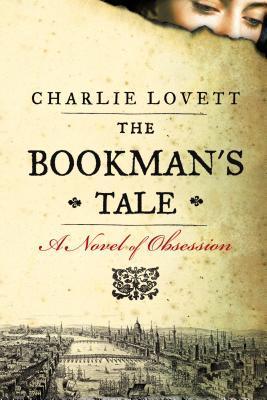
The Bookman’s Tale

Rate this book
"What about the most valuable relic in the history of English literature—would that be worth killing for?"

Hay-on-Wye, 1995. Peter Byerly isn't sure what drew him into this particular bookshop. Nine months earlier, the death of his beloved wife, Amanda, had left him shattered. The young antiquarian bookseller relocated from North Carolina to the English countryside, hoping to rediscover the joy he once took in collecting and restoring rare books. But upon opening an eighteenth-century study of Shakespeare forgeries, Peter is shocked when a portrait of Amanda tumbles out of its pages. Of course, it isn't really her. The watercolor is clearly Victorian. Yet the resemblance is uncanny, and Peter becomes obsessed with learning the picture's origins.

As he follows the trail back first to the Victorian era and then to Shakespeare's time, Peter communes with Amanda's spirit, learns the truth about his own past, and discovers a book that might definitively prove Shakespeare was, indeed, the author of all his plays.

352 pages, Hardcover

First published January 1, 2013

869 people are currently reading
25023 people want to read

About the author

Charlie Lovett

29 books1,069 followers
I was born in Winston-Salem, NC and grew up as the child of an English professor. We spent our summers in the rural North Carolina mountains, so I felt an early affinity for the countryside. I was educated at Summit School, Woodberry Forest School (VA), and Davidson College (NC) and in 1984 went into the antiquarian book business with my first wife, Stephanie. About the same time I began to seriously collect books and other materials relating to Lewis Carroll, author of Alice’s Adventures in Wonderland.

When I left the book business in the early 90s, I continued to be a book collector, and now have a large (and growing) collection of rare (and not so rare) books and artifacts connected to Lewis Carroll and his world.

In 1997 I received my MFA in Writing from Vermont College (now Vermont College of Fine Arts). During my work on this degree I researched and wrote Love, Ruth, a book about my mother, Ruth Candler Lovett, who died when I was two years old. Maya Angelou called the book “tender, sensitive, and true.”

After completing my MFA, I traveled with my wife, Janice, and daughter, Jordan, to England where we lived for six months in Kingham, Oxfordshire. We immersed ourselves in the culture and made lifelong friends. Ten years later, we purchased the cottage we had rented in 1997 and renovated it. My wife and I now spend about 6–8 weeks a year in Kingham, and have traveled extensively throughout the UK.

In 2001, my wife was hired to oversee the third grade drama program at Summit School. Bemoaning the dearth of good material, she asked if I would write a play. Thus began my career as a children’s playwright. For eleven years, as Writer-in-Residence, I wrote plays for third graders and for eighth and ninth graders. Nineteen of my plays have been published and have proved extremely popular and have seen over 3500 productions in all fifty states and more than 20 foreign countries.

During all my years as a writer, I have worked on writing fiction. I wrote my first novel-length manuscript in the early 1990s and, with luck, it will never see the light of day, but it did prove to me that I could write a book-length work of fiction. In 2008, my novel The Program, about an evil weight loss clinic, was published by the micro-press Pearlsong Press, which later published my YA novel The Fat Lady Sings.

But my big break-through as a writer came when I put together two of my passions—rare books and the English countryside—to write The Bookman’s Tale. It was a New York Times bestseller, a Barnes and Noble Recommends selection, and has been translated into several foreign languages. Parade Magazine called the book “[A] delightful tale of love and bibliophilia.”

My next novel, First Impressions, is another literary adventure, this one starring Jane Austen. People Magazine called it “a delightful novel that weaves together a modern love story and a literary mystery involving Jane Austen.”

2015 was a busy year for me, being the 150th anniversary of the publication of Alice’s Adventures in Wonderland. I curated a major exhibition called Alice Live! at the New York Public Library for Performing Arts at Lincoln Center. I spoke at the international gathering of Carroll enthusiasts in New York and wrote the introduction to the new Penguin Books edition of Alice. 2016 also saw the publication of my Christmas book, The Further Adventures of Ebenezer Scrooge, which USA Today called “[a] clever, merry, and, yes, convincingly Dickensian reimagining of this Victorian tale.”

My new novel, The Lost Book of the Grail, will be published on February 28, 2017. Set in an English cathedral library, and reaching through centuries of English history, it tells the story of bibliophile and Holy Grail enthusiast Arthur Prescott as he works to uncover a centuries-old secret about the cathedral’s history.

None of this could have happened without the support and love of my wonderful wife, Janice, and my fabulous children, Jimmy and Jordan.

Ratings & Reviews

What do you think?
Rate this book

Friends & Following

Create a free account to discover what your friends think of this book!

Community Reviews

5 stars
4,036 (21%)
4 stars
7,690 (41%)
3 stars
5,222 (28%)
2 stars
1,171 (6%)
1 star
282 (1%)
Displaying 1 - 30 of 2,776 reviews
Profile Image for Jeffrey Keeten.
Author 5 books252k followers
June 6, 2019
''Sweet are the thoughts that savour of content,
The quiet mind is richer than a crown;
Sweet are the nights in careless slumber spent,
The poor estate scorns Fortune's angry frown.
Such sweet content, such minds, such sleep, such bliss,
Beggars enjoy, when princes oft do miss.''
Robert Greene


 photo william-shakespeare_zps29f7dc95.jpg
William Shakespeare, the “upstart crow”.

Bartholomew Harbottle was a rogue, but a brilliant one. He was a bookseller who knew most of the major playwrights of the Elizabethan Age including Christopher Marlowe, Francis Beaumont, John Fletcher, Thomas Middleton, Thomas Kyd, and oh...that “upstart crow” William Shakespeare as well. While having a drink with Shakespeare Harbottle offers to lend him a copy of Pandosto by Robert Greene as a source of inspiration for a new play. This proves fruitful in a numerous ways. First and foremost the result is the play The Winter’s Tale. Second, Shakespeare made copious notes in the text of Pandosto, so when he returns the book, with regrets about all the scribbles, to Harbottle he has also handed the bookseller a book made more valuable by association. It is the equivalent of an original manuscript.

It is the holy grail of book collecting.

 photo RobertCotton_zps24d8d765.jpg
Sir Robert Cotton whose private book collection became the foundation of the British Library.

Remember I mentioned Harbottle is a rogue? He sells the book to the eminent collector Robert Cotton even though Cotton doesn’t have much interest in Shakespeare. Harbottle then steals the book back from the collector. Cotton has so many books, that a slender Greene book could go unnoticed, well forever. Harbottle leaves the book to his son, with special instruction, which would have been more helpful if the lad could read.

Now why would such a book be so important?

Because for hundreds of years the Shakespearean world has been split between two main camps the Stratfordians and the Oxfordians. The Stratfordians believe that Shakespeare was a genius and the writer of all the plays attributed to Shakespeare. The Oxfordians believe that Edward de Vere, 17th Earl of Oxford is the real writer of the plays. Shakespeare, for the sake of this theory, is merely a beard to hide the artistic endeavors of a man who by position can not accept the accolades of his writing genius.

 photo Edward-de-Vere-1575_zps46b59ca5.jpg
Edward de Vere, or should I call you William Shakespeare fine sir?

All the definitive proof tying Shakespeare conclusively to the production of his plays has been lost in the fogs of history. (not to mention the fire of London that destroyed too much of our literary history.) The Oxfordians insist that even if Shakespeare were a genius he still was not properly educated to have written those elegant, witty plays that still have audiences roaring with laughter 400 years later.

Peter Byerly is a book collector, book seller, book archivist, and more importantly a book lover. His college professor who runs the special collections wing of the library explains this newly awakened desire to him.

”Peter, you either are or you are not a rare bookman. I can’t change that. You felt the power of this.” He picked up the Hamlet quarto. “Most students just see an old book, but you felt its deeper significance. You don’t choose this career; it chooses you. Now, I can help you and I can teach you, but know this----after today you will never look at books the same way again. Nothing I do or don’t do will change that.”

The book switches between timelines of Peter in North Carolina who is just discovering how deeply he feels about books not only as conveyors of knowledge, but also as objects of art, and between an older Peter living in England suffering from the recent loss of his wife. The book also slides back into the Elizabethan era giving us glimpses of various book collectors and book sellers throughout history who, if ever so briefly in some cases, owned the copy of Pandosto that if found would put to rest all the speculation about Shakespeare.

 photo Pandosto_1588_zps6c6714d0.jpg
Pandosto by Robert Greene

Peter has withdrawn from everything and nearly everyone since his wife died because all their friends and old associates just remind him of what he has lost. He has received lots of great advice. Most of this advice is a chorus of encouragement to rejoin society. He finds that losing himself in books suits him just fine and that really he doesn’t need the rest of the world except as a conduit to keep him in the necessities to sustain life. He receives a phone call from a prominent family in the area asking if he is interested in buying some of the family books. His ingrained book curiosity overrides his abhorrence of having to meet new people. Peter reluctantly agrees to give the books a look.

Little does he know this will land him directly in the middle of a family feud that has spanned and been sustained by several generations. Peter will have to find a way to part the curtain of history, follow the clues, brush up on his knowledge of forgeries, and contend with a short time line to prove his case before this chance of redemption escapes him forever. And who is trying to kill him?

I’ve never had the privilege of making a discovery anywhere near as interesting as a Shakespeare scribbled Pandosto, but I did have a woman walk into the bookstore late one night with something that left me shaken for days. She pulled a postcard from her purse. It was a sonnet written and signed by Robert Louis Stevenson. She said that RLS has met her GG aunt on a boat coming from Scotland to New York. He had taken a shine to the little girl and had written her this sonnet as a keepsake. Stevenson had been on his way in 1879 to reunite, he hoped, with Fanny Osborne who was living at the time in California with her husband. Stevenson was very sick on the voyage across the Atlantic, but he always liked kids so I could see him trying to divert himself away from his illness by writing a poem to please this pretty little girl.

 photo RLSsignature_zps3a430d33.jpg

So there was RLS’s handwriting in front of me, the collecting monster inside of me was putting all kinds of devious thoughts in my head. It only took a few questions for me to determine that she had no idea what it was worth (nor did I). She just thought we might want to buy it because it was kind of cool. I could already see the richly ornate mahogany wood with which I was going to frame this soon to be center piece to my own collection. I ran numbers through my head, would she be thrilled with a hundred dollars, two hundred? I’m surprised the wrestling match inside me wasn’t contorting my features into all kinds of diabolical shapes.

*Sigh*

With trembling hands I wrote down the name and phone number of the man running the Special Collections Department at the University of Arizona. I explained that the value for something like this was speculative, but that he was an honest man who would give her the best evaluation he could. I’d given the game away. She was astute enough to realize that she had something more special than she could have even dreamed by the time she left the bookstore.

Do I regret it?

Absolutely!

The only way I could have owned that sonnet was to absolutely steal it from her. Sometimes I think that fate sent that woman to me as a test, or maybe the universe was saying this sonnet will be much more loved by you than anyone else. *Sigh*, who can say? It is a very minor part of the Special Collections Department of the University of Arizona, but in my library it would have been adored and admired as a most valued friend.

The right and wrong of almost anything is really about most right or least wrong. I have to believe I did the most right thing I could have done. Still, sometimes, in the darkness of the middle of the night...

3.65 stars out of 5
Profile Image for Bookcaffe Swanbourne.
26 reviews17 followers
July 4, 2013
Look, I liked this book and I can understand why I found it really hard to put down. Lovett was the master of the cliffhanger. Just when I thought that I was going to put the book down and go do something else, something big would happen but the actual specific detail ie what might be in a particular letter would be held off until another chapter. Frustrating, but a great narrative technique for building tension. But the thing is, and this is why I've given this book such a low star rating, that for a book as ambitious in scope as Kostova's The Historian, it just kind of fell flat. Scenes and chapters were fleeting, dialogue expedient and cliched, and historical flashbacks would jump to the next owner of the text without me being one hundred per cent sure I had gotten the message that I was supposed to have. It seemed like the author had it all planned out- that this would happen and then this, and then this- and he was focusing on the points themselves rather than the journeys between. This book had the potential to be so amazing, and it was entertaining, but it was light on the wow factor and I was disappointed in the end.
49 reviews8 followers
January 23, 2015
WOW! Ok…So I loved this one!

When shopping for a novel, have you ever picked one up and thought “Yup! This is going to be great!” That is the reaction I had to this novel from the moment I received it in the mail and read the back cover. Happy to say, Mr. Lovett did not disappoint.

The novels main focus is on Peter, an antiquarian bookseller, who has lost his wife a few months prior to the opening pages. To say that Peter is socially inept would be an understatement, as he seems to struggle with even the easiest of human interactions. But that was not the case with Amanda, who from day one was able to draw him out and into the world. Peter discovers himself doing things that he’d have never thought possible without her. It’s the story of Peter and Amanda that captures the heart of the reader, a couple that Amanda refers to as “nuts and bolts“. There are several scenes in the book where Peter interacts with Amanda on a spiritual level, that highlight the special and unique bond these two shared. Peter’s journey shows the reader the weaker and stronger parts of his character, and speaks to overcoming ones flaws even at ones weakest. Peter is wonderfully written and one gets the feeling book lovers around the world will take an instant liking to him.

The other main focus of this piece is the mystery behind Shakespeare’s plays, and the long standing question of whether the plays were truly written by the legendary man from Stratford-on-Avon. Lovett, does an incredible job of taking the reader through time as the mystery unfolds. The characters he brings to life on the page help to build a stunning tale; a personal favourite for this reader was the use of real historical figures such as Christopher Marlowe, playwright and of course Shakespeare himself. The author’s firsthand knowledge of the antique book business is paramount to this story and shines as he lays out details of the business, the history of the book, and gives the reader the needed foundation to be able to sit back and enjoy the ride.

It becomes evident as you read The Bookman’s Tale, that Lovett has a passion for books, and is able with ease to weave that passion into a believable and fascinating story that made this reader want to read the last word only to turn back to page one to enjoy it a second time….and a third time….

**I received this book in a Goodreads.com giveaway.

my blog can be found at http://ibereadin.wordpress.com/
Profile Image for Magdalena aka A Bookaholic Swede.
2,058 reviews886 followers
December 25, 2017
I saw on Goodreads that this book was compared to Possession by A.S. Byatt and that really made me want to read this book. Alas, this book was like a pale version of possession. It had elements of Possession. Especially the ending when Peter

The problem was that the characters were very flat and honestly boring. Peter meets Amanda and they fall in love, he discovers that she is a rich heiress (No way, I didn’t see that coming) she dies and he finds a watercolor painting that looks just like Amanda in England and he just have to find out who painted it and the identity of the woman .

Another problem is that everything is so damn convenient, he finds the painting and after that everything just falls into place. He meets the right people; everything he does leads him on towards the big discovery in the end. But it doesn’t feel genuine. Trust me I read adventures book, I can take it that clues just fall into the laps on people, but in this book, no! It's too freaking easy for him. Also, he sees visions of his dead wife! Com on Charlie Lovett, could you not have left that out at least.

And then in the middle of his sorrow he meets a woman that helps him with the clues and one just knows that either she is evil or he will fall in love with her since why the heck not, his wife has just been dead for 9 months and lives moves on...don't matter that he just before he found the painting  hardly was functional, she's a woman, he is man...it's love!


As if that wasn’t annoying, the book also turned into a murder mystery since he was not the only one after the “treasure”. I didn’t want to read a murder mystery I wanted a historical novel with a tragic love, where the answers are in the past. Meh!

Yes I grumpy, but I was really looking forward to the book…

Profile Image for Julie .
4,247 reviews38k followers
July 2, 2013
The Bookman's Tale: A Novel of Obsession is a Viking Adult publication. This book was released in May 2013. I would like to thank the publisher and Edelweiss for the digital copy of this book.

Peter leaves the United States for Kingham, Oxforshire, England. It has been nine months since the untimely death of his beloved wife, Amanda. He and Amanda had purchased a cottage here just a short time before her death. Peter is utterly bereft and without direction since his wife died. Even his beloved books bring him no peace or joy. But, for the first time in ages he enters a rare bookstore. Once inside, he feels at home and begins browsing the antiquarian goods. Picking up a copy of a book about authenticating documents, a watercolor painting is stuffed between the pages. A startled Peter finds himself looking at his wife's portrait. Only this painting is old- very old. So, with new direction guiding him, Peter sets off to discover who the woman is in the painting and who the artist was.
However, his initial goal becomes overshadowed when Peter meets Liz. Liz may have information about the artist.
When Peter is contacted by a resident of Kingham to come out and look are some old books and documents and possibly authenticate them, Peter is stunned to find that he may actually have proof that William Shakespeare was the author of his plays.
The Grail book, the watercolor painting and Liz , with a little help from Amanda,all eventually lead Peter to one life altering moment.

The history of the Grail book is told between the story of Peter and Amanda as they meet, fall in love and get married, and the present day- ( 1995), with Peter's research about the Grail book and the feelings he is having about the death of his wife and making new friends.

The story flips back and forth between these three periods of time until all things are brought together.
Peter is an interesting guy. He suffers from social anxiety and does very well with Amanda in his life, but once he is back on his own again, he struggles not to hide himself away from everything and everyone forever. Stumbling across the watercolor gave Peter something to focus on other than Amanda and his grief. Along the way Peter learns to take the bull by the horns and take charge of his life again.
The facts about book restoration and antiquarian preservation and authentication is very interesting.
The melding together of the past and the present was done expertly. I was intrigued from beginning to end.

This book should appeal to any book lover, no matter what kind of books you typical read. This book has it all. History, romance, mystery, suspense, emotion, scandal, but ultimately it was an uplifting story that made you feel like you had gone on a journey and are now back safe at home, even if home wasn't the same as when you left it, you feel a sense of comfort and peace.
Over all this one gets an A+
Profile Image for Phrynne.
4,030 reviews2,726 followers
February 21, 2015
Sadly I did not like this book as much as I expected I would. The idea was good, I enjoyed the main characters and the story was interesting. However I felt that every time things started to get exciting the chapter ended and the author whipped me off to another time and another place. This is a normal practice for many books but somehow in this one it just got in the way of the story and became irritating. An okay read but could have been better.
Profile Image for Brian.
825 reviews503 followers
June 20, 2019
“But sometimes you’re just going to have to let me hurt.” (2.5 stars)

The premise to “The Bookman’s Tale” was intriguing. The execution of that premise was quite average. The novel is a beach read for bibliophiles, rare book lovers, or those who like Shakespeare related stories that expand and imagine the world of the Bard.
Full disclosure, I am one of those readers.
First off, I do appreciate the fact that the action of the text is motivated by a character who is able to prove definitively that Shakespeare wrote Shakespeare. I have no time for the conspiracy theorists who deny Shakespeare’s talent. Therefore, the author, Charlie Lovett, gets points from me for that.
This is a not a great book. However, I read it quickly and the story kept me entertained, despite the occasional eye rolls that it produced in me. Most of the eye rolling was a result of the insipid love story that sets the novel up. Mr. Lovett writes flat one-dimensional characters, without exception.
As mentioned, “The Bookman’s Tale” is a beach read for people with the above-mentioned interests. Nothing wrong with that.
Profile Image for Jill H..
1,637 reviews100 followers
October 5, 2017
This is a book for the avid bibliophile and lover of a good story well written. It centers around the Holy Grail of antiquarian book discoveries, one that every book collector dreams of and which will make history....unless, of course, it is a forgery.

The main protagonist is Peter Byerly, a book collector and conservator who finds a small watercolor in the pages of an old book - a watercolor that looks exactly like his recently deceased young wife. Thus begins a strange tale of obsession and murder that is set up in three time periods; the 1600s through 1800s; the recent past; and the present day. Sometimes this type of format can be awkward and hard to follow but the author easily slips among the years in a fascinating search for the origins of the watercolor which soon turns into a search for the origins of a book. The story also gives us an insider's look at the world of serious book collecting which is rather fascinating.

I have only one small complaint about the story. The author adds a rather unnecessary turn in the plot that is a bit too coincidental just to answer a minor point. Other than that, this is a highly recommended book. I found it enthralling.
April 19, 2017
I have no reason to be miffed that this tale did not bend to my desires, maintain the life within the dust of old libraries, the crackle of a turned ancient page, the life within and for books. This was enough for me.

I watched the young college student trudging cross campus his books held close against his chest, huddled over them, eyes down, to avoid any conversation. His life is best spent surrounded by books. Working at the University Library shelving them he is given the opportunity to learn hands on the repair of books, ancient manuscripts, how to bind and re-bind, how to restore.

In the library this shy student sees a woman reading with intensity, self possession, at the same time each day. She is beautiful in her own bookish way. He watches from a distance By getting to re-shelve her books he sees what she is studying and the progression of her books. The problem is that the second book further down in the series is in disrepair. It’s intolerable for him for a book to remain this way but more intolerable that she would need to handle and read such a book. He repairs it. She reads it. When he later shelves it he finds a handwritten note within. She is aware of him shyly watching her and asks if he would meet her later at the student union.

This starts for me what is a wonderful relationship based on a mutual attraction, on bookish personalities, opposites as well as matches, replete with the gradual development of their own ways of teasing, expressions of affection and eventual love.

But the…but then… I was disappointed watching stars fade, wither, and dropping to the floor as the exalted air of the bookish world trended into a romp of mystery and murder. The drop in elevation sucked oxygen out leaving me as withered as the fallen stars, and disgruntled. I would have rather seen this tale remain within the lofty atmosphere of books and the couple take opposite views on the origin of Shakespeare’s work as part of an academic battle gathering around them. Suspense might then build on this effecting the evolution of their relationship?

This book though fits within a different genre, one of academic research leading to plotted suspense, crime, the hanging possibility of murder. Maybe the blending of two genres.

I lift a star by my foot. Limp, almost lifeless. It needs a revival. I cup it in my hands providing warmth. It begins to stretch growing into its shape, forming itself. I place it next to the remaining star. Now two stars for the etherial aura of old books, manuscripts, and the life of literature. What is this? One reviving on its own. It’s so cute. A third one for the relationship which I so understood and enjoyed.

I was so engrossed through the first half of the book. This is where I should have stopped reading. But for anyone enjoying this genre read it all the way through, it is carefully plotted and it’s moving back and forth through the three tunnels of time adds an extra luster.
Profile Image for Jeanette.
4,088 reviews837 followers
July 5, 2013
The first 1/3rd of this book was a 4 star- and it read quickly.

The rest of the book just about made 3, 2.5 actually. The characters were so cozy and predictable that the sequences became redundant (and the romance especially was almost plodding and trite- like a Hallmark card). I am not a romance reader when the characterizations are so narrowly structured as in this book.

The device of different segments of quick short length jumping from era to era back and forth over the nearly 400 years? This is a method of writing that is currently just endemic right now. In fact I have read at least 10 books using this technique in the last 2 years. Former to 2005 or so, it was more rarely used.

Like all writing techniques, it can go extremely well or not. This time it just did not. Flat- it made the book drag and with me actually worked completely against any tension or suspense. Which made the SO predictable ending maudlin, and rather insipid.

It had some good research and a lovely plot premise with the script and that's the reason I gave it a 3. But after reading The Art Forger and many other art historian and archival experts' works, the details that were explained seemed so simplistic as to be almost cartoonish. And then, to me, the plot became not believable, as well. The feelings and mood interludes with the ghost/romance etc. just did not mesh with the rest, either. It was like Peter became rather a tool. Ugh!

Profile Image for Lawrence.
24 reviews5 followers
August 13, 2013
This had so much for folks like me (bibliographers, old lit types): Robert Cotton! Sir Gawain! The Hinman Collator! North Carolina!But it kind of ruins it all. The prose is painfully blunt. The love story stuff was just icky: she gives herself to him as a present to "unwrap"--in the rare books room of the library. She is Perfection, even more so when he realizes that she is actually an Imperfect Woman. I cannot believe the author had to set up the anti-Stratfordians as a legitimate group to explain why the book at issue would matter. And after the protagonist's great education in the rare books room why oh why does he think that rare book dealers are the ones who protect books for future generations?

I guess this was just too close to my own interests for me to enjoy. There were some kind of exciting bits, and the back- and -forth narration presented some interesting problems for the reader to unravel. So there's that. But this was too close to The Art Thief and too far from The Name of the Rose.
Profile Image for Alexandra.
126 reviews30 followers
May 19, 2013
Original Review: http://alexandrampatterson.com/2013/0...

The Bookman’s Tale by Charlie Lovett

Pub Date: May 28, 2013

Every once in a while you find a book that so perfectly explores your interests that you’re overwhelmed; the kind of book that upon reading the description any one who knows you is bound to remark “Oh that’s a book for Alexandra.” The Bookman’s Tale is that book for me.

Peter Byerly is an antiquarian book dealer who has just lost his wife, the heiress Amanda. When Peter picks up and moves to England to escape his grief he finds himself in the middle of a centuries old quest for proof of Shakespeare’s authorship. Along the way Lovett gives glimpses into Elizabethan England, 18th century auctions and the book repair trade.

I’ve been interested in Shakespeare for a long time. I remember the first night I went to visit what would become my high school: there was an illustrious English teacher who spoke about Shakespearean authorship. Though I would quickly learn that Oxfordians are in the minority, it rocked my world to think that Shakespeare wasn’t Shakespeare. I think that I went into an English degree partly because of that ten-minute talk!

Though it’s no surprise a librarian-in-training likes books about books, it wasn’t until I was putting together a list of read-a-like books that I realized I have quite the little obsession going. Here are a few books and movies that share an obsession with books:

Books

The Historian
Possession
The Physick Book of Deliverance Dane
84 Charing Cross Road
The Name of the Rose
People of the Book
The Book Thief
A Discovery of Witches
The Dante Club

If you’re anything like me, after reading The Bookman’s tale you’ll be yearning for more information about antiquarian books. Here’s a few that caught my eye:

A Degree of Mastery: A Journey through Book Arts Apprenticeship by Annie Tremmel Wilcox
Contested Will by James Shapiro
The English Country House by Mary Miers
Shakespeare by Bill Bryson
The Winter’s Tale by William Shakespeare
Pandosto by Robert Greene
Books on the Move: Tracking Copies Through Collections and the Book Trade by Robin Myers

Disclaimer: I received a copy of this book from the publisher through Netgalley. The opinions expressed above are my own.
Profile Image for JanB.
1,369 reviews4,486 followers
July 6, 2013
This was a tough book to rate. All the elements of a fantastic read are here: a bibliophile protagonist, a mystery, ancient forgeries, and a love story. The author writes from his own personal experience in the antiquarian book business which lends an authenticity to the novel.

However, the highly detailed descriptions of the authentication and restoration of old books and book forgeries, while interesting, made my eyes glaze over after a while, and it wasn’t until I was halfway through the book before the story took off for me. I think moving between two time periods, not three, would have made the book easier to read.

All in all, an enjoyable, predictable read despite a few flaws, but not on par with Shadows of the Wind by Carlos Ruiz, as the description from the publisher suggests.
Profile Image for  Linda (Miss Greedybooks).
350 reviews107 followers
June 23, 2014
I held off using an e-reader for this long - I love books - maybe not quite as much as Peter - His obsessions are most understandable. Ironically my first e-read is about a bibliophile - I can never see Peter reading this way! I adore the characters - Peter and his two Amanda's swept me away - I felt their joy, their fear, their successes and disappointments. I cried some tears of sorrow, but more of happiness. I love Amanda's appearances to Peter to help him. The book aspect was of interest right away. I enjoyed the mystery, and admit I read instead of going to bed, eating and doing laundry as I should have been going. I highly recommend this story!
Profile Image for Razvan Banciu.
1,884 reviews156 followers
May 21, 2025
Well, we know (at least we guess...) the target audience for this story, so we have to accept a certain amount of syrup.
The plot is a little bit to sinuous, there are some (un)fortunate coincidences and a theatrical final, but the novel has some quality, not to mention some valuable pieces of information about how books are literary made.
Profile Image for Mary.
858 reviews14 followers
August 5, 2013
A great disappointment. I was attracted to this novel by the title because I love books and believed it would be a good story based on the fact that I was on the waiting list at the library several weeks before I could borrow it.

Basically, Lovett tries to write a Dan Brown type novel. He fails.His main character Peter Byerly is professional book dealer. He is familiar with rare books and documents. He also has a social anxiety disorder that is supposed to endear him to us? Lovett's characters have no life to them.

The are two mysteries to solve. Who is the woman in a painting who looks like Byerly's dead wife? And is there truly a play out there by Robert Greene with annotations that Shakespeare made when he adapted the play's story for A Winter's Tale? Was there really a William Shakespeare? Or were the plays Francis Bacon's hobby?

Bouncing back and forth between several time periods, these mysteries amazingly come together to be solved? O I forgot there is a Hatfield/McCoy grudge in the story too.

Blah, Blah

Profile Image for Diane S ☔.
4,901 reviews14.6k followers
May 19, 2013
3.5 Book Obsession and Hay-on-Wye, a place a friend of mine and I really want to go, They have more bookstores per capita than any other place on earth. This is a book lovers romp through history with some likable and some mysterious characters. Covers book forgeries, art forgeries and the tracing through the past of a book annotated with Shakespeare's musings. We follow the book to the time of Kit Marlowe and Shakespeare as well as many literary collectors of books and letters. We follow as the book is traced to Victorian times and at last to our own. A few mysteries at the core and I would have rated this book much higher but for a few too many coincidences that I felt were a bit over the top. That said all the books mentioned are said to actually exist or did at one time as well as many of the characters. Great fun for book lovers, art lovers, mystery and history lovers. An equal opportunity novel.
Profile Image for Susan.
571 reviews49 followers
August 18, 2016
2.75*
When I discovered this book it seemed to have all the ingredients to make it the kind of story I really love.
It's about rare books, manuscripts, book collectors and sellers....and Shakespeare, so how could it fail?
Well, unfortunately the author used his obviously extensive knowledge of these subjects as the background for a murder mystery story which relied on, what was for me, far too many somewhat improbable coincidences.
It was a good idea, and I enjoyed the bookish parts, but couldn't engage with the characters or the improbable story, and felt a little disappointed by what I'd convinced myself would be a five star read.
Profile Image for Heidi (can’t retire soon enough).
1,379 reviews273 followers
October 20, 2021
I've never been too shy to declare my adoration for historical fiction novels which feature two storylines that intersect.

Add a mysterious Shakespeare masterpiece, antique books and an interesting cast of characters and I'm hooked.

The contemporary story was the weaker of the two threads and the ending involved some seriously cliched characters and conflict, but overall, an enjoyable read.
Profile Image for David Eppenstein.
789 reviews197 followers
July 31, 2017
When I purchase a book I try to select something that will both engage as well as entertain me. When a book meets that expectation I give it 4 stars. To get 5 stars a book must do more than simply exceed my expectations; it must also make an impact; it must have a WOW quality. Charlie Lovett's "The Bookman's Tale" is getting 5 stars from me. This book is a multi-faceted gem that will charm the reader, especially if the reader is a serious bibliophile.

So what are the facets of this gem? Well there's first love, there's shared heartbreak, there's true love and then tragic loss, despair follows and then there's reawakening, soon there's discovery along with a quest, then a long storied family feud colored with intrigue and if that isn't enough there is a murder all to be capped off with new love. Is that enough? It was for me. I found this author a few months ago when I read his most recent book, "The Lost Book of the Grail". I gave that book 5 stars as well and it prompted me to look for other books by this new author. I found two previous works and ordered them both. One more sits on my TR shelf and I look forward to reading that soon. So what really is this book about?

The book's protagonist is Peter Byerly an antiquarian bookseller. The story arcs through three time lines: Peter's college years and early marriage, his present day life which is in the mid '90's, and the backstory and of the artifact that Peter discovers which begins in the English Elizabethan Era. Peter suffers a tragic loss and leaves his home in North Carolina for a cottage in the English countryside. While there he is engaged to evaluate and sell some books for a local country squire and his sister. In the course of this evaluation he finds an artifact that could have major historic significance if it can be authenticated. Peter sets off on an attempt to verify this authenticity and a thus begins a tale that spans back to the late 16th century up to the present. This book covers a lot of ground and dazzles the reader with both its adventurous quality as well as its heart-tugging moments. There is definitely something for everybody in this story. Charlie Lovett is an author I intend to keep track of and you might want to do the same.
Profile Image for Barb.
1,318 reviews146 followers
November 10, 2014
'The Bookman's Tale' is a mystery woven around rare books. Peter Byerly finds a watercolor painting in an antique book that bears a striking resemblance to his recently deceased wife, Amanda. He's a collector and restorer of rare books and can't get over the strong resemblance of the painting to his wife. He begins researching where the painting might have come from and finds himself pulled into a dangerous web of deceit, one that proves deadly.

The author reveals the history of the painting Peter finds, the books related to it and the mystery surrounding them by showing the reader little pieces of the puzzle from different periods of time. We have a contemporary story that unfolds in the 1990s and also in the 1980s, this is Peter and Amanda's story, their meeting, their dating and eventually getting married and then Amanda's death.

The details and progression of their relationship were very pedestrian, unsophisticated and clumsy. The characters themselves were flat, shallow and lifeless, the dialogue was unrealistic. This part of the story was nothing but a turn off to me. The romantic aspect of it was very sappy, the characters were stiff, it made me cringe a bit. This from an exchange between Peter and Amanda 'She pulled him into her arms and Peter felt a surge of love so intense he thought he might explode.' If this needed to be included, less would have been more. I forgot to mention that after Amanda dies Peter sees her ghost on a regular basis and the ghost speaks to him.

Those chapters do reveal Peter's research on the mystery of the painting and the books he finds with it, so some of what happened in the distant past is revealed to us in the context of his research. In that regard some information in those chapters does move the story forward.

So, we have the chapters set in contemporary times, then the reader follows the progress of one book as it's passed down from person to person, with stops in 1592, 1609, 1612, 1720, 1856, 1875, 1876, 1877, 1878, 1879. We stop with a chapter or multiple chapters set in each of those years. However, there aren't two chapters in a row that are set in the same year. So, there is a constant back and forth in time with each subsequent chapter being from one of the two contemporary periods. This is one of my least favorite techniques, when it's done well it can be wonderful but I find very few authors who do it well.

I think the portion of the story that revolved around Philip Gardner's life in the 1800s was very interesting and well done. I wish the author had focused building his story around the conflicts in Gardner's life and edited out nearly all of the rest of the novel. I think it would have been a much better book if he had. Gardner's relationships were interesting and his conflicts were the basis for the entire mystery, his character was the pivot point of the whole book. But he didn't get the time and attention he deserved.

I did like the historical portions of this mystery, I felt they were superior in quality to the contemporary story line. The thread that dealt with forgery and investigating suspected forgeries was interesting. The core mystery in this story was great but the filler and tie in to the present story was unnecessary. I wish I could have had one without the other.
Profile Image for Cheryl.
457 reviews48 followers
October 9, 2019
Like any decent mystery, this required just the right amount from the reader. I enjoyed how it pulled me in, making me a participant in unraveling the puzzle. Each time I set it down I found myself wondering where the heck the story would lead next. One plot point bugged me and spots could feel farce-y or a stretch, but I tried to chalk it up to part of the fun, and, in hindsight, I think the author was poking a bit of fun at himself and his own book-selling/collecting world. In this same vein, I tried not to question the narrowly-defined characters and just enjoy the ride. Gotta say anyone who can weave plot, history, Shakespeare, art, antiquated books, love, intrigue. . . well, this was FUN.
Profile Image for Charles Finch.
Author 37 books2,468 followers
February 17, 2015
3.5 stars. My USA Today review: http://www.usatoday.com/story/life/bo...

The Bookman's Tale
By Charlie Lovett
Viking, 368 pp.
* * *

The tale of a battered antiquarian book with a mysterious, perhaps even magical connection to the past has been told so frequently in recent years, by writers high and low — Roberto Bolano, Carlos Ruiz Zafon, Diane Setterfield — that this entry into the genre feels, though affable and well-researched, pretty shopworn. The volume in question this time around may link a widower, Paul Byerly, to both his late, beloved wife, Amanda, whom he is still mourning, and the greatest of English writers, Shakespeare. There are few surprises in store (the Shakespeare material here is also overfarmed), but Lovett tells his story with ease, charm and a faith in his characters that eventually draws them into our sympathies.
Profile Image for Ana Or'Lar .
338 reviews29 followers
March 13, 2025
3.5⭐ El Coleccionista de Libros nos presenta a Peter, un librero estadounidense que, tras varios meses de la muerte de su querida esposa Amanda, decide asentarse en un pueblo inglés buscando la recuperación que aún no ha podido alcanzar. Es en una librería, entre las páginas de un viejo volumen, donde encuentra el retrato de una mujer de apariencia fiel a la de Amanda pero que tiene no menos de un siglo de antigüedad. En su afán de desentrañar la historia detrás de la mujer del retrato, Peter terminará frente a un misterio aún mayor que involucra la discutida autoría de las obras de William Shakespeare.

El autor ha dividido la novela en tres tiempos diferentes intercalándolos a lo largo de todo el libro:
✒️ El primero es 1995, el presente dentro de la historia, donde seguiremos a Peter en su investigación. El misterio engancha pronto y es entretenido de seguir. Hay algunas cosas predecibles que pueden restarle impacto a los descubrimientos pero yo lo disfruté de todas maneras. Hacia el último tramo, adopta cierto estilo a lo Dan Brown.

✒️ El segundo inicia en los 80 y nos narra la relación de Peter y Amanda a lo largo de los años así como el acercamiento de él al oficio de los libros. Con estos capítulos tuve mis más y mis menos. Por una parte, me identifiqué mucho con el joven Peter en su búsqueda de un refugio y en lo que los libros llegan a significar para él y me interesó mucho todo lo relacionado con el tema bibliófilo: la restauración, las falsificaciones, los hallazgos, el coleccionismo, etcétera. Pero por otra, nunca conseguí conectar con Amanda ni con el romance que me pareció soso y prescindible.

✒️ El tercero inicia a partir de 1592 y nos lleva por el recorrido de cierta obra literaria a través de los siglos, desde su origen, sus distintos dueños (unos legítimos, otros no tanto) y las peripecias en las que se vio involucrada de forma directa o indirecta. Me fascina pensar en todo lo que ha pasado cualquier objeto o pieza histórica y, aunque esta travesía es ficticia, me ha encantado seguirla igual que si fuera real.

Confieso que no soy la mayor fan del recurso de los saltos temporales pero creo que Lovett salió airoso, en ningún momento confunde ni se siente pesado. Por ponerle alguna pega, en el clímax, el cambio de tiempo puede cortar un poco el rollo pero no gran cosa.
Veremos un pequeño desfile de personajes históricos, unos más populares, otros no tanto salvo en el gremio literario. Como nos dice en su nota final, el autor se tomó licencias pero también incluye algunas anécdotas reales muy curiosas, por ejemplo, el desafortunado episodio de John Warburton y su cocinera que llevó a la pérdida de alrededor de 50 manuscritos isabelinos (casi me da algo 😡).

Para sintetizar, en El Coleccionista de Libros se extiende una amena trama de engaños, rivalidades, codicia, venganza, amor y pérdida alrededor del fascinante tema de la bibliofilia, aderezado por buenas dosis de misterio, romance e historia.📚
Profile Image for Maine Colonial.
937 reviews206 followers
June 21, 2013
Our protagonist, Peter Byerley, is a young bookseller who caught the bibliophile bug at (the fictional) Ridgefield University in North Carolina. A scholarship boy with crippling shyness, his preferred work/study job was in the library, because he wouldn't have to interact with anyone. And yet that is where he meets the two great loves of his life: rare books and Amanda Middleton.

The story actually begins with Peter recently widowed, Amanda having died suddenly after they'd been married only six years. Heartbroken, Peter has fled North Carolina for the cottage in Kingham, Oxfordshire, England that he and Amanda had bought the year before.

Now, months later, Peter decides slowly to return to his antiquarian book hunter/seller work. In Hay-on-Wye, the renowned city of bookshops in Wales, he discovers a portrait of Amanda slipped inside an old volume. But it can't be Amanda, because this is a Victorian-era portrait. The discover electrifies Peter. He must find out where this portrait came from.

A request to evaluate a local Kingham resident's manor-house collection of antiquarian books leads Peter on a quest for what he calls the Holy Grail: proof that William Shakespeare really was the author of all those plays and sonnets, rather than Marlowe, de Vere, Bacon or one of the other better-educated writers often claimed to be the more likely source.

Peter's two quests become a thrilling adventure, especially for readers fascinated by old books and their travels through time and the lives of their owners. Each chapter tells one of three stories: Peter's modern-day (1995) pursuits, his life with Amanda and the chequered past of the grail book. The three yarns wind around each other skillfully, each part adding extra richness to the others, then converging in a deliciously satisfying way.

When I turned the last page of The Bookman's Tale, I was shocked to see it was 1:30am. Now it's nearly 3:00am and I'm savoring more time with the book as I write this review. I'm a morning person; I'm usually asleep before 11:00pm and I can't remember the last time I've been up past midnight. But it never occurred to me to think about the time while reading this tremendously enjoyable bibliographic detective story. I'm not going to claim it's high art, but it's terrific old-fashioned entertainment.
Profile Image for Tracy.
690 reviews55 followers
September 13, 2017
I struggled to get as far as I did - page 70. I always feel disappointed when I don't like a book, especially when my friends love it. But....we are all different people with different tastes so I guess I shouldn't feel so bad about it.

Anyway, I just couldn't get into it. After 70 pages of not being interested I don't think it's going to improve much for me personally so I set it aside....
Profile Image for Holly in Bookland.
1,347 reviews619 followers
November 30, 2014
Another entertaining book by Charlie Lovett. He has given me a new genre to love, literary mysteries. I'll admit that I'm not really a Shakespeare fan but it still did not deter me from loving every minute of this book.
Profile Image for JoLene.
559 reviews9 followers
March 7, 2018
I'm always a sucker for books about books! Peter Byerly is a rare book dealer who has moved to England after the recent death of his wife. While perusing a used bookstore, he comes across a small water color portrait of a woman who looks very much like his wife. He is also contacted by some a local man who is hoping that Peter can sell off some of his families rare books; these two mysteries form the basis of the story that goes back and forth through time to trace the origins of some of the works and to highlight some of the real life forgers through the centuries.

From the first couple of chapters, I was caught up in this story. Not only does the story shift time, following a particular manuscript from the Elizabethan period, but it also shifts back to Peter starting in college and discovering both of his loves, rare books and his wife. I really enjoyed his transformation and also learning some of the craft of book restoration and how books are authenticated. There was a lot of material covered, but it read quickly for me. The chapters alternated between the historical, the present day and Peter's history, and I liked all three parts in equal parts. (Due to the time bouncing, I'm not sure how easy this would be to follow on audio). I would definitely recommend this for fans of Shadow of the Wind, anyone curious about forgery, or those who like a good historical mystery like the Dan Brown books (although I felt this was much better written). I can't wait to read some of Lovett's other books.
Profile Image for Lisa.
3,781 reviews491 followers
January 20, 2016
My father’s going to love this novel. Perfect for people who love books and literature, The Bookman’s Tale, A Novel of Obsession is just the kind of story he enjoys: a cleverly constructed mystery that respects the reader’s intelligence.

At Wikipedia the Shakespearean authorship question is a long page with a zillion references - but apart from a few diehard conspiracy theorists, the issue appears to have been resolved in favour of William Shakespeare of Stratford. Millions of tourists who’ve made the pilgrimage to Shakespeare’s birthplace (as I have) must be pleased about this because trekking around to the birthplaces of all the pretenders would be rather tiresome, eh? Nevertheless Charlie Lovett has created a delicious mystery out of the discovery of a 16th century work called Pandosto which is thought to be the inspiration for the plot of A Winter’s Tale. Has antiquarian bookseller Peter Byerly discovered the answer to the mystery of who really wrote Shakespeare’s plays?

The novel is also an inspiring story of love and loss and starting again… Peter is mourning the sudden death of his lovely wife Amanda: he is an introvert with a social anxiety disorder and it’s not easy for him to form relationships with anyone, much less fall in love. So the story, told in three different time periods, reveals his devastation and stumbling efforts to reintegrate into the world; the backstory of his brief, joyful and unexpected life with Amanda; and the Shakespearean past that Peter is trying to unravel. The catalyst for this quest is Peter’s hesitant trip to Hay-on-Wye where within the pages of a book he discovers what appears to be a Victorian-era picture of Amanda. Half-heartedly following the advice of his therapist to stop being a recluse, he sets off to solve the mysterious provenance of this enigmatic watercolour – and in the process comes across what he thinks is the original Pandosto with annotations by Shakespeare himself – the book that could definitively prove Shakespearean authorship. If it’s authentic, this Pandosto would be the holy grail of book collectors, but of course, as an antiquarian Peter knows that there are forgers aplenty.

To read the rest of my review please visit http://anzlitlovers.com/2013/10/05/th...
Profile Image for Ellen.
1,588 reviews456 followers
December 6, 2013
The Bookman's Tale by Charlie Lovett is a lovely, charming story that is a little reminiscent of A.S. Byatt's Possession with a story within a story, both doomed and happy love, and several stories enacted across centuries.
Peter Byerly is a book collector who has only loved books-and his wife Amanda, who has died nine months before the opening of the story. He is pulled out of his grief by the discovery of an exciting manuscript-possibly a major discovery of a new Shakespearean manuscript. In the course of pursuing this book, we flashback to his love affair with Amanda, Shakespearean London, Victorian England and a present day murder.
Lovett's story is satisfying on many levels-especially for anyone who loves books. I found the details of repairing a book - or forging one - fascinating and I was touched by the anxiety-ridden Peter's discovery of books as objects. The love story is properly romantic and the murder interesting-although sadly I easily guessed the killer's identity, which was a disappointment.
I found the book a little too facile in its handling of tragedy but a satisfying and engrossing story. I strongly recommend it to book lovers and romantics (like me).
Displaying 1 - 30 of 2,776 reviews

Can't find what you're looking for?

Get help and learn more about the design.