The classic fantasy series from “one of alternative-history’s stalwarts” (The New Yorker) continues in the adventure of a lifetime. Harry Turtledove’s brilliant re-imaginings of major world events have thrilled fans for decades, but he first captured readers’ attention with the Videssos Cycle, a unique blend of fantasy and speculative history. In this two-book volume, a Roman legion, thrown into another world, fights its way through sorcery, intrigue, and epic conflict.
THE LEGION OF VIDESSOS Since the legion was mysteriously transported to this magical realm, Roman military tribune Marcus Aemilius Scaurus has valiantly served the rulers of the war-torn city of Videssos. However, Fortune is a fickle goddess. Returning in triumph after defeating a well-entrenched army of rebel mercenaries, Marcus is betrayed by a friend, seized as a traitor, and dragged before the Emperor. Only one person may be able to save him: the Emperor’s niece. But consorting with her could lead to exile . . . or worse.
SWORDS OF THE LEGION As prisoner of the Emperor, Marcus Scaurus is in a desperate situation. He stands condemned for treason, unless he can reclaim a rebel province from a fanatic usurper—without the aid of his Romans. Now, with just one centurion by his side, Marcus sets out to once again do the impossible. Soon the fates conspire against the men, driving them toward the torture chambers of an evil, deathless wizard-prince. But an audacious last hope rallies behind them—the soldiers of the legion are on the march.
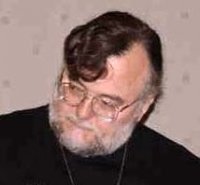
Dr Harry Norman Turtledove is an American novelist, who has produced a sizeable number of works in several genres including alternate history, historical fiction, fantasy and science fiction.
Harry Turtledove attended UCLA, where he received a Ph.D. in Byzantine history in 1977.
Turtledove has been dubbed "The Master of Alternate History". Within this genre he is known both for creating original scenarios: such as survival of the Byzantine Empire; an alien invasion in the middle of the World War II; and for giving a fresh and original treatment to themes previously dealt with by other authors, such as the victory of the South in the American Civil War; and of Nazi Germany in the Second World War.
His novels have been credited with bringing alternate history into the mainstream. His style of alternate history has a strong military theme.
The videssos cycle is well done, perhaps the finest alternative history I've ever read. The end isn't as good as beginning. The echo of history plus a good vs evil magical system. Enough material for a shared universe. Though I would hate to see a dilution of content.
The concluding books in the Videssos Cycle. Loads of fun, Romans transported to a semi-magical semi-Byzantine land. Interesting characters and situations. Well-written and edited. Plenty of history (and alternate history) and just a touch of fantasy and magic.
I read a fair amount of non-fiction – philosophy and such – so when I shift gears, I like to relax. That’s one reason I’m partial to scifi and fantasy, and one reason I enjoy the solid, if unexciting, craftsmanship of Harry Turtledove.
Another reason is his interest in history, both alternate and otherwise, but in the Videssos Cycle (Volumes One and Two, Del Rey, $18.95 each, 653 pages/816 pages), he mixed a dash of fantasy with a generous serving of the culture of the Byzantine empire, which was a winning combination for me.
That said, this early Turtledove – these are reissues of some of his first novels, originally published in the 1980s – has its obvious flaws. The hero’s love interests are telegraphed a mile away, and the bad Irish dialogue of the one of the protagonists can get annoying quickly. On the other hand, another of Turtledove’s protagonists is gay, which is not something that was done in 1980s popular fiction, so he does get points for forward thinking.
Still, I found pretty much all of the nearly 1,500 pages pleasurable, as the story of a Roman legion magically translated to an alternate universe with an empire just like Byzantium rolled by pretty quickly. There’s some magic involved, and the details are great (as they should be, since Turtledove has a doctorate in Byzantine history), and though the Videssos Cycle won’t shake anyone’s foundations, for this history/fantasy fan, it was time well spent.
This is the second half of the Videssos cycle and, as I've reviewed the first half, I'm not sure I have that much more to say. This volume takes the story of the Romans in Videssos to the ultimate confrontation with Avshar, the long-lived wizard, who is seeking to destroy Videssos, the almost Byzantine Empire in a magical world. These two novels are a little harder to read as they split into two, sometimes three major storylines as various characters go off onto different adventures including participating in an imperial embassy to the steppes of Arshaum, taking in a war on the way, the lead character is sent on a suicide mission into a city ruled by a powerful, but crazy prelate which takes him to the capital of Videssos' arch-enemy. Eventually, everyone meets up and the stage is set for the final battle at Amorion. I won't spoil the ending, but the battle bears a resemblance both to the battle at Margarha in the first book and a passing resemblance to the climatic battle in Lord of the Rings.
Definitely a brilliant series and a landmark in the alternative history genre.
Since I read the first two books in the series, I felt I had to finish it. The multiple military campaigns dragged on and on, and became tedious to read. I also didn't appreciate being bludgeoned with approving accounts of homosexual relationships. At least there was a reasonably good ending, with the main character and the woman he loves happy in their romance, the evil wizard destroyed, etc.
Readers who love military and political details might like this series. This will be the last of my Harry Turtledove reading. It's a big relief to go on to something else.
As I said for the first volume, this is a series that I keep re-reading everything few years as it is so well done. Turtledove creates excellent characters and this series has two of his best in Marcus and Gaius. The villain, Avshar, is also really well done it is great to see things end as they should.
If you like Turtledove and haven't read this series, you need to.