In High Latitudes Farley Mowat chronicles for the first time a sometimes hazardous journey he took across northern Canada in 1966. He hoped to write a book that would let northern people speak for themselves and that would expose the speciousness of the political idea that the North was “a bloody great wasteland” with no people in it, and therefore resource developers could exploit it however they chose. For reasons Mowat describes that book did not get written then. But here it is now, with the original conversations recorded by Mowat during that epic journey. In vintage Mowat fashion the legendary writer delivers a sweeping narrative brimming with breathtaking nature writing, suspenseful storytelling, larger-than-life characters, ferocious humor, pitiless rage, iconoclastic insights, and compassionate concern. In her foreword Margaret Atwood writes: “High Latitudes gives us, with passion and insight, a vertical section of time past — the time that preceded our present. The choices that were made then affect our now, just as the choices we make now will determine the future. . . . It’s both depressing and cheering to note the changes that have taken place since 1966. On the one hand, more damage and devastation, both natural and social, with global warming as a contributing factor. On the other hand, an increased optimism. . . But as Farley Mowat has always known, and as more and more people have come to agree, it’s a race against time, and time — not just for the North, but for the planet — is running out.”
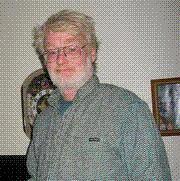
Farley McGill Mowat was a conservationist and one of Canada's most widely-read authors.
Many of his most popular works have been memoirs of his childhood, his war service, and his work as a naturalist. His works have been translated into 52 languages and he has sold more than 14 million books.
Mowat studied biology at the University of Toronto. During a field trip to the Arctic, Mowat became outraged at the plight of the Ihalmiut, a Caribou Inuit band, which he attributed to misunderstanding by whites. His outrage led him to publish his first novel, People of the Deer (1952). This book made Mowat into a literary celebrity and was largely responsible for the shift in the Canadian government's Inuit policy: the government began shipping meat and dry goods to a people they previously denied existed.
The Sea Shepherd Conservation Society ship RV Farley Mowat was named in honour of him, and he frequently visited it to assist its mission.
Farley Mowat tells the story of his 1966 trip into the Arctic. Tells of the stops and his visits with the inuit and tells of their struggles as the gov't tries to "assimilate" them into white culture. Lots of interesting stories from the natives and the whites of the "old times". Interesting look into a part of our country that we don't hear too much about. The book was published in 2002 so Farley also tells of secondary visits to the same places and what has transpired there since his first visit. Very eye-opening insight into the struggles in the north. Definitely want to read some more from him.
This is probably the third or fourth book I've read about life in the Arctic. It was a fascinating read. I sensed a frustration of people, both Inuit and new comers, that the powers that be in the south made decisions without considering what was really was best. The newcomers who truly wanted to "help" found that their suggestions and ideas kept hitting roadblocks, that things that were working didn't survive bureaucracy. Of interest, Mowat mentions Dewline sites, particularly the contamination left behind. In a geoenvironmental class I took this past term we learned that the Canadian government is now cleaning up the Dewline sites.
This was a very interesting read. It's great/horrible to hear stories about how the Eskimos and Indians of Canada lived 50+ years ago. I certainly appreciate that Mowat wrote about the plight of the Eskimos and opened a lot of eyes in Canada and around the world. I really enjoyed the historical aspect of this book as growing up in the US I didn't really hear about or learn too much about Canada's history. This book isn't for anyone, but it's a good read for history lovers, adventure readers, and fans of Mowat.
Farley Mowat, acknowledged as a well-appreciated Canadian writer, chronicles his trip across the high latitudes of the Canadian north. He made the trip in 1966, and already there was a lot of change in the way the native peoples were living. This book contains many of the conversations that he recorded with the people he visited. He tours in a small plane with a pilot who appreciates the trip as much as he does. He visits with so many different people as he crosses the Canadian north. They are bright, kind, concerned for one another, and want to be self-determining. The damage done by developers and the thoughtless treatment of the people who live in this vast area are sad to read about. I can only hope that he would find that some things have improved since that time. I think, as a whole, people today are more aware of the richness of life in a society we do not know much about. I hope that we are more appreciative of the culture that existed successfully for a long, long time before the "outside" world began to interfere.
I’m a big Farley Mowat fan - in many ways he was so ahead of his time regarding his views on environmental management and indigenous relations. The quotes and interview transcripts in High Latitudes are invaluable in providing a sense of how things have changed and the attitudes toward the Arctic and it’s ‘development’ and for that I think that they are a major strength of this book. The way indigenous communities have been treated makes me sick, as does the fact that this abysmal treatment carries on today, though there is now a guise of reconciliation. I think it is important for all Canadians to read books like this that help explain colonialism, it’s legacy, and the presence of neocolonialism in our country and to understand the different world view held by indigenous people and how they have had to reconcile their systems with settler systems. By all accounts there is obvious animosity toward the government exerting control and managing the Arctic from afar with a complete disconnect to the region.
High Latitudes is listed as “Travel / Memoir”, but it’s as much history as anything. Using his own words and quotes of the people he met, he describes, for example, the annihilation of the various species of whales in the Arctic, beginning in the early 17th century. By the late 18th century, 200,000 of the Arvek had been slaughtered for their oil. More devastating is his description of how the indigenous people were impacted by the arrival of the whites. Many children were taken from their parents for “schooling” down south to maybe be returned for the first time when they were 15 -17 years old. By that time, most if not all had lost their culture, survival skills and even their language. And, it was not at all uncommon for the government to force the natives (Eskimos or Inuit) to relocate for a variety of specious reasons with devastating impact. In the end, this author’s book about his trip across the Canadian Arctic is simply a history of the horrible destruction of the Arctic environment and the indigenous peoples.
This book tells the story of Mowat's journey across the high latitudes of Canada in 1966 as he documents the plight of the native peoples in their struggles with the government of Canada. It is not a good story which is usually the case when a colonizing effort is made to "improve" the lives of native peoples which usually means eradicating their culture so that it comes in line with the culture of the colonizer.
While this book tells of his 1966 journey it was published in 2002, 36 years after the trip. So as he tells of this trip he also at times adds in what has occurred in the intervening 36 years. Again, usually not good news for the Arctic or for it's peoples. There is no mention in the book of how the creation of Nunavut in 1999, which gave them far more control of their lands and future, has affected the native people.
This is Farley Mowat so there's adventure aplenty as he travels throughout the Arctic with some hair-raising flights that inspired him to offer 'round rum for all, including the pilot. His descriptions cemented my desire to visit the North but also provided a true condemnation of what the federal government in Canada has done to the Inuit.
Incredibly depressing… which is why it took me two years to finish it. There are a couple of light hearted anecdotes, but it’s largely a collection of depressing outrages inflicted on native peoples, animals and their land by white men.
Farley Mowat can write a manual on how to dig a ditch and it would be entertaining. I liked the tour of northern Canada, but is is now a bit dated. However, it's still a good insight into the struggles of the Inuit people and the clumsy programs implemented to "benefit" them.
A description of the author's travels by Otter seaplane in the 1960's. He is an advocate for preserving the Arctic natural resources and the Inuit culture.
I really thought I would enjoy this, but maybe I should have started with a different book of Mowat's, an earlier one. I think part of what I found difficult was the format--it seems like at least a third of the book is in italics, to show that these parts came from the recorded conversations he had with various people. But those parts were hard on the eyes and all felt like monologues that went on a little too long, and Mowat's journey itself felt somewhat unfocused and...like they just kept doing the same thing and having the same conversations over and over and over. It's sad, the situations the Canadian Inuit have found themselves in, really sad, but this was not the most compelling account of their plight. I'm still looking forward to reading Never Cry Wolf : Amazing True Story of Life Among Arctic Wolves and People Of The Deer, but...this one was not for me.
High Latitude gives us , with passion and insight , a vertical section of time past - the time that preceeded our present . The choices that were made then affect our now, just as the choices we make now will determine our future ... But as Farley Mowat has always known, and as more and more people have come to agree , it's a race against time , and time --- not just for the North , but for the planet -- is running out .
There are really some hellish good tales in this book. I suspect it was mostly written 50 years ago and was too controversial and gov't-critical at the time to get published. Plus at this late date he reveals causing a minor international incident by taking a shortcut over Alaskan air space during the cold war.
It took me only three weeks to read this book and I really enjoyed it very much. I learned a lot of different things, like how the people of the far north lived years ago in the cold north. There are so many different things I learned from this book I wouldn't be able to name them all. But Farley Mowat who wrote this book is a fantastic writer and I plan to read more of his books.
This was a great read by Farley Mowat. Based on his travels in 1966 where he takes a comprehensive look at the social, political and environmental problems facing the Artic and the natives in the Artic. Really enjoyed it and learned a lot.
there are claims that Farley may have embellished his stories. So enjoy but remind yourself that some stories may not be true. Mowat is quite the storyteller of the Arctic