The Prussian king Frederick II (1712–1786) is perhaps best known for successfully defending his tiny country against the three great European powers of France, Austria, and Russia during the Seven Years’ War (1756–1763), a feat that allowed Great Britain to limit its engagement on the Continent and emerge as the world’s leading colonial power, as summed up in William Pitt’s famous claim that “America was won in Germany.”
But in his youth, tormented by a spectacularly cruel and dyspeptic father, this future military genius was drawn first to the flute and French poetry, and throughout his long life counted nothing more important than the company of good friends and great wits. This was especially evident in his longstanding, loving, and vexing relationship with Voltaire. An absolute ruler allergic to pomp, a nonhunter who wore no spurs, a reformer of great zeal who maintained complete freedom of the press and religion and cleaned up his country’s courts, a fiscal conservative and patron of the arts, the builder of the rococo palace Sanssouci and improver of the farmers’ lot, maddening to his rivals but beloved by nearly everyone he met, Frederick was—notwithstanding a penchant for merciless teasing—arguably the most humane of enlightened despots.
In Frederick the Great, a richly entertaining biography of one of the eighteenth century’s most fascinating figures, Nancy Mitford’s trademark wit and charm find the ideal subject.
Nancy Mitford, styled The Hon. Nancy Mitford before her marriage and The Hon. Mrs Peter Rodd thereafter, was an English novelist and biographer, one of the Bright Young People on the London social scene in the inter-war years. She was born at 1 Graham Street (now Graham Place) in Belgravia, London, the eldest daughter of Lord Redesdale, and was brought up at Asthall Manor in Oxfordshire. She was the eldest of the six controversial Mitford sisters.
She is best remembered for her series of novels about upper-class life in England and France, particularly the four published after 1945; but she also wrote four well-received, well-researched popular biographies (of Louis XIV, Madame de Pompadour, Voltaire, and Frederick the Great). She was one of the noted Mitford sisters and the first to publicize the extraordinary family life of her very English and very eccentric family, giving rise to a "Mitford industry," which continues.
دوستانِ گرانقدر، این کتاب به زندگانیِ یکی از پادشاهانِ دوست داشتی و محبوبِ تاریخِ اروپا یعنی «فردریک بزرگ» یا همان «فردریک دوم» پرداخته است عزیزانم، «فردریک بزرگ» از سالِ 1740 تا 1786 میلادی، پادشاه پروس (سلسلهٔ پادشاهی آلمان) بوده است او پادشاهی مقتدر و سربازی نمونه و انسانی روشن فکر و خردگرا بود که با خرافات های دینی و ستم مسیحیان نیز مبارزه نمود... «فردریک» بر این باور بود که پادشاه باید از قدرتِ خود در راهِ منافعِ رعیا و مردمِ سرزمینش، استفاده کرده و بهره ببرد... او زمانی که به قدرت رسید جلویِ زورگویی ها و شکنجه هایِ وحشیانهٔ کلیساها را گرفت و با آنها به مبارزه برخاست این مرد بزرگ، در زمانِ قدرتش، نظامِ ارباب و رعیتی را در سرزمین و املاکِ خویش برانداخت... «فردریک بزرگ» مالیات ها را کاهش داد و بخشِ عمدهٔ مالیاتِ دریافتی را خرجِ ارتش و نیازمندی هایِ آنها نمود و برایِ اولین بار به سربازها به صورتِ علمی و منطقی و توسطِ کتاب و اساتید جنگی، نبردِ صحیح را آموخت و اینگونه بود که منظم ترین و کاربردی ترین و تاکتیک پذیر ترین ارتشِ اروپا را بنا نهاد و نامِ "ارتشِ پروس" لرزه بر اندامِ رقیبانی همچون فرانسه می انداخت او با اندیشمندانِ زمانِ خویش همچون «ولتر» مکاتبه داشت و از آنها در مواردِ گوناگون مشورت خواهی میکرد او علاقهٔ فراوان به موسیقی و هنر داشت و موسیقی دانِ بزرگ "باخ" را ستایش مینمود و از پسرِ "باخ" (کارل فیلیپ) درسِ موسیقی می آموخت. لذا آهنگسازِ خوبی بود و سازِ فلوت را عالی می نواخت ************************* روزی این پادشاهِ خردگرا و روشنفکر، همراه با جمعی از یارانش سوار بر اسب، در خیابانهایِ برلین گشت و گذار میکرد، در همین حال، اعلامیه ای را بر دیوار مشاهده کرد که از سویِ مخالفشان بر علیه وی نوشته شده بود و در آن نسبت به او ناسزا نوشته شده بود... «فردریک بزرگ» اعلامیه را به دقت خواند و گفت: نامردها چقدر اعلامیه را بالا چسبانده اند، ما که سوارِ اسب هستیم آن را آسوده خواندیم، ولی مردمی که پیاده هستند، برای خواندنِ این اعلامیه حتماً به زحمت می افتند.... به افرادش گفت: آن اعلامیه را بکنید و پایین تر بچسبانید تا به آسانی خوانده شود.... یکی از افرادش با تعجب گفت: اِی پادشاه، این اعلامیه بر ضدِ شما و بر ضدِ "امپراتوری پروس" میباشد... «فردریک» با خنده پاسخ داد: اگر حکومتِ ما واقعاً به مردم ظلم و ستم روا داشته است و آنقدر بی ثبات است که با یک اعلامیهٔ چند خطی از هم بپاشد و نابود شود، همان بهتر که زودتر برود و حکومت بهتری جایِ آن را بگیرد.. ولی اگر حکومتِ ما بر اساسِ قانون و نیک خواهی و عدالتِ اجتماعی و آزادیِ بیان و اندیشه و آزادیِ قلم پایه گذاری شده باشد، مطمئن باشید آنقدر ثبات و استحکام دارد که با یک اعلامیه از پا نیفتاده و سرنگون نشود ---------------------------------------------- امیدوارم این ریویو برایِ شما ادب دوستانِ خردگرا، مفید بوده باشه «پیروز باشید و ایرانی»
A great man, who fell out of favour in modern history because he was so admired by the Nazis.
Having read another Mitford biography I knew what to expect - a conversational style and an assumption that the reader already has a working knowledge of the history of the era. This wasn't a problem for me with Madame de Pompadour but what I knew about Russian history would fit comfortably on the back of a postage stamp, so I struggled with this read until I put all other books aside & really concentrated. At least this time there wasn't too many French phrases as my schoolgirl french is now pretty much non existent.
I'm lucky to have one of the lavishly illustrated editions. For example this is a tabagie
much beloved by Frederick's father Frederick William.
I really wouldn't recommend trying an edition without illustrations. That just isn't the full Mitford experience!
This family did put the "dis" in functional. Frederick's father wasn't a well man, was disliked by Frederick's mother who encouraged his children to bait & disobey him. Frederick William retaliated with violence & unreasonable behaviour.
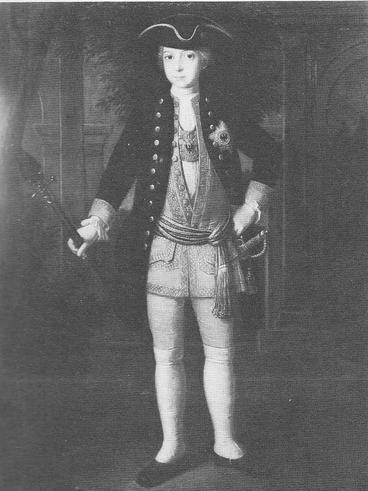
Frederick at 12
As a teen Frederick even made plans to escape.
Married to a woman he didn't love (& probably couldn't love, he was homosexual)
he ignored Marie Christine for most of their lives. He made only the most perfunctory effort to produce a heir & they then lived apart. She must have been very lonely.
A young king
Contrasted with the sadness in his eyes at 70.
Most of the people he loved predeceased him. Which may help to explain his expression, but after a life of war & strategy he wasn't a well man.
I would love to read more about his greatest adversary, the wily Empress Maria Theresa 0f Hungary & Austria.
I noticed that there is to be a comparative, dual biography of George Washington and Frederick the Great upcoming in a couple of months. That's intriguing, but I knew very little about Frederick and why he was Great. So now I know a little more.
He is not the wood out of which one carves good husbands. That appears true. He married, perhaps without consummation. Rather quickly he packed the Queen off to her own digs, which were nice, and saw that she was well-treated. He was no womanizer. Mitford concludes that if he was anything, he was homosexual. Maybe. But Mitford sees gay often.
He had a horrible, abusive father. How bad? Well, he had young Frederick's best friend beheaded.
There's much written here about Frederick's various wars, but I thought the telling a bit cluttered.
When he wasn't playing the flute or reading French poetry Frederick wrote: bad poetry and good meditations on War. He primarily spoke French, and didn't like spoken German. He was an atheist.
I was delighted with this bit of dialogue with an officer during a battle:
'Why is that excellent soldier in irons?' 'He was found committing bestiality with his horse.' 'Fool - don't put him in irons, put him in the infantry.'
People were captivated by his engaging personality and his encyclopedic mind. He had a long friendship with Voltaire, who said wonderful things to him but horrible things about him. Frederick seemed to tolerate that in people, if they were interesting enough.
It was Voltaire who said: Wars generally go on for no better reason than that they have begun.
Nancy Mitford's Frederick the Great is neither a complete nor scholarly biography of Prussia's most famous monarch. It is a popular chronicle written to be entertaining and not authoritative. As the reader would expect, Mitford displays a fine prose style, keen wit, and a gossipy flair – if occasionally stumbling over the facts. Her Frederick the Great is similar in tenor to Duff Cooper's biography of Talleyrand, but without Cooper's erudition. Although Mitford traveled around France, the former East Germany, and the former Czechoslovakia researching the biography, most of the information in the book is derived from Frederick's Oeuvres, first published in 1850, and containing his private correspondence. Mitford's Frederick the Great is worth reading and rates a solid Three Stars.
I am a bit sad to have finished the last of Nancy Mitford's wonderful portrait biographies, but I can't be sad I read this. Inimitable, as always, Nancy. My hat is off to you. Full review in a roundup of awesome books on my blog: https://shouldacouldawouldabooks.com/...
Nancy Mitford provides an in-depth insight into the personality of Frederick the Great, especially through the extensive archives of his letters. These, coupled with Mitford's analysis of his character, have the power to change one's perception of Frederick; such a detailed view of his life brings to light the aspects of the person and not just his actions. This is done through the author's heavily narratorial structure, which is apt for certain events in his life, such as Frederick's relationship with his father. It seems Frederick's attempted escape from Prussia as a young man can only be written in such a way; this is because the event itself could come from any work of fiction such is the excitement of the story. However, with periods in Frederick's life such as the Seven Years War, a more analytical and broad approach to describing war would be more appropriate. Describing the events of the war around Frederick's relative position to particular events meant that broader context of the war wasn't easily understandable. It is therefore important to remember that this a biography of the man, Frederick II, not a history of his reign.
An entertaining and edifying biography, skillfully combining political and military history with a wealth of amusing details about monarchical eccentricities. Did you know Frederick II's father collected giants, sometimes by kidnapping them from their homes? Now you do.
Another biography of a King that I knew just a little about and his life. My copy has gorgeous illustrations that are a plus for the book. Mitford's style is story-like and enjoyable.
3.5 stars for this entertainingly informative biography of one of the 18th century's notable rulers.
Mitford recounts the life of Frederick II of Prussia, from cradle to grave, in an easy, breezy style which masks the serious research she did on her subject. This short book is a good introduction to Frederick's life. All of the high (and low) points are covered without drowning the reader in too much detail. She excels at bringing the large cast of characters to life, some with brief sketches, others with full portraits. She is a very sympathetic biographer; she clearly liked and admired Frederick. One minor quibble kept this from being a 4 star read for me. Mitford assumes the reader possesses a level of knowledge about the various personages of the age. She name drops with abandon, sure that the reader will know enough to fill in the blanks. Well, she overestimated my knowledge level on numerous occasions.
This work has appeared in various formats. I do advise that you track down the lavishly illustrated edition. I read the bare-bones paperback--no portraits, no maps. I spent a lot of time on Wikipedia looking for visuals to go with my print.
Li esta biografia de Frederico, o Grande com interesse mas sem aquele entusiasmo arrebatador que as grandes obras nos suscitam. Dentro do género, satisfaz.
It wasn’t at all clear that Frederick would turn out so great. As a boy and a young man he was not what most would consider alpha male material. He was artsy and effeminate and a bit of a disappointment. He famously attempted to run away from home where, along with the rest of his family, he was practically imprisoned by his troll of a father, Frederick William, Elector of Brandenburg and King of Prussia.
What a father! Frederick William had a policy of kidnapping seven-foot-tall men from all over Europe and forcibly enrolling them in his Regiment of Giants. Not that they were great fighters – they weren’t; he just liked to collect giants. Frederick William also liked beating people with his cane, once nearly killing his son and heir. His chief joy in life seems to have been tormenting his bosom friend Grundling during their nightly drinking bouts, once toppling him out a tower window onto a frozen moat and once setting him on fire for laughs.
Somehow young Frederick survived to adulthood. When his father died and he was made king at age twenty-eight, Frederick went straight to work. The work of an eighteenth-century monarch in central Europe was first and foremost war – which it turns out Frederick had an unexpected gift for. He took advantage of political uncertainties in the Empire to wrest Silesia from Maria Theresa in a shockingly efficient manner. Then, after a brief lull during which he met old J.S. Bach and introduced various land and legal reforms, Frederick was swept up with much of the Western world into what became known as The Seven Years War.
That’s when Frederick really earned his “Great” but it’s also where Nancy Mitford’s biography gets a little dull. While she excels at drawing portraits of eccentric characters and does well with Frederick’s long, tempestuous friendship with Voltaire, she’s no good at describing battles. Still, reading through the long list of engagements and the terrible death counts from all sides, I bristle. Habsburgs, Bourbons, Hanoverians, and Hohenzollerns amounted to something like one big extended family of scheming nobles playing a game of chess over the continent. How preposterous that a million should die so Frederick can keep Silesia and Maria Theresa be humbled.
But they loved him, Old Fritz. His soldiers loved him (those who survived) and so, by Mitford’s account, did his people, though great numbers of them must have lost sons and husbands in his wars. We can hardly blame the monarchs then but must conclude there is some black corner in the heart of man where Death is worshipped under the name of Glory. All it would take for such wars to come stillborn into history is a simple refusal to take part by those who would do the fighting, but it never happens that way. Twenty years after Frederick’s death, Napoleon would doff his hat in homage at the tomb of the great soldier.
The subject is indeed a controversial historical figure for a lot of reasons. To be honest, I have a strange relationship with the so-called Frederick the Great. In a way I can’t help but feel sorry for the childhood and adolescence he had, constantly abused by his rough and militaristic father. There are some aspects of him I find really interesting (his love for philosophy, music and arts) and others abhorrent (see at the voices Misoginy and Militarism. But hey, what can I expect from a man who lived in the 18th century?). It’s clear that Nancy Mitford has a sort of sympathy for Frederick but she doesn’t praise him a priori and doesn’t fail to point out even his shortcomings (while taking the opportunity to roast him a little which he deserves at times). Her writing style is pleasant and witty and the pages flow easily. The biography doesn’t go into much details on certain aspects, so if you have no idea of the context it could be difficult at first. Sadly it doesn’t have footnotes, which could’ve been quite helpful, but only a general bibliography in the end. It’s clear that the author has done her researches. I was pleasantly surprised that she didn’t gloss over his very probable homosexuality, in fact she is cool about it (mind you that this is a book published in 1970). Now when I think about Mitford, I imagine her galloping through Europe, like one of Frederick’s generals, without any care or pain in the world, as she wished for.
This lively biography of a great and complex Prussian king, military genius, musician, and promoter of the arts (1712-86), is by a British novelist and biographer of aristocratic birth, Nancy Mitford, whose novel, The Pursuit of Love (1945) and Love in a Cold Climate (1949)gave rare inside glimpses of upper class society in England. Much has been written on the diverse interests, pursuits, and ideologies of Nancy and her sisters (e.g., of the four, one was a fascist and one was a communist). I especially enjoyed his interactions with Voltaire, his often surprising victories in battle despite the odds against him, his wisdom in leadership, his reforms after the seven years war. I also read it along with Frederick the Great by David Fraser (2001): Frederick II, King of Prussia, was a legendary ruler, artistic patron, man of letters, lawgiver, and commander -- in David Fraser's words, "one of the most extraordinary men ever to sit on a throne or command an army". He personally commanded his army in war after war with such supreme skill that he became acclaimed as the greatest soldier of his time.
I enjoyed the book, but it's missing something that would give it more weight. Mitford's narrative skips along in a breezy, light-hearted fashion that's fun to read, but Frederick the Great happens to be a subject better examined with more depth and with more understanding of the dark side of his personality, his battles, and his era.
The great event of Frederick's life was the The Seven Years' War, which has been called a virtual 'World War' in its scope, with the participation of nearly all the great states, and it affected many lands most of the way around the globe. For example, the French and Indian War in the US is a mere subset of it. The war needs a different sort of author than Mitford, namely someone capable of enough drama, tragedy, and profundity so the reader can grasp the full impact of its devastation.
A good, fun introduction - had to put it down a couple times because I was laughing too hard. It's slighly drier, less bitchy, more serious, and more sympathetic than Voltaire in Love but still an incredibly fast read that I was able to binge it in two days even in these days when I don't feel like reading much. Somewhat dated, which was to be expected since it was published in 1970; however, it more than does the job of piquing your interest.
I did not know much about Frederick the Great and this book taught me much. German kings are not fashionable and the only other biography available was 600 pages long (this is only 300).
Nancy Mitford was an upper class English woman and writes with a humor and charm that are very becoming.
The book seems to be well researched and equal importance is given to matters of state and personal life. This gives a special taste to the storytelling and one starts do admire Frederick as a man that, despite a very hash childhood, became a real statesman, a gentle person, a great soldier, a good musician and a personal friend of Voltaire. One can say that those are no small accomplishments.
4-plus. Succinct and pacy tour through Frederick's 18th century. Sympathetic and even-handed, sharp and clear-eyed; an illustrated edition that could probably only be called 'lavish'.
It starts off strong for about 3 chapters, but then becomes a mess of minor characters and minor details of Frederick’s life that are often inconsequential and not all that interesting.
I have a bit of a passion for historical biographies and this one did not dissapoint. Nancy Mitford's writng style is fresh and engaging. She definitely brings to life some of the complexity of Frederik the Great and in the end brings you to the conclusion that he was a significant and noble ruler of his time. I got interested in learning more about him while reading another biography of Napoleon. On Napolean's fated invasion of Russia he stopped in Potsdam, home of Frederik and the beautiful Sans Souci Palace. It is said that Napoleon gathered his generals and took them to Frederik's grave and remarked 'if he was still alive we would not be here'. That captured my imagination straight off. After reading Nancy Mitford's rendition of his life I believe it is not that Frederik was such a superb strategic leader of his troops, but rather one of a better kind: caring of the human soul, disciplined in life and purpose, and most importantly, a man who did not think himself supreme, but rather a man who believed in himself and followed his beliefs. An unexpected bonus in this story was to learn more of the relationship between Frederik and Voltaire, and I believe Frederik comes out the better man. My only regret was to read how the British ambassodor maligned the reputation and integrity of Frederik. Being of British heritage myself I can understand how that came to be. The bright side though is that Nancy Mitford, also of British stock, has presented a compelling and more balanced view of this man. To close, one book always leads to another and in this case Frederik's great adversay was Maria Theresa of the Hapsburg house of Austria. Having visited Vienna and Budapest numerous times I find the connection here very intriguing. Nancy's handling of this part of the story has compelled me to start reading J. Alexander Mahan's book 'Maria Theresa of Austria'. More on that once read!
Nancy Mitford is a favorite of mine, without a doubt, and her Frederick the Great is the last European Enlightenment biography that she managed to finish before her early death. Frederick was spared a lot of her razor wit and snide remarks, maybe because she related to the overbearing father and strict expectations. Whatever the reason, Mitford's last biography is simply wonderful.
Frederick the Great was challenged with problems early in his life (he had a brother die from the gun salute given to royal male children because the concussion blew out his ear drums and was always sickly himself) to his difficultly with his sexuality (probably fancied other men but in a hereditary monarchy needed to marry politically and have heirs) and overcoming the overbearing legacy of his father. Frederick the Great, though Prussian and considered somewhat backwards by the French, Mitford's usual subject, strived to make significant political reforms and really live up to the ideals of his Enlightenment idol, Voltaire.
Mitford brings her immense biographical powers to bear in her last work, and it's a bitter sweet ending to her career. Within two years of Frederick the Great's initial publication Nancy Mitford was diagnosed with lymphoma and died within six months, never recovering self sufficient level of health.
Frederick II of Prussia attempted to escape his authoritarian father as a boy, but went on to become one of history's greatest rulers. He loved the flute, and devoted hours of study to the arts and French literature, forming a long-lasting but turbulent friendship with Voltaire. He was a military genius and enlarged the borders of his empire, but he also promoted religious tolerance, economic reform and laid the foundation for a united Germany. Nancy Mitford brings all these contradictions and achievements to her fascinating, intimate biography. It reads like a novel as Ms. Mitford brings her skills to bear on this fascinating character and his era. There are probably more comprehensive biographies of Frederick but I doubt that there are any more readable than this one.
I loved this piece of history especially as it ties in with Catherine the Great. At the end of the book Napoleon is quoted at Frederick's grave saying if Frederick were still alive he Napoleon would not be leader. Frederick had an abusive father Frederick William, which like many stories of royal families could have suppressed him, but Frederick came out of it to be a great military strategist. He also had many good ideas about crop rotation, industrialization and reducing capital punishment as well as appreciation of art and he spoke very little German. In one of the last battles with Russia, Austria, and France the book credits Luther's protestants for stepping up to win. The book tells how Frederick held the group of German states from being passed out to other countries.
A most edifying and enjoyable account of the Old Fritz. Whilst not absorbing in the same way as the account recorded by Tim Blanning, still a very worthwhile edition to any canon of Prussian history. That said, Nancy has a tendency to go overboard with the Old Fritz's Fracophile tendencies and also flatly rejects the Old Fritz's sexuality. Of course she reasons this by claiming an ignorance of same sex relations and of course her own love France shines through every page. As an introduction it is fine and as the Sunday Times reviewer said, 'Witty and atmospheric', detail however would be better sought elsewhere.
This is a biography that reads a little like a British tabloid: opinionated, biting, and filled with juicy details. Frederick the Great was a remarkable man, a military genius, an astute ruler, and a great friend to many men. He got married, but never spent any time with his Queen, they never lived together, in fact, she was never invited to Frederick's palace, Sans Suci. HIs upbringing was filled with pain as his father tortured him almost daily. He grew up loving French literature and the flute. I recommend this book as a fun page-turner, light on research, but strong on opinion and verve.
I really enjoyed this book. The writing style is very casual. But it is filled with facts and flows well. The titles and naming conventions were confusing to me, I believe partly because the book was published in 1970. And because it was written by an English author in a way that suggests her target audience would have some prior knowledge of the subject.
Having read Catherine the Great, by Robert K. Massie, immediately prior to Fredrick the Great, I was very entertained by the difference in feeling of the characters about certain contemporaries, such as Ernst Johann von Biron.
I absolutely loved this book. It is clear that Mitford has digested a ton of primary sources on Frederick's life, and she is able to give a bird's eye view through the maze of largely chatty and gossipy diaries from Frederick's contemporaries that she brings to light. Her ability to engage in the minutiae and detail of the everyday, while at the same time keep the action moving at a quick pace with a steady narrative, is very impressive. I'm a fan and look forward to reading the other 3 18th century biographies she penned in her life.
I am a picture person and this book is jam-packed with many color plates depicting various aspects of Freddie and his environment. One plat shows a map of Frederick's battles. For collectors, there is a picture of a gilded snuff-box set with diamonds with a miniature of the King. To know someone, you must know about their background and environment.
Then when you read about their actions you get a feel for the reasons behind these actions. What was going on in the world around Freddy that helped mold him?
In this book, Nancy Mitford takes the blur of many wars and focuses them through the eyes of a single great leader. Nancy Mitford has a good track record as a history writer of this era. You may want to read more of her books for a fuller background.
This book is divided into twenty-two chapters usually separated by wars, a section on resources, and an extensive index.
The book is the awkward length of around 200 pages -- too long to be a quick summary of the facts, but too short to both encompass all of Frederick the Great's life and give meaningful analysis of that life. In this book, Frederick the Great just does one thing after another. There are even too many characters, each of whom isn't talked about enough.
Frederick the Great, Catherine the Great, Maria Theresa -- these are the 'enlightened despots,' but their era really just seems like one of silliness and bickering among tyrants. All the rulers are sort of related, and the wars feel like family feuds with extensive bloodshed for no honorable reason. And during the brief periods of peace between wars, people just seem so bored, engaging in their affairs and personal attacks and all those things. The period ends with Napoleon trying to conquer everything, but at least Napoleon was self-made and gave some good speeches.