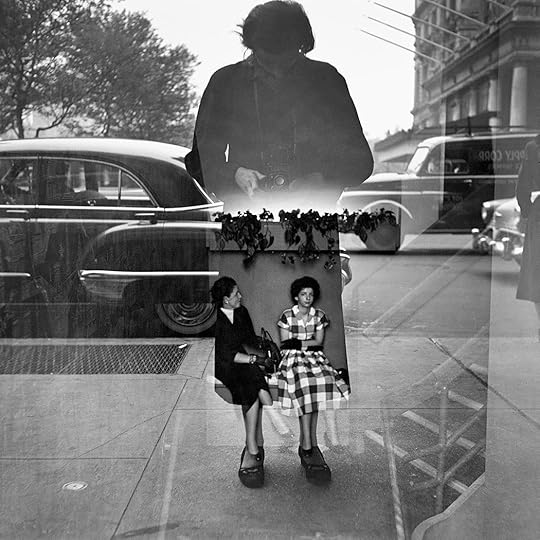
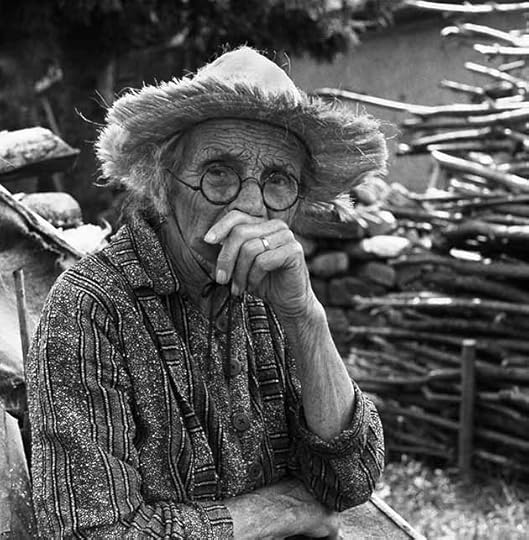
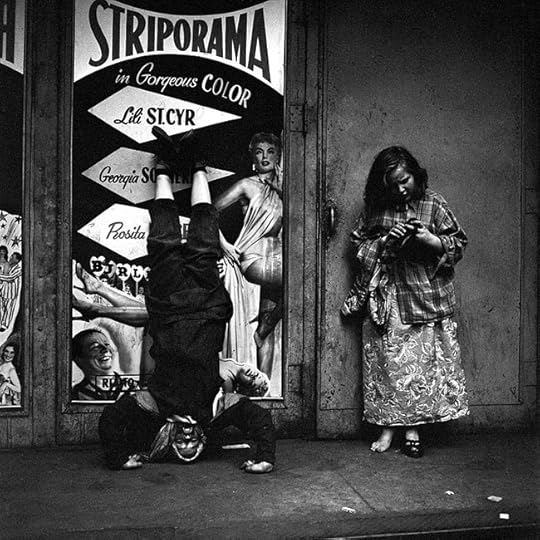
Presenting her breathtaking photographs alongside interviews with those who knew her best, this volume is the first attempt to put Vivian Maier’s work in context and create a moving portrait of her as an artist. Though she created more than 10,000 negatives during her lifetime, only a few of them were ever seen by others. Shortly after her death in 2009, the first group of her unseen photographs—gritty with humanity and filled with empathy and beauty—were shown online. What followed was a firestorm of attention, catapulting Maier from previous obscurity to being labeled as one of the masters of street photography. Her work has appeared in numerous museum exhibits and a feature-length documentary on her life and art has already been planned. Features 275 black and white photos on heavy gloss paper.
Vivian Dorothea Maier (February 1, 1926 – April 21, 2009) was an American street photographer, who was born in New York City and spent much of her childhood in France.[1] After returning to the United States, she worked for approximately forty years as a nanny in Chicago, Illinois. During those years, she took more than 150,000 photographs, primarily of people and architecture of New York, Chicago, Los Angeles, although she traveled and photographed worldwide.[2]
Maier's photographs remained unknown, and many of her films remained undeveloped, until her boxes of possessions were auctioned off. A Chicago historian and collector, John Maloof, examined the images and started to post Maier's photographs on the web in 2009, soon after Maier's death. Critical acclaim and interest in Maier's work quickly followed.[3][4] Maier's photographs have been exhibited in the USA, Europe and Asia and have been featured in many articles throughout the world.[5] Her life and work have been the subject of both books and documentary films.
Vivian Maier was a reclusive Evanston/Chicago nanny (for four decades?!) and even more reclusively a street photographer who was unknown until after her death when John Maloof, a Chicago historian and collector, picked up boxes of her photographs auctioned off after her death. More than 100,000 photographs! Quite a stash, in cardboard boxes! She was born in NYC and grew up in France before moving to Chicago. This is my fifth book of her work I have read, and have seen a few exhibitions here in Chicago. This is one of the very best of the books, organized in terms of different categories such as France, the beach, downtown, but the theme of her coming out of the shadows as a photographer and her photography emphasizing shadows and light are central here.
If you are looking for one book about this once unknown, now discovered artist who photographed people with such grace and humanity, who spoke for the poor, who loved Chicago faces, if you want to know her story, this might be the book for you.
YouTube intro, by the curators who also write fine and helpful essays:
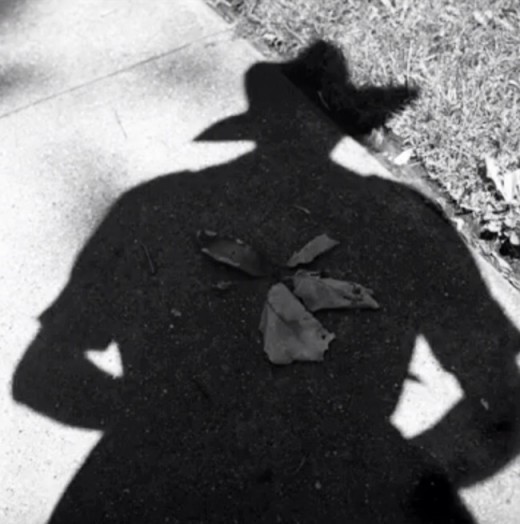
PS: I have two sons taking photography classes and have been traveling again a bit so have been taking more photographs, just for fun. The cover shot of the book is seen as a self-portrait, though in shadow, as she often did it, and this has inspired me to do shadow self-portraits of myself in the morning and evening, in various places, more than a hundred shadow self-portraits so far (working my way to 100,000, of course) (not). Not making any claims about quality here, just having fun, but it's interesting to me to play around with. And it makes me pay attention to beauty.
I was inspired to borrow this book from the Library after viewing the inspiring Vivian Maier: In Color Exhibition at the Chicago History Museum.
Vivian Maier: Out of the Shadows is amazing! Maier truly captures the spirit of every day living in her photographs. Her subjects are naturally going about their business, rather than posing for her. I loved perusing each page and noting all the details. This is truly a special book.
When she died in 2009, the following notice appeared in the Chicago Tribune: "Vivian Maier, proud native of France and Chicago resident for the last 50 years died peacefully on Monday.... A free and kindred spirit who magically touched the lives of all who knew her." In her photographs, her spirit lives on.
Last summer I anticipated reading "Vivian Maier: Street Photographer" but the book turned out to be a huge disappointment. John Maloof's collection of photographs was amazing of course, but the book was missing the context needed to better understand the photographer and her work. It was like seeing an exhibit at a museum without reading the text labels. Luckily, "Vivian Maier: Out of the Shadows" fills in the blanks. First of all, this is a different collection, owned by Jeffery Goldstein, that is somehow more complete in that the photos tell the story of her life, not just one particular period. This well-researched book provides the details of this mysterious woman's life and answers many questions people might have when looking at her pictures. Not only is this book well-written, but the information is so interesting I had a hard time putting it down. I highly recommend this book to Maier fans who are searching for meaning behind the images, it will leave you even more intrigued than you were before.
It's an unfortunate if oft-repeated scenario: An artist goes unrecognized in his or her lifetime, only to have their work discovered and fêted too late for acclaim or riches. Such is the story of Vivian Maier, who spent her formative years in France, then worked as a nanny for a series of families in the United States, mostly in the Chicago area (for a brief stint, she even worked for Phil Donahue). She always carried a camera, but she never allowed anyone to see her photographs, and by all accounts she lived an extremely private life. So, her genius was never known while she lived. Her work was only discovered when her belongings were auctioned off, and someone who won a container full of undeveloped film examined the contents and discovered Art.
I first learned of her work thanks to a Facebook friend posting a link to the trailer for an upcoming documentary about Maier's life and work. I'm so glad that I took the 2-1/2 minutes to watch that video:
Maier's life story is intriguing, yes, full of secrets and mysteries. But her photographs are magical in their honesty and beauty. Vivian Maier: Out of the Shadows by Richard Cahan and Michael Williams provides a wonderful introduction to the artist and her art. After a brief biographical introduction, the bulk of the book is given over to chapters highlighting different aspects of her photography, beginning with snapshots from France and then delving into her chronicles of America in the 1950s and 1960s. (She continued photographing her surroundings well into the 1990s, apparently, and in color, too; but this book focuses on her '50s and '60s black-and-white work.)
She was not afraid to visit, regularly, the toughest, most run-down areas of Chicago, her young charges in tow, to photograph anyone she felt worthy of capturing. The humanity and dignity of her subjects, even those skid-row denizens whom most people might cross the street to avoid, come across vividly in her portraits. Some of these photos seem somewhat posed or at least contemplated, while others were obviously taken on the sly.
Amazingly, Maier almost never took multiple shots of the same subject (apart from the children in her care, and a series of pensive self-portraits, sometimes just of her own shadow): One carefully considered image was enough for her. And the results are stunning. The year 1968 was particularly pivotal for America, and indeed for Maier; there's a whole chapter devoted to her chronicles of that tumultuous time, with special attention paid to the life and death of Robert F. Kennedy. While I loved all of the images in the book, my favorites are the portraits in the chapter "Downtown" (pp. 206-241). Here are young people and old people; the rich, the poor, and the once-rich; characters all. These are only single portraits, but I feel as if I can see into these people's souls; the good and the sad are revealed in equal measure.
For all of the hundreds of images in this book, I realize that this collection only scratches the surface; I look forward to finding more of them to marvel at.
The book is a gateway into the Vivian Maier photography. Sadly she passed in 2009 not having recognition for all the photographs she took, many thousands. I strongly encourage the reader to go and see an exhibition of her work, looking at the photos in the book doesn't do justice for the photographer. Indeed, she captured the very essence of everyday life and provides a historical view of society in a personal way that I can't describe.
Se vicino a voi arriverà una mostra di questa "street photographer" andate a vederla, ne vale la pena. Morta a 83 anni, una vita passata a lavorare come governante, mentre nell'altra vita parallela girava per le città in cui ha vissuto con la sua fedele rolleiflex a fotografare la vita che le stava attorno. Le rolleiflex sono poco invasive, le tieni sulla pancia, guardi nel pozzetto e scatti, non ti senti fissato, "mirato". Il risultato é molto naturale, puro all'apparenza semplice. Vivien Meier sapeva entrare in contatto con quanti sono entrati nel suo mirino, e la sua fedele biottica la seguiva docilmente. La Maier aveva un talento fotografico naturale, un po' come l'orecchio assoluto per certi musicisti, finché era in vita praticamente nessuno conosceva questa sua doppia vita. Alla sua morte, nel 2009, i suoi pochi beni fra cui più di 100.000 negativi sono stati comprati da tre fotografi appassionati collezionisti di vecchie fotografie (per pochissimi dollari) i quali ben presto han capito di aver trovato un tesoro, meglio che vincere al lotto. La governante Vivian Meier é morta, Vivian Maier fotografa invece ha appena iniziato a vivere.
Vivian Maier, a recluse, gained recognition as a street photographer after her death in 2009. She snapped a hundred thousand negatives, discovered after she died.
Vivian Maier worked as a live-in nanny on Chicago's North Shore from 1956-2000. During her time off, she strapped on her Rolleiflex for trips to the city.
Street photographers of the time used 35mm cameras with three dozen frames on a roll. Vivian Maier used a larger format camera with a dozen frames on a roll. Her larger negatives paid off. In a book of this type, the higher resolution gives us big, clear images.
Almost three years ago, the first exhibition of her photographs opened to the public at the Chicago Cultural Center, kitty-corner from Millennium Park: http://newsblogs.chicagotribune.com/a...
I knew I would love the photographs since I've enjoyed Maier's work so much previously, but this book far exceeded my expectations. I was expecting a brief introduction explaining the very unusual circumstances around Maier's portfolio, followed by the photos standing alone. I wasn't expecting a meticulously detailed piecing together of her life, juxtaposed with photos that represented that part of her life. They quoted the 1930 census to determine who 4 year old Maier was living with at the time, they interviewed her former employers and the grown children she nannied for, even the workers at the photo development counter. I was astounded by the details they managed to dig up on this very private person, and it really enhanced the selected photos for me. This is my favorite of the Maier photography book so far.
Wow. This book is so much more powerful and in-depth than the first. Not only a much larger selection of photos, but also the biographical information that had been missing till now. It is, however, a very sad book.
Also, the authors seem off when they compare her to other photographers. She was obviously very aware of the reportage movement, their insistence that she created her own style is dubious. And to put Kertész and Brassaï in a list of French photographers is weird and seems ignorant. Lived in France, yes, but two of the great Hungarian masters, famously so.
To know I walked the same streets as Vivian Maier gives me goosebumps. This book was a collection of her work I've never seen before, with snippets of dialogue that gave me insight into her life. Before I read too far into the book, I couldn't get over the fact that I -might- have walked the same street as her. And then the further I progressed into the book, the more the scenery in her photos became familiar. And soon, I find myself looking at photos of the same things I've photographed in my own life. It makes me feel motivated, inspired and closer to my photography idol.
Incredible, sometimes astounding photographs. So simple, but so striking and insightful. But what's truly heartbreaking is the story of Vivian Maier's life. She was so talented, and so isolated. I wonder what she would think about her fame. Based on what is known of her, I kind of think she'd be underwhelmed, or even angry. But I'm glad to have seen these photos, and hope more gets published.
I read this from front to back and then back to front. The latter method made it seem less bleak somehow. Maier's photos truly capture life often showing the grandness in the trivial.
THe photography, of which their is quite a bit is 5 star. The bio seemed a little lacking but that might be because her life is hard to document. Well worth it for viewing the images.
Much better than the previous book of Vivian Maier photos I read last month, as it has actual photo notes, and some good biographical information. Great introduction to her and her work.
Photographer Vivian Maier took outstanding pictures from the 1950s onward but showed them to no one during her lifetime. A treasure trove of undeveloped photos was discovered after her death in 2009, and have been collected in this book from Jeffrey Goldstein's collection, who obtained them from an earlier owner. Ms. Maier took most of her pictures in New York City and Chicago, where she lived as a live-in nanny for various families, but there are additional pictures from her around-the-world travels. She captured slice-of-life moments from eras gone by, with a remarkable eye for composition. This collection includes introductions to each themed chapter, which really elevated this book for me since it put the pictures in perspective and gave readers insight into what was happening in the world at that time.
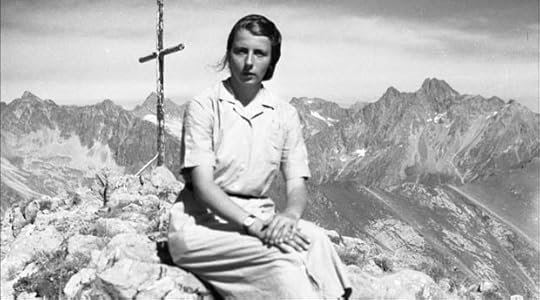
Goldstein's collection only includes pictures from 1949 to the early 1970s, so most of them are of people and cityscapes from before she pivoted to more abstract photos later in her life. My favorite pictures include- picture taken of VM as a lovely young woman in France (pg 33), the artist Salvador Dali (pg 37), group of young men in Highland Park (pg 107), a crying boy in a grocery cart (pg 122), a woman in curlers at Maxwell Street Market (pg 143), swimmers at Wilmette Beach (pg 165), National Guard troops at Grant Park (pg 192), man in Chicago who reminded me of my Dad (pg 219), and the group of boys in downtown Chicago (pg 234). I wonder if the two groups of boys who would now be in their late 60s/early 70s found themselves in this book.
When I first heard of her photos a few years back, I thought about how tragic it was that she didn't get the recognition she deserved during her lifetime, but I've since reconsidered. She obviously gained pleasure from taking the pictures, and there is value in making art for art's sake even if she didn't wish to share her talents with others.
"She is just looking at life and capturing moments that are real. So few people know how to shoot like that." - Mary Ellen Mark
"How she found those moments and caught them at such close range is perhaps the biggest mystery of all. Many photographers plot and plan. Ansel Adam's might figure out lighting for days beforehand. Maier was the opposite; it doesn't appear that she planned a thing. Her photographs are all about documenting what's before her camera and what intrigued her.
"She carried her camera everywhere - on walks, in the car, on her bike, in the grocery store, at the doctors office, around the house.. She used the camera as a diary."
Descriptions of Vivian Maier's cameras as fixed extensions of herself are hitting really close to home and stirring thoughts on how I used to be.
Nice balance of images and text here. A photo memoir wiith biographical text. Her photos are so fascinating, and so many.
Excellent photography book of Vivian Meier’s work in Black and White. This collection focuses on mid 1950s to late 1960s in the US and France. She photographed the DNC convention in 1968 outside the building which is very interesting. Not the riots but the aftermath. Travels to LA, Miami, NYC are covered too. Someday I’d like to see her photographs of other countries outside of US and France. I’ve seen a few but more. This collection is mostly Chicago and her nanny days which great. Was an unliked nanny to Phil Donohue’s kids for a short time. Two families she was with for for years took care of her when she became elderly and infirm.
I honestly feel a strange kinship with Maier sometimes. Her subjects are quite different from mine (though her photos of post-race riot Chicago ruins and scattered suburban garbage are very close). But her intense secrecy, her extreme air of personal obfuscation... I can relate. I don't necessarily want to, but I do. You can tell she took her photographs not as a way to spread her vision far and wide, but as a way to digest her corner of the world and understand her place in it. I've been a street photographer for a while now, though I stopped going out in my own town about a year and a half ago out of fears for my own safety. You can only have so many people swerve off the road to yell at you before the costs start to outweigh the gains and you worry about making it home alive. Maier doesn't seem to have had those fears - the striking photos she took amidst the chaos of the 1968 Democratic Convention are proof enough. As Joel Meyerowitz posits in one of the sections here, she photographed to make herself feel more alive. I've done the same, but in all honesty, that feeling has escaped me for a long time. I haven't published any photos in months. By the end of my journeys out into my neighborhood at large, I'd come home and feel like I'd done nothing but waste time. The town, its people and their reactions to my presence (very few and overwhelmingly negative) made me feel more dead by the day.
This is a powerful book, but to me, it's an even more powerful cautionary tale. Though her work in 1960s Chicago includes some of the most singular, empathetic, perfectly captured photos I've ever seen, her attitude towards it meant that no one but a seldom few ever saw it in her lifetime. These incredible photos mouldered away in a storage unit until she finally gave up and surrendered them. Sure, it's massively fucking presumptuous of me to assume that anything I make might stand up on this level. But one thing's certain - if there's anything in there that does, I'd rather not wait until I'm actually dead to find out.
I was mindlessly shelving books (I work in a library, yes) when I came across this big heavy book. I was instantly intrigued & flipped through the pages & the photographs; they are so... well, if you've seen her work you'll know what I am trying to say. Absolutely beautiful photographs of simple, every day life.
I wanted to read what was in between the pages; but I couldn't since I was at work. A regular patron stopped by & I know him to be into art, film, & photography, etc. I excitedly show him this new book we received and he checked it out. I kind of forgot about this book afterwards. It wasn't until a few days ago I came across an article about this unknown photographer, then I saw the trailer & I thought to myself, "Wait a minute, is this the same person from that book I saw at work?" It sure was. Then I just HAD to check it out.
The book tries to give some background of what her life was like through her photography and does a pretty good at it, but..
I was left wanting to know more about this "mystery woman" and I feel a bit of sadness in my heart. I can say that she is truly inspiring though. She didn't give in to what was/is expected of a woman. She simply did what she wanted to do. And that was to photograph life, people, struggles, & good times. That is what so many people wish they had the courage to do. To do what they love, be who they really are.
Her photography makes me feel as if I was walking right along with her in those streets.
These images are not from the Maloof collection, so these images are not the same ones in the "Finding Vivian Maier" documentary. I believe it suffers in particular by not containing any of her travel images, which went by in the film quickly but looked very strong. I suppose you have to find the Maloof book to see those (my library only carries this one, not the other; therefore this is the only Maier book I have seen).
That said, I do think there are some very strong images in this collection. There are also some biographical details that were not in the film. I feel like some of the still life shots are much less interesting than the street portraits; but there are some really stunning street portraits in this book.
As for quality, the halftone of this book does seem a little low (ie, the halftone dots look a bit big); but I'm not really super conversant in photography books to say that it is better or worse than other such books.
As always, leafing through this book just leaves me wanting to see more Vivian Maier photographs.
I had never heard of Vivian Maier, but glancing through the book I was reminded of Dorothea Lange's ability to tell a person's story in one perfect black and white photograph. So I set it aside for further study. Reading the preface, I discovered that she had left over 100,000 negatives, sold at auction when her storage bills became delinquent. The first batch were posted to the Internet in 2009, 6 months after her death, and she has been a world-wide phenom ever since. This book is set up as a photographic memoir, which works as well as any system. How to organize and display a life's worth of observations? How to choose? As far as I can tell, Mr. Cahan has done an excellent job with an overwhelming legacy.
Well, I started tearing up after only a few chapters, and then every time I read more, I would start the waterworks again. I thought it was just me, my identification with the lonely photographer out in the wild, shooting for no one but oneself, but my feelings were echoed right back to me by the quote that is the last line of the book. Maier's photos show raw everyday life and the various familiar expressions of the people she shot. I think there's a note of anguish, desperation, and tragedy about all of them. I think Vivian's eye betrays her own psyche in these photos. Maybe that's what we all sense and respond to.
Vivian Maier left behind about 2000 undeveloped rolls of black and white film, plus thousands of negatives and slides. Born in New York City and raised in the French Alps, Vivian returned to the US as a teen. She began taking photographs of everyday people, objects and locations using an old Rolleiflex camera, and supported herself through work as a child caregiver and domestic. After her death in 2009, boxes of her work were auctioned off and word spread quickly on the Internet of this remarkable find. Cahan and Williams have compiled a selection of her photographs with a narrative of her life and times.
I found out about Vivan Maier because I downloaded the Fathom Events movie theater show of This American Life. I paid five dollars to watch that show and I had an amazing two hours. Vivian Maier was one of the discoveries. This book publishes a retrospective of Maier's work and short essays tell the photographer's story. Maier's work is stunning--her portraits of people she encountered are moving. Her body of work is even more amazing when a page of her negatives are viewed. She mostly just took one shot of each subject. But what a shot.
The story of Maier and her work is an interesting one, and the photographs presented are very good. They're not great, in my opinion, and calling her the "female Robert Frank" is quite an exaggeration, as she's not nearly in his league. Technically, her work is spot-on, and she appears to have mastered her camera and exposure. She's got a good eye, too, finding the interesting among the everyday. There's just nothing mindblowing going on. Which is okay. Not every monograph can be a masterpiece, and this one is worth reading and possibly adding to one's collection.
I was very surprised tohave such a detailed and emotional portrait of this mysterious woman in this book on Vivian Maier. Having seen Maloof's movie, I figured there was not a lot more info out there. The essays (and approach to the photosand essays) was both sympathetic and evocative - made me realize how much the movie was more about Maloof and sensation than the subject. These photos may not be as strong, but I came out with a much fuller sense of who Vivian Maier was and what she was trying to convey in these images.
I just found my favorite Photographer. This book does such a wonderful job of quickly getting to the heart of a found collection from Vivian Maier who didn't make public her photos during her lifetime, but took tens of thousands of photos and stored her prints and negatives. Her photos are so strong, and full of life. They range from the playful to the heart-wrenching, but always offer so much to see. Maier's photography expresses in ways little other photography does, and this is a wonderful collection to act as introduction to her work.
The story of eccentric unusual Vivian Maier is unique. A nanny with a camera around her neck in the 5o's 60,s and 70's. There at several books about the "discovered" mysterious Vivian and the thousands of photos and negatives that were sold at auction from storage on her death, in 2009. Her photos and her life story are very interesting. There is an excellent documentary movie, well worth seeing, titled Looking for Vivian. There is a new book published in 2017 fully telling the story of the path of the thousands of photos and negatives.
I love looking at Vivian Maier's photographs! There is just something about them, and her and her life story that resonates with me. She was such a gifted photographer. Each photo is a treasure. It is unfortunate that she was ultimately unable to safeguard her work, and her prints and negatives were auctioned off while she was on her deathbed. Even though she did not self-identify as an artist, she knew all too well the tendency for society to consumer artists and their art without consideration for the artists themselves.