Two Women, Two Cultures, And The Fight To Find A New Life In America, Despite The Secrets Of The Past...
Banished by her wealthy Filipino family in Manila, Amparo Guerrero travels to Oakland, California, to forge a new life. Although her mother labels her life in exile a diminished one, Amparo believes her struggles are a small price to pay for freedom...
Like Amparo, Beverly Obejas—an impoverished Filipina waitress—forsakes Manila and comes to Oakland as a mail-order bride in search of a better life. Yet even in the land of plenty, Beverly fails to find the happiness and prosperity she envisioned.
As Amparo works to build the immigrant's dream, she becomes entangled in the chaos of Beverly's immigrant nightmare. Their unexpected collision forces them both to make terrible choices and confront a life-changing secret, but through it all they hold fast to family, in all its enduring and surprising transformations.
Marivi Soliven is a Filipina author based in America where she works as an interpreter. Her background as a writer includes having taught creative writing at the University of the Philippines, the Ayala Museum, and the University of California in San Diego. The Mango Bride has earned her a Hedgebrook writing residency last August 2012, and in 2011, garnered the Grand Prize for the Novel in English at the Carlos Palanca Memorial Awards for Literature. Soliven has authored other works, namely Suddenly Stateside and Spooky Mo.
I don't know how Filipino authors do it but my God, do they write well. They give enough descriptions that the reader can picture the scene and characters but not too much that readers get lost. It also takes a lot of skill to be able to weave in and out of different timelines and point of views without actually confusing the reader. All of that was accomplished here. Marivi Soliven, job well done, job well done. I swear there are not enough Filipino novels out there in the international radar!
This novel was crazy. It's the kind of book where you can't help but get invested in the characters and their unique stories. And Really really enjoyed this book! I also love the fact that she used Filipino words and expressions. It made it that much more authentically Pinoy :D
FILIPINO PRIDE!!
Recommended to anyone and everyone out there, reading this review :) It is most definitely not a waste of your time.
I could not put this book down! It touches on so many issues affecting Filipino Americans, like the immigrant experience, mail-order brides, domestic violence, keeping up with appearances for the sake of of the family's good name, the plight of the Veteranos -- all wrapped up in a complex plot of heavy family drama. Some scenes were very intense, especially when touching upon marital abuse and the indifference of the rich in the plight of the poor. Perhaps the only thing I wasn't too keen on was the ending, but then again, virtually nothing in life gets resolved neatly.
THE MANGO BRIDE is a dual narrative novel that follows two young women: Amparo and Beverly. With loosely interwoven backgrounds, both women immigrate from Manila to Oakland, CA. While each woman takes a very different route to get to the U.S., their lives collide in a very unexpected way.
I loved this novel! I’m so happy Fran recommended this to me because it was a backlist title I had never heard of! I loved the two storylines featured in the book, and thought the way they merged was creative and unexpected. I also enjoyed how Soliven slowly reveals certain surprises, but then really ramps up the book in the last quarter of the story. This book also has wonderful descriptions of Manila. From the descriptions of the heat and rain to the delicious food featured in the story, I felt like I was experiencing the city first hand. While I loved the two females featured in the story, the men in this story are awful (I felt like this was purposeful, so this isn’t a complaint). There were homophobic and discriminatory comments made by various male characters, and the book contains domestic violence. Even though these parts were hard to read, I understood how those elements brought to light the issues of dangerous and abusive spouses. My only (tiny) complaint is that I felt like I had to suspend my belief on some aspects of the book, but by no means did it discourage me from finishing the book. Overall, I loved this book, and learned so much about The Philippines as well! Perfect for those looking for a great novel set in the Philippines or readers who enjoy immigration stories!
Amparo had come away from her fortnight’s visit convinced she was right to abandon Manila. She had become, as her mother said, one of those people with nothing to lose.
The Mango Bride is a faithful and heartrending story about the many facets of Filipino diaspora.
The story-telling timbre of The Mango Bride is something you’d usually observed in a teleserye. There is a heavy emphasis on familial responsibilities, our conservative and somewhat limiting values and of course, food.
This book touches a lot of things most of us – Filipinos shy away from, such as anti-blackness (racism, colorism), the hierarchy within our nation, abortion and premarital sex, migration, poverty and more.
I like the pacing of the plot, though I find some of the particular scenes boring. Hence, a less star. And, I have to admit Soliven has a knack of crafting well written characters with plenty of dimension to explore.
Highly recommended to Filipino readers who want to reconnect with their roots and to everyone who’s looking for a harrowing story about reality.
P.S. I was highly entertained with the random Tagalog phrases.
Ay talaga! (Really?) Okay, I really wanted to like Mango Bride especially when there are few fictional books that I found that really capture the Filipino culture. Lysley Tenario's Monstress and the classic historical Noli Me Tangere by Jose Rizal are examples that I really loved. Mango Bride had plenty of potential but sadly the generational elements didn't quite work well together. Plus, the teleserye (that's pinoy for telenovela soaps) aspect of the storytelling made me roll my eyes and laugh at the "obareacting" (overacting) that seemed to play out throughout this novel just like an ABS-CBN television series.
Mango Bride begins innocent enough with a wealthy Filipino family and the elderly matriarch dishing out orders to her servants. One of the maids suddenly goes apeshit and stabs the old lady's ass. I mean she grabs a knife next to a plate of mangos (a reference used often in the book) and shanks the bitch. Then what happens next made me crack up so badly that I knew I couldn't take this book seriously. The old crone is calmly bleeding from her suso (breasts) and all she can think about is the ceiling fan not being dusted. WTF? "Punyeta ka!" (Cursing) Your ass gets stabbed by the maid and all you can think about is your house not being cleaned. Damn gurl, you got problems!
Cut to the other main character named Amparo living in the U. S. and working as a call center translator. She's related to the old rich lady but apparently shamed her wealthy family so much that she's now living estranged in Oakland, California. Now if you know anything about Oakland, you know that it is pretty much a ghetto and sure enough it social issues galore as she deals with the racism, the violence (she gets mugged and assaulted), and the fact that she has now assimilated in as a Oakland Raiders fan. RAAAIIIIDEEEERS! (This is the mid-90's before they decided to relocate the team to possibly Vegas.) Okay, she doesn't become a Raiders fan but if you live there long enough, you end up being one! Amparo handles all this with surprising levelheadedness (she's on drugs I'm thinking) while a cast of supporting characters come in and out to support some connecting thread in the storytelling. A generational story that is supposed to make the reader care about these people. Sorry, I didn't.
Suddenly, the book transforms into Amy Tan's Joy Luck Club with various characters from different decades tied in with Amparo's story and spilling the family tea (the dirt) in various flashbacks. Now we have the soap opera elements again with tons of crying, someone being unfaithful and boinking someone else, and tons of close-ups displaying a method acting of horror, despair, and anger. (Well if this was a soap, you would definitely see the actors really trying to commit to their parts.) Yup, the whole book is one book freaking teleseyre that you can toss a lumpia roll (eggroll) at. Maybe some pancit (noodles) and a combination number 3 with some sinigang (soup). Boy, am I hungry! Basically, this whole thing is more corny that an Olongapo bargirl doing a ping-pong routine with the phallic vegetable. "Tarantado!" (Stupid!)
Add in a mysterious minor character who is being abused by her American husband and suddenly the whole mystery becomes one big revelation at the end so that the reader is supposed to be surprised by the twist finale. Sorry, this device has been used already. Try again. Better yet, have an evil twin return from the dead as an aswang (the Philippine's version of the Chupacabra) and "pok pok" (beat) their heads with its bloodsucking tongue. (Hey, it could happen or they can call Darna (( a Philippines superheroine)) to save the day.)
Sadly, Mango Bride didn't cut it for me. Instead of being a good literary work of women's literature, it fell through the cracks as bad "chick lit". On the upside, it made great satire, though unintentional.
What? I'm "gago" (foolish) and "bastos" (nasty) too! Say it to my face! I'm tired of you kids gallivanting around! I'll "pok pok" your heads! You want the belt or the slipper? The belt or the slipper?
In THE MANGO BRIDE you will be introduced to a variety of women from different generations and divergent social classes, some who remain in their native Philippines and others who, for a variety of reasons, leave to begin new lives in the United States. One of these women is Concha, the matriarch of a prominent Filipino family, is more concerned with what the neighbors will think and how her family's status in the community will be negatively affected than with the protection and welfare of her family members. Another is Clara, an impoverished young woman who is seen as an unsuitable mate for the scion of a wealthy family. The fallout of their individual actions and a decades old scandal culminates in Oakland, California when the paths of the offspring of these two women cross with unexpected and tragic results.
Addressed by the author, Marivi Soliven, are questions like: What is it that constitutes real freedom and is it more difficult for a woman to achieve than a man because of economic obstacles? Is love and concern for another human being what embodies and epitomizes the true definition of "family"? How often does the pursuit of a dream have unanticipated and nightmarish consequences? This is a family saga containing a myriad of components that run the gamut from immigration, mail order brides, social prejudice and class conflict to veteran's issues, domestic violence and the problems of assimilation. While possessing some soap opera undertones and a lack of explanation as to the meaning of some of the Tagalog phrases used, I nevertheless found THE MANGO BRIDE to be an absorbing and thought provoking read that presented an informative and exhaustive look at the Filipino culture.
If you are a fan of the works of storytellers like Jennifer Haigh, Kate Morton, Alan Brennert, Erika Roebuck or Thrity Umrigar then Marivi Soliven's THE MANGO BRIDE should be the next book added to your TBR list.
I read an uncorrected proof version so there were a few things I would change but they were very minor. Most were just technical errors anyway.
Besides that, I thought the book was great. For me, it really picked up towards the end, but the beginning and middle kept me interested because I got to step into and learn about a world I knew nothing about. I liked the language switch from English to Filipino, it made it feel very realistic and personal. Once you had the whole story it really picked up and towards the end I could not put down the book, it was really good and fast paced. And it does not have the ending you except once you learn all the information and how everyone is connected which I liked also. All in all, this was a very good book and I recommend it to women of all ages and races.
The Mango Bride won the Philippine’s version of the Pulitzer Prize and won many awards for its writing on issues surrounding women and I see why.
This book has the most beautiful descriptions and characters but also is packed with suspense and heartache. The ending is so well thought out I cannot stop thinking about it.
The main characters Beverly and Amparo are both from Manila in the Philippines 🇵🇭 and both end up in America. Although they came from the same place and ended up in the same place their stories are vastly different. Amparo is a translator in America after being shamed from her family and Beverly is a “mail order bride” in search of a better life. Both stories unfold before you and connect in a jaw dropping conclusion.
I learned so much from this book and will read anything by this author. Please read this one!!! Ugh SO GOOD 😊
I'm breaking this book through two parts: plot and structure.
PLOT:
Beverly and Amparo meet in California under circumstances that could be considered worthy of a Filipino soap opera, minus the abortion censors. Although all the convoluted relationships stayed within a circle of other relationships, such is the tight-knit clan of Duarte-Guerrero, it all still became quite cliche, within Filipino standards.
Men in this book are sinful, and I don't mean that in the sexy kind of way. Mateo, Fico, Aldo, Lydell, Josiah? Just, unnecessarily bad examples of bad people in life, be it white old veteran creeps or adulterers or heartless lovers. The only respectable men in this book are either in America (minus Josiah):Seamus, the Chess Manongs (as I like to call them), Aldo Guerrero (at some extent) or is Rodrigo Guerrero.
The women of the Guerrero house? Pretty much bitchy version 5.0. Concha and Lupita had no reason to be that bitchy, as far as I know, not a lot of spoiled people in this country are that bitchy, going so far as being so irrationally upset about high society and gossip.
Marcela is pretty much everyone's mother, and I like her for it but not enough to give this book another star, because the summary says that it's about Amparo and Beverly, but the outcome is literally about Marcela and her sister, Clara. Both Amparo and Bev made some pretty dumb decisions because of their ambitions, but they redeemed themselves. Well, Amparo did.
I also have a long-standing hatred for gay men portrayed as beauty queens in PH media
STRUCTURE:
This could have gone better with less anecdotes. It would have ended earlier, but that could have given the author time to actually plan the purpose of this book through and through. The anecdotes just stretched this out too much, and context clues were already given. It's the same way with the Filipino words in the story, but that's actually helpful. If you mention the event already, you can move on without further expanding on the event unless you need the event to portray something important.
The time line is really hard to follow too, considering that the prologue happens after the third to the last chapter of the book. So , yeah.
OVERALL:
It's an okay book because it's kind of educational on the side of history where mail-order brides were a thing, and traces of Filipino behavior immediately after Marcos. It's an okay book because it actually kept me going until I finished it. It's an okay book because maybe I just don't like adult novels but like the concept that this one gave me.
But it's just an okay book. It's not amazing or mind-blowing, or even at all that engaging. It's long-winded and just this side of cliche.
THE MANGO BRIDE by Marivi Soliven Blanco is a multi-faceted story about 2 Filipino women that lead parallel lives. Amparo Guerrero comes from a wealthy family and is exiled by her mother after a secret comes loose. Beverly Obeja is a young waitress trying to make ends meet. She seeks a better life by signing up as a mail-order bride to live in the US. Both women unexpectedly cross paths after their immigration to Oakland, CA, where deep secrets resurface and are inevitably confronted.
THE MANGO BRIDE reads like a teleserye with its layers of complex family drama. It explores how hiya (or shame) in Filipino culture affect families and how different it is for families that come from a different class. I have read criticism of this book saying that some characters within the same family have too-similar plot lines. I can understand how this may come off repetitive but I feel this is intentional to emphasize an important message: Without being able to talk about past mistakes and secrets that haunt older generations, it becomes more likely for younger generations to repeat them. It doesn’t protect anyone to live in silence and in fear of shame. It doesn’t enable a person to learn from their mistakes. It doesn’t teach others to prevent making the same ones. Throughout the story, Señora Concha (Amparo’s mother) warns that exposing secrets risks losing the reputation of the family name. Would pride matter that much if a person loses who they are in an effort to protect a reputation?
Marivi Soliven Blanco’s exploration of class differences were nostalgic of the Manila I knew. At times, it was uncomfortable because I had to confront my own privilege of having grown up with yayas that have helped raised me and also having been able to immigrate easily. This discussion about class differences is rarely talked about in the household I grew up in. Marivi Soliven Blanco broadens this perspective with THE MANGO BRIDE.
THE MANGO BRIDE also portrays many facets of the Filipino diaspora, exploring different reasons to immigrate and how each person’s perception of the US affects circumstances under which he or she left the Philippines. It highlights the importance of finding a sense of belonging in a community away from home, as a way of coping with homesickness.
Overall, I recommend this to anyone looking to read a complex family drama.
A good read. I was already concocting the ending in my head, but it had a different twist. Poor Beverly, but this just reflects the harsh realities of life which I hope most of us will never experience.
I was having problems with the Tagalog words used, as there will often (about 80% of the time) be an English translation in the next sentence. This just breaks the flow, seems redundant. Hope this has a version with no more translations.
Also, I think the editor failed to notice some errors on who the narrator was talking about. Such as Amparo being referred to repeatedly as Carina's niece, when in fact they are not blood relatives, but only godmother-goddaughter. This could have passed, if Amparo was dating Carina's nephew Matteo. Near the end, there was a passage I had to reread again as it said sister instead of daughter. There are many other things that the editor missed.
Brilliantly written! This Palanca grand prize novel winner (2011) is a must-read for many, specially for those Filipinos who dreamt of coming to America.
The American dream is not a guaranteed success. As shown by the different results in the lives of Amparo, Beverly, and Aldo. Hindi lahat ng napapadpad sa America ay gumaganda ang buhay.
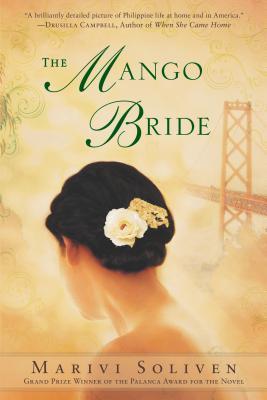
The title and the Golden Gate bridge on the book cover promise a story about the Filipino in diaspora and the woman's experience as a bride/wife living away from home.
Aware of the stigma, yet ignorant of the plight of the mail-order bride, and as someone who often wonders what it is like to spend years away from home, I needed to know what life was like through their perspective. I've always been curious about the stories of Filipinas as companions and wives to foreigners, their struggles, and how they managed to survive while clinging to what most assume to be the promise of a good life. If this book could offer a window to that perspective, I'm taking it.
You can read the full review on my blog where I discuss my favorite character of the book, the stories that paint life abroad, and my thoughts about the writing itself. But to give you guys an idea of what the reading experience is like, I'm sharing this particular section here on Goodreads:
Zooming into the reading experiencing, it was overall sympathetic, dramatic, and rich in imagery and sentiment only someone from these two countries—the USA and the Philippines—could write about. Having lived in Manila for six years, I saw the dark skies as the city submerges under torrential rains, hotel guests and the stereotypes they pin to Filipinas with their foreign partners, the drenched children on the streets knocking on car windows as they beg for alms.
The English translations, however, constantly jolt me back to reality, and it feels jarring and disruptive. Each Filipino line of dialogue follows after an em dash and the English translation. Strangely enough, this doesn't carry over to other languages in the novel—Spanish, French, and even slight mentions on Ilonggo—where Soliven leaves these lines either in their intended language or in English.
Straightening up, Richard smirked at his younger brother, muttering in French, "That the new flavor of the month?" (94)
This probably wouldn't be an issue to readers who don't understand Tagalog. It certainly makes the novel accessible to a wide range of readers. But as someone who does understand the language, the translations create this experience of riding through traffic, having to slow down or stop abruptly before moving on to the next sentence.
The ironies and the events foreshadowing what was to come were just as noticeable. They pepper major scenes in the book in such a way that it felt like watching after-dinner soap operas on screen. The fact that the characters themselves realize they're witnessing a soap opera of their own makes me wonder if these were intended as a commentary of how Filipinos feast and can relate to stories about family drama, hardship, and sacrifice in the pursuit of happiness.
As a whole, the book paints a painful but enlightening picture of the circumstances that lead people to make huge, life-changing decisions, whether that's exiling one's child for wealth and reputation, or fleeing poverty by clinging to the arms of a man they know nothing about.
The important things need to be said, and I'm glad this book was written to tell the stories we don't always remember or care to stop and listen to.
The Mango Bride begins with the graphic stabbing of an old cook named Marcela to her employer Señora Concha with a knife. The next few pages took me to an exciting bourgeois lifestyle of Señora Concha’s kin - the Dante-Guerrero Clan which instantly appealed to me a bit like Kevin Kwan’s Crazy Rich Asians.
Though starting off on its dreamy-nostalgic state, it delves deeper into the lives of two women who came from different background but both ended up living in Oakland, CA. One came from a wealthy family background and the other, a former wait staff who came in the US as a mail-order bride. Told in an omniscient narrative in the 1990s, these women’s storylines align on an eclipse mode, serendipitously bound to pass one another - unfolding one of the lifelong secret that impacts both characters.
The Mango Bride touches themes on US immigrants, mail-order brides, exploitation, domestic violence, racism, unwanted pregnancy and second chances. It also vividly tackles social classes, the understated homesickness, filipino food, superstitions and families which depict much of the Filipino culture and society.
This novel essentially appealed to me as a dark comedy on the extremities of the rich to keep up with appearances and live their own double standard lives in secrecy to put their disgrace and shame off the grid and some sad realities of the Filipino immigrants in the US. But, it’s also a beautiful tale of women’s grit to turn their lives around against the odds and their renewed strengths to fight back.
This one’s a precious read! It’s both captivating and entertaining. Most of the characters are just so wittingly created and unforgettable. The Mango Bride is easily one of my personal top recommendations for all readers who would want to diversify their reading experience and get a glimpse of the Filipino culture. ⭐️⭐️⭐️⭐️⭐️!
As a new(ish) Filipino immigrant in California's Bay area, this novel has resonated so much.
I don't get really get homesick, but after reading this novel I felt each character's longing for home. Where is home? Is it the place where you grew up but looks so much at others' pasts, or is it this land that people come to to make a new start?
It's not just about home, but also the little nuances that a lot of Filipino expatriates experience. Berkeley Bowl--- seeing Manila mangoes and that cornucopia of fresh produce, senior veterans that don't get support, mail-order brides dreaming of a whole new life but instead live lives eating fists for breakfast, rich Filipinos flung from grace living a servant-less life in America, the jar of bagoong and good memories... the list goes on.
Additionally, the author has pictured the Manila and Bay area experience so profoundly; you'd be transported to experience the real picture of the places.
Also, I saw from the writer's Facebook page that this is going to be a Filipino movie soon. Happy to have read the book before the movie, yay!
Although the book reads like a soap opera (and even the characters call attention to it!), there are enough interesting cultural components to round up from 3.5 stars. I realized early on that I've never read a book about Filipino culture, and I read a lot of multicultural literature! I loved the sprinkling of Tagalog throughout the book and the great descriptions of food, but the over-the-top family drama was a bit much, as were the tidy cliche plot points. It was a lot, but at least you get a bit of everything!
I spent many late nights reading this book. It entertains like a cross between “One Hundred Years of Solitude” (which is my favorite book) and a Filipino soap opera. The story is fueled by a secret surrounding flawed and tragic characters whose drama unfolds across time and places. A book packed with emotions, it addressed domestic violence, class issues, social injustice in Manila and the U.S. I really enjoyed it.
Really wanted to like this one, but the middle portion of the story was very drawn out (the beginning and ending was very engaging in comparison) and I wasn't really a fan of the ending. Felt more like a soap opera and while I enjoy some soap opera-like books... this just didn't click with me. I am very interested in reading more books about the Philippines/Filipino culture by Filipino authors, both fiction and non-fiction.
found the Filipino version of Pachinko. someone better turn this book into a telenovela!
BUT working as an interpreter myself, i don’t find it realistic at all to be interpreting and doing household chores at the same time! nevertheless, i loooved this novel so much! very well-structured and there weren’t any stray pages that do not even contribute to the story.
I just started reading this just for fun. So far, so good. I am really enjoying most of the references. I can see my mom, and sisters in many of the characters (my mom was also called Concha). Punyetta! Our favorite swear word -lol. Taking a little break from the book club books and reading challenges.
So, I completed this book this morning and was not disappointed. It took on some heavier subjects and I could totally relate to why some of the women did what they did. Although I did not grow up in the Philippines, my older sisters and brothers did, and so much of what I read in the book was relatable. I recommend, but it is a whole different world in the PI.
Set in both California and Manila, this book was so wonderfully depicted, I could picture the Philippines and smell the delicious food that’s cooked up throughout the novel. There were lots of interesting characters, and a couple you just love to hate.
I love an immigration story, and The Mango Bride, which spends half of its time in the Phillipines, is now among those I recommend. I was admittedly confused when the story began. There were a lot of characters right away, and I took time figuring out how each related to the others. By the end, everything fit together perfectly in one culminating event.
What is it about emigration and immigration that allows one person to maintain love for one’s heritage and adapt to one’s new environment while another is unable to let go of the past and finds the experience of a new country to be so harsh, even abominable? This is the central issue in The Mango Bride which is the story of several characters forced to leave the Philippines and live in Oakland, California in 1995. But the story is so, so much more. It begins with Marcela the cook/maid stabbing Senora Concha, the mother of Ampara and her brothers. There’s a sense of magical realism in the initial scene, with few clues to indicate why Marcela has snapped. But everyone in the family is cautious and careful and won’t even consider calling the police. She gets medical attention from her son, the dermatologist, and all seems forgotten as the story switches to Ampara whose mother made her emigrate to America for a shameful secret that no one is supposed to know but everyone does. Ampara’s point of view appears as she is a translator, taking care of her home and answering the telephone to do her job translating for police and social workers in Oakland. Chapters follow with Filipinos living in California, a viciously abused woman, a women who is carrying an unwanted pregnancy, and so many more tales. What is most striking about these suffering women is the loneliness of American life for them and their painfully raw nostalgia for their native home. Ampara tries to stay neutral but one story in particular sets off her own painfully poignant memories. When she meets her Uncle several times, a recovering alcohol holding his own secrets, he is reluctant to address the issues and secrets Ampara knows he is harboring. She has a solid relationship with a new boyfriend and wouldn’t consider leaving but her heart aches for her mother, no not Senora Concha but Marcela who acted as her “real” mother for some odd reason most of Ampara’s life. Marcela realizes she needs to catch up with connecting with her children but her fear of scandal is larger than her maternal instincts. We will later know why and the immense consequences of that secret. We also meet Beverly, a maid who is cousin to Ampara, who has her own awful story regarding her deceased mother and her present issues as the wife of a white man who treats her like a dog and will even try to ship her back home – for good! She is actually more of a central character than Ampara because Beverly’s story parallels the story of so many young Filipino woman in America. This notable novel almost defies description. Loyalty, family, gender roles, gender abuse, betrayal, revelation, repentance are just a few of the topics that these potent scenes address and which one appreciates as a sign of the immigrant and cultural experiences herein that one has never previously realized. If you, the reader, are not there, this book will amaze you; if you, the reader relate, there is comfort, truth and healing herein. Finely crafted novel and superb contemporary fiction, Marivi Soliven! Great read!
BOOK COVER/DESIGN: 8/10 stars. The cover - and the font used for the synopsis - was elegant and nicely done.
GENERAL REVIEW/THOUGHTS: I love reading Filipino stories. The well - written ones, of course unlike the declasse ones written by jeje Filipino authors on Wattpad. Sadly, the last Filipino story - stories, rather - I've read that isn't school - related is The Myths and Legends of the Philippines by Marlene Aguilar. The writer, Marivi Soliven, was at UST some years ago to host a talk about her book. I was intrigued by the synopsis and I decided to purchase the book. And this did not disappoint me. It was absolutely brilliant! I loved how the characters were relate-able; one would easily relate to their lives no matter what social strata you belong to. I love how the author depicts life in Manila accurately - from the Filipino masses, to the food, to the environment, to the weather, and to dreams and yearnings. Life in America was depicted well, too. Having lived in New York City for a number of months, I was transported back to America when I read this. This book raises issues on women's rights and domestic abuse and it was so well - narrated that I found myself fighting back tears. Although I come from a family that closely resembles the Duarte - Guerrero clan, I was still able to relate myself to the Obejas family. I am glad that the story ended with a happy ending.
RECOMMENDATION: I recommend this to any Filipino - whether residing in Manila or abroad - as this will surely warm their hearts. I should read more books by Filipino authors. For mature audiences only.
I picked this up as I realized I've been reading a lot of American fiction and it made me realize how much I seem to know more about American culture and their way of life versus our own. My uncle who has lived in the US for almost 30 years told me that he has read this book and asked me if I have read this (sheepishly I said no) and I'm glad I did. The book is the story of two Filipinas with two very different lives in the US but their lives are inexplicably intertwined. I love Marivi Soliven's writing especially as she has interspersed Tagalog words in the conversations, making it more authentic, the emotions very real and familiar to us Filipinos. I also love that the Filipino culture was highlighted (in food, practices at home and others, UP life - I personally love this as I'm an alumna.) I feel that the author truly deserved the Palanca Writing Award. The story flows smoothly, with very interesting snippets of the lives of our kababayans abroad seeking the good life with very familiar outcomes. I can't help but marvel at their bravery and resolve to overcome challenges with optimism and hope. The revelation chapters were well written however I wished that some characters had more development specifically Senora Concha, the matriarch of the Guerrero clan. Can't help but ask - did she change? ask for penance, what are her realizations? But this can very well be the subject of a very interesting book club discussion. A must read.
This is the first Filipiniana book I've ever read since I was 16 and I must say I'm not disappointed. Aside from the Story (hey, this reminds me of the old telenovelas they have on TV when I was a kid ha) and the characters, I love how the author depicted old Manila and a bit of the Filipino culture.
The story is all about Amparo, a girl from a wealthy family in the Philippines who was sent (more like, exiled by her mother tbh) to California as a consequence of her actions and Beverly, an impoverished girl who works as a waitress, who in hopes of changing her life, willingly .
I won't go into more deets, but, Amparo and Beverly are connected to more ways than what you think. I honestly expected a different ending, but nevertheless, I still enjoyed reading this one x
It's very rare that I find a well-written novel written by a Filipino starring Filipino characters in an American setting. Mango Bride was a gem to read.
This soap opera-like novel eventually comes full circle, focusing on the lives of the rich Guerrero family and the Obejas women. The story starts with a mystery--why did the Guerrero's trusted cook Nanay Marcela stab the bitchy matriarch Senora Concha during breakfast? We are then launched into the history of the clan, answering questions along the way. Why is Concha's daughter Amparo exiled in the United States with her Uncle Aldo? What is Marcela's role within the family, besides being their cook? Who is Beverly?
The story tackled women's issues in the late 80's and early 90's, as well as explored the diaspora of Filipinos immigrants. We are introduced to multi-faceted characters such as Manong Del, whom Amparo befriended on the train; Josiah Stein; Lisa and her fiance Lydell; Mateo and Seamus, among others. All the characters undo some sort of change throughout the story, and all for different interesting reasons.
For a short book, Mango Bride was brimming with rich details (and prose) and a whirlwind of events. A must-read for sure.
It has been a long time since I've read a book that has greatly affected me. The Mango Bride touched on so many issues Filipino-Americans face regularly. As a Filipino American, I am so happy that I found this book on my last trip to the Philippines. I only wish/hope that there will be more stories written about the struggles of Fil Ams. The story was relatable and realistic. Many of the instances in Amparo and Beverly's stories were stories I've heard from my family or from relatives and friends. The story is very sad, but very realistic. Many of the instances that happen are regular occurrences in the Philippines and America.
The ending is a little open-ended. I do wish there was more closure with Mateo, Manong Del, and a few of the other minor characters. It kind of felt like the first part was incredibly long and by the 4th part it felt a little rushed. Despite this, i absolutely enjoyed this book and will definitely be recommending it to all the Filipino-Americans I know! Soliven touched on a lot of important pieces of history like martial law in the philippines and the history of filipino-americans here in America - I was really excited to read about the veteran@s.
I'm definitely looking forward to more stories from Soliven!!! I highly recommend this book!!!
This entire review has been hidden because of spoilers.