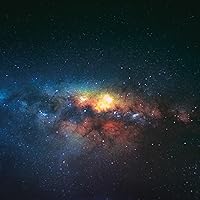
Туптящото сърце на Слънцето е пулсът на живота на Земята. От древните, белязали пътя му при Стоунхендж, до съвременните учени, разкрили реакцията на ядрен синтез, превръщаща масата в енергия, човечеството винаги се е стремяло да разкрива загадките на най-близката ни звезда. В тази вдъхновяваща биография на Слънцето известният астрофизик Боб Бърман покрива цялата палитра на огненото кълбо в небето - от звездното му раждане до бъдещата му зрелищна смърт, наблягайки на чудното и увлекателното, както и на покъртителните саможертви, смехотворни грешки, егоистични битки и блестящи идеи на хората, опитали се да проумеят неговата неукротима сила.
Bob Berman is one of America's top astronomy writers. For many years, he wrote the popular "Night Watchman" column for Discover magazine. He is currently a columnist for Astronomy magazine and a host on NPR's Northeast Public Radio, and he is the science editor of the Old Farmer's Almanac.
Great science writers infect you with their curiosity and enthusiasm for their subject. Bob Berman does this in a book that is informative and funny as he conveys knowledge about his awe inspiring subject, our Sun. While never stenting on supplying the astounding facts and figures, he takes time to talk about man's relationship with our star today and throughout history.
There is a total eclipse coming in August 2017 across most of the USA. After reading this book, there's no way I will miss it!
(FIRST HERE ARE MY INITIAL THOUGHTS, WRITTEN AT THE HALFWAY POINT ON 23 JAN. HAVE NOW FINISHED, SO SCROLL DOWN FOR THE EXCITING - AND UNBELIEVABLY DEPRESSING - CONCLUSION!)
First tried reading this back around 2009, but my little brain overloaded about a quarter in. Still, what I did understand was fascinating, and so I promised to give it another try some day when I was hopefully smarter.
Well, that day is today - and I made it halfway through this time before my brain kerploded! So, yay me - but back to my "to get back to" list for Mr. Berman, at least until I've ice-packed my cerebellum with some stupid fiction.
My own limitations aside, Berman is an excellent science writer, with an appealing sense of humor that ranges from cleverly droll to enjoyably stupid. An example of the first, while discussing the progress from hunter to agriculturalist:
"Homo erectus erected the first blazing fire 500,000 years ago. After burgers went from raw to medium-well, a truly long time elapsed before the next human milestone: the bun."
And a couple examples of the second:
"When hieroglyphics were finally deciphered in the mid-19th century ("Aha! I see! It's snake before stork except after fish!"), the inscription revealed how central the Sun was to daily life."
"French astronomer Guillaume Joseph Hyacinthe Jean-Baptiste Le Gentil de la Galaisière…failed to arrive in time to observe the transit, thanks to an outbreak of war (and probably delays caused by officials writing his name on passport applications)."
So yeah, you're never more than a page or so away from a welcome if generally childish break from all the hard science. And believe me, some of this science is hard - although Berman certainly does his best to, if not dumb it down, at least make it almost accessible to an idiot like me. Much as Dava Sobel did in her small but wonderful The Planets, Berman provides an excellent if too-short description of the 18th century's race against time to determine the Astronomical Unit; but unlike Sobel, he also manages to explain just why the AU is so important to determining the distance of the planets (and how to someday reach them).
Berman also does a great job introducing a number of important but generally overlooked or forgotten players - always one of my favorite things with any non-fiction (see Alan Moorehead's The White/Blue Nile books, or any of Peter Hopkirk's character-driven Central Asian histories) - who had a much more profound impact on our understanding of the world than most of us realize. Among my favorites:
- The early Greeks Aristarchus - first to write that the Sun was the center of the solar system, and that Earth revolved around it once a year while spinning on its axis - and Erosthenes - first to calculate the size of Earth (without ever leaving Egypt!). However, despite their brilliance, both were soon displaced by the more famous (if more consistently wrong) Ptolemy and his geocentric universe, which became gospel for the next 1700 years…
- Best buds Gustav Kirchhoff and Robert Bunsen (he of the high school lab burner), who discovered and then developed the field of spectroscopy - which I never understood before, but which is now super awesome...
- Walter and Anne Maunder, whose amazing insights into how sunspot activity is linked to magnetic disturbances on Earth was attacked by the at-that-time-totally-bonkers Lord Kelvin (of earlier absolute zero and transatlantic cable fame), relegating them to the scientific junk pile until their work was rediscovered and promoted in the mid-1900's by Jack Eddy, himself one of the 20th century's most famous and important scientists that you've also probably never heard of.
And that's all just in the first half of the book, which may explain why I need a breather now. But I will definitely get back to it again sooner than I did last time - since Berman at least teases at discussing how a better understanding of the Sun and it's cycles might actually save us from total climate meltdown! So stay tuned!!
(FINAL REVIEW…TWO WEEKS LATER:)
Aaaaand…DONE! Took a two week breather before tackling the final 100+ pages, which were equally good but by the end got WAY darker (no pun intended).
The second half of the book got deeper into the science, which certainly made me smarter, but I miss the colorful characters introduced earlier. I have already impressed my colleagues by explaining how important Vitamin D is and why they should let their kids go out and play in the sun; I also now better understand the physics (vs. the earlier "magic") behind the northern lights, rainbows, color, eclipses, etc. But at the same time, I am now scared to frickin' death by solar flares (although at least I now correctly call them "coronal mass ejections," or CMEs). And most depressing of all, while I hinted above that Berman may offer some hope that the Sun might bail us out on climate change, it turns out I was wrong, and so we are, in fact, all doomed.
CLIMATE CHANGE. You may wonder what this has to do with the Sun - and that's just Berman's point, because the answer is "unfortunately, not much." Three Sun-related factors used to affect weather patterns on Earth - eccentricity, obliquity and precession, (don't worry; there won't be a test). But any effect they once had has long been superseded by "anthropomorphic climate forcing," almost exclusively the result of increased CO2 emissions, (aka, greenhouse gases).
"Anthropomorphic climate forcing (man-made climate change) has now become the biggest player in global heating. If carbon emissions go unchecked, all indicators predict positive feedback loops: melting polar ice creates dark-water oceans that absorb more heat, which melts more ice and more permafrost, which releases more methane, and on it goes until the world is 6°F to 10°F warmer, mostly due to warmer winter lows at middle and high latitudes.
"Climate change will then be irreversible, no matter what we do. Those are conditions out planet has not seen for three million years. The results will be spectacular. Rising sea levels will be the least of them. More prominent will be weather extremes, with violent unaccustomed paroxysms. Most prominent will be biological blights and diseases, as previously cold-hating pathogens spread to tasty new organisms in the plant and animal kingdoms."
Or as Berman sums up just one page later: "we're screwed."
And remember, this book was published in 2011 (and so researched/written at least 2-3 years earlier), and so things have only gotten worse since then.* However, Berman does offer a few ideas on where one might want to move to for one's final days - New England and Eastern Canada might not be bad places to ride out our looming (and increasingly certain) Mad Max eco-tastrophy.
Sigh…
(* One statistic Berman often refers to is the atmospheric CO2 level. Historically, that ranged from a low of 180 ppm (parts/million) during Earth's coldest periods to a high of 280 ppm - but never higher until the mid-20th century. At the time of Berman's writing, he reported a shocking level of 338 ppm, and described the long-term disastrous effects that would have. Well, a quick Google search just informed me that in 2017, the level was already up to 405 ppm - higher than at any other time in the past 800,000 years.)
Много ми е трудно да определя какво точно представлява тази книга - история на света, Земята и вселената или учебник по почти всичко. Информацията, както научна, така и свързана с ежедневието ни, е много като обем, но поднесена увлекателно и ненатоварващо. Боб Бърман успява да я побере в поносим и недоскучаващ обем страници, всяка от които отваря апетит за четене. Ако работата ми се състоеше предимно в присъствие пред монитора в офиса, бих жертвала с удоволствие две нощи сън между първата и последната страница от историята и бъдещето на "най-страхотното нещо наоколо". Факти, явления, процеси, масови истерии и заблуди са обяснени изключително достъпно, разбираемо и образно. Освен много знания, опит и талант в споделянето им, Боб Бърман притежава и чувство за хумор, което демонстрира с остроумни сравнения и забележки.
Каквото и да кажа за тази книга, ще бъде слабо. Тя трябва да бъде прочетена. За учители е абсолютно задължителна - това е начинът една материя да задържи вниманието, да предизвика интерес и да бъде заобичана.
Благодаря на човека, който ме накара с такова нетърпение да чакам излизането й.
Take a moment from fussing about who the next President will be, or what light beer to drink, and focus on the incredible power of the Sun and all the ways it allows us to exist on Earth.
I like getting my mind blown and this description of how the sun works and how it affects us was just the ticket (did you know rainbows aren't a real tangible thing but only exist between the eye, sun and rain? If you weren't there there wouldn't be a rainbow!). Relatively easy to read with quirky anecdotes. The author is very personal, and that usually makes it entertaining though a few times it got in the way.
A book of stellar brilliance that ejects masses of surprising illumination from every page. Berman notes that there are four main factors that can modify mimimum temperatures on earth. Solar radiance (a cyclical and highly variable phenomenon), volcanic activity (which results in transient cooling), el nino, and artificial CO2 production (which drives a positive feedback loop of warming) . The last mentioned has become by far the most significant and persistent since 1975 and most markedly since 1994. Conclusions regarding our collective (in)ability to ameliorate CO2 driven climate forcing are depressing. Historically and technically detailed, but remarkably accessible.
Fun look at our nearest star. This is no textbook; Berman is a storyteller, so you often get just as much information on astronomers as you do on the sun. But highly informative none the less. Berman definitely has a thing for sunspots, solar cycles, and solar weather. I can't say I blame him-- a coronal mass ejection could strike our planet at any time, wiping out electronics and anything electric, especially in the northern latitudes (it's connected to the position of the earth's magnetic fields). Also interesting to consider how the solar cycle affects our climate. Thankfully sunspots have been low over the last couple of decades, so the earth is staying cooler than it otherwise would.
In fact, the discussion of the sun's impact on our planet's climate was easily the most interesting portion of the book. Basically, variations in three components of the geometric interplay between the earth and sun affect how much of the sun's energy our planet receives. First is the shape of our orbit. It is usually very circular (only 3.5% difference between nearest [91.6 million miles] and farthest [94.8 million miles] spots). But the orbit goes through a cycle, and at times there is a 13% difference. Since energy received is based on the square of the distance, this variation can have a big effect.
The second factor is the tilt of the earth's axis. It alternates between 22.1 and 24.5 degrees ever 42,000 years, making seasonal differences more extreme when the tilt is greater. The last factor is the wobble of the earth's spin. Every 11,000 years, the tilt switches, so that the northern hemisphere has summer in January, just when the earth and sun are closest. Those summers would not be pleasant.
The basics of the sun are here too--its life cycle, its powering process, its emissions, etc. Great stuff that we should probably all know, but few do.
Books about science for the lay reader have to strike a balance between being dull but informative and being entertaining but accurate. At one extreme, a little dullness can be forgiven if the information is amazing; at the other, a few factual errors can be forgiven if the book is a good read. Bob Berman tilts towards the latter end of the spectrum. He gets full marks for entertainment, but his book should carry a health warning concerning some of the “facts”. Since it doesn’t, part of my job is to warn you not to believe everything he says; but I still recommend The Sun’s Heartbeat to anyone wanting a light-hearted but (for all its flaws) informative look at the life and death of the star on which our lives depend. Berman writes in a deceptively casual style that reads like an old friend chatting to you over the backyard fence, but has undoubtedly been crafted with great care. His subject matter ranges from how the Sun stays hot to the myth that tidal forces affect the timing of human births, always with a strong emphasis on the human element of who discovered what, and where, and why. I particularly liked the story of how the Sun’s activity has changed in historical times, and the saga of astronomer Jack Eddy’s efforts to convince sceptical colleagues that such changes affect the climate on Earth. It is just Berman’s bad luck that he nails his own colours to the mast of the suggestion that the solar quiet of recent years will continue for years or decades in a book published exactly as the Sun has woken from its slumbers with a great burst of activity. There is even a possibility that the book could save lives. Vitamin D is an essential for our bodies, and our bodies manufacture ample amounts of Vitamin D with the help of sunlight. At least, they used to. Thanks to a combination of a fear of ultraviolet radiation and a more indoor sedentary lifestyle Vitamin D deficiency diseases are on the increase. The advice from medical science now, says Berman, is to go out in the Sun regularly without burning and without covering up. “twenty minutes of unprotected midday Sun from May to July,” he says (for a North American resident) “or a full hour or more during early March, April and late August through October” will suffice, and then you can slap on the sunblock. Now for the promised health warning of a different kind. The book is riddled with mostly minor errors that result from carelessness and could have been picked up by giving the manuscript to any competent astronomer to read. For example, the Sun is repeatedly described as the sole source of energy for the Earth and life on Earth, ignoring the fact that whole ecosystems exist in the deep ocean, where they never see the Sun, fuelled by heat escaping from inside the Earth. There is even a respectable body of opinion which argues that life originated there. The ultimate energy source of these ecosystems is heat released by the radioactive decay of elements incorporated into our planet when it formed, and nothing to do with the Sun itself. The same kind of radioactive elements, incidentally, provide more than half of the electric power used in France, generated by nuclear reactors. To take another example, the formation of the Sun is described as occurring in a “plain-vanilla” cloud of hydrogen gas, when in fact the cloud contained roughly 25 per cent helium. And a supernova is described as “the most intense brilliance nature ever creates”, ignoring the far brighter outbursts of quasars and the phenomenal stellar explosions known as gamma-ray bursters. There is also, although this is not strictly speaking a factual error, an irritating Northern-hemisphere bias in the discussion of astronomical observations, as in the advice about when to go out in the Sun quoted above. Anyone who has visited the Southern hemisphere will tell you things look different from that perspective. Perhaps the worst scientific howler is Bergman’s claim that changes in the geometry of the Earth’s orbit cause Ice Ages because they “produce changes in the amount of solar energy that reaches the Earth”. They do not, at least to any significant amount – what matters is that they change the balance of heat received in different seasons. Sometimes, in the Northern hemisphere we have very cold winters and hot summers for millennia, sometimes we have relatively mild winters and cool summers for millennia; but the total heat received over a year stays the same. Curiously, it is cool northern summers, not harsh winters, that are linked with Ice Ages; it is only when the summers are very hot that the ice over Eurasia and North America melts back. The most lazy historical error comes when Bergman castigates “a pair of renegade astronomers” for making “a wheelbarrowful of money” by incorrectly predicting a major California earthquake in 1974. I was one of those astronomers (although actually a journalist by then), and I made precisely £2,040.57 out of the book he is referring to, which was in no way a bestseller; my late colleague Stephen Plagemann got the same. Berman could have emailed me to get the number right! Which is relevant, because it shows the level of fact-checking (or not fact-checking) that went in to the book. So why, in spite of everything, do I recommend The Sun’s Heartbeat? Mostly because it is fun, and too many science books, for all their erudition, simply are not. Secondly, because it portrays scientists as often-fallible ordinary human beings. There is a place here for the occasional great genius who gets it right first time, but also for tales of human error, pride coming before a fall, and a stubborn refusal to give in even when “everyone knows” you are barking up the wrong tree. Above all, the author’s enthusiasm for science shines through, and if even a little of that enthusiasm rubs off on his readers I can forgive him his own ration of human error.
Fantastic. Fun read, quick easy to understand, with a cheekiness that only Bob Berman has. He speaks with passion and authority about so many pieces of the sun and how they interplay with all the facets of life here on earth.
Should be required reading for a whole new generation.
Представете си, че имаме една масивна звезда като Ригел от стъпалото на Орион. Тя е 17 пъти по-тежка от слънцето и съответно живее едва 7 милиона години, превръщайки водорода в хелий (следващия елемент от таблицата), вследствие на ядрения синтез. Като изразходва целия си водород започва да гори самият хелий, като от този процес се получават въглерод и кислород, а звездата живее още 700 хиляди години. След което кислородът се превръща в силиций, а силицият - в желязо. Желязото е краят. Създаването на атоми, по-тежки от желязото, по-скоро изразходва енергия, отколкото да я създава. Като няма вече гориво, теглото на всичките й слоеве ще я накара да се свие в себе си и да избухне в свръхнова. Ще се разпръсне материята от кислород, силиций, желязо, а от горещината на свръхновата се синтезират нови, по-тежки елементи. Тази материя се разпръсква и като срещне по пътя си първична мъглявина се формира цяло люпило нови звезди от второ поколение. И се повтаря цикъла. Нашето слънце е звезда от трето поколение. Това го знаем, защото единствения начин да се създаде йод (намиращ се в щитовидната ни жлеза), олово, уран, а и от всичко от което сме съставени, е във врящия котел на свръхновата. Масивната звезда е фабриката, в която се създават всички познати елементи.
Красива история нали? :) Това е историята на всичко и аз преразказах съвсем малка част от многото такива в книгата на Боб Бърман.
Informative and entertaining in a somewhat frivolous manner*. Too bad there aren't any diagrams/ graphs/ illustrations/ coloured photographs etc.
*Selected quotes from The Sun's Heartbeat by Bob Berman:
" Atoms have substantial, chewy centers made of protons and neutrons stuck together by the most powerful force in the universe, which, in the great poetic tradition of physics, is officially called the strong force."
"As the first humans acquired tools and an appreciation of minimalist cave art, they turned their attention to improving their lives and understanding the cosmos. Homo erectus erected the first blazing fire 500 000 years ago. After burgers went from raw to medium-well, a truly long time elapsed before the next human milestone: the bun. The first planting of grains and other crops, which occurred just 12 000 years ago, ended our million-year low-carb diet and freed us from being hunters. No longer plagued by the frustration of trying to sneak up on animals with bigger ears and faster legs, humans started staying put. Our nomadic days were ending."
Wow! A truly amazing book. This book about our sun, the source of all life on our planet, is not just for science fans like me, but contains practical, useful information for the average reader. "The Sun Will Save Your Life" chapter is so useful and informative- not to say fascinating- that it was the highlight of a book that has a lot of stellar high points. The author also focuses on solar eclipses, and with the upcoming total solar eclipse over the US on August 21, 2017, this information is right on cue. I love this book. The main giver of life on this planet deserves a couple of hours of study and worship from every American. So, read this cool book!
I picked this up expecting a deeper scientific text on solar science. The content instead veered all the way to nutrition and astrology. Some chapters seemed built of unconnected dots. It sometimes felt as if crucial parts of the text were missing. The irrelevant humor was annoying at best and offensive at worst (except one crack about prisms and goats that gave me a smile). I recommend this book in spite of all that for its mostly interesting and informative content delivered in easily digested fashion, and its science history. I managed to learn quite a few things in spite of having read much on the subject already.
if you are at all interested in the sun and like me have no real science background to your curiousity i think you will really like this book. I've said it before I love books written by science reporters and this guy can't seem to reign in his doofy sense of humor (isn't that what editors are for?) But back to the sun, lots of great info about the history of our understanding the sun. Awesome and I'm only half way through
Изключителна книга! Много ми хареса! Интересни факти + чувство за хумор = невероятна комбинация. Даже понякога от снимане (чувството, че това на всяка цена трябва да се запомни) едвам прочетох книгата. За произхода на слънцето, за историята на неговото изучаване, за катаклизмите и климатичните промени...и т.н ❤ Препоръчвам ви! ❤
In The Sun’s Heartbeat, Bob Berman shares with us his enthusiasm for our friendly neighborhood star by sharing factoids, anecdotes, and other miscellaneous information. The title refers to the solar cycle, with the Sun changing its magnetic polarity and sunspots. For the longest time, very little was known about the Sun. It was only within our recent memory that we were even able to pry into the Sun’s mysteries. This was especially the case with Spectroscopy and other such indirect methods.
Now, I think little of the Sun when it is doing its job, as I suppose is the case with most people. The Sun is just so ubiquitous that it is difficult to think otherwise. If something were to happen to the Sun, we would not know of it for approximately eight minutes and twenty seconds. We didn’t even know the precise distance of the Sun to the Earth until the 1960s or so. Even the story of how that was achieved was interesting. Now any scientist can tell you the precise composition of the Sun, right down to the fraction of a percent. We know approximately how long the Sun has “lived” and how long it will continue to shine. We know how the Sun came to be, and that the Sun is a third-generation star. As far as other stars go the Sun is unremarkable.
Some of the information was really wild and specious. Take the idea that people thought it was possible to live on the Sun, and that it was inhabited by people of some other variety. Where did the heat and light of the Sun come from? Well, from the clouds on the Sun of course. There is a ton of other interesting stuff in this book, along with the science that lies behind it.
So this book was fantastic. I really enjoyed learning a lot of things that I didn’t really know before. I knew about Mass Spectroscopy, but I didn’t know exactly how they figured out how long an Astronomical Unit was. This book talked about all of that and more, with Berman’s enthusiasm being infectious.
Really cool book. If you are interested in the sun, this book has an immense amount of information to share. It's fairly well written, with only a few dry spells. I found it tedious taking notes throughout this book, because there was a lot of information I didn't want to let slip after I was done. It can be tough at times to relate astronomic and optic history and science to a lay person, but the author is completely enthralled with the topic and it shows. I learned many things about the sun which have a direct impact on my interpretation of optical frequency and sight, atmospheric phenomena, solar eclipses, auroras, climate change, human vision, sunscreen and vitamin D, and more. I found it fascinating and a joy to read. However, I doubt I could have read it straight though - I read it in chunks.
I loved this book! Just enough science to give you a clear understanding, and enough humor to make it bearable. I have a higher appreciation for the Sun after reading this book; and that is a great feat when you live in the Middle East!
I liked the the author’s writing style; very clear, funny, and not overwhelming with scientific jargon; which is very hard to achieve in science books, specifically astrophysics.
A big part of the first few chapters is a historical background of humanity’s encounter with our Sun; which was also very interesting.
Although this book is dated, in the sense that there has been a great deal of solar research since its publication, I have rarely found a book that balanced entertaining writing and meaningful appreciation of solar research. I am fairly well informed about solar science, but I learned a great deal from it nonetheless and was impressed by the author's ability to render complex ideas with innovative and entertaining metaphors. It is a great read!
The story of our very own superstar! It keeps us alive, but will eventually kill us. In the meantime it will cause a lot of problems, but also holds the key to such as curing cancer and our future energy demands, and as a results; wealth of mankind all over the planet, including under developed countrys.
Bob Berman as a narrator is an example of excellence. He sprays the story with funny anecdotes and comments - it really grabs your attention and makes this book a pleasure to read.
4.5 stars. I love reading about the sun and other stars, and this book was one of my favorites. Berman is a good storyteller. He also has infectious enthusiasm for the subject. When a book is written by someone who loves his subject and can write well, that’s a living book. I will most certainly be using this in our homeschool curriculum (slightly edited for various ages). I’d really like to see an update to this book.
A good read, lots of informative facts about our life giving Sun. Living in Florida I sometimes wish the sun would cool down a bit, now I think the sun is the most fascinating thing in our near galaxy. Zoom is also a fun book. I think I'm going to have to have my own copies of Zoom and The Sun's Heartbeat.
Outstanding. Excellent read about 'the star that powers our planet'. Berman's style makes the science accessible and fascinating. Having finished the book, I want to re-read it right away! So I'll buy it, it deserves a place in the bookcase. Best book read so far this year!
I normally don't read non-fiction, but this book captivated me. Bob Berman explains large concepts in a clear and engaging way, igniting the reader's interest in our Sun. If you want to learn more about the story of our nearest star, this is the perfect book to read.
This is an engaging and accessible read. Even people knowledgeable in astronomy will pick up some new things from it. It is heavily weighted towards the sun's interactions with the human world, which might leave some people wishing for more detail on the current state of solar science. Even so, I think most people will enjoy this title.
My husband bookmarked the chapter on eclipses for me to read as we drove to Oregon to view the 2017 eclipse. I enjoyed it so much, I read all the other essays as well.