Jump to ratings and reviews
Rate this book

Störfall: Nachrichten eines Tages

Rate this book
An East German writer, awaiting a call from the hospital where her brother is undergoing brain surgery, instead receives news of a massive nuclear accident at Chernobyl, one thousand miles away. In the space of a single day, in a potent, lyrical stream of thought, the narrator confronts both mortality and life and above all, the import of each moment lived-open, as Wolf reveals, to infinite analysis.

119 pages, Paperback

First published January 1, 1987

21 people are currently reading
577 people want to read

About the author

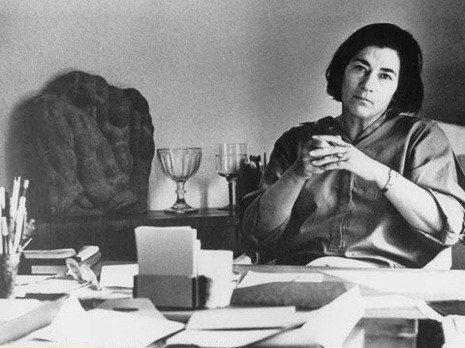
Christa Wolf

171 books464 followers
Novelist, short-story writer, essayist, critic, journalist, and film dramatist Christa Wolf was a citizen of East Germany and a committed socialist, and managed to keep a critical distance from the communist regime. Her best-known novels included “Der geteilte Himmel” (“Divided Heaven,” 1963), addressing the divisions of Germany, and “Kassandra” (“Cassandra,” 1983), which depicted the Trojan War.

She won awards in East Germany and West Germany for her work, including the Thomas Mann Prize in 2010. The jury praised her life’s work for “critically questioning the hopes and errors of her time, and portraying them with deep moral seriousness and narrative power.”

Christa Ihlenfeld was born March 18, 1929, in Landsberg an der Warthe, a part of Germany that is now in Poland. She moved to East Germany in 1945 and joined the Socialist Unity Party in 1949. She studied German literature in Jena and Leipzig and became a publisher and editor.

In 1951, she married Gerhard Wolf, an essayist. They had two children. Christa Wolf died in December 2011.

(Bloomberg News)

Ratings & Reviews

What do you think?
Rate this book

Friends & Following

Create a free account to discover what your friends think of this book!

Community Reviews

5 stars
100 (16%)
4 stars
219 (35%)
3 stars
191 (30%)
2 stars
87 (13%)
1 star
28 (4%)
Displaying 1 - 30 of 64 reviews
Profile Image for Lisa.
1,108 reviews3,290 followers
March 21, 2018
1986 - a year which defines a clear before-after moment in history. Before Chernobyl, the narrator feared a nuclear war, and after Chernobyl, she knows that human beings are capable of destroying themselves even in peaceful times.

A woman listens to the radio and worries about her children and grandchildren. The healthiest, freshest food is the greatest danger in a world where everybody all of a sudden talks like a scientist, referring to becquerel, Geiger counters, iodine 131, the half-life of radioactive substances and the destructive effect of taking a bath instead of a shower. Power plants in other countries have an impact on ordinary families' day-to-day lives, and the news feed the fear incessantly. Experts fight on television - a collective disaster that doesn't keep within the political borders of the Iron Curtain.

And yet, people have individual worries as well. "In-dividuum", like "a-tom", meaning that which can't be divided, as the narrator reflects. But what happens when it IS divided anyway? What happens when you split an atom or an individual open?

The woman waits for news from her brother, who on that specific day is having complicated brain surgery. They are opening up and splitting that part of him which makes him an individual - a unique personality. If the surgery goes wrong - because of involuntary human failure - he may wake up and find himself with a changed personality.

From the collective level down to the deeply personal worry, the narrator looks at life as a fragile gift, something that can be abruptly ended or changed forever, something that can get out of control within a split second.

A moving story of universal character and personal relevance - recommended!
Profile Image for Raul.
370 reviews294 followers
October 17, 2020
"What’s gone is gone; the older we get, the more we learn to respect and fear the inexorability of time. One can rack one’s brains in search of justifications for things left undone, such as: but instead of that, I worked, I wrote. No use. The omission stakes its claim in the form of guilt and it is not to be undone..."

A German writer is in a town in Mecklenburg thinking about the brain surgery her brother is undergoing while also contemplating the repercussions of the Chernobyl disaster that has just happened. We go through her mind's observations, meanderings, uncertainties and fears for a day.

It's been thirty four years since the Chernobyl disaster, time has made it a distant event but this book by Christa Wolf, published a few years after it happened, brings the fears following its happening fresh in one's mind. I've come to expect Christa Wolf books to be difficult, taking effort, that has so far, always been rewarded. This book was similar as Wolf explores the destructiveness of human nature. A good read.
Profile Image for Marion.
247 reviews18 followers
July 26, 2025
130 Seiten voll mit so viel Inhalt.
Die Ich Erzählerin muss sich an einem Tag Ende April 1986 mit 2 Tatsachen auseinandersetzen, dem „Störfall“ in Tschernobyl und der Hirntumor-Operation ihres Bruders.
Weit gefächert sind ihre Gedanken. Ich muss Wolfs Fähigkeit so viele Aspekte in eine so klare und schnörkellose Sprache mit so viel Hingabe zu packen einfach bewundern.
Ich bin froh dieses Buch erst jetzt zu lesen, wo ich der Autorin altersmäßig mehr als nahe bin.

Am 4. November 1987 erhielt Wolf in München den Geschwister-Scholl-Preis für ihr Werk „Störfall“. Laudator war der Schriftsteller Herbert Rosendorfer. In der Begründung der Jury heißt es:[3]

Das Wort – Störfall – ist eine Verniedlichung, eine Beschwichtigung und Vertuschung, was die Sache anbetrifft, es ist ein horrendes Wort für die Erzählerin dieses leisen, privaten Monologs, der fast etwas ist, wie die Darstellung der Sprachlosigkeit angesichts des Schreckens. Dieses Buch sollte ein „Störfall“ sein im Ablauf des bequemen Denkens, des Verdrängens der Gefahr der ökologischen Katastrophe, die uns bedroht und die wir nicht wahrhaben wollen (…).
Profile Image for Daniel Chaikin.
593 reviews71 followers
December 7, 2018


From my Litsy post (Nov 1): Christa Wolf was an East German activist and feminist under surveillance. She writes here about Chernobyl, in the shadow of the fallout, as her brother undergoes brain surgery. And she touches on her culture and being German in 1986, and on science and the mentality of science and its conflicts. It's all very random, stream of consciousness style writing, with indirect points that are often hard to pin down, and a few vivid striking sections.

I didn't mention she had a record of working with Stassi, too, where they found her "reticence" frustrating, and lost interest in her cooperation. Or that she was against reunification (according wikipedia). Or that she was already a grandmother in her late 50's when she wrote this, so, we might say, long past her idealism. It's a mature work of frustration with our Promethean games.

-----------------------------------------------

57. Accident: A Day's News by Christa Wolf
translation: from German, 1989, by Heike Schwarzbauer and Rick Takvorian
originally published: 1987
format: 113 page paperback
acquired: 2011
read: Oct 22 - Nov 1
time reading: 3 hr 30 min, 1.9 min/page
rating: 4
Profile Image for Josefine.
352 reviews
April 3, 2019
I just yeeted this entire novel in under two hours, listening to hardcore cyberpunk synth on full blast. I have no idea what I just read, but by god did I read it. Proud of me now, professor?
Profile Image for Andrew.
2,258 reviews928 followers
Read
March 4, 2024
The comparisons to Clarice Lispector are inevitable, and it’s a world away from Christa Wolf’s own Medea, which I read ages ago. One woman deals with a world-historical event in the small, quiet way that any of us would, oscillating between the news of the day and her purely quotidian world, and the ways in which those intersect – will the vegetables be safe? For all of that, it is far more haunting and powerful than the normal narratives about these sorts of things.
Profile Image for Sven.
64 reviews8 followers
Read
March 12, 2025
Andere Texte von Christa Wolf fand ich besser. Kann aber auch daran liegen, dass ich in dieser 80er Jahre DDR-Vorwendezeit und ihrer Atmosphäre zu wenig drin bin. Als Subtext läuft das an einigen Stellen mit. Und wenn ich davon mehr Ahnung hätte, hätte ich das Buch vermutlich mit Gewinn gelesen.
Profile Image for Frank.
588 reviews119 followers
October 17, 2020
Mutige Anspielungen auf die "geteilte" Wahrnehmung der Katastrophe von Tschernobyl in westdeutschen und DDR- Medien, abgemildert durch persönliche Familienbezüge (also den "Storfall" im Persönlichen- eine Tumor- Operation des Bruders). Interessant, dass im Zusammenhang mit Tschernobyl immer wieder Kriegserinnerungen aufkommen. (Vgl. auch "Tschernobyl" von Alexijewitsch.) Die Absage an den Fortschrittsglauben (=Technikgaube) war damals ein Affront; heute kommt das Ganze eher zahm daher. Wir sind längst daran gewöhnt. :-( Zeitlos hingegen die Frage: "An welchem Kreuzweg ist womöglich die Evolution bei uns Menschen fehlgelaufen, daß wir Lustbefriedigung an Zerstörungsdrang gekoppelt haben?" (S. 73/ Aufbau- Ausgabe) Wer denkt dabei heute noch an Tschernobyl? Man beobachtet es überall im Fernsehen (Krimis und Horror- Filme voller Toter als "Unterhaltung") und bei der ballerspielenden Jugend sowieso. No death no fun! Aber das kann trotzdem nicht die ganze Wahrheit sein. Psychologie ist nie die Ursache! Man muss der Autorin freilich zugute halte, dass sie vom Ausmaß der menschlichen Tragödie bestenfalls eine Ahnung hatte, die aufscheint, wenn sie mit dem Wort "Evakuierung" eigene Erfahrungen verknüpft. Im Ganzen also ein verdienstvoller Text, dem die Jahre allerdings das ihre angetan haben. Er kommt leicht verstaubt daher und kann - aus heutiger Sicht - kaum mehr als 3 Sterne rechtfertigen. Wer etwas über Tschernobyl erfahren will, der kommt an dem gleichnamigen Text von Alexijewitsch nicht vorbei.
32 reviews4 followers
April 18, 2009
Wolf uses the Chernobyl disaster and a fictional brother's brain tumor to explore the greater concepts of human's capacity for destruction, of science and its attempt to know everything (about the brain and technology) before knowing the consequences of such knowledge, of the ridiculousness of ideological boundaries and how events like Chernobyl - which sent radiation throughout all of Europe and even into North America - can dissolve those boundaries. Wolf, who was a teenager in Germany during WWII, lived in East Germany and truly believed in the tenets of socialism but was an outspoken writer against East Germany's censorship and tight control of its citizen's lives.

This is a short book but is packed with a few central themes that become intertwined with the narrator's thoughts and the quotidian events of one day. It's not the easiest read and its plot is scant and hidden among the stream of consciousness. In any case, I really like it.
Profile Image for Cindy.
341 reviews48 followers
May 21, 2021
Das hat mir gefallen. Ich fand diese Gedankensprünge, überlagert von der Sorge und den Erinnerungen um den Bruder, sehr authentisch. Ohne in allem übereinzustimmen (was auch nicht geht, denn es sind ja nicht meine Gedanken), habe ich diesen Text - pathetisch ausgedrückt - gefühlt.
Profile Image for jan.
19 reviews3 followers
March 8, 2023
sometimes you can only recognise the true brilliance of a book after having to analyse it for class. this is such a beautiful and horrifying reminder of our bound fates, the promise and limits of technology and personal responsibility
27 reviews
December 20, 2020
Kurz nach der Tschernobyl-Katastrophe verarbeitet Christa Wolf ihre Emotionen und versucht sich einen Reim auf das Disaster zu machen: ich habs nicht kapiert. Irgendwie findet sie die moderne Welt und moderne Technik gruselig, irgendwie auch ganz cool und hilfreich, irgendwie ist das alles ganz schwierig. Von dem Buch nehme ich nur wenig mit.
Profile Image for Jill.
486 reviews258 followers
March 10, 2016
This is what I wish Clarice Lispector novels were: twisting streams of consciousness, heavily peppered with personal reflection --- but expertly guided to an open conclusion. Not that it's conclusive in any sense -- just that it's heading somewhere in the first place; just that there's a driving force. No rambling, here.

This novella amounts to a spiral of feelings, narratives, reflections, anecdotes, all centered on the concerns of technological progress. Plotwise, what little there is: over the course of a single day, our narrator semi-gratefully awaits medical news of her brother while wondering if the Chernobyl accident will cause her garden to radioactively spoil. Questionwise: how has language held us back; thrust us too far forward? Can we stop ourselves from changing the world irreparably? How much do we, as individuals, matter in all this?

Answerwise: about as much as an atom.


Overall: this is beautiful, winding but succinct, and slicing writing. It's a quick read, but it'll require your full attention -- and if none of the insights are new to you, the permeating feeling of a late April day will be worth it.
Profile Image for Homersevil.
45 reviews18 followers
October 26, 2022
Katastrophe, größter anzunehmender Unfall, Machtlosigkeit, Wut – Krankheit, Tumor, Hoffnung, Schicksal.

So könnte man grobkörnig die Gedanken und philosophischen Ansätze in Christa Wolfs Werk beschreiben. Die Autorin beschreibt die Ereignisse eines Tages im Leben einer fiktiven Schriftstellerin, die mit der Nachricht eines Reaktorunfalls in der Nähe Kiews zum Einen und als wäre das nicht genug, zum Anderen mit einer riskanten Hirnoperation ihres Bruders konfrontiert wird.

Ausgehend von diesem Vorfall in der Sowjetunion, über den nur ganz allmählich und tröpfchenweise mehr Details bekannt gegeben werden (zumindest in der DDR), überlagern sich die Gedanken und Eindrücke der Erzählerin mit der zur gleichen Zeit stattfindenden Operation ihres Bruders, deren Ausgang ungewiss ist.
Immer wieder werden Gedanken und Überlegungen in Beziehung zu diesen anormalen Ereignissen gesetzt und dadurch stetig neue Blickwinkel auf die jeweiligen Problematiken geworfen. Die Abhängigkeit von moderner Wissenschaft und die damit verbundene Weiterentwicklung der Menschheit, ob positiv oder negativ, als auch die Unfehlbarkeit der Technik und die Möglichkeit menschlichen Versagens, spielen in den Gedankenwelten der Protagonistin eine entscheidende und immer wiederkehrende Rolle.
Doch auch viele andere Thematiken und Ereignisse werden innerhalb der Geschichte aufgenommen und verarbeitet. Mit einer enormen Tiefe und Emotionalität gelingt es Christa Wolf den Leser völlig einzunehmen und jenen "Störfall" persönlich wahrzunehmen und zu empfinden.

Das vorliegende Werk entstand innerhalb weniger Wochen, unmittelbar nach der Katastrophe von Tschernobyl. Aufgrund der Tatsache, dass es sich für eine DDR-Schriftstellerin nicht ziemte die Sowjetunion in jedweder Weise anzugreifen, fällt der kritische Teil am Reaktorunglück auch relativ knapp aus. Häufig war und ist dieser jedoch dieser Umstand eine willkommene Möglichkeit westlicher Kritiker, Christa Wolfs Werke zu beanstanden. Doch wie in nahezu jedem künstlerischem Medium, welches die Zensur der zuständigen DDR-Organe überstand und überlebte, muss zwischen den Zeilen gelesen, gehört oder gesehen werden, um alle Aussagen und Bedeutungen zu ergründen. Es lohnt sich in jedem Fall!
Profile Image for Sus anna .
93 reviews20 followers
March 27, 2019
Irgendwie hab ich mir das Buch ganz anderes vorgestellt... und der Schreibstil war das schlimmste. Ganz ganz furchtbar zu lesen & die Geschichte langweilig. Das Buch wird seinem Titel gerecht. Es ist wirklich ein Störfall. Störfall und Zeitverschwendung, während man in der Zeit ein anderes gutes Buch hätte lesen können. 🤓
Profile Image for Brian Finn.
73 reviews
February 5, 2025
I enjoyed the inner monologue of the character, though I felt at times it drifted away a bit tooooo much. Writing about the domestic effects of environmental damage in the 80's, however, is something extremely commendable. I enjoy the way in which science and technology are in this book both explained and left unexplained (every detail of the brother's surgery is known, and, yet, nothing is known of Chernobyl). The references to Mitverantwortung (eng?- shared responsibility?) to the Nazi era were also impactful — are we, too, equally as responsible for the destruction of the Earth when all we do is comply?
Profile Image for Lena Marie.
100 reviews10 followers
October 26, 2018
Für die Uni gelesen

Es war auf irgendeine Weise interessant, aber es hat mir nicht wirklich gefallen. Der Schreibstil war irgendwie befremdlich. Außerdem fand ich, dass es relativ wenig Referenzen zu den Folgen von Tscherbobyl hatte, dafür, dass das eigentlich das Thema der Geschichte sein sollte.
Profile Image for Elizabeth.
13 reviews
April 10, 2025
Writing this in class as we are discussing this “book”. Can’t express how much I ~extremely dislike~ this mess. It’s about this woman who gets news of the Chernobyl nuclear accident while her brother is undergoing brain surgery. The entire book is her giant mess of thoughts in one day. That’s literally all I know. How is being confused during the entire duration of a book entertaining at all??
Profile Image for Giusy.
105 reviews9 followers
September 5, 2025
Christa Wolf scrive benissimo e questo libro sarebbe anche bello tutto sommato, ma il flusso di coscienza non è proprio cosa mia: ci ho messo un tale impegno e una tale concentrazione che la mia lettura è stata lentissima, frustrante e accompagnata dal mal di testa :(
277 reviews
March 21, 2017
Narrativa breve ou longo [quase] monólogo, escrito em 1986, quando a nuvem de Tchernobyl pairava sobre a europa. reflexões sobre o sentido da vida, sobre a verdade da ciência, sobre a legitimação das políticas.
Nas últimas páginas o retorno ao Conrad do "Coração das Trevas", directamente citado como exemplar denúncia do mal de que o homem é capaz.
Profile Image for Astrid.
77 reviews
May 10, 2025
"Störfall" sind die Gedanken einer Ich-Erzählerin an einem Tag, und passenderweise lässt es sich hervorragend im Lauf eines Tages lesen. Das habe ich getan, und mich wieder ganz mitreißen lassen von dieser klugen Sprache - Christa Wolfs Art zu schreiben gefällt mir so gut, obwohl ich immer das Gefühl habe, nicht alles verstehen zu können. Macht aber nichts.
Profile Image for Zola Zyndschnur.
55 reviews3 followers
April 20, 2025
hab ich ein neues lieblingsgenre (erfolgreiche ostdeutsche schriftstellerin macht gartenarbeit und denkt über aktuelle katastrophen nach) unlocked?
Profile Image for Casey (Myshkin) Buell.
113 reviews8 followers
December 10, 2013
Accident: A Day's News is a strange and fascinating little novel. Our narrator (never named, though intimated to be Christa Wolf herself) waits for a call to tell her how her brother's brain surgery went, while ruminating on the recent nuclear disaster at Chernobyl. As she goes about her daily business, gardening, shopping, answering her mail, she contemplates humanity, and human responsibility. Imagining the details of her brother's surgery she juxtaposes it with the spreading nuclear crisis. The pursuit of technology, without clear understanding of its ramifications, may well be the tumor nestled in the brain that is humanity. This is a short novel, but the dense stream-of-consciousness prose packs the punch of a much larger book.
Profile Image for steph.
747 reviews8 followers
August 10, 2019
a nuclear reactor disaster disrupts society’s routine, a brain surgery his family’s, the awkwardness of familiar words in these new contexts the writer’s. in a stream of consciousness the narrator wonders and ponders, about science and consciousness, what it takes to be(come) a human, how sanity and society can seem so fragile.

“Aber vergessen habe ich diesen Augenblick nicht mehr können, auch wenn ich es schon lange gewusst habe, daß jede Haut reißen und aus den Rissen die Ungeheuer quellen können. Daß das Stützwerk hinter Fassaden von Zeit zu Zeit zusammenbrechen pflegt; daß ganze Wegstücke unmittelbar vor uns ins Bodenlose zu versinken lieben.“
Profile Image for Miri Gifford .
1,634 reviews73 followers
July 20, 2018
Everything I have been able to think and feel has gone beyond the boundaries of prose.

Difficult to follow at times because of the stream of consciousness style, which made me feel as though I were coming in to conversations already in progress—but that's not a criticism, rather a recognition of successful execution.
We have not said too much—rather, too little—and that little bit too timidly and too late. And why? For banal reasons. Because of insecurity. Because of fear. Because of lack of hope. And, strange as the claim may be: because of hope as well. Deceitful hope, which produces the same results as paralyzing despair.

The prehuman may also have approached another member of its horde with hands raised to symbolize peaceful intentions before it could speak. Yet only with the help of language . . . did the humans of one horde seem to have dissociated themselves from another horde: the one who spoke differently was the other, was not human, was not subject to the murder taboo . . . Language which creates identity but which, at the same time, makes a decisive contribution to the dismantling of the inhibition about killing that member of the species who speaks differently.
Profile Image for Cora.
87 reviews4 followers
June 14, 2020
Ich habe das Buch heute beendet, aber kann ihm leider noch keine Wertung geben.

Es ist sehr schön, ausschweifend und philosophisch geschrieben und erinnert viel an einen typischen DDR Dialekt zwischendurch (den ich durch meine Familie sehr gut kenne und jedes Mal schmunzeln muss). Es ist wie der Titel schon beschreibt "Nachrichten eines Tages", denn man verbringt den Tag mit unserer namenlosen Protagonistin und der Operation des Bruders. Gleichzeitig zeigen sich die Auswirkungen von Tschernobyl, welches aber nie namentlich genannt wird.

Es ist keine wirklich Handlung, sondern eher Gedankenstränge, die sich ineinander winden und darstellen, wie persönliche und globale Katastrophen miteinander verschränkt sind. Nicht für jeden Leser geeignet. Ich musste es aufgrund eines Seminars lesen, fand es in diesem Bezug auch gut, sonst eher lasch.
Profile Image for Grada (BoekenTrol).
2,286 reviews3 followers
July 18, 2020
When I picked up this novel, I had no idea what to expect.
It ended up being a novel that was interesting on one hand: reading about that day when Tsjernobyl happened. And the other major thing that occupies the main character's thoughts.

On the other hand I disliked the book, just because it small a book about thoughts. I got exhausted reading like my brain is working (most of the time), even though the brain & thoughts of this character were more organized than mine.
It was not a bad book, the form was well chosen, especially because it's a thin book. But it's also not a kind of book I'd be going back to soon.
Profile Image for Terry Pitts.
140 reviews56 followers
January 22, 2018
Accident takes place on a single day shortly after the Chernobyl atomic plant disaster. An East German writer (much like Christa Wolf) goes about her day. She ponders the implications of radiation drifting over Europe and alternately imagines the operation her brother is undergoing for brain cancer on the very same day. Wolf seamlessly interweaves meditations on technology, medicine, and the ordinary daily activities of life into a book that is powerful for its brevity. "We live in the flicker," she thinks, suddenly, deeply aware of life's fragility.
Profile Image for Rahel.
26 reviews1 follower
July 20, 2024
26.04.1986 parallel und ineinander verschränkt eine Innenschau. Gartenbau. Hirnoperation. Familie. Kriegserinnerung. Sprache. „Kontamination“.
In alldem schillernd konkret, gleichzeitig unspektakulär und mit genial.

Und: „Schreibend haben wir mehr und mehr die Rolle des Schreibenden zu spielen und uns zugleich, indem wir aus der Rolle fallen, die Masken abzureißen, unser authentisches Selbst hervorschimmern zu lassen.“

Erstes gelesenes Werk von Christa Wolf & sicherlich nicht das letzte.
Displaying 1 - 30 of 64 reviews

Can't find what you're looking for?

Get help and learn more about the design.