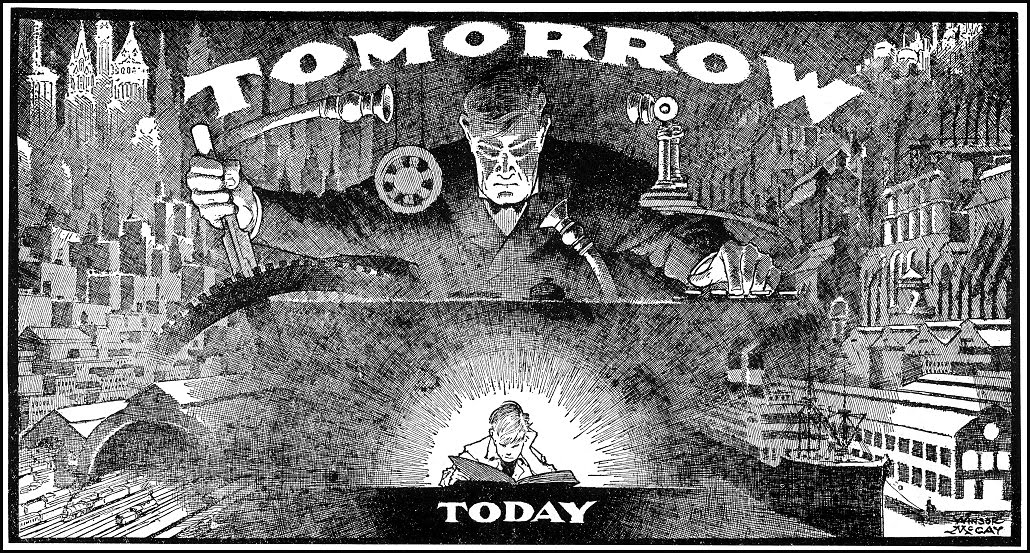
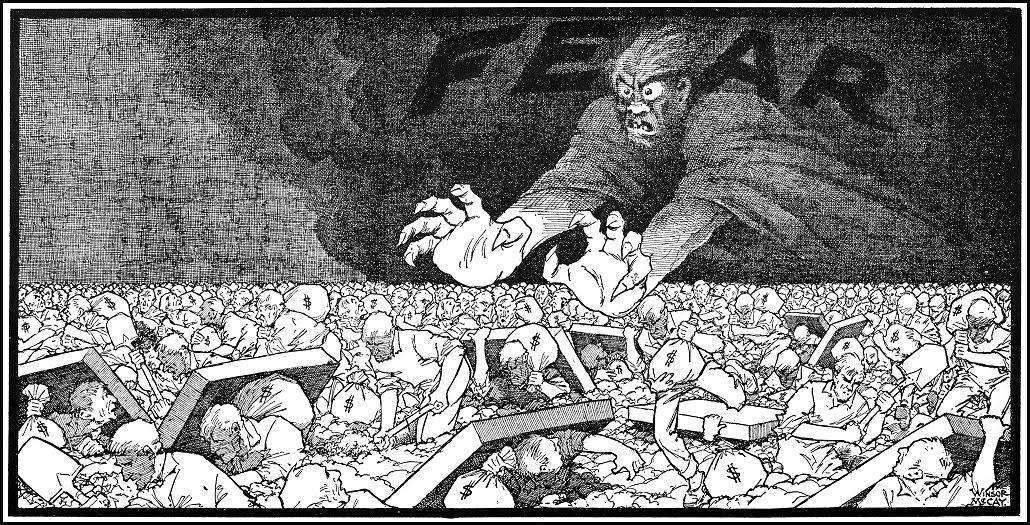
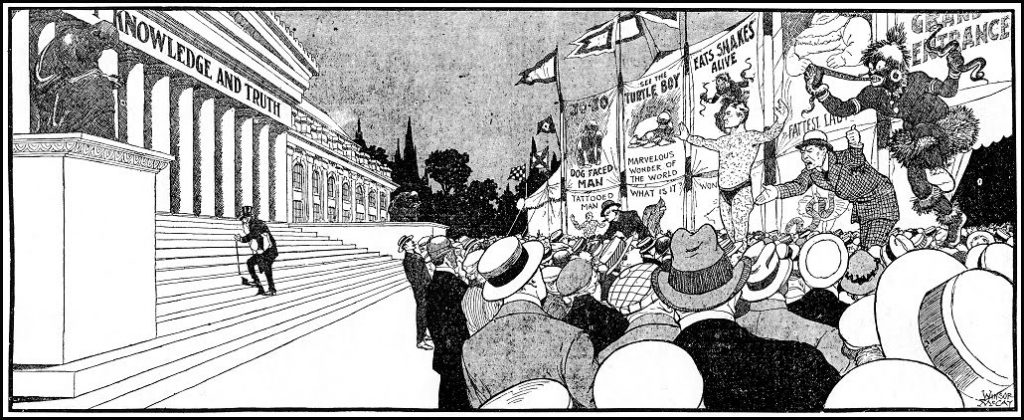
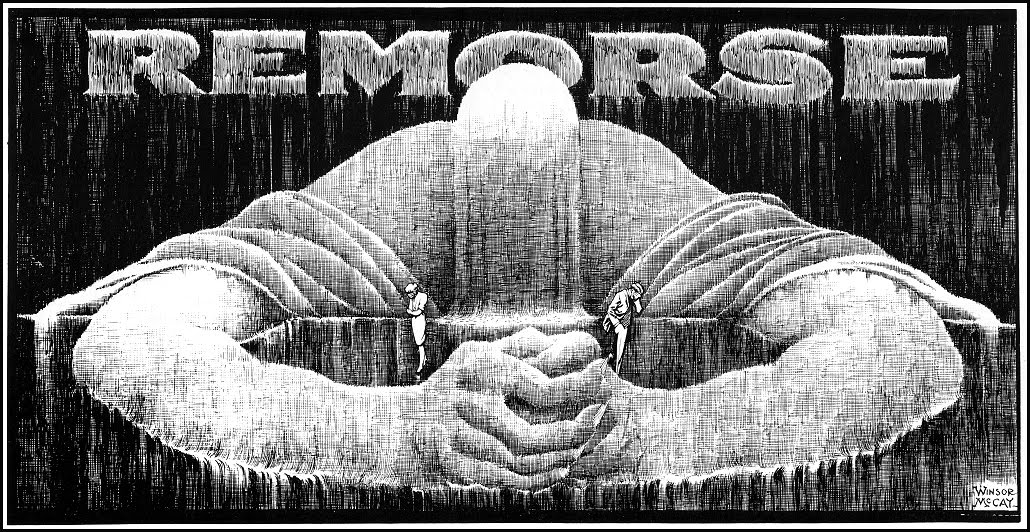
Daydreams & Nightmares collects the rarest work from Little Nemo In Slumberland creator Winsor McCay's historic career. A fantasist of the first rank, McCay was a key pioneer in the histories of both comics and animation. He had a fascination with dreams that extended beyond his newspaper strip Little Nemo in Slumberland , and it was a fascination as compelling as that of Freud, Jung and Adler's, as proven in the pages of Daydreams & Nightmares . McCay's dream-inspired strips, illustrations and cartoons feature rarebit-induced nightmares, playful "what-ifs," moralistic panoramas, pictorial allegories and other fantastic visions. The highlights of the book are McCay's Dream of the Rarebit Fiend strips created for the New York Evening Telegram in 1905, as well as early efforts like A Pilgrim's Progress, Poor Jake, Day Dreams, Rabid Reveries, Little Sammy Sneeze ("He never knew when it was coming!") and more. The artwork in this book includes outstanding examples from several categories of McCay's illustrations from his first paper, the Cincinnati Enquirer ; anti-war and anti-materialist cartoons; playful strips for Life magazine; early dream sequences; futuristic illustrations for the New York Herald ; and allegorical and editorial cartoons for the Hearst newspapers. The book spans the years 1898-1934, the bulk of McCay's career. McCay's world was the world of playfulness and whimsy that most leave behind in youth and encounter again only in dreams; Daydreams & Nightmares is a tour through that world.
Was an American cartoonist and animator, best known for the comic strip Little Nemo (begun 1905) and the animated cartoon Gertie the Dinosaur (1914). For legal reasons, he worked under the pen name Silas on the comic strip Dream of the Rarebit Fiend. A prolific artist, McCay's pioneering early animated films far outshone the work of his contemporaries, and set a standard followed by Walt Disney and others in later decades. His comic strip work has influenced generations of artists, including creators such as William Joyce, André LeBlanc, Moebius, Maurice Sendak, Chris Ware and Bill Watterson.
Incoherent, didactic, and yet astounding. So no insult to call McCay the Dril of political cartoons. (Apparently he was the creator of the single panel as we know it? What a terrible legacy!)
Many of these would be great capital-a Art if he only hadn't plastered "TRUTH" or "DRUG HABIT" or "SLAVERY" all over the clear symbols he was using for those things. But this absolute sincerity is part of the power, for all that leaden hearts like mine cringe at it. Hallucinatory moral clarity.
It's incoherent because he has a lot of standard booster capitalist views (like envy [of the rich] as the worst of all vices and Captain of Industry glory) and a lot of standard Christian socialist views (like wealth costing you your soul, like advertising and entertainment as evil rather than silly). There are a couple of slightly unnerving evangelical rapture panels. You could explain this by him just playing up to his current clients' ideology, cynically. But I hope he contained all of this nonsense.
But ignore all that: he gets it. He gets what human history was like, and what the filthy and nasty urban industrial accumulation is for. All writing is an entry in the Great Conversation, and all actual work (not rent-seeking) is part of the great project. One of his running motifs is the farmer bent cropping as an inset. Most of my contemporaries don't get it like McCay gets it, even though it's fucking obvious, as it was not in 1910.
He's also surprisingly metal. Again, his moral and political feelings are so strong that they produce a presentiment of metal's extremes. Actually I think this extremity, this early, is the most impressive part. For all that it had to be cloaked in pieties and Hearst editorialising.
I've been reading comics all year and McCay is one of only a couple of artists who make me stop in my tracks, who force their whole mind onto the page.
Fantastiquísimas visiones de Winsor McCay de 1898-1934. Libro apaisado en formato gigante de 180 páginas. Incluye prólogo de Gary Groth, prefacio de Richard Marschall, y ocho capítulos a cargo del autor: From Sketchbook to Animation, On Being a Cartoonist, Chapter One: Early Magazine Work, Chapter Two: Newspaper Fantasy Illustrations, Chapter Three: Midsummer Daydreams and Other Comic Strips, Chapter Four: Dream of the Rarebit Fiend, Chapter Five: Sunday Excursions y Chapter Six: Sermons on Paper.
Between his beautiful illustrations, groundbreaking work that presages modern comics, Ste.-Exupery's Little Prince, global warming, and even today's advertisement-laden society, this collection of McKay's "other" work is simply jawdropping. Though slightly inconsistent, as any collection of comic strips is wont to be, it contains absolute gems, the brilliance of which has not faded with time.
If you are intelligent, and read the funny pages, find this book.
Daydreams and Nightmares features many of Winsor McCay's contributions to comics beyond that of his most well known work, and chapters in this edition include his early magazine work, newspaper illustrations, and other comic strips like Dreams of the Rarebit Fiend, Little Sammy Sneeze and more. Having read a lot of McCay's collected Dreams of the Rarebit Fiend, the novelty here for me was largely in the splendid newspaper fantasy illustrations which feature phantasmagorical scenes of baffling scale. It's these early illustrations that really ground McCay's interest in capturing the nonsensical essence that is dreams in a visual showcase, and the final pieces are truly incredible to behold.
The chapter on "Midsummer Daydreams" feature loose strips like "Midsummer Daydreams", "It Was Only a Dream", "Dreams of a Lobster Fiend" and "Rabid Reveries", all of which maintain some of the similar visual language found in McCay's more famous strips like Dreams of a Rarebit Fiend and Little Nemo in Slumberland. They're all just as esoteric and bizarre, but visually captivating all the same. Contained here is also a chapter on Dreams of a Rarebit Fiend, but it's mostly a collection of select strips and by no means comprehensive.
A highlight here was the Little Sammy Sneeze strips which maintains a similar formulaic approach to the daily strips of Little Nemo. Here, we witness Little Sammy sneezing which cause a raucous and shifts reality around him, similar to how Little Nemo's sleeping transports him into fantastic dreamlike settings. Making for an interesting analogue to McCay's better known strip, it was interesting to see just how captivated by the subject matter of surrealistic dreamscapes McCay actually was throughout his career.
There's plenty of supplemental material here to fawn over as well, but Daydreams and Nightmares is truly an excellent way to further scratch below the surface of one of this medium's greatest contributors.
Collecting a ton of non-Nemo work of McCay's, this book probably isn't worth it if you really want engaging and entertaining comic strips. (it took me a while to read just due to the repetition of "daydream" strips - surreal, stream-of-conscious strips that always end with the protagonist waking up - and Sammy Sneeze strips - little boy sneezes to cause chaos in his surroundings.)
Nonetheless, the book also features some of McCay's AMAZING magazine and newspaper illustrations, which has got to be seen. Amazing detail, depth, versatility and dynamics. Just astonishing work.
Plus, the strips, though occasionally repetitive, were just as beautifully drawn. I can see why he enjoyed the daydream strips, just for the opportunity to let his imagination run wild.
This is a look back at an artist active during 1898-1934, who served as both cartoonist, fantasist and editorialist (todays political cartoons). Finely rendered stuff. I didn't find the cartoons all that funny, but but the fantasies and political comments were all still quite interesting & biting respectively. An interesting look back through the artists eyes at a bygone age.
every morning Winsor McCay woke up. brushed his teeth. put on a starched white shirt and uncomfortable shoes. walked down stairs and had a light breakfast. then went into his study and created the most beautiful surrealist and technically perfect art.
he was a living refutation of the idea that an artist needs to live some sort of rebellious bohemian lifestyle.
some company is coming out with a more thorough collection of his newspaper/editorial works. but this serves as an excellent sample for those who don't want to commit several hundred dollars.
This compendious selection of McKay's work other than Little Nemo in Slumberland shows his range as well as his characteristic obsessions. Gorgeous art, thought the stuff intended to be seen in colour suffers in black and white (and some is not very well reproduced). More contextual material and commentary would have been useful, too, especially for some of the political cartoons.
Love the formatting of this book, specially the large single panel pieces. Gives a great feel for the wonderful detail of so many of the drawings. Favorite pieces are the apocalyptic visions... His flying machines are very cool as well.
Absolutely a must for anyone who likes Winsor McCay. This collects some of his political cartoons and drawings and other things. Many drawings take up a whole page rather than being comic panel format and they are fantastic to look at!