What do you think?
Rate this book


212 pages, Paperback
First published January 1, 1980

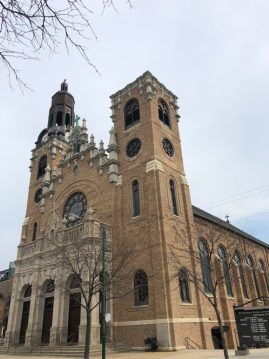
It was only your own death that shows how life should be lived, as she listened to music from the car radio, the electric guitar reaching for the upper registers, a song about an angel. With the radio playing, everything seems all right. That's how I'd like to die--listening to music high, driving around at night, as her house went by again & again.The city is gritty and the distance between individual ethnic neighborhoods at times formidable, separated by language, culture & their own lack of sensitivity to what lies next to their respective area boundaries, sometimes in flux, with each one thrusting for the golden ring seemingly just beyond, or just idly groveling in time & space.
Noon patinaed the downtown skyscrapers. Smokestacks fumed among copper green church steeples & an enldess assortment of water towers. Overhead, an airliner droned and he wondered if anyone could see him--a boy on a bridge with a white sack blowing like a pennant.Most of Dybek's tales are exceedingly evocative, painting coming-of-age images of youthful souls caught in a blue-collar, Midwestern reality, tempered by a dreamworld, laced with a dose of the macabre. I very much look forward to reading Stuart Dybek's later stories, including The Coast of Chicago.
His life spread out before him like the cityscape, suspended in time, rather than the dark blur of the highways. This was a landscape he was the center of, completely alone, though surrounded by a city. The dreams were over. Between them was a distance greater than between foreign countries.
The summer we were fifteen, Dan discovered an old suitcase of his father’s liqueur miniatures. The suitcase had been on the back porch for years and it was like coming on a hidden treasure chest. They looked like jewels, exquisite shapes of glass glowing ruby, Amber, creme-de-menthe emerald.
We’d sneak back there on June evenings with the light out in the kitchen and Dan’s parents in the front of the apartment watching TV. I had a penlight and we’d study the labels before sampling. It brought the world into our lives as no geography book ever could. From necks narrower than a straw drops of exotic places burned on our tongues: Cognac, Chartreuse, Curaçao.
In high school the priests had cautioned us against the danger of books.
“The wrong ones will warp your mind more than it already is, Marzek”.
I tried to find out what the wrong ones were so that I could read them. I had already developed my basic principle of Catholic education-The Double Reverse: (1) suspect what they teach you, (2) study what they condemn .