A rather old book about vampires. Useful if you are interested in their original folklore. It's kind of difficult to find in print; I had to get this one from the UK.
A survey of the history of the vampire, both as a mythological legendary creature and as a literary figure. The first part of the book deals with the various human psychological developments in ages past that led to various beliefs about blood which the author feels contributed to the rising of superstitions about such beings. These include cannibalism and ancestor worship. There is then a survey of the different countries or areas of the world and the vampire like creature there and the protections believed to work against them. This also touches on werewolf, witch and ghoul beliefs where those overlap.
Later sections dealt with the vampire as a literary character and its use in productions brought to the stage or screen. Because this is an old book, it doesn't cover, for example, Buffy the Vampire Slayer, because the Hammer films starring Christopher Lee were the most influential at the time this was written. Despite that, I found these sections more interesting than the earlier ones which were more of a dry catalogue interspersed with extracts from old travellers tales or Victorian and Edwardian studies of the subject. For this reason therefore I am awarding this only an OK 2 star rating.
Disappointing! I really had high hopes for this book but as I made my way through it I kept getting the odd feeling that I'd read this all before. Then it struck me. I had.
Caveat Emptor. Significant portions of this book are directly lifted out of Montague Summers' books "The Vampire: His Kith and Kin" and its follow-up "The Vampire in Europe". In Anthony Masters' brief introduction he thanks the late Summers whose works were a "constant source of help and stimulation". Clearly, they were much, much more.
So much of the "The Natural History of the Vampire" is Summers' own work that he should be credited as a co-author. In fact, if one were to excise Summers' work Masters' book would be much thinner.
I'm not certain one can level a charge of plagiarism against Anthony Masters because he does give credit to Montague Summers but I also find it difficult to recommend a book whose author is, at best, intellectually lazy. And this is too bad because when Masters took the risk to write something original it was actually quite good.
As an odd side note the author of "The Element Encyclopedia of Vampires", Theresa Cheung, is guilty of plagiarizing "The Natural History of the Vampire". The publisher of Cheung's book, HarperCollins, refused to pull it.
I'm not entirely sure I should have been reading this when I was aged 10, but of course that was probably why I liked it so much at the time. I haven't read it in years, so my rating is based largely on nostalgia. I'm not sure if my well-thumbed copy would stand up to being read again, or if it would turn to dust and ashes like a certain Count exposed to the sunshine.
From memory, it contains a sort history of vampires from around the world, descriptions of some blood-thirsty religious rites, and a supposedly true account of vampire-hunters operating in London's Highgate cemetery. This latter account was certainly in my mind when I visited the cemetery some years ago, adding to the already thick Gothic romantic atmosphere.
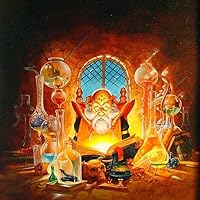
Look at that cover! Of course I had to pick this one up when I came across it. Inside you'll read about the human vampire, cannibalism, sacrifice, premature burial, body snatching, lycanthropy, vampire bats, traits and practice with cases and investigations all over the world, a cool photo and illustrations section, the pagan vampire with roots in witchcraft and demonry, the vampire in Christianity, in literature, the vampire as an entertainer in theatres and cinema, the vampire today... the author sums up pretty much of everything about the topic. Okay, I new many facts, aspects and background before but he did a good job here. Really recommended for every vampire fan!
Fascinating from the start. Masters studies the vampire in varying legends from around the world, comparing likenesses and rationalisations. It covers all aspects from human blood sacrifices to the dead rising from their graves. The vampire in history is a very different creature from the one we are used to from Hollywood and television. It has changed even more so since the publication of this book. If you're looking to read more about the soulful vampires of Buffy or Twilight, this book isn't for you. If you are genuinely interested in the dark truth behiind the legend then this is excellent.
es un libro que explora y documenta el mito segun los lugares y la historia oral. realmente disfrutable y sumamente util como fuente de consulta y referencia-