“There seems to be something hanging over us, something that makes it hard to be happy.”
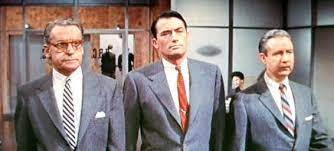
A suit without a face. He could be anyone, a cog in the machine, one of the colourless multitudes who descend every weekday at Central Station in New York and move, zombie-like and indistinguishable from one another, to their high-rise offices where they will perform obscure and pointless jobs, until the clock reminds them to pick up their briefcases and move back, zombie-like and indistinguishable, to the commuter trains that will take them to their identical houses and their identical families in some half-developed suburban community.
Tom Rath has returned from World War II carrying a heavy baggage. On paper, he has everything he could wish for in life: a pretty and loving wife, three healthy children and a decent job. Yet he is unhappy, borderline manic depressive, prone to fits of anger and sleepless nights filled with anxiety about the future.
I am a good man, he thought, and I have never done anything of which I am truly ashamed. Curiously, he seemed to be mimicking himself. “I am a good man,” he seemed to be saying in a high, effeminate, prissy voice, “and I have never done anything of which I am truly ashamed.” A gust of ghostly and derisive laughter seemed to ring out in reply.
Tom’s condition didn’t even have a name in 1955, when the novel was published, but Sloan Wilson does such a masterful job here with his portrait of the individual caught by the corporate rat race that the man from the title becomes a byword for discontent in both cultural and psychological circles, a snapshot of the 1950s for generations of readers.
I looked up PTSD online, and came back with : Symptoms may include disturbing thoughts, feelings, or dreams related to the events, mental or physical distress to trauma-related cues, attempts to avoid trauma-related cues, alterations in the way a person thinks and feels, and an increase in the fight-or-flight response
In this context, Tom Rath comes to us a veritable poster boy of trauma induced depression, checking all the boxes in the diagnostic cues above. Feelings of alienation, sadness, anger, anxiety dominate his everyday thoughts while the joys of family and material success appear to move farther and farther away. Time and time again, Tom returns to the past, in particular to memories of Maria, the girl he seduced and abandoned in Rome during the war.
There were really four completely unrelated worlds in which he lived, Tom reflected as he drove the old Ford back to Westport. There was the crazy, ghost-ridden world of his grandmother and his dead parents. There was the isolated, best-not-remembered world in which he had been a paratrooper. There was the matter-of-fact, opaque-glass-brick-partitioned world of places like the United Broadcast Company and the Schanenhauser Foundation. And there was the entirely separate world populated by Betsy and Janey and Barbara and Pete, the only one of the four worlds worth a damn. There must be some way in which the four worlds were related, he thought, but it was easier to think of them as entirely divorced from one another.
In an effort to meet the social aspirations of his wife Betsy and the needs to pay for his children’s education, Tom gives up his safe job as a public relations agent at a charitable foundation and applies for a much more demanding position at a big corporation.
The biggest parties of all were moving-out parties, given by those who finally were able to buy a bigger house. Of course there were a few men in the area who had given up hope of rising in the world, and a few who had moved from worse surroundings and considered Greentree Avenue a desirable end of the road, but they and their families suffered a kind of social ostracism. On Greentree Avenue, contenment was an object of contempt.
Betsy, who knows nothing of the horrible experiences Tom had to go through in his war years, is completely invested in the American Dream of happiness through material prosperity, the quintessential image of the 1950s in America. But she too feels the pressure and the disillusionment of conforming to the social norms of her class.
What’s the matter? the psychiatrist would say, and I would reply, I don’t know – nothing seems to be much fun any more. All of a sudden the music stopped, and it didn’t start again. Is that strange, or does it happen to everyone about the time when youth starts to go?
The trouble hadn’t been only that he didn’t believe in the dream any more, it was that he didn’t even find it interesting or sad in its improbability. Like an old man, he had been preoccupied with the past, not the future. He had changed, and she had not.
That had been the trouble with him and Betsy: what with his brooding about the past and worrying about the future, there never had been any present at all.
Based only on the subject matter, this novel would be too depressing to make for an easy read, but Sloan Wilson is such an elegant and insightful writer that I often found myself re-reading a particular passage or dialogue in order to enjoy the way it is constructed and to ponder on the subtlety of the argument.
Of course, as others noted, there are autobiographical elements here. In an afterword written for a 1980s reissue of the novel, Sloan mentions both his war service and his job as a public relations man at the University of Buffalo. Later in the novel, there is also a spirited debate for public school funding. Sloan Wilson was a keen advocate for integrating, funding and improving public schools and Tom and Betsy’s interventions in a town hall meeting should feel very familiar in 2025, when the whole education system is under attack.
The most important take from that afterword is the claim that critics and readers might have misunderstood the point of the novel on its first publication:
Underneath the bland exterior which the business world demanded of him, Tom Rath was of course a very angry young man. When I named him “Rath” I thought I might be criticized for making this too obvious in a rather corny way, but Tom’s manners in the book were so good that very few readers picked that up. Men in gray flannel suits hide their emotions all too well, but younger readers are seeing through the disguise.
I was tempted myself to draw some parallels with the literary scene in London in the 1950s, where young writers like Osborne and Amis and Sillitoe were making quite a splash with their ‘kitchen-sink’ dramas, but I feel the comparison would be forced and misleading. Sloan Wilson is indeed angry at society and at the corruption of the American Dream, but his focus is on the upper middle classes and his style is closer to the classics of XIX century, like Sinclair Lewis or Theodore Dreiser.
Wilson is also a romantic, maybe not so obvious here as in A Summer Place , but quite transparent in Tom’s recollections of his doomed love affair in Rome and in the uplifting conclusion of Tom Rath’s story, something I consider a cop out and a let down after the strong case study of PTSD built so patiently over the previous pages.
>>><<<>>><<<
How smoothly one becomes, not a cheat, exactly, not really a liar, just a man who’ll say anything for pay.
Tom Rath’s experiences in his new job at the United Broadcast Company resonate as strongly to my modern eyes as his depression and his school funding crusade.
Tom is assigned to work directly under Ralph Hopkins, a captain of industry and ‘job-creator’ who is running his fiefdom like a medieval tyrant, spreading terror in the ranks. A high achiever and a workaholic, Hopkins expects everyone to jump when he says so, to be available at all hours of day and night, to follow instructions to the letter but also to demonstrate initiative and creativity. He is quick to praise but even quicker to punish insubordination or poor results.
Wilson’s portrait of the top man in a corporation is subtle and ambiguous. Tom feels admiration for the work ethics of his boss and for the results Hopkins gets, thinking he deserves to rule. The author also spends some portion of his novel fleshing out Hopkins’ personality with some insights into his childhood and current family issues with a bored wife and a rebellious teenage daughter:
“This world was built by men like me!”
But Tom also feels the pressure and the insecurity of knowing that his future is in the hands of one person, a person who can change over night and who could put Tom out on the street at a moment’s notice.
Playing with a guy like that is like petting a tiger – any time he wants to turn on you, he can. I don’t want to be in a position like that.
The crux of the novel comes when Tom must tell his boss what he thinks about a speech he has been working on for months. Should he tell Hopkins the truth that it is garbage and risk his anger and his job, or should he become another ‘yes-man’ like his overseer Bill Ogden?
This conundrum is another good argument for the relevance of the story today, when so many corporate goons become self-appointed and tyrannical leaders of society.
“It’s not an insane world. At least, our part of it doesn’t have to be.”
“Of course not.”
“We don’t have to work and worry all the time. It’s been our own fault that we have. What’s been the matter with us?”
The easy solution is to put oneself out of the rat race, to search for some sort of work-life balance that doesn’t depend entirely on material purchases and fake social points. As I said, I like the conclusion, but it feels out of tune with the bleakness of the rest of the story.
Most of all, I appreciate the way Sloan Wilson writes, understated yet so self-assured and so sharp, so beautiful and heartbreaking in some places:
There’s something wrong, he thought. There must be something drastically wrong when a man starts wishing time away. Time was given us like jewels to spend, and it’s the ultimate sacrilege to wish it away.
“Don’t wish time away.”
I know I saw the movie on TV when I was a little child, but I don’t remember much of it except that it was much too sad and too boring for my tastes, which went the Errol Flynn and Sandokan way at the times. I have become a fan of Gregory Peck later in life, so I will try to find a copy and re-watch it while the novel is still fresh in my mind.
I really don’t know what I was looking for when I got back from the war, but it seemed as though all I could see was a lot of bright young men in gray flannel suits rushing around New York in a frantic parade to nowhere. They seemed to me to be pursuing neither ideals nor happiness – they were pursuing a routine. For a long while I thought I was on the side lines watching the parade, and it was quite a shock to glance down and see that I too was wearing a gray flannel suit.