

What do you think?
Web #4
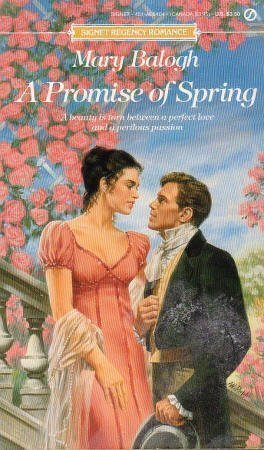
A Promise of Spring
Grace Howard had told her husband that a youthful folly in love had compromised her virtue. But the handsome lord who had betrayed her was not dead as she had professed, and when he returned to seduce her again, she feared her white lie would soon become a scarlet sin. Original Regency romance.
221 pages, Mass Market Paperback
First published February 6, 1990
About the author
Mary Balogh
194 books6,495 followersMary Jenkins was born in 1944 in Swansea, Wales, UK. After graduating from university, moved to Saskatchewan, Canada, to teach high school English, on a two-year teaching contract in 1967. She married her Canadian husband, Robert Balogh, and had three children, Jacqueline, Christopher and Sian. When she's not writing, she enjoys reading, music and knitting. She also enjoys watching tennis and curling.
Mary Balogh started writing in the evenings as a hobby. Her first book, a Regency love story, was published in 1985 as A Masked Deception under her married name. In 1988, she retired from teaching after 20 years to pursue her dream to write full-time. She has written more than seventy novels and almost thirty novellas since then, including the New York Times bestselling 'Slightly' sextet and 'Simply' quartet. She has won numerous awards, including Bestselling Historical of the Year from the Borders Group, and her novel Simply Magic was a finalist in the Quill Awards. She has won seven Waldenbooks Awards and two B. Dalton Awards for her bestselling novels, as well as a Romantic Times Lifetime Achievement Award.
Mary Balogh started writing in the evenings as a hobby. Her first book, a Regency love story, was published in 1985 as A Masked Deception under her married name. In 1988, she retired from teaching after 20 years to pursue her dream to write full-time. She has written more than seventy novels and almost thirty novellas since then, including the New York Times bestselling 'Slightly' sextet and 'Simply' quartet. She has won numerous awards, including Bestselling Historical of the Year from the Borders Group, and her novel Simply Magic was a finalist in the Quill Awards. She has won seven Waldenbooks Awards and two B. Dalton Awards for her bestselling novels, as well as a Romantic Times Lifetime Achievement Award.
Ratings & Reviews
Friends & Following
Create a free account to discover what your friends think of this book!
Community Reviews
Displaying 1 - 30 of 137 reviews

May 2, 2016
Several of Mary Balogh's old Regency romance novels have been reissued in pairs, two novels under one cover. A Promise of Spring was included in one volume with The Temporary Wife, which had been recommended to me, and which I loved. This one, not so much.
It has a couple of interesting twists for a romance novel: Grace Howard is 35 years old, single, and living with her single brother Paul, a rector, who has just died. She's estranged from the rest of her family because, way back in her reckless youth, she got pregnant and had a son out of wedlock when her boyfriend (a neighbor and friend of the family!) abandoned her and married someone else. Her son died when he was only 4 years old, triggering the fight that led Grace and Paul to leave their family.
Sir Peregrine Lampwick, who is 10 years younger than Grace, was her brother's best friend. Perry is truly a good guy: handsome, kindhearted, intelligent, caring ... I'm not sure he has any faults? He's kind of a beta personality, not into conflict. Anyway, Perry has always liked Grace in a platonic kind of way and feels sorry for her, as she'll have nowhere to go now, and for these not-particularly-compelling reasons decides to propose marriage to her. Even Grace's story of her youthful troubles doesn't faze Perry.
So far so good, but after the marriage is when trouble rears its head. Grace told Perry that Gareth, the father of her deceased child, had died as well, but it turns out that's not true. When Perry and Grace visit her family about a year after their marriage to mend fences, Gareth is now the neighboring viscount. When he sees Grace again for the first time in 15 years, he wants her badly (probably because she's now married and contented). It doesn't really matter to him that she's married -- in fact, that seems to make it more of a challenge for him. So Gareth starts pressuring Grace to leave Perry (or not; an affair would be fine with him too) and take up with him. He's that kind of alpha guy.
Grace doesn't want to have anything to do with Gareth's plans, but she's kind of like a deer in the headlights, not sure how to deal with Gareth. Plus she feels guilty about everything, and somehow that makes her think maybe she doesn't deserve Perry and it's her fate to be with Gareth. And when Perry finally figures out what's going on, he thinks he needs to sit back and let Grace make her own decision.
All. The. Drama. People who could solve most of their problems if only they'd be completely honest with each other. It drove me batty. Plus there were a lot of secondary characters (several of them from prior books in this series) that I never developed any interest in. I skimmed most of the second half.
Not recommended.
Content advisory: a mildly explicit sex scene.
It has a couple of interesting twists for a romance novel: Grace Howard is 35 years old, single, and living with her single brother Paul, a rector, who has just died. She's estranged from the rest of her family because, way back in her reckless youth, she got pregnant and had a son out of wedlock when her boyfriend (a neighbor and friend of the family!) abandoned her and married someone else. Her son died when he was only 4 years old, triggering the fight that led Grace and Paul to leave their family.
Sir Peregrine Lampwick, who is 10 years younger than Grace, was her brother's best friend. Perry is truly a good guy: handsome, kindhearted, intelligent, caring ... I'm not sure he has any faults? He's kind of a beta personality, not into conflict. Anyway, Perry has always liked Grace in a platonic kind of way and feels sorry for her, as she'll have nowhere to go now, and for these not-particularly-compelling reasons decides to propose marriage to her. Even Grace's story of her youthful troubles doesn't faze Perry.
So far so good, but after the marriage is when trouble rears its head. Grace told Perry that Gareth, the father of her deceased child, had died as well, but it turns out that's not true. When Perry and Grace visit her family about a year after their marriage to mend fences, Gareth is now the neighboring viscount. When he sees Grace again for the first time in 15 years, he wants her badly (probably because she's now married and contented). It doesn't really matter to him that she's married -- in fact, that seems to make it more of a challenge for him. So Gareth starts pressuring Grace to leave Perry (or not; an affair would be fine with him too) and take up with him. He's that kind of alpha guy.
Grace doesn't want to have anything to do with Gareth's plans, but she's kind of like a deer in the headlights, not sure how to deal with Gareth. Plus she feels guilty about everything, and somehow that makes her think maybe she doesn't deserve Perry and it's her fate to be with Gareth. And when Perry finally figures out what's going on, he thinks he needs to sit back and let Grace make her own decision.
All. The. Drama. People who could solve most of their problems if only they'd be completely honest with each other. It drove me batty. Plus there were a lot of secondary characters (several of them from prior books in this series) that I never developed any interest in. I skimmed most of the second half.
Not recommended.
Content advisory: a mildly explicit sex scene.

November 17, 2016
The story was too melodramatic and the heroine a liar and coward. What she hid from her husband was despicable and hammered in the final nail in this DNF coffin.

March 15, 2016
This had such strong potential, but it unraveled as the story progressed.
I couldn't relate to Grace's victimized approach to life and there were times that Perry should have made a stronger stand on issues for the sake of decency and commonsense. I was also disappointed that the whole "Gareth" plot just disintegrated into nothingness when it had been such a major factor throughout the book.
I'm mixed about this one, but I will give it average.
I couldn't relate to Grace's victimized approach to life and there were times that Perry should have made a stronger stand on issues for the sake of decency and commonsense. I was also disappointed that the whole "Gareth" plot just disintegrated into nothingness when it had been such a major factor throughout the book.
I'm mixed about this one, but I will give it average.

June 2, 2016
Slow and sweet romance. No bodice ripping, no BDSM.
Grace is left alone when her brother dies saving a young child so Perry, her brother's best friend, offers for her. Surprising issue is she is ten years older. Despite being a MOC, it is a surprisingly passionate one.
Perry is a natural born flirt and completely at ease with women without being an obnoxious womanizer. He sounds like the eternal younger brother. Grace is VERY buttoned up and distant owing to a past tragedy scandal. She had a baby out of wedlock who died at four.
The story heats up when in an effort to mend bridges, Grace and Perry visit her family. While there, the evil, skeevy Gareth rears his arrogant jackass self. He is the dark side of the alpha hero: arrogant, manipulative, entitles and selfish. He plays the our-passion-is-too-strong-to deny card but Grace does not want to play.
A foray into London society and back to the old estate, evil Gareth follows the couple.
There is a lot of back and forth with the H and h of does he/she love me. It gets a little tedious.
All in all a thumbs up with the caveat that this is a nice gentle romance, the old grey mare kind of romance. Perfect for a rainy day.
Sex/love scenes are discreet, but not quite fade to black.
Grace is left alone when her brother dies saving a young child so Perry, her brother's best friend, offers for her. Surprising issue is she is ten years older. Despite being a MOC, it is a surprisingly passionate one.
Perry is a natural born flirt and completely at ease with women without being an obnoxious womanizer. He sounds like the eternal younger brother. Grace is VERY buttoned up and distant owing to a past tragedy scandal. She had a baby out of wedlock who died at four.
The story heats up when in an effort to mend bridges, Grace and Perry visit her family. While there, the evil, skeevy Gareth rears his arrogant jackass self. He is the dark side of the alpha hero: arrogant, manipulative, entitles and selfish. He plays the our-passion-is-too-strong-to deny card but Grace does not want to play.
A foray into London society and back to the old estate, evil Gareth follows the couple.
There is a lot of back and forth with the H and h of does he/she love me. It gets a little tedious.
All in all a thumbs up with the caveat that this is a nice gentle romance, the old grey mare kind of romance. Perfect for a rainy day.
Sex/love scenes are discreet, but not quite fade to black.

Read
July 30, 2018DNF, so will not be rating it. Perry is a bit to mild-mannered and nice for me. LOL. I may get back to it but I doubt it.


June 2, 2021
Loved this! If you are familiar with Mary Balogh, this is another iteration of:
-> Platonic love of a good man is better than passionate love from a f**kboi rake.
-> Give the lady a minute! Let her have her say.
A Promise of Spring reminds me of Lord Carew's Bride but instead of a slightly awkward hero with a limp, we have Perry, a popular twenty-something lord who is beloved by all the women in the town because he's the hero who likes to be nice to women by harmlessly flirting with them. One of my fav heroes <3
It reminds me of Lord Carew's Bride because the heroine has to make a choice between her good marriage and a man that returns from her past. Grace marries Perry when her brother dies and she is left without any security, as she is estranged from her living family due to a scandalous past. Perry often went to visit her brother, a cleric or a pastor -it's been a while since I read this! - so he is acquainted with Grace.
Perry and Grace face the conflict of overcoming f**kbois in the past, and in communicating how they feel about each other. What I particularly love about Balogh's description of Grace and the OM is that they are considered an attractive couple together. There's this nuance to how Balogh writes rakes who are unable to reform. She's really got their number, and got how confused they can turn whoever they've got their sights on.
Perry, like Lord Carew, does not force his wife's hand. Perry will let Grace make up her mind - whether she wants to be with the OM or with him.
In terms of repenting rakes, The Notorious Rake by Balogh is one where the rake is good and does succeed in getting the girl.
-> Platonic love of a good man is better than passionate love from a f**kboi rake.
-> Give the lady a minute! Let her have her say.
A Promise of Spring reminds me of Lord Carew's Bride but instead of a slightly awkward hero with a limp, we have Perry, a popular twenty-something lord who is beloved by all the women in the town because he's the hero who likes to be nice to women by harmlessly flirting with them. One of my fav heroes <3
It reminds me of Lord Carew's Bride because the heroine has to make a choice between her good marriage and a man that returns from her past. Grace marries Perry when her brother dies and she is left without any security, as she is estranged from her living family due to a scandalous past. Perry often went to visit her brother, a cleric or a pastor -it's been a while since I read this! - so he is acquainted with Grace.
Perry and Grace face the conflict of overcoming f**kbois in the past, and in communicating how they feel about each other. What I particularly love about Balogh's description of Grace and the OM is that they are considered an attractive couple together. There's this nuance to how Balogh writes rakes who are unable to reform. She's really got their number, and got how confused they can turn whoever they've got their sights on.
Perry, like Lord Carew, does not force his wife's hand. Perry will let Grace make up her mind - whether she wants to be with the OM or with him.
In terms of repenting rakes, The Notorious Rake by Balogh is one where the rake is good and does succeed in getting the girl.

August 13, 2012
1.5/5; 2 stars; C-
I have liked or loved pretty much everything I've read by this author (except for the Devil's Web series). (edit: I didn't realized until I reviewed it on GR that this book is considered #4 in the Devil's Web series).
There is nothing wrong with the writing, it comes down to the characters. I thought the premise of the story was great (younger man offers marriage to the older, destitute sister of a recently deceased friend). Perry, the hero, was the most level headed, kind hearted, smart, and steady male you could hope to find. Even the character of Grace had a lot to love. However, I got thoroughly fed up with angst and hand wringing and negative inner dialogue, especially on the part of Grace. There was too much repetition of the same doubts and fears and way too many opportunities to be honest about feelings that were passed by. Can you really spend YEARS wondering if someone loves you when you know that you love them but have never mentioned it because you're a complete cowardly weinie?? This is one of the tropes I hate.
I have liked or loved pretty much everything I've read by this author (except for the Devil's Web series). (edit: I didn't realized until I reviewed it on GR that this book is considered #4 in the Devil's Web series).
There is nothing wrong with the writing, it comes down to the characters. I thought the premise of the story was great (younger man offers marriage to the older, destitute sister of a recently deceased friend). Perry, the hero, was the most level headed, kind hearted, smart, and steady male you could hope to find. Even the character of Grace had a lot to love. However, I got thoroughly fed up with angst and hand wringing and negative inner dialogue, especially on the part of Grace. There was too much repetition of the same doubts and fears and way too many opportunities to be honest about feelings that were passed by. Can you really spend YEARS wondering if someone loves you when you know that you love them but have never mentioned it because you're a complete cowardly weinie?? This is one of the tropes I hate.

August 7, 2010
I love the role-reversal in this romance: the villain is the passionate, possessive, uber-masculine dude, and the hero is the sweet nice guy who wants the heroine to make her own decisions and so would inevitably get slotted into the "let's just be friends" slot in a different book. Way to see the nice guy finish first for a change! But it's hilarious that the publishers chose a scene between the heroine and villain as the inside blurb, as the only way to get the standard kind of romance interaction.

March 14, 2012
This is not the 4th book in the Web series; it is more like 1.5, for its time span is before, during, and after the first Web book, The Gilded Web. I admire Balogh for the breadth of male romantic leads she depicts, from uber-alphas like Jocelyn in More Than a Mistress and Wulfric in Slightly Dangerous to charismatic charmers like Dominic in Web of Love and Flavian in Only Enchanting, to tormented Byronesque figures like James in The Devil's Web and Geraint in Truly. But I especially appreciate her beta leads, men who are not caught up in proving their masculine bona fides, men who like women and treat them with respect and admiration. Sir Peregrine Lampman is definitely in this final category.
Perry's long been friendly with the local vicar, barely noticing the older sister who kept house for the clergyman. But when the vicar dies in an accident, leaving his sister Grace destitute, Perry offers to marry her, even though she is ten years his senior. And despite everyone's belief that the marriage is strange and unlikely to prosper, Perry finds he more than enjoys the quiet life he and Grace create together, reading, gardening, and sharing the companionship of a bed. It is Grace who is more wary, for she's had a horrible past experience of love, an experience that lead to a break with her aristocratic family. In trying to mend that break, at Perry's gentle urging, Grace confronts once again her old lover, and fears that her past obsessive feelings for him will damage her relationship with Perry, a relationship she, too, has come to cherish. Rather than upbraid Grace for lying to him (she led him to assume her old lover was dead), or insist that she repress her past, Perry allows Grace the emotional space to come to terms with her wounds in her own way, and in her own time. Even while his rival for Grace's love continually upbraids him for his lack of masculinity, for his cowardice and lack of force... So lovely to see the beta male given the lead role, with the the aggressive love-obsessed male shown to be selfish and cruel.
Perry's long been friendly with the local vicar, barely noticing the older sister who kept house for the clergyman. But when the vicar dies in an accident, leaving his sister Grace destitute, Perry offers to marry her, even though she is ten years his senior. And despite everyone's belief that the marriage is strange and unlikely to prosper, Perry finds he more than enjoys the quiet life he and Grace create together, reading, gardening, and sharing the companionship of a bed. It is Grace who is more wary, for she's had a horrible past experience of love, an experience that lead to a break with her aristocratic family. In trying to mend that break, at Perry's gentle urging, Grace confronts once again her old lover, and fears that her past obsessive feelings for him will damage her relationship with Perry, a relationship she, too, has come to cherish. Rather than upbraid Grace for lying to him (she led him to assume her old lover was dead), or insist that she repress her past, Perry allows Grace the emotional space to come to terms with her wounds in her own way, and in her own time. Even while his rival for Grace's love continually upbraids him for his lack of masculinity, for his cowardice and lack of force... So lovely to see the beta male given the lead role, with the the aggressive love-obsessed male shown to be selfish and cruel.

January 31, 2010
Could not believe in the main plot conflict: that the heroine would be almost irresistibly attracted, 15 years after the fact, to a louse who abandoned her when she became pregnant with his child, even though she is now married to a wonderful man who accepts her completely (and is ten years younger than she is)!

March 31, 2011
Totally don't understand why she'd feel drawn back to Gareth even though he was a such a bastard to her.
Also... why did Balogh have to repeat everything so many times? The dead kid, the age difference, etc, etc... it was driving me insane. Oh and another thing: sometimes "yes" is not an answer.
Also... why did Balogh have to repeat everything so many times? The dead kid, the age difference, etc, etc... it was driving me insane. Oh and another thing: sometimes "yes" is not an answer.

December 28, 2022
This book is the last book to the Web series, a prequel. I happen to have read it last. I still enjoyed it a lot.
The story is kind of a slow burn, with very likeable characters all around, except the OM. I admire Mary Balogh's tight comment of language. She made me cry, and I'm not a cryer. She also made me smile a lot with from the dry humor the book is filled with. The book is very rich in narration, description and inner dialogue. I usually tend to shy away from wordy book but I had just finished reading Dating a Silver Fox when I picked this one up and... Let's just say I had been primed to appreciate strong narration around tight, plot moving dialogues.
This book has almost no villain, except for a self absorbed Other Man who seems to have stepped from some other book in which he may have been the hero, but decided he wanted to see more of the world, take on new challenges and try to seduce other heroines with his charm and his dizzying kisses. I found this little experience very interesting, as it allows us to see what separates the usual romantic hero (tall, confident and commanding) from any other jerk out there: honor. This OM had everything to succeed, but he lacked honor to make a well rounded protagonist.
The plot is nothing extraordinary, as the strenght of this book really is in the writing. Yet I was never bored, even towards the end when the conflicts are pretty much resolved and the author just wants to tell us more about protagonists from other books in the series. It was all around a nice, heartwarming story.
I recommend this to anyone who's not looking for excitement/adventure, as the author will sometimes grace us with an entire chapter that serves nothing other than let us know the protagonists are fine and the roses have blossomed. And the chapter will always be so well written!
The story is kind of a slow burn, with very likeable characters all around, except the OM. I admire Mary Balogh's tight comment of language. She made me cry, and I'm not a cryer. She also made me smile a lot with from the dry humor the book is filled with. The book is very rich in narration, description and inner dialogue. I usually tend to shy away from wordy book but I had just finished reading Dating a Silver Fox when I picked this one up and... Let's just say I had been primed to appreciate strong narration around tight, plot moving dialogues.
This book has almost no villain, except for a self absorbed Other Man who seems to have stepped from some other book in which he may have been the hero, but decided he wanted to see more of the world, take on new challenges and try to seduce other heroines with his charm and his dizzying kisses. I found this little experience very interesting, as it allows us to see what separates the usual romantic hero (tall, confident and commanding) from any other jerk out there: honor. This OM had everything to succeed, but he lacked honor to make a well rounded protagonist.
The plot is nothing extraordinary, as the strenght of this book really is in the writing. Yet I was never bored, even towards the end when the conflicts are pretty much resolved and the author just wants to tell us more about protagonists from other books in the series. It was all around a nice, heartwarming story.
I recommend this to anyone who's not looking for excitement/adventure, as the author will sometimes grace us with an entire chapter that serves nothing other than let us know the protagonists are fine and the roses have blossomed. And the chapter will always be so well written!

October 29, 2017

I ended up really liking this one. It was a bit of a downer though. It read a bit like a Thomas Hardy novel. Not an epic love story by any means, but a uplifting story of second chances. I realize that I'm contradicting myself there, but Grace's character was definitely a tragic one. She spent most of the story trying to overcome her own weaknesses; moving on from a series of tragic events that she believed were of her own making. She didn't believe she deserved happiness.
I really loved Perry's character, although he was much too mild mannered. Would have liked to see a little more gumption on his part. I

March 15, 2019
This book had my full attention until the 50% mark...then it became repetitive and the characters frustratingly indecisive to the point of cowardice....I can't stand these kind of people in real life and I have no patience for them as characters in a book....I skimmed the second half just to get to the ending which also dragged on and on. Time to take another break from Balogh....seems I can only handle her writing in small doses...and since both Lisa Kleypas and Elizabeth Hoyt has produced nothing but mediocrity in the last few books I am desperate to have at least one of my favorite authors to come back to for more of my favorite historical romances.
March 3, 2010
Annoying, weak characters who create their own problems.

March 16, 2017
Can't explain it, but this is one of my favorite Mary Baloghs.

December 4, 2023
Tears and anxiety. oh, and I adore Grace and Peregrine.

July 20, 2023
Unique, memorable, reverse age gap romance that digs deep and gets you straight in the feels. Essential HR reading.

January 22, 2013
This story is a romance about a marriage and not a courtship between the H/h. I was surprised and adored that their HEA came about more than 2 years into their marriage and not at the point of when they said their “I Do’s.” There was even a point, if my memory serves, when Perry mentions that marriage was one of the hardest things he entered into. Another unlikely element of this story is the fact that the H is ten years younger than the h, quite backwards from MANY of the historical romances out there. These two unexpected aspects actually made the story more attractive and satisfying for me.
It’s hard to put into words my reaction to this book because something about it – the characters, maybe – felt very flat, but not in a bad way. Their relationship, their day-to-day activities, and their dialogues were so mild and mundane. It didn’t really have much of the witty banter, or exciting plots and events we are used to or expect. This couple was also not in the highest echelon of society – they were in the upper class though not quite the high ranking aristocrats we see in other historical romances. I think the fact that Balogh made this story a bit more realistic and not so much a fairy tale – and therefore a little different from the other books I’ve read from her – is what drew me in.
I also felt a little emotionally drained by the time I finished this story, and again, not in a bad way. The parts about Grace losing her son, the death of her brother Paul (the only family she’s had for a long time), and the very real FEAR the H/h felt of losing each other and not knowing (until the very end) that each loved each other was always in the undercurrent of their relationship – all of these tugged at me and made me feel all the more for the H/h. I really could believe that Perry was afraid of losing Grace to Gareth because Gareth was her first love/lover. Also, I understood Grace’s fear that Perry could regret being tied down to someone 10 years his senior and feeling guilty that she robbed him of a young man’s more active and carefree life, of having numerous children, and of forcing him to live more maturely too early in his life. (On a side note, this story made me see so clearly just how unfair life is for women during that time – and maybe still today – due to the fact that the child bearing years puts such a limitation on women. Men can be single and carefree well into their late 30’s or later, while women seem to expire at around 30.)
I loved Perry. He was young yet so mature and honorable and he was always there for Grace – the steady rock she needs. We couldn’t ask for a better hero for Grace. I also loved Grace. Balogh seems to put her heroine through so much at such a young age and Grace is not the exception. The villain in this story was also hard to accept as a pure villain because it seems that he did want to marry Grace and in his own way believed that he loved her and that he and Grace were the ones meant for each other. Together though, their love strengthened over the years and they overcame all the hardships thrown at them that by the end I felt relief and so happy that this couple made it through and reached a point to start their well deserved HEA.
It’s hard to put into words my reaction to this book because something about it – the characters, maybe – felt very flat, but not in a bad way. Their relationship, their day-to-day activities, and their dialogues were so mild and mundane. It didn’t really have much of the witty banter, or exciting plots and events we are used to or expect. This couple was also not in the highest echelon of society – they were in the upper class though not quite the high ranking aristocrats we see in other historical romances. I think the fact that Balogh made this story a bit more realistic and not so much a fairy tale – and therefore a little different from the other books I’ve read from her – is what drew me in.
I also felt a little emotionally drained by the time I finished this story, and again, not in a bad way. The parts about Grace losing her son, the death of her brother Paul (the only family she’s had for a long time), and the very real FEAR the H/h felt of losing each other and not knowing (until the very end) that each loved each other was always in the undercurrent of their relationship – all of these tugged at me and made me feel all the more for the H/h. I really could believe that Perry was afraid of losing Grace to Gareth because Gareth was her first love/lover. Also, I understood Grace’s fear that Perry could regret being tied down to someone 10 years his senior and feeling guilty that she robbed him of a young man’s more active and carefree life, of having numerous children, and of forcing him to live more maturely too early in his life. (On a side note, this story made me see so clearly just how unfair life is for women during that time – and maybe still today – due to the fact that the child bearing years puts such a limitation on women. Men can be single and carefree well into their late 30’s or later, while women seem to expire at around 30.)
I loved Perry. He was young yet so mature and honorable and he was always there for Grace – the steady rock she needs. We couldn’t ask for a better hero for Grace. I also loved Grace. Balogh seems to put her heroine through so much at such a young age and Grace is not the exception. The villain in this story was also hard to accept as a pure villain because it seems that he did want to marry Grace and in his own way believed that he loved her and that he and Grace were the ones meant for each other. Together though, their love strengthened over the years and they overcame all the hardships thrown at them that by the end I felt relief and so happy that this couple made it through and reached a point to start their well deserved HEA.

April 17, 2016
This is a six star book. It goes on my Amazingly Wonderful shelf, Heroes I love and several others. This is a true romance. No insta-love, no true-love-conquers-all without any effort on anyone's part. It's a deceptively low-key kind of book that ended by blowing me away with it's honesty.
The heroine, Grace, has a troubled past that no one knows of and has kept house for her brother the Reverend in a small town for years. She's 35 and content. Then her brother dies, and everyone in the village wonders what will happen to her. Nobody expects her brother's friend Perry to propose or for her to accept, but she does. He's 25 and very popular with the ladies. Before they marry she tells him her secret, but not quite all of it, and that little deception comes back to haunt them.
Since this is a story of how love really works between two honorable adults, we don't get any temper tantrums or jealous rages, nor does a night of sex solve all their problems. Instead, "each believed that love had grown on one side only", so they remain a little unsure of each other. And when the pressure comes Perry refuses to force her hand, but gives her the time and space to work things out for herself, though his heart is breaking at the thought of losing her.
This book is wonderful on so many levels. Those fictional alpha males who run through stories destroying everyone's lives and end up being cast as romantic? Here he is shown for what he really is - selfish and unable to love. And instead of happily-every-after we get a solid, committed relationship. "But it had not come easily and it had not come merely from the wanting. They had both had to work hard and give a great deal..."
Not everyone will love this book like I do. But if you sometimes yearn for stories that get love and marriage right without being depressing, Here It Is. :) Did I say I loved it?
NB- I noticed after I finished that this is the #4 book in a series. I couldn't tell. It's great on its own.
The heroine, Grace, has a troubled past that no one knows of and has kept house for her brother the Reverend in a small town for years. She's 35 and content. Then her brother dies, and everyone in the village wonders what will happen to her. Nobody expects her brother's friend Perry to propose or for her to accept, but she does. He's 25 and very popular with the ladies. Before they marry she tells him her secret, but not quite all of it, and that little deception comes back to haunt them.
Since this is a story of how love really works between two honorable adults, we don't get any temper tantrums or jealous rages, nor does a night of sex solve all their problems. Instead, "each believed that love had grown on one side only", so they remain a little unsure of each other. And when the pressure comes Perry refuses to force her hand, but gives her the time and space to work things out for herself, though his heart is breaking at the thought of losing her.
This book is wonderful on so many levels. Those fictional alpha males who run through stories destroying everyone's lives and end up being cast as romantic? Here he is shown for what he really is - selfish and unable to love. And instead of happily-every-after we get a solid, committed relationship. "But it had not come easily and it had not come merely from the wanting. They had both had to work hard and give a great deal..."
Not everyone will love this book like I do. But if you sometimes yearn for stories that get love and marriage right without being depressing, Here It Is. :) Did I say I loved it?
NB- I noticed after I finished that this is the #4 book in a series. I couldn't tell. It's great on its own.

November 1, 2023
Now listen, I am one to call out a heroine on bad behavior, one of my biggest pet peeves in romance is how women are written to be unreasonable, as if they don’t know their own minds.
But I didn’t think the heroine was dumb at all, I expected her to be one of those TSTL easily manipulated by all reviews saying she sucked. The heroine in this book endured something traumatic and felt insecure in her marriage. Especially with how society treated women with her kind of past, her feelings of unworthiness didn’t come out of nowhere.
Was she slow to communicate something? Sure, but by the complaints I read in reviews, I assumed she kept a dastardly secret the whole book, her communication was pretty good for a romance.
Yeah, both MCs should’ve discussed their feelings better and sooner but I think Balogh made a good case for their reluctance. This was a marriage of convenience that started in chapter 2!
The heroine is 10 years older than the hero, who is a cinnamon roll that is popular with the ladies. I actually think if he had been an overbearing alpha, people would’ve liked this story better, but because he was respectful of her and super honorable, it made people impatient with her.
I say this as someone who loves bodice rippers, I like a cruel hero, but this sweet man was so swoon-worthy.
Lots of OM drama here.
This is a prequel to the gilded web, so there’s page time for characters that are focused on in the rest of the series. It is very high angst. Lots of talk of lovemaking and being in love, that kinda Balogh.
But I didn’t think the heroine was dumb at all, I expected her to be one of those TSTL easily manipulated by all reviews saying she sucked. The heroine in this book endured something traumatic and felt insecure in her marriage. Especially with how society treated women with her kind of past, her feelings of unworthiness didn’t come out of nowhere.
Was she slow to communicate something? Sure, but by the complaints I read in reviews, I assumed she kept a dastardly secret the whole book, her communication was pretty good for a romance.
Yeah, both MCs should’ve discussed their feelings better and sooner but I think Balogh made a good case for their reluctance. This was a marriage of convenience that started in chapter 2!
The heroine is 10 years older than the hero, who is a cinnamon roll that is popular with the ladies. I actually think if he had been an overbearing alpha, people would’ve liked this story better, but because he was respectful of her and super honorable, it made people impatient with her.
I say this as someone who loves bodice rippers, I like a cruel hero, but this sweet man was so swoon-worthy.
Lots of OM drama here.
This is a prequel to the gilded web, so there’s page time for characters that are focused on in the rest of the series. It is very high angst. Lots of talk of lovemaking and being in love, that kinda Balogh.
March 5, 2025
Solid. Interesting thoughts on masculinity from Perry. And give me more heroines older than the hero! But it doesn’t always have to be a big deal lol.

June 15, 2012
Way too much angst and mental hand wringing in this story. The hero is not good enough for the heroine. The heroine is not good enough for the hero. Cute characters and a lovely story, but I just skipped pages of angst. The villian was just too overblown and a caricature of a person.

January 9, 2024
Boy, Balogh sure knows how to draw out the angst. I do think the angst was too drawn out, but I loved Perry and Grace so much. Their friendship and romance was so very sweet, and talk about a cinnamon roll hero. Peregrine, aka Perry, takes the prize.

April 3, 2012
I must admit that I didnt think balogh had any bad books. unforteneatly this one i really did not like. i hate grace, gareth and perry for begging for grace.

January 18, 2013
Oh, I do enjoy stories about "older" (35) women and younger men (25).

January 12, 2015
This was a beautiful book! Sensitive, passionate and utterly moving!!

May 3, 2016
I really enjoyed reading this beautiful story. Love reading everything written by Mary Balogh.
4****
4****

August 6, 2023
A Promise of Spring can best be described as Mary Balogh rewrites how Tess of the d’Urbervilles would’ve ended if Tess’s husband hadn’t been such a tool.
Grace is a quiet, reserved women who works as housekeeper to her younger brother, the rector for a small country parish. When Grace’s brother dies suddenly in the opening pages of the book, her brother’s close friend of the past few years, Perry, offers for Grace’s hand in marriage to save her from poverty and destitution.
Before agreeing to marry, Grace reveals her sordid secret: that she has been living a life of repentance for having a child out of wedlock. That she had a passionate affair in her youth with her childhood best friend. That the two had meant to wed when he went off to the army and never claimed the child as his, and that the child died in an accident which she blamed herself for.
Perry, being the most pure and good cinnamon roll to ever grace this world, marries her without judgment—having assumed that his wife’s former lover died at war—and showers her with love and affection.
But Grace’s former lover is alive, has inherited his father’s viscountcy, and seeing Grace now happily wed is determined to have her again.
The book is filled with angst and drama that unfolds over the first two years of the couple’s marriage. There’s an age difference of 10 years between the couples, which Grace agonizes over constantly and Perry barely seems to notice. While to the modern reader, it may feel like Grace is oversensitive to the age gap between her and her husband, the amount of fuss seems appropriate to the time period. Still, as an unmarried 36 year-old woman, myself, it was a bit difficult to read the numerous references to Grace’s “advanced” age.
Grace is an extremely difficult character to relate to because not only has she lived through the tragedy of societal scorn and losing a child, but she also punishes herself, believing she doesn’t deserve happiness, which puts a strain on her marriage.
The true star of the novel is Perry, who respects Grace’s personhood enough to make her own decisions—readers seeking an alpha male “mine” reaction will be sorely disappointed—and loves her enough to be willing to let her go if that is what would truly make her happy.
Ultimately, the novel ends with a Happily Ever After but it’s a long and torturous two years to get there.
3.5⭐️ (not a fun read, but contains some valuable reflections on what it means to be happy, content, and in love in a marriage)
Grace is a quiet, reserved women who works as housekeeper to her younger brother, the rector for a small country parish. When Grace’s brother dies suddenly in the opening pages of the book, her brother’s close friend of the past few years, Perry, offers for Grace’s hand in marriage to save her from poverty and destitution.
Before agreeing to marry, Grace reveals her sordid secret: that she has been living a life of repentance for having a child out of wedlock. That she had a passionate affair in her youth with her childhood best friend. That the two had meant to wed when he went off to the army and never claimed the child as his, and that the child died in an accident which she blamed herself for.
Perry, being the most pure and good cinnamon roll to ever grace this world, marries her without judgment—having assumed that his wife’s former lover died at war—and showers her with love and affection.
But Grace’s former lover is alive, has inherited his father’s viscountcy, and seeing Grace now happily wed is determined to have her again.
The book is filled with angst and drama that unfolds over the first two years of the couple’s marriage. There’s an age difference of 10 years between the couples, which Grace agonizes over constantly and Perry barely seems to notice. While to the modern reader, it may feel like Grace is oversensitive to the age gap between her and her husband, the amount of fuss seems appropriate to the time period. Still, as an unmarried 36 year-old woman, myself, it was a bit difficult to read the numerous references to Grace’s “advanced” age.
Grace is an extremely difficult character to relate to because not only has she lived through the tragedy of societal scorn and losing a child, but she also punishes herself, believing she doesn’t deserve happiness, which puts a strain on her marriage.
The true star of the novel is Perry, who respects Grace’s personhood enough to make her own decisions—readers seeking an alpha male “mine” reaction will be sorely disappointed—and loves her enough to be willing to let her go if that is what would truly make her happy.
Ultimately, the novel ends with a Happily Ever After but it’s a long and torturous two years to get there.
3.5⭐️ (not a fun read, but contains some valuable reflections on what it means to be happy, content, and in love in a marriage)
This entire review has been hidden because of spoilers.

September 1, 2017
"Get me a Bromide, and Put Some Gin in It!"
- The Women, 1939
Now on to A Promise of Spring by Mary Balogh. Originally written in 1990, A Promise of Spring is connected to her Web trilogy. It has also been re-released with The Temporary Wife as part of a package.
Have I mentioned before that Mary Balogh is the queen of angst? Now when I say that I don't mean the kind of angst where the hero has a scar on his face and he can never luv another. No, Ms. Balogh's angst is based on her characters’ insecurities. So, in a lot of her stories there is a plethora of internal thoughts buzzing through our characters’ heads. The Promise of Spring is filled with these thoughts, so be prepared to be bombarded with some heavy-duty contemplation.
The main contemplation in this story revolves around age difference - 10 years in fact. What's the big deal, you may ask. Well, it's the heroine Grace Howard who is older than the hero Peregrine Lampman. That means that there are alllll kinds of insecurities to think about. By the way Peregrine is one of the nicest beta guys ever - almost toooo nice, but more on that later.
Grace Howard is the sister of Abbotsford village pastor Paul. She's a quiet woman, does her
duty, cleans his house, and keeps to herself. She sits in the corner sewing when Paul's best friend Peregrine comes to visit. Peregrine is Mr. Sunshine, everyone loves him. He's charming, charming, charming - there just isn't anyone who can find a bad thing to say about Peregrine. Then one day Paul is killed while saving a child, and Grace is left all alone and lost. Everyone in the village was trying to figure out what to do about Grace - and, I do mean everyone. But, before any of their plans could be put into action, Peregrine asks her to marry him. You see he's a nice guy and Paul was his best friend, so it's the least he can do. He proposes; at first Grace turns him down, then thinks better of it. But before she accepts she tells him her secret. The reason she is living in Abbotsford is because earlier in her life she gave birth to a child out of wedlock. Her child died and she and Paul broke with their family and left to live out their lives in the small village. She also tells Peregrine that the father of the child died. Here's comes Mr. Nice Guy again - he indicates that this won't be a problem.
They marry and begin a quiet life, in the quiet little village - she tends the garden and sews and he reads in his little corner. The only fly in the ointment is Grace occasionally wonders if Peregrine will continue to want her after a while. They grow together, they become friends and they have a great sex life. Well, we all know that this bucolic life cannot continue. Grace has finally worked up enough nerve to write her family that Paul has died. She doesn't expect any kind of reply, so imagine her surprise and concern when she gets one which invites her and Peregrine for a visit. Well, the little gray cells just start chattering away - not only hers but Peregrine’s as well. She worries how long Peregrine will be interested in her and, he worries how long he can keep her interested in him. She's sooooo old she can't compete with the younger women and he's sooooo much younger he can't compete with the more sophisticated men. After some thinking, they decide to make the step into Grace's past and try to mend some fences. So more thinking and angst.
Are you keeping count? We have the age difference angst, Grace and Perry's, so that two angstssss', now we have the family angst which would be the father, another brother and the sister-in-law (allll of them guilt-ridden). But the best angst is about to happen - guess who isn't dead? Oops, did Grace tell a little white lie? Gareth, the guy who impregnated Grace alllll those years ago is still alive and now he's the Viscount Sandersford. Guess what else, he still wants Grace. Hey that's not all, Grace doesn't tell Perry that Gareth is the guy, but he finds out anyway. So we have alllll kinds of angst – the “age thing”, the “family thing”, the “old lover”, the “why didn't she say anything”, the “why isn't Perry saying anything”, the “should I leave Perry”, “should I go with Gareth”. There was so much angst going on my ears started to ring. Even with Ms. Balogh’s gentle cohesive writing all of that stuff was a little tooooo much.
Perry, super beta man. I mentioned before that Perry was one of the nicest guys ever and I like nice guys in romance books. But Perry needed to be just a little bit more aggressive. Ms. Balogh wrote him as a pretty passive guy; so passive he doesn't do anything when he figures out who Gareth is. Even when Gareth becomes this extra pushy, obsessive guy, Perry remains passive. He lets Grace make up her own mind, afraid all the time that she will choose overbearing Gareth over him. As always with Ms. Balogh, her words are clear and Perry's actions are clear, it's just that I wished that Ms. Balogh had written him saying something - anything to Grace. Perry does eventually confront Gareth, but Gareth doesn't really care. This was just such a small part in the book, but it weakened the story for me.
You may think I didn't like this book, but you’d be wrong. I did like it. It wasn't the most comfortable book to read and there are some things I would have changed if I'd written it - but I didn't. There was a lot of quiet angst that this couple went through to find their HEA. When I finished reading this book I felt drained. I do give it a recommendation, but just remember it may not be your cup of tea and you might need a gallon of wine to help you get through it. This is a great example of Mary Balogh's strong writing.
KaysBlog
Now on to A Promise of Spring by Mary Balogh. Originally written in 1990, A Promise of Spring is connected to her Web trilogy. It has also been re-released with The Temporary Wife as part of a package.
Have I mentioned before that Mary Balogh is the queen of angst? Now when I say that I don't mean the kind of angst where the hero has a scar on his face and he can never luv another. No, Ms. Balogh's angst is based on her characters’ insecurities. So, in a lot of her stories there is a plethora of internal thoughts buzzing through our characters’ heads. The Promise of Spring is filled with these thoughts, so be prepared to be bombarded with some heavy-duty contemplation.
The main contemplation in this story revolves around age difference - 10 years in fact. What's the big deal, you may ask. Well, it's the heroine Grace Howard who is older than the hero Peregrine Lampman. That means that there are alllll kinds of insecurities to think about. By the way Peregrine is one of the nicest beta guys ever - almost toooo nice, but more on that later.
Grace Howard is the sister of Abbotsford village pastor Paul. She's a quiet woman, does her
duty, cleans his house, and keeps to herself. She sits in the corner sewing when Paul's best friend Peregrine comes to visit. Peregrine is Mr. Sunshine, everyone loves him. He's charming, charming, charming - there just isn't anyone who can find a bad thing to say about Peregrine. Then one day Paul is killed while saving a child, and Grace is left all alone and lost. Everyone in the village was trying to figure out what to do about Grace - and, I do mean everyone. But, before any of their plans could be put into action, Peregrine asks her to marry him. You see he's a nice guy and Paul was his best friend, so it's the least he can do. He proposes; at first Grace turns him down, then thinks better of it. But before she accepts she tells him her secret. The reason she is living in Abbotsford is because earlier in her life she gave birth to a child out of wedlock. Her child died and she and Paul broke with their family and left to live out their lives in the small village. She also tells Peregrine that the father of the child died. Here's comes Mr. Nice Guy again - he indicates that this won't be a problem.
They marry and begin a quiet life, in the quiet little village - she tends the garden and sews and he reads in his little corner. The only fly in the ointment is Grace occasionally wonders if Peregrine will continue to want her after a while. They grow together, they become friends and they have a great sex life. Well, we all know that this bucolic life cannot continue. Grace has finally worked up enough nerve to write her family that Paul has died. She doesn't expect any kind of reply, so imagine her surprise and concern when she gets one which invites her and Peregrine for a visit. Well, the little gray cells just start chattering away - not only hers but Peregrine’s as well. She worries how long Peregrine will be interested in her and, he worries how long he can keep her interested in him. She's sooooo old she can't compete with the younger women and he's sooooo much younger he can't compete with the more sophisticated men. After some thinking, they decide to make the step into Grace's past and try to mend some fences. So more thinking and angst.
Are you keeping count? We have the age difference angst, Grace and Perry's, so that two angstssss', now we have the family angst which would be the father, another brother and the sister-in-law (allll of them guilt-ridden). But the best angst is about to happen - guess who isn't dead? Oops, did Grace tell a little white lie? Gareth, the guy who impregnated Grace alllll those years ago is still alive and now he's the Viscount Sandersford. Guess what else, he still wants Grace. Hey that's not all, Grace doesn't tell Perry that Gareth is the guy, but he finds out anyway. So we have alllll kinds of angst – the “age thing”, the “family thing”, the “old lover”, the “why didn't she say anything”, the “why isn't Perry saying anything”, the “should I leave Perry”, “should I go with Gareth”. There was so much angst going on my ears started to ring. Even with Ms. Balogh’s gentle cohesive writing all of that stuff was a little tooooo much.
Perry, super beta man. I mentioned before that Perry was one of the nicest guys ever and I like nice guys in romance books. But Perry needed to be just a little bit more aggressive. Ms. Balogh wrote him as a pretty passive guy; so passive he doesn't do anything when he figures out who Gareth is. Even when Gareth becomes this extra pushy, obsessive guy, Perry remains passive. He lets Grace make up her own mind, afraid all the time that she will choose overbearing Gareth over him. As always with Ms. Balogh, her words are clear and Perry's actions are clear, it's just that I wished that Ms. Balogh had written him saying something - anything to Grace. Perry does eventually confront Gareth, but Gareth doesn't really care. This was just such a small part in the book, but it weakened the story for me.
You may think I didn't like this book, but you’d be wrong. I did like it. It wasn't the most comfortable book to read and there are some things I would have changed if I'd written it - but I didn't. There was a lot of quiet angst that this couple went through to find their HEA. When I finished reading this book I felt drained. I do give it a recommendation, but just remember it may not be your cup of tea and you might need a gallon of wine to help you get through it. This is a great example of Mary Balogh's strong writing.
KaysBlog
Displaying 1 - 30 of 137 reviews