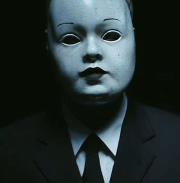
When the relatively unknown Hammer Films released "The Curse of Frankenstein" in 1957 it unexpectedly struck gold. The reactions of a lynch mob of critics brought the audiences flooding into the cinemas and the film ultimately recovered its modest production budget thirty times over and launched an international 'brand' that would become a part of the British way of life. Originally formed in 1934 and previously known for quickie melodramas, police thrillers and monochrome sci-fi features, Hammer was quick to capitalise on the film's success. By 1979, when the studio ceased production, Hammer's trademark combination of gore and decolletage had in dozens of "Frankenstein", "Dracula" and vampire movies that would continue to be a staple of late-night television for years to come. Hammer was a very British success story. A family business, it operated from the improbable setting of a Berkshire country house, employed largely British casts and catered to the long-established British taste for grand guignol that teetered on the edge of self-parody. But its production values were high by the standards of the time and the genre and in addition to establishing the careers of its regular stars like Peter Cushing and Christopher Lee it gave a surprisingly large number of British actors and directors their first break and film-makers including Scorsese, Spielberg and Tarantino have all acknowledges its influence on their work. The author has interviewed many of the surviving actors and other employees most of whom recollect their times at Hammer with amusement and affection.
Sinclair McKay writes regularly for the Daily Telegraph and The Secret Listeners and has written books about James Bond and Hammer horror for Aurum. His next book, about the wartime “Y” Service during World War II, is due to be published by Aurum in 2012. He lives in London. -Source
Contrary to what some reviewers of this book say, I’m going to crawl onto the limb of a creepy old tree and say that the author, Sinclair McKay does actually like Hammer Horror films
I find it hard to imagine that anyone would go to the time and effort to write a book about Hammer films while disliking them, so I think he likes them fine. Besides, he’s clearly invested enough time and energy in them to know what he’s talking about,
There’s a flippancy to the book’s tone though, a need to constant make jokes and point out flaws, rather than necessarily extol the virtues. Being a Hammer fan is like being a classic era DOCTOR WHO fan, one loves the flaws almost as much as one loves the good bits. So, we can acknowledge those parts that now look cheesy and crap (and maybe always did look cheesy and crap), even laugh at them, but we don’t necessarily want the rubbish to be the main focus.
All that is to say I enjoyed the book more that some readers, but I just wished it had a clearer view on what was actually good about the films, as well as – and this is the more important point – that it had greater depth. I can’t imagine anyone reading this book who wasn’t already invested in the world of Hammer Horror. But it’s too superficial and skirts over too much to really please those of us who are already invested in Hammer and, since no one else is going to pick up, it made me wonder quite what the intended audience was. I for one would have liked to read more about MANIAC and PARANOIC, the supernatural thrillers of the early 60s – the entire set of which here gets one paragraph.
The whole is breezily written by a man who clearly knows a great deal about his subject and (despite what some online might say) manages a few good jokes. However, Hammer fans – and I can’t see anyone else ever pick this up – will probably be left wanting more.
Breezy and readable, this is a history of Hammer, the quintessential British horror film studio of the 50s and 60s written by someone who is obviously a fan. As such, some of his preferences and assessments are open to debate by fellow fans, but it also means that the book is written with a fondness for Hammer horror, initially the most extreme, gory thing staid British critics and censors in the 50s had ever seen, but increasingly a never-never land unto themselves.
McKay is somewhat repetitive at times, and the narrative occasionally loops back on itself. Still, he does a good job of contextualising the rise and fall of Hammer against the overall history of the horror genre, the British film industry and Britain's social and economic upheavals during the years of Hammer's activity.
It's a chatty, sometimes gossipy overview of the amazing career of an iconic production house. It could have done with more analytical depth and some of the stated facts are a bit dodgy, but this is a good overall introduction to its subject matter, if a bit more like an extended blog post or newspaper supplement article than I would have liked.
Fascinating account of the Hammer horror films era. I wish there had been more about their noirs. And I wish the author hadn't dissed Clockwork Orange as if its 'ultraviolence' is somehow distasteful compared to Hammer's gentler horror films. Minor quibbles.
When I was in my twenties the Friday night routine of the average twentysomething about town was pub, take-away, then home to watch the late-night horror film on TV. If the film in question was a ‘Hammer Horror’, then it brought the evening to a near perfect conclusion. Even though the studio’s last film had limped out into cinemas nearly twenty years earlier the distinctive aesthetic they created had sunk its (ahem) fangs deep into popular culture. So much so that my friends and I could, and to my middle-aged embarrassment often did, recite whole scenes from The Curse of the Werewolf, Taste the Blood of Dracula and other films. In this book published to coincide with the fiftieth anniversary of the release of the first true Hammer Horror film Sinclair McKay tells the story of how a small studio better known at the time for cranking out B features unleashed a cultural phenomenon. He analyses the way cinematic tropes such as the usual settings in an ersatz Middle Europe or the London of hansom cabs and pea soup fog, actresses in flimsy nightwear being pursued through forests and, of course, liberal amounts of Kensington Gore were assembled into a unique and powerful look. One that, at least at first, skilfully walked the tightrope between high art and even higher camp. This may have been in part a happy accident brought about by the need to churn out a saleable product on a tiny budget. There was always more to it than that though, Hammer also brought together a distinctive company of directors, script writers and actors, who relished the challenges of making turning the lemons of economic necessity into the lemonade of cinematic brilliance. Hammer was helped by having in its stable of talent two legends of the horror genre, Peter Cushing and Christopher Lee. Both of whom delivered many of the performances that earned them their status in its productions. McKay manages to do all this without resorting to the impenetrable jargon of a film studies textbook or succumbing to the temptation to snigger behind his critical hand about things being ‘so bad they’re good’. He recognises that at their height in the late fifties and early sixties the films Hammer made weren’t just good, many of them were minor masterpieces. They sidestepped the pallid conservatism of the British film industry to tap into the desires and neuroses of a country that was finally emerging from years of austerity both looking forward to and feeling more than a little apprehensive about finally getting to have a good time. The films Hammer made in its golden years addressed issues that might at first seem too complex for stories about things going bump in the night. These included the changing role of women and that perennial British concern, class conflict, Dracula and the Baron were very much above the salt, those wielding the pitchforks and flaming torches decidedly below it. McKay writes with the genuine sadness of a true fan about how somewhere between the dawning of the Age of Aquarius and Edward Heath announcing the three-day week Hammer lost their way. The decline was less precipitous than that of the rest of the British film industry during the same period, but once begun it was inexorable. That decline was, in part, due to factors outside the control of the studio, American money which had bankrolled production for years fled the country in the late sixties and early seventies. They were also skewered by the rise and rise of television and the corresponding death of cinema going. Having said that Hammer were luckier than many in that the pictures they made were better suited to getting small on TV, brining in a handy and enduring revenue stream. A lot of the blame must though be laid at the door of the studio itself; Hammer established a formula that worked brilliantly in the late fifties, the trouble was they stuck with it for way too long. When they did make attempts to move with the times the results were risible, Dracula AD 1972 might have had me and my drunk mates falling off the sofa with laughter, cinema audiences of the time were less forgiving. Later attempts to abandon horror in favour of cheap comedies based on popular television shows of the time were even more dire. That they made three films based on the awful On The Busses is an act of, artistic at least, evil that puts anything Frankenstein might have come up with into the shade. McKay reminds us that even if the conventions Hammer created have become familiar enough to become cliches, they still exert a hold on the popular imagination. Increasingly on the critical one too, everyone from Oscar winning directors to earnest film scholars have stepped forward to praise their influence and hitherto unrecognized cultural significance. Most of all he rightly reasserts that the reason these films, most of which were anything but ambitious, endure is because of where they take us. A place that is, for all its spooky trappings, somehow safe and even comforting. Long may they continue to do so.
Hammer Films may have been founded in 1935 but it only produced anything of consequence, other than the first of its Quatermass series in 1955, when Peter Cushing emerged as Baron Frankenstein in 'The Curse of Frankenstein' (1957).
Until its final demise as film maker in 1979 (although its story really ends in 1974 to all intents and purposes), it became known for a peculiarly English Gothic take on themes originally developed by Universal Studios in the 1930s but derived from English literary models.
There was Dracula, Frankenstein and the Mummy as well as a homegrown Quatermass series and Conan Doyle, Rider Haggard and Dennis Wheatley adaptations ('Hound of the Baskervilles', 'She' and 'The Devil Rides Out' respectively). Highly variable in quality, its keynote stars were Peter Cushing and Christopher Lee with Ingrid Pitt as perhaps the best known female star in the vampire series.
Sinclair McKay's book is readable, as it should be from someone who was Deputy Features Editor of a major newspaper, but only in a workmanlike way. There are few complaints to be had about his general judgements, his occasional gossip is amusing and the brief accounts of key films and the useful context in the cinema of the period or (with perhaps less usefulness) the wider culture and politics of the period are well judged. The photographs are also largely new and capture the day-to-day work of the studio well.
His weaknesses are an excess of repetition - 'embonpoint' appears to be a favourite word and he might have done with a thesaurus to hand on a few occasions - and he has a somewhat jumpy attitude to chronology. As with all jobbing journalists, deep analysis is not his strong point. His matey jokiness can also pall on occasions. His attempt to defend the studio's films against the charge of sexism is noble but it is a bit forced - although it is true that strong women characters did start to appear in the mid-period.
But why quibble? - it is an enjoyable and nostalgic read and it does allow one to place the key films where they should be in the story. The picture he paints is an affectionate and practical one - of a business first and foremost based on trying to give the public what they wanted at the lowest possible cost. They lucked out on a talented team of actors, designers, composers, directors and writers who could churn out some low cost art from little more than the producers' tried and tested method of producing the poster first and worrying about the product afterwards - and using the same sets over and over again as if they were a touring repertory company.
Hidden within the text is a bigger story of national economic decline that McKay constantly alludes to but never quite develops as an analysis. This studio was artistically British in every respect but it had a colonial relationship to its backers. The financing was largely American and its product was dictated to a considerable degree by the expectations and requirements of the bigger American market, that is, when it was not being forced into the straitjacket of producing homegrown rubbish like 'On the Buses' (1971-1973) to grab that brief moment between there being a television in every home and the arrival of colour.
The American public wanted Christopher Lee so this very fine actor was stuck into a role, the near-monosyllabic red-eyed Dracula, that was way below his level of talent. Fortunately, for his long term career, the non-Hammer roles of Scaramanga in a Bond movie and, for his long run reputation, in the 'Wicker Man' (as well as a few more interesting roles at Hammer such as the Duc de Richelieu in 'The Devil Rides Out') made sure that he did not suffer the fates of Bela Lugosi and of Boris Karloff as the eternally typecast B-movie horror actor. Alongside the American Vincent Price, Cushing and Lee are respected as actors and as persons in a way that eluded the Universal generation.
The book is thus servicable but is not great - a reasonably sound and entertaining guide to a cultural phenomenon. In 1957, the humourless Tribune complained that 'Curse of Frankenstein' was 'depressing and degrading for anyone who loves the cinema'. By 1973, it was being outgrossed (in horror as well as cash) by 'The Exorcist'. Cinematic horror moved inexorably back to Hollywood where, with occasional brilliant outings from the UK such as the recent '28 Days' series, it has broadly stayed. with only periodic challenges from East Asia.
As so often, and especially in matters of sex, music and violence, the United Kingdom was a research laboratory for Anglo-Saxon cultural experimentation, usually on a shoestring budget, until big American money felt confident about throwing significant dollops of its capital at better produced and resourced productions of its own back home. The renaissance of American horror starts in the 1970s and parallels the collapse of independent British horror which, in turn, had arisen as the run of Universal and later science fiction films from the 1930s to the 1950s tailed off.
Once a product had been tried and tested in its smaller English-speaking market, the original small creative sources could be happily abandoned, the best talent attracted to America and the British left to pick up the pieces. Even today, UK Government policy towards the creative industries appears to pander to this Atlantic model, throwing educational resources into creativity in a race against time to see how much global capital can be attracted to London (in particular) before the talent gets pulled overseas again. Never was the 'creative destruction' of capitalism more clearly represented than in British film-making of the 1970s.
The story of Hammer is thus a minor tragedy of national decline and not one restricted to the 1970s. McKay documents how freebooting US studios became more strictly capitalist enterprises and how creative decisions worked through uncomprehending Committees. American executives could not understand the amused English interest in devil worship and had no context for Quatermass. We were lucky that 'Devil Rides Out' and 'Quatermass and the Pit', two of the finest horror films of the period, slipped through the net.
In the end, the studio lost its way - neither able to push the boundaries as did the smaller end of the native market (in films such as the brilliantly dark and sadistic 'Witchfinder General' or the perversely misunderstood 'The Wicker Man') nor invest in the production values and new thinking that might have created a new range of horror or adventure products (or take the studio into new creative territory altogether). It was the American funders who kept pushing the studio back into churning out variable versions of the old Gothic classics.
A sign of decline was the decision to create a Kung Fu Dracula movie ('The Legend of the Seven Golden Vampires' (1974)) in a vain attempt build up an East Asian funding base out of Hong Kong. The film is not that bad but it is not that good either. After a tired Dennis Wheatley retread and a tolerable attempt to re-make a Hitchcock with American stars, the studio was dead five years later.
As for Hammer, there has been a recent attempt to revive the brand as an internet horror series (with some creative but not much commercial success) to attract traffic into MySpace. It seems not to have worked and MySpace appears to be having little success against the pretensions of the new kids on the block, Facebook and Twitter. But the original films (or rather a few of them) are now classics that stand with the Universal horrors as icons of popular culture, watchable over and over again as comfort food and, for the British, alongside the 'Carry On' series, as proof that, indeed, the past is another country.
There is this odd feeling growing up through the veil of time, that with passing decades gives more spice to the Hammer horror films; while new titles are trying to set up new challenges or goals in rat race, whatever Hammer films standardized, is almost impossible to be kicked out of the genre canon.
Author of this particular book, presented all facts, names and key dates in a very free way. In this position, each theme or topic is separated in a chapter, which makes easier for a possible readers to find whatever concrete they need.
Me myself as a huge fan of these old productions: I enjoyed the lecture and finished it the same day my reading has started. Felt not bored at all, but more amused and refreshed by the writing and language style used for presented in written form informations.
Very enjoyable. Covers everything Hammer but doesnt ever feel the need to go too deep. You get a bit about the major films (but not a replay of what you can see for yourself if you watch it), some social commentary of Britain in the 50s to 70s, some film industry background and a bit of chatty general information.
All good fun and doesn’t outstay its welcome. Pretty much like most Hammer films.
The author clearly has an affection for the studio, though he can’t help but laugh a bit at their efforts. It’s a solid and interesting history of the studio and its decline (written before the studio's resurrection). The author has a tendency to get ahead of himself in the narrative and I was surprised at the absence of Captain Kronos – Vampire Hunter, my favorite and one of the best late-era Hammer flicks.
This was a wee bit all over the place in terms of a chronological appraisal of the hammer films. I was disappointed one of my favourite films, the swashbuckling/western/horror mash up 'Kaptain Kronos Vampire Hunter', only got a few sentences.
Still, I enjoyed it and there's no doubting Sinclair's love and enthusiasm for the films.
A fascinating look at the history, influence and impact of Hammer Films. A must read for anyone interested in film history in general, and British film in particular.