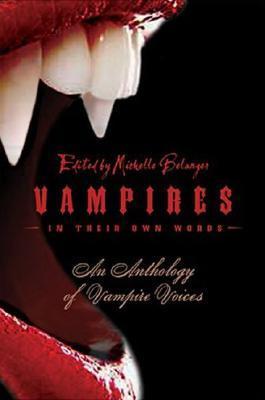
I frequently purchase books from a great new age surplus shop online. The deals are great so I periodically go through the website and find any interesting books and purchase them. I can afford to risk $2!
I have seen Michelle Belanger on various paranormal television shows and somehow knew a little about her -- she identifies as a vampire and owns a large library of occult books, which I envy! I am interested in the occult and always have been. I have seen television programs on "real" vampires that were intriguing. I am also very interested in outsider status. Anything "weird" attracts me because I am a huge contrarian. So, this book should have been perfect, right?
I had a basic understanding of "sanguine", aka, blood vampires, and "psychic" vampires before reading the book. I liked it because it explained the different theories people have about why they are a vampire -- some believe it is a physical/spiritual issue that makes it difficult for them to process energy/burn through energy faster than non-vampires -- others believe it indicates an elevated spiritual standing.
The writers in the book work hard to combat the vampire equivalent to the "fluffy bunny" of the pagan community: angsty goths who use the identity to feed their own egos and abuse others. I found that some of the passages about donors were beautiful and expressed love and intense gratitude towards them. I also liked essays, like "Being a Vampyre Donor" by LadyBlak that portrayed honest situations where she struggled to maintain that love and gratitude.
It's always hard to truly assess due to the secret nature of the majority of vampire societies, but I felt like many different sects and identities were represented here.
I am a part of the pagan community (although I am figuring out what that label means to me at this time,) and was suprised by how many people said pagans had discriminated against them about their vampirism. I certainly don't feel I would -- at least not in the same way these people say they were.
An interesting argument was made in the book -- why is the word "witch" appropriated and accepted by many, and the word "vampire" is not? I found the argument intriguing and a difficult one to answer. Perhaps it is because the "witch" often does not obsess over the trappings of the stereotype, ie, a pointed hat, as many "lifestylers" described in the book do -- perhaps because the one person I met who identified as a vampire was mentally unstable. Perhaps because I do have some of the bias described in the book.
Overall I learned a lot and learned about different societal structures, terms, etc. I also enjoyed the structure and the fact that Belanger included definitions at the end of each essay if necessary which often did not get repetitive even if they were utilized throughout the whole book -- they served as great reminders and included new information each time.
I suppose my only complaint is that the book often got repetitive, but when you bring a group of people togheter to discuss a topic or identity i suppose that is bound to happen.