From the author of the wildly controversial books Liar and Paul's Case comes one of the most anticipated ― and perhaps, in some quarters, feared ― books of the year. This is author Lynn Crosbie at her most honest, most cutting, most hilarious, and most heartbreaking. The stories told here are at once a cache, a repository, of a seven-year period in the author's life; and, too, a gymnasium, a place where she can flex her prodigious wit and her dazzling stash of literary tricks Deft with matters both low- and highbrow (here are stories about 80s big-hair bands and the lasting, theological value of the Rocky series; here, too are stories contemplating critical theory and fine art), Life Is About Losing Everything speaks with manic yet grave authority about risking and losing everything, and then sorting through the remains to discover what is beautiful, what is trash, and what, ultimately, belongs.
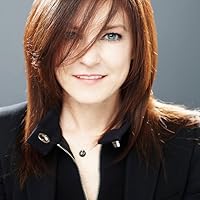
Lynn Crosbie is a Canadian poet and novelist. She teaches at the University of Toronto.
She received her Ph.D in English from the University of Toronto, writing her thesis on the work of the American poet Anne Sexton.
Crosbie has lectured on and written about visual art at the AGO, the Power Plant, and OCAD University (where she taught for six years.) She is an award-winning journalist and regular contributor to Fashion magazine and Hazlitt. She has had columns in the Globe and Mail, the National Post, the Toronto Star,Flare and Eye magazine.
This book is nuts. I mean that in the best way possible. Crosbie, who is best known as a pop culture writer for the Globe and Mail, gives us a a funny and at times heartbreaking look at her real and fantasy life over the better part of a recent decade. Or maybe it's more apt to say for Crosbie the worst part of a recent decade.
This collection of short stories seems disjointed because at first it seems like you are following along with the same person, but then you are unsure of whether the narrator is the same but with different surrounding players, or if you are into Crosbie's fantasy world. If you normally can be found reading heavily plotted books this can be disconcerting and takes some getting used to. But it is so much more real this way, I think. It's like you ran into Lynn at a party and you are both a little tipsy and you ask her what's been going on in her life over the seven years since you saw her last. She gives you more honesty than you are expecting, and one story rolls into another that reminds her of something else and because you're both a bit out of it you aren't really sure where in the world zombie Sylvia Plath comes into the conversation but there it is, and the way she is describing it is riveting.
This all makes it sound as if this is a funny memoir but although there are some very amusing parts there are sad, gruesome, cringeworthy, and even desperate parts interwoven, but all are candid to the point of graphic at points. If I were at this fictional party with Lynn I'm sure at some point I would grab here and ask if there isn't anything she likes about herself?
What she likes, is her dog Francis. I'm not sure if she likes anything else in her life at the time of this book though, not the drugs she does or the people she is involved with. But somehow she is able to see all of this with a sardonic wit that makes you wonder if she is trying to laugh through the pain.
It does feel disjointed, but it is that attitude, the idea that life sucks so let's meet it with dry humour, is the thread that ties her Don Ho fantasies to the death of the being she loves the most together. It's effective and that's what makes it surpass a simple party story, other than her lovely and poetic turn of phrase.
An exchange with a bullying neighbour early on in the book is a pretty good example of how Crosbie approaches the rest of the book.
"The next morning, I found a little azalea outside my door with a note. It said, God never gives us more than we can bear. I turned it over in my hands, wondering at how people so often surprise you. I knocked on her door, and when she answered, I smashed the plant in her face. He just did! I said."
When I read Coupland's endorsement ("I've sometimes wondered if I've lost my ability to feel the world in a certain way, and this book reminded me that I haven't."), I thought it was out of place, overly-optimistic. It is not. Not even a little bit. A beautiful writer writing beautiful, wrenching words. I read this book mostly at night. It was cryptic to me at times and I couldn't understand what Crosbie meant, but then I thought, if someone has recoiled so deep into their self, recounting everything that was and will not be now, maybe only they know what they mean and we're just along for the ride trying to make sense of it all. The book is a hazy, dreamlife thing to get through, but so is depression. There were times when I thought it wouldn't end, and wished it would, and then as I got closer to the end, I wished it wouldn't.
I did not enjoy this as much as I'd hoped to. There were parts that I really liked and parts that made me laugh out loud, but all of these "parts" were no longer than two or three sentences. Crosbie couldn't seem to follow any one train of thought for longer than that, which made the already short sketches in this book feel even more fleeting, even less memorable.
To start: I had glanced at a review and though that this was a book of short stories, not a book of micro fiction. So yes, I was a bit dismayed when I started reading. It feels like a plotless book - though you get a sense of what is happening (somebody dies, somebody is terribly unhappy and seems to be upset about being fat, loses her job - or does she? - and drinks a lot), it's a chaotic jumble. The book is described as 'part fiction, part fantastical memoir,' and the more I read, the more I thought about how I felt sorry for the people who must have been the character's neighbour.
A disappointing, maudlin, self-indulgent narrative that just kept going and going. And going. And going some more.
This was a challenge to read. I enjoyed the small snippets of disjointed narratives but struggled to stay engaged. Crosbie does a great job of capturing the internal monologue each of us possesses and tries to silence in her work. I hope there was a happy ending for her sweet dog!!!
Crosbie, nearly half a century old, writes a coming-of-age book about this and that. She writes a lot about relationships and "dating" (for that read "screwing") and about various people she has met. Ho hum. This book reminds me of a recent contestant on Jeopardy, who, during the first silly "interview" break, talked about a book she has been writing for twenty-six years, a book that she started writing when she was six. She mentioned that it has over a thousand characters "all based on real people", that it is about "family and relationships and stuff." Ho hum. Crosbie's book is like the contestant's description of her own book -formless and directionless. A lot of trees died needlessly to have this printed.
I had a hard time forming my thoughts about Lynn Crosbie’s Life is About Losing Everything That’s not to say I didn’t enjoy the book. I did. Crosbie writes beautifully and while Life is at times pretty bleak, there’s no shortage of humour – or heart. It feels incredibly personal.
There’s no real “story” to it (those looking for a solid narrative will be frustrated), but rather, the book is a series of impressions that Crosbie imparts on the reader in mini chapters. The end result is a book that takes its place somewhere between poetry, fiction and a brutally honest confessional.
One of the most memorable books I’ve read in a long time.
This was such a strange book, and a tricky one to categorize. It's got elements of fiction, creative non-fiction and memoir, written in a lyrical almost-poetic style. The stories are often plotless, but interesting little fragments from the seedier side of life. This is the first book I've read by Lynn Crosbie, who might be the long-lost illegitimate love child of Charles Bukowski and Allen Ginsberg.
Even though I liked this book quite a bit, I think it was a bit too long. It would have been better if she'd saved some of it for the next book.
I was given this book as a gift at Christmas. I've read more than half of it but since I was not enjoying it I have put it aside. The author is a journalist who often writes a column for the Globe & Mail on pop culture. This book is semi fiction and semi autobiographical...I found it impossible to tell which essays fell into which category. Since I am not that interested in 'sex, drugs and rock and roll', I found myself growing impatient with this self absorbed person.
Lynn Crosbie’s Life Is About Losing Everything is a gritty song cycle melding a dizzying array of short story, poetry, microfiction, memoir and more. The story traces a path through depression, addictive behaviours and destructive relationships, seeming to circle back repetitiously but always – sometimes imperceptibly, but always – moving forward.
This is a very difficult book written by a prize winning author who writes a regular column for pop culture in the Globe and Mail. It is a candid chronicle of seven years in her life in which she details sexual abuse, promiscuity, and drug use. She began the book as a way to deal with the loss of two men she was close to: a boyfriend who died suddenly and a high school friend who died many years before. She is also trying to deal with the fact she is sliding toward middle age with all its inherent musings and “shoulda, woulda, couldas” that process inevitably includes.
This book has no real narrative thread. It tumbles from one story to another as a series of short memoir style reflections, some of which are real and some of which are fiction--a kaleidoscope of odds and ends of experience with bits of poetry and prose thrown in.
Crosbie has had a crazy life and this all seemed to be just a chaotic jumble of memories, ideas and feelings. There are some moments of real brilliance in the writing, but for the most part I found this offering chaotic, unapologetic and self indulgent.
I read this one after Dorothy L'Amour, so I wasn't sure what to expect. I should have expected a challenging read and more than a bit of craziness, and that's what's here. I think the author writes far from the conventional lyrical realism that fills bookshelves, and that' a plus. She challenges us with ugliness, immorality, a difficult style, and a really unusual approach to telling a story. (Which means it's by no mean for everyone, and also puzzling. But if you want only digestive biscuits in literary form, you're not going to pick this up, I'm willing to bet.)
Beautifully written in tiny, punctuated moments, unfortunately surrounded by such overwhelming selfishness and self-destruction that I found myself, more often than not, becoming angry at the author or simply not caring about what she was doing to herself or those around her. An interesting exercise, but one I would not recommend. Certainly wouldn't recommend sitting down and reading straight through. Best taken in small doses.
Micro-fiction/poetry/vignettes of fact and fiction of the life of Lynn Crosbie. Disjoineted, poetic and full of pop culture.
I'm not big on experimental writing and that's okay. I did manage to finish this entire book, have loved her past books, and would read her again. I just didn't love this book.
Didn't really like it. There is no beginning, middle ,or end, just a series of short stories that are part fantasy ,part auto biographical,,part poetry. . Lots of failed relationships, pets that replace relationships and drug addled musings. Would make a good pick-up and put down book since it can be read in any order and the individual entries are short.
Did I love this book, did I hate it, am I utterly confused? Yes to all three. While I understand the process, some editing of the middle section could have gone a long way. I was meandering through and felt like I finally surfaced 3/4 of the way through but without really understanding what happened. Maybe that was the point? A big departure from what I normally read but I enjoyed the journey.
Not an easy book to read. Very disjointed & hard to keep track of the characters. Maybe the book is written in this way because the character is feeling disjointed, but I didn't enjoy the style. I would not recommend this book.
It wasn't all bad, but after 160 pages, I'd had enough. Unfortunate, as I am a fan of Crosbie's pop culture column in The Globe. I tried. But glad to see, though, that she made it out of that previous scene alive, and each of us are all the more lucky for that.
I thoroughly enjoyed 'Queen Rat' and 'Liar' but after about a third of this one, I've had enough. A thoughtful, ruthless editor would have made this a much better book.