Ilya Kaminsky and Katherine Towler have gathered conversations with nineteen of America's leading poets, reflecting upon their diverse experiences with spirituality and the craft of writing. Bringing together writers of tremendously various family backgrounds and religious orientations, this book offers frank, thoughtful consideration of themes too often polarized and politicized in our society. Participants include Li-Young Lee, Jane Hirshfield, Carolyn Forche, Gerald Stern, Christian Wiman, Joy Harjo, and Gregory Orr, with twelve others, all wrestling with difficult questions of human existence and the sources of art."
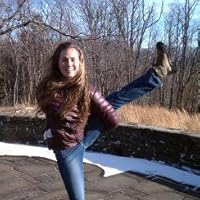
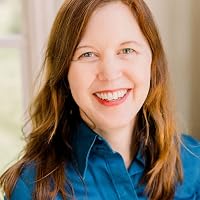
Katherine Towler is author of The Penny Poet of Portsmouth: A Memoir of Place, Solitude, and Friendship and the novels Snow Island, Evening Ferry,and Island Light. This literary trilogy is set on a fictional New England island and takes place between the early 1940s and early 1990s, chronicling the lives of two generations in two island families and the impact of war on the island community. Katherine is also co-editor with Ilya Kaminsky of A God in the House: Poets Talk About Faith, a collection of conversations with poets. All three of her novels were Indiebound selected titles. Snow Island was also chosen as a Barnes and Noble Discover Great New Writers title. Katherine grew up in New York City and attended the University of Michigan, Johns Hopkins, and the Bread Loaf School of English at Middlebury College. She teaches in the MFA Program in Writing at Southern New Hampshire University. She is happy to hear from book groups and to arrange Skype visits.
This volume contains everything that the most cynical reader would expect from contemporary poets: lukewarm Buddhism, watery Christianity, a vague challenging of the definition of spiritual, and self-righteous activism. The only thing that most of the poets seem to think of as absolutely, unwaveringly good is liberal politics. Almost all of the statements made in these interviews - especially the highlighted ones placed at the starts of the chapters - are hilariously pretentious: shower thoughts as deep as acne masquerading as revelations. If any of this appeals to you, I recommend this; if not, don't bother.
To clarify, I don't dislike this because I personally disagree with the poets. That is to be expected when dealing with people of diverse religions. What I dislike is their aggressive lack of a backbone and unwillingness to believe in anything but politics.
This is a collection of essays I'll keep close to me. It was so pleasant to enter into the book, A God in the House: Poets Talk About Faith, as if I was in warmer more familiar territory than I've been used to of late. This is because I was raised in an environment of faith. My mother is deeply spiritual, and I've spent 17-odd years of my schooling in Catholic educational institutions. Even though I am not a practicing Catholic and I have my differences with the church's history, hierarchy, and dogma around women and sexuality, a world in which faith is permitted possibility is always, to me, a better world. In recent years, I've done a mix of yoga and meditation. For guidance, I've alternated between the Tibetan Buddhist teachings of Pema Chodron and the half-cracked but somehow-infallible Course in Miracles. What's thrilling about this collection, edited by Ilya Kaminsky and Katherine Towler, is the range of faith perspectives, from Fanny Howe's acquired Catholicism to Annie Finch's feminist paganism to the Islam that Kazim Ali struggles to reconcile with his sexual orientation. In lieu of much analysis or review, I think I'd like to use this space as a collection of passages I found to be meaningful. From the Editors' Introduction: "In America in the twenty-first century, irony holds sway over much of our public intellectual life, and a dialogue about faith asks us to set aside irony for a direct engagement with beauty, hope, doubt, and fear"(x). Carolyn Forche was educated in Catholic parochial schools the way I was. Here are some observations from her essay, "Infinite Obligation to the Other." She observes that some of the great political poets of the twentieth century--Celan, Akhmatova, and Jabes--were also spiritual poets: "As dangerous as the political is, the spiritual is far more dangerous. These poets don't easily extricate morality, ethics, the sacred, and the political. For them, it's not possible to think of these as isolated categories, but rather as modes of human contemplation and action which are inextricably bound to one another"(12). Further on in the essay, Forche evokes the notion of inspiration this way: "The thing about writing poetry is that the more you're there working, the more you're there writing, the more you realize you are not writing it. The little threads and weavings that come into the poem--one is not consciously awre of these things, because something larger is working in you. This is an experience close to revelation, to the realm of prophetic language"(15). She quotes Levinas on this point: "'Artistic activity makes the artist aware that he is not the author of his works"(16). This makes me think of the "art" displayed near Decatur, Georgia, last week when the clerk in a school was able to talk a distraught gunman into surrendering himself, possibly saving dozens of young lives; when asked by news people how she was able to rise to such heroism, this woman, Antoinette Tuff, repeatedly stated that it could only have been God working though her. In "The Devotion of a Mourner," Gerald Stern writes, "I suspect that the actual writing, the continuous writing, the writing over and over again, the commitment, is a kind of devotion. Maybe it's not the devotion of a priest; it is certainly the devotion of a mourner. [. . .] Prayer is certainly addressed to what is mysterious or invisible or beyond reach and control and--for me--at this point in my life, so is a poem"(24-25). In "The Circular Path," Jane Hirschfield, a long-time practitioner of Zen Buddhism, observes that "we humans turn toward a spiritual practice in pat to restore ourselves from some form of separation or exile. [. . .] this not uncommons sense of being exiled from full presence in the world brought me to both Zen and poetry"(52). Here is a passage from Jericho Brown's "The Possibility of God." Brown, who is a young gay poet raised in the Black Church of the South, speaks vividly to the importance of testifying in that church, or showing "just how free you were individually. You had to be vulnerable to an audience for them to see what you believed"(82). Later in the essay, he writes, "The poem mirrors the life of the believer, and mirros the process of prayer--of having a conversation with the supernatural. For instance, line breaks have everything to do with doubt. That's why poetry is so different from prose, because it's infused with doubt. At the moment of a line break, even if it's for a millisecond, you're thrust into doubt; you're thrust into a place where you're not certain what just happened or what's going to happen. Only faith that the next line will land us on solid ground is what keeps us breathing"(90-91).
I've written about other moments in this book for a talk I gave earlier this month to the Pittsburgh Poetry Society, and which I'm hoping soon to publish. One of the best features of this collection is that each essay is followed by one poem that functions as a CODA. Reading this book not only reminds me that it's okay to cultivate faith even if I must also deepen my understanding that life lacks much in the way of certainty or even meaning that doesn't require an unhealthy degree of attachment; it also reminds me that the life of poetry I've chosen is itself an act of faith. I am so, so glad the book exists.
A God in the House: Poets Talk About Faith edited by Ilya Kaminsky and Katherine Towler is a book, obviously, that does not avoid religion. In this collection, the editors bring together 19 contemporary American poets to talk about spirituality and/or religion and the act of writing.
In one of the essays, Gerald Stern notes that "Poets -- maybe all artists -- get away from their own religious upbringing in order to arrive at a condition of faith." Indeed, his words are echoed in many different ways as a variety of poets explore religion and spirituality in their own lives. For instance, G.C. Waldrep discusses his time with an Amish community while Gregory Orr places his relationship with religion in the context of family tragedy. Other poets include Fanny Howe, Annie Finch, Li-Young Lee, and Dunya Mikhail. My favorite essay is "The Possibility of God" by Jericho Brown, where the poet talks about his struggle with his religious background, his family and his personal life, while still ending up believing: "I love God. I love liberty. I shame one if I lose the other. I think of God now as way more patient than I could ever be. I have to believe that God is better than me and better than all of us. That's the only thing that could make God God."
This is a collection that does not pass judgment, nor do any writers believe that one religion or path of spirituality is "better" than another. The essays are non-academic in nature, and in general, are must reads for anyone interested in how contemporary poets explore spirituality in both personal and writing lives.
When this book came out, I gave it to everyone I give Christmas gifts to. Poets from Carolyn Forche, Kazim Ali, Li-young Li, Joy Harjo, to Christian Wiman are interviewed about their relationship to the sacred. Some participate in easily recognizable traditions--Christianity, Islam, Judaism, Wicca. Others are atheists. Each has something eloquent to say, and the role of the editors at getting to the core of these matters is sublime. Each poet's interview is followed by a poem that somehow illustrates their concerns, questions, or experiences regarding the sacred.
It's a deep, beautiful, and inspiring look into the lives of these writers.
Moving, varied, a kind of devotional of poetry. So many gems in here: Carolyn Forché, Jean Valentine, Li-Young Lee, Alicia Ostriker, G. C. Waldrep, and Christian Wiman stand out. Like a possible family tree of poets-of-faith ancestors
As a longtime atheist, I decided to read this book for two reasons: I had faith in the excellence of Tupelo Press; and I had hope that someday Tupelo Press would publish a companion book entitled "No God or Goddess in the House: Poets Talk About Secular Blessings."
Both my faith and my hope were rewarded, manifold. The content of this book is exhilarating. (So much praise about the content can be found online that I will avoid being redundant here on Goodreads.) And the companion book I longed for can easily be derived -- by any reader like me -- from the present text of "A God in the House." Delving into these 287 pages of personal credos, I was gratified to discover that several of the featured poets share some of my own godless thoughts and feelings about natural human "engagement with beauty, hope, doubt, and fear" (page x).
Recently I heard that at least one hotel establishment is removing the Holy Bible from its suites and replacing it with the wildly popular "Fifty Shades" books. I propose that, from now on, any hotel hosting an AWP conference be required to place "A God in the House" on the pillow. Right alongside a small square of truly divine chocolate.
It was very interesting hearing from poets how divinity works through them and through their work. I read this book for a college class, but I still enjoyed it. Some parts were a little repetitive and dense for my taste, but considering they were written from interviews, it makes sense. I would recommend this book to anyone who likes nonfiction, poetry, and has an interest in different religions and divinities.
What a marvelous book! Not all the chapters were excellent. But many of them were. And the last chapter by Gregory Orr was worth the whole book to me. These reflections, very different reflections, by a wide array of poets helps me think about my own faith and spirituality. It is truly a beautiful little book. I loved it.
"Doctors know a lot about disease and witness a lot of problems, but all they do is give you a small piece of paper with a prescription. Poets do the same. But doctors can heal you; poets only give you X-rays so that you may see your wound." --Dunya Mikhail.
A conversation with an exceptional collection of poets. Poets with strong, authentic, inventive voices sharing their spirituality. Unlike most books about religion these poets aren't really defending or explaining theology.
If you’re a poet or you read poetry, and you have literally any religion/spirituality at all, I implore you to read this. I learned a lot about the creative process as well as new ways of looking at religion, as a practice, when I read this.
An excellent and thought-provoking collection of essays by poets of different faith (and non-faith) commitments, A God in the House traces themes of community, the potency of the material realm, and the immanence of God (and related terms). This last emphasis is nearly universal, with most of the essays expressing explicitly, or at least implying, a discomfort with the notion of a transcendent being. A few do a nice job striking a balance between transcendence and immanence. Some favorites in the group were Gerald Stern (spirituality as justice), G. C. Waldrep (faith in community), and Christian Wiman (faith in the midst of loss). Every author brings their poetry to bear on their spiritual journey. For many, their spiritual journey involves ritual, the outward nature of which parallels their interest in the created world via their poetry. The distinct voices in this book make for a fascinating discussion of the state of faith in the western world, and I have found that while I don’t always agree with their conclusions, the act of listening (through reading) to each of them has been beneficial to how I see the world.
First, as Tupelo Press states of all their work, this book is "a joy to hold as well as read." The paperback cover feels like velvet, demanding its own attention before readers continue.
Anthologies often recycle and fragment existing material, removing its context and distorting the writers' efforts. In contrast, the editors of A God in the House have initiated and captured fresh, self-contained conversations with a variety of willing poets.
Furthermore, the editors bypass small talk, cutting quickly to each artist's recollections, observations, and beliefs. The poets are candid and informal, sharing long-held, personal, and complex thoughts on religion, God, faith, spirituality, and creativity. A God in the House invites underlining passages for emphasis and scribbling marginalia in dialogue with a motley group of engaging individuals.
The range of thinking here about faith and poetry is wonderful. Some essays I will not soon forget. Highly recommended.
Also love the poems included with each essay/interview and within the essays themselves. Here is Christian Wiman's translation of an Osip Mandelstam poem (and possibly his last poem):
And I was alive in the blizzard of the blossoming pear, Myself I stood in the storm of the bird-cherry tree. It was all leaflife and starshower, unerring, self- shattering power, And it was all aimed at me.
What is this dire delight flowering fleeing always earth? What is being? What is truth?
Blossoms rupture and rapture the air, All hover and hammer, Time intensified and time intolerable, sweetness raveling rot. It is now. It is not.
Local (NH) author Katherine Towler and local poet Ilya Kaminsky teamed up to create this interesting book. The duo interviewed poets from around the country concerning their spiritual lives. The poets' beliefs run from traditional religious groups to non-believers. Each chapter covers one poet who discusses his or her life and how each one came to current beliefs. Each chapter ends with a poem by the poet. I enjoyed reading about each of the poets. I came away surprised that my own beliefs are more in line with a religion that is not my own!
This book was recommended to me by a fellow poet who also happens to be a pastor. He said he knew I would love it, and he was right. I know I will keep going back to these essays because of what the writers say about poetry, about faith, and about what one has to do with the other.
We used this book as a text for a poetry workshop. Loved it. So much here about the lives of specific poets like Jane Hirshfield, Li-Young Lee, and Joy Harjo talking about the relationship between their writing, their lives and their spirituality.
Poignant, sensitive and varied in voice, this book of essays and poetry is a wonder for anyone who has spiritual questions and a love of poetry. I feasted on this book.
There are absolutely some five star pieces in here-and some three star ones--this this is a bit of an average. A good read for anybody interested in poetry and faith of any kind.
This is a great collection that includes a wide range of poets and voices across all kinds of belief systems and poetic styles. The voices felt very true, and each interview is followed by a poem.



 Reading this book was like a homecoming. The house has many rooms. The table has many places. Enough for everyone. Only fear keeps us forgetting.