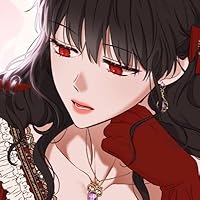
Pub 2011 08 320 and unmatched since childhood. orphaned Miyamoto tone Mi. suddenly became the sole heir of ten billion heritage. However. her the first participate uncle birthday encountered three cases of murder. went During the meeting. encounter the mysterious man played round and round. caught in lust whirlpool can not extricate themselves. even become a series of the Bounty murder incident.
Seishi Yokomizo (横溝 正史) was a novelist in Shōwa period Japan. Yokomizo was born in the city of Kobe, Hyōgo (兵庫県 神戸市). He read detective stories as a boy and in 1921, while employed by the Daiichi Bank, published his first story in the popular magazine "Shin Seinen" (新青年[New Youth]). He graduated from Osaka Pharmaceutical College (currently part of Osaka University) with a degree in pharmacy, and initially intended to take over his family's drug store even though sceptical of the contemporary ahistorical attitude towards drugs. However, drawn by his interest in literature, and the encouragement of Edogawa Rampo (江戸川 乱歩), he went to Tokyo instead, where he was hired by the Hakubunkan publishing company in 1926. After serving as editor in chief of several magazines, he resigned in 1932 to devote himself full-time to writing. Yokomizo was attracted to the literary genre of historical fiction, especially that of the historical detective novel. In July 1934, while resting in the mountains of Nagano to recuperate from tuberculosis, he completed his first novel "Onibi" (『鬼火』), which was published in 1935, although parts were immediately censored by the authorities. Undeterred, Yokomizo followed on his early success with a second novel Ningyo Sashichi torimonocho (1938–1939). However, during World War II, he faced difficulties in getting his works published due to the wartime conditions, and was in severe economic difficulties. The lack of Streptomycin and other antibiotics also meant that his tuberculosis could not be properly treated, and he joked with friends that it was a race to see whether he would die of disease or of starvation. However, soon after the end of World War II, his works received wide recognition and he developed an enormous fan following. He published many works via Kodansha's Weekly Shōnen Magazine in serialized form, concentrating only on popular mystery novels, based on the orthodox western detective story format, starting with "Honjin Satsujin Jiken" (『本陣殺人事件』) and "Chōchō Satsujin Jinken" (『蝶々殺人事件』) (both in 1946). His works became the model for postwar Japanese mystery writing. He was also often called the "Japanese John Dickson Carr" after the writer whom he admired. Yokomizo is most well known for creating the private detective character Kosuke Kindaichi (金田一 耕助). Many of his works have been made into movies. Yokomizo died of colon cancer in 1981. His grave is at the Seishun-en cemetery in Kawasaki, Kanagawa (神奈川県 川崎市).
The opening is a good one: a young woman was on the run with a man whom she referred to as a 'bad person' and they were looking for a mysterious hidden document, with both police and gangsters hot on their heels, why and how did things come down to this?
Overall it could be an enjoyable mystery and adventure novel, it is rare for Yokomizo to use a female character as the narrator but.................you just can't expect too much from this. Plus I do like the setting of four groups of women (and their wicked suitors) fighting over the right to inherit a huge family fortune in a deadly game of wits. The ending and the revealing of the murderer's identity is a bit weak but I can live with it nonetheless.
However! Let's address the elephant in the room! ! I understand it's a story written in the post-war era but I am still so fucking disappointed!
The plot seemed like The Inugami Curse where an heiress had to marry a specific man in order to receive whatever money and heritage they would be given later.
If you are looking for a story with a messed up family tree, this book is for you. However, the story is easy to read. Although the story was developed in to a serial kill, the trick of murders were not properly explained and satisfied me enough as to be called a detective story. Therefore, we barely see Detective Kindaichi Kosuke in this book. *please give him more role*
However, most important reason why I did not even rate this book 4-stars is because it tried to “romanticize raping” and called it fate. As a citizen of 21st century, I felt utterly uncomfortable during reading about it.