Ultimately, this author won me over. But, for much of the book, I was having flashbacks to when I used to babysit and the kid would pull out all of her toys one by one and lay them out on the living room floor. Which is to say, there was a lot of unsubtle showing off.
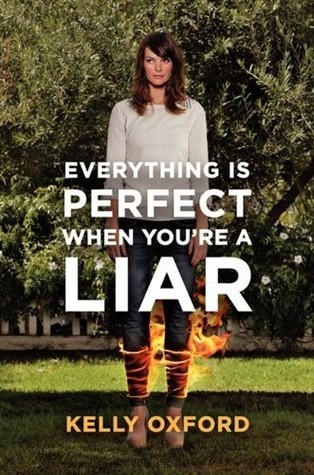
In my opinion, the title suggests a tone that is in no way supported by the content of the book, and I think that is where some of my disappointment is rooted. I guess I was looking forward to something more relatable and less self-congratulatory. Instead of illustrating that no one's life is perfect-which I'm assuming, based on the title, was her intention-the book felt like one really long humble brag.
First, there is the prologue, which is a script of a conversation among Oxford and her three children. The only purpose that I can see for sharing this exchange is to make sure the reader understands that Oxford's kids are really cool and smart, and that that is due to Oxford's cutting-edge parenting. Then, the reader meets a similarly precocious six-year-old Oxford who is attempting to set up a stage production of Star Wars with her peers. This story seems to be included to make sure the reader knows that Oxford, herself, was a really cool and smart child and that she was into Star Wars before you. Then comes the overt and absolutely relentless weed references. I do not at all judge her self-proclaimed (and proclaimed and proclaimed) stoner status, but this kind of bombast, I cannot abide. It was almost enough to make me quit the book. Oxford goes on to describe a bunch of terrible situations that she, largely, chose to be in and a bunch of a bad decisions that she, for the most part, knowingly made. I guess this is the part where her life isn't perfect.
It really isn't until Oxford has a brush with reality (in the chapter when she trains to work in occupational therapy) that she becomes endearing, and then she does in spades. She writes about brain-damaged and elderly patients with what is, by this point, uncharacteristic heart. She speaks about wanting to help these people and knowing that there will never be enough of herself to help them the way she knows she would feel obligated to do if she stayed in the field. Here is the depth the reader has been craving, and, even though the following chapters aren't as deep, Oxford's humanity is not forgotten. When she gets a botched lap dance in Vegas or tells off a cop, it is now clear that good intentions commingle with the bravado and recklessness, so you give her a break. Perhaps she would have done better to flash a little sincerity a little earlier in the book.
Oxford is proof that a smart, pretty girl can get away with a lot. She is inarguably charismatic
and often funny, and she is lucky that she is, specifically, herself because if she were anyone else, I don't think this book would be a thing.



 come to my blog!