Jump to ratings and reviews
Rate this book

Into The Heart Of The Country: A Novel

Rate this book
Longlisted for the 2011 Scotiabank Giller Prize Set in the eighteenth century, in what is now Manitoba, this unflinching and powerful novel takes the reader deep into unexplored territory. Molly Norton, mixed-blood daughter of Governor Moses Norton, is ill-prepared for the ordeal fate has in store. Dressed in English clothes unsuited to the harsh conditions at the Prince of Wales Fort and forbidden to practice the traditional skills of her mother’s people, Molly bears witness to her father’s increasingly tyrannical rule. Governor Norton is suspicious of every man, but particularly resentful of Matonabbee, the esteemed hunter and Dene captain, whom he once considered his brother. But it is the explorer Samuel Hearne who receives the brunt of Norton’s temper when, returning from his expedition, he sets his sights on Molly. In the days that follow, larger events unfold and every man, woman and child at the fort is confronted by forces greater than themselves. Allegiances are both broken and tragically upheld as one of history’s cruel ironies takes shape in the harsh ancestral landscape from which Molly descends.

416 pages, Paperback

First published March 14, 2011

2 people are currently reading
607 people want to read

About the author

Pauline Holdstock

27 books15 followers
Pauline Holdstock is a Canadian citizen who has lived in Canada for over thirty years. She writes novels, short fiction and essays. Her books have been published in the U.K, the U.S., Brazil, Portugal, Australia and Germany, as well as in Canada, where CBC’s 'The Arts Tonight' has featured her work.

Pauline’s short fiction has appeared in numerous literary magazines.

The Hunter And The Wild Girl, Winner of the City of Victoria Butler Book Prize Prize, is her most recent novel.

Her novel, Beyond Measure, was a finalist for the 2004 Giller Prize and the Commonwealth Writers’ Prize, Canada and Caribbean Region. It won the BC Book Prizes Ethel Wilson Award for Fiction in 2005.

A recent novella, The World of Light Where We Live, was the winner of the Malahat Review 2006 Novella Contest.

Pauline Holdstock also writes non-fiction. Her essays and book reviews have appeared in Canada’s national newspapers and have been broadcast on CBC radio. She was the winner of the Prairie Fire Personal Journalism Prize, 2000.

Pauline has taught at the Victoria School of Writing and at the University of Victoria. She has served on the faculty of the Banff Centre Wired Writing Studio, and the Banff Centre’s Writing with Style program.

Ratings & Reviews

What do you think?
Rate this book

Friends & Following

Create a free account to discover what your friends think of this book!

Community Reviews

5 stars
19 (16%)
4 stars
42 (36%)
3 stars
34 (29%)
2 stars
16 (14%)
1 star
3 (2%)
Displaying 1 - 21 of 21 reviews
Profile Image for TBV (on hiatus).
307 reviews70 followers
October 3, 2021
4.5 stars
“Walking out on the still-frozen lakes and marshes, under starry skies that shone down on the sparest of features, he had tested his skill with the instruments and his memory of the tables, taming what other Englishmen saw as a wild expanse of snow where a man could lose himself, his life, perhaps obliterate his very soul, and making of it instead an accurate map of precise locations between which a civilized man could travel with ease. In the absence of any memory of the land, navigation was a fine way to assert mastery over it. Or so he believed, seeing the scientist as so much more subtle and sophisticated than the trader.”
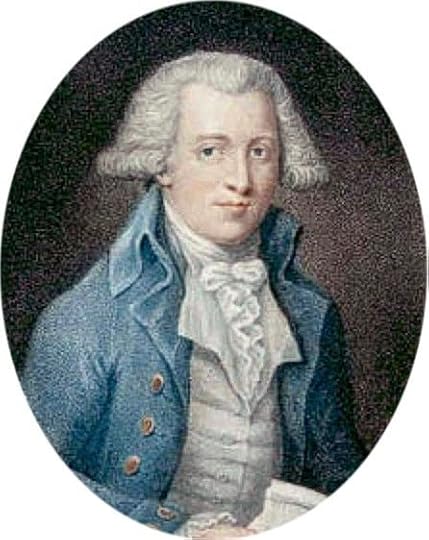

Into the Heart of the Country is a fictional account of the life of explorer and naturalist, Samuel Hearne (1745-1792) who was born in England, and in 1766 joined the Hudson Bay Company in Manitoba. He later became governor of Fort Prince of Wales.

Samuel Hearne
 photo Samuel_Hearne_-_Project_Gutenberg_etext_20110_zpskti8jkdr.jpg

The novel focuses to a large extent on the plight of women and children left behind when their men returned to England, sometimes taking a child with them with or without the mother's consent. One such child of mixed blood was Moses Norton who was snatched from his mother's arms and taken by his father to England where he was promptly put into the care of another family. I shan't go into any more details, but suffice to say that Moses suffers from a palpable sense of isolation, both in England and on his return to Canada. Moses looks forward to meeting with his sibling, thinking that he would impress the younger man, but it is Matonabbee who impresses and makes Moses feel even more insignificant. I love how Ms Holdstock describes Moses's mind being "bifurcated by time". Moses also learns what he is not.

Other children too are separated from their mothers and siblings. Richard Norton is not the only man to leave behind a First Nation wife on his return to England. It is a recurring theme, and a sense of loss permeates these pages. The novel is suffused with tragedy and impending tragedy. The landscape is vast and harsh. The seemingly endless white cold landscape is occasionally brightened by the "green fires" of the aurora dancing across the sky. Bleakness and beauty exist side by side as does horror and harmony. The novel is full of contrasts not only in nature, but also in the nature of the characters of Moses, Matonabbee, Molly and Samuel Hearne.

Molly Norton's story is interwoven through the tale, and is related in the form of flashbacks, dreams and hallucinations.

Samuel Hearne undertakes various explorations into the vast unknown territory. He observes and he writes and draws. He learns a great deal from his friend Matonabbee, and he creates for himself a life that he loves, and he also loves his wife. Everything is near perfect until the day that the sails of three large ships appear on the horizon...

###
Extracts

"Moses ate little for supper that night. Lying on his cot he stared a long time into the autumn dark before he slept, falling through time to become a small child in search of his mother's comfort."

"The world was put to sleep. He went only about half a mile and stopped on a low ridge. His eyes swam, drowning in whiteness. The world was without definition. He could not tell if this hollow or that rise were near or far, if it were a furrow in the snow a few feet ahead or a fold in the land miles away. He was seized with the knowledge of his aloneness on the earth."
[Moses]

" - Well, said Moses. So many years. And so much distance between us.
Matonabbee said nothing but he continued to smile.
⁃ You a captain, Moses went on.
⁃ And you a servant of the Company.
⁃ But been to England and back since last we were together. Many times.
⁃ And I have walked as far all over my own land on my own feet."

"Its topmost peak towered above them tinged with pink like the rarest bloom. Its height crushed the men who looked on it, listening to the intermittent roar and boom it made, like the sea entering a cave. They did not speak. The sculpting winds had rendered the thing fantastic, a gleaming castle of ice with tilted walkways spiralling up to its turrets and pinnacles, with cavernous entrances below and a high turret above. It was not of this world."
[Part of a fabulous description of an iceberg.]
Profile Image for Penny (Literary Hoarders).
1,313 reviews168 followers
May 27, 2011
Heartbreaking. Holdstock has a very subtle way of detailing her contempt for how the English (and later the French) destroyed the Native Indian way of life. Or, it's the uglier side of colonization, or how colonization affected the native women and the children they bore for the English. The story briefly opens with Richard Norton taking a "country wife" and later ripping her son away from her to take him to England to become an English-boy. A cruel joke for the mother, the son (Moses Norton) and Richard who just leaves him there. A half-breed that will never gain the respect of the English and is shunned by his own people because he is never really able to be one of them. Later Moses returns as Governor of the fort and the story weaves back and forth between his daughter Molly and her husband Samuel Hearne. You see how the English destroyed their lifestyle, leaving so many unable to be English and many never to be fully accepted by their own people. I wrote down a few quotes that showed Molly's confusion and inability to be one with her own people. "She was a stranger in her own country." "She and her sister in their English dresses. Forbidden to play outside the walls.' "You are an English woman Molly". "Sending her over to school her in the ways of her mother's people - ways she has always chosen to ignore." Molly never learns how to live off the land, and in the end cannot survive outside the fort, as many cannot when the English head back for home, leaving them behind. Holdstock is subtle but clear in writing how their lives unravel and from their intrusion in to their world, over-hunting for trade and now cannot live or survive the English sicknesses that are brought over. A very good book, just heartbreaking to read.
Profile Image for Ruthie.
653 reviews4 followers
August 5, 2016
An important slice of Canadian/British history, based on historical facts. There is a lot to like about this book, especially if the reader is interested in the history of the Indigenous Canadian people and how the arrival of Europeans affected their way of life. This story takes place well after the arrival of the first Europeans, the Indigenous people are used to trading with the English, have become dependent on guns and developed a taste for rum and brandy. The British men take (seemingly not forcibly) temporary wives, then leave them behind when they return to England. The religious aspect is not a factor here, there are no priests actively trying to convert anyone and the residential schools are not an issue either.

My only concern was feeling a bit removed from the characters, I just didn't feel really engaged all the time. Otherwise an interesting read!
Profile Image for Maia Caron.
Author 4 books53 followers
December 8, 2016
Beautiful, beautiful. If you like Louise Erdrich's books, you will love this one. Ms. Holdstock is a poet. I enjoyed Into the Heart of the Country in the way I did Erdrich's, The Plague of Doves--transported to another time and place through a compelling story, rich imagery, and lyrical sentences.

Just one example of what I was captivated by, and why this book was long-listed for the 2011 Giller Prize:
"I have looked on this in all the long days and I have seen how the people were like seeds adrift across the land and blown by their hunger."

Research is integrated seamlessly into the narrative. Ms. Holdstock is a masterful storyteller who brings alive the early days of the fur trade in the North-West wilderness of the 1700s. Ms. Holdstock tells the story of a native woman who is drawn into a white man's world and also gives us a glimpse of that white man's reality, so that we may understand both the heart of the culture that was destroyed and the lack of heart in the one that destroyed it.

Molly, the native woman in this story thinks, "The breath of the dogs in the winter air? I am less. I am less than the high white smears across the blue roof of the world. All my people starved and broken."

"Still, I am not tragic." First Nations author Lee Maracle wrote this line in a poem for a truth and reconciliation book called Buffalo Shout, Salmon Cry. Ms. Holdstock perfectly captures this truth: although the story of Indigenous people is ultimately tragic in the face of colonialism, the individuals who lived and continue to live that story are not.

Indigenous stories are at the very heart of our identities. Books like The Orenda, The Plague of Doves, and Into The Heart of the Country tell us what First Nations people lost for us to gain the freedom that we enjoy.
Profile Image for Grazyna Nawrocka.
512 reviews4 followers
November 9, 2014
The narrative of this story is slow and insightful. Here two cultures mingled and co-depended on each other, and when one was gone, the other one almost lost the ability to survive. It is a tragic story about human endeavours, dreams and their confrontation with reality. The constant change in nature, economy, and politics, demolishes all of our "blue castles," and then we try to build the new ones. "Panta rei," nothing stays the same.
Profile Image for Koren.
93 reviews2 followers
October 15, 2013
Into the Heart of the Country is based on the life of Molly Norton, one of the daughters of Moses Norton, a half Native governor of the Hudson Bay Company’s Prince of Wales Fort in Manitoba in the 18th century. Holdstock provides a fictionalized account of the lives of the fort’s inhabitants and their relationships with one another, including the nearby Native American populations.

The story opens at the end of Molly’s life, and she recounts her life, her father’s life, and her grandfather’s life at the fort through her dreams as she starves alongside her children and family while journeying through the Manitoba wilderness.

Looking back on Molly Norton’s history, Holdstock goes back to a time when Richard Norton, her grandfather, was governor of the fort. Richard has children by different native women, and he takes his eldest child, Moses, away from his mother to educate him in England. Richard’s English wife will have nothing to do with Moses, and he grows up lonely, longing for his home and his mother, while learning to be an Englishman. Moses continually struggles with his identity, not fully accepted by either the English, or the Natives, a struggle that Molly also deals with (though doesn’t seem to be fully aware of it). This leaves him a bitter and tyrannical governor with a gluttonous appetite for drink and Native women who he keeps about himself.

I would estimate that half of the book focuses on Moses Norton, and another large chunk focuses on Samuel Hearne’s experiences at the fort. Molly appears once in a while, but she’s definitely a supporting character for the majority of the book. For a book that is supposed to be chronicling her life, this is surprising.

I did find it difficult to get into the story and care about any of the characters. I felt that I was “overseeing” the story unfold most of the time. The piecemeal nature of the book is distracting and confusing. Holdstock drops in new characters, leaving me wondering if they’d showed up before and I’d not noticed, but usually there was no mention of them again.

Holdstock does a good job of relaying the turmoil felt by the people who straddle the races, and their uncomfortable position outside of the fort. The most engaging parts of the book are Molly’s dream narratives, when she is actually speaking to the reader. The descriptions of the hunt for food, the group’s struggles to survive, and the suffering of Molly and her children were heartbreaking. A terribly sad, heartrending story.

Real rating: 3.5 stars
Profile Image for Girl Guides of Canada.
52 reviews5 followers
August 24, 2012
An excerpt from one of our Girl Guides book club reviewers:

"Holdstock’s writing is rich, detailed and at times poetic, but the tale she tells is burdened with tragedy and injustice making this novel a heavy read. The harshness of the northern Canadian landscape is ever-present and vividly portrayed. If you are interested in Canadian history then this account of 18th-century northern life, though fictionalized, is a slowly evolving but compelling and worth-while read." -- Nisha

http://girlguidescanblog.ca/2011/05/0...
Profile Image for Kathleen McRae.
1,640 reviews7 followers
September 4, 2018
I liked this book because it details life at a Hudsons Bay Co in Churchill Manitoba.It also gives an account of the native population in the area and their descent into starvation and how the influx of europeans into their population caused them to assume practices that were particularly hard on their women and children
Profile Image for Dorothy.
74 reviews1 follower
November 21, 2011
Pauline Holdstock has a knack for integrating little-known historical facts into a well-woven story. In this case, she expands on the interactions between the European men who came to the forts for trading and the natives, particularly the 'country wives'. The many harsh implications of the relationships are shown, and are related from the point of view of Molly, the daughter of one governor who becomes the wife of another, Samuel Hearne.
Profile Image for Vionna.
510 reviews2 followers
December 30, 2011
This was a very good history lesson on the very northern part of Manitoba. How the early settlers survived those winters is beyond me. The British certainly didn't treat the aboriginals very well, especially the women who were used as concubines and discarded when they returned to their wives in England. Her characters were very well drawn, both the villains and heroes.
1,643 reviews
January 13, 2012
The basic story about the two governors in charge of Prince of Wales fort is excellent but the attempt at dream sequences and philosophizing the native way of life detracted from the most important aspects of survival in its many senses.
103 reviews
June 26, 2011
Really enjoying this so far - I'm about halfway through.
6 reviews
January 11, 2012
A great read that left me feeling I was living through all the hardships. A great Canadian read.
Profile Image for Elaine.
56 reviews17 followers
August 8, 2014
A beautiful, remarkable story.
Profile Image for Heather.
134 reviews3 followers
Read
August 7, 2013
I read for as long as I could, probably about 100 pages but I just couldn't get into the story.
1 review
September 9, 2016
should be a great story but the writing style didn't draw me in - didn't finish it.
Profile Image for Gail Amendt.
812 reviews31 followers
November 13, 2019
This is a sad and thought-provoking book about the relationship between natives and Europeans during the fur trade. Set at the Hudson Bay Company's Fort Prince of Wales, near what is now Churchill, Manitoba, it explores the moral complexities of the practice of taking "country wives" by the men of the fort. The men portrayed are not bad men, and seem to feel genuine love in some cases for their native families, yet there is the unspoken assumption that these relationships, and often the children they have produced, will be abandoned when the men return to England at the end of their fur trade tenure. I am somewhat disappointed that the writing style is rather disjointed, skipping around through time and between characters, and telling parts of he story through vague and confusing dream sequences. This resulted in my feeling somewhat detached from the story, and somewhat sheltered from the harsh emotional impact that this it could have had if it had been told in a more straight forward way. There are not a lot of historic records from this time, and of course they are written entirely by the European men, and as a result the author has taken a lot of artistic license, some of which I'm not sure I agree with. Nonetheless, this is a very good examination of the injustices committed against native women and their children during the fur trade.
508 reviews1 follower
December 29, 2019
Well done in terms of insight into the history and impact of colonialism in Canada, and I always love a bleak Canadian setting. I could have done without the dream sequences and generally with a more engaging novel.
44 reviews
August 21, 2022
I thought this was pretty good. It was cleverly written starting with the ending first.
Profile Image for Alexis.
Author 7 books147 followers
Read
March 12, 2011
I had to read this for review and it was torture.
Displaying 1 - 21 of 21 reviews

Can't find what you're looking for?

Get help and learn more about the design.