Go on an airplane ride. It weighs as much as 100 elephants, but it can fly for hours. How does a jet do that? From the engine that provides the power and wings that lift the plane off the ground to the cockpit controls and passenger cabin, see how these modern marvels work and what makes them stay in the air.
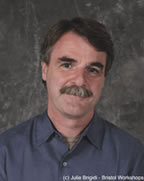
David Macaulay, born in 1946, was eleven when his parents moved from England to Bloomfield, New Jersey. He found himself having to adjust from an idyllic English childhood to life in a fast paced American city. During this time he began to draw seriously, and after graduating from high school he enrolled in the Rhode Island School of Design (RISD). After spending his fifth year at RISD in Rome on the European Honors Program, he received a bachelor’s degree in architecture and vowed never to practice. After working as an interior designer, a junior high school teacher, and a teacher at RISD, Macaulay began to experiment with creating books. He published his first book, Cathedral, in 1973. Following in this tradition, Macaulay created other books—including City, Castle, Pyramid, Mill, Underground, Unbuilding, and Mosque—that have provided the explanations of the how and the why in a way that is both accessible and entertaining. From the pyramids of Egypt to the skyscrapers of New York City, the human race’s great architectural and engineering accomplishments have been demystified through Macaulay's elaborate show-and-tells. Five of these titles have been made into popular PBS television programs.
A fun, short book that explains, with words and pictures, the working of a passenger jet plane, from cargo hold to ailerons. Told to a child taking a trip, things she sees on the plane are explained in excellent drawings and clear text. I was also pleased that Mccauley chose to identify the pilot as female. Small steps like this are significant in helping break down the attitude of "mens" vs. "womens" work. It is especially important for boys to see these examples and this is a title to which boys, in particular, will be drawn. On behalf of all women, thank you, Mr. Mccaualey!
Genre: Informational grades: 4-6 I think the topic is what makes this book unique. Most informational books for kids are about animals or interesting places. Not many people would consider how a jet engine works to be a topic for children to read about.
I love David Macaulay's books. They always amaze me with the way he can break complex things down into their components and make them understandable. His book, The Way Things Work, is a favorite in our library. So when I discovered David Macaulay's My Readers books, I was extremely pleased. They are just 32 pages long, but still filled with all his intricately labeled and diagrammed illustrations and compelling explanations of different nonfiction topics. To help with learning more about each topic, the books have a glossary, an index, and a list of suggested books and other media to explore.
Since I love planes and flying, I read Jet Plane: How It Works and thought about how much my fellow aerospace educator buddies would love to have copies of this book to use with their students. How in the world does he fit so much into such a small book? There are diagrams of how planes pull away from the terminal and the interior of a jet engine; explanations of lift, thrust, and how to steer a plane; and the glossary is built around a diagram of the plane with all the parts nicely labeled. There is much more than that, but you need to see it for yourself.
I recommend this to any reader who enjoys books about planes or transportation in general, and the parents and teachers of those readers.
This book makes the process of flying understandable to kids and their parents. For example, the wings of the jet airplane are curved on top and flat on the bottom. As the plane moves forward “the air moves faster over the wings than under them. The faster air pulls up. The slower air pushes up. This creates a force called lift.” As always, David MaCaulay manages to take big ideas like lift, thrust, combustion chamber, and break it into its components, so that even a 7-year old can feel like an expert on a subject. MaCaulay’s illustrations are superb and the diagrams contribute to understanding. The diagram that shows how throttle is connected to fuel tank that sends extra fuel to engines finally allowed me to see the process that I only imagined in my head. You can find more books about airplanes on Kid Minds website. http://www.kidminds.org/2015/08/airpl...
This is an excellent read-aloud for an eager young child who loves knowing, in detail, how things work. My almost-5-year-old LOVES it, and we've read it together so many times that he has started explaining each page to me before I can read the words, so it's been great for encouraging him to develop those important narrative skills. It's a little above the 3-year-old's head, but despite the complexity, she enjoys it too. Macaulay's illustrations are excellent, as always. This is the perfect book to read with a preschooler before or after a plane trip.
Detailed illustrations accompanied by interesting text that provides children with a great amount of "jet" vocabulary. A "My Readers" book with easier reading than you come to expect with MacAaulay's books.
Wonderfully written, in simple, informal, speaking to the reader language! Great illustrations with simple diagrams. My kids age 7 & 3 both really enjoyed. Will read others by this author!