Post–Civil War New York City is the battleground of the American dream. In this era of free love, emerging rights of women, and brutal sexual repression, Freydeh, a spirited young Jewish immigrant, toils at different jobs to earn passage to America for her family. Learning that her younger sister is adrift somewhere in the city, she begins a determined search that carries her from tenement to brothel to prison—as her story interweaves with those of some of the epoch's most notorious figures: Elizabeth Cady Stanton; Susan B. Anthony; sexual freedom activist Victoria Woodhull, the first woman to run for president; and Anthony Comstock, founder of the Society for the Suppression of Vice, whose censorship laws are still on the books.
In the tradition of her bestselling World War II epic Gone to Soldiers, Marge Piercy once again re-creates a turbulent period in American history and explores changing attitudes in a land of sacrifice, suffering, promise, and reward.
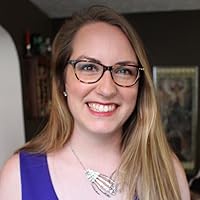
Marge Piercy is an American poet, novelist, and social activist. She is the author of the New York Times bestseller Gone to Soldiers, a sweeping historical novel set during World War II.
Piercy was born in Detroit, Michigan, to a family deeply affected by the Great Depression. She was the first in her family to attend college, studying at the University of Michigan. Winning a Hopwood Award for Poetry and Fiction (1957) enabled her to finish college and spend some time in France, and her formal schooling ended with an M.A. from Northwestern University. Her first book of poems, Breaking Camp, was published in 1968.
An indifferent student in her early years, Piercy developed a love of books when she came down with rheumatic fever in her mid-childhood and could do little but read. "It taught me that there's a different world there, that there were all these horizons that were quite different from what I could see," she said in a 1984 interview.
As of 2013, she is author of seventeen volumes of poems, among them The Moon is Always Female (1980, considered a feminist classic) and The Art of Blessing the Day (1999), as well as fifteen novels, one play (The Last White Class, co-authored with her third and current husband Ira Wood), one collection of essays (Parti-colored Blocks for a Quilt), one non-fiction book, and one memoir.
Her novels and poetry often focus on feminist or social concerns, although her settings vary. While Body of Glass (published in the US as He, She and It) is a science fiction novel that won the Arthur C. Clarke Award, City of Darkness, City of Light is set during the French Revolution. Other of her novels, such as Summer People and The Longings of Women are set during the modern day. All of her books share a focus on women's lives.
Woman on the Edge of Time (1976) mixes a time travel story with issues of social justice, feminism, and the treatment of the mentally ill. This novel is considered a classic of utopian "speculative" science fiction as well as a feminist classic. William Gibson has credited Woman on the Edge of Time as the birthplace of Cyberpunk. Piercy tells this in an introduction to Body of Glass. Body of Glass (He, She and It) (1991) postulates an environmentally ruined world dominated by sprawling mega-cities and a futuristic version of the Internet, through which Piercy weaves elements of Jewish mysticism and the legend of the Golem, although a key story element is the main character's attempts to regain custody of her young son.
Many of Piercy's novels tell their stories from the viewpoints of multiple characters, often including a first-person voice among numerous third-person narratives. Her World War II historical novel, Gone To Soldiers (1987) follows the lives of nine major characters in the United States, Europe and Asia. The first-person account in Gone To Soldiers is the diary of French teenager Jacqueline Levy-Monot, who is also followed in a third-person account after her capture by the Nazis.
Piercy's poetry tends to be highly personal free verse and often addresses the same concern with feminist and social issues. Her work shows commitment to the dream of social change (what she might call, in Judaic terms, tikkun olam, or the repair of the world), rooted in story, the wheel of the Jewish year, and a range of landscapes and settings.
She lives in Wellfleet on Cape Cod, Massachusetts with her husband, Ira Wood.
Not as good as I expected. I would recommend this book to young women (16 & up) who maybe don't know a lot about women's history. It does make me want to know more about these women's lives. I imagine the truth is better than the fictionalization! There's a lot of explicit sexual content in the book. But even the sex was kind of dull! I found the characters, who were mostly real historical figures like Susan B. Anthony, Elizabeth Cady Stanton, & Victoria Woodhull, to be quite one-dimensional. The fictional part of the book, about a Polish immigrant woman, was interesting but not very believable. There's some unbelievably stilted dialogue & an odd tendency to link the physical characteristics of women like Anthony & Stanton, to their personality characteristics!
Here is my two-minute synopsis, with SPOILERS:
Susan B. Anthony: Elizabeth, you mustn't eat any more! You're enormous! We need you to be a famous women's rights campaigner & you can't do it if you're too big to walk! Elizabeth Cady Stanton: Oh, shut up & go talk to the younger women. (Aside.) Look how thin Susan is, obviously she isn't getting any sex. She'll never get a man & have children. She'll have to do all the travelling & speaking while I write the speeches. I like that Victoria woman, she looks like she's getting some sex. Victoria Woodhull: I need to make lots of money to overcome my poor family. I can do it because I'm beautiful & smart & I can use this rich man over here to help. (Makes money.) Now I need to become a famous women's rights advocate. All characters - (Speeches made. Newspapers published.) Anthony Comstock: No, you prostitute! I arrest you! And by the way, no one should be having any sex except me! Victoria: Oh no! (Loses money.) I'm so depressed! Susan, Elizabeth: let's forget about Victoria & be friends again. Victoria: I'm moving to England & getting married. (Leaves.) Freydeh: I need to make money, find my sister, & have a nice house. I'll work hard, become a condom manufacturer, & take in a few street kids along the way. (Makes money.) Anthony Comstock: No, you prostitute! I arrest you! Freydeh: Oh no! (Loses money.) Oh well, no use being depressed. All I have to do is work twice as hard & find my sister. (Some live. Some die.)
This entire review has been hidden because of spoilers.
This book addresses a fascinating fifty year period and with admirable feminist verve. Following the lives of women from various walks of life but equal commitment to furthering their autonomy and their political and economic goals, Sex Wars features fascinating characters from free love spiritualist and first woman to run for U.S. president Victoria Woodhull to notorious and successful abortionist "Madame Restell," to those founding mothers of the American women's movement, Elizabeth Cady Stanton and Susan B. Anthony. Piercy also recognizes what a different world the so-called Gilded Age represented for the working classes and the poor; some of the most poignant material in the book comes out of the life story of an (I think) invented Jewish American immigrant Freydeh who begins a condom manufacturing business. Piercy's central paradox is the fervor of the postbellum years regarding sex and women's independence--some, like Anthony Comstock whose censoring (and censorious) tale she tells with barely disguised disdain, who see the world changing and are determined to put a stop to it, and others, like Woodhull who celebrate women's pleasure in sex and knowledgeable control of their own bodies.
A lot of the information Piercy includes here I did not know before, such as Stanton's commitment to publishing against Christian treatments of women as inherently sinful, in spite of the fact that these essays and books met with great outrage. Woodhull is a totally fascinating figure, as much as charlatan as an ideologue, and I'd love to read more about her. Piercy is on to something with her themes--that this was a time when urbanization, prosperity, and the New Woman led to changing social mores that really outraged and alienated many people (Comstock and another traditionalist character, Asher, both of whom PIercy depicts as patriarchs who miss the small-town values of their youth). And her cast of characters is well-chosen, their storylines interweaving in thematically productive ways. (Freydeh the condom maker crosses paths with Comstock, much to her detriment, as does Woodhull, and so three of the central characters, each from a different walk of life, find their public fates and conflicting ideologies entangled.)
Unfortunately, this is an incredibly didactic book. Piercy's opinions about women's sexuality and social activism come through loud and clear, and the straightforward narration about these themes never quite seems to fit in the minds of the characters whose reflections are ostensibly being ventriloquized. Also, Piercy clearly fell in love with her research, and when she enters in on a scene description or a biographical anecdote, or even cultural context, I felt as though the narrator were announcing 'We now interrupt our regularly scheduled novel programming for an excursus into a book report on historical facts about this period.' The writing just felt clumsy and awkward, a limitation that made the explicit sex scenes rather uncomfortable--ironic in a book about how important it is to be frank and unashamed about sex.
I was first introduced to Marge Piercy by a grad school roommate and i tore through all the books i could find written by Piercy up to that point. I just discovered Sex Wars: A Novel of the Gilded Age New York covering the lives of early suffragettes Susan B. Anthony and (the seemingly more likable, tho less famous) Elizabeth Cady Stanton; sensationalistic (first female presidential candidate) Victoria Woodhull and her rather colorful family; the fictional Jewish immigrant Freydeh Levin; as well as crusader on the side of the lord, Anthony Comstock fighting against obscenity as well as anything outside of "normal" sex roles, in the "turbulent post-civil war years". This is yet another novel of shifting narrative perspective and some voices seem to be rendered more truly than others (it also did a bit of jumping back in forth in time that had me constantly referring to other pages, but that could just be my chronologically challenged mind.) The character of Fredeh seemed to me one of the most poignant (perhaps because Piercy was not limited so much by historical accuracy in her~and was condom-production really the only good money making option outside of prostitution for the non-seamstress-single-woman, because it didn't seem to draw in a whole hell of a lot?) and even Comstock seemed somewhat more fully drawn (perhaps fruit of a struggle to make him at least a touch sympathetic?) the rest of the characters sometimes fell into stiltedness or caricatures, but not horrendously so, and it was an easy, quick, yet still edifying read (especially on the tail end of an illness when my brain wasn't ready for much.) As an interesting aside, here's a description of the presidential election of 1876: "By midnight, when they finally got into bed it was clear that Tilden had won the popular vote by a considerable margin. As the Herald trumpeted the next morning, Samuel Tilden was now president. However, the Times said the election was too close to call. Henry and Elizabeth talked more during the next weeks than they had in a decade. The election was being stolen, through the three Southern states still under Reconstruction regimes. Boards were set up in Louisiana, South Carolina and Florida that disqualified thousands of ballots for Tilden and certified ballots for Hayes even when the number of ballots exceeded the number of voters in a district. Weeks turned into months and still the election was in doubt. The election finally came down to Florida and the disputed votes there. The states had no president. The democrats were protesting fraud. Finally the election was thrown into the Supreme Court, where Republicans outnumbered Democrats. The crooked election was certified along strictly partisan lines. Rutherford Hayes became the next president while Tilden retired from public life." Sound slightly familiar? At least there was no mention of hanging chads. All in all, this is not Piercy's Best work (Gone to Soldiers is heart wrenching & beautiful, Braided Lives one of my favorites, and He, She and It is great science fiction) but it is still very much worth reading. There are only a few historical novels i take much interest in (or maybe more than a few, now that i think about it~but there are many that i take no interest in) this is one that i enjoyed reading. And, as i said, this oh-so-very-knowledgeable librarian learned a great deal from it, so how can you beat that?
I struggled thru the first half of this novel. Kept telling myself it would get better. It didn't. After being introduced to a religious zealot that I had absolutely no interest in (actually started skipping his chapters) and Victoria Woodhull (portrayed as a scam artist and early day hippie,) I hit part two and finally called it quits. Why? Not only was I not enjoying or getting a feel for any of its characters (the exception being the Russian immigrant Freydeh. She alone has kept this novel from being one star) but the novel is chronologically backwards like Star Wars. Part two goes back 16 years all of a sudden. It jumps to 1862 and then to 1847 and back up a bit to 1854 so not only do you have to keep track of who is who, but also what year they are in. If I have to draw a timeline, I am not going to enjoy the story.
Different title, different cover would serve this book better. Piercy covered a lot of ground in this European immigration story. Birth control, women's voting rights, poverty, and survival all mixed up in the teeming city of New York in the late 1800s. Piercy jumps from story to story, character to character, and moves time up and back. Susan B. Anthony, Elizabeth Cady Stanton, Vanderbilt, Sanger, Woodhull as well as fictional characters tell about this turbulent time. I found it interesting and edifying.
I enjoyed this one though it's not a book for the faint-hearted, I would guess. Here, the author tells the personal history of women that drove the womens' rights movement in the United States and those who opposed them. Intermixed, is the story of a woman searching for her sister who ends up going into business for herself by manufacturing condoms. What I found most interesting about the account is the histories of Elizabeth Cady Stanton, Susan B. Anthony, Victoria Woodhall, Anthony Comstock, and others. The women have all kinds of views and practices of sexuality - showing how the womens' movement varied in its ideas and approaches. And, of course, Anthony Comstock gives new meaning to the word...farcical character who never really was in touch with his own sexuality. Margaret Sanger makes an appearnace as does another prominent abortionist of the 19th century - they're made to be heroic figures, I think. So, it is pretty clear that the author has more than fiction, in mind, which could anger/frustrate a few. I, for one, loved the portrayal and the conflict. It ends on kind of a sour note for our suffragette heroines but...then, it was a quite realistic ending. This book was recommended to me by a friend and I appreciate the recommend.
I really enjoyed this book. History unfolding in a novel format. I read it around the time of all the election madness and it was a good reminder of how far we've come, which gave me hope.
Totally fascinating historical novel starring Elizabeth Cady Stanton, Susan B Anthony, the evil Anthony Comstock and the heretofore-unknown-to-me Victoria Woodhull, the first woman to run for President of the United States, in 1872. Well-researched and dramatic, it shines light into the lives of these feminist heroines as well as the notorious Society for the Suppression of Vice head-jerk Comstock, who was responsible for throwing hundreds of people into jail, costing people their lives, and confiscating many tons of "obscene" material, including condoms, women's health pamphlets, and birth control.
Woodhull was a feminist and in many ways a radical: she lived her life and spoke passionately on the principles of "free love" - that women as well as men should have the ability to choose their lovers as they pleased without threat of social or physical consequence. She was divorced and remarried at the time of her fame (scandalous to most at the time, even though her first husband was a good-for-nothing drunk who beat her), was spiritual guide to Commodore Vanderbilt (she was a spiritualist and medium), and was the first woman to operate as a stock broker - on Wall Street, no less! A fascinating character, she nevertheless retreated from New York in shame and scandal after Comstock got through with her - she and her sister served a year in the notorious Tombs for publication of obscene material, and underwent several subsequent trials where her public credibility was shattered. Nevertheless she bounced back, moved to London, and lived out the rest of her life in the English countryside, after remarrying again to some rich dude over there. She was a feminist to the end. Go Victoria Woodhull! What a crime that you have been all but erased from history.
Who owns the film rights to this? Because if I were HBO or Showtime, I'd be adapting this novel for a TV series RIGHT NOW. It's like a Gilded Age Masters of Sex combined with Boardwalk Empire. I want to see these characters on TV. And soon. I think now is the moment for this story. As the Feminist movement gains some traction, the forces of Puritanism push back viciously. Wait - is this now or then?
Victoria Woodhull is one of the most interesting historical figures I'd never really heard of and I want to see more of her. As Marge Piercy has written her, she is a modern feminist in a late 19th century world. She'd be shockingly inspiring if she emerged into the public eye today, I cannot imagine what a strange creature she must have seemed then. I mean, she ran for president before women were even allowed to vote! Badassery Extraordinaire!
We need these stories, these foremothers of our rights to vote, to own property, to make a living, to divorce, to make choices about our own bodies. We need, as a culture, to remember how hard won these changes were.
I want statues of these ladies everywhere. I want Woodhull on the quarter. I want Elizabeth Cady Stanton on the 10 dollar bill and Susan B. Anthony on the 20. I want portraits of Margaret Sanger and Lucretia Mott hung in every town.
This book made me appreciate all of them more than I ever did before. You hear me, HBO? You got me, Showtime? And if you need a writer to help you make this exciting, sexy, unpredictable show, you just let me know.
I am so glad I read this book! Marge Piercy was one of my favorite authors for awhile and I'm thrilled to have again come back to her exquisite writing and storytelling especially for this story about suffragist beginnings. And at a time as now, when I feel threats against women's equality it was powerful to read the words of Elizabeth Cady Stanton (and I'm inspired to read her essays!) and Susan B. Anthony. I knew little about Victoria Woodhull, the first woman to run for President before women even had the right to vote; a strong woman from a colorful family. There was an interesting story about that year's presidential election as well- an election that came down to Florida deciding the vote that was subsequently challenged in a partisan Supreme Court! I was disheartened to read how Anthony Comstock, a religious zealot supported by conservative Christian men, was motivated to temper the rights of women and our ability to control our own destinies by a truly misguided view of women. (That women are evil, and that we lead men astray/to sin.) sadly, he was successful! I recommend this book!!
Piercy's highly engaging novel of 1870's New York mixes in real-life characters (Susan B Anthony, Victoria Woodhull, Anthony Comstock) with a the fictional life of Freda Levin, Jewish immigrant and condom manufacturer, who runs afoul of Comstock's obscenity laws. The book is somewhat haphazardly plotted and paced, but I enjoyed spending time with all of then, particularly medium-suffragist-stockbroker-presidential candidate Woodhull, whose life is so extraordinary, I kept running to Wikipedia to see if Piercy was making stuff up (she wasn't).
Got to this book via Joyce Carol Oates. It's a roller coaster and the timing is sometimes confusing as Piercy skips around between and among years, primarily focused on the 1870s during the Gilded Age. Freydah Levin, a Jewish immigrant from the Pale, is sort of the focus. She comes to NY with her husband Moishe (who soon dies in an accident)and "adopts" three Jewish street children who remain faithful to her. She manufactures condoms in their tenement apartment and sells to local pharmacies and brothels. The condoms connect her story to those of Elizabeth Cady Stanton, Susan B. Anthony, Victoria Woodhull and Anthony Comstock (the viperous censor of all things sexual). Learned alot about the various individuals, whose stories govern chapters, but have some questions about sourcing. Piercy begs off a bibliography, instead opting for a clustered list of sources she'd read. Don't know how derivative the stories are, but they sure make for good reading. Cornelius Vanderbuilt offers inadvertent stock tips to Woodhull and her sister and the reader joins Stanton and Anthony in their decades-long friendship and commitment to feminism, abortion rights, suffrage, abolition, and all sorts of other issues. I found Levin and Woodhull most intriguing. The latter was the first woman to run for President - until she found herself in the horrible Tombs prison in NY, victim of Comstock and the YMCA. Makes me laugh the think of Comstock's work under the "YMCA" song's banner. Remember making the letters while dancing to the tune?
A novel of historical fiction taking place in post Civil War New York. Each chapter is a year between 1850 and 1870 involving the same 5 main characters; true life Elizabeth Cady Stanton, Susan B Anthony, Victoria Woodhull, Anthony Comstock (boo, hiss), and fictional character Freydah, an amalgam of a European Jewish female immigrant. These are leaders of the suffragette movement, fighters for women's rights and contraception, and conversely the man still responsible for all the laws against pornography, abortion, and birth control. Although this book was not a big hit with my book club, I really liked it. Everyone did say they learned a lot of history, and we were all dismayed by how awful life was for women at this time in our country. The main criticism seemed to be that it needed some editing; there was some repetition in the writing, parts of it bogged down a little, sometimes she threw in some irrelevant historical fact, and some women felt it read too much like historical non-fiction. This is a character-driven novel. Each person is well developed and very interesting. Freydah is widowed, financially struggling, living in a tenement, and trying to find her emigrating sister. Everybody's lives intersect with one or more characters as they fight for the issues of the day.
This was a captivating work of historical fiction taking place mostly in New York City during the Gilded Age, and focusing on women and their role in late 19th century society. The novel is about one fictional character, a Jewish immigrant woman, whose story is interwoven with those of feminists Elizabeth Cady Stanton, Susan B. Anthony, and Victoria Woodhall, among others, and the conservative fundamentalist and anti-feminist zealot crusder Anthony Comstock. Great insights the free-thinkers of the time, the suffrage movement, and various attitudes that supported and condemned the important strides that women were making. Marge Piercy is one of my favorite authors and this book is one of her finest.
As a reader, I find historical fiction to be the best of both worlds when it combines actual people and events with fictional dialogue and other details that can't be known. When done well, it is entertaining and edifying. While I enjoyed this book, it leans more toward edification and less to entertainment. Most of the characters never truly came to life for me. I enjoyed hearing about their exploits, but mostly it was a bit of a slog. The character that I truly cared about was the one that was completely fictional (although well based in fact--Marge Piercy did thorough research of the book's setting). I did like the book and appreciated learning more about all the real-life characters. But all these fascinating people deserved a more interesting portrayal.
This book was really amazing. It made me realize we women had NO rights back in the day; we were property of our husbands. If we worked all our money went to our husbands and if you weren't married you were constantly working hard labor making very little money to survive.
The book takes place from the 1860's through the early 1900s. I really loved it because it is an historic fictional book almost entirely about how women lived and tried to fight for their rights in New York City. Some of the fascinating characters include: Victoria Woodhull (my personal favorite), Elizabeth Cady Stanton, and Susan B. Anthony.
I don't want to give anymore about this book away; just read it!!
In the current political climste in the US, this book demands reading. Too many people think the topic of women's rights has only recently verges to birth control, abortions, and sexual freedom; but Marge Piercy's look at the past reveals, with some liberties I'm sure, that this is not the case. Women have always looked for ways to terminate pregnancies and prevent them. Each POV character is richly interesting, even Anthony Comstock, possibly because of the relative similarity he bears to the modern-day HOP. A must-read for every feminist!
This is a fictional version of Gilded Age NYC through the perspective of Victoria Woodhull, Elizabeth Cady Stanton, Anthony Comstock, and a Jewish immigrant woman making and selling condoms to survive after her husband dies. It is wild to think about all the cultural clashes that were happening as America recovered from the Civil War and became increasingly urbanized. Women’s rights, religion, free speech and democracy are all swirling around these characters and we see these tensions play out through their stories and people around them like intellectuals, abolitionists, suffragists, madames, prostitutes, abortionists, preachers, the YMCA and more. I love reading about the rise of cities and about famous women but this one took me a long time to get through. It’s dense and sometimes drags on in sections, but I’m glad I read it now as we are entering a new era of conservatives imposing laws to restrict women’s rights and anything they view as immoral from their religious perspective. Hopefully we can learn from the triumphs and failures of history.
This book follows four characters--three historical, one fictional--throughout a roughly twenty year period. While the book overall tells a cohesive and interesting narrative, the three historical characters' narratives are bogged down by the sense of the author having a lengthy list of date, facts, and accomplishments to recount. Invoking those historical events often feels unnatural in the course of the book and distracts from the author successfully speculates on their inner narrative at a given point in time. Additionally, one of the "villain" of the story is written with cartoonishly broad strokes.
I'll check out this author's other books because she certainly seems to have talent, but needs a good editor at her side.
An interesting addition to our discussion group's reading list on women's suffrage. As a novel, it added a richness to the lives we've been discussing, and offered the element of Freydeh as a way to getting a better feel for the experiences of impoverished, urban immigrants which has otherwise been missing. It was fun getting to "see" the bits of these lives that we can never really know historically (like the sex lives of folks like Victoria Woodhull, Ben Butler, Theodore Tilton, and the mind of Anthony Comstock), but as a novel, it was a little baffling as it jumped around in timelines, and sometimes a little boring.
This book was more about the gilded age of New York rather than about sex. I really thought it was non-fiction, but it was actually historical fiction which was even better! This novel follows 4 stories which revolve around female empowerment and morals. Many of the stories include people who have changed society for the better including Elizabeth Cady Stanton, Susan B. Anthony, and Victoria Woodhull. For so many years these women fought for the right for women to vote. They were unable to see it to fruition, but they fought long and hard. There was much detail and research that went into this novel. Don't let the title fool you!
This one has been sitting on the shelf for donkey's years, its size seeming somewhat foreboding at a time when I've had the concentration span of a dead gnat. Finally, I picked it up as part of a drive to read and declutter my over-crowded bookcases before I can allow myself to buy any more books.
I'm glad I did. The book is an impressive achievement - the sheer volume of research that Piercy must have undertaken about historical figures involved in the burgeoning suffrage movement, yet the narrative is never dry nor reduced to mere exposition.
A proper novel by a proper writer - it's been a delight.
Revisit the turn-of-the-century story of women’s plights—without rights—through the eyes of original suffragettes. A sorely needed reminder, given the current generation of Republican women who blithely support corrupt, hypocritical policy makers that squelch access to birth control and health care, rip migrant children from their families, suppress voter rights, and trounce upon Constitutional law while thumping a bible and waving a flag.
The perfect novel to bring together all the nonfiction that we have been reading for the Votes for Women! reading and discussion group. Although it includes the stories of historical figures; Victoria Woodhull, Elizabeth Cady Stanton and Anthony Comstock, it is Piercy's portrayal of the plight of the immigrant Freydeh that really brings this novel it's depth and allows us to see the atmosphere in which all these other historical events occurred.
Interesting history of the time after the Civil war when women's rights movements were growing with portrayals of important women of the time.But also with the counter anti-women movement spearheaded by Anthony Comstock. I had heard of him of course but did not know the extent of his villainous influence! Most of cannot imagine the horrible degrading poverty and filth of New York City of that time which the author portrays quite well--not for the faint hearted!
A load of in-depth research went into this book. Unfortunately, the awkward shifts in writing style, even for the same characters, and stilted dialogue are often jarring. Since the Jewish immigrant's story is only one of the four threads, the title and cover art is also somewhat misleading. 3.5 stars rounded up.
An historical novel of the early days of what is now known as "feminism." While most of the major characters are historical, Piercy brings them alive as fully realized characters in this enlightening and entertaining book.
I loved Piercy's "Gone to Soldiers," and this one also didn't disappoint. Seamless interweaving of historical and fictional characters. Lurid details of the anything-goes sex industry of the 1860s and 70s. The suffragette campaign details were particularly interesting to me.