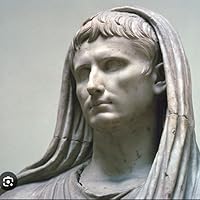
Gaius Octavius (63-14 BCE) or better known as Octavian was given the title Augustus when he ushered in a time of peace under the Pax Romana. So began the Roman Empire in 27 BCE. The Roman’s had conquered much of the Mediterranean basin, from North Africa, the Middle East, Germany, France and Spain. For a people “so great” they needed a story to tell.
Publius Vergilius Maro, better known as Virgil (70-21 BCE) was celebrated for his poetry. When he wrote an epic tale of the founding of Rome he had the ear of the Emperor. It also helps when you put that emperor in the poem. Some call this the first great piece of propaganda and it’s hard to dispute this after reading this tale.
It was written between 29 and 19 BCE, consisting of twelve books each containing around 850-1000 lines of poetry. At the time the epic sagas of the Iliad and the Odyssey written by Homer eight centuries earlier were well known. the Iliad tells the tale of the Greek hero Achilles and the destruction of Troy while the Odyssey tells the ten-year long journey of Odysseus returning home to Ithaca. Virgil blended the two stories: the first half is an Odyssey; the other half is an Iliad, Roman style.
The Romans believed in the Olympic gods and they are instrumental throughout the book. Juno, wife of Jupiter despises the Trojans; Venus, mother of Aeneas supports them. The arbiter is Jupiter. The story begins with Juno asking Aeolus the wind god to destroy the Trojan fleet of Libya. Only seven of the twenty ships survive and roll up on the beaches of Carthage, home of Dido.
This is the great set up for the tragic love story between Aeneas and Dido. It also foreshadows the three wars between Carthage and Rome from 264-146 BCE, known as the Punic Wars. The people of Carthage are Phoenicians. Dido herself had to flee after her brother killed her husband lusting after the Queen. Legend has it she founded the city using the thread of a cow’s skin. Aeneas’ mother Venus presents him with a dilemma. Found Rome or stay for love (and perhaps become a second-rate person in history?) What would any “hero” do? Easy choice with a bad outcome. Now do get the antagonism of the Carthaginians?
Yet it really starts with the Greeks taking over the city of Troy, after ten years of siege. Aeneas flees through the raging city with his family including his father elderly Anchises. His wife gets separated and in a chilling scene, reunites with Aeneas as a “shade” having died. “Flee the city!” she warns. For the Romans, family, the gods, honour and state are all important. He listened to his wife.
His clan leaves Troy, makes it to Carthage (Dido story) then Sicily (more bad stuff) before making up the river Tiber to the hills of what would become Rome. All seems well except there are people living there already. Who are they? They are the Latins, living under king Latinus and Queen Amata. They have a daughter Lavinia betrothed to handsome Turnus. All sounds fine until Aeneas and his ragged lot of Trojans show up. Aeneas makes friends with Evander and the Arcadians (one of those neighboring folks).
The king really likes the “new guy” Aeneas and the “old guy” Turnus is not a happy camper. Lavinia? She is just embarrassed. One day Auscanius, Aeneas’s son accidentally kills a sacred deer and the Latins and especially Turnus are really upset. They get the neighbouring Rutulians (mor3 folks living in the area) on board and it’s a fight to the death for just about everyone.
The gods are having a field day. Blood and gore with a lot of interventions on both sides. Battles, funerals, more battles, funerals, deceit, promises, broken promises. You get the gist of the latter half of the story. Virgil, who is a very talented poet makes full use of metaphors, symbolism and beautiful language. This is what holds our attention.
In the end and with no surprise, a compromise is made with the gods to get this damn Roman Empire under way. It may surprise you that the Trojan war happened around 1200 BCE. It took Aeneas and his crew seven years to get to Rome. Bickering and warring gods, queens and princesses, heroic warriors born of gods, heroic fighters both men and women, prophesies and warnings, and endless shipwrecks and toils beyond belief makes for a grand epic tale. We are talking about a story that happened 3200 years ago, written down 2000 years ago and to be honest, still is a worthy read.
Full 5 stars.
Read in original Latin with a lot of help on the bilingual side of the Loeb Classical Library edition. Unfortunately it spans two volumes but I am only adding the review to last volume. I read Vol 1 with Eclogues and Georgics along with the Robert Fitzgerald translation in the late 1990s.
**************
Original review: His Minor Poems are intriguing. 3 stars.