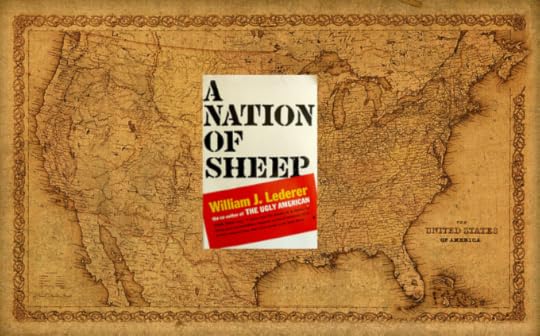
إن كتاب أمة من الغنم كتاب يتحدث في السياسة الخارجية الأمريكية والتعتيم الإعلامي وحجب الحقائق عن الشعب, ويعالج بجرأة السياسة الخارجية الأمريكية, كما يندد في حالة عدم اكتراث الأمريكيين بما ترتكبه الحكومة من أخطاء, وأنه يلقي الضوء على بعض الحقائق المفزعة حول التدمير الذاتي لسلوكنا السياسي, وهو مليء بالأحداث والأسماء والتواريخ, ويحلل الجهل الأمريكي, والمسؤولون هم المذنبون في عدم تنوير الشعب بالشكل الكافي والاستمرار في تضليله عن إصرار وتصميم, وبما ان الحكومة الأمريكية تجهل الأحداث البسيطة الواضحة التي تحدث في الأمم الأخرى, وكذلك الصحافة واثقة من أن الشعب الأمريكي لا يرغب في سماع الأحداث القاسية التي تجري في خارج الولايات المتحدة والتي تحتاج إلى مجهودات كبيرة وروتينية لتغطيتها إعلامياً, وإن فقدان المعرفة بالأمور الدولية جعلت الشعب في الولايات المتحدة الأمريكية يبدو كأنه شعب من الغنم, شعب صلب وغير مبال بما يجري حوله وليس لديه الرغبة والقدرة لمعرفة الأسباب, ويوافق على أي من الحلول التي تبدو مبتذلة وسهلة والتي تأتي من مصادر تظهر بأنها أكثر معرفة من غيرها, وقسم الكتاب إلى أربعة فصول تناول الفصل الأول البحث في بعض القصص عن السياسة الخارجية الأمريكية. والفصل الثاني تناول الحديث عن المجرمون, حكومة تدار بمعلومات مغلوطة, السرية في ملفات الحكومة, الصحافة. وفي الفصل الثالث تناول معالجة المواضيع التالية: ما العمل؟ على المستوى الوطني, على المستوى الفردي. وتناول الفصل الرابع والأخير موضوع مجابهة التحدي. وهو كتاب مؤثر ومثير للغضب.
William Julius Lederer, Jr. was an American author.
He was a US Naval Academy graduate in 1936. His first appointment was as the junior officer of a river gunboat on the Yangtze River.
His best selling work, 1958's The Ugly American, was one of several novels co-written with Eugene Burdick. Disillusioned with the style and substance of America's diplomatic efforts in Southeast Asia, Lederer and Burdick openly sought to demonstrate their belief that American officials and civilians could make a substantial difference in Southeast Asian politics if they were willing to learn local languages, follow local customs and employ regional military tactics. However, if American policy makers continued to ignore the logic behind these lessons, Southeast Asia would fall under Soviet or Chinese Communist influence.
.ذكر المُترجم في المُقدمة قصة رمزية طريفة قال " حدثنا د. ماجد عرسان الكيلاني عن حوار طريف مع أستاذ جامعي أمريكي كان سأله عن علة تحريم الخنزير في الإسلام؟ فأجابه بما هو موجود في تراثنا الفقهي عن هذه المسألة، فلم يقتنع زميله الأمريكي وطلب منه سبباً آخر.. فأجابه بما هو شائع في الموروث الشعبي من أن لحمه يقتل الغيرة في الرجل، والدليل هذا الدرك الذي وصلت له علاقات الجنسين في الغرب! فدهش الرجل من العلاقة المفترضة ما بين أكل اللحم وتفسير النفسيات، قبل أن يقول: وجدتها، لقد كنت أتعجب من الهزائم العربية أمام إسرائيل، إلى أن اكتشفت الآن بأن سبب ذلك هو أكلهم للحوم الأغنام! .
كالعادة لما شفت العنوان توقعت أن الكِتاب يحكي عن أمة الغنم العرب لأنه شيء متوقع من الشعوب العربية بأن تُقاد كالغنم ولاتقود …لكن خاب ظني و"طلع" الكتاب هجوم على شعب " من الغنم في قارة التى تغرب عنها الشمس بين قرني الشيطان تُدعى أمريكا".
كتاب قديم تم نشره من ستين سنة..يشرح الكاتب وليام في هذا الكتاب فضائح السياسة الخارجية الأمريكية في لاووس وتايلند وتايوان"فورموزا"وكوريا، الكتاب عبارة عن كف موجه للقارئ الأمريكي ليفهم كيف تُصاغ السياسة الخارجية حيث أن أغلب المعلومات التى تصل المواطن الأمريكي غير صحيحة ، تقوم الصحافة تحت قيادة وزارة الخارجية بنشر الأخبار الكاذبة لشعب الأمريكي وحتى أن الكونجرس تعرض لتضليل في المعلومات التى تخص السياسة الخارجية، الكتاب عبارة عن عدة فصول، الفصل الأول يحكى عن الأحداث المأساوية ناتجة عن "غباء السياسة الخارجية"،
. إن الأمة العريقة لا يمكنها أن تبقى على قيد الحياة لمدة طويلة على أساسٍ من خداع النفس والتضليل والإعلام الكاذب. .
. الفصل الثاني يحكى عن كيفية أن الحكومة تدار بمعلومات خاطئة، وأيضًا عن جهل الدوبلوماسيين والسفارات عن الدولة الموجودين فيها كـ سفراء لدولة أمريكا العظمي، أما الفصل الثالث والرابع والخامس عن الصحافة الكاذبة وزيف السلطة الرابعة ، ويختم الكتاب بفصل مالعمل مجموعة من نصائح لشعب الأمريكي لمُحاولة تثقيف نفسه ..بالمُناسبة شاهدت تقرير عن منظمة ما في بداية أزمة "أوكرانيا" نسبة 40٪ من الشعب لايعرف الموقع الجغرافي لهذه الدولة..والمُصيبة أن 20٪ منهم قال أنها توجد في أمريكا الجنوبية.!! كتاب جيد لشخص مهتم "بالسياسة الخارجية لأمريكا، قام الكاتب بكتابة هذا العمل نتيجة لعدة رسائل من القراء يطالبونه بكتابته بعد قرائتهم لكتابه الأول " الأمريكي القبيح"، لماذا الشعب الأمريكي مكروهين من كُل شُعوب العالم
This was a reread. I read it many (many) years ago, but the current state of U.S. politics made me want to read it again to see if we had made any progress in how we formulate and implement our foreign policy. What did I find out? Sadly, we seem doomed to repeat our actions of the 1950s and 60s over and over again. It's "Groundhog Day" in a much more serious and deadly arena. Albert Einstein must be chuckling wryly, or grimacing in his grave as we do the same actions over and over again and expect different results. If you've never read this, try it. It's less than 200 pages, but it should make you think. Back before the Vietnam War was over, Lederer brought to our attention how we ended up in that quagmire. Jump ahead to 2002 and we have sadly not advanced much in our political process and how we develop and administer our foreign policy. Government budget cuts have decimated our intelligence services. The media moguls have seen fit to close many of their foreign posts and rely instead on social media to report the "facts" of situation overseas that might embroil us in a costly and deadly conflict thousands of miles away in a place most of us know very little about.
It is interesting that the author's observation that "the world has become local" was offered way before the internet and Tom Friedman's "The World is Flat".
I first read this book over 40 years ago. It is an easy read and one of my touchstones. It is one of those books that I like to keep handy on the shelf.
The book underscores the need for a disciplined approach to reading/viewing the news, e.g. know something about the author/reporter, be skeptical, and do not rely on one source. It also provides suggestions about getting the family involved in reading/viewing the news. Inspired by this book, we made a point of discussing news at meal times while our children were growing up. I can tell you that these news discussions made a difference in school and in my children's adult lives.
The book is partially a tome on the state of journalism, governmental attitudes toward voluntarily providing information, and a citizen's need to be informed. The book's basic premise still resonates today, that is: (1). Our government representatives, either through ignorance or intent, as well as the press are not always honest with us, and (2). An informed and proactive citizenry is the best antidote. Furthermore, the author states that a US citizen must perform a citizen's duties in everyday life and the state of the nation depends upon its individual citizens.
The author opines that a citizen has a duty to keep his or herself informed as well as conveying their thinking on the issues to both those reporting the news and their elected representatives. He believes that the state of our nation can be changed from the bottom up through an active and informed citizenry. In other words, our national ignorance and lack of participation allows others to decide what type of government we get.
The author includes a list and analysis of foreign policy missteps that may at first glance seem dated, but at second glance provide the reader with a sense of déjà vu. WMD anyone!
Being informed is in our own self-interest, because, as the author points out, an uninformed people become a misinformed people and therefore are not a free people.
I originally read this book in the mid-1960 and was not mature enough to quite understand the author's points; however, this second reading, and the political/social/cultural mess I have lived in during all that time, convinces me Lederer was right. We, the people, have given our thinking processes over to Big business/Big Government/and those who don't know how to do anything except manipulate money and the populace. The end of democracy in 2016, which has just expired, only contributed to my disgust with the insane world we live in. We are no longer a nation of freedom, only those who control the arms and purse strings have any freedom - we did it to ourselves by listening to the opinions of others and not listening to our own basic intelligence. A Nation of Sheep is a most appropriate epithet for individual liberity, an obituary for the form of government upon which the United States was formed: United States of America - RIP.
A Nation of Sheep is an old book. I say this because it was published in 1961. The ideas are still current today. Lederer discusses how Americans receive or fail to receive adequate information. Either the information is false because not enough work is done to verify it in the first place, or it is purposely presented to us in a falsified way in order to tame us. To render us lazy and nonquestioning citizens.
We have evolved in some ways and remained very similar to the citizens of 1961 in many ways.
The upside of this book is that many of his solutions remain useful today. Maybe the topics have changed, or drifted, or even evolved. But his main point is that if citizens show elected officials that there is interest in a specific area, and we bring those interests to them, then they will respond.
We can still do this. We can only keep our democracy if we participate as knowledgeable citizens. And then we go vote.
الكاتب يلخص الأخطاء الفادحة للإدارة الأمريكية و بالأخص السياسة الخارجية فى عديد من الدول بعد الحرب العالمية الثانية و بداية الحرب الباردة. و لكن السؤال هنا, رغم هذه الأخطاء الكبيرة و فى المقابل الإستراتيجية الجيدة عند الطرف الأخر "الشيوعى" حسب رأى الكاتب- لماذا حدث العكس و إنهار النظام الشيوعى و بقيت الولايات المتحدة و ازدهرت؟ "self optimized system" الجواب من وجهه نظرى هو أن النظام الأمريكى يعتمد على مبدأ أى لا مانع من الأخطاء و العك إذا جاز التعبير طالما هناك عقليات ذكية شابة تستطيع التعامل من الكوارث و التعلم منها و تصحيحها و لكن على النقيض فإن النظام الشيوعى اعتمد على تسلسل القادة فأصبحت القيادة مترحلة يملأها رجال كبار فى السن ليس لهم عقليات متجددة تستطيع مواجهة التغيرات المستمرة و التعامل معها بحنكة و بالتالى انهارت
An accurate explanation of U. S. foreign policy failures then and now
Given the current situation of the United States in Iraq and the circumstances as to how the U. S. got involved, one would think that it was a historical abnormality. However, in reading accurate histories and this book it is all too clear that it is not. For many different reasons, some noble and honest, but others simply due to greed and stupidity, the U. S. government has consistently lied to the American people about foreign entanglements. In this book Lederer describes some of the most absurd deceits perpetrated by American presidents. They are:
*) “The Laos Fraud”, the supposed invasion of Laos by the North Vietnamese, a scam perpetrated by some members of the Laotian government in collusion with members of the U. S. military and government. To react to the “great threat” billions of dollars of American aid was sent into the country. *) “The Editor from Thailand”, a description of how the ruling elite of Thailand solicits American aid by claiming fear of the communist bogeyman and how most is pocketed by corrupt Thais. *) “What We Aren’t Told About Formosa”, an accurate description of Chiang Kai-shek and how his government in China was so corrupt and inefficient that it was bound to fail. Lederer also describes how ruthless his government was in destroying the native Formosan culture and in attaining and maintaining his power. *) “What We Aren’t Told About Korea”, a description of the brutality and corruption of the Syngman Rhee government of South Korea. In many ways, Rhee was just as repressive as many of the communist governments that the U. S. so strongly opposed.
Lederer then goes on to describe how other programs, supposedly designed to further American goodwill around the world have had the opposite effect. Aid moneys are regularly skimmed into the pockets of local government and military officials so that only a small portion actually reaches the hands of those who need it. Lederer also is harsh with the members of the press, who accept subtle bribes to write positive stories and who sometimes are a party to outright fraudulent stories. At the end, the advice he gives is sound, even though as recent events indicate, it is not being followed any more now as in 1961. That advice is that citizens must be soundly informed and willing to make their opinions heard. As scandal after scandal over the current Iraq war continues to surface and we learn more and more about how the American invasion was launched, it is clear that Lederer’s position is just as true now as it was in 1961.
الكتاب منذ عام 1960 .. أي أنه رسمياً خارج الزمن ، وخارج الواقع المعاصر .. فأساليب سوق (الغنم) تطورت كثيراً من وقتها ، كما أن الادارة الأمريكية تحسنت كثيراً جداً عما كان في هذا الزمن القديم .. لكن .. برغم كل شئ هناك أحيان كثيرة تبدو فيها الادارة الأمريكية المعاصرة بنفس الحماقة والبلاهة القديمة ، فادارة كارتر مثلاً كانت تتنبأ ببقاء الشاه وتمدح في عصره قبل رحيل الرجل مطروداً بشهور قليلة ! وادارة أوباما مدحت استقرار مبارك قبل سقوطه بقليل ! اذن برغم كل شئ فان الادارات الأمريكية لازالت تحمل كثير من الغباء القديم برغم التقدم المرعب في وسائل الحصول على المعلومات والقدرات الخارقة من جانب استخباراتها في اختراق العالم كله حتى وصل الامر لاختراق روسيا نفسها ! أفضل ما في الكتاب مقدمته وبدايته القوية التي تضعف كلما تقدمت في الكتاب .. كذلك أزمة لاوس المضحكة الشبيهة بفيلم (wag the dog) بصورة تثير الوسواس والريبة ! لقد حدثت قصة الفيلم في الواقع فعلاً بصورة أخرى مختلفة قليلاً لكن المدهش أنها حدثت بالفعل !! وشبيه بها أزمة اجتياح جزيرة ماتسو ! كتاب نقدي معقول .. ستعرف منه أخطاء هامة قديمة لها شواهد من الواقع المعاصر .. لكن بشكل عام هناك كتب أحدث أكثر افادة منه ..
Imbued with a desire to forget about knowing the intricate details and truths of the real world, Cypher takes a bite of the almost too rare filet mignon, ignorant of whether or not it exists but aware that THE MATRIX will tell him that it's juicy and delicious, and declares that "Ignorance is bliss." Though neither the screenwriters or the thespian playing the character invented the phrase, that doesn't detract from its revelatory significance or veracity. A NATION OF SHEEP argues that ignorance is the root of all evil--ignorance in bureaucratic circles, Congress, the press, and the American public. If misinformed people are not free people, America, while pursuing bliss and happiness, however, creates ignorance.
Published in 1961, A NATION OF SHEEP maintains that America's ignorance in foreign affairs was nothing new, and sixty years hence, it's still as spot on as it was then. Even at that time, other nations believed America to be gullible; a wonderful people and such a pure nation, yet incorrigibly in the habit of substituting dollars for knowledge. This would also reemerge after the horrific 9/11 terrorist attack on CONUS during the resounding response with scant HUMINT available in theater beginning in 2001-2003. In fact, A NATION OF SHEEP reads like it was just published, and one could substitute 'Ukraine' for the eponymous country in the "THE LAOS LIE" segment and not miss a beat. Today, as in 1961, millions of dollars of foreign aid were getting dumped into places like Laos, Thailand, Formosa, and a lot of it was pocketed by the ruling elite and other enterprising culprits. Those who knew the system and controlled it, valued the political expediency of switching ideological sides whenever it's beneficial to do so, especially when the US dollar is involved. This is something that would plague (or boost) America well into the new millennium while fighting the GWOT.
Representative government is doomed to fail in absence of the bright light that information and transparency shines on the goings-on in the corridors of power. A NATION OF SHEEP prods the reader to consider whether or not the government have any responsibility to keep the American public informed. If only by tacit acquiescence, Public Information Officers (PIO) were there to inform the public on how they are being served and have since morphed into PR representatives to make the bureaucrats look good. The author alleges that there are more PR reps in DC than there are journalists, and are evolving into manipulating public opinion for their own benefit. Where exactly is the Fourth Estate during all of this? Americans have wittingly sloppy news reading habits, accepting the headline's scream as the full story and ignoring the fine (but important) print. The press is well aware of this, and the text is often not exciting enough to sell papers. Thus, it bears to ask what has become of the concept of journalism as a profession rather than as an industry? Chapter 8 is particularly salient and valuable, for anyone reading this book before COVID/pandemic would've not believed a word of the line that was fed to the public. Also among autocrat behavior and the resulting chain of events is the description of constitutional change to allow unlimited terms as president, demonstrations, information paralysis, and the ransacking of police stations, all of which sounds eerliy familiar to the term served by the 45th President of the United States.
Despite the quantum leap to a time of newspapers, flim flam, telegrams, Chiang Kai-shek, JFK, MacArthur, Mao, and Eisenhower, A NATION OF SHEEP is utterly appropriate for modern times and current affairs. It seems that only time has marched on and technology mushroomed into daily life, everything else with regards to Foreign policy and how the government conducts its business on behalf of taxpayers hasn't changed one iota. From then to now, congressional investigations are simply a technique for making and controlling news. They are a means of molding national opinion or creating fame for the investigators. They're not investigations per se. They are planned deliberately to move from preconceived idea to a predetermined conclusion. The hearing is the final act in the drama, a staged spectacle to attract attention, to calm, to alarm, to soothe, or even sometimes to obscure. In this fog of information war, secrecy can sprout, often labeled in the post millennium as "national security" censorship. What it really is, is people with the power to rubber stamp 'Secret' are doing so to protect themselves, and to prevent citizens from finding out what those elected to serve them and the country are doing, as well as to remove all levers to control those in public office. Further undermining the governed is 'executive privilege' (created by George Washington), privileged information, and 'for official use only' monikers. When the modern positivity train and compliance toxicity frightens Americans away from exercising the boldest and proudest of American traditions that's the privilege of speaking out, saying what they think, asking questions and demanding answers, ignorance emerges from that lack of knowledge. A NATION (OF SHEEP) or an individual cannot function unless the truth is available and understood. The answer, then, is that everyone has to become cognizant. To emerge from A NATION OF SHEEP, the first step is to read this book and take an active interest in being free, governed, and informed.
Though this book is slightly outdated the message is still the same. We are a nation in decline because we choose not to be educated on what is important. We get the government that we deserve because we refuse to ask the tough questions of our representatives and fail to hold them accountabale for what we need.
رغم أن عمر الكتاب أكثر من 50 عام .. ألا أنه ذو أهمية كبيرة لمن أراد أن يفهم كيف تسير السياسات الخارجية الأمريكية في دول العالم الثالث وكيف يمضي الاعلام الأمريكي في تظليل الأمريكيين وغير ذلك من جواهر هذا الكتاب .
It's a pretty remarkable book for being published in 1961, and it holds up reasonably well today. If I was teaching political science at a high school or college level, I'd consider using this book -- with the caveats that there's some outdated phrasing about Asian people, and there's basically a lack of women at all in the book. But as a loud-and-clear warning about the high cost of ignorance, this book stands the test of time.
The book is a polemic. The author rips into the US Congress and presidential administration, the State Department, the media, and individual American voters . He states bluntly and with dozens of examples why all of us are ignorant about the true conditions faced by regular people in Asia, and until we get the facts and pay attention, we will lose status in that part of the world. Given that he was writing when Vietnam couldn't even be called a "war" yet, his lessons were spot-on. Tragically, they weren't understood until after the Vietnam debacle.
This isn't a polite book. Over and over, the author calls out agencies and individuals by name for their stupidity and obvious mistakes. He ties them to the "losses" to communist sympathies of Cuba, North Korea, China, etc. And it's very convincing. And he's not a communist sympathizer by any means, but he explains briefly why the leaders who the US backed were hated by their citizens for corruption, brutality, etc. We know all of this now, but writing this in 1961 was a eye-opener and, potentially, a career-ending endeavor.
The anecdotes in the book are priceless. There's one about two US reporters who went to northern Vietnam (pre-war) to find out if the people were happy and why they might be interested in communism. They interviewed a village elder through a translator. They got the answers they were seeking -- communism is making big promises, and the US better come up with more money, or we will go red. But here's the problem: The translator wasn't translating the questions or the answers. He was telling the village elder "Don't act up, old man. Just count to 10, look at the sky and say something." And then the translator would give the Vietnam party line. This is known because, after the film was shown in US defense and policy circles for a year, someone thought to show it to a Vietnamese-English speaker, who said, "The translator isn't translating."
And there's one about the US being worried about events in Cambodia. The State Department had a list of only 11 people who spoke Cambodian who were in the US, and 10 of them were tied to the Cambodian govt. So they contacted the only Cambodian exchange student they could find and asked him to translate. Priceless.
The book has lessons for today, of course, as our idiot president depletes the State Department and displays stunning ignorance and racism about people all over the world. So the question at the heart of the book remains: Do we invest in reaching out in a positive way around the world, or do we retreat to our world?
Trigger alert. For anyone super-sensitive about political correctness, this book will be tough going. There's a lot of what we'd today call racism and racial profiling, though it was tame at the time. For example, there's a long sequence about the people of Korea (North and South) being both physically tough but also petty thieves because that's what you have to do to survive in such a poor country. Literally, the author talks about people as "leather-skinned" and stuff like that.
In 1960s America, there were many questions from Americans as regards USA's involvement in foreign countries. One immediately thinks of Cuba and Vietnam, but as this book illustrates, America had its fingers in a lot of countries' pies. It's more of a historical curio than anything, but I enjoyed how its advice to the lay people (like us) applies even now. Lederer actually made me realize that the first president of South Korea, Syngman Rhee, was a lot like our Ferdinand Marcos - and both were supported by the USA.
Lederer's advice to his readers applies even to Facebook users nowadays: always think before you speak anything, or post anything on Facebook. 'In a democracy where so many are inarticulate, the voices that do speak carry enormous weight. (p. 135)' I think this definitely applies to fake news: a lot of Facebook users fail to think through what they read online that they fail to assess the veracity of the posts they've read. One must read and observe in order to know what is right. A lot of Filipinos bypass that critical act of thinking before posting, and this was what Lederer preached against fifty years ago. There can be no discernment without reflection.
الكتاب منذ عام 1960 .. أي أنه رسمياً خارج الزمن ، وخارج الواقع المعاصر .. فأساليب سوق (الغنم) تطورت كثيراً من وقتها ، كما أن الادارة الأمريكية تحسنت كثيراً جداً عما كان في هذا الزمن القديم .. لكن .. برغم كل شئ هناك أحيان كثيرة تبدو فيها الادارة الأمريكية المعاصرة بنفس الحماقة والبلاهة القديمة ، فادارة كارتر مثلاً كانت تتنبأ ببقاء الشاه وتمدح في عصره قبل رحيل الرجل مطروداً بشهور قليلة ! وادارة أوباما مدحت استقرار مبارك قبل سقوطه بقليل ! اذن برغم كل شئ فان الادارات الأمريكية لازالت تحمل كثير من الغباء القديم برغم التقدم المرعب في وسائل الحصول على المعلومات والقدرات الخارقة من جانب استخباراتها في اختراق العالم كله حتى وصل الامر لاختراق روسيا نفسها ! أفضل ما في الكتاب مقدمته وبدايته القوية التي تضعف كلما تقدمت في الكتاب .. كذلك أزمة لاوس المضحكة الشبيهة بفيلم (wag the dog) بصورة تثير الوسواس والريبة ! لقد حدثت قصة الفيلم في الواقع فعلاً بصورة أخرى مختلفة قليلاً لكن المدهش أنها حدثت بالفعل !! وشبيه بها أزمة اجتياح جزيرة ماتسو ! كتاب نقدي معقول .. ستعرف منه أخطاء هامة قديمة لها شواهد من الواقع المعاصر .. لكن بشكل عام هناك كتب أحدث أكثر افادة منه ..
I bought this book at a used book shop for 10 cents because I thought the title was relevant. The book was published in the 60s but still contains themes that are relevant today: mistrust of media, public ignorance, and corruption. However, the author makes sweeping generalizations about large groups of people; such as, calling the Chinese arrogant and the Koreans "crafty thieves". It a book about America's corruption in Asia with a side of racism. I may have wasted a dime.
I know the author felt this to be a nonfiction but to me it was all fiction, all made up in the mind of the author, yes there were facts but these facts were presented from the point of view of the author . He was looking for anything to make his book more sellable to those looking for corruption behind every corner. For me the book was just way out in left field.
عند مطالعة عنوان الكتاب يبار لذهن القاريء تناوله للشعوب العربية على اعتبارها الشعوب المنصاعة للقوى والهيمنة الغربية الامريكية وليست صاحبة القرار حتى فيما يخص شؤونها انما يملى عليها لكن نجد ان الامة من الغنم هي ما يخص الحالة الامريكية بالمجمل مؤلف يتناول تحليل لعناصر قديمة نوعا ما قياسا بالحال االراهن
Still relevant today, maybe not as much as when it was written, but still worth reading. Tends to turn into a pretty lively diatribe at times, but Lederer makes his reasons for that pretty clear, I think. The first chapters on Laos and Korea are good in providing some information that is not well known to the casual armchair historian.
Decent read, but shows how little things have changed (and how things have more likely than not worsened) in regards to 1) the dishonesty to/ignorance of elected officials to their constituents and 2) the consequent lack of knowledge about issues home and abroad (and as result of that, a lack of interest) from the public😅
This entire review has been hidden because of spoilers.
If you want to know a bit of history on how America handles its foreign affairs with all the delicacy of a bull in a china shop, this is the book for you.
Describes the cold war building blocks of American hegemony; corrupt politicians, armed forces, the press, and a gullible public. Chomsky, 25 years before Chomsky.
What annoyed me the most was the fact that he presented so much as fact, yet presented no footnotes, no end notes to validate what he wrote. How are to know if it was merely an opinion, if he was recording false info or even if he was write? He records of how we are to avoid people as sources as being agents with a motive, yet he relies so heavily on people as sources, maybe they were agents feeding him false info. He states the obvious the foreign policy in the US, heck in any nation is not perfect. He states some good things on what to do to be knowledgeable. His info and opinions are late for 2012, what he felt or saw then has changed with a new generation in play as well as attitudes changing. An interesting read but again, where are his facts, where are his notes and sources? How can we trust him? And the newspapers he wants is to trust... many of them then and now are still awful and in trouble for false info among other things... if one wants to read it, I say go ahead but keep an open mind. Alas, I just remembered.. What also bugged me was that he kept calling American a democracy, sorry bud, we are a Republic, the Founders intended and stated as much and were against the idea of America ever being a democracy. With that, credibility went down a bit for me
توقفت في ص89 كتاب يهم الأمريكان والمختصين بالسياسة والإعلام، يشرح كيف يمكن لشعب أقوى دول العالم أن يتم تضليلهم عبر الإعلام الكاذب والسياسيين المراوغين. مما يلفت النظر أن الكاتب متعصب لثقافته الأمريكية ولدولته وشعبه بحيث كلما ذكر شعباً آخر كالصينيين مثلاً، لم يتورع عن ذمهم ووصمهم بأوصاف التعاظم والإعجاب بالذات ونكران الآخرين! يخشى المؤلف أن تتم هزيمة أمريكا نفسياً وإعلامياً مما يمهد لهزيمتها عسكرياً. يثبت المؤلف في كتابه غباوة بعض المواقف التي وقفتها السياسة الأمريكية تجاه البلدان الخارجية، وضرب أمثلة لذلك كيف ضحك شعب بلدة لاووس على الأمريكان حيث لفقوا كذبة حرب شيوعية عليهم ليتلقوا المساعدان من أمريكا، وكيف استطاع أحد الصينيين أن يحتل بلدة ويتحكم بها بعد طرده من الصين وذلك بمساعدة أمريكا، وكل هذه المواقف أثارت حفيظة العالم تجاه أمريكا وأضعفت ثقة الشعب الأمريكي بحكومته. من منافع الكتاب دحض أسطورة الهيمنة والسيطرة الأمريكية على العالم لا سيما في المجال الاستخباراتي الذي ضعُف حتى عن كشف الخداع الذي مارسه كثيرون على أمريكا وما يزال بعضهم يفعل. ورد في الكتاب قول هتلر: [إذا كررت نفس الشيء مرة تلو أخرة بصور مختلفة فإن الشعب سيتقبل ذلك في النهاية] يعني كما يعوَّد الشعب يتعود إلا أنه يصحح مساره يوماً ما...
While elements of this book are clearly dated (generalizations about large groups of people--like saying that Koreans make crafty thieves--are no longer appropriate), it's central message is still important today: US citizens and their government need to be well-informed about world events and truly understand the effects of our foreign policy on the hearts and minds of common people throughout the world.
كتاب يتحدث عن السياسة الأمريكية في كافة المجالات ، أعجبتني بداياته إلا أنني في النهاية أحسست بالملل ، كتاب رغم أنه قديم نوعا ما و يتحدث عن أحداث مر عليها ملا يقل عن ٥٠ سنة جعلني افكر بمدى تأثير الصحافة و الإعلام الأمريكي خاصة أنه الآن يؤثر ليس على الولايات متحدة خاصة بل عل العالم عامة ،وما نحن نعيش إلا كذبة كبيرة يروج لها أصحاب النييويورك تايمز و مثيلاتها من الصحف و فوكس ومثيلاتها من الإذاعات الأمريكية