Jump to ratings and reviews
Rate this book

The Illustrated Longitude

Rate this book
The Illustrated Longitude recounts in words and images the epic quest to solve the greatest scientific problem of the eighteenth and three prior centuries: determining how a captain could pinpoint his ship's location at sea. All too often throughout the ages of exploration, voyages ended in disaster when crew and cargo were either lost at sea or destroyed upon the rocks of an unexpected landfall. Thousands of lives and the fortunes of nations hung on a resolution to the longitude problem.

To encourage a solution, governments established prizes for anyone whose method or device proved successful. The largest reward of £20,000 - truly a king's ransom - was offered by Britain's Parliament in 1714. The scientific establishment - from Galileo to Sir Isaac Newton - had been certain that a celestial answer would be found and invested untold effort in this pursuit. By contrast, John Harrison imagined and built the unimaginable: a clock that told perfect time at sea, known today as the chronometer. Harrison's trials and tribulations during his forty-year quest to win the prize are the culmination of this remarkable story.

The Illustrated Longitude brings a new and important dimension to Dava Sobel's celebrated story. It contains the entire original narrative of Longitude, redesigned to accompany 183 images chosen by William J.H. Andrewes - from portraits of every important figure in the story to maps and diagrams, scientific instruments, and John Harrison's remarkable sea clocks themselves. Andrewes' elegant captions and sidebars on scientific and historical events tell their own story of longitude.

224 pages, Paperback

Published January 1, 1998

9 people are currently reading
314 people want to read

About the author

Dava Sobel

46 books950 followers
Dava Sobel is an American writer of popular expositions of scientific topics. Her books include Longitude, about English clockmaker John Harrison; Galileo's Daughter, about Galileo's daughter Maria Celeste; and The Glass Universe: How the Ladies of the Harvard Observatory Took the Measure of the Stars about the Harvard Computers.

Ratings & Reviews

What do you think?
Rate this book

Friends & Following

Create a free account to discover what your friends think of this book!

Community Reviews

5 stars
138 (36%)
4 stars
159 (42%)
3 stars
59 (15%)
2 stars
15 (4%)
1 star
3 (<1%)
Displaying 1 - 30 of 53 reviews
Profile Image for Pramod Nair.
233 reviews213 followers
August 10, 2015
Longitude from Dava Sobel is a fascinating account of how a virtually unknown watchmaker named John Harrison conquered one of the oldest and thorniest problems surrounding the ocean voyages - the problem of accurately measuring longitude -, which stumped even the best of scientific minds for centuries.

A fascinating problem

It was Ptolemy in ‘Geographia’, written in the 2nd century, who contributed the concept of a co-ordinate system based on the imaginary lines of latitude and longitude, for accurately plotting any spot on the surface of earth. With these imaginary lines he bought a new light in to the maritime explorations and map-making methods of his time. The sailors while at the ocean found it pretty straightforward to find their current latitude - which is drawn parallel to each other while girdling the globe – by measuring the height of the sun or any known celestial bodies.

But accurately measuring their current longitude was an entirely different case, as the longitudinal lines loop from the North Pole to the South Pole and back again in great circles, which converge at the ends of the earth. Since it is an angular measurement, which is based on time, the sailors had to have access to two different times - the current time on-board the vessel and the time at a known and pre-selected longitudinal location – at the same instance for calculating the hour differences to work out the geographical separation and the longitude. From a modern viewpoint with our easy-to-carry accurate time-telling devices and instant communication this problem, which a sailor faced in finding the exact time at two different locations, may feel far-fetched. But a sailor in the middle of an ocean pre-dating 18th century only had limited resources in the form of either a pendulum driven clock which was not at all reliable – as the factors like gravity, motion of the vessel, temperature and atmospheric pressure affected the pendulum and there by the time – or by comparing positions of moon or planets like Mars with their anticipatory positions in working out the longitudinal values; both these methods were crude with a high level of inaccuracy.

Since the days of Ptolemy, legendary scientific and exploratory minds like Amarigo Vespucci, Sir Issac Newton and Galileo Galilei did a lot of research into this matter but it took sixteen more centuries for mankind to finally invent a reliable solution for this problem.

A tragedy & the declaration of a prize money

In 1707, a British fleet of vessels under Admiral Sir Clowdesley Shovell met with a tragic disaster as the result of miscalculations in their whereabouts leading to the sinking of four warships with a death toll of more than 1600 mariners. This disaster and huge protest from the merchants and seamen resulted in the formation of a parliamentary committee for finding a practical solution for the longitude problem. This was followed by the 1714 ‘Longitude Act’ by the parliament, which promised a prize money of £ 20,000 for a suitable solution. Dava Sobel covers this formation of the committee and the announcement of the reward in detail.

Sir Issac Newton, who was consulted by the committee, at first suggested the idea of a ‘watch’ for tackling the longitude problem.

“One method is by a Watch to keep time exactly. But, by reason of the motion of the Ship, the Variation of Heat and Cold, Wet and Dry, and the Difference of Gravity in different Latitudes, such a watch hath not yet been made.”

But he believed that such a watch with too many technical challenges was not going to be a reality and was aligned more towards finding a solution for the longitude problem in the realms of astronomy.

“A good watch may serve to keep a reckoning at Sea for some days and to know the time of a celestial Observation; and for this end a good Jewel watch may suffice till a better sort of Watch can be found out. But when the Longitude at sea is once lost, it cannot be found again by any watch.”
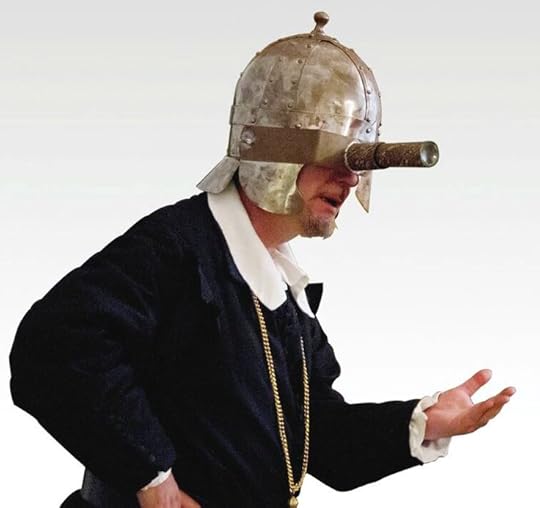
Newton died in 1727, and therefore did not live to see the predecessor of the modern day chronometers become a reality. At the same time another less known figure; a skilled watchmaker from Lincolnshire named John Harrison who was stimulated by the scientific and the monetary factors surrounding this riddle decided to find a solution of his own. Possessed with a brilliant mind he succeeded initially in creating a prototype and then further versions of perfect working models of the world’s first marine-chronometers thereby revolutionizing the ocean travels. His handmade sea-clocks - which are elaborate pieces of engineering marvels and still in display in working condition at the Royal Observatory, Greenwich, England - gave the world the first reliable method for measuring the longitude.

Dava Sobel records the background and each step of this pioneering invention in an easy to read form, by guiding the reader through a tumultuous story of the sheer determination and relentless pursuit for perfection from a self made man and the obstructions, unkempt promises and villainy he had to face from some of his jealous contemporaries. This concise and engaging chronicle of an innovative engineering deed covers a lot of details on the history, science and politics, which led to this invention and is a recommended read for anyone who is interested in maritime history and science.

Since I read an updated fully illustrated edition of ‘Longitude’, which was published later, the book was a treasure trove with a large selection of rare photographs - including Harrison's sea-clocks, documents of declarations, letters, scientific articles, maps and diagrams which added greatly to the value of the volume. The illustrated edition is highly recommended.
Profile Image for Philip.
1,802 reviews121 followers
July 17, 2025
In my 4-star review of the original Longitude, I said that "my sole complaint is that the book would have really benefited from illustrations" - and now here it is! So I really have to give this the full 5-stars based on that alone.

However, THAT SAID...maybe 180 illustrations (Sobel's total as noted in the introduction; I didn't count them) is a few too many? There are pictures on nearly every page, and while it makes for a much more enjoyable overall experience, one quickly notes that the pictures all fall into one of five categories: old-timey maps; near-identical paintings of 17th-18th century scientists; only-slightly-less identical covers of early scientific pamphlets*; paintings of ships at sea (cool); and finally, drawings and photos of the various clocks and other devices invented along the way (very cool). Of course, I don't know what ELSE you could have pictures of, (although inexcusably, the one thing that isn't shown is Galileo's brilliantly dorky "celatone," so here ya go, and you're welcome:)


My original review covers the text itself - although turns out I had totally forgotten about the delightful "powder of sympathy," a bizarre magical powder that could purportedly heal instantaneously over great distances. Long story short, the plan would ultimately have called for wounded dogs to go out with all ships, who would then yelp at a fixed time every day when someone back in England dipped one of their bandage in the magic powder. Of course, on longer voyages the dogs would have had to be re-injured at regular intervals (remember, this was pre-PETA) - but thankfully, this technique was never tested.

Anyway - absolutely great book that is even superior to the wonderful original. Only wish it was better known, as the original Longitude has some 48,ooo GR ratings, while this illustrated update has only 260!

* Typical example: "THE LONGITUDES EXAMIN'D, Beginning with a fhort Epiftle to the Longitudinarians, AND Ending with the Defcription of a fmart, pretty MACHINE Of my Own, Which I am (almoft) fure will do for the LONGITUDE, and procure me the Twenty Thoufand Pounds."
Profile Image for Ken-ichi.
635 reviews647 followers
October 4, 2009
Old review from 2005.

Since my fondest wish is to sail the high seas of the 19th century, I need to learn how to find myself without GPS. I also love this cover: a violent sea dashing ships to splinters, and, from on high, a man, in a wig, with a clock, come to deliver the poor dogs from ignorance. Interesting story, filled with many an odd character. Made me want an olde time pocket watch. I was actually constantly thinking of Hicksville while I was reading this book, and the Captain Cook / Hone Heke scenes in which they are lost at sea on a moving island. It’s strange that the sensation of being lost very often feels like falling out of reality. Even if you don’t know your exact location, you are still at a definable location, but it never seems to feel that way. Imagine a small, ticking watch being your only psychological anchor to the real world. Without it, you become unplottable.
Profile Image for JoAnn Hallum.
104 reviews65 followers
April 30, 2022
“He wrested the world’s whereabouts from the stars, and locked the secret in a pocket watch.”
This entire review has been hidden because of spoilers.
Profile Image for Anna-Maria Crum.
Author 33 books6 followers
August 7, 2013
This is the type of nonfiction I love. It's all about the people who made history and not just a recitation of dates and facts. The "Illustrated" version of this book included plenty of color images, paintings, maps, etc. I enjoyed seeing portraits of the people involved in finding the answer to the puzzle of determining an accurate reading for longitude.

I had known it was a problem but I hadn't realize what a terrible danger it was for ships not to know the exact reading for it. I assumed that dead reckoning got ships fairly close to where they wanted and then they would spot land and finish the journey. Okay, I know that was dumb, but I've never sailed, so that's my excuse. One of the stories that brought home how dangerous it was was the recounting of a British fleet returning from a battle and due to the conditions, couldn't see the coastline. A sailor came forward, and even though it was against the law, told the admiral that they were too far off course and were in danger of running aground. The admiral had him hung on the spot for mutiny. Then all the ships in the fleet ran aground and sunk right after that. 1,647 men died. Only 26 survived, including the admiral. However, after he made it to shore, he was killed by a woman who fancied the emerald ring on his hand. You've got to think there's a hand of justice at work in the world.

The book brought to life the challenge and danger people faced without an accurate way to determine longitude. I also enjoyed the way the author set forth the opposing philosophies and factions for how to tackle the problem. One concerned creating an accurate time piece that could keep time without slowing down due to temperature changes and sea water affecting the mechanism. The second faction looked to mapping the moon and the stars and planets as the way to determine longitude. Each approach had seemingly insurmountable problems. How the problem was finally solved made for fascinating reading.
Profile Image for Nathan Albright.
4,488 reviews165 followers
November 4, 2018
If you have already read Sobel's Longitude, you have already seen all of the text that is in this particular book.  Indeed, I mistakenly thought that there were two different textual versions when I originally got both editions of the book from the library, and to my surprise I found out that the shorter paperback of less than 200 pages and the larger-sized book with 200 pages of text in it were actually the same book, except one had pictures and the other did not (except for the cover).  Early in this book it is said that the only way that one could make this book better is with pictures, and while this book is definitely better for its illustrations, it is not as if the original book was without flaws.  Indeed, one of the most amusing aspects of this book was the way that a previous reader had annotated this particular volume to point out a couple of flaws in it, namely the authors comment about how the component metals were combined in order to preserve the same length regardless of the temperature conditions faced by the chronometer, and once to point out that there are subtle differences between GMT and Universal Time.

Indeed, like its text-only counterpart, this book is divided into the same fifteen chapters that introduce the problem of longitude, explore some of the ways that it caused death when people ran up against unexpected shores thinking they were hundreds of miles away, and how there were essentially two different ideas of how to know longitude, one based on the mechanics of the clock (ultimately used by John Harrison to solve the problem with his chronometer) and the other based on celestial mechanics that was favored by court astronomers and the scientific establishment.  This being an underdog tale, the author's sympathies (and likely the reader's as well) will be with the lone underdog who occasionally asks Parliament for money while solving the problem mostly on his own--although there are clearly some ways in which he was influence by others, especially in his decision to turn his third model into a small watch that was far more portable than his first two solutions.  And when he is vindicated at last and his solution is mass-produced by others, the author can close with a glorious look at his machines and their restoration, with the reader appreciative of the lone genius that worked for decades to solve a problem some people thought impossible.

And really, the text is improved with the pictures, whether one is looking at photographs or looking at designs or examining maps.  Even as someone who is generally a pretty textual person, it is easy to see that this subject matter is improved with visual aid, especially because chronometers and the travel of people through the ocean and the shrinkage of estimates of land once proper coordinates are known are all matters that can easily be conveyed through appropriate visuals and are much more difficult to explain in text alone.  One wonders why Sobel didn't want to focus on a well-illustrated version of her book to begin with, since at least a few of her other books are richly illustrated.  With illustrations, this not only becomes a good book to read but also one which can easily appear on someone's coffee table to be paged through admiringly by visitors to one's house, which is definitely no small benefit.  It is also easy to wonder if the author's work will be improved by comments like that which I found in this volume, as its minor errors probably should be corrected for the author to really show her expertise in matters of popular science as she would wish to show.
Profile Image for Ulla.
430 reviews18 followers
October 24, 2023
Interesting story about the invention of the chronometer, the sea-clock which is highly reliable and with which the longitude can be determined much easier as with the lunar-stellar distance method. I love the illustrations and historical pictures. Without them I probably wouldn't have understood many things and the faces also helped me to follow who's who. I developed a dislike for Mr. Maskelyne, who is an antagonist for John Harrison, the hero of the book.
Profile Image for James Welfare.
24 reviews2 followers
November 29, 2013
Interesting short read this. Explains the context and resolution of the longitude competition in tidy, well paced style. It isn't over detailed but manages to convey sufficient information in an engaging manner.
Profile Image for Staci.
35 reviews6 followers
abandoned
April 6, 2021
I have never had a book take me back to high school like this one did. It looks and reads exactly like a high school science textbook.

Objectively, I think this is most likely a good book. If I wasn't reading the illustrated version I probably would have finished it.
Profile Image for Bill Sleeman.
792 reviews10 followers
February 20, 2026
I am not too proud to admit that I enjoy a good coffee table book! Every picture does tell a story (hat tip to RS) and the judicious selection of images here illustrate the story effectively without distracting from the narrative. I read the text only book many years ago when it was first released, this Christmas present was a wonderful way to be re-acquainted with this fascinating story. Thoroughly enjoyable for history fans!
626 reviews23 followers
March 11, 2017
If you're going to read this book, it's really a good idea to read the Illustrated version, because you get a lot of context from the beautiful illustrations, and their captions. I fact, I think I would have found the original, bare, edition to be rather less interesting. Apparently, the text is exactly the same (I checked). However, be aware that reading the illustrated version is more difficult because of its rather awkward size and shape. But it's worth it to see the illustrations, really!

I enjoyed this book. It tells a fascinating story of an unsung hero (at least, I had never heard of him before this book became a best seller), John Harrison, who was clearly a genius. He started making clocks without having being apprenticed to a clockmaker -- in other words, a self-educated man from relatively humble beginnings, who solved the biggest problem of his day: determining longitude while at sea. Many ships foundered and sank with loss of [nearly] all hands when they encountered rocks or shorelines they didn't expect, because they didn't know where they were. The book talks about the most famous of these -- four British warships, headed by Sir Clowdisley Shovell (isn't that a simply marvelous name?), struck the rocks in the Scilly Isles, off the South West coast of England, and sank with the loss of almost all the men -- 1647 perished.

As a result, the British government offered a considerable prize to one who could solve the problem of determining longitude at sea, to a sufficient accuracy. This resulted in many, many people submitting proposals, most of which were completely ridiculous. But, eventually, John Harrison from a small village in Yorkshire travelled down to London and met with members of the "Longitude Committee", who evaluates the proposals, and, of those accepted, require the submitter to prove his submission worked (no mean feat!).

The result was a long, protracted situation, with John Harrison working years to perfect the most accurate timepieces ever made to that point, with funding from the Longitude Committee, and with members of the Longitude Committee supporting him, and others working against him and pushing their own rival schemes in very underhanded fashion. Politics was the name of the game. It was by no means certain that Harrison would succeed, especially since his major rival was Nevil Maskelyne (what a suitable name for an evil antagonist, huh?), who was for a long time the British Astronomer Royal. Dastardly deeds abounded.

Altogether, a fascinating piece of history, quite well told (although the author, from time to time, had a tendency towards rather "floral' writing). It is probable that Harrison's invention, the marine chronometer, was a major reason why the British ruled the waves for centuries.

Highly recommended!
Profile Image for Patrick.
882 reviews27 followers
January 4, 2010
This is another of those books that considers a topic for which sufficient material was at hand to produce a fine New Yorker-length feature piece, but on which the author or publisher was determined to produce something longer, and so the material is stretched, repeated, and embellished upon with pointless asides and personal reflections that end up making a good story fairly painful to get through.

The story behind all this is quite interesting, but so little is known of Harrison's life that we spend little time on him or his inventions, but must instead slog through accounts of shipwrecks and the general hubris of "learned" men of the era. Further, the details of Harrison's engineering seem to be beyond the author, or were excised by some populist editor, leaving me tantalized but frustrated.

Sobel seems to take her inspiration from works like The Map That Changed the World William Smith and the Birth of Modern Geology, and although she does not quite fall to the nadir of Winchester's execrable prose, the closing chapter is just embarrassing.

This Illustrated copy would have benefited from an editor who believes people actually read the book - instead, the many images are captioned with duplicate descriptions that at times conflict on facts with the main prose!
Profile Image for Elizabeth S.
1,922 reviews79 followers
February 25, 2016
I really enjoy reading books that bring to life the history of science. Especially books like this that tell the story of someone who is not a household name, but still contributed something significant to the world. I thought the writing was well done. There was some appropriate humor in the pages, which helps keep nonfiction books from running dry. The story is clearly told. The author also honestly acknowledges where there are gaps or historical uncertainties in the record. The science is explained, but not in overwhelming detail (which is a plus or a minus depending on who you are).

The illustrated edition has some big pros and some small cons. Pictures of the described clocks, maps, locations, and portraits all added significantly to the story. In addition, lengthy captions for each picture, written by William Andrewes, often added interesting facts and details not found in the main text. The downside is that the captions sometimes repeat information in the text, and sometimes give the information ahead of time. This caused me some minor confusion in chronology while reading for the first time. But overall, being able to see what was described is well worth it.
3 reviews
December 31, 2019
A fascinating and quick read about the arduous journey of measuring Longitude.

I chanced across this book on a Reddit discussion a day ago and grabbed a copy from the local library immediately. Though not riveting like a fictitious thriller, it was gripping enough to finish the book in two sittings.

The non-illustrated version is probably easy to read if you are an aficionado of horology and understand the workings of a watch.

Illustrations add context and credence to an otherwise one-sided account of John Harrison’s 40-year quest in building an accurate timekeeper, a predecessor to the now widely-known Marine Chronometer, to solve ‘the greatest scientific problem of his time’.

The illustrated version gives horology non-aficionados a literal peek into the history of watchmaking and will, however, take aficionados longer to complete as more time will be spent admiring and analysing the illustrations.

A recommended read for sailing and horology enthusiasts.
222 reviews1 follower
September 1, 2020
Read this book after learning more about Magellan's circumnavigation of the Globe. If he had been able to accurately determine the latitude and longitude of his voyage, it would have saved many months and lives lost at sea. This Longitude story is full of intrigue and personalities. The race to assist mariners by inventing a practical navigation system pitted astronomers and cosmologists against a watchmaker. Should sailors rely on the moon, sun and stars or a good clock? What happens when you cannot see the heavens because of poor weather and you are on a ship in the middle of the Pacific? Some of the scientists involved in the Longitude race played dirty pool to get their hands on the prize. This is a fun read.
Profile Image for Catherine.
1,071 reviews17 followers
March 16, 2011
The sciencey parts of the book made me glaze over at times, but I gained a basic understanding of how longitude is calculated (just don’t ask me to explain how to factor in the tilt of the earth). The human interest part of the story, complete with a villain, always held my attention. The beta testing roles of Captain Cook and especially Captain Bligh were a bonus for me - I've read several books about The Bounty and never thought about a chronometer, much less which group got custody of it.

I highly recommend this illustrated version for its maps, portraits, and photos of the beautiful, ornate early chronometers.
Profile Image for Joy Weese Moll.
401 reviews109 followers
August 3, 2014
Detecting latitude (how far north or south you are) is fairly easy. Longitude (location east or west), however, especially on a rolling sea, is quite difficult to calculate. As Britain was stretching itself into empire in the 1600s and 1700s, the longitude problem became a national and international obsession among scientists of the age. A solution was deemed so important that the British Parliament passed the Longitude Act of 1714 offering a prize of the equivalent of several million dollars for a solution.

More thoughts on my blog:
Profile Image for Tracy Davis.
19 reviews1 follower
April 14, 2017
While studying Geography by the seat of our pants in our home school, I chose this book to go along with the intro to the course. It takes us back to the time when finding longitude was as elusive as the fountain of youth, and great scientific minds applied themselves to the problem for years while sailors needlessly lost their lives for want of knowing where in the world they were. This book tells the fascinating story of a self-taught clock maker and his ingenious inventions up against the scientific community biased toward looking to the heavens to solve the longitude problem. The illustrated edition brings the text to life with original drawings, documents, and photographs.
Profile Image for Jen Bergeron.
180 reviews1 follower
February 2, 2018
I have to say, this it was a fantastic recommendation. As a scientist, I thoroughly enjoyed learning how clocks work and how Harrison compensated for thermal expansion, though I have to admit it took me a lot of mental energy and chapter rereading to figure out how the escapement mechanism works. Plus, the whole problem of longitude was absolutely fascinating to me and I've excitedly told a few of my nerdier friends about it as well. Also I've been to Tycho Brahe's observatory in Hven (Denmark/Sweden) so that was a neat connection to make.
The first part was awesome, definitely 5 stars, though it started to lose steam in the middle and definitely by the end so 4 stars.
96 reviews2 followers
July 19, 2011
I really enjoyed the history outlined by this book. I must say, revising it into an illustrated edition was a brilliant idea; the subtle details really don't sink in without all of the photographs and images. There are so many images, with fairly detailed descriptions, that I would say you could probably just read all of the captions through the book and understand things quite nicely. Indeed, sometimes it felt like I was reading the same story twice - once by Sobel, again through the captions. Regardless, the content is fascinating!
Profile Image for Alyssa Bohon.
590 reviews5 followers
March 26, 2022
Large, glossy pages with big, crisp pictures of intricate clockwork and paintings of rubicund British men in frock coats are the perfect accompaniment to Sobel's colorful and detailed writing. I thoroughly enjoyed the experience, and learned a lot. Honestly, I think reading this text without the illustrations (even though Sobel is a brilliant writer) would have annoyed me, and I'd have ended up spending half my reading time embarking on Google image searches. Glad I found the illustrated version.
Profile Image for Patty.
738 reviews12 followers
February 15, 2011
I found this illustrated edition at the Library when seeking out the story of John Harrison and his timekeepers. An excellent exploration of the problem of determining longitude and the solution provided by accurate watches built to endure the elements. The beautiful pictures illuminate the faces behind the story as well as highlight the intricacies of design in each of the four timekeepers built in response to the Longitude Act.
Profile Image for Fred Rose.
643 reviews18 followers
April 7, 2012
"The first X-prize. Interesting in that the process took so long, really more than 50 years. I also found it interesting that the guy spent 25 years developing some very complicated clocks that worked, but were very large. Someone then gave him a very nice pocket watch which inspired him to develop a pocket sized watch that worked for measuring longitude. I'm not a big fan of the "lone genius" moniker and this shows that even in this case, that inspiration can come from many places."
Profile Image for Gali.
356 reviews
January 3, 2014
There are two main points for the book - it's a rather unknown story and it's a short read. There are many points against the book including the fact that it appears to have been written with middle schoolers in mind, the language is beyond simplified and the sentence structure is not worthy of an "adult" book. Moreover the author does not seem to use any kind of logic in her placement of chapters and stories, things get repeated, others are chronologically wrong.
86 reviews10 followers
March 1, 2016
Longitude is the type of science book that attracts readers of fiction who want to venture in to non-fiction occasionally: it is mostly storytelling. In fact, the information in longitude can be condensed to a longread article on the internet.

Is that a bad thing? Not at all. Dava Sobel has a captivating writing style. There is nothing really wrong with this book, but it was simply too much story, and too little facts for me.
Profile Image for Charles Veley.
Author 76 books103 followers
April 16, 2019
This is both a thrilling and inspirational story and a wonderfully lucid presentation of the historical challenges surrounding a complex issue. The pictures and text combine to create a deeply satisfying experience to which a reader can return again and again. One obtains a sense of not only the scientific methods involved, but also of the political and economic forces that shaped Western society at the time and still prevail today. A superb achievement.
165 reviews
February 9, 2020
Probably not worth your time reading this, especially if you've already done the tour at Greenwich and seen H1-4 in person. I felt like I was just reading a really long museum label. Interesting things I found out though are that H3 took 19 years to create, and that H4 was completed the year after H3. There was also some good detail as to how much of an asshole Maskelyne was to Harrison, especially when he was removing H1-4 to Greenwich, intentionally mistreating the devices.
Profile Image for Julie.
3,563 reviews51 followers
May 23, 2022
A very interesting history of how the problem of accurately determining longitude was solved. Poor John Harrison - he was really put through the wringer and I repeatedly wanted to slap Nevil Maskelyne myself, so I can only imagine how Harrison felt.

The illustrated version provides tons of gorgeous full-color images - portraits of all the major players, diagrams and documents, and photos of the locations and objects discussed.

Thanks to my dad for lending/suggesting it to me!
26 reviews
September 20, 2010
A wonderful account of the history of resolving the problem of longitude. Ships could find their position by latitude, but not by longitude right into the 19th century. The solution had to be either entirely from astronomical observations or through the invention of a clock which could maintain its accuracy whilst enduring changes of climate, the salt sea air, and the motion of a ship at sea.
2 reviews
November 13, 2015
Excellent book on a fascinating subject. This version especially good because of the illustrations which help greatly with understanding of some quite complex concepts and technical solutions. As well as being a good read, this is a really nice object which will bear frequent revisiting, especially to browse the illustrations.
Displaying 1 - 30 of 53 reviews

Can't find what you're looking for?

Get help and learn more about the design.