In the near future, disease will be a condition of the past. Most genetic defects will be removed at birth; the remaining during infancy. Lou Arrendale, a high-functioning autistic adult, is a member of the lost generation, born at the wrong time to reap the rewards of medical science. He lives a low-key, independent life. But then he is offered a chance to try a brand-new experimental “cure” for his condition. With this treatment Lou would think and act and be just like everyone else. But if he was suddenly free of autism, would he still be himself? Would he still love the same classical music—with its complications and resolutions? Would he still see the same colors and patterns in the world—shades and hues that others cannot see? Most important, would he still love Marjory, a woman who may never be able to reciprocate his feelings? Now Lou must decide if he should submit to a surgery that might completely change the way he views the world... and the very essence of who he is.
Thoughtful, provocative, poignant, unforgettable, The Speed of Dark is a gripping journey into the mind of an autistic person as he struggles with profound questions of humanity and matters of the heart.
Elizabeth Moon was born March 7, 1945, and grew up in McAllen, Texas, graduating from McAllen High School in 1963. She has a B.A. in History from Rice University (1968) and another in Biology from the University of Texas at Austin (1975) with graduate work in Biology at the University of Texas, San Antonio.
She served in the USMC from 1968 to 1971, first at MCB Quantico and then at HQMC. She married Richard Moon, a Rice classmate and Army officer, in 1969; they moved to the small central Texas town where they still live in 1979. They have one son, born in 1983.
She started writing stories and poems as a small child; attempted first book (an illustrated biography of the family dog) at age six. Started writing science fiction in high school, but considered writing merely a sideline. First got serious about writing (as in, submitting things and actually getting money...) in the 1980s. Made first fiction sale at age forty--"Bargains" to Marion Zimmer Bradley's Sword & Sorceress III and "ABCs in Zero G" to Analog. Her first novel, Sheepfarmer's Daughter, sold in 1987 and came out in 1988; it won the Compton Crook Award in 1989. Remnant Population was a Hugo nominee in 1997, and The Speed of Dark was a finalist for the Arthur C. Clarke Award, and won the Nebula in 2004.
This book is about as 'sci fi' as an episode of CSI. Moon basically takes 'Flowers for Algernon' and hacks off the ending. The writing was alright, and there was some interesting characterization, but I suspect it only got the Nebula and Clarke because award committees love nothing as much as political correctness. This book is the equivalent of an actor making an Oscar bid by playing a mentally-challenged character.
I know Moon is a sci fi author, but in this book, it feels like she just stamped on the 'Sci-Fi' label in order to draw an audience, or perhaps because her publisher refused to authorize a genre switch. I hope that isn't true, because that's always a cheap move. This is just modern pop-fiction, an 'emotionally confessional' book with a veneer of 'vaguely near-future'.
This wouldn't have been a problem if Moon had used this opportunity to explore human psychology, which was how 'Algernon' and 'A Clockwork Orange' treated this same theme, but she didn't. She rehashed half of an interesting idea, and failed to capitalize on it.
Speculative Fiction has always been obsessed with what makes us human, and how much we can change before we stop being human at all. While that should be the main theme of this book, it goes almost unexplored.
The climax is rushed and inauthentic. We never actually see the character change, we don't witness the effects as they happen, instead they are lightly explained in choppy montage at the end. Compared to the rest of the book--an internal, step-by-step presentation of a fairly different mind--this sudden, convenient, external ending is disappointing and jarring.
The denouement following the climax is particularly tidy, with all the subtlety of the end of an 80's college movie where we learn through super-imposed text that "Barry went on to win the Nobel prize" to the strains of Simple Minds.
And it's a shame, because the story leading up to the climax is interesting enough, presenting the psychological workings of autism. Moon researched this disorder much better than Mark Haddon in his laughably flawed 'Curious Incident Of The Dog In The Night Time', but then, Moon's son is actually autistic.
There was also a part about fencing, which excited me at first, being a former competitive fencer and coach, but instead, it was just weird SCA dressup boffing. Not that I have anything against SCA dressup boffing (or do I?).
It's an alright read, goes pretty quick, and it might give you some insight into brain disorders, but it doesn't tie human experiences together; which is really a shame, because other sci fi books have successfully used this topic to ask some very difficult and profound questions about how the future of technology might change the way we think, and about the different ways people process information.
'Flowers for Algernon' tackled the exact same themes and was written sixty years before Moon's less profound attempt. You'd think we'd have something more to say after sixty years of neurology and psychology, but apparently not. It also pales in comparison with 'A Clockwork Orange', another good light sci fi which explores the morality of changing the way that people think.
This book was light and fluffy, especially given its subject matter, and while it will probably make soccer moms feel proud of themselves for reading something so 'different', it doesn't endeavor to change the way they think about humanity, the mind, or the possibilities within us.
Speed of Dark by Elizabeth Moon tells the story of an autistic man in the near future where advances in medical technology have cured many diseases. The protagonist is in a small group of people who were born just before these advances and so have grown up in a world where their disability is a close anachronism.
This is a subtle, introspective work that focuses on psychological, philosophical and theological questions about normality and quality of life.
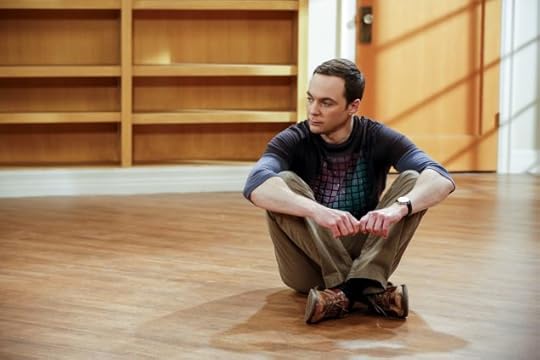
I could not help but cast actor Jim Parsons, from The Big Bang Theory, in the role of the hero, and throughout the book his was the voice and face that I imagined as Lou. I also was led to compare this work to Look Me in the Eye: My Life with Asperger's by John Elder Robison, his non-fiction autobiographical work about his life with Asperger’s Syndrome as well as Philip K. Dick’s work Martian Time-Slip.
There is some very thin characterization, almost straw man, that weakens the larger credibility of the narration, but the ending is very good and well worth the time reading.
I may need to review my top-ten shelf and see what can be bumped. "The Speed of Dark" book moved me like few books ever have. I cried, I laughed, I didn't want it to end. Elizabeth Moon does an absolutely amazing job of making a reader walk many miles in someone else's shoes. In this case, the reader becomes Lou Arrendale, an autistic man in an era when autism can be cured in childhood. Unfortunately, he was born too soon for the treatment. A new treatment is developed for adult autists and he has to decide whether or not to participate in the clinical trials. At the end, I don't know that I agreed with his decision, but I understood it.
I now understand the term "genre ghetto". I think this book should be more widely read, but it probably won't be because it's classified as science fiction. Believe me, it's not a space opera or a tech-geek novel, it's a novel with real heart that would appeal even to those who never set foot in the science fiction/fantasy section of the bookstore.
This entire review has been hidden because of spoilers.
Oh man. This book started out incredibly promising. The autistic first-person narrator is believable and authentic, and when an experimental cure for autism is acquired by the company he works for, the ethical ramifications are gripping and frightening. I mean, when people see autism as an illness, something to be cured, then resisting treatment is obvious grounds for firing someone. So I really wanted to see where the writer would take this.
This is one hell of a fantastic SF and it hit me in all the right feels. It's not flashy, either, just really well made.
It's also custom-made for anyone wanting to see and feel what life would be like as a high-functioning autistic. Its set in the near future, with talk of highly advanced treatments and AIs, but the real joy is in the narrator's outlook, the focus on patterns in everything, everywhere.
For while this novel is pretty soft-SF, it actually has a hard-SF feel because of the character. And even though he goes to work, has hobbies, thinks about having a love life, and continually strives to be better, the difference within his perception of things is a real joy.
I love this book. I really love this book. It's not even one I would have normally picked to love, either. It just slammed into me from out of nowhere. It even has sword fights. :) Well, fencing. And bombs! Um, dangerous pranks and jilted lovers. :)
Yes, it is a joyous celebration of differences in humanity, but more than that, this novel is also a great story. :)
I totally recommend it for anyone, anywhere.
Even those of us who already "think differently". :)
The last forty pages of this fucking sucked. Up until that point, it was an awesome anti-ableist critique of normalcy and "cure" with what felt to me like a pretty authentic narrative voice. Then, rather inexplicably, the main character does an about-face and decides that in order to truly fulfill his dreams of being an astronaut and be able to date, he needs to be cured. Sick. It totally knocked it down from a 4 star to a 2 star. I'm still giving it 2 stars because this horrible ending was tacked onto the end of what otherwise was a pretty amazing book. Moon, the parent of an autistic son, totally let her "parental fantasy of cure" win out in the end. Soooo disappointing. I'd actually still recommend it to people with a serious caveat about the last 40 pages. The rest of it rocks though.
This entire review has been hidden because of spoilers.
For some reason I couldn't like this book. The good things about it was the main character and how his autism was portrayed, but other than that, it just bothered me. The main thing that bugged me is, what is normal in the first place? This book takes place in the future, how far it takes place, I don't know, but I would think that by the future we'd understand autism better and wouldn't just dismiss it as abnormal but would try to empathize with people with autism and to understand their point of view. In this book you have a man with a life that's already rich and full of fencing, people who like him and respect him (and one enemy, but you get to that later). He has a good job, sure he has to do things like bounce and have pinwheels around, but why is that a big deal? It's hard for him to appreciate himself with this concept of normal hanging over his head. Could the world in the future expand to except other concepts of normal? Or will differences and variations be "cured" instead of taking care of the more difficult symptoms? This main character, after all, was incredibly intelligent, able to understand information about the brain the "normal" folks around him couldn't understand totally. But the main frustrating thing about this book is simply, even in the future, there's no way something like this would even be allowed. No way can a corporation FORCE a person to accept a cure or experiment on their brain because that sort of thing is just not ethical.
So too many things about this book frustrated me.
Rereading Flowers for Algernon makes me realize just how frustrating this book is compared to that book. And it makes me take away a star. For one thing, the character in Flowers for Algernon was more impaired than this main character in this book. As I said up there, he was autistic, but that's not the same thing as an intellectual disability. This character could function, think, remember. His brain functioned differently, but he could understand all sorts of books about neurology. So why did he have to be cured? Is this just wishful thinking on the part of someone who has a child with autism? That they find a cure and they become normal which doesn't really exist? Why can't you be an astronaut even WITH autism? Why can't folks learn more about autism rather than trying to wipe it out to the point that all you have are people who are normal when it doesn't exist? The spectrum must expand. Much as sexuality is narrowed in the minds of so many people to only encompass heterosexuality when you have a spectrum that goes from asexuality to bisexuality, normal must be expanded to include other people whose minds do not work the same way because there's really nothing wrong with that!
Also, too many of my reviews, especially negative ones turn into rants.
I also must add, what is wrong with Lou? He seems like a nice guy, he has cool hobbies like fencing. I'd hang out with him. I just didn't see that there was something wrong with him that needed to be cured. Maybe I am biased, but there really was nothing wrong with this guy. Now I could see if this was interfering with his life, his job and making it difficult, but there was nothing like this at all. The ending is satisfying for people who see autism as a horrible affliction you need to get rid of as soon as possible, but not for people who see autism as more of a human variation than a tragedy.
This entire review has been hidden because of spoilers.
My son has Asperger Syndrome and while this book was enlightening and incredibly insightful, it was also painful to read, which is why it sat in my "Currently Reading" list for so long. I had to pace myself, taking in a little at a time, so I did not get overwhelmed by how close to home Lou's struggle with daily life hits.
In addition to the "learnings" I encountered on every page, I did love the story and the characters, and enthusiastically give this book five stars for its eloquence, heart, and ambition. The description sounds an awful lot like Flowers for Algernon, but don't let the possibility of it being a bit derivative stop you from picking this up.
Just like Wonder, The Speed of Dark is definitely one of those "oh, I'm so glad I read this" kinds of novels. Its warmth and inspiration will stay with you long after you've finished.
This is a very interesting book set in the near future when advancements in medical science have made autism curable in child hood. The story revolves around a group of adults with autism who were too old to be treated when the cure was found, making them the last of their kind. Eventually a possible 'cure' is found for the adults and the debate is raised whether they need to be changed or whether they are who they are and should stay the same There are lots of similarities between this book and the wonderful Flowers for Algernon. I also saw much of Don from The Rosie Project in this book's main character Lou. Lou actually holds this book together. For much of the time he is the narrator so the reader gets to view the world from his often very unusual stand point. It is an interesting, informative and often entertaining book and I enjoyed it very much.
Amazon's e-book samples are too short, only about 18 pages in length, good luck applying that ol’ “50 pages rule” here. Fortunately The Speed of Dark (2003 Nebula Award winner) is immediately intriguing and I was sold on it by the end of the short sample. I keep hearing good things about Elizabeth Moon and Elizabeth Bear in sci-fi websites and forums, I get them mixed up a lot as I have not read either one until now. Elizabeth Moon surpasses my expectations with this book, hopefully Elizabeth Bear can do likewise very soon.
The title The Speed of Dark has a very sci-fi ring to it, it is actually a phrase to contrast the speed of light. The idea is that there is always darkness before light, therefore darkness must somehow travel faster than light because it is always ahead. This is a metaphor the author is employing to represent knowledge illuminating ignorance, so it not some kind of crazy bad science.
The book is set in the near future, the protagonist Lou Arrendale is an autistic man working in a department of a company that exclusively employs autistic people for their superior concentration, greater pattern recognition or other cognitive abilities. Lou copes admirably with his autism and is generally happy – if not quite content – with his life, then one day he is informed that there is a cure for autism and his life immediately changes even without before the cure becomes available to him.
The Speed of Dark is often compared to the classic Flowers for Algernon as both books deal with improvement of the brain through neuroscience. Both books are also poignant, brimming with compassion and tug at the heartstrings. Don’t worry about having your heart broken by the author though, Elizabeth Moon is not Thomas Hardy. Prior to reading this book I knew next to nothing about autism, not having met any autistic person. I can not claim to know a lot about it now as this is a work of fiction but Ms. Moon’s son is autistic so I believe her depiction of autism to be realistic. In any case her portrayal of autistic characters has the feel of verisimilitude.
Most of the novel is told in the first person from Lou’s perspective (with the occasional switch to a few secondary characters where Lou is not privy to what is going on in his absence). This is the first book I have ever read that take me inside the head of an autistic person. The very clever first person narrative of Lou is fascinating in and of itself. Lou’s stilted use of language is very formal, polite and precise. Here is an example:
“ "Don can be a real heel," she says.
“Don is not a heel; he is a person. Normal people say things like this, changing the meaning of words without warning, and they understand it. I know, because someone told me years ago, that heel is a slang word for “bad person”. But he couldn’t tell me why, and I still wonder about it. If someone is a bad person and you want to say that he is a bad person, why not just say it? Why say “heel” or “jerk” or something? And adding “real” to it only makes it worse. If you say something is real, it should be real.”
More importantly Lou’s narration enables me to feel the gulf between himself and “normal” people. Social nuances or cues are entirely beyond his ken, as are voice intonations and most facial expressions. He is also hopeless with colloquial terms, idioms and metaphors. All the characters in this book are very believable, the autistic characters are particularly vivid and sympathetic. They all seem to have a pure heart, I don’t know if this is true for all “autists” in the real world but the selfish and prejudiced “normals” they come across raises the question of whether normality may be overrated. After all, only a “normal” person would consider hurting someone who has never done them any harm.
Most of the book reads more like contemporary mainstream fiction than science fiction, the sci-fi component of it only comes into play well into the second half of the book. This is not a sci-fi thriller, this is not a page turner, I did not want to turn the pages quickly to find out what happen next, I wanted absorb the story page by page and hope that Lou will be alright. From what I have heard Elizabeth Moon generally writes action packed military sci-fi or fantasy so I guess this book is atypical of her works. It appears to be a heartfelt story based on her own experiences with her son that she wants to share with us. I feel privileged to have read it, it is a beautiful book that I will never forget.
Moon has an autistic son, which clearly informed her writing of this book. The Speed of Dark tells the story of Lou Arrendale, an autistic man living in a near future very similar to our own time. The back of the book blurb focuses on:
"…an experimental “cure” for his condition. Now Lou must decide if he should submit to a surgery that may change the way he views the world–and the very essence of who he is."
But the book is so much more. This isn’t an action or adventure novel, and the treatments and potential cure for autism is pretty much the only real SF element in the story.
The most powerful thing, to me, is the way Moon brings you into Lou’s perspective:
It is hard to drive safely in the hot afternoon, with the wrong music in my head. Light flashed off windshields, bumpers, trim; there are too many flashing lights. By the time I get home, my head hurts and I’m shaking. I take the pillows off my couch into the bedroom, closing all the shades tightly and then the door. I lie down, piling the pillow on top of me, then turn off the light.
This is something else I never tell Dr. Fornum about. She would make notes in my record about this…
As the father of a boy on the high-functioning end of the autistic spectrum, I spent a fair amount of time reminding myself that Lou’s experiences aren’t meant to be a universal representation of autism. Lou works with other autistics, doing pattern-analysis for a large corporation, and Moon does a very good job of showing Lou and the other characters as individuals. Autism is a significant part of who they are, but it doesn’t define them.
Moon shows many of the challenges Lou faces, both the internal and the external. A new supervisor wants to eliminate the “special accommodations” Lou and his unit receive at work. A man from Lou’s fencing group blames Lou for his problems, accusing people like him of stealing jobs from “normal” people. (Sound familiar? Much of this book could be set in today’s world.)
And then there’s the potential cure, the chance for Lou to be normal, whatever that means. Moon does a decent job of exploring the moral messiness and complexities of “curing” autism, though I would have liked to see more of this part. Should we cure someone who’s able to function? What about someone we define as low-functioning? How many of the challenges autistic people face are inherent to the condition, and how many of those challenges are externally created?
The Speed of Dark is a book that makes you think. Lou is a wonderful, sympathetic, beautiful protagonist. This isn’t a plot-oriented, action-packed book, but it’s one I definitely recommend reading.
I was very impressed by The Speed of Dark. Lou Arrendale is autistic and employed by a large company that requires his special skill of recognizing patterns that can't be seen by other people or computers. Despite the fact that he is gainfully employed and a brilliant fencer, autistics have a different way of interacting socially and perceiving the world.
The author has written about autism with a lot of knowledge and sensitivity.
What does it mean to be normal? This book explores this concept much more than it tells a sci-fi story.
It's interesting to me that we spend the early part of our lives rebelling against normality (Why be normal, right?) only to want so desperately to be normal when our normality is not in our hands. Lou is born autistic, and even with the advantages of a future where more is known about the illness, there is still an enormous amount of prejudice towards people with autism.
I have strong objections to the word "normal" anyway. Watching what Lou went through throughout this book was heartbreaking. First the forced pressure to be cured and, on the other side, does he want to be? It's very difficult to watch this struggle and to see how he's been made to feel less and other all of his life.
I loved that author allowed Lou to do research throughout the book that allowed us to better understand autism. I wouldn't really consider this to be a sci-fi story so much as a study of what makes a person who they are and what would happen if that could change. Would it change who they are? And how much would a desire to be normal shape this decision?
5.0 stars. This is an incredible novel and one that I highly recommend to anyone one liked Flowers for Algernon. Emotionally powerful science fiction at its best. Superb writing, excellent plot and an unforgetable main character.
Nominee: Arthur C. Clarke Award for Best Science Fiction Novel Nominee: Locus Award for Best Science Fiction Novel Winner: Nebula Award for Best Science Fiction Novel
I hate the labels: they make me feel sticky, where they are stuck to me with professional glue I can’t pry off. All babies are born autistic, one of our group said once. We laughed nervously. We agreed, but it was dangerous to say so.
Normality is a fictional notion, a social convention. Witness the extreme pressures exercised by some vocal minorities, both on the right and on the left of the political spectrum, to redefine normality in light of their own peculiar dogmas. Everybody who disagrees with them is their mortal enemy: Nazi sympathizers on the right lay claim to national identity – they are the only template for what it means to be a true [insert nationality here]; Every Christian splinter cult throughout history claims they hold the ultimate answer to God, and that everyone else is a heretic who should be burned at the stake; crusaders for a new sexual revolution on the left rush to cancel anyone who dares to question the validity of their claims and of their priorities.
When in doubt, I myself have two benchmarks that I use to question my own position on human behaviour issues: One is Socrates, who urges us to self analysis, but also to strive for balance, avoiding extremes, both in theory and in practice. The other is a military psychological manual that I ‘borrowed’ from my captain’s office during my tour of duty. It was explained there that there are four basic temperamental traits in humans, and that they can be determined through tests. [Choleric, Sanguine, Phlegmatic, Melancholic] The one important lesson in the book is not how to assign a type to a person, but the fact that nobody is a ‘perfect’ type: we all manifest traits from two or more of these categories. Some people favour one trait more than others, but extremely few can be said to be ‘pure’ choleric or ‘pure’ melancholic. The origin of the Greek word for temperament is in fact a reference to that same Socratic ‘balance’ – the way these innate traits are usually manifested in a character study.
Sometimes I wonder how normal normal people are, and I wonder that most in the grocery store.
Why the long [and personal] introduction? This book is about Lou Arendale: a person who has been labelled ‘not-normal’, ‘aberrant’ or ‘defective’ based on the way he processes outside stimuli and the way he interacts socially with his peers. Nothing to do with his intelligence. In fact, a multinational corporation in the IT sector has hired Lou Arendale and a team of his equally gifted but socially challenged peers in its most advanced laboratory, where they develop together cutting-edge software routines.
Everything in my life that I value has been gained at the cost of not saying what I really think and saying what they want me to say.
Lou Arendale is struggling to be a functioning adult, integrated in ‘normal’ society, but he is constantly baffled by the illogical actions of these people he is supposed to model his behaviour on. Having an interesting job, a work environment customized to his special needs, a hobby [fencing] and a social group of his co-workers to spend his leisure time with should help Lou Arendale blend-in, but all his pillars of support are about to crumble when a new manager tries to assert his dominance by cutting privileges for his autistic software team and by pressuring them to undergo a controversial new brain intervention that would ‘normalize’ their behaviour.
Executives, it had been explained repeatedly, needed these perks to help them maintain peak performance. They had earned the privileges they used, and the privileges boosted their efficiency. It was said, but Aldrin didn’t believe it. He also didn’t say it.
Aldrin, the team co-ordinator, believes the conscription of vulnerable people is ethically indefensible, since the results are not guaranteed. Lou and his colleagues are conflicted, torn between anger at the way they are treated and the possibility of having their most secret dream realized: to be like everybody else. But would they really be themselves after the researchers cut into their brains? or will they lose their special ‘savant’ abilities, their memories, their very identities? And all for making them better corporate drones, able to work longer hours with fewer perks?
[*] A little side note here: the novel is set in the near future, a couple of decades ahead of present day. The one development that struck me as important is a so called PPD chip, used by law enforcement on convicted criminals. It is inserted into their brain by court order and it is used to make them ‘compliant’. Lou wonders if the new treatment they are offered is a variant of this PPD chip that will make them work longer hours with more focus and fewer breaks. I’m sure corporate gurus are salivating already over the possibility, just like the evil one in the novel.
Lou Arendale must take the future into his own hands, decide for himself if the risk is worth the reward.
>>><<<>>><<<
Does the plot sound familiar to you? Yes, it steers pretty close regarding being locked inside your head and ridiculed by so-called ‘normal’ people and regarding the ethics of medical experiments on the brain to the celebrated Daniel Keyes novel Flowers for Algernon . The one that actually inspired my internet signature from the first day I logged on. The question was put to Elizabeth Moon in the interview included at the end of the novel, and she correctly answers that she feels honoured. Also that the books should be discussed in their differences, not in their similarities. I agree that both are excellent and that both deserve the genre awards received, and that we should avoid easy comparisons. Lou Arendale should be considered on his own merits, which are considerable.
No matter what I do, no matter how predictable I try to make my life, it will not be any more predictable than the rest of the world. Which is chaotic.
The one thing that kept me glued to the page here [as in the original Keyes] is the unique first person narration, the glimpse into Otherness that is ultimately Sameness. Lou’s candid look at the folly of our absurd habits, mannerisms and speech patterns [memes?], his innocence and his pointed questions: Who gave me the right to judge him? What defines me as Normal and him as Aberrant?
... some people don’t think too well, and it’s easy for them to blame someone else for anything that’s wrong in their own lives.
We are in the same boat here, a pebble lost in a vast sky, sailing the immense darkness of space. Sticky labels are less than helpful in making us understand each other, and I hate them as much as Lou.
... everything they say means more than it says. Beyond the words is the tone; beyond the tone is the context; beyond the context is the unexplored territory of normal socialization, vast and dark as night, lit by the few pinpricks of similar experience, like stars.
How can Elizabeth Moon be so insightful and expressive, close to poetry, on the subject of autism, a condition so easy to misinterpret? From the same interview I quoted earlier, the author has a long, difficult yet rewarding experience in dealing with Otherness in her own family. Lou Arendale is not based on her own son, but on the vast trove of medical and behaviour studies she consulted in order to offer her child a better chance to function independently as an adult. I know I would probably search everywhere, try anything if it was my own child.
I do not understand God that way. I do not think God makes bad things happen just so that people can grow spiritually. Bad parents do that, my mother said. Bad parents make things hard and painful for their children and then say it was to help them grow. Growing and living are hard enough already; children do not need things to be harder.
Lou Arendale in the book tries social services, peer support groups, academic friends, fellow hobbyists, even a church in his integration quest, in his effort to find the meaning of a chaotic life. I am not myself a church going person, but I would never go so far as to condemn religions and spiritual advisers wholesale like Hitchens: I would only apply sticky labels in turn, and there are always cases when comfort and kindness can be found with the right practitioner, the right mentor, the right parental model.
Moon’s decision to explain the condition to us and to help us be more considerate towards the struggle, to help other families who deal with similar problems is well served by her literary skills. The end products speaks for itself, and she should be proud of the achievement.
>>><<<>>><<<
Surely someone else has asked why dreams can be full of light even in the dark. The brain generates images, yes, but where does it come from, the light in them?
A good book, a best-seller, is usually helped by a catchy title. Accidentally or not, Elizabeth Moon struck gold here, with a little help form her son. The yin-yang dynamic of light and darkness informs every chapter of the book, and the metaphors practically write themselves, if your artistic ear is tuned to the music. Bravo, again!
from the interview: When a title works, it begins to resonate with more and more elements ... in the writing, the other metaphysical connections formed.
Here are more examples:
How fast is dark? Shadow can be no faster than what casts it, but not all darkness is shadow. Is it? This time I hear no music but see a pattern of light and shadow, shifting, twirling, arcs and helices of light against a background of dark.
“Metaphorically,” Tom said, “if you take knowledge as light and ignorance as dark, there does sometimes seem to be a real presence to the dark – to ignorance. Something more tactile and muscley than just lack of knowledge. It would explain some politicians.”
Out there is the dark: the dark we don’t know about yet. It is always there waiting: it is, in that sense, always ahead of the light
>>><<<>>><<<
Last side note: if I were pressed to find some fault with the novel, I would ask the same question the author was asked in the interview:
How typical is Lou of people with autism today in terms of his social skills and mental abilities?
Elizabeth Moon gives a general answer about how, with the proper treatment started early in childhood, a higher proportion of autistic children will become capable of independent functioning in society. A second good answer is that Lou’s mental processes are quite typical. She gives us the books of Temple Grandin as a reference, and those look quite interesting on their own. Lou’s genius though is not so often found [ Savant syndrome is estimated to affect around one in a million people. says a quick wiki search], and the one cautionary note I feel is need here is that the vast majority of people with behavioural issues need our understanding and support and not the ‘genius’ label.
This book is outstanding. Moon's believable hero is a genius trapped in an autistic shell. The characterization was vivid and touching, I grew to love the man and feel very strongly about the things he dealt with. I even found myself getting angry with the bad things people were doing thinking, "they can't do that!" even though the book was just fiction. It was outrageous and yet believable. I loved how the author didn't relegate the autistic man to being stupid or unable to comprehend big words. She clarified the difference, making me think about the how we think intelligence means being able to think and process quickly when capacity is even more important.
The only problem I had with the book was the ending which I felt was rushed and unsatisfying. While I didn't agree with all the choices the characters made, that wasn't the problem. I just felt that the ending was too pat, too cut and dried and it left me discombobulated.
It wasn't enough to dissuade me from giving the book five stars. I really loved the book and wish there were a whole series based on this character. Of course, the nature of the issue in the book is necessarily a one-book plot. Alas.
3.5 Stars This is such an important story discussing the complexities of neurodiversity, particularly focused on the Autism spectrum. Set in a near future science fiction, this story asked hard questions while exploring complex themes. Despite not being an ownvoices story, I thought the representation of people with Autism was excellent. In many ways this book felt like a love letter to the brilliance of the Autistic brain. I wanted to highlight so many quotes.
However the ending to this book was extremely frustrating, undermining all the themes built up throughout the story. This book would have been a five star read except for that devastatingly frustrating ending.
Overall this was a really powerful story and I would highly recommend it to readers looking for a nuanced character driven story. However I am tempted to tell readers to stop reading a few chapters early before this author shoots themself in the foot with that ending. Ugh!
"Autistic is different, not bad. It is not wrong to be different. Sometimes it is hard, but it is not wrong."
The protagonist, Lou, is described very well by the blurb and it was a genuine delight to follow his thought processes. This review is chokkas full of quotes from the book because you don't need to be autistic to relate to many of the introspective observations:
"It would be simpler if people said what they meant."
Actually if you haven't read the blurb you ought to, I'm not even going to try to summarise it. The scifi here is about possible medical achievements which may improve quality of life for future generations while skipping over a generation of individuals who were the last to be born without genetic selection. This is my second book my Moon and I was expecting a very personal narrative which is exactly what she delivered.
There are some standard evil players in the game, the manager who puts profits before people and the doctor who projects their presumptions onto their patients are two early examples.
But most of the characters are wonderfully complex too. The head of Lou's department has some internalised guilt for abandoning his own low-functioning autistic brother to a full-time adult care facility which he assuages partly by his work with Lou and other high-functioning autistic employees.
This is not a typical scifi adventure, although there are a few hints (other than medical) at just how far ahead the science is in this future. For example:
“light is an abstraction of sorts. And they used to say it existed only in motion, particle, and wave, until early in this century when they stopped it.”
That's a science achievement that I couldn't stop thinking about and it definitely helped to get a hold of the titular idea, one that Lou mentions in several contexts throughout the story:
"In my mind, photons chase darkness but never catch up."
"Not-knowing definitely seems faster than knowing."
If you've never read from an autistic person's perspective, I think there will be plenty of insight here that may take you by surprise.
"I do not understand the rules about interrupting. It is always impolite for me to interrupt other people, but other people do not seem to think it is impolite for them to interrupt me in circumstances when I should not interrupt them."
"he is pushing into my life, rushing me, making me feel slow and stupid. I do mind that. Yet he is acting like a friend, being helpful. It is important to be grateful for help."
"All the interventions, all the training, were like software designed to make a bad computer work right. It never does, and neither did I."
"I want to know what we know now, not what my parents might have heard when they were children. What difference does it make if someone in the distant past thought there were canals on Mars?"
"Learning is not hard. Not learning is hard. I wonder why they are not learning it for long enough to feel like work. “It is easy to see in my head,” I say instead"
Once Lou finds out about the potential treatment he takes it upon himself to learn as much about the brain as he can. He's surprised to find that he can understand it quite well:
"All my advisers and counselors told me to go into applied mathematics, so I did. They told me what I was capable of, and I believed them. They did not think I had the kind of brain that could do real scientific work."
When I see it I point it out, the quote above makes the unfortunate and regrettable mistake of labelling applied mathematics as not "real scientific work".
As he's learning about brain function he begins to realise that he's not actually broken at all. He reads the following in a neuroscience textbook:
“Essentially, physiological functions aside, the human brain exists to analyze and generate patterns.”
And for Lou it really connects:
"My breath catches in my chest; I feel cold, then hot. That is what I do. If that is the essential function of the human brain, then I am not a freak, but normal. This cannot be. Everything I know tells me that I am the different one, the deficient one. I read the sentence again and again, trying to make it fit with what I know."
And that's when he realises something that we should all perhaps consider:
"Maybe if the things I was told about myself were not all correct, the things I was told about normal people were also not all correct."
The narrative changes perspective probably two or three times, to keep the reader up to date with things that Lou doesn't see.
I felt the story was a non-stop, relentless drama but maybe I connected a bit too hard. Everything could feel like it was about to blow out of proportion, his lovely old lady neighbour prying a little too much or just bumping into a girl he likes at the supermarket for two examples. But there is actually major and tense drama in this story too. One of Lou's friends is out to hurt him and he doesn't believe a friend could do that so he barely considers it, right up to gun point.
"But some people don’t think too well, and it’s easy for them to blame someone else for anything that’s wrong in their own lives."
There's a humour in Moon's writing that helped to ease some of the tension at just the right times:
"The wheel with its saggy flat tire mocks me."
I felt a bit let down by the ending. But there are enough reviews on GR that'll tell you how it ruined the whole book for them, so I'm not going to get into it. It didn't ruin it for me, it's a nice end, a lovely end, and there's nothing at all incorrect about the message that it carries. But it did feel just a bit like it took something away from some of the earlier messages in the book.
All in all this is a highly recommendable, thoughtful exploration of some unintended consequences that we should try to foresee as we advance medical science.
Lastly, just a quote. Lou's friend Tom explains that when lovers argue they don't stop loving each other:
"it’s hard to explain, Lou. We love each other, and we love each other even when we’re angry. The love is behind the anger, like a wall behind a curtain or the land as a storm passes over it. The storm goes away, and the land is still there."
It’s going to be a challenge to write a review without using a spoiler box but I will do it, as I have written all my other reviews without spoilers.
This is kind of a cross between The Curious Incident of the Dog in the Night Time and Flowers for Algernon, both books I also really liked.
The writer is the mother of a son (adolescent at the time of this book’s publication) that has autism. The main character in this book has autism, but it takes place in the future where he has received better early intervention and treatment than exist today.
It is speculative fiction that takes place in a (not too distant) futuristic world but this story is one hundred percent character driven so it was easy to forget the science fiction aspects. The science fiction aspects are somewhat subtle: there are definitely more advanced medical interventions and treatments available; occasional things are mentioned that make it clear global warming has gotten worse.
I found this story very moving and I really loved the main character and all the characters are well drawn. The author tells a very engrossing story.
I loved the main character's musings on various pieces of classical music; it was fascinating.
There was some unexpected, for me, humor that made me laugh & smile and I really appreciated that because much of the story was sad and there was quite a bit of suspense as well.
It’s the mark of a wonderful storyteller when I become very interested in some subject I’d never had interest in – fencing in this case – I did get an intro in high school gym/drama and two of my friends continued and took intermediate fencing, but really I haven’t been at all interested since then.
This book reminded me to never judge or underestimate anyone based on their disability or appearance, and it did make me think what exactly makes someone who they are and what makes a human being valuable. It also said a lot about change and about risk.
I thought that the story very nearly fell apart at the end, but then it ended ok, I guess, but I did not like the end; I did not like the end much at all, and it also felt kind of rushed. However, it was still a remarkable achievement. I just loved Lou’s voice, so very much! It wasn’t a flawless book and the end was not as good as the majority of the book, but I’m giving it five stars anyway.
I got a library copy that had tons of notes and also underlining/circling of the text and it took quite a bit of effort for the “autistic” part of me to ignore it and focus on just the text of the book, but for the most part I managed to do that.
Edit: I loved this book so much that I recommended it to two friends when I was still in the early pages. While it did go a bit downhill at the end, I would still recommend this book.
Lou Arrendale is a high functioning autistic main character in ‘The Speed of Dark’ by Elizabeth Moon. I was very interested in Lou as a main character; my grandson having Williams Syndrome may have something to do with that. Lou works in an office, has a car, and takes part in a fencing community. He has autistic co-workers but is very drawn to ‘normals.’ Being engaged with the Williams Syndrome community, I have learned to question the use of the word ‘normal.’ The word typical is used more frequently. In this novel nowever, normal seemed to do a better job of drawing contrasts between Lou and others, but increasingly I wonder what is normal and who gets to decide and why do they get to decide.
The big question Lou faces is whether to participate in a research project that will make him ‘normal.’ He would no longer be autistic. Would he be the same person if he was no longer autistic? Lou is very intelligent and seeks to understand what’s going to happen to his brain as he undergoes brain engineering. I've been interested in questions of neuroplasticity, attention control, and consciousness for some time, so I felt like I was in partnership with Lou on his journey.
I enjoyed this book very much. I know what it's like to have loved ones who are devastated by a diagnosis that alters every aspect of what is considered normal life. My grandson's first year of life must have felt at times to my son and daughter-in-law like a waking nightmare. It's not that you don't come to grips with it; it's just a lot of dark days before you do. While they were trying to deal with their adjusted view of life, there was a cranky newborn who couldn't be soothed who also had a heart defect as well as neurological compromise. The lack of elastin caused by a genetic deletion affected his heart, his brain, muscle tone, and had many other consequences. All that in one little not so typical package.
My little grandson is nothing like Lou, but somehow I felt his echo in all Lou's travails. Like Lou, my grandson has his own distinct personality. And I must confess to at times wondering who he would be if he didn't have Williams Syndrome. Just as Lou wonders who he would be if he wasn't autistic. Most of the time, I just love my grandson for who he is. It's like there was a trajectory, and suddenly someone said, no not that way, here is your path.
Should Lou decide to take the risk of becoming normal? Should science be able to make these kinds of changes in people? Moon attempts to tackle the question of what Lou stands to lose and what he gains. Having an autistic son gives her a unique perspective. Perhaps autism is just a wee bit romanticized in this novel, but I enjoyed the character very much.
This was a very impressive, entirely unexpected and often confrontational story.
I have read a lot from this author, she never disappoints, so I bought this book knowing nothing about it except the author and that I had not yet read it.
Set in the very near future, this book is far from the space opera that I was expecting. It is 'science - fiction' by virtue of being slightly in the future. That future is never spelled out in too much detail; the medical technology is somewhat advanced, humans are in space, there is a treatment to prolong life and there are treatments to identify and treat conditions such as autism, in utero.
The last factor is the most important for this book, Lou is autistic, what we would call today high functioning, though he is still autistic and struggles with 'normal' people, their behaviours and with general society. He has a job in a pharmaceuticals company in a special unit made up of autistic people who have good patterning skills. Lou sees patterns that other people do not, him and his co-workers have special conditions to allow them to use this skill for the company for whom they work. Lou and his cohort have another defining characteristic; they are probably the last people to become autistic adults, the treatments that were developed to treat autism were developed too late for them, but anyone younger has benefited from them.
Then a new boss takes over, one who resents the special treatment given to Lou's unit and wants to force them into taking a new, experimental treatment, or else lose their jobs.
That is the overall plot, but the engrossing and often nerve racking part of this book is living Lou's life from inside his head. He is entirely taken over by routines he cannot break, that are there to help him deal with a world that is often more terrifying than the most elaborate sci-fi thriller. The extent to which this book makes you think about being autistic, from the inside is actually a bit scary. I found myself falling into Lou's world so much that I had to schedule time away from the book, so I could decompress. If I read it too long I found myself associating with his anxieties and identifying with his alienation from 'normal' people.
The plot is good, the characterisation is excellent and the reading experience is one that will stay with me for quite some time. I would recommend it to anyone with any interest in, or curiosity about autism. As a sci-fi book it was unusual but it actually achieved something that few more traditionally themed sci-fi books can. Many a sci-fi story will try to take you inside an alien character's head, to make you think outside the box. The inside of Lou's head was more alien than many of those attempts at alien psychology construction, and certainly expanded my thought processes.
I was intrigued because this book was mentioned several times at WisCon’06 as an example of disability in science fiction and austism in general. Congoers had varying opinions—some touted it as the Best Writing About Autism Ever, while others said it was unrealistic. I have little experience with autism (besides being in fandom and reading The Curious Incident of the Dog in the Night-Time), so I can’t comment on how realistically Moon recreates an autistic experience. As a book, it’s quite good, albeit overly simplistic at parts (the ending feels rather at odds with the rest of the book, as well). There’s not a whole lot of plot, but there is a good deal of character development.
In The Speed of Dark, Elizabeth Moon blends science fiction, neuroscience, and her own experience to speculate about a future in which scientists have nearly eliminated the symptoms of autism. Lou Arrendale’s cohort is the last of the impaired autistics. Thanks to early intervention programs, Lou and his colleagues are verbal, take care of themselves, and work for a pharmaceutical company that makes use of their savant abilities, yet they lack the social understanding needed to integrate into “normal” society. But that could all change because Lou’s company has just received approval to begin clinical trials on a procedure that may cure them of their disorder, and the boss wants to use Lou and his co-workers as the first guinea pigs.
Because Elizabeth Moon has a teenager with autism, a background in science (and science fiction), and has done a lot of research, The Speed of Dark feels like an authentic account of an autistic man’s cognitive processes. I was completely fascinated by Lou’s revelations about the way he thinks, the things he understands and remembers, the environmental stimuli that he either doesn’t notice or can’t ignore, and the way he uses music and motion to help him integrate and regulate sensory input. This was really well done (except that I feel pretty sure that Lou wouldn’t use the term “object permanence” to explain “shape constancy”). Few readers could fail to become emotionally attached to Lou and to root for him as he struggles to understand who he is and how he fits in, tests his strengths and challenges himself to excel, makes friends and enemies, falls in love, learns how his brain works and, most importantly, decides who he wants to be.
The focus on Lou deprives the other characters of some depth, but perhaps they seem this way because we view them mainly from Lou’s perspective. Marjory, the girl Lou has fallen in love with, exhibits very little personality, and Mr. Crenshaw, the “villain,” is so completely over-the-top that I kept thinking of Mr. Waternoose from Monsters, Inc. In fact, in Brilliance Audio’s version, the reader, Jay Snyder, sounds just like Mr. Waternoose (who was played by James Coburn). By the way, I highly recommend this audiobook because the novel is written in the first person and Snyder’s voice, which so perfectly captures Lou’s social awkwardness, adds to the emotional impact and makes Lou’s stilted language not only easier to “read,” but actually quite charming.
The Speed of Dark, which won the Nebula Award, is one of those novels that makes you feel the whole spectrum of emotions, changes the way you think, and stays with you forever. Its portrayal of a devastating behavioral disorder is all at once beautiful, humorous, enlightening, heart-wrenching, poignant, and hopeful.
The Speed of Dark is an eloquently written examination of the internal life of an autistic man, as he considers whether or not to try an experimental cure for his condition. It is told from the first person point of view of Lou Arrendale, and his voice is so strong and unique that I found myself becoming personally involved in his dilemma. I didn't want to loose his voice, or any of his uniqueness. Through the window of Lou's experience, the novel examines the consequences of the medicalization of human difference and the increasing ability of modern medicine to treat or cure neurological and psychiatric conditions.
The novel has plenty of flaws, however. It's more speculative fiction than true science fiction, a sort of Flowers for Algernon for autism. The narrator is obviously very high functioning, and doesn't represent the reality of most autistic people's experience. Many of Lou's limitations and abilities ring completely true, but some fall far outside the usual autism spectrum. The ending is less than satisfactory, and could be taken to imply an easy solution to what is, in reality, a very complex problem.
But, The Speed of Dark presents us with many questions that are worth answering. I am glad to have read it, I thoroughly enjoyed it, and I would recommend it to anyone with an interest in the genre or the subject.
Me resultó muy atractiva la temática: un futuro en el que el autismo puede ser curado y el dilema de el grupo de autistas que aún no saben si curarse o seguir tal cual están. Tiene reflexiones y puntos de vista que te llevan mirar el mundo con otros ojos.
First of all, I know I'm thirteen years late to the party on this one, but in my defense, I was three years old when this book came out. For a little bit of background, I'm autistic, and I've known for a little while that this book centered around questions of autistic treatment, so that was interesting to me. I finally got around to reading it last week. And all I can say is... yikes.
Lou is an autistic adult, living in a near-future world where disabilities are slowly but surely being eliminated by eugenics. He has a comfortable and independent life; he belongs to a cohort of autistic individuals who work a very specialized tech job in exchange for workplace accessibility. He doesn’t appear all that lonely or unhappy, but he recognizes his own societal alienation, that he is looked upon differently because he’s disabled. This is realistic. All disabled people struggle to fit in, because the world is abled and so are most of the people in charge.
An executive at Lou’s workplace is insistent that the autistic cohort's accommodations are too expensive. But getting rid of disability accommodations is against the law, so he comes up with a new solution— compel the autistic employees to participate in a trial of a treatment that will eliminate their autism. Or else they’ll lose their jobs.
So, in other words, if they want to remain employed, they must… choose not to be autistic anymore.
Oh, jeez. Okay. Yeah. This is exactly as frustrating as you’re imagining it to be.
As a reader, I was okay with the first… eh, 75% of the story. Despite Lou not being very interesting, he was at least semi-realistic. I think it’s important at this point to jump in and let you know that Elizabeth Moon, the author, has an autistic son. I have no idea if Elizabeth Moon is an Autism Mom™, who believes that autism is a tragedy that ruined her family. But what I know is that the avenue her novel ultimately took was harmful to autistic representation and the way disabilities are portrayed in the media.
Most of the story isn't inherently harmful, aside from a few comments that didn’t sit well with me. Lou expresses concern about whether the neurotypical woman he has feelings for can “catch” autism from him, and he laments that he’d never want to burden someone else if autism were contagious. There was a section where Lou was wondering why bad things happen, and he described his autism as “like if I were a baby and a rock fell on me and broke my leg … I think my autism was an accident.”
This rhetoric exists in other places before the really bad part begins. Even though it’s problematic, I'm willing to chalk it up to ignorance.
Like I said, Lou is being compelled to undergo treatment that will fundamentally change who he is. It will get rid of his autism. He will not be the same person without autism— and Lou is fully aware of that fact. I was on board with this story during all the time when Lou was, along with other characters, genuinely struggling with the situation; he didn’t want anything to do with the treatment.
Until he did.
Lou rather suddenly decides that if he undergoes the treatment, he will be able to get the woman of his dreams and maybe even become an astronaut like he always wanted to be. He receives the treatment, and comes out on the other end neurotypical.
And that’s it. That’s the end of the story.
I read this, and I was like what. The. Hell.
Because this was so not the direction I expected the story to go. I cannot draw up any reason that this character made this decision other than Elizabeth Moon was living out her Autism Mom™ crack dream of a.) an autism cure existing, and b.) autistic people hating their disability as much as their parents do, so that they c.) have reason and desire to get rid of it.
This book was ridiculous for implying to me that an autistic person would dream of being neurotypical just because “normal” people have it so much better. I’m so, so tired of the implication that autistic people want to be like the rest of the world. We don’t. We’re happy the way we are.
I know that Elizabeth Moon intended with this book to shine light on the autistic community and her son’s experiences, but… yikes, something went wrong somewhere along the way. And even though this review is 13 years out of date, the sentiment holds true— this is harmful representation.
In the future, a cure for autism has been developed and is given to all babies (still in the womb or just born) that test positive for the disorder. Lou is born a few years to early for the treatment and is therefore in the last generation of autistics. After going to therapy for most of his childhood, he is now a functioning adult with his own apartment and a steady job with a pharmaceutical company that uses his advanced pattern recognition abilities. He has "friends" who are both autistic (his co-workers in his special division) and normal (in his fencing group he goes to once a week). Although he labels these individuals as friends, he struggles with all the nuances a friendship entails.
A new treatment is developed that will "cure" autism in adults and Lou is offered the opportunity to be one of the first test subjects. Because autism affects all aspects of Lou's life and personality, will he still be himself without the disorder? With input from his autistic and normal friends, Lou attempts to deal with his regular problems and the decision of whether or not to take the treatment.
This book is paced very slow, but I thought that was in context with how Lou thought through personal interactions. I also enjoyed how Lou progressed as an individual through different experiences. Even with his structured life and routine, life still pushed him to change and adapt. After reading the book, I felt I had a better insight into autism, but also felt that the author made some leaps to truly explain what it felt like to be autistic. It works in the context of the story (in the future with advanced therapy available) but not so much with where we are right now with autism knowledge and research.
This book made me more aware of our social nuances. Right after I finished the book, I was at a family get-together and found myself paying more attention to how "normal" people interact socially. Like the rules for helping to clean up after dinner. What is the right number of times to offer to help when the host refuses? Not offering is rude. Offering to many times when the host refuses is pushy. The perfect amount is somewhere in the middle. How silly that we offer to help when we may or may not actually want to help and the host initially refuses regardless of whether or not they want the help. Lou would have been mystified by the whole process and felt it was stupid. Watching it play out with Lou's perspective in mind, I had to agree!
Also note that this is a story about what it is like to be autistic, so plot wise, not much ever happened. The "events" in Lou's life would be non-issues in a book about a non-autistic person. The story was set-up to have some corporate thriller aspects, but these went nowhere. The ending of the book is pretty sloppy. It felt like the author was slowly building up to a major event through 300 pages and then suddenly got tired of the book and tried to wrap everything up in the last 20 pages. There were no loose ends exactly, but several plot lines that built up throughout the book were shoddily explained in a sentence or two and tacked at the end of the story. One particularly irritating one was the mystery of why Lou's workplace was so pushy to have him take the treatment. This was answered in a single throw-away sentence that didn't even really make sense.
Overall, an ok book to read. It did change how I perceive social situations and gave me some insight into how an autistic person thinks about things. Normally I would give an extra star for my changed perceptions but the ending was executed so poorly, I take off a star for that. Overall: 2.5 stars.
Ahoy there me mateys! After reading the vatta’s war and the vatta’s peace series, I wanted to check out one of her standalone novels. Apparently this one won the Nebula Award for Best Novel in 2003. I can certainly see why. This novel was heart-warming, thought-provoking, and superb.
Set in our close future, genetic testing and treatment has cured most diseases including autism. But what about those born too late for treatment? This book follows Lou, a high-functioning autistic man who is part of the “missing” generation. He works for a corporation that is promoting a trial of a drug that might cure adult autism. Lou has a good job, friends who care about him, and successfully lives on his own. As ye follow Lou through his daily life ye see how he views himself and how both life and chance of a “cure” influence his self-worth. But what will happen to Lou’s self-identity if he accepts this treatment?
This book is a fantastic look into self-awareness, medical ethics, societal norms, and what makes a person human. It is so well-written. At the beginning, Lou’s thought process seemed so foreign and unusual. By the middle of the book, Lou’s perceptions seemed challenging but valid and sensible. By the end, I just wanted Lou to thrive. At all times, I was engaged and cheering for him and sympathizing with him. Lou was just an exemplary human being.
I really can’t do this justice but think it be one every sci-fi lover should read. Also the author has an autistic son and the author interview at the end of the book was wonderful. This was me 8th book of the year by Ms. Moon and the 11th overall. I will be reading others.
Side note: special thanks to Sarah @ brainfluff for telling me about this author’s sci-fi stories. Arrr!