

What do you think?

Maiden Voyage
Tania Aebe was an eighteen-year-old dropout and barfly. She was going nowhere until her father offered her a challenge. He would offer her either a college education or a twenty-six-foot sloop in which she had to sail around the world alone. She chose the boat and for two years it was her home, as she negotiated weather, illness, fear, and ultimately, a spiritual quest that brought her home to herself....
From the Paperback edition.
From the Paperback edition.
304 pages, Paperback
First published January 1, 1989
About the author
Tania Aebi
12 books20 followersAt the age of 18 she set off from New York on a solo circumnavigation of the globe in a 26 foot sailboat, Varuna. She returned at the age of 21 and Maiden Voyage is a memoir of her solo trip around the world.
Upon her return she married Olivier, a fellow sailor she met on her trip. Although they would later divorce, she went on to raise two sons with him, earned her BA and MFA, as well as her captain's license, and continued to sail both with her family and leading charters, and continued to write.
In 2005 a collection of Tania Aebi's columns from Latitudes & Attitudes was published as I've been around.
Tania Aebi writes for sailing and cruising magazines.
Upon her return she married Olivier, a fellow sailor she met on her trip. Although they would later divorce, she went on to raise two sons with him, earned her BA and MFA, as well as her captain's license, and continued to sail both with her family and leading charters, and continued to write.
In 2005 a collection of Tania Aebi's columns from Latitudes & Attitudes was published as I've been around.
Tania Aebi writes for sailing and cruising magazines.
Ratings & Reviews
Friends & Following
Create a free account to discover what your friends think of this book!
Community Reviews
Displaying 1 - 30 of 304 reviews

September 7, 2010
In my GR favorite quotes you'll find the following: "There's nothing ... absolutely nothing ... half so much worth doing as simply messing around in boats" -these words of Kenneth Grahame's from Wind in the Willows were cemented in my mind by my boat building father from such a young age that I can't remember ever not knowing them! or doubting them. After reading Aebi's memoir, it is clear that these words of wisdom are still worth quoting today! If you ever wake up and question whether what you're doing is worthwhile, for god's sake take the day off and get out on the water! if you need to take a couple years off and sail around the world or simply around the same little lake every day, I'm not sure if it even matters where you go! Just get in the boat!

December 8, 2008
As a present for her high school graduation, Tania Aebi receives a 26 sailboat from her father with the admonition that she needs to sail around the world to increase her awareness of the world. This is the account of this voyage. I have read this book 2-3 times because I like sailing books. I've sailed around the world with 4-5 people over the years (from my easy chair.) I will read this again,.
March 2015
This is a re-reading of this book, perhaps the 3rd time. An 18-year-old girl is told by her father to sail around the world on a 26-foot sailboat after graduation from High School. It takes her two and a half years with several stops, but she does sit. Why do I like this book? I think I like it because it is the human spirit that overcomes adversity. A little bit at a time. Sometimes she made 30 miles a day. We, too, build one day at a time.
As she approaches New York, she takes down her sails and thinks about she what she has done. These are some quotes from the last part of the book. She had just sailed 49 days from Gibraltar to New York, during October and November on her last leg of her journey, 2 1/2 years. This is what she wrote: "Now, in the same spot as I had been as an eighteen-year-old, setting off on her maiden voyage, scared and apprehensive of the future. I realized that the future wasn't something to worry about. If living at sea had taught me anything, it had revealed the importance of taking each new dawn in stride and doing the best I could with whatever presented. . . . Isn't that what life is all about? to move forward and keep adding to the memories? "
March 2015
This is a re-reading of this book, perhaps the 3rd time. An 18-year-old girl is told by her father to sail around the world on a 26-foot sailboat after graduation from High School. It takes her two and a half years with several stops, but she does sit. Why do I like this book? I think I like it because it is the human spirit that overcomes adversity. A little bit at a time. Sometimes she made 30 miles a day. We, too, build one day at a time.
As she approaches New York, she takes down her sails and thinks about she what she has done. These are some quotes from the last part of the book. She had just sailed 49 days from Gibraltar to New York, during October and November on her last leg of her journey, 2 1/2 years. This is what she wrote: "Now, in the same spot as I had been as an eighteen-year-old, setting off on her maiden voyage, scared and apprehensive of the future. I realized that the future wasn't something to worry about. If living at sea had taught me anything, it had revealed the importance of taking each new dawn in stride and doing the best I could with whatever presented. . . . Isn't that what life is all about? to move forward and keep adding to the memories? "

September 10, 2012
I enjoyed the book and reading about the adventures of the author's trip around the world. That being said, I found the idea that a father would send his daughter out on a boat with the preparation that this girl had, ludicrous. That paired with the fact that he was available and able to fly to her aid, or send much needed items at her every request, made this story hard for me to identify with. The story as told seemed to come from someone far more mature than even the author was when she finished her journey, I suppose one could argue that the trip gave her that maturity. The book was an easy read and entertaining. Anyone that's ever dreamed of sailing round the world or even round the closest bay, will enjoy reading this book!

October 30, 2014
My boyfriend and I have been seriously discussing getting a sailboat and taking off to see the world, so naturally I've turned to one of my favorite hobbies - reading - to educate and inform myself on what doing something like that might actually be like.
I was pleasantly surprised by this book. Although not instantly hooked in the beginning or even midway through, I stuck with it and ended up really enjoying Tania's story. The beginning is a bit choppy and the writing style takes some getting used to as Tania jumps back and forth between past/present and many details aren't revisited until later in the book. Initially, this frustrated me, but as I made my way through the book things came together more.
What stuck with me the most was Tania's coming of age and growth during her journey. Here's a girl just 18 years old with no real direction in her life given the opportunity to take off and sail the world for 2 years. Her father does sort of push this on her, but Tania makes the decision herself to go. She has little sailing experience and an incredibly faulty engine, yet she perseveres and accomplishes something many can only dream of doing. As time goes on, she has no choice but to confront her past, her relationships and life in general. She really matures and comes to terms with a lot throughout her journey and I loved reading about that. I guess confrontation with yourself is kind of inevitable when you're in the middle of the ocean all alone.
While Tania is alone for much of her journey, she also meets countless fascinating people who help her along the way and provide support when she needs it most. She finds romance, friends and family along the way and is exposed to so many cultures and ways of life. I loved her description of the islanders during her time in the South Pacific and also her reaction to what it was like adjusting to Western culture again.
So - why only 4 stars? While I loved this I did feel that the story was only told at surface level. Tania does divulge some details of her romance with Olivier and her rocky past with her parents, but I kept feeling like something was missing. What she discusses is of course very personal, but I felt like the story would have been stronger and I would have connected more had things not been so downplayed. I also kind of disliked Tania's father for most of the book - the whole voyage was his idea and it felt like he kind of pushed it on Tania as a way to live through her…it just didn't sit right with me.
While this wasn't as good as another sailing memoir I read (Love With a Chance of Drowning) I still really enjoyed it and applaud Tania for such an amazing accomplishment.
I was pleasantly surprised by this book. Although not instantly hooked in the beginning or even midway through, I stuck with it and ended up really enjoying Tania's story. The beginning is a bit choppy and the writing style takes some getting used to as Tania jumps back and forth between past/present and many details aren't revisited until later in the book. Initially, this frustrated me, but as I made my way through the book things came together more.
What stuck with me the most was Tania's coming of age and growth during her journey. Here's a girl just 18 years old with no real direction in her life given the opportunity to take off and sail the world for 2 years. Her father does sort of push this on her, but Tania makes the decision herself to go. She has little sailing experience and an incredibly faulty engine, yet she perseveres and accomplishes something many can only dream of doing. As time goes on, she has no choice but to confront her past, her relationships and life in general. She really matures and comes to terms with a lot throughout her journey and I loved reading about that. I guess confrontation with yourself is kind of inevitable when you're in the middle of the ocean all alone.
While Tania is alone for much of her journey, she also meets countless fascinating people who help her along the way and provide support when she needs it most. She finds romance, friends and family along the way and is exposed to so many cultures and ways of life. I loved her description of the islanders during her time in the South Pacific and also her reaction to what it was like adjusting to Western culture again.
So - why only 4 stars? While I loved this I did feel that the story was only told at surface level. Tania does divulge some details of her romance with Olivier and her rocky past with her parents, but I kept feeling like something was missing. What she discusses is of course very personal, but I felt like the story would have been stronger and I would have connected more had things not been so downplayed. I also kind of disliked Tania's father for most of the book - the whole voyage was his idea and it felt like he kind of pushed it on Tania as a way to live through her…it just didn't sit right with me.
While this wasn't as good as another sailing memoir I read (Love With a Chance of Drowning) I still really enjoyed it and applaud Tania for such an amazing accomplishment.

July 22, 2019
Survival of self-created adverse odds by luck and grit. The fact that Tania survived her circumnavigation is more thanks to luck and meeting the right people at the right time, than to her (growing) skillset. For sure she displays great courage and grit, but she makes a series of terrible decisions throughout the book. I admire her for being so upfront about it all; she seems to hide nothing of her sailing issues.
When I read the part where she recklessly endangered herself time after time with her faulty celestial navigation, which turned out to be due to her old PLASTIC sextant being warped with age, and which was entirely avoidable because she had a proper aluminium sextant in a box in her hold - I had to put the book down for a few moments to let it all sink in.
She's reckless, probably due to the fact that she is "unconsciously incompetent" about most of the art of sailing. And the bent sextant is by no means an isolated incident.
On her first long haul crossing she discovered within hours that her (new) water tanks had not been properly flushed and that her water was undrinkable. Rather than turning around to address this issue while there is still time, she decides to press on, replying on the melting ice in her icebox to keep hydrated. Or when she leaves harbour in Sri Lanka, discovering that her propellor shaft gland seal was fubar, meaning that her boat was filling with water, but still presses on. Etc Etc.
It's an amazing account from someone who beat the odds, odds that she and her father created. And that father comes across as a completely irresponsible parent, dragging his children into dangerous situations that he does / they do not have the knowledge nor the skill to understand or manage. These are great stories for over a bottle of cognac when it all turns out well of course, when Tania has not shipwrecked somewhere due to her utter lack of preparedness, or when her brother did not in fact freeze to death in Baffin Island - but very very irresponsible. I wouldn't let that granddad close to my brood ;-)
When I read the part where she recklessly endangered herself time after time with her faulty celestial navigation, which turned out to be due to her old PLASTIC sextant being warped with age, and which was entirely avoidable because she had a proper aluminium sextant in a box in her hold - I had to put the book down for a few moments to let it all sink in.
She's reckless, probably due to the fact that she is "unconsciously incompetent" about most of the art of sailing. And the bent sextant is by no means an isolated incident.
On her first long haul crossing she discovered within hours that her (new) water tanks had not been properly flushed and that her water was undrinkable. Rather than turning around to address this issue while there is still time, she decides to press on, replying on the melting ice in her icebox to keep hydrated. Or when she leaves harbour in Sri Lanka, discovering that her propellor shaft gland seal was fubar, meaning that her boat was filling with water, but still presses on. Etc Etc.
It's an amazing account from someone who beat the odds, odds that she and her father created. And that father comes across as a completely irresponsible parent, dragging his children into dangerous situations that he does / they do not have the knowledge nor the skill to understand or manage. These are great stories for over a bottle of cognac when it all turns out well of course, when Tania has not shipwrecked somewhere due to her utter lack of preparedness, or when her brother did not in fact freeze to death in Baffin Island - but very very irresponsible. I wouldn't let that granddad close to my brood ;-)

March 1, 2022
The author is frighteningly immature and unprepared, but she is after all still a teenager. She benefits from a lot of luck, but impressively sets her sights on an around-the-world voyage, and goes for it. Quite an experience! The writing is nothing special, though.
> Out of the past two and a half years, I had spent 360 days alone at sea, pressing ever westward, ever homeward. This final landfall would close the circle
> To every problem there is a solution. This time it was the sextant. I had been using the plastic one that had been aboard my father’s boat, Pathfinder. Through the years the plastic must have warped because the angles I was getting between the sun and horizon were slightly off. An unaligned sextant will get you nowhere. Luckily, in the bottom of one of my lockers lived an excellent aluminum Freiberger sextant.
> Men and women in colorful costumes sang religious songs and danced in front of a veranda where the king and his entourage sat holding court. The dancers had petroleum jelly smeared all over their arms and shoulders, and onlookers stuck paper money on their favorites, in this way making a collection for a new building.
> There were two general stores with the inevitable Sao crackers and Laughing Cow cheese with the wedges fitting into the familiar round box. Ever since Tahiti, this had become my standard sea fare, as it was always the cheapest and easiest to prepare.
> Out of the past two and a half years, I had spent 360 days alone at sea, pressing ever westward, ever homeward. This final landfall would close the circle
> To every problem there is a solution. This time it was the sextant. I had been using the plastic one that had been aboard my father’s boat, Pathfinder. Through the years the plastic must have warped because the angles I was getting between the sun and horizon were slightly off. An unaligned sextant will get you nowhere. Luckily, in the bottom of one of my lockers lived an excellent aluminum Freiberger sextant.
> Men and women in colorful costumes sang religious songs and danced in front of a veranda where the king and his entourage sat holding court. The dancers had petroleum jelly smeared all over their arms and shoulders, and onlookers stuck paper money on their favorites, in this way making a collection for a new building.
> There were two general stores with the inevitable Sao crackers and Laughing Cow cheese with the wedges fitting into the familiar round box. Ever since Tahiti, this had become my standard sea fare, as it was always the cheapest and easiest to prepare.
January 11, 2023
Inspiring! I can’t imagine the guts it would take to circumnavigate. Varuna was found at the Annapolis boat show (the model of the boat at least) and eventually sold to someone on the Chesapeake Bay. It has since been passed on to a few owners and was eventually abandoned off Gibraltar, but cool to think this journey began in a way here in the bay I love.

May 2, 2011
This book is a memoir of the author's trip around the world, alone, in a 26' sailboat, the conclusion of which trip made her both the youngest person and the first female to circumnavigate the world alone.
Tania Aebi was 18 in 1985 when she left New York on the sailboat Varuna, and that departure marked the first time she had ever handled a boat by herself. She (alongside siblings and family friends) had served as "crew" on her father's sailboat before, but he'd handled most of the actual work of sailing, so this trip really was, astonishingly, her maiden voyage. The whole idea had been her father's brainchild - worried that his daughter was squandering her life with no goals or direction, he made her an offer: either go to college, or let him use the tuition money to buy her a sailboat - on the condition that she spend the next 2.5 years sailing around the world, writing articles about her progress for the sailing magazine Cruising World. She chose the latter without any real conviction or excitement about the decision.
In a way the book is a chronicle of growing up and coming into one's own, as the author grows from living out her father's dreams to developing dreams and plans of her own. Along the way the reader gets glimpses of many different ways of life (the sections about islands in the South Pacific were a fascinating supplement to other books I've read about those places), learns about sailing, and watches the author struggle with her mortality and fall in love. It's interesting on a number of different levels, human and geographic and technical. Aebi tells her tale well, being personal and confiding while avoiding the tendency toward self-absorption that infects so many memoirs.
All in all, I thoroughly enjoyed the book. It's engrossing to read and reminds the reader that it's good to break from routine and try something new and scary every once in awhile. However, while Aebi was careful never to dwell on or gloat about the fact, it's obvious that her family had enough money to make this kind of trip easy for her from a material aspect: family members occasionally flew to meet up with her at different locations, and her father was always ready and willing to fund repair work when Varuna ran into troubles. While most of the book can make the reader a bit itchy to try out the same kind of adventures, the occasional financial reminders serve to make the dream a little less realistic - most of us, even if we ended up with a boat on our hands, couldn't afford to keep up with all the kinds of disasters and repair work that Aebi faced. Even still - I never really thought about sailing one way or the other before, but now I'd like to give it a try someday because of this book, and I think that speaks pretty highly of the author's passion and writing.
Tania Aebi was 18 in 1985 when she left New York on the sailboat Varuna, and that departure marked the first time she had ever handled a boat by herself. She (alongside siblings and family friends) had served as "crew" on her father's sailboat before, but he'd handled most of the actual work of sailing, so this trip really was, astonishingly, her maiden voyage. The whole idea had been her father's brainchild - worried that his daughter was squandering her life with no goals or direction, he made her an offer: either go to college, or let him use the tuition money to buy her a sailboat - on the condition that she spend the next 2.5 years sailing around the world, writing articles about her progress for the sailing magazine Cruising World. She chose the latter without any real conviction or excitement about the decision.
In a way the book is a chronicle of growing up and coming into one's own, as the author grows from living out her father's dreams to developing dreams and plans of her own. Along the way the reader gets glimpses of many different ways of life (the sections about islands in the South Pacific were a fascinating supplement to other books I've read about those places), learns about sailing, and watches the author struggle with her mortality and fall in love. It's interesting on a number of different levels, human and geographic and technical. Aebi tells her tale well, being personal and confiding while avoiding the tendency toward self-absorption that infects so many memoirs.
All in all, I thoroughly enjoyed the book. It's engrossing to read and reminds the reader that it's good to break from routine and try something new and scary every once in awhile. However, while Aebi was careful never to dwell on or gloat about the fact, it's obvious that her family had enough money to make this kind of trip easy for her from a material aspect: family members occasionally flew to meet up with her at different locations, and her father was always ready and willing to fund repair work when Varuna ran into troubles. While most of the book can make the reader a bit itchy to try out the same kind of adventures, the occasional financial reminders serve to make the dream a little less realistic - most of us, even if we ended up with a boat on our hands, couldn't afford to keep up with all the kinds of disasters and repair work that Aebi faced. Even still - I never really thought about sailing one way or the other before, but now I'd like to give it a try someday because of this book, and I think that speaks pretty highly of the author's passion and writing.

April 28, 2014
Just finished Maiden Voyage by Tania Aebi. It describes her solo circumnavigation starting at age 18 from New York in 1985 and finishing 2 years later in 1987.
Zipped through the whole book in less than a day. Obviously a gripping tale.
The stuff I loved:
* She did it at 18 years old - holy shiny binnacles, Batman!
* She did it on a boat that was only 26 feet long!
* At the time, she was the youngest person ever to circumnavigate (minus 80 km during which she had a friend on board)
* She seemed like a cat lover - she took along 2 cats!
* I got through the whole thing in less than a day - I was riveted.
Concerns:
She left on an intended circumnavigation of the globe:
* with little sailing experience
* without even knowing how to anchor
* without knowing how to navigate (??!??!)
* without knowing how to fix an engine
* without fixing simple factory defects in her boat that could easily have been found during shakedown voyages (see wiki description)
and most disturbingly...
* en route, she gave away one of her cats!! Yikes! Who could DO that??
I found it fascinating, interesting, insightful, and was totally hooked... until the unforgivable moment of madness at the end of the book when she gave away one of her cats!!!!!!! After that, I did not have the strength to carry on and gave it to a friend who loves dogs.
Zipped through the whole book in less than a day. Obviously a gripping tale.
The stuff I loved:
* She did it at 18 years old - holy shiny binnacles, Batman!
* She did it on a boat that was only 26 feet long!
* At the time, she was the youngest person ever to circumnavigate (minus 80 km during which she had a friend on board)
* She seemed like a cat lover - she took along 2 cats!
* I got through the whole thing in less than a day - I was riveted.
Concerns:
She left on an intended circumnavigation of the globe:
* with little sailing experience
* without even knowing how to anchor
* without knowing how to navigate (??!??!)
* without knowing how to fix an engine
* without fixing simple factory defects in her boat that could easily have been found during shakedown voyages (see wiki description)
and most disturbingly...
* en route, she gave away one of her cats!! Yikes! Who could DO that??
I found it fascinating, interesting, insightful, and was totally hooked... until the unforgivable moment of madness at the end of the book when she gave away one of her cats!!!!!!! After that, I did not have the strength to carry on and gave it to a friend who loves dogs.

April 21, 2017
An incredible recounting of one young girl's incredibly foolish but amazing goal of circumnavigating to world in a sailboat by herself. I finished this book in a daze, it sucked me in. I travelled around the world with Tania from my flight to Utah. Maybe it was especially poignant to me as I had just gotten back from an international whirlwind trip to Peru. But I felt like I lived that trip with her. The emotions and the worries were portrayed in such a real way, that I couldn't help but feel as if I was there with her the whole way. And I couldn't help feeling the pull again of travel. An incredible story, an incredible way to see the world.

July 19, 2017
This book is so inspiring. I still find it hard to believe that Tania Aebi set out as an eighteen-year-old to circumnavigate the world. And she succeeded! Despite the fact that through this feat she definitely earned bragging rights, she is not braggy or boastful at all, but incredibly humble. She is very honest about her fears and feelings of inadequacy and, at times, her desire to quit. She is truly an inspiration to me!
Additionally, I found the writing beautiful. She knows how to put together a sentence, that's for sure. Her language is descriptive and flows well. I highly recommend this book.
Additionally, I found the writing beautiful. She knows how to put together a sentence, that's for sure. Her language is descriptive and flows well. I highly recommend this book.

July 15, 2019
I never ended up being able to root for Tania, our worlds are just too different. I'm glad she was able to find value in her journey, though.
The story did give me more confidence in the abilities of sailboats to keep us alive despite ignorance, (in the active and passive sense of that word.)
The story did give me more confidence in the abilities of sailboats to keep us alive despite ignorance, (in the active and passive sense of that word.)

June 13, 2022
What an amazing trip!
While I did not understand the sailing vocabulary this was an amazing story of adventure. I can't even imagine embarking on such a trip all alone ... especially at the age of 18. Or perhaps it is necessary to be young and ignorant to attempt such a trip?
While I did not understand the sailing vocabulary this was an amazing story of adventure. I can't even imagine embarking on such a trip all alone ... especially at the age of 18. Or perhaps it is necessary to be young and ignorant to attempt such a trip?
March 28, 2023
This book was written beautifully. I found myself poring over every word and taking my time to read and follow Tania's journey as she circumnavigates the world. My only complaint would be that I want more. There was no superfluous fluff that I wanted to skip over. I think the level of detail is perfect and can only come from Tania keeping track of her journey by writing articles and keeping her log book along her passages.

September 24, 2020
3.5 stars. Tania sets sail at age 18 to circumnavigate the globe. Alone. The story is a good one: my only quibble is with the writing style but then I remember that the author was only 21 when she wrote her story and I can forgive her for that.
January 29, 2025
Gives you wanderlust but also makes it clear this is not for the faint of heart or romanticized

June 7, 2025
True story of a teen girl sailing alone at the urging of her father. Good read!

July 15, 2025
As someone with an immense yearning to see as much of the world as possible, I vehemently enjoyed this book. I felt a deep appreciation for Tania’s transparency when expressing her discomfort along her journey whilst she simultaneously described it as one of the most extraordinary and beautiful experiences she’s ever had. It’s remarkable how much one can learn and accomplish by just “winging it”! Would highly recommend reading this if you’re into type 2 fun.
November 12, 2024
Great read

April 22, 2026
Awesome odyssey. Awesome scale. Awesome idea. Stupid idea. Saw lots of reviews that it was a romantic book however I thought this was very surface level. Craved a bit more. Just loved the constant bombardment of nautical terminology. I really did have no idea what was going on sometimes and that was fine by me. also feels like quite a different person who wrote the book than lived the experience, so some dissonance there. Really enjoyed her building her boat into a magnificent home, minus the crap engine.

July 28, 2009
I ended up liking this book a lot more than I thought I was going to at the beginning. The way Tania matured throughout the process was interesting and her way of giving credit to everyone but herself showed a level of character unusual for one that young (or any age).
I kept projecting myself into her role and wondered how I would have handled the obstacles she faced when I was that age. I’m certain I wouldn’t have done as well as she did and I doubt I would have had integrity to handle the long stretches at sea, the storms, near collisions with tankers and the constant mechanical problems with the boat.
At the beginning I was a little put off by the romantic and family drama component but as the saga progressed I have to admit that the issues with her family became interesting to read because they were so out there. We’re not talking typical family dysfunction here.
The romances with Luc and Olivier seemed like a crutch at times but by the end she displayed so much inner strength that her ability to problem solve and her sailing skills were on par with the boys and exceeded them in some cases.
Taking on the challenge was not the smartest decision and she was lucky she made it but in the end, she pulled it off and deserves praise and admiration for it.
I kept projecting myself into her role and wondered how I would have handled the obstacles she faced when I was that age. I’m certain I wouldn’t have done as well as she did and I doubt I would have had integrity to handle the long stretches at sea, the storms, near collisions with tankers and the constant mechanical problems with the boat.
At the beginning I was a little put off by the romantic and family drama component but as the saga progressed I have to admit that the issues with her family became interesting to read because they were so out there. We’re not talking typical family dysfunction here.
The romances with Luc and Olivier seemed like a crutch at times but by the end she displayed so much inner strength that her ability to problem solve and her sailing skills were on par with the boys and exceeded them in some cases.
Taking on the challenge was not the smartest decision and she was lucky she made it but in the end, she pulled it off and deserves praise and admiration for it.
Read
May 16, 2013I received this book as a gift my senior year of high school from the teacher who supervised our literary magazine. I read it back then and loved it. From that reading, I mostly remember descriptions of the author sailing into foreign ports, hanging out with fellow sailors, and eating fruit. It made me want to follow in her footsteps.
This time around I noticed things I didn't pay attention to the first time. The way her father manipulated her into this "adventure." The way, after she begins her voyage, he isn't content to live through her and goes off on dangerous adventures of his own, checking in every now and then to spur her on or admonish her for slowness, for risking the loss of her world record, to be the youngest person to sail alone around the world. Aebi offers an ambivalent view of him. Like any stunt book, this one ends with a recap of how she has changed, how the challenge has made her a better person. She would never have undertaken it were it not for her father. On the other hand, she could easily have died out on the ocean.
This time around I noticed things I didn't pay attention to the first time. The way her father manipulated her into this "adventure." The way, after she begins her voyage, he isn't content to live through her and goes off on dangerous adventures of his own, checking in every now and then to spur her on or admonish her for slowness, for risking the loss of her world record, to be the youngest person to sail alone around the world. Aebi offers an ambivalent view of him. Like any stunt book, this one ends with a recap of how she has changed, how the challenge has made her a better person. She would never have undertaken it were it not for her father. On the other hand, she could easily have died out on the ocean.
July 6, 2025
Heerlijk boek, over Tania die als 18-jarige de wereld rondzeilt. Mijn eerste zeilboek, maar ondanks dat het maar een boek is, krijg je er meteen een zeilgevoel van. Een rustige wereld, met soms momenten waarop alles ineens snel moet gebeuren. Waar veel planning en organisatie bij komt kijken kijken, maar ook veel vriendelijkheid en warmte van zeilers.
Het leven aan boord is terug naar de basis: eten klaarmaken, lezen, naar de sterren kijken en urenlang voor je uit staren. Een onverwacht verrassing was hoe open Tania is over haar persoonlijke leven. Dat maakt het extra bijzonder.
Wel slecht vertaald, maar ik denk dat de Engelse versie nog lastiger is door alle zeiltermen. En niet het meest spannende boek vandaar 4 sterren
Het leven aan boord is terug naar de basis: eten klaarmaken, lezen, naar de sterren kijken en urenlang voor je uit staren. Een onverwacht verrassing was hoe open Tania is over haar persoonlijke leven. Dat maakt het extra bijzonder.
Wel slecht vertaald, maar ik denk dat de Engelse versie nog lastiger is door alle zeiltermen. En niet het meest spannende boek vandaar 4 sterren

May 10, 2014
An enjoyable and interesting memoir. If you don't sail, some of the jargon used in descriptions of what goes on at various points in the journey are hard to understand, but in the end that doesn't distract from the theme of the book. It is was particularly interesting to read about the things she learned to do as she went(navigating for example). She was both fortunate in the beginning and innovative in solving problems that came up. Coming of age/learning to do hard things stories come in many different variations, but this was an interesting one to read. I'd like to contrast it at some point with the one about the 16 year old Australian girl who did this a few years ago.

May 12, 2011
Maiden Voyage is a true story of a young woman's adventure sailing solo around the world at the age of eighteen. Not the kind of book I would normally pick up, I couldn't put it down. More than a tale of adventure and courage on the high seas, Maiden Voyage delves into the dynamics of Tania's fascinating family, the struggles in her heart, and the drama of falling in love, all portrayed with poetic sensibility and literary integrity.
May 29, 2012
Warning: This book got me onto a 32ft Roughwater sailboat with dreams of circumnavigation. Lived and sailed my sailboat for 2 yrs, but I had to sell her when life changed suddenly on me. The sailing itch is still under my skin.

September 26, 2008
Loved it! I want to sail the world now! Well, maybe not but it's a truly inspiring book that makes you want to experience more out of life.
May 30, 2009
this is on my "top books ever read" list.
I highly highly recommend this book...
I mean, it is a true story... and unbelievably adventurous!
I highly highly recommend this book...
I mean, it is a true story... and unbelievably adventurous!

Read
September 25, 2010As nautical recounts of single hand voyages go, this was refreshing and delightful.
September 17, 2012
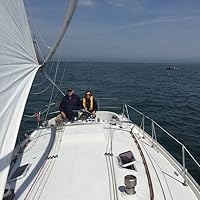
As the proud keeper of a Contessa 26, how could I not be enchanted and mesmerized by this wonderful tale of circumnavigation. Recommended reading.
Displaying 1 - 30 of 304 reviews